

Unabridged: Plot Twist — LARB Radio Hour Interviews Traci! - Transcript
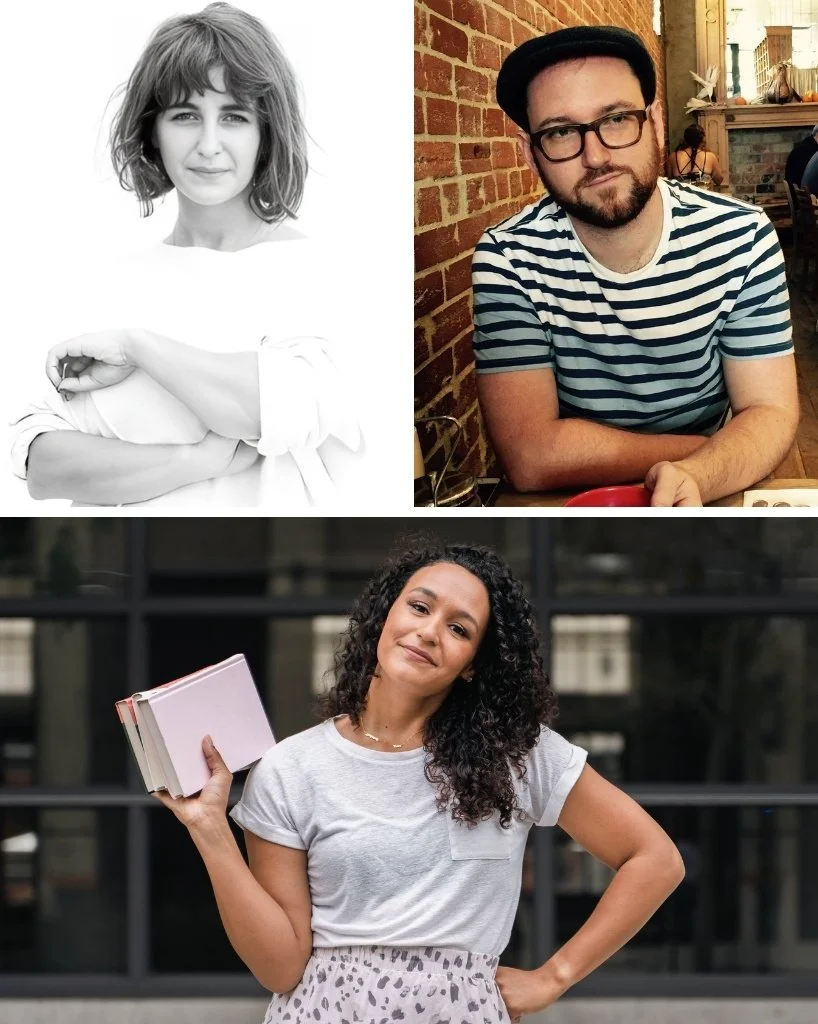
For this month’s bonus episode, we’re mixing things up a little—this time, Traci is the one being interviewed! The fine folks at LARB Radio Hour, Medaya Ocher and Eric Newman, speak with Traci to discuss the impact of social media on publishing, the content creator life, and the way readers discover books today. At the end of the episode, Medaya, Eric, and Traci offer readers a rundown of recommendations for the books getting us through 2025.
TRANSCRIPT
Traci Thomas 0:00
Traci, Hey everybody, it's me. Traci Thomas, host of the stacks, and you're here for another episode of the stacks unabridged, our exclusive bonus episodes for paid subscribers on Patreon and sub stack. This month, we're doing something a little bit different. I'm actually sharing a conversation where I was interviewed by the folks over at the LA Review of Books about social media and book publishing, content creator life, and also a few recommendations of books that are getting us through the year. Okay, enough of me. Now here's a conversation that I got to be a part of with the LA Review of Books
Eric Newman 0:41
we're pleased to be on the line today with Traci. Thomas. Traci is the host and creator and so much more of the literary podcast the stacks, which you can find wherever you get your podcasts, or at the stack podcast.com you can also hear Traci every month on NPRs, here and now, or see her live on stage as part of the literary las Live series one for the books. In addition to this already varied and voluminous work, Traci also hosts and moderates literary events, book festivals and author talks across the country. And she does all this while also working on her own sub stack, appropriately called unstacked, where she offers deep dives into books, while also opening the door to discussing her non literary passions, like pop culture, which we're all always already here for, sports, which maybe one or two of us politics and more. She joins us today from our home in Los Angeles. Hi, Traci, thank you so much for joining us.
Traci Thomas 1:40
Maybe I can convince you to like sports.
Eric Newman 1:44
Oh, a challenge. Many, many years. I mean, maybe tennis occasionally. The
Traci Thomas 1:48
French Open is on right now. It is great. So many compelling narratives, if you love a story, if you love an upset, if you love heart and emotion. Sports, wow.
Medaya Ocher 2:02
Look, I'm immediately up for for one of the hardest things that she can take on convincing me and Eric to like sports. What our parents can't do, Traci can.
Eric Newman 2:15
So the reason we wanted to talk with Traci today for this CO lab is to talk about the book fluencer, which is a clunky word that we use to describe folks like Traci. And I'll ask her in a minute how she identifies, as it were, who bring kind of literary discussions, book discovery and passion to the multi platform landscape of today's social media. And it's because of Traci is kind of unique sort of work in this relatively new literary media ecosphere that we also want to talk to her about this strange moment in media, you know, which, depending on your POV, is either the harbinger of a new dream or a kind of techno capitalist nightmare. So we're gonna get into it and talk a bit about being a modern content creator, about where people find their latest read today, and about the books that are getting through this very strange, maybe kind of scary year. So can you talk to us a little bit about how you got started and what it like? Do you even kind of vibe with the the I the identity label of, like, a book influencer.
Traci Thomas 3:23
Yeah, you know, I know people feel weird about these things. They feel very strongly like, I'm not an influencer, I'm a content creator. And to me, it's all the same. I don't feel strongly that there's a difference between those things. Like, when I think about people who make fashion content, I'm not, I don't say, Oh, they're not a fashion influencer, they're a content creator. There's no difference to me, what I personally say, because a lot of people who aren't in the book space don't know what a book fluence or is. I generally just say I talk about books on the internet because I do do so many different things, and hearing you list out my bio like that makes me kind of nauseous. But, you know, we'll move off that. But I just say, I talk about books on the internet. I'm a book person. I review books, I promote books, I have a book podcast. There's, it's such a new thing to be a single book person, unattached to a large media company, that there isn't really language for it, and most people, I have to say, like, three or four things that I do before any of it actually hits. So I'm not precious about what people call me. Tell
Medaya Ocher 4:31
us how you got started. Of course, you were a reader and and how did you bring being a reader and a writer to this other to these other platforms.
Traci Thomas 4:42
Okay? So first, I'm not a writer. I hate writing. I only write because I have to. It's part of being a person who talks about books on the internet. If I could do everything as a podcast, that's what I would do. I just want to talk about books. But the way that I got started was with the podcast. Back I had all. Been a reader. Growing up, I loved reading. I lived in New York. I read all the time on the subway, you know, on the bus, whatever. I moved to LA, and I basically stopped reading. So in 2016 I set a goal for myself. I was like, I'm gonna get back into reading. I'm gonna read a book a month for the whole year. Like no one's ever done anything this hard in their life. And I got to December 29 I finished my last book, you know, I treated myself to a gallon of ice cream. I was like, I am the most literate person. And then in 2017 I said I'm going to read 13 books this year, because I had pushed it to the wire. You know, I thought I had, like, reached my limit. And I started posting little reviews on my just personal Instagram page. And at the time, I was working in fitness, I was a spin instructor, and people would come up to me and say, Oh, I saw you read the sell out by James Beatty. What did you think? Or, oh, that book you said you loved is so bad, I can't believe you liked it, or whatever. And I realized, like, oh my gosh, people want to talk about books. And I had sort of been sold this lie that people in LA don't read or don't care about books. And that's not true, as I'm sure you both know, but it that was sort of the first thing that clicked. And then the second piece was that I read the book blood in the water about the Attica prison uprising, and I was desperate to talk about it. And nobody in my life, like my mom, didn't really remember it that. Well, we're from California, and it was a New York thing, so it was sort of like, you know, and it was 50 years ago, so she was, sort of was like, I don't remember. And so I went to listen to a podcast about it, and there were only two episodes I could find. One was a legal podcast, and it was a very legal Eagle. And then the other podcast I can no longer find. I've tried to go back a minute. I think it was the New Yorker or something like that, very hoity, toity. They weren't really talking about the book in the way that I wanted to talk about it. They weren't saying things like, Oh my God, that scene was so fucking crazy. Like, are you kidding me? They were saying things like, the sentence structure was beautiful, and I just, I was like, I need a place to talk about books in the ways that I want to talk about them. And so then I was like, I'll just make my own podcast. And then everything just spiraled and is completely out of my control now.
Eric Newman 7:14
So you started doing this in 2018 and I think over about that kind of period of time. We've also seen content creators, and it's not just literary views, but also movie reviews, like all kinds of cultural criticism has kind of become a unique space for promotion that, in particular, the publishing industry has become more and more reliant on. I mean, I'm remembering this New York Times article from and we're going to get into this as well, because it's also all about platforms, in which, when Tiktok was first threatened to kind of be yanked out of the country, whatever that would actually look like, or mean, a lot of publishers were kind of concerned, because they said, actually book talk, which is a reference to book influencers or book related content creators on Tiktok, but I think is also used as a catch all for people like yourself too, or primarily on other social media platforms. They had become really important to the kind of publicity campaigns for these books. So can you talk a little bit about how just over the course of your own work on this podcast, you've seen the type of work that you're doing change.
Traci Thomas 8:26
Yeah. I mean, because I think this is across most of the platforms, at least Instagram, which is where I'm mostly active, as far as social media goes, I don't really consider substack social media, but it is. But anyways, I'm the most active on Instagram, and video has become huge in the last seven years, since I've been doing this, which really changes. I mean, I like to just post a picture. I'm an elder millennial. I don't want to make a film. I will make a film about once a week. That's what I call my reels, or films, because it takes seven years to make one. But there's a lot less. When I first started, there was a lot more reviewing going on. People were talking about books they had read. Now it's a lot more like book haul culture, where it'll be like, here's all the books that I got at the bookstore, here's all the bookmail I got, or here's all the books that are coming out this month. And a lot less of I read this one book, and here's what I thought about it. And when we do see reviews, oftentimes those are also now more video style reviews where someone will say, I read this book and oh my god, it made me want to throw up, and it was amazing, but there's no actual critical conversation. A lot of people won't even post critical reviews, which is something that I do. I think it's really important. I'm one of the few people who genuinely will say I didn't like this book, or this was bad and so and as time has gone on, there's even less and less people who will do that. Most people say, I'm only gonna talk about the books I like, or I'm not gonna say anything bad about a book, because writing a book. Hard. And I'm like, everything is hard.
Medaya Ocher 10:02
Everything is hard.
Traci Thomas 10:03
You know what's really hard being a waitress, and a lot of people are rude to waitresses and tell them they're doing a bad job. So it's not that writing a book isn't hard, but I would love for you to find me a job that's not hard, like, you know who works really hard? My babysitter, I'd like I have notes for her too. So I'm gonna have notes for your novel. It's just that's how it's gonna be.
Medaya Ocher 10:27
When you are choosing which book you're going to talk about, what do you think about like, are you thinking about the book that has most sort of engaged your attention? Are you thinking about your audience? Are you thinking about all those, maybe all those things.
Traci Thomas 10:42
Yeah, I'm thinking about a lot of different things. So one of the rules I set for myself when I first started the Instagram page and the podcast was that every book I finished I would review publicly. So if I read a book to the very end, I will post about it. I used to always do it on my Instagram. Now I've sort of started doing that weekly on my sub stack. I post like a mini paragraph review. That is a rule that I set for myself, that I have. I'm sort of a non negotiable as far as, like, if I'm posting a bunch of books that are coming out soon, or whatever, I'm thinking about, what are books? Mostly I'm thinking about, what am I genuinely interested in because I believe, and I know as a consumer of internet culture, that when people speak honestly and passionately about things, that's much more effective than when they try to squeeze into a box. That being said. Sometimes I will read a book because everyone else said it was great, even though I never would read it. I'm like, I just, I just have to know, like we did Colleen Hoover on book club last year. I would never normally read a Colleen Hoover book, but at some point I was like, I'm a book person. I gotta know what this is about. So sometimes it's that outside pressure. Sometimes I've also, I call this is not really true, but what I call it is inventing a book. I like to invent a book, which is where I find a book that's coming out that I read, that I really love, and I talk about it a lot, and then at the end of the year, people tell me I read this book because of you or whatever. A few years ago, I think the book that people, a lot of people, associated with me, was country of the blind by Andrew Leland, great book, and not real, so good, but it wasn't. It's not an online book, it's not fairy smut. It's not, you know, it's not that. It's not even like literary fiction. It's not all fours, it's not James. Like I read James Early, I loved it. I screamed about it, but I was never gonna invent that book, right? Like Percival Everett invented that book. You know, same with martyr. I read it early. I loved it. I screamed about it. But like that book, it got to be too much of an online thing for anyone to invent.
Eric Newman 12:49
Yeah, you know, I want to talk to you a little bit. I mean, we've kind of been teasing this throughout. Is like that. You're wonder how I could even break this down. So it's like you've got the you have the podcast, right? So that involves scheduling, recording, prep, all of that. You create, also social media posts in order to promote the podcast, but also to call out other things that you're doing. You do the live events. You work with NPR for their here and now as a monthly contributor, you're making me sick again. I know, I know, but this is what I'm curious about, because, and as you've mentioned before.
Medaya Ocher 13:26
It's actually just your to do list.
Traci Thomas 13:29
This is therapy. What's the it's like the dickens. It's like past, present and future self, like, come and talk to you. But instead, it's just all the things I have to do today, come and talk to me.
Medaya Ocher 13:40
Yeah, exactly, sorry, we're the ghosts of your, of your present, okay.
Eric Newman 13:46
Exactly like the Groundhogs Day of your, of your to do list. But like, I mean, as you had mentioned before, you know, there's kind of been a shift to even within all of that, plus the sub stack, right? Like, even within all of that, there's a shift to more video content, which I know you've had to respond to, and you're, you know, are kind of integrated into your system. You know, how did you kind of learn to do all of these things? Because, you know, nobody is born outside of a Nepo baby, maybe, who grows up on set, right? Nobody is born just knowing how to do all this recording, knowing how to do the social media stuff. So I assume that was all a process. And can you kind of talk about how you developed and kind of how you today kind of manage all of these various different things you have to do as a quote, unquote content creator.
Traci Thomas 14:36
Okay, make sure that I answer your question, because I there. My brain is like spinning thinking about how to how to do this. So based basically, I started with the Instagram right before I started the Instagram, when I knew I was going to do the podcast. So I was like, I need to build an audience. There seemed to be people on the internet talking about books. So for two months before the podcast ever came out, I was just on book Instagram, talking to people, making friends. And connecting posting about the books I was reading. Then I made the podcast, and I'm an independent podcaster. I'm not on a network, so that means that I don't get paid. Nobody buys ads for me. If I sell an ad for the show, I gotta go do that. I gotta find an ad. I gotta sell an ad, which quickly led me to learn about Patreon, which is a platform where people will pay you money, $5 a month, is what mine is, to support your work, and in turn, you give them perks. One of the perks I do is a monthly virtual book club. So once a month, we will hop on a zoom and we'll talk about whatever the book club pick was from the podcast. There's other perks, but that's sort of how it works, and that allowed me to have some sort of a income that was steady. And when the show got bigger and the Patreon got bigger, I was able to hire an editor who took that that work for me. So like, my Patreon is how I fund the actual making of the show. It's how I pay for my website. It's how I pay my assistant. Like, it's really if I can't pay for something out of the monthly patreon. I can't have it. I do sell ads. I do do other things, and that money goes to me like that's how I pay myself. I don't ever take money out of the Patreon. The Patreon is for the show, so it pays for that's the show's budget. The show's budget is the Patreon. But basically I learned that if I wanted to make more money, I had to make more content. And the question becomes, where do I make that content? How do I make it? And so that's when substack sort of got introduced because, because Instagram has moved so much to a video space, and that is where my biggest following is, a lot of content is doing a lot worse on Instagram. I'm sure you've heard people talk about how the algorithm is hell, and they're not wrong. It's very bad. So the substack became another outlet like Patreon, where I could post things and people were committing to supporting my work without me having to like, perform, likes or engagement for them. And it also allows for someone like me to talk about things that I can't talk about in long form over on Instagram, like I can't make a 20 minute video of me, like explaining the different kinds of nonfiction, which is something that I started doing over on my substack. I have a series called the nonfiction files, where once a month, I will take on a topic in non fiction. Last month, we talked about memoir. And people always talk like, oh, I don't want to say a memoir is bad, because that means that the person I don't like the person. And I did a whole thing about, like, what makes a memoir bad, and how can you judge a memoir without feeling like you're judging a person? And another time, I did a taxonomy of non fiction, and like all of these things that are sort of creative and fun and things that I think about all the time, but there's no place for that on the internet. So substack allows me to sort of publicly think out loud about books and not feel like I've written a seven comment caption where it's like more continued in the comments. Nobody's reading that on Instagram, we're scrolling. I want to see pretty books. Like, maybe I'll stop.
Eric Newman 18:03
I mean, how long did it take for you to take this idea from 2017 a launch in 2018 to like, I can quit my job? Like, this is a business.
Traci Thomas 18:15
Yeah. So it's tied to like, sort of an unfortunate thing, which is that in 2020 with the murder of George Floyd, breonna Taylor and ahmaud arbery, and the sort of push to support black creatives, my Instagram platform blew up. I went from having about 15,000 followers to about 40,000 followers in three or four months, which and at the time, lots of businesses were putting money behind independent black or not independent black media. But, you know, I was getting to guest on all of these, like shows that have never talked to a black person in their life, and so that that was really the catalyst for me to be able to do things. It also meant that I got like media coverage, like business outsider wanted me to write something or like things like that that had never been available to me became available to me because of the political and social climate, and I sort of just tried to ride that wave, and it felt icky, and it still sort of feels icky like when I talk about it in retrospect. But I, you know, I spoke to, actually, Ijeoma Oluo, who wrote the book, we can't talk about race, or how to talk about race. I can't remember. Oh yeah, yeah. And when she came on, I asked her about this, because she also had, you know, surged to the top of the New York Times bestseller list at this time. And I said to her, like, how do you navigate that? And what she said has stuck with me, which was, basically, I've been doing this work. People now have come to it, but I did not start doing this work because of what happened to George Floyd, like, I was doing this work and nobody cared, and now it's out there, and people do care. And so that made me feel a little bit better, because it does feel icky to be like, Oh, this horrible thing happened, and now I can go work for myself, like, you know. So, so that's really how it happened. Then from there, I sort of just built on on that momentum.
Eric Newman 20:09
You're listening to the lar Radio Hour. We're speaking with Traci Thomas, host of the stacks podcast. Now let's get back to that conversation.
Medaya Ocher 20:20
During the George Floyd era, there was, I think, you know, a very delayed push to hire black women in particular into various higher up roles in the publishing world.
Traci Thomas 20:36
And then over they fired a lot of them. Correct, yeah.
Medaya Ocher 20:39
Past two years, they've hired a lot of them. I mean, I think almost, maybe, and and so I'm just what I'm curious, like, what your impression has been about the state of the publishing industry right now, and in terms of how it's how it's responding to anything, if it responds now they're so slow to respond to anything, but, yeah.
Traci Thomas 21:07
I think they are responding to things for sure and faster than I actually would have expected. Like, don't I mean, not in a good way. Do you remember, like, right after the election, they announced Simon and Schuster, I think, announced their, like, Christian in print, and it was like, whoa, okay. You guys were waiting to see what would happen, you know, like, so I definitely think they're paying attention. I think that, you know, the pressure post George Floyd to, you know, hire and listen to black people and in publishing, specifically black women, as they felt like they could get away with not doing that anymore, I think they did. I think the expectations were totally unfair on those black women. I mean, you all know it takes two years to, like, publish a book, right? If you acquire a book and you can turn around and get it out in two years, that's pretty good.
Medaya Ocher 21:59
I mean, that's even more hot, right? That's like, yeah, exactly time, really, that you can show that you can do exactly.
Traci Thomas 22:05
And so a lot of people being fired after three years or so, two and a half, three years, feels like the expectations were out of whack, if not just like a performance piece of we're doing, we're doing this, and we don't like it. And I think also, you know, when you do hire people who are outside of your business's cultural identity, what and not necessarily, like racially, I'm saying like what the business stands for. If you when you hire an outsider, it takes a while to shift the culture. But also, people who do that hiring might not like the shift. They probably liked what the culture had been for decades more than they like having a disruptor tell them whatever. And so I think as soon as it became socially acceptable to get rid of people who were shaking things up, that's exactly what they did. I mean, you know, there are books that came out under certain black women who made it to the National Book Award finalists, right? And like that those people lost their job, is like, Okay, well, what else do you want? What else do you want from your publisher, if not to pick, support, acquire, nurture, market, publicize a book all the way to the upper echelon of the literary universe, yeah, yeah. Like there is, I mean, aside from winning a Pulitzer, there is no higher achievement or, I guess, winning the award. But, you know, like being in that class. So, so I think, like, a lot of it was performance. I do also I worry. My current worry is about what happens to trans authors? Tori Peter sort of ushered in this moment of trans authors, specifically trans women with de transition baby in 2021 Tori Peter's second book came out this year, stag dance, and with her this year, there have been a ton of literary books by trans women, as well as other books by trans women that aren't like literary fiction and these attacks on trans people, I am very worried that publishers will respond in the same way, in the way that they responded positively to Tory Peter's success. I'm worried that what's happening politically will impact trans authors, trans women, especially trans fiction writers, in a really bad way. So that's sort of the thing that I'm kind of have my eye on. As far as, like political trends, I've definitely noticed less Black Books, less books by black authors. I think, like when it comes to like Latinx communities, they're always sort of battling to even be recognized in any way that one has felt the most consistent to me, like just consistently not a lot of representation in those communities. And so, you know, I'm always, I'm always sort of just like looking to see, you know, I read the catalogs to see what's coming. And so. Will have my eye on those things, but I think it all ebbs and flows with the politics of the moment.
Eric Newman 25:06
Yeah. I mean, I think that there's also something else. It's, I mean, a version, as you were talking earlier. I was like, oh yeah. It's like, publishing is gonna do the kind of like, target style flip flop, where it's like, oh, we're all about this. It feels like a safe space for different people, and then as soon as there is political pressure, they fold like a cheap hand of cards. The other thing, though, that I was thinking about as I'm hearing you talk is like my ongoing frustration with how it's not just publishing. I mean, this is true in larger cultural kind of spheres as well. That it's like we tend to treat books by let and I even hate using this term by quote, unquote, marginalized populations as if they are only for that population. So for example, I'll make this very brief. It's like I was talking with a friend in Palm Springs over the weekend. And he is a South American. He's, he's an author, like, I'm being cagey a little bit because I'm like, Well, I don't know if he wants me to talk about him specifically on the radio, but he was talking about this experience of taking one of his books into a bookstore, and the woman, he said it was very odd, you know, it's like a little white lady that is like, trying to figure out what shelf to put his book on. And it's like, oh, well, are you a Latin American? Author? Are you Spanish language? Author, are you LGBTQ? Author? And his whole thing as he's telling me this story, is like, well, I'm also just a fiction writer, like, that's what I am. And that there's something about the way that the market, and you're absolutely right about the the self fulfilling prophecies, which is like, well, if we make this as narrow as we possibly can in terms of how we're promoting it, talking about it, and doing any kind of messaging about it, then, like, oh, well, it only reached a really narrow band of people. I guess it's not popular. And that also means that, like, you know, so let's take, for example, a book by a if there's a work of fiction, let's say by a black female author. I mean, imagine if Toni Morrison was literally only marketed in like, well, this might be the like Black Books section of the Barnes and Noble but no, she's a major American fiction writer and her--
Traci Thomas 27:33
But there are bookstores here in LA that you can find her only in the African American section. Is that today, to this day.
Medaya Ocher 27:39
Really? Is that true?
Eric Newman 27:40
Is that only in that section?
Medaya Ocher 27:41
Should we call him see that.
Traci Thomas 27:44
I don't want to be scared of them.
Eric Newman 27:47
Okay.
Medaya Ocher 27:49
Off the record,
Eric Newman 27:49
That's what I'm talking about. That's like, that's another way in which, on the one hand, and look like, and I wonder if this is true for you as well. It's like, as as a gay person, you know, I sometimes am looking for like, books that are about, like the gay experience or the queer experience. I let Tori Peters is another one that I, you know, I want to read anytime that she publishes something, I want to read it. Same with Andrea long Chu, you know, it's like, that's, I'm looking for that work. And in some ways, you know, is we're all geriatric Millennials here. It's like having those kind of curated titles to say, Oh, now we're actually gonna tell you, this is where you could go for LGBTQ books. It is a service like I do, like going into an ecosystem where it looks like, okay, this is the kind of thing I'm looking at. Just show me all the things that are that but it also feels like we're just like pigeonholing ourselves, or being pigeonholed in a way that is pretending as if that fiction, nonfiction, whatever it is, literature, is not part of the majority conversation either.
Traci Thomas 28:54
Well, I think, you know, not to toot my own horn, but I think broadly, this is why book influencers are doing so well, because I can read a book that is targeted to a specific audience that is me, like, for example, Secret Lives of church ladies. I did not invent that book because Kisa layman told me about it on the podcast, but it was before the book came out, and because he mentioned it on the podcast, and then he went on to rave about it. I read it, went on to rave about it. Disha Philly, the author of that book, still to this day, tells people that that episode of the podcast was the most important thing that happened to her in her book. So nice, and like when she went to sell her novel, her second novel, she said that they even mentioned the episode, or that she mentioned it to them. And so there is this thing that I'm able to do, or that people who have these loyal audiences are able to do, which is to say, this short story collection published by a university press that you've literally never heard of who knew West Virginia University Press published short story collections. Yeah, that this book is amazing, and you're not gonna find it on the general fiction shelf, and you know, you're not gonna see it everywhere you go, and you'll probably have to special order it. But it is worth it, and it is amazing. Then the book, obviously, and I'm not suggesting that I had anything to do with this, went on to become a finalist for the National Book Award, which obviously gives it the sticker, made it a thing, but that the internet community, we were able to scream about this little book in a way that even if the New York Times, you know, had reviewed it, which I'm I don't know if they did or not, they're not gonna say, oh my god, this story about peach cobbler makes me want to die in the best way, like, only a book influencer can do that, and only someone who can do that can really tell you, like, Your Most Trusted book recommendations come from people you know they don't come from the New York Times, unless you have a really good sense of your taste in books. You are going you're talking to your best friend at book club, who you always agree with them, right? You're talking to your cousin, your aunt. And so what book influencers are able to do, well, maybe not your aunt, but someone's aunt, or maybe your uncle. But what book influencers are able to do is to be is to be that person, for people who don't necessarily have that person in their life, or who just want another person. And so I think, like when we talk about these sort of, like niche books, according to publishing, these books that are targeted to specific identity groups, whether that is a marginalized group or not, that that we are able to get books into people's hands because we value the book, and we're not worried about what shelf it goes on. I'm just saying this book is amazing, because, again, for all intents and purposes, Challenger goes on all the big shelves, right? Like it's a face out book. But you'd be shocked to know how many women who also love fairy smut read challenger, because I said so do you know what I mean, like and so that there is this exchange of book recommendations that is not tied to some sort of classification from publishing or media or the bookstore or the library or whatever, but it's coming from if you like this, if you trust me, try this and that that can't that like we are able to provide a service in that way to authors, I think, a lot like we are able to put authors on in a way that no one else has been able to break through in, like a mass way. It's like, it's like, you know, we've sort of amplified hand to hand book passing.
Eric Newman 32:38
So one last thing that I wanted to ask you about, before we get to our own little book rec segment, is, you know, as somebody who you don't really have much presence at all on Tiktok, so you weren't directly impacted by the threat for Tiktok to suddenly go away, which, like, you know, people in my parents generation, okay, Boomer will let you know, are kind of like, Oh, I mean, that's so ridiculous. And it's like, actually, it's not. That's where a lot of people built a whole livelihood and businesses and revenue streams and all that kind of stuff. You know. How do you feel about let's say so, Instagram seems largely stable, you know, but we don't really know. And algorithms are changing, which will also change. You know, how you need to interface with the with the app and with your audience? You know, kind of how do you do you ever get nervous, I guess, about the stability of the very platforms you where you have invested lots of time and money and effort into building a brand?
Traci Thomas 33:39
Of course, I do, because I have seen how the algorithm has negatively impacted the work that I do. Right? Like I back in 2020 when Instagram was really different and like that was back when you still if you could only swipe up, if you had 10,000 or more followers, you could only post a link, if you had 10,000 or more followers, like that has changed. Now everybody can post link, which is great, but I've just seen all of these different changes. I used to get views that were like 20% of my audience on things. Now I'm getting 10% if I'm lucky. I mean, there was a time when it was more like 50% right? Like, so I that's part of the reason that someone like me would diversify to a place like sub stack as well. Like, just to have my content in different places, so that when things go bad in one place, I'm not like, oh my god, I lost everything. And also, like, do I still want to be on a place like Instagram? You know, I read that book, careless people. It's not good stuff happening over at meta, right? Like, it's like, yeah, at what point do I want to participate in some of this stuff? And, you know, there is a version of the stacks that, you know, if this, if I were able to be successful as I could be, I maybe wouldn't have to be on Instagram, you know, like, maybe I could just be on something like a sub stack, or just have my own website, and I had people who could just manage it for me, and you could just come to my website, and wouldn't have to, you know, give money to any of these places. Is, but right now that's not a reality. And so I work within the frameworks that I have, but I definitely think about these companies and how much I want to be a part of what they do, and how much they are a part of what I do, and what that looks like. And, you know, owning my own stuff.
Eric Newman 35:18
All right. Well, let's get to now without further ado, let's get to what we were originally all gathering to get together about, which is the books that are getting us through 2025 so Traci, what are the two or three books or more that are getting you through 2025 okay.
Traci Thomas 35:35
I'm going broad. I'm giving you two things wide. I'm going to start high brow with a book club pick we had in April this year, which was blessing the boats by Lucille Clifton, it's a poetry collection. I am not a poetry girly. Okay, so I was gonna say--
Medaya Ocher 35:53
Poetry, poetry collection, okay.
Traci Thomas 35:57
But Lucille Clifton, yeah, very good at poetry surprise. And I have some poet friends, and one of them always say people only turn to poetries for weddings and death. And I thought, That's right. And right now, in America, sort of feels like everything is either a wedding or a death, like it's either just like, congratulations, Beyonce is amazing, or the world is on fire. People are being harmed at every possible turn. And so the poems have been comforting. The blessing the boat poem, the title poem, it's just so good. There's so many good poems in the collection. And can we read it?
Medaya Ocher 36:32
And we think we can read it. We can read it. What if we read it? Yeah, please. I'll read it.
Traci Thomas 36:36
Okay. So here's the poem, blessing the boats, by Lucille Clifton at St Mary's, "may the tide that is entering even now the lip of our understanding carry you out beyond the face of fear. May you kiss the wind then turn from it, certain that it will love you back. May you open your eyes to water, water waving forever, and may you, in your innocence, sail through this to that."
Traci Thomas 37:02
Oops, that's beautiful.
Traci Thomas 37:04
Things are so uncertain that someone just saying, like, I want this for you, I hope is like feeling like enough for me. So that's my one. On my flip side, I'm tell, polarizing. I went back to the very beginning of The Hunger Games series this year. You guys. Suzanne Collins needs a Pulitzer needs a National Book Award. Needs a Nobel Prize, maybe two. Katniss Everdeen, perfect character. Yeah. The stories perfect. Paced perfectly. It's creative, it's engaging. It is everything you want. There's a little bit of a love story, which I don't personally agree with, the choices that she's made. Katniss, but the books are so good. They for me, they feel dark enough to not feel silly in this moment. I know some people want to like, like, like, to run away and read like, light, fluffy stuff. Can't do it. Can't hold my attention. I need to feel the darkness and the heaviness even in my escape. So all of that. But they're just so good I don't want to put them down. They're perfect books. They're perfect again. I She had a book come out this year, which I haven't gotten to yet. I'm saving it for July. My birthday is in July. Saving it for my birthday month. The most recent one, it got a rave in the New York Times. If she doesn't win the National Book Award, I'm marching in there one night November. I'm bringing my red like, Pita paint and I'm throwing it on the winner. Okay? Like, I don't care the winner. Yes, every the judges, I'll find the judges dump red paint on all of them. Okay, yeah. She the work she has done for this country since the first Hunger Games book has come out. And unlike other authors of YA books, she shuts the fuck up and doesn't tell you what to do with your body. She allows me just to love her books, just to have a relationship with Katniss and not to have to fear that I'm supporting someone who wants to take other people's rights away. So for that, I also love Suzanne Collins. She is famous, rich and quiet, the three perfect ways to be, unlike owners of car companies or online mega retailers. She is rich, famous and quiet, a dream. I would be so quiet if I were rich, so quiet, like, that's the way I would be off Instagram if I were rich, oh my gosh. I would just mind. I would do what Oprah does, which is just like, sometimes have a book club pick, just sometimes be like, Oh, covenant of water, we're back. Yeah.
Medaya Ocher 39:45
Use this a surprise. I know Eric. What are yours?
Eric Newman 39:50
Okay? So mine are. It's a little bit of so there is the light in the dark. So the hope and the like still somewhat hopeful. Yeah? Um, but my two are. The first one is Sarah schulman's The fantasy and necessity of solidarity. Now, on the one hand, Sarah Shulman is an always will read for me like anything that she comes up with. I will, I will read it. I found this particularly useful at this moment. I mean, there's so many things that this book gets into that I found useful in navigating this particular moment. But I think what I really appreciated is, and Shulman reminds us of this in all of her writing, is that, in fact, like you can make real political change in the microcosm. So if you are engaged with your community, if you're engaged at a local level, those things do matter. Because I think that, speaking only for myself, I think sometimes when I see the awfulness in the world or the things that I wish were different, or that I wish would change, or that I'm afraid we're sliding back into some really terrible thing. It all feels so big that I feel as if I've been rendered totally powerless. And that is and powerlessness is a useless feeling, right? It isn't something that will cause any change ever. It just causes stasis or worse. And so just being reminded that, in fact, like it's all about engaging on the local level, doing something, and that even something that seems very small can actually snowball into something that is quite big. And that's borne out, not only in her kind of work around kind of advocating for Palestinians. You know, both, she has a longer history of doing that, since 2009 but also, you know, more expressly in the present, but also in the history of AIDS activism. You know those, these are proofs that people power does matter, that the minor Act does lead into a major change or and it is also possible, she would say that it doesn't like you may not see in your lifetime the change that you desperately want and want to work for. But that doesn't mean that a working for it doesn't matter, and it doesn't mean that the work you put in during your lifetime towards achieving that aim won't help it be achieved later. So that's my hopeful one. The other book that I just got very obsessed with is fiction. It was Milo Todd's the lilac people, and this is about a group of trans people immediately in the wake of the end of the Holocaust. So when the German Reich has fallen and the allied forces are occupying Germany, it's about a story of two trans men and a woman that is, you know, kind of is with them as well. And it was a reminder to me about all these buried histories. I had no idea, for example, that the allied forces actually re imprisoned Trans and Queer People who were liberated from the camps. They were the only groups that were put back into prisons and who were served the worst kind of sentences under the former Nazi regime. So it was a reminder of that there is a hopeful end to that story. But, you know, I think, to me, it was a reminder of kind of what's happening now, and how closely we should be kind of holding that history that, in fact, like it isn't necessarily his ancient history. And there, I'm not going to get into it now, there are a variety of reasons to understand that it is not going to be exactly the same, right? But that, to me, that was a book that I was obsessed with, not just because it is a really powerful and moving story, but also because it's one of those things in history that I feel like has been blocked from us, like things that we just don't know, that sometimes fiction, and also non fiction, is able to bring us in the present. So that would be my other one is Milo Todd's the lilac people.
Traci Thomas 44:08
That sounds so good.
Eric Newman 44:11
It's so good. I also do have to mention my husband did edit that book.
Traci Thomas 44:15
This is a disclaimer. This is, this is family self promotion. It sounds awful. Just kidding. Yeah, not gonna read it now, to spite you.
Eric Newman 44:24
Only have to mention it for due diligence, but it is literally, as my husband would even say, you know, like I don't. In fact, most of the time when it's something he's worked on, I'm resident to talk about it, but this book just grabbed me from the first page all the way through to the end. I absolutely loved it, and in that way, it's transportive, which is great, but also just made me think about all the things I've been talking about with regard to history, the past and the present. What about you? Medea, what are your books getting you through 2025 okay.
Medaya Ocher 44:52
Mine are a little bit dark. I'm sorry, but.
Traci Thomas 44:55
That's my shit. We're here for it.
Medaya Ocher 44:59
So. So the first book is things in nature merely grow.
Traci Thomas 45:05
So good. It's so good. Oh my god. It's so good. It's so good. I'm going on the record, because I already said this publicly. If that does not win the memoir Pulitzer, next year, you're just outside, I will be stuck. No, I know it's right about it, but it just has Pulitzer memoir. If you look at the ones that have won, it is giving it is that it is exactly what they like. It is okay, go ahead. Sorry, no.
Medaya Ocher 45:31
No, I know. I'm glad, I'm glad you've read it, because I do hesitate recommending it to parents, in particular, because it the premise. Obviously, it isn't a premise. It's a real thing. So it's written by Yin Li. It is about the death of both of her sons, who both committed suicide about six years apart. It's a very short book. It came out somewhat recently, but I read it back in December. It you know, the way that I had been describing it. My partner kept asking why I was reading that. Because the subject matter is, is so intense, obviously. And to me, there was something about like the way that I was describing it. And I might have talked about this before on the show. So sorry listeners, if you've heard this before, but that that it seemed to me like a like an articulate letter from hell, that it was like it was a person who had lived through the unimaginable and the unfathomable, and had and had become determined to live through more, and that, in many ways, the books, the books themselves, are an honor to her children. But, you know, I really, I really think it's a work of genius, because I think when faced with something that I think for most people would be like a primal scream, she has come up with literature and that, I mean, truly a feat. So it's incredibly impressive. And I just, I just think about, like, just the, the achievement of it, but also just the, you know, I don't want to say the beauty of it, because, like, I don't want to set aside aestheticize, like, what is, what is also clearly a tragedy, but, but also the beauty of it. So, yeah, I I've been kind of turning back to that, and then I've also found myself sort of, I'm not a big poetry person either.
Traci Thomas 47:36
This is so we're being so rude. Weddings and death season Sure is.
Medaya Ocher 47:44
But I also, I've also found myself sort of turning to poetry, and okay, I'm gonna read one too. Is that okay? So the so our our summer issue is submission themed, and so I had been thinking about the theme sort of more broadly, in terms of like how we were approaching, and we've approached in sort of a fun in the fun ways that we can talk about dominance and submission, but then also the ways in which it is a it's a political reality, right? It's a political and lived reality. And there is a poem in the next issue that I just found very beautiful. It's short. I'm going to read it. I really think it's it speaks a lot to the the ways in which we can think about what sub, what submission is. You guys ready? All right. It's called the strange freedom of the dog. It's by Sawako nakayasu. I hope I am pronouncing that correctly. Okay, when's its way under a bridge, I rush to lay down the next brick, then the next of the unfinished bridge under the dog. What is freedom when the bridge is yet unfinished? What is a bridge when no one around to cross it? What is no one? When everyone else has better options? What is an option? What is doggedness, what is a gambit? I am encouraged to choose the path of least suffering, but I must get to a different land just to find out how to measure such matters in this unique kingdom of pain. I am told that my methods of measuring no longer hold water. I am told that it is already too late for those who have drunk the water, I am told that no one is listening, no one is looking. In other words, I am strangely free as a dog. If that is the option, I choose one option out of many dogs. I just think it's so good, so and. And we also have a poem by Harriet Mullen, which is in the issue, which is also very beautiful. But I'm, I'm not going to read that one because it's a little long.
Medaya Ocher 49:50
Anyway, I love it. All right. Here we are getting through, I guess, getting through it. Look at us,
Eric Newman 49:58
All right. I wanted to say thank. Thank you so much, Traci, for this conversation. We've been speaking with Traci Thomas, host and creator of the stacks podcast. Thanks so much, Tra
Traci Thomas 50:08
Traci, thank you. Thank you so much for having me. This was awesome. Thank you, Traci. This was so fun.
Medaya Ocher 50:21
Thanks for listening to the larb Radio Hour. Subscribe to our show on Apple podcast, SoundCloud, Spotify, or wherever else you get your podcasts. If you like the show, please rate us an apple podcast to help us get the word out, and we'd love to hear from you. The producers of the larb Radio Hour are Medea ohcher, Kate Wolf, Eric Newman and Mary Knopf and Jonathan shifflett, who also mixed and edited our show. Our founding executive producer is Allan Minsky. Our intro music was written and performed by Imogen Teasley button you.