

Ep. 405 Friday Night Lights by H.G. Bissinger — The Stacks Book Club (Joel Anderson)
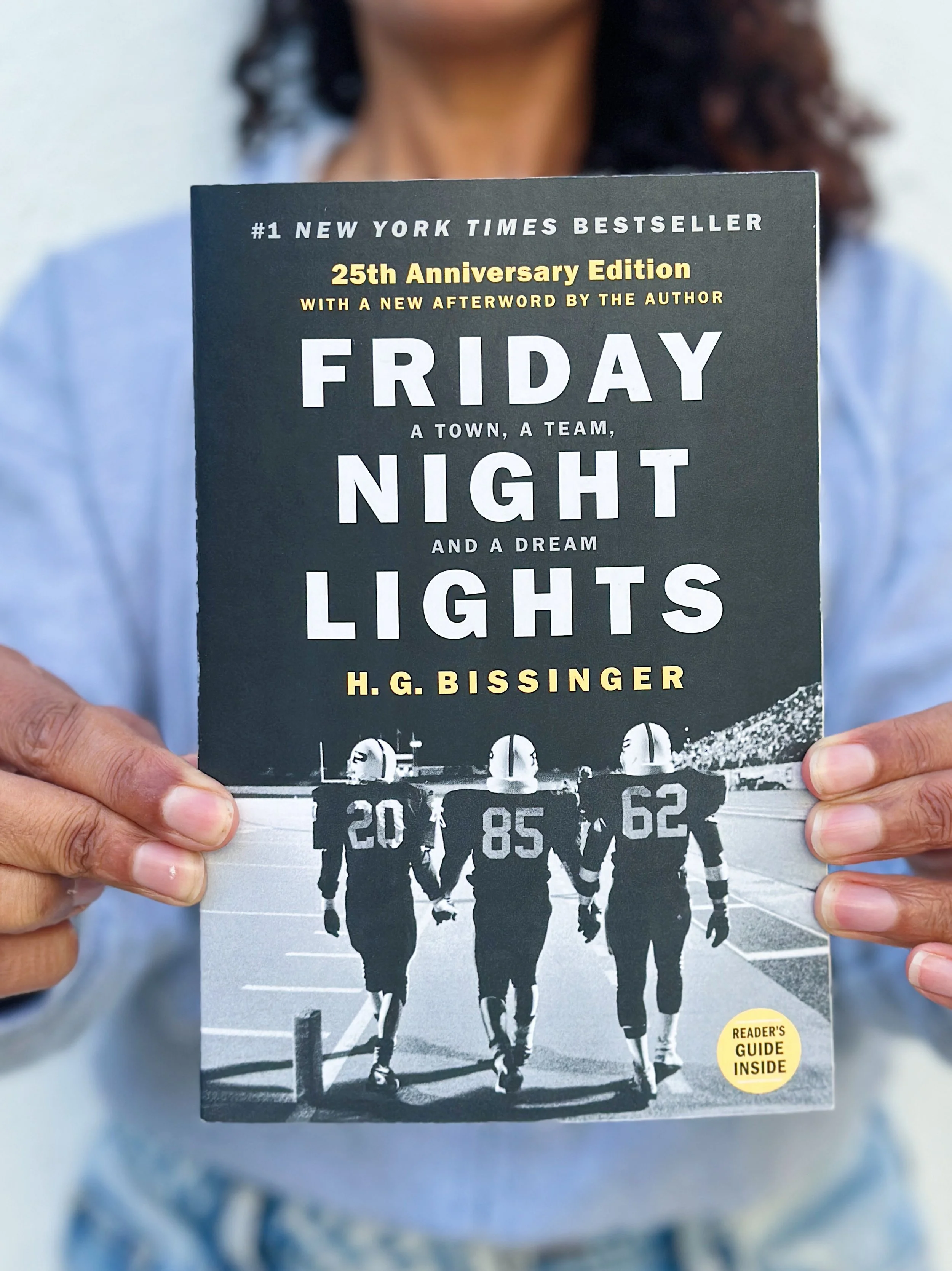
For the last Stacks Book Club episode of the year, we're diving into Friday Night Lights: A Town, a Team, and a Dream by H.G. Bissinger with Joel Anderson, senior staff writer at The Ringer and co-host of sports & media podcast The Press Box. This book follows the 1988 season of the Permian Panthers, one of the best high-school football teams in Texas history. We discuss whether this book could exist as is today, how we feel about high school athletes getting special academic treatment, and why Joel wants to untether grades from extracurricular activities.
There are spoilers in this episode.
Be sure to listen to the end of today’s episode to find out what our January book club pick will be.
LISTEN NOW
Apple Podcasts | Spotify | Google Podcasts | Overcast | Stitcher | Transcript
Everything we talk about on today’s episode can be found below in the show notes and on Bookshop.org and Amazon.
Friday Night Lights: A Town, a Team, and a Dream by H.G. Bissinger
Friday Night Lights by H. G. Bissinger (audiobook)
The Adventures of Huckleberry Finn by Mark Twain
Bishop O’Dowd High School (Oakland, CA)
UC Berkeley (Berkeley, CA)
Stanford University (Palo Alto, CA)
De La Salle High School (Concord, CA)
“What Carter Lost” (ESPN 30 for 30)
Rocky (John G. Avildsen, 1976)
World Series 2025 play at the plate (MSN.com)
Friday Night Lights (NBC)
Friday Night Lights (Peter Berg, 2004)
Girl on Girl: How Pop Culture Turned a Generation of Girls Against Themselves by Sophie Gilbert
To support The Stacks and find out more from this week’s sponsors, click here.
Connect with Joel: Instagram | Twitter | Bluesky
Connect with The Stacks: Instagram | Threads | Shop | Patreon | Goodreads | Substack | Youtube | Subscribe
To contribute to The Stacks, join The Stacks Pack, and get exclusive perks, check out our Patreon page. If you prefer to support the show with a one time contribution go to paypal.me/thestackspod.
The Stacks participates in affiliate programs. We receive a small commission when products are purchased through links on this website.
TRANSCRIPT
*Due to the nature of podcast advertising, these timestamps are not 100% accurate and will vary.
Joel Anderson 0:00
The important thing here too, is that, like, I mean, what, what is happening in Odessa, Texas in 1988 is, like, a weird perversion of everything, right? Like, I mean, I, I related to it a lot because, you know, like, that's sort of the the culture with which I grew up in or was familiar with, right? But I also could understand, even then and now, with more perspective as I'm older, I'm like, oh yeah. Like, they're not going about this totally the wrong way. You're setting these kids up for failure when you tell them that their senior year of high school is, like, basically going to be the most important, the high point of their life, essentially.
Traci Thomas 0:38
Welcome to The Stacks, a podcast about books and the people who read them. I'm your host, Traci Thomas, and somehow we have made it to our last book club episode of the year. Today I am joined once again by Joel Anderson, who is a staff writer at the ringer and co host of the press box podcast. And today we are going to discuss Friday Night Lights, a town, a team and a dream by H G Bissinger, this book follows the 1988 season of the Permian Panthers, one of the best high school football teams in Texas. The book explores so much more than just the game of football, from racial dynamics to politics to a town obsessed with football culture, and Joel and I talk about all of that and so much more on today's episode. Please be warned there are spoilers in the episode. Everything we talk about on each episode of the stacks is linked in our show notes, and remember to stay tuned to the very end of today's episode to find out what our January book club pick will be. Now if you like this podcast, if you want more bookish content and community, please consider joining the stacks pack on patreon at patreon.com, slash the stacks and subscribing to my newsletter. Unstacked. Over on substack, at TraciThomas.substack.com each of these places offers a bunch of different perks, like community conversations, bonus episodes, virtual book clubs, hot takes, all of that, plus your support makes it possible for me and the team here at the stacks to make the show every single week. So to join, head to patreon.com/thestacks for the stacks pack and check out my newsletter at Traci Thomas.substack.com. All right, now it is time for my conversation about Friday Night Lights by HG Bissinger with Joel Anderson, and reminder, there are spoilers.
Alright, everybody, it is The Stacks Book Club day. It is the last book club episode of 2025 I am thrilled to be joined again by Joel Anderson. He is a journalist. He is a podcaster. He is a former football player. So he's gonna have insight on today's book club episode, conversation about Friday Night Lights: a town, a team, and a dream by HG Bissinger. Joel, welcome back.
Joel Anderson 2:58
Hey. Thanks for having me. This is the last one of the year. What an honor. I didn't know that this makes me nervous.
Traci Thomas 3:05
Oh no, it's fine. Everyone's sick of me by this time of the year.
Joel Anderson 3:08
I gotta close it out right.
Traci Thomas 3:12
This episode drops on December 31 the last day of the year. It's a Wednesday
Joel Anderson 3:18
Where will we be then?
Traci Thomas 3:21
I will be probably sitting right here at my desk trying to finish up accounts. I don't know
Joel Anderson 3:28
Same, same, same, I'll probably be right up in here.
Traci Thomas 3:30
So we're reading Friday Night Lights. We read it. You picked the book. I told people. I don't know if I told the story on this podcast. I think I told in book club meeting, but I said, I asked Joel what books he wanted to read. I said, send me five or seven, and you just wrote back. How many times have you done Friday Night Lights? I said, zero times. You said, Okay, that's the book. And I said, great. So tell people why you wanted to read this book for book club.
Joel Anderson 3:55
Well, I mean, obviously I'm a huge football fan, right? But more than that, it is I'm insanely jealous of Buzz Bissinger, the author who wrote this book, because it's it's not really the first of its kind, because A Season on the Brink, which was a book on a year in the life of Bobby Knight and the Indiana Hoosiers in the early 80s. Like he followed the basketball team for a year and wrote about it, right? And so this is sort of the same theory, but this is so much more than following a sports team. It's really like a slice of life in a part of the country that not very many people are familiar with, but probably feels familiar, sounds familiar, especially if you've got family back in the country or down south or even out west or whatever. And I think it just says so much about the way that school and race and culture impact American life, right? It's not just this football team. It's like all these people come to this stadium on a Friday night. And there's a lot of reasons why. These people are here. Some people are native. Some people like booby miles, he gets sent there because his uncle takes him as a foster child. People that you know have fought, tried to follow the oil boom and tried to make their fortune there and reach hard times. But they've all got their kids there, and they're all focused on this one thing. And so I always that's always just kind of stuck with me out one thing about me, if I come to your town, or if I'm driving around, I'm always trying to see what the stadium looks like in your hometown, because I always kind of feels like it says a little something about, like, what's important in the town, like, do they care about football? And yeah, it's just always fascinating to me. And so, yeah, I think it, it's, it's about football, but it's about so much more. It's about the way we live and the way we used to live so much more. But I don't know if you picked up on this.
Traci Thomas 5:48
So here's what I'll tell you. So we usually start with generally, like, what did you think? But I pitched you that question, Said, but I'll tell people generally what I thought. This is my first read of this book. Okay, it took me a second to get into it. I was like, there's a lot of names. There's a lot of names. It's like, okay, we got Coach Gaines, we've got Booby Miles. Like that first introduction, I was taking notes like Brian plays tight end, you know, like, whatever. And then at some point, and I honestly don't know exactly where I was hooked, by the time we got to the coin toss, I was doing dishes. I was listening to. I was doing I just stopped doing dishes, just standing there, just standing in the kitchen. I know exactly where I was just like, hands up, pencils down, just locked in. So I also loved, I love narrative nonfiction. I love books like this. And reading this book, I was like, Oh my gosh, all of my faves were inspired by this. Maybe they didn't read it. Maybe they weren't, but whatever he did clearly infiltrated the culture. Because this is different than reading books pre 1990 that are non fiction, right? Like this kind of narrative. It just felt like, so like, I think, like, Patrick Radden Keefe is clearly inspired by this. John Krakauer is clearly inspired by this, like the weaving of the stories. And then the other thing that I thought was like, such a wow about this book as a sports fan, because I read a lot of books about sports that just feel like a biography or like a telling of this moment, but this book felt like watching sports, right? Like the beginning, you're kind of like learning who the people are. And you're sort of like first quarter, I can get up, I can go to the bathroom. By the time you get to the third quarter, which is like the coin toss, to me, it's like, if you're leaving the room, you're pausing the game, like the fourth quarter, the way that he was writing about, like, it just kept building the momentum that by the time we got to the end, and, like, we get to the epilogue, I was literally like, the way that I sit back and watch, like Scott Van Pelt after a big game, and I'm just like, okay, tell it all to me again, let it wash over me. And so I felt like that was really cool, that the content really matched the form of the book like that, the craft matched what he was talking about. Do you know what I'm saying?
Joel Anderson 8:05
Yeah, absolutely. Well, I mean, I think it's really interesting that you say that, because I would imagine that after this book came out, and I haven't done any research into this, that a lot of book agents and book houses were like, can you give me something like Friday Night Lights
Traci Thomas 8:20
Like Friday Night Lights, but about tennis, Friday Night Lights but about like, like, lawn turf
Joel Anderson 8:26
Yeah, whatever, chess club,
Traci Thomas 8:28
Friday Night Lights of libraries, whatever, like that they wanted. Yes, 1,000%
Joel Anderson 8:33
if you're a greedy writer, this is what you want to do. Because I mean to me, like, I want the sports that I write about to be about something more than just the game, right? Like, I want you to be invested in the people and how they got there. And, like, there's a part in the book where they just talk about how Permian came to be and how they, you know, start at the integration of the school, or whatever. I'm just like, Oh, wow. Like, that stuff is fascinating, right? And people don't even think about that because they'll go watch a football game, and especially, particularly in high school, you see one team of, like, all Latinos, right? Like, particularly in Texas, but there'll be one school with this, like, you know, 90% white with, like, four, you know, four black players. I'm like, how did that happen? Like, how did those black players get there? Well, this book kind of explains to you, at least in one step of how this, how that some of that stuff happens, yeah.
Traci Thomas 9:19
And I also felt like, as I was reading this, there were so many times where I took a note that was like, is this 2016 like, Oh my God. Like so much of it felt so current. I was the biggest thing that felt dated to me was the excessive use of the N word.
Joel Anderson 9:36
Do you think that they would not have allowed him to use the N word?
Traci Thomas 9:41
I think it would have been different. So I listened to a lot of it on the audiobook. And I certainly think that the audiobook narrator, a would have been a black person if they wanted to use it, or B would have been bleeped, or would have said N word. I just it was, it was a little jarring to me.
Joel Anderson 9:55
I've not heard the audio version yet.
Traci Thomas 9:56
I think you have to have it in for this book. I think it is, like, crucial to the telling of this story. And one of the things that I loved most about this book is that, while it felt very related to now, people are not talking about race as candidly as they were in 1988 and so this, like, sort of like this thing, if a journalist from New York shows up in a West Texas town now and ask questions about race, they're not going to be like, yeah, that mule with a 12th grade education fucking, you know, like they're not talking to him in the same way now. So I felt like this has a had a like, much more guard down, casual nature to it, which I sort of appreciated, because I'm like, right? The racism is still there, but the people saying it just, like, no big deal is really important to the book. But I do think if it came out now, they wouldn't either include it as many times, they certainly wouldn't have started a chapter with nigger. Yes. Like, that's nuts. Chapter Five is just says
Joel Anderson 10:57
it starts with nigger, yeah.
Traci Thomas 11:01
Like, that's not happening in 2025
Joel Anderson 11:04
This is the book I got for Christmas. I think whatever year this book was it?
Traci Thomas 11:09
1990 is the year
Joel Anderson 11:10
I got this book for Christmas in 1990. My mom gave it to me with Bo nose bow and and I read this book basically like, you know, within a week.
Traci Thomas 11:10
How many times you think you've read it?
Joel Anderson 11:14
Oh, man, shit, man, a dozen. I go back to it a lot too, like you, whenever I'm writing, and I'm like, stuck, and I'm like, I wonder, you know, it just, just to kind of get the juices flowing a little bit. So yeah, like, I've had this book forever, and yeah, and one of the things that I remember from this book is that very early. And before you get off the first page of Chapter Five, there's a quote of the nigger lady. So there's a guy. There's an elderly man making a complaint to the city council one day in September. He didn't remember the name of the person, but he did recall what she looked like. Quote the nigger lady, he said at the podium. And so it's just like, I remember that, like, from 12. I was shocked. I was shocked. But, I mean, it was just, it was really evocative. And one thing I think, Traci, is that you're right. Like, it was a very different time. Like, if a reporter from the East Coast came out to a West Texas town now, they would have their guard up right, like, they'd be like, Who the hell are you? We're not talking to you liberal elite. But this was, like, kind of, and I don't want to be overstated, this was like, the first real era of desegregation, like the first time so people were still, like, unguarded and didn't they were getting used to mixing up with each other, right? Like, I think I've read studies that said that if you grew up around my age and I'm 47 that like, that was the most integrated America's public schools have ever been, right? And it never, it never reached those heights again. Like it declined every year. It's declined every year since then. But, um, I think that, like, that's why you get some of this, because people just don't know how to respond to each other. Like they're never seen, they're still, we're all still learning each other in this time in America.
Traci Thomas 13:02
And I think when the when the manuscript shows up back in New York with his publisher, or whatever, they're like, Oh, it's so gritty. Like nobody's thinking, we shouldn't put this racial slur on page 87 304 times, like giving Huckleberry Finn, like, I'm a little stunned reading it now. But again, like, in I have the newest edition, the 25th anniversary, which has, like, the afterward and everything, and they don't bleep it out at all in there, in the physical book or on the audio. And I don't think they should personally, like, I'm like, I think it's so important to understanding the race, the racial elements of the moment, the like, general temperature on race in Permian and in the rest of the country at this time, is that not only is this being said in Permian, Texas, but it's getting the the green light back in New York. Nobody in New York, for a moment, is like, we shouldn't do this, like, you know, or like, can we cut it out a little bit? Or, if they did, it doesn't feel like they did, because it's still in there so much.
Joel Anderson 14:00
Well, so you I'm just shocked that the audio version has a white guy saying this, though
Traci Thomas 14:05
Repeatedly.
Joel Anderson 14:07
And I mean, I think the thing is, I don't know. Maybe there's another way that he could have made his point, but Bissinger clearly wanted to let people know, and I think he does. He does a very good job of showing us what the lay of the land was in Odessa in 1988 right? The way that people talked about it, it felt like it felt Jim Crow,
Traci Thomas 14:26
yeah, well, and I think so one of the reasons why, which I thought was so interesting, is when we get to the section on education, we find out that they do not try to desegregate until 1982 I think, is when the whole conversation gets started, right? So, like, This is years after what's happened in the sort of like Deep South, right? This is years after everyone else is doing it. They're finally like, some black guy comes to town, starts agitating, ends up in jail, of course, which is a theme in this book, black people end up in jail. And it takes years and years. So by the time we get to 1988, when this season takes place, it's only the schools have only been desegregated for 17 minutes. Like we're not. It's not 20 years after the Civil Rights Act or whatever, like, It's not the time difference that you might think it should be based on what we're told about history and how racism ended in 1968 right like Lyndon Johnson signed away racism. Everyone lived happily ever after. No, it takes another almost 20 years before it even is really instituted in Permian Texas.
Joel Anderson 15:30
Brown v Board is 1954 this is this is 20, this almost 30 years later that they finally get around to it, but which is also like it taught me this example is like, oh, that actually is the way that desegregation worked in a lot of places, it was very tough. I mean, you'd have to ensure that these local school districts and school boards were going to follow the letter of the law. And if you can tell from reading about ector county or Odessa, those people were not exactly excited about it. And even then, once they did it, they still figured out a way to kind of skirt around it, like in this book that talks about how the redistricting worked, and basically they scooped out, like, a couple of black neighborhoods where they thought they could get good athletes for the football team
Traci Thomas 16:13
They call it gerrymandering for football. I was like, that's incredible. But and then like, Well, okay, I want to pause on the education, because I want to come back to it, because I think it's like a huge part of the story. But I want to go back. I want to ask you just a few questions. Since you are not only a Texan, though you're from the Houston area, correct? But you also were a high school football player, how much does this book reflect your experiences? Did you go to a school where Friday night was a big night, was football big in your school? Were you treated differently?
Joel Anderson 16:50
I think that, like, if you're a high school football player in Texas, you're treated differently anyway, but it's kind of like this is in you know, I apologize if this offends anybody up front, it's like, you're in the military, like, it's like, it's like being consigned into service, like, if you didn't play high school football in Texas, 80s or 90s, what's wrong with you, bro? Why you ain't out here playing football with us, right? And so, so it was like an expected part of it was like an expected milestone in your teenage life. Now, if you were good at it, then you would get accrued all these other benefits. For me personally, I went to an all boys Catholic School in Houston.
Traci Thomas 17:30
Like, it wasn't like the Town team
Joel Anderson 17:32
Not quite the same vibe. Like we're coming from all over town to do a school thing, and so, like, if we had support, like we would have a couple 1000 people at our games, yeah, stuff like that. But it was nothing like small town Texas, or like West Texas, or East Texas, or anything like that. And Houston, turns out, as many top football players and college recruits as any place in the country, but there's just not a culture around it, although there are in particularly in the suburbs around there, places that are kind of similar to that. Like, I don't know if people who listen to this show have heard of Katy Texas. So you remember Andy Dalton? Oh yeah, that's right. Andy Dalton from Katy Texas, which is right on the west side of Texas. I work side of Houston, and it kind of had that kind of vibe. So there's some spots around there, but it ain't like it ain't like this. This is totally different.
Traci Thomas 18:23
Do you feel like, as a person who lived it and also read it and like, Where have you noticed any shifts in the way that high school football is talked about or covered since this book came out?
Joel Anderson 18:39
Um, I think there's been a huge decrease and sort of the prestige accorded to high school football players. I think it's because fewer people play high school football than they used to, because we know too much now about football now, right? Like, there's some places in this country where people are really tuned into the data and the information, and they know, Hey, man, I don't want my kid to get a brain injury, right? So there's a lot of places where it doesn't happen, but among the kids that play and among the families that are involved, it's like hot
Traci Thomas 19:06
Is it still big, like in West Texas, or like in these places,
Joel Anderson 19:10
see, now that's kind of the one of the things that's changed, because demographics have really hurt those schools out there, right? So Dallas, the Dallas Fort Worth area has just become massive. Houston metro area has become massive. The area between Austin and San Antonio, massive. So a lot of the people that used to live in Odessa, they just moved to the far flung suburbs of DFW. So it's not good. So Odessa permian is not anywhere near what it used to be, right? I, in fact, I went to Odessa Permian to write a story about it in the summer of 2000 because they had just hired a new high school football coach who was supposed to restore the glory. It didn't quite work out like that.
Traci Thomas 19:51
Got it, got it, got it, got it. I mean, I think one of the things as like a football watcher, though I don't watch as much as I used to, is like, it's hard. Hard to read this book and hear about the treatment of these kids and not think about their brains in 2025 right? Like to not think about all the things that we know now that maybe we didn't know then, or we're just beginning to sort of think about then when it comes to like CTE. But the other thing which surprised me in this book, I was genuinely surprised by how much I believe that these children did deserve special treatment. Like I really was like, Okay, well, why do they need to go to school as much as everyone else, if they like? Because the way the book pitches it, they are the center of the community, right? Like there is no community without them. They are the social life, they are the politics. They are all these things. And like, yes, I want kids to go to school and learn, but in a lot of ways, I'm like, this is this kid's job. He is carrying the back of this commute, this community on his back. And like, if he that means he gets special cookies baked for him by the cheerleaders or whatever. Like, I don't know that. I think women should have to serve men, but I do understand being like, Okay, I'm gonna give you an A in this class, even if you didn't deserve it, because you need to go play, because this is part of the economy of our town. Like, I'm just like, I get it. I don't think that's the way it should be. Like, I don't think that kids should be responsible for the entire community in which they live. But as the way as it stands, I'm sort of like, Yeah, I'm that teacher. I am passing that kid.
Joel Anderson 21:23
Okay, did you find yourself being a Permian fan by the end of this?
Traci Thomas 21:26
That's such an interesting question. Someone else asked me that in the discord, I did not find myself being a Permian fan or a fan of, was it Midland Lee?
Joel Anderson 21:38
Oh, yeah, the Midland Lee rebels
Traci Thomas 21:40
Or, or no, what's the All Black Team?
Joel Anderson 21:42
The all black? Oh, Dallas Carter
Traci Thomas 21:45
I didn't find myself being a fan of any of the teams. I, like the true child of an interracial marriage who is taught to see race everywhere, became a fan of all the black characters. Like I was rooting for booby. I was rooting for Ivory Christian. I was rooting for those kids in in Dallas, like I was rooting for their success. I was rooting for them to get home field advantage. Like I just became extremely along racial lines, I think. But I think I genuinely was just rooting for the kids, like, when we get to the have you read the like afterward that he writes, like, 20 years later, where he goes back and like,
Joel Anderson 22:22
I know that, I know that I read it at one point
Traci Thomas 22:27
but it's not in your copy. Obviously. But when I got to that part, I mean, I genuinely was like, please tell me booby's okay, like, please. Like, I just was like, What's ivory Christian up to? Like, I was like, I hope, like, Dawn has failed and everyone else is like, all the black kids are doing great, you know. Like I was you know, like, I was really reading it in a 2025 lens.
Joel Anderson 22:45
They're really struggling, man,
Traci Thomas 22:47
We're gonna talk about booby, but I do think generally, I'm rooting. I was rooting for the kids. Like, yeah, I was. I wasn't rooting for the school or the team or, like, Coach Gaines necessarily. I was just, like, rooting. I just wanted, I wanted the kids to win and be happy, because I feel like they're they're doing so much work.
Joel Anderson 23:05
Yeah, it's hard to like, it's hard to resist them in that way. And if actually, Traci, I want to, did your high school have a big football team?
Traci Thomas 23:12
So I also went to a private Catholic school, not all boys, though, mine was integrated in Oakland, California. And for people who don't know about Oakland California, we, especially when I was there, had some of the worst some of the worst public schools in the country, and so most kids who could afford to in any way or could get a scholarship for athletics or whatever, went to private Catholic high schools because it was cheaper than a true private school and it was better than a public school. So we had a lot of great athletes at our school, and our basketball team now has won state a few times, and we went to state a few times when I was like, we were in the tournament and stuff, when I was getting basketball our football team was just okay. I think now maybe the football team is good. Bishop O'Dowd, have you ever heard of it?
Joel Anderson 24:00
Oh, yeah, that's what didn't Jason Kidd go?
Traci Thomas 24:02
Yeah. Well, for a year, and then he transferred to Alameda, I think. Well, we've had some good players, like NBA coach Johnny Bryant, who is an assistant in Cleveland now, he went there, like, it's a legitimate school. We had, like, had a legitimate basketball program when I was there, and I think they still do now
Joel Anderson 24:20
Yeah, the girls basketball team is really good.
Traci Thomas 24:22
The girls team, like, was really good a few years ago. Volleyball like, so like, really good sports program. But I lived in Oakland, California, a major city and a major metropolitan area, so no high school. Anything is big, because we had Cal and Stanford, and then we also had the Warriors, the Giants, the A's, the Niners, like, it's just there's no high school sports were just high school sports. When I was around, like, De La Salle was really good at football, and they were, like, on a crazy win streak for, like, it was, like five seasons long. They never lost a game or something in men's football. But like, even that was sort of relegated to like the Oakland Tribune. It wasn't like on TV that often. You know?
Joel Anderson 25:04
I'll tell I'll tell you a quick, funny story. I had my dad come to visit. When my dad came out and visit, because we always used to go watch high school football games. So I took him out to De La Salle because I wanted to see what the big deal was. Conquered de la salle. We get to the game, get to the stadium. My dad's looking around for a little bit, and he says, Man, this stadium is pitiful. And I was just like, Dad, this is what it's like in California. They don't care about it in the same way out here as we as we do in Texas. Man, like, have some perspective,
Traci Thomas 25:32
especially not like in the bay area or in LA because, again, we have so many sports, professional sports teams, right? Like, right, it's not, there's no dearth of and it's not even like there's one team, there's so many teams and so sharing team. Yeah, it's just like, there's so many high schools. You know, within your league there were big games, but it wasn't a big deal. But our athletes definitely were treated like, better, but they also still had to go to school, like, like it was, like, you had to have a 2.0 or 2.5 or whatever. And, like, they were pretty strict about that, and I don't and I don't think teachers were passing kids just to pass them. But, you know, I think it was, like, a, I think I had a pretty, probably typical sports situation at my school. If you went to a school that had, like, good sports, like, we had a good athletic department,
Joel Anderson 26:18
okay, okay, yeah. And, I mean, the important thing here too, is that, like, I mean, what, what is happening in Odessa, Texas in 1988 is, like, a weird perversion of everything, right? Like, I mean, I, I related to it a lot because, you know, like, that's sort of the the culture with which I grew up in or was familiar with, right? But I also could understand, even then and now, with more perspective, as I'm older, I'm like, Oh, yeah. Like, they're not going about this totally the wrong way. But I mean, they're setting these kids, and we can talk about it later, you're setting these kids up for failure when you tell them that their senior year of high school is, like, basically going to be the most important, the high point of their life essentially
Traci Thomas 26:54
Right? Well, so that's the stuff that like, when I'm saying, like, I believe that these kids should have been treated differently within the system they were in. Like, I have a vision for a better life for these kids, where they are not responsible for their town and like that they are not the center of everyone's attention, and that they get to be 16, 17, 18 year old kids. Like, that's the ideal for them, but given the system with which they are in, like, I understand why they would feel entitled to certain treatment, and I don't think that they are wrong for that at all. And I don't think that they're necessarily wrong for getting it given the system they're in. I want to talk a little bit more about sort of booby miles. And actually, let's take a break and come back and do that. Okay, we're going to talk now about booby miles and sort of the racism in this town in this book, because I don't know for for me, booby is the central character, even though there isn't one, he's the character to which I felt the most. Do you want to tell the people a little bit about who booby Miles is and a little bit about his story, if they haven't read the book?
Joel Anderson 28:05
Yeah, sure. So booby miles is a senior running back. When this book opens and everything, he's going to be the next big Odessa Permian High School star, like he's, you know, had a great year last year, he's coming to a senior year. Everybody's expecting him to have another big year. And he's got scholarship offers from, you know, just name the big school in the country. He's got that scholarship offer. And then in, I think I can't remember, was the first or second scrimmage of the year, he has a knee injury that basically, it ruins this season, if not, you could say his entire career. So he gets hurt, and then at that point in the book, we're following him as he sort of drifts away from the team right where you where you kind of see how expendable these guys are, how, like, just you think that because they're building up, like we're a community this team, we're all standing together. We're Permian or whatever, and they had this guy that was so key to that, to their wins the previous year before a guy that they had so much hope for. And then you can just see them kind of disparage him and, like, push him away from the team and and under and undermine him and talk about his maturity and everything. So, yeah, so booby Miles is like, I mean, he also, he's not a great student, as you might imagine, like he's by the time he's a senior in high school, he's still taking, like, freshman and sophomore level courses, but he's a kid who had a kind of hard scrabble upbringing, man like he was abused as a real as a child by, you know, biological parents, and he ends up going, goes into a foster home, and then his uncle comes to Houston and brings him up to Odessa, and that's how he ends up in Odessa. So he's very close with his uncle, and his uncle is like, football is going to be his path, that's going to be his way out, and it's going to change things for us. And when he gets hurt in that game, it really sets everything back. And it's just so it's a tragedy early on, like you're so. It up. You're like, hurt because they're like, Oh man, that guy's gonna be awesome. And it's like, Oh no, this sucks. Was that how you felt?
Traci Thomas 30:06
Yeah. And I just felt like, I mean, the way that buzz bissinger sets it up in the book. And again, I'm reading this for the first time in 2025 so I'm familiar with a sports narrative. I didn't need to know anything after page like five that I was like, Oh, this kid is gonna get hurt. Like, it's so clear the way he sets up the story, of like he's so great. This is the team. He's the guy. And I think, like, watching how he's treated and like how he's disregarded. And, you know, expendable is a word you use, which is so right on, is he represents so many black men and boys in sports, right like, there are many black men and boys in sports who choose to walk away from sports for a myriad of reasons, but then there are those who are forced out for because of injury. Maybe it's because of, like, a disagreement with the coaches or the people in charge. Maybe it's because their parents don't get along with the coaches, with people in charge, or whatever. But like that, there is, you know, I had a boss that used to tell me everyone is replaceable, which is just, like, a really kind thing to say to people,
Joel Anderson 31:16
Yeah, setting it up. Yeah. I really want to go the extra mile for that person
Traci Thomas 31:21
Yeah, I'm like, Thank you. Thank you. Yeah, you're lucky that I'm self motivated. But that is the energy of the booby miles story, which is like, and not just that. They're like, Oh, we're so sorry you got hurt. You can't play anymore. But they're like, talking shit about him behind his back. There's someone calls him like a he's, he's a mule with the brain of a 12 year old. You know, it's this entitlement to black children, like he's a child, he's, maybe he's 18. Maybe he's 18 by the end of the book. But as a senior in high school, most kids are 17 when they start the season, right? Like, like, I was 17 when I graduated high school. So, like, younger, I'm young, July birthday, but, um, but it's just like to, like, one of the things the book, I think does a disservice to the reader and to the athletes, is that you forget that they're children, right? You think, I keep, I kept thinking like, oh, professional athlete, right? Like, I kept thinking, like, I kept envisioning men, and I'm like, No, these are boys. Like, of course, he's got the brain of a 12 year old he's a 17 year old boy. There's no such thing as a 17 year old boy with the brain of a 17 year old boy. They're all acting like five year olds, like, and so that was really like
Joel Anderson 32:42
it was, it was crazy. Because I'm, as you're saying this, I'm realizing when I read this book, I was 12 years old, 17 year old, seems like an adult. That's an adult to me. And so I thought about it that way. But I will say is, you know, I went ahead and played a little football in college. And I would say that the thing that affected me, I would say that this book affected me and impacted my view towards coaches in a way that I don't think nobody they could have never expected a child to be as cynical about coaches as I was when by the time I got to high school, because I'm reading this book, I read what the coach said about him, and I don't what was the N word policy for the show was I allowed to say
Traci Thomas 33:21
I said it
Joel Anderson 33:22
Okay, all right. Well, anyway, so this is one of the end of the sections in the booby chapter. It says, What would booby be without football? Echoed a Permian coach when he was asked the question one day, and it goes a little bit and says, a big old nigger, you know? And I was just like, oh, man, like your coat. I'm thinking, you know, at this age, I'm like, Oh, I thought my coaches were like, sort of like surrogate fathers or something. Like, there's look, they look out for me. They care for me. It never occurred to me that somebody that would be in that sort of a position of authority over you and caretaking over you, that would think about you like that. But when it, when it got into my head, that a coach could possibly think of me as just a big old dumb nigga, I'm like, Well, how could I ever give myself to you for real? Like, this is all for me, not for you,
Traci Thomas 34:04
well, and that's why, like, that's why I say that these kids did deserve to get boosted grades and all these other things. It's like you're being exploited for your body as a child. So, like, the least you could do is give me an A on my algebra test, you know? Like, is that right? No, but should adult men be making their careers off black children, or any children's bodies, like, probably not, not to this extent, not that like other adults in the community are threatening your kids and your wife over if your team wins a game that's being played by children who you think are so valueless that all they are big, dumb niggers to you, and mules and all like to me that's just like, Okay, give me the A then, you know, like, I deserve. I deserve the little the free car ride from the booster or whatever, like, and that's why I've always said they should play college athletes. I'm just like, I don't care. I don't care where the money comes from. I don't care if the football team is subsidizing the women's squash team. Game you better pay these kids. I don't care they are bringing if you have enough money to pay Lane Kiffin millions of dollars, figure out how to pay these kids.
Joel Anderson 35:11
Oh yeah. I've always felt like it was a civil rights issue. Yes, like, I mean, it's a labor rights issue as well. But, I mean, the thing is that what gives the game away is that, again, it's really they only have these concerns about the sports that only black people play. Black people play, correct when it comes to like, you know, ice skaters or gymnasts or whatever, capitalizing on their fame and making money. 18 years old. Nobody cares. Or tennis player like, nobody is concerned about, oh, I don't want them to pervert, to be perverted by money, and, you know, money to be the thing or whatever. Like they they're just like, Oh, it's fine. 18 years old, they can sign a million dollar endorsement deal with Nike or whatever. But with football and men's basketball in particular, they're like, Well, we really don't want to spoil the game of the, you know, the purity of the sport by paying these kids. And we don't want to, you know. So anyway, see, I'm, I'm all about that. That's something I've been fighting about my whole life. Is a writer, because I just like, I really think that people don't look at it as a civil rights issue. And I'm like, Oh no, they're, they're denying these kids the revenue that they actually generate. They make, they make, they make, whole lives for all these other white administrators and white coaches and never, and are never able to cash in on it.
Traci Thomas 36:18
Like, if you can afford a billion dollar stadium. Like, I'm just like, where's that money coming from these children who are playing or young adults, if it's college or whatever? But like, yeah, so I think, I think booby just is the most explosive character in the book, because I think he represents so many pieces. And as you're saying, like as a civil rights issue, as an education issue, as a labor issue, just like as a as it like the hypocrisy within these locker rooms. I just think he becomes like such a representative figure to me, of all the things that I care about, frankly, like, I'm sure that, like some of the other characters, might represent things that other people are more interested in, but to me, like booby, and I think in some ways his kind of foil, which is Ivory Christian, who, like, I think if he was the one to get injured, would have sort of been like, Okay, right? Like he, the whole time, is sort of the reluctant talent, and he's the other black kid that is, like, profiled on the team, and he wants to be a preacher, and he's good, but he has an injury, and they keep injecting him, and then by the end, he sort of is like, wait, I do like playing football. And you know, he doesn't end up going down the path of like being a preacher, but that he has some whether or not he's able to articulate it, has some understanding of like, this is not the limit of his life or his only opportunity to be a person that he can imagine futures for himself that are not on the field. And so I did find him to also be a compelling character, but nothing close to booby, because the vitriol around booby is so high,
Joel Anderson 37:55
the way they talk about and it's I've always kind of wondered, and I'm sure buzz has talked about this at some point, about the way the other black players kind of came to regard, like, once they saw this stuff in print, if they ever got a chance to read it, what they thought of their coaches, and I think later, maybe in that, that the afterward that you, that you read, I think, but doesn't bissinger, doesn't he identify the coach that called booby a nigger. I think he does.
Traci Thomas 38:23
I can't remember.
Joel Anderson 38:24
I think he does because he's like, he doesn't say him by name in the book. But I think he does at that point, because, like, I don't owe him the right, I don't, I don't. He doesn't deserve anonymity.
Traci Thomas 38:35
Yeah, and then, okay, this is tied to this. I do want to talk about the passing grade of the Dallas team.
Joel Anderson 38:45
Oh, man Dallas Carter.
Traci Thomas 38:47
Dallas Carter, so they have honestly, if he had followed that team for the season, he would have had an equally compelling book.
Joel Anderson 38:55
Can I tell you the so I want to say the ESPN did a 30 for 30 on that team.
Traci Thomas 39:00
Oh, that same year they like, went back and, like, did it.
Joel Anderson 39:03
They went back later because they were such a compelling team, and it's such a compelling narrative, that they ended up doing a 30 for 30 on that team.
Traci Thomas 39:09
Oh, wow, I missed that one.
Joel Anderson 39:09
Oh, yeah, you got to check it out. That's very I thought I watched all of them as I as I read that book out, and I remember thinking, Man, I wish I could learn so much more about Dallas Carter, man. And so yeah, and then when I went and wouldn't play to college, I actually ended up playing with guys with from Odessa Permian and Dallas.
Traci Thomas 39:28
Oh, really. Oh, yeah, cool. So what happens with them? And they're introduced later. They're the team that eventually beat spoiler. They're spoilers who beats Odessa Permian to in the semi finals to go to state, and they are almost exclusively all black team due to the segregation we talked about earlier. And in Texas, there's a rule where kids have to, like a certain pass passing grade. And there are teachers who are definitely passing kids who are not not that they're not smart enough, but they're not applying themself enough, because I think that's the other thing in the book. It's like, oh, these kids are all idiots. I'm like, is booby really stupid? Or is booby just not interested in doing this stuff? Or is it something in between, right? Like, because they make it sound like booby is mentally deficient, not capable, and I'm like, but he's capable of following the scheme and, like, running the plays, and he's got the vision, like, he's clearly got some brain capacity, you guys. But anyways, so there's a kid who gets there's a teacher at Dallas in Dallas who's like, you are not gonna pass this class. And the other teams are like, taking it to court, and Superintendent gets involved, and they're like, No, he did pass. And teachers have discretion. And it's like this whole big thing, it goes all the way through this courts. Eventually they are able to play in the game, which ends up beating our beloved Permian Panthers, our mojo boys. But in this scene, in this thing, the judge calls them a bunch of African natives. That's he says, they look like, it looked like a room full of a bunch of African natives. And I said, My gosh, like that is not in a book in 2025 no judge says that on the record in 2025 to a journalist, they might say it's still in 2025 to each other, but they're not saying it to Buzz Bissinger, that's the thing about this book. I don't believe that everybody's not saying this stuff anymore. I just believe people have learned not to say it out loud.
Joel Anderson 41:24
Oh yeah. I mean, again, this is the start. And I'm sure in a certain kind of conservative media, they're just like, oh, they don't, they're going to, they're going to actually report what we say, yeah, right. It wasn't actually in Texas, not a few years later, the way that they ended up with Ann Richards as governor is the Republican candidate Clayton Williams said something off, allegedly, off the record, about, if rape is inevitable, enjoy it. It got reported. That was one of the things that was why he didn't end up winning the governor's race. And Ann Richards essentially won, and then Bush won in 96
Traci Thomas 42:00
The rest is history. She's, like, the last person to ever, Democrat, to ever win a statewide office in Texas.
Joel Anderson 42:08
Absolutely. Yeah. So that, and it had to happen in that way. So, yeah. So I think people were just not as learned, right? Or as, you know, like, and also, like, I mean, the idea that somebody would come all the way down there to report on something of this import
Traci Thomas 42:20
Or that anybody would ever read the book.
Joel Anderson 42:22
Yeah like, I'm not gonna read that. This is about a high school in Odessa. Come on, get out of here. Nobody's gonna read that. They were shocked. So, yeah, so they were open, in a way that is shocking, but yeah, I mean, man, and I so it's funny, because you spend the whole book around Permian Panthers and Mojo. And I'm like, man, you know, I'm, I'm sort of ambivalent about this team, because I don't really like the coaches, I don't like the town and the parents, whatever, but there's still a few kids that I'm invested in here. And then Dallas Carter shows up, and I'm like, Oh man, I fuck with them. Like, those are my boys, like I wanted them to win by the end of the game. Yeah, and yeah. And so when the I always thought the pass the No Pass, no play thing. This is, this is, this starts in Texas, I think in 1984 where you know your athletic eligibility is tied to your academic performance, right? And so I can totally understand why the people that were in that building of Dallas, Carter, like, you don't understand, we don't do this here, like, right? And this kid needs to be out here and to play, yeah. And in fact, Traci, I actually have a sort of controversial idea of a piece that I want to write about one day. I'll just go ahead and say it. I think we need to untether grades from extracurricular performance. I really do my dad, my dad, who was a very good football player in his day, told me that if I hadn't been able to play football, I wouldn't have gone to school. And I know that there are a lot of people that are like that. Like football gives you a community. Like it gives you people that you're accountable to. It gives you a reason to come to school every day. Sometimes it may be the only avenue through which you get food. I don't know if not people know that, but I've known, I've covered football and all over this country High School, and a lot of kids, sometimes they got fed after practice, and that might be the only meal they might eat that day, right? And so I'm just like, why are we running kids off because the grades, like I don't, there's no evidence that by forcing them away from the one thing they're attached to, that their grades are going to get better. They may find some sort of way to get their grades up, but it doesn't mean that they're learning anything, if they've done anything. And so I just, it was through this book, and I said, Oh, you know what? It's probably not a coincidence that once the school started to get integrated or desegregated, that they started leaning in on this kind of stuff too.
Traci Thomas 44:38
Yeah, that's such a good point. And also, like, you know, everybody knows this, I was a theater major. I am not a particularly, I was a good student, because I will follow a rule, but I was, like, extremely bad at math. Like, I got a D in math once
Joel Anderson 44:54
Oh, got a D. Man, I failed math
Traci Thomas 44:57
I'm, I'm a person. My overall, like. High school GPA was like, a 3.7 so, like, that's like, extreme departure for me, and it wasn't because I couldn't try. I'm just extremely bad at math. I have, like, dyscalculia, or whatever. Point being is that I was talented in other things that I was not really graded on, right? Like, you don't get a great like, I did take drama, but like, I didn't get graded on all the extracurricular work that I did, I danced outside of school, like all of these things that I did that I would have gotten a pluses in. And so I do sort of agree with you that like to punish children for excelling outside of the classroom when most people don't do that stuff in anyways. But I do think there has to be another way to incentivize kids to to learn, right? Because, like, we are definitely entering the age of anti intellectualism and, like, maybe not even the age, but like, it's definitely people are into it. Because one of the things in this book that I thought was so striking is there's a part where the teachers are talking about how the kids are so much stupider now, and they watch all this TV and they don't know how to talk and they can't read. And I'm like, that sounds like, now, what are the phones like? That's what they say about kids now. So I'm like, maybe this is just teachers always think kids are dumber than they were.
Joel Anderson 46:07
I mean, every general, every generation, thinks the success of one is bad, is worse than they were. Yeah, the worst than ever before. Like, these are problems that they've never had before. Like, from school to anything, like in football too. Like, they'll be like, these kids, they don't listen like they're used to. You can't coach them the way you used to back in the day. And it's just like, no, like, you're just an old person who is not used to being in this position. And you don't, you forgot what it was like to be a child.
Traci Thomas 46:32
And you could be abusive back then in a way that you can't be like, physical you could have physically harmed children back then, and now you like, can't do that,
Joel Anderson 46:40
So I'll never forget going to school and having to sign a form to opt out of corporal punishment at school.
Traci Thomas 46:47
I don't think I had that.
Joel Anderson 46:48
You didn't have it
Traci Thomas 46:50
I know I'm like, I'm from California, and I'm, yeah, I'm just enough younger than you that I feel like it probably was phased out.
Joel Anderson 46:56
Oh yeah. Like we had to, you had to take sign before take the form home to your parents and signed out so to make would spank you in school,
damn.
So it was different time. It was different time.
Traci Thomas 47:08
Okay, wait. I want to go back to Carter, Dallas. So one of the, one of the assertions in the book is, because these children were allowed to play and they didn't have consequences for their actions, that they were somehow never going to learn a lesson. They were beyond reproach, etc. Then we get to the epilogue of the book, and we find out that the two stars of the team have been they decided to, like do some little thefts. They were doing some thieving for no reason, just for shits and giggles. And the ways that kids do stupid shit.
Joel Anderson 47:47
They were part of a theft ring in South Dallas
Traci Thomas 47:51
And one of them is, like, already lined up for a scholarship for college. The whole thing, they get caught and they think, like, oh, it's gonna be no big deal, like, a little slap on the wrist. They end up going to prison for, like, what is it? Like, 10 and 12 years, or 12 and 17, something crazy it was.
Joel Anderson 48:09
So it was, like, it was like, a, yeah, like, maybe five years. Let me I'm gonna look this up. I want to make sure I get that right. Oh, my God. Derek Evans was sentenced to 20 years in prison. Gary Edwards was sentenced to 16 years. And they were they, in fact, they both had college scholarship offers like they both could have gone on and played.
Traci Thomas 48:32
So my question to you then is, do you think I hope I think I know your answer, but do you think that this behavior is because of the entitlement of getting past and being like the kings of the school. Or do you think that this is about something else?
Joel Anderson 48:49
Man I think it's about a lot of things. I mean, I guess that could be a factor among a series of factors. But I also think Traci, having been a 17 and 18 year old boy, like, man, you're just really lucky to get through that age without doing something stupid, to throw your life into turmoil. Like, there's just, I think of so many times that, like, my friends wanted to go do something stupid, and I was just like, I don't want to go. I wasn't there for that or whatever. And I went to school with a kid who ended up going to prison for killing somebody at Mardi Gras.
Oh, my God, in high school?
He was two years out of high school. He ended up being two years out of high school. Yeah, he's still in prison right now. And so, um, I think that, like, that is a part and parcel of like, you know, like, the way that we raise boys, and our expectations of boys, and the boys will be boys stuff and like, maybe some of that is related, so we're not going to hold them accountable in the classroom, you know, or whatever, in behavior. But I don't think that that's a football issue. I don't think that that's a black culture issue. I just think that's a culture issue that we have around teenage boys of all colors and all social levels, or whatever in this country, right? I don't know, what do you think? Because, I because there's so many kids on those football teams that they weren't involved in any of that stuff.
Traci Thomas 50:07
Yeah, well, I don't, I mean, my read of the whole situation, and given the framework of the rest of the book, what we know about what happened to booby later, what happens, I think Brian also gets in trouble with the law, or one of in the afterword, we find out, Oh, that Brian is in trouble for a physical altercation and and, you know, I think a lot of it is like not to be beating a dead horse, but like, it's racism. If these kids are white and they're great college players, they get a slap on the wrist. It is the five years that you thought it was right. It's not the 20 years that you falsely remembered because it seems so extreme, like I think about like Brock Turner, he was a swimmer with so much promise out of them, he could rape a woman, sexually assault a woman in public, and be given a slap on the wrist, because he had his whole life ahead of him. And so I think that, like, the behavior is the behavior of children, right? Their brains are not fully developed. They are children. They make bad choices. Like I've got six year old identical twin boys, and my whole life's work from for the rest of the next 20 years until they're like more developed, is to make sure they don't do the stupid shit that they do at home out in the world, and I understand that. That being said, I think that this stupid behavior is, of course, blown out of proportion when you think about the judges calling it a courtroom full of African natives, right? Like that. It's so inextricably linked to the system in which they live that every black character in the book ends up in jail at some point,
Joel Anderson 51:42
Right, right? Well, you know what it is, too. I mean, the thing is, you can envision a scenario that, if they're white, that maybe they spend a month in county jail, right, you know, and that's probably you're afraid, it's the first time offense, whatever, like, it's not a big deal. But, yeah, that is, I mean, but again, this is edging into the, you know, the the time that we got hyper incarceration in this country, right? With, like, the super predator era, whatever, when they become a lot more punitive of these kids, right? And so we're entering that era. And, like, again, I'm so glad you said it, because I don't know why it's around it. I don't know why I said it, but they, they think of, again, it's sort of related to booby. They think of black, black kids as expendable, right? Like, they just don't, or a nuisance. Like, it's better to have them here in prison than out here in the world, right? And so, yeah, I'm man, I forgot that they put them, sent them kids to prison for that long.
Traci Thomas 52:35
I mean, that's so long. That means they would have gotten out of jail in 2010.
Joel Anderson 52:42
Yeah, oh my god, right.
Traci Thomas 52:44
Like, it's crazy. It's crazy. And I think, like, what's tied to this piece of it, of like, the treatment of the black kids in this book is also the treatment of women in this book, basically non existent, right? Like they're the cheerleaders. It's the wife of the coach, like there's so few women. But also, there is a moment in this book where the same boys from Dallas, Carter where they leave school early to go have sex with a girl who apparently was bragging about it throughout the school. It's multiple boys, and it's written about as if it's just no big deal.
I think they took pictures too. Like, I remember there was, like, polaroids
She took pictures and was telling everyone about it. That's how it's presented in the book, and whether or not that's true, whatever, I'm going to trust that everything in the book is true, because that's how I have to read these books. Like, I have to trust that buzz bissinger did his job, or whatever. That being said, the way that it's handled in the book is so extremely uncomfortable. And like, I wish that buzz had tried to interview her. I wish that there was more care given to what it felt like to these young women and these girls to be at the service of these boys. It's so much focused about how men felt about the boys, and how the boys felt about the men. And it totally just like, erased women from this world, besides, like a mom here or a wife there. But it's like, what about the girls who were at the high school? How did they feel? Like, what did it mean to be one of the pet pets? Like, was that a huge status thing? Talk about that. What did that look like? Were the men? Were the boys rude to them? Did they treat them bad, like the whole thing, it was like a it's a big gaping spot in the book. And obviously the book can't do everything, but to pretend like women weren't a part of the culture is feels like such a huge omission, because we know they were.
Joel Anderson 54:33
Well, you know, and that's the thing that makes Odessa feel a little bit like the Wild West, because I think that, like when that one of the things you know, when they were first settling the West in America, that there were not very many women out there, right? And the women that were out, that were there, that were treated very poorly. And they would say, we're basically at the service of men. And so you kind of get the same feeling in this book, is that, like, they're not, they don't have a place at the table here, and there's not really a place. For them to reach prominence or influence or anything in these houses. And again, they're just, they're secondary characters in every way. And so, yeah, it would have been nice. But I do remember there being like, a teacher who was, like, ostensibly liberal, and like, he interviews her, but like, yeah, there's not very
Traci Thomas 55:18
There's not it's just, like, very loosely sprinkled throughout. We're running out of time. I have to say one quick thing, which is Odell Beckham senior.
Joel Anderson 55:28
Oh yeah, I'm so excited. I tell people this all the time, because when Odell Beckham Jr came around, I was like, is that Odell Beckham's son? And I was like, Oh yeah, Odell. So Odell Beckham is a running back for an opposing team in this book, for Marshall High School in the book. And he's really he's a really good running back. He ends up playing at LSU, just like his son does later.
Traci Thomas 55:51
And for those who don't know who Odell Beckham Jr is, he is a recent NFL star. He played for the New York Giants. He's he was a flashy guy.
Joel Anderson 56:02
He was dancer, yeah, just a handsome dancer,
Traci Thomas 56:05
everything, just like such a figure, and with the name like Odell Beckham, and he's Odell Beckham Jr, so it's not like, I mean, I hear the name, and I was like, immediately stopped the book, and was like, Odell Beckham senior. Is he from Texas?
Joel Anderson 56:20
Yeah, and his dad is still kind of young looking, kind of with his son. There's a, there's a very famous picture of Odell Beckham and Shaquille O'Neal on campus at LSU posted up on campus talking to a couple of women. Oh my god. I wish I could find it somewhere, but it's out there, right? I'll see if I can find that looks like, yeah.
Traci Thomas 56:37
Oh my gosh. I love it. But I also was shocked how few people from the book go on to become stars. I just assumed, like, Oh, if you are, if you're in the Friday Night Lights book, you must be the best player in the whole wide world. Like, I just assumed. I didn't really think about until the very end, when it's like, right? Just you could be a very good high school football player. And that's just it. That's the peak. You're just very high school football there.
Joel Anderson 57:00
So that's the thing, I mean, and that's the thing that sort of made Odessa Permian sort of a story. It's like they're, like, the rocky of high school football, right? That they're winning all these games with kids that are undersized and slow, and they're going against big city powers, and they can still overcome all that. And so, like, that was, like, the real big thing for a Permian. But eventually, like, numbers catch up with you. A lack of talent catches up with you. Every now and every now and again, they sent the kid off, like, ivory Christian, I think, got a scholarship to play at TCU, yeah, for a little bit, which is my alma mater
Traci Thomas 57:28
But then he, like, left or something.
Joel Anderson 57:30
yeah, he left or something like that. And yeah, Brian went to Harvard. Didn't enjoy the football there because it didn't feel the same. Didn't enjoy the football there. So, you know, Traci, there's a line in this book. It was during the coin toss chapter, right? And it always comes back to me because it's kind of how I felt when my high school football career ended, but it wasn't the same thing. So to set it up for people, Odessa Permian ends up in a three way tie at the end of the regular season to go to the playoffs. And so all the coaches from these three teams go to a gas station somewhere remote, just sort of in the middle of them, and they flip a coin to see which two of the three teams are going to go on to the playoffs, right? And permian gets in. I think Midland Lee gets in, and I can't I think Midland High School is a school that loses right, that they miss it. And so then the coach has to go tell his kids,
Traci Thomas 58:20
I'm going to read it. This is the line that stuck with me. I have it. It's on my book. This line is the line of the book.
Joel Anderson 58:26
So it comes to me every time, okay, every time in life.
Traci Thomas 58:30
So he says, "I told you that we had no control over a coin flip, right?" He goes on. He says, I'm gonna read it's like a whole chunk. I'm gonna read it because this, to me, is the greatest thing in the book. "I'm so proud of each and every one of you. He said, as he tried to console them, there came a sound of high school football as familiar as the cheering, as familiar as the unabashed blare of the band, as familiar as the savage crash of pad against pad. It was the sound of teenage boys weeping uncontrollably over a segment of their lives that they knew had just ended forever" un real writing. It's an unreal moment in the book.
Joel Anderson 59:06
It sits in my chest even today, like just when I think about it, you know,
Traci Thomas 59:11
that's the part where I was in my kitchen doing dishes, and I just stopped and was like, I need to hear every single word. And I went back and rewound that section, and then I went into my physical book and found it so that I could underline it and, like, circle it and fold the page. It is such for people who I think, I think it resonates with everybody, because I think there are times in our lives where we realize that it's the end of something that we love. But I think for people who love and watch sports and care deeply about sports as culture narrative, whatever. And I know there are many people who don't care about sports, so this is not going to be the same thing for you. This is not for you, but for those of us who do care deeply about sports, that sentence is it just encapsulates the whole. Thing, right? Like, it's like the winning and the losing, and knowing that no matter what, like, this season is over, it's done, it's gone, and, like, you have to figure out how to move forward.
Joel Anderson 1:00:15
It reminded me at every point in my life after that, when something kind of came to an end, and I was like, I'm never going to be here again. Like, that line is just kind of bounced around my head for the, like, the last 35 years. It's just so impactful. And whenever I see, whenever I would go to a high school football game, because I had to cover high school football, and I cover a state championship game or whatever, and the team that loses, I always just be like, oh, man, they're going to, they're going to, first of all, they're going to remember this for the rest of their lives. They're going to play this moment. This moment, this day, over, over and over again in the here, first of their lives, and also it's just going to hurt in a way that is really hard to articulate. And I, I wish people were more comfortable talking about the feeling of loss or whatever, or the grief that you feel when that part of your life is over, because it really will sit in your chest for for a long, long time.
Traci Thomas 1:01:03
Oh, God. I think one of the things I talk about with a lot of writers on the show who like sports on the show, but also just like in my relationships with them offline or like outside of the show, is how the narratives of sports are just unmatchable. Like there is no book, there is no short story, there is no anything that movie, TV show, that can match what sports can do for people who love narrative like and I think, I mean, nothing gets me as fired up as a sporting event. And I think like this book comes came really close to me, not because the book is as good as the best game, but I felt like it encapsulated what it felt like, what it feels like to root for people, to root for a team, to care about a place and a team and the stories and all of that. And I just, I really appreciated that about the book, and I think that line also just felt so human. Like, I mean, I'm not a Blue Jays fan, I am a Dodger hater, but like every time I see that shot from the World Series this year of the home plate and the toe and the toes, one's touching and one's not. I just think, Oh, my God, if I was a Blue Jays fan, the way that I would want to die a million deaths every day, every time I see that shot. And I don't even care about those teams. I mean, I do hate the Dodgers, but I don't care. Like, I'm it's not my team, you know,
Joel Anderson 1:02:35
right, right, right, yeah, no, it's, it's, it's just, there's, there's something in, um, and I hadn't even played high school football at the time I read this book, but there's just something, yeah, right. And you're just in a room with all these people, and they're all here, they came here, and they have got all these different lives. And it just made me think, I was like, there's a Gerard McDougall. Gerard McDougall, as a book, is a character in this book. There's a mike Winchell, like, there's a black Winchell, you know, in the book, and it's just like, I don't know what your life is like. You may have an alcoholic father, you may have dreams of going to Harvard. You may just want to stay right here in hometown and work at the family business or whatever. But that's what, like, sports can do for you. And like, my wife would be like, Why do you care? You know, like, I'd be communicating with somebody that said something, you know, vaguely anti Obama on, you know, whatever. And she was like, why are you still following that person? I was like, I played football. We shared something that's important, you know, and so, and I think that's the thing that buzz captures, and I will say, by the way, that's why I've never watched the TV show.
Traci Thomas 1:03:40
Okay, I watch the TV show. I also watch the movie in preparation for this. And the movie's not good. And the movie changes booby in a way that is really ick. the TV show so different from the book it. It is source material in name only in a lot of ways. So I feel like I didn't even, it didn't even resemble.
Joel Anderson 1:04:03
It didn't even, yeah, that's why, that's why I couldn't get into it. I was like, wow. Like, who's gonna be coach gaines? Yeah.
Traci Thomas 1:04:12
I mean, it's just, I like the show a lot, but, like, I would loosely based on the book, as in, like, high school football. I mean, it's also not even set in the 1980s I don't think, I think I think it's set in the 2000s like I just think it's a totally different thing. There's no to my memory. There's no Latino kids in the TV show at all. It's only black and white racial lines. I think it's just like, we want the name Friday Night Lights, because that's famous. Okay, we have to go. But before we do, last chance for you, is there anything else you want to say about this book?
Joel Anderson 1:04:45
I just really think that if you read the book, you will understand a lot of the sports writing that came after it, you know, and a lot of the books that came after it, and it has been, I mean, probably it's one of the three or four most influential books in my life. And. I've, look, I've met people from Permian. I've met people from Dallas Carter, and when I do, I can't stop talking to them about, Hey, did you know this person? Did you know this person? Were you a Pep pep? There's a girl I went to college with who went to Odessa, Permian, and I called her pepet, like that was her nickname. She's like, I wasn't a pet, pet.
Traci Thomas 1:05:16
But I heard people from the town didn't like the book, which I understand, I wouldn't like it either.
Joel Anderson 1:05:20
Oh, he could not. It took a long time, I think, for Buzz Bissinger, to be able to go back to town there because, I mean, they felt burned, but, I mean, all he did was record what they say like they had people were exposed to, like the attitudes and that place. And it made them, it made them seem very simple and very mean people, but you know, all buzz did was report what he got. So, you know, I think they got what they deserve.
Traci Thomas 1:05:46
I think in some ways now, if this book came out, buzz or whoever wrote it would have been more, maybe gentle or like, aware of the optics of going into a place and writing about it in that way, that, like, we now know and understand because of books like this coming before, but I do think that, like, that's part of the thing that makes this book so special, is like he really just was like, I'm just gonna go do this, and just reported what he saw. And like, he clearly has a point of view about it, but doesn't feel that way. So I understand feeling like, ooh, this guy burned us. But I also understand like, maybe don't be so racist next time. We'll see
Joel Anderson 1:06:23
that's the thing I'm gonna say. I feel like now they would be a much more sympathetic view, according to the people in this book. And I think that, like, it's better that we know, like, what the unvarnished racism looks like. And sort of the systems working in the background to keep people where they were in Odessa and ector County and, like, I don't know that. You know, it's a You're right. Like, I don't think a writer would be able to go there and do that, or will be even allowed to write in quite the same way. They would be too aware of it. And that's, that's why I think that this book is a real public service. Yes, it's of a moment in time.
Traci Thomas 1:06:58
Well, this has been an absolute joy. Joel Anderson, thank you for it was worth the wait to get you on the show. It was worth the wait and also tell your wife she's next.
Joel Anderson 1:07:09
Okay, all right, I'll let her know. Let her know I'm putting it on. She's even more of a reader than I am
Traci Thomas 1:07:15
I tried to get her on the show too, but I think she was busy having a baby with you or something.
Joel Anderson 1:07:18
She's really difficult. We got two of them
Traci Thomas 1:07:21
I know, but like I said before, I'm persistent and I'm patient. I'm not going anywhere, so when she's ready, and if she does come, I think you guys would be the first ever married guests of the show. I've had people who have been in relation with one another, but not legally bound by law. Hurry up, in case I get someone else's spouse on here.
Joel Anderson 1:07:49
I'll try. I'll try to free up. Try to free up so we can do it.
Traci Thomas 1:07:53
Everybody else, listen to the end of this episode to find out what our January book club pick will be. This is it on 2025. Joel, you are a dream guest. Thank you so much.
Thank you, Traci. It's been awesome.
And everyone else we will see you in the stacks. Thank you all so much for listening today, and thank you again to Joel Anderson for being our guest. I'd also like to say a quick thank you to Allison punch for helping to facilitate this interview, our book club pick for January is girl on girl. How pop culture turned a generation of girls against themselves, by Sophie Gilbert. We will be discussing the book on Wednesday, January 28 and you can tune in next Wednesday to find out who our guest will be for this conversation. If you love the stacks and you want inside access to it. Head to patreon.com/the stacks to join the stacks. Pack and check out my newsletter at Traci thomas.substack.com, make sure you're subscribed to the stacks wherever you listen to your podcasts, and if you're listening through Apple podcasts or Spotify, please take a moment to leave us a rating and a review for more from the stacks. You can follow us on social media at the stacks, pod on Instagram, threads, tick tock and now YouTube, plus you can check out our website, at the stacks podcast.com this episode of the stacks was edited by Christian Duenas, with production assistance from Sahara Clement. Additional support was provided by Cherie Marquez, and our theme music is from tagirigus. The stacks is created and produced by me, Traci Thomas.