

Ep. 446 Hope Comes From Knowing Your Values with Min Jin Lee
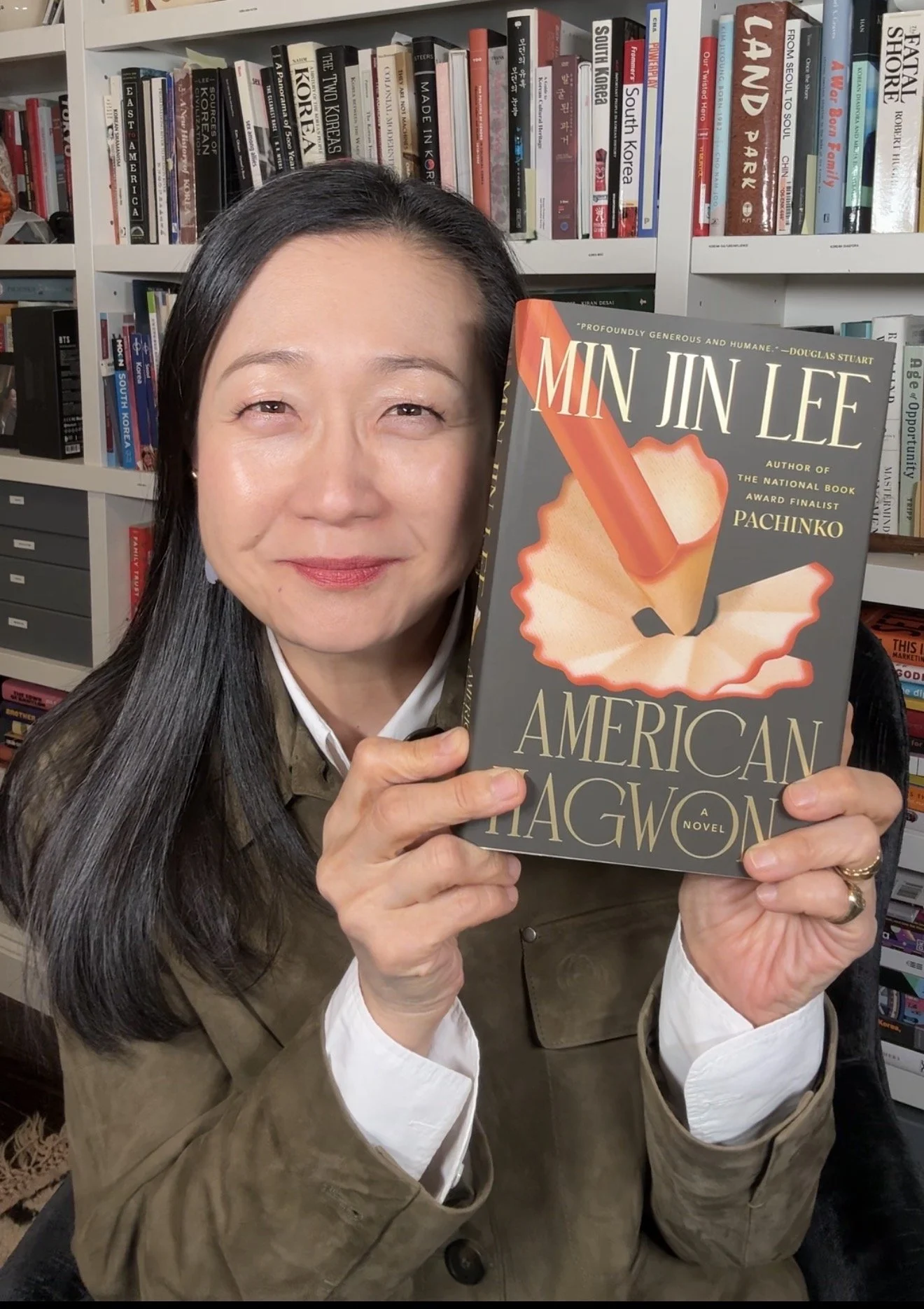
Today on The Stacks, we’re joined by National Book Award finalist, New York State Author Laureate, and best-selling author, Min Jin Lee, to talk about her newest book, American Hagwon. In this sweeping novel, a Korean family is forced to relocate and rebuild after their middle-class life is upended by the 1997 Asian financial crisis. Lee shares how she uses real-life interviews in her fiction, her thoughts on the importance of education, and her approach to remaining hopeful in moments of despair.
Our book club pick for October is Last Chance Live! by Helena Haywoode Henry. We will discuss the book with Jess Lee on Wednesday, October 28th.
LISTEN NOW
Apple Podcasts | Spotify | Google Podcasts | Overcast | Stitcher | Transcript
Everything we talk about on today’s episode can be found below in the show notes and on Bookshop.org and Amazon.
American Hagwon by Min Jin Lee
Dancing with the Stars (ABC)
University of California, Berkeley (Berkeley, CA)
Free Food for Millionaires by Min Jin Lee
Pachinko by Min Jin Lee
“Ep. 291 I’ve Never Read for Pleasure with Mitchell S. Jackson” (The Stacks)
To Kill a Mockingbird by Harper Lee
The Transit of Venus by Shirley Hazzard
Scrivener (app)
“The Short Stacks 28: Jacqueline Woodson//Red at the Bone” (The Stacks)
Fat Ham by James Ijames
Much Ado About Nothing by William Shakespeare
“Ep. 168 Embodying History with Clint Smith” (The Stacks)
Educated by Tara Westover
Jude the Obscure by Thomas Hardy
To support The Stacks and find out more from this week’s sponsors, click here.
Connect with Min Jin Lee: Website | Instagram | Threads | Bluesky | X/Twitter
Connect with The Stacks: Instagram | Threads | Shop | Patreon | Goodreads | Substack | Youtube | Subscribe
To contribute to The Stacks, join The Stacks Pack, and get exclusive perks, check out our Patreon page. If you prefer to support the show with a one-time contribution, go to paypal.me/thestackspod.
The Stacks participates in affiliate programs. We receive a small commission when products are purchased through links on this website.
TRANSCRIPT
*Due to the nature of podcast advertising, these timestamps are not 100% accurate and will vary.
Min Jin Lee 0:00
The market itself is different than readers.
Traci Thomas 0:03
Yeah,
Min Jin Lee 0:04
readers are very special. Yeah, like they have very strong opinions. Yep, and you have to really respect the reader. And I think that marketing to these kind of firebrand, renegade, individualistic, opinionated people requires a great deal of respect and understanding of who they are, and I think very often you can't tell a person like, oh, because this person said this, this is true, and this is a reason why you have so many people who've walked away from reading.
Traci Thomas 0:36
Welcome to the Stacks, a podcast about books and the people who read them. I'm your host Traci Thomas, and today we are joined by National Book Award finalist and best-selling author Min Jin Lee to talk about her newest book, American Hagwon. In this sweeping novel, a Korean family is forced to relocate and rebuild after betrayal at the onset of the 1997 Asian financial crisis that upends their comfortable middle class life. Today we talk about Min's diasporic Korean novels, how she researches, and why she wanted to set her book in Korea, Australia, and the United States. Our book club pick for October is Last Chance Live by Helena Haywood Henry. We will be discussing the book with Jess Lee on Wednesday, october 28. If you like this podcast and you want even more bookish content, please consider joining our community, the Stacks Pack, on Patreon and subscribing to my newsletter, Unstacked on Substack. An easy way to think of these places is that Patreon is the space for community. That's where we do our book club. That's where we talk on our Discord. And over on Substack, that's a place to talk about culture, you're going to find my hot takes on books. You're going to hear some literary gossip. You're going to get the latest news and pop culture. And in both places, you're going to have access to monthly bonus episodes. Your support makes it possible for me to make the stacks free to all every single week. So if you like this show, please consider joining the Stacks Pack at Patreon.com/slash The Stacks and subscribing to my newsletter Unstacked at Traci thomas.substack.com. Now it's time for my conversation with Min Jin Lee.
Min Jin Lee 2:14
How are you?
Traci Thomas 2:15
I'm so good. How are you?
Min Jin Lee 2:17
I'm okay. I just got a I got an epidural for my sciatica yesterday. Oh, it's a whole new experience. I'm like, am I okay, or is this anyway? So I'm, I feel, I'm having this like sort of like really in my body experience because sometimes I can be really out of my body.
Traci Thomas 2:33
Yeah. Well, let's see. Let's see this.
Min Jin Lee 2:36
I probably just overshared. I'm sorry.
Traci Thomas 2:37
No, I love. Do you know my most important thing about myself is that I love information and gossip. I'm like, oh, I have an inside story that no one else has.
Min Jin Lee 2:47
I wish I was more sexy.
Traci Thomas 2:48
Yeah, it's it's so good. It's like, oh, you don't know about epidurals. I've had I had an epidural when I had my child. Children.
Min Jin Lee 2:55
How old is your baby?
Traci Thomas 2:56
Well, I have twins, so I should have said children. I don't know why I said child. Hopefully, they don't ever hear this. They're six. They'll be seven this year. Yeah
Min Jin Lee 3:06
My son is 28.
Traci Thomas 3:08
Oh my gosh, that's a full grown adult.
Min Jin Lee 3:11
Kinda.
Traci Thomas 3:12
Does it ever feel like that? I'm like asking for a future version of myself. Do you still feel all the things of like responsibility, is everything okay?
Min Jin Lee 3:24
I really thought that I'd be done. You know, yeah. At a certain point, I'm not done.
Traci Thomas 3:28
You're not done. This is my fear. Are you? Do you feel? Well, let me introduce you before we continue. But I'm gonna follow. Oh, sorry. I'm sorry. Everybody, this is Minjin Lee. This is Minjin Lee. She's on The Stacks today. We just dove in because like that's what we're gonna do today. But for those of you who are not familiar with her, the newest book, her newest book is called American Hagwon. We're gonna talk about that. But first, I wanna I was had a question about parenting, and now I flew out of my brain. Oh, I was gonna ask you: Are you the kind of person who like are you controlling? Like, are you a person who needs to know everything and like be? No, you don't have that because that's what I have, and that's why I'm worried that I'm going to be a really bad adult mom.
Min Jin Lee 4:09
I'm not controlling, but I like knowing things. But and also, I'm very good at guessing.
Traci Thomas 4:16
Ooh, what makes you good at guessing?
Min Jin Lee 4:19
I don't know. Like, but I'm maybe it's because I have so much. I have a really big dataset of people.
Traci Thomas 4:27
Yeah,
Min Jin Lee 4:28
so I'm fairly good at predicting people's behavior. It's like, for example, when I'm teaching, my students will ask me a question, and I'll go and I'll get like I'll ask two or three questions that don't seem very related, and I'll go, "Oh, that's going to happen, and you're in chapter two, or you're in chapter 12,
Traci Thomas 4:51
of of their lives or of their actual work.
Min Jin Lee 4:54
It could be of their lives,
Traci Thomas 4:56
okay,
Min Jin Lee 4:56
or it could be of that incident,
Traci Thomas 4:59
okay, because
Min Jin Lee 4:59
it could." Be that story of let's say a job search. It could be a story of a failed relationship, and they'll go like, "You're kind of like you're not at the crisis point. It's coming. You're going to be fine. So I'm a little bit like that. So I don't know if that's controlling. It's definitely. I I have a bit of the. I can't stop myself. So if someone asks me for advice. I will say, I think these two things are going to happen. You are going to have to decide which one you want.
Traci Thomas 5:26
It's like it's not controlling. It almost sounds like you are like constantly like organizing and recalibrating. It kind of sounds like it's like you are getting the information and you are like, oh, this is where this goes, or like this is where this belongs.
Min Jin Lee 5:39
Also, I want to protect them? Like I don't want people to get hurt. Like I that I have. I really, I don't. I don't want my students to get hurt. I don't want anyone to get hurt. I really have that. Like, oh, if like if I could just kind of like protect you and put like wool around you and make sure that you don't get your feelings hurt or physically hurt.
Traci Thomas 5:59
Do you feel that way about your characters,
Min Jin Lee 6:01
no,
Traci Thomas 6:02
no, you don't care. You're like
Min Jin Lee 6:04
No, you can't because then you'll have a shitty book.
Traci Thomas 6:06
Yeah, yeah. I mean, I think that's right. But like, you know, some people do feel very precious about their characters and like are very, you know, they have rules about how how much pain or how far they will what they will do to their characters,
Min Jin Lee 6:21
well, I write social novels, so they have to be realistic, and I will let happen what can happen to characters like this.
Traci Thomas 6:31
Yeah,
Min Jin Lee 6:31
but if I protected all of my characters, then you would have a terrible reading experience. Yeah,
Traci Thomas 6:35
nothing would happen.
Min Jin Lee 6:37
Nothing would happen. It would be Christmas every day, and people get presents.
Traci Thomas 6:42
Yeah, people be happy. They go get ice cream. Since we're going to talk about your book today, we dove in. But I always like to kind of start ish around just like in 30 seconds or so. Can you just tell people about American Hagwon?
Min Jin Lee 6:54
Sure. It's set between 1992, and 2007. So it's about a family that's literally within the parentheses of two global financial crises: the Asian financial crisis and the U.S. financial crisis of 2008. So that experience really affects this one family and all the people who are around them. It's about this one family, the Coes. They go from Seoul to Sydney to Orange County, California, and they have three kids, and they're trying to raise them. And it's also about humiliation and loss of status, and trying to educate your family. And it's about how do you live a wise life.
Traci Thomas 7:34
Yeah. Can you just tell people? Because I'm sure there's listeners who are like, What's a hagwon? Can you tell people what that
Min Jin Lee 7:41
is? Yeah, a hagwon is a learning center. So in Korea, if you want to learn how to tap dance, or become a gourmet chef, or learn about wine, or if you want to learn piano, or become a police officer and you want to take the exam to become a police officer, you go to a learning center, and that learning center is called a hagwon. So it would be misleading for people to think that a hagwon is only a cram school because it's not just a cram school; it's for anything that you want to learn outside of traditional school.
Traci Thomas 8:11
Do we have learning centers in the United States?
Min Jin Lee 8:14
We have tons of them.
Traci Thomas 8:15
I should never think of them. Like Kumon, Kumon
Min Jin Lee 8:18
is a learning center. It's okay. It's a hogwan. Kumon is a hogwan. Princeton Review, Stanley Kaplan. So if you want to become a lawyer, you take Barbry, the MCATs. You'll have another kind of hagwon.
Traci Thomas 8:29
Okay, so ours are more around like like these tests or whatever.
Min Jin Lee 8:34
It's exactly the same thing. It is. So for example, like let's say you want to become a ballroom dancer.
Traci Thomas 8:40
I do.
Min Jin Lee 8:42
Right, of course.
Traci Thomas 8:43
I just was going to go on Dancing with the Stars. Is there another way?
Min Jin Lee 8:46
You know, I could totally see you do that. Then you would go to a ballroom dancing hung on.
Traci Thomas 8:54
Got it. Okay, great. Where did you come up with the idea for this book? I know that you're sort of working on this Korean diaspora quartet-is that your phrase, or did someone else come up with that?
Min Jin Lee 9:07
No, the diaspora quartet is definitely my phrase.
Traci Thomas 9:09
Okay
Min Jin Lee 9:10
I've been told that it can also be called a tetralogy.
Traci Thomas 9:12
Yes, that's another word. I think quartet is better.
Min Jin Lee 9:16
Quartet, I think so too.
Traci Thomas 9:18
Tetralogy feels too like, and I feel like I know it has, yeah, it has like a shimmy to it. I don't know. Where did you come up with the idea for this story? Why did you want to take your characters around the world in this one?
Min Jin Lee 9:31
What happened was that I was interviewing 1000s of Koreans around the world, and each person would talk about their educational path and what they really thought was important. And I thought, okay, that's fine, that's fine. But then it kept on coming over and over and over again, and people had very strong opinions about it. It wasn't neutral. It wasn't like they were saying, "Oh, I love education. They were kind of like saying, "Oh, I hate education. You're kind of going, "All right. And then I thought, okay, well, if I had to think about the most important thematic value. To Koreans, I was like, "Oh, it's education. So I'm going to write my education novel. So this became my education novel in relationship to the fact that the Koreans have experienced diaspora. Now, the other thing that I wanted to really explore is that I think that diaspora is a modern condition for you and me. So we could be living in an alleged democracy of America, and we could be living in an advanced economy like America, and yet diaspora becomes a permanent condition because we have environmental diaspora now, we have technological diaspora, we have employment diaspora, we have educational diaspora within this country, and this is happening globally. So I study the movement of bodies, the movement of borders, and I just happen to focus on Koreans.
Traci Thomas 10:50
I feel like this is-I mean, as I was reading the book, I was thinking obviously so much about education, and also like a book about education as an American in this moment, where education just feels like under attack in so many ways, like we don't pay our teachers here, like kids can't read, everybody wants to get a charter school voucher now, but what about homeschooling? I just feel like education is such a terrifying world in this country right now, so I'm wondering how you were thinking and feeling about education as you're writing about education in this moment, where the news is like scary education stuff.
Min Jin Lee 11:40
I'm really glad you brought it up because I think that it's the one topic that we don't talk about in this country as a nation. Yeah. So if we purport to care about children, we don't want to talk about education because it's controversial. Because we don't want to blame anybody. Because we don't want to compete. We don't actually want to know what's there. Right. We don't want to assess our children to see well what do they need because an assessment is really about what do you need, how can I help you rather than how do we stack you up against other people.
Traci Thomas 12:11
Right, right, right, right.
Min Jin Lee 12:12
That must happen, and that discussion is not happening because we're afraid.
Traci Thomas 12:18
Right,
Min Jin Lee 12:19
and so I feel very upset about this because I see young people right now really, really struggling. And you know what happens if we don't talk about it as a nation, as a state, as a city, and also as a family?
Traci Thomas 12:34
Yeah,
Min Jin Lee 12:34
they blame themselves.
Traci Thomas 12:35
Sure,
Min Jin Lee 12:36
kids always blame themselves.
Traci Thomas 12:38
Sure,
Min Jin Lee 12:39
and it makes me so angry because I look at these precious young people and I go, this isn't your fault. The fact that you live in a neighborhood where your school is tied to taxes,
Traci Thomas 12:49
right,
Min Jin Lee 12:50
and therefore you may get extra or you get nothing,
Traci Thomas 12:54
right? Because that's
Min Jin Lee 12:55
what's happening in this country. It's like some kids get extra, and other kids get nothing. And I'm talking about public schools. I'm not even talking about homeschooling or even private. I'm just talking about like whatever the base minimum that we, as a nation, and as also as a country, have decided we're going to say you have to go to school.
Traci Thomas 13:13
Yeah,
Min Jin Lee 13:14
right.
Traci Thomas 13:14
Like I said at the beginning, I've got school age kids. My kids are in first grade, and we're at public school. And I live in Los Angeles, which is the, I believe, the largest or second largest school district in the country, and it is wild. It is wild to see how all of these schools have the same rules, and you go into the different schools, and they're so vastly different: the student population, the economic, the class, and it's like what works for this school in the Pacific Palisades is just-it's not possible that that's what's going to work for a school in Koreatown or a school in South Central or a school in Hollywood. And like we are just-it's crazy. I-I'm stunned that any teachers are successful and that any students learn anything like it? Just feels like that happens almost by accident, or like in spite of the system we have in place. Because to your point, we're not really talking about it. We talk about the problems, but we don't really talk about like what is needed and how it feels, how these schools feel to these kids,
Min Jin Lee 14:21
and also, do we really care, right? And I, and I, and I say that, and I don't want to get in trouble for it, but at the same time, I think I we have to risk being judged, because if you really care about something, you spend time on
Traci Thomas 14:37
yeah, yeah,
Min Jin Lee 14:38
right, yeah, and the application of the rules, as you just said, is wildly different, right? And it's actually, in terms of application, is it even practicable? Practicable, like, can it be done when you have this much money and if you have this much resistance? Like, I talked to a superintendent who was talking about how her kids come into school hungry so she said, "Well, I have to give them breakfast."
Traci Thomas 15:04
Yeah,
Min Jin Lee 15:04
and there are people who kind of say, "Well, no, that's not our job. It's not our job to feed children. But she's saying, "Well, no, it's my job to make sure that the kids can learn. If they're hungry, they can't learn. And you're going like, "Fair statement."
Traci Thomas 15:16
Yeah,
Min Jin Lee 15:17
but we are actually making kids feel ashamed if they can't pay for their food anymore. I mean, the children are coming into schools without clothing. This is the wealthiest country in the world.
Traci Thomas 15:28
I know.
Min Jin Lee 15:29
So all of it, it's very upsetting. But I think so
Traci Thomas 15:32
upsetting
Min Jin Lee 15:33
as a as a person who writes social novels, like this is a problem. And it may look like I'm writing about Korea, and I am. But I'm what I'm really saying is, can we look at all the different things, and can we stop getting sidetracked by the red herrings? There's so many red herrings in this discussion, rather than just talking about what does my kid need, what does my neighbor's kid need? Because if we only focus on our own kids, we're gonna get nowhere.
Traci Thomas 15:56
Yeah, it's just it's so frustrating. So I'm from California. My mom and my aunt and my uncle and my other aunt all went to UC Berkeley in the '70s. And I remember when I was in high school 25 years ago, my mom talking about like how easy it was, you know, to go to Cal. Like you could go to Cal, you could get in, you could pay for it compared to what you know. I was walking into in I started college in 2004, didn't go to Cal, and then as I'm reading this book, and it's sort of like because of when it's set, it's the '90s, and it's sort of this era where it does sort of switch from like the Cal and state schools being accessible to California students, and education being something that like America was still like kind of good at in the 70s and 80s. And then this book is sort of set in this moment where everything changes. Were were you? I know you said it between these two financial crises, but were you anticipating that moment in education when you picked the setting at all for the book, or was that almost yeah?
Min Jin Lee 17:03
And also, the financial crises and the educational crises are related. They're related because now, as money becomes more scarce and economic inequality becomes more grave and more salient to all of us, people who are in the middle class are terrified of losing their economic status, and also not as like a something, not because they want to show off, but because they just want to survive. Everything costs so much money, and therefore they're thinking, well, if I'm going to have these education dollars for my kid, what kind of education do I want to give to my kid? And then people start putting more money into these children, in the hopes that if they're going to pay $400,000 to send them to a private college or a private university, not to mention if you borrow the $400,000, you're really paying more a lot because of the cost of that interest in the lifetime of the loan. So now you're not thinking about education; you're thinking about an investment.
Traci Thomas 18:10
Yeah,
Min Jin Lee 18:11
and that discussion is really heavy on the hearts of parents.
Traci Thomas 18:15
Yeah, and this your book gets at it so well of like the hope, right? Like this is a book about hope. I wouldn't necessarily, I wouldn't say like this is a like a hopeful book, but this is a book about our hopes. Whether as as children who hope to sort of make their parents feel proud, as parents who hope that their children don't have to do the things that they have to do, the hope that you have for yourself as a student when you go into a college or university or or not, you know, like, and I'm wondering, the word hope feels like so hard to even say in 2026, you know. So I'm wondering how you think about hope.
Min Jin Lee 19:00
I think hope comes from knowing your values, because those values can be a constant. Like, if I will be an ethical person, no matter what the situation is, that's a constant, and I can hope in that. I I don't I can't predict anybody else's behavior, but you could predict mine if I say this is what I'm going to do. This is what I'm going to do, and I think that what's happening right now is that we're in an era where we don't have truth.
Traci Thomas 19:31
Yeah,
Min Jin Lee 19:32
we don't believe in truth anymore. We'd also think that there's a lot of corruption and grift, and in this era of grift, corruption, and a lack of truth, and also that we don't trust legacy institutions anymore, because so many institutions have become corrupted.
Traci Thomas 19:50
Yeah.
Min Jin Lee 19:51
So then, I think individuals who have a sense of values of what they really need, they have to enact them in a micro level. Interpersonally, and that's all we can do. And actually, by looking at history for a long time, I can say that you can have terrible things happen in a larger level, but people survive if interpersonally we transact all of our behavior With integrity,
Traci Thomas 20:22
yeah,
Min Jin Lee 20:23
and I hope in that. I really hope in that because I have the data set for that too. In terms of history, a lot of us have survived when we shouldn't have,
Traci Thomas 20:31
yeah,
Min Jin Lee 20:32
and it's because some of us were behaving with some of our ancestors were behaving with decency.
Traci Thomas 20:41
Wow, decency! Never heard of it. How about that? Imagine people behaving with decency. I know it does not compute. How did you pick the places in the book? How did you decide on Seoul, Orange County, and Sydney?
Min Jin Lee 20:58
Well, Sydney was really important because I visited Australia four times for this book.
Traci Thomas 21:04
No, you did.
Min Jin Lee 21:04
Yeah
Traci Thomas 21:06
Had you been before?
Min Jin Lee 21:07
Oh, yeah. And when I was in Australia and I was doing my research, there they had programs in the laws that were so attractive to me and to all of us that can be enacted. Like they have nationalized healthcare. Wow, how about that? They have mandatory. They have mandatory voting. Everybody has to vote. Everybody, not. It's not elective. It's you have to vote. And then also when you vote, they have this thing called the sausage sausage sizzle. So people actually have fun. It's like you have the day off, and you go vote, and you hang out with your friends, and you have a sausage sausage sizzle, which is actually hard to say.
Traci Thomas 21:49
You don't like go home and sit in front of your TV and cry with your friends, like because like that's been my last election days.
Min Jin Lee 21:55
I hear you, Traci, and I see you. And then you also have this thing called HECS, H E C S, and it's a loan forgiveness program as well as a loan kind of. It's a really humane way to pay back your student loans, so that you have HECS, and HECS is amazing. So if you talk to the average person, who the average person, not the rich person, the average person in Australia who went to college or university who might have gone to the best ones in the entire country. Nobody stresses about their student loans. They're like, "Oh, it's hecs. I'll pay it. So it makes even like going to Berkeley or UCLA where you have a reasonable tuition, although it's gotten pretty high, It's even less than that.
Traci Thomas 22:41
Wow!
Min Jin Lee 22:42
So they have hecs, and they also have something called TAFE, T-A-F-E, and these TAFE schools are for people who want to learn how to do things like become a hairdresser, an auto mechanic, or air conditioning repair person, and they have a built-in mentorship, and you can go to school for almost nothing. I think that's amazing.
Traci Thomas 23:03
Yeah that is amazing. Yeah, yeah. So Australia got programs. So those programs are what wanted what made you want to get Australia the book, like to touch on that stuff. And then what about Orange County?
Min Jin Lee 23:16
Oh, you know, it's really funny. California is where you have the most amount of Korean Americans, and LA Koreans and Orange County Koreans are different. And it is through exploring those differences that I thought, oh, you're going to have the most extreme stories in Orange County, and that's where I found them, because I found this concentration, an enormous disparity among the immigration population of what education means to them, and therefore I was able to have two different kinds of Hagwons.
Traci Thomas 23:51
And when you are doing, or like as you're doing your research and you're interviewing people, what sort of things are you asking? Like, what sort of conversations are you having in your research?
Min Jin Lee 24:02
So, for example, and if I can use you as an example,
Traci Thomas 24:04
you can.
Min Jin Lee 24:05
You're a mom of two kids, right? So, like, let's say I was going to write about a journalist who writes about books, who talks about books, and has her own show, and has
Traci Thomas 24:19
Sounds like me,
Min Jin Lee 24:19
right? And who has two kids, and is from California, and actually, you're three generations California or four?
Traci Thomas 24:27
No, I'm second. My mom was born here. My dad was born in Louisiana.
Min Jin Lee 24:32
Right, so two generations of Californians, and I wanted to understand what a young mother who's working and is raising twins is experiencing in terms of let's say picking a middle school, which is around the corner for you. I would not only have a like we would probably have coffee or lunch if you wanted to, if you had the time, and then if our conversation went well and if you gave me permission, I. Would probably shadow you to the extent that you felt comfortable, and then it is through that experience that I would get the kind of. It's not just the data that I'm looking for or the facts. I'm really looking for, like, gosh, is this joyful? Is this stressful for her to have this experience at this moment in time? Because I really need the emotions.
Traci Thomas 25:21
Yeah,
Min Jin Lee 25:21
that's actually much more important to me of how people face things, and very often I found that people who have a really hard time can still laugh a lot.
Traci Thomas 25:30
Yeah,
Min Jin Lee 25:31
and also I can see what are your strategies in terms of how you survive this absurd thing about finding middle school for twins.
Traci Thomas 25:39
Yeah,
Min Jin Lee 25:40
does that make sense?
Traci Thomas 25:41
It does.
Min Jin Lee 25:42
It's very respectful. Like I have had a really positive experience with every single person I've done this with, and in that, and then afterwards, I gather all this information, and then have to imagine a narrative because facts facts don't make a story.
Traci Thomas 25:56
Yeah, this is so interesting to hear because one of my questions I had for you is about how you sort of keep everyone in this book straight. You have so many people, but hearing that that sort of part of your process, it makes a lot of sense that you'd be able to because they're all the emotional truths of these characters are coming from something that you've witnessed or experienced in some ways.
Min Jin Lee 26:21
Oh, absolutely. And also, if I spend, let's say, even an afternoon with you, and then we talk about, let's say, how you drink your coffee, or that you don't drink your coffee,
Traci Thomas 26:32
yeah,
Min Jin Lee 26:33
that little thing will sort of tell me about what you care about. Like if you said it's cold brew or nothing, you know. I have to make it myself. Or you said, you know what? Like whatever is in the house is what I drink.
Traci Thomas 26:49
Yeah.
Min Jin Lee 26:49
Like if it's passed to me, like I'm just gonna chug it. All those things will start to tell me about your personality, and your personality will sort of predict your behavior.
Traci Thomas 27:00
And have you always used this sort of technique to find your stories, like these sort of this interviewing, shadowing?
Min Jin Lee 27:07
I only I think I started doing it just because I was really insecure, because I write about work and I write about society, and there are all these things I've never done. So you could read about it, but it's really not the same as really just being with people who are doing the work, because in my mind I might think like, gosh, being a garbage man must be really difficult. A sanitation worker. When I was growing up, you call them garbage men because they're mostly men. And then once you meet a sanitation worker, you're going, oh, it's not at all what I thought. Like there are all these different rules, and they have really great hours, and their pay is amazing. Like I had no idea, and so I have really learned a lot more about knocking on doors and asking people how are things going.
Traci Thomas 27:57
I love I love this so much. This is like you know I love nonfiction, so this is sort of like pretty close to nonfiction for me. Like we are in that space.
Min Jin Lee 28:09
Well, I love nonfiction. I read a lot of nonfiction, but I think that when you're the novel part is the imagination part is what takes me the longer period of time because once I figure out have a control on the what the real problems are, then making up the fiction part of the story is a whole other thing, and that's taken me a really long time. I mean, I I I produce a book. This is so embarrassing. One every 10 years.
Traci Thomas 28:38
That's great. I've produced zero in 40 years, so you're beating me.
Min Jin Lee 28:42
Well, you're only 40. Well, well, I I published my first book when I was close to 40.
Traci Thomas 28:46
Okay. Well, I actually don't want to write a book, but I'm just saying a lot of people have lived a lot of life and not published any books. Wait, I actually do want to talk about this, but I'm gonna we're gonna take a quick break and come right back. Okay, we're back. I I want to talk about the imagination part because this is because you know, Min, there is a world in which you could write nonfiction, but you have chosen to write novels. So, if the imagination part is hard for you, what is it about it that is calling you to still want to figure it out to write it in that way, as opposed to writing, you know, more like day in the life nonfiction books where you write about a topic or an issue and you interview five families and you follow five families through this issue? Like, why do you want to turn it into a novel?
Min Jin Lee 29:40
Oh, actually, the imagination part is easy for me. I'm sorry if I if I was unclear. I'm sure I was unclear. The imagination part is the easy part. It's the craft that's difficult.
Traci Thomas 29:49
Talk about it.
Min Jin Lee 29:50
So the craft of novel writing is really hard.
Traci Thomas 29:54
Yeah,
Min Jin Lee 29:55
because what I'm trying to do is to make it so interesting that you want to stay with me. For 15 to 20 hours.
Traci Thomas 30:02
Yeah,
Min Jin Lee 30:02
that's a lot. That's a tall order, especially today.
Traci Thomas 30:05
Yeah,
Min Jin Lee 30:06
and I think learning how to write fiction is golly. And there's really no other way to write a novel. Learn how to write a novel except just to write more novels.
Traci Thomas 30:17
Yeah.
Min Jin Lee 30:18
So it's the gathering of the information, it's the imagination part which I really like, and I really enjoy that part. And in terms of the craft of producing a high level of fiction, for me, that's the hard part. I guess it's putting it all together.
Traci Thomas 30:34
All together.
Min Jin Lee 30:35
I'm not that interested in writing nonfiction. It's a very different. It's a very, very, very different story. Although now I think narrative nonfiction has used a lot of fictional elements,
Traci Thomas 30:46
yeah,
Min Jin Lee 30:47
and that's what's made it more propulsive. But that hasn't ever been really my calling. I don't think.
Traci Thomas 30:53
Can we talk a little bit about? I feel like so often when I talk to authors, and also just in general, a lot of artists. It's like you've got your debut, you've got your sophomore thing, and now you have your, I guess, junior thing, right? Like this is your third. This is your third thing, and I'm curious. I'm just curious about what that's been like for you, both as like what you feel like you've learned from Pachinko to this, like what's changed for you as a writer, maybe what surprised you about this third book as your data set as a writer as a novelist sort of expands.
Min Jin Lee 31:30
Well, it took me 12 years to publish my first book. My second novel really took almost 30 years because I started in college. So it's a book that I abandoned before I published my first book. To Pachinka was called Motherland before that, and then my third book is American Hagwon, and that took almost 10 years. What did I learn from each publication? I became more confident. I feel like I've earned my stripes. Yeah, I feel like I also know what I'm doing. Like, I definitely feel like I know what I'm doing. I I understand the demands of novel writing a a bit better, and that's really nice. Also, I have so much compassion for people who do this.
Traci Thomas 32:18
Yeah,
Min Jin Lee 32:18
like I I just can't believe we're all this crazy
Traci Thomas 32:25
like the same kind of crazy.
Min Jin Lee 32:27
Yeah, we're all the same kind of crazy. Like I really have so much love and respect from my fellow fiction writers. Actually, anybody who's working on a book, I'm like, I'm with you. We are in solidarity. We are fighting against so many forces which want us to stop.
Traci Thomas 32:45
Yeah, yeah. So when, do you do you know Mitchell Jackson? Do you know?
Min Jin Lee 32:50
Sure, Mitchell and I are going to do an event in Portland.
Traci Thomas 32:53
Okay. Well, I love Mitch, and he came on the show, and he's so great. And one of the things he talked about,
Min Jin Lee 32:57
I love him.
Traci Thomas 32:58
Yeah, he's so great. He talked about being a writer versus being an author, and that being a writer is the day to day the writing of the thing, and that being the author is more of a public facing role. It is about promotion. It is about branding. It is about showing up, making friends, doing author talks, all of those things. How do you, if we use his framework, how do you feel about being a writer and being an author?
Min Jin Lee 33:27
Well, Mitch is so smart, and I think that he's being really honest, and I think that it's a service to tell the truth about this.
Traci Thomas 33:35
Yeah.
Min Jin Lee 33:35
So I really want to co-sign with whatever Mitch has to say. It is really. difficult to be an author. It's actually harder to be an author if you're really a writer because writers, we're kind of dorks.
Traci Thomas 33:50
Yeah,
Min Jin Lee 33:51
we're not really designed. Most of us, I mean, Mitch aside, you know, we have the the face for radio. Like we don't have this sort of like I didn't I didn't become a writer to be public facing.
Traci Thomas 34:05
Right,
Min Jin Lee 34:06
I became a writer because I wanted to tell these stories that I thought were really important to me, and that's what's gonna keep making me write books. The author part is a whole different job. It's almost a different job for a different person. Yeah, so I think Mitch is right. Like you almost have to excavate this part of you that you're not comfortable being. And I have to give talks a lot, and I do, and I have given a lot of these kinds of things, and they're really hard for me. I'm not. I can do them. I've given talks in front of 20,000 people, and I can do it, but they require so much effort.
Traci Thomas 34:50
Yeah,
Min Jin Lee 34:50
and it's a very, it's a really different thing because when you give a book, the reader is doing so much work. Ideally, work that gives them pleasure. But the book is an is an inert thing unless the reader opens it and activates it in her imagination. She is the executive producer and the star and the setting designer, the casting director and lighting and sound. She's doing all of that. Actually, you're putting it all in there, but she actually has to activate it. So, and I'm fully aware of the magic that we're doing together. Speaking in public is a very different thing. Yeah, very different, and I'm fully aware of that as well. So, in terms of being an author, there are different slices of that job too, in the marketing business as well as social media. All of it. I'm 57 years old, and I've had to learn how to do all these things, and I've approached it with a kind of seriousness because I wasn't going to have it handed to me. And I don't know. I mean, I think it's unfair.
Traci Thomas 35:58
Yeah,
Min Jin Lee 35:58
it's it's really unfair because it isn't for everybody. Not everybody can do this, and not everybody should do this. Sometimes like the best writers shouldn't be giving readings. Yeah, and doesn't mean that their books aren't amazing. So I kind of wonder about this economy of books-it's a weird, it's a weird world.
Traci Thomas 36:24
It is. I mean, I I have a background in theater, and so I think a lot about audience. It's one of my favorite things to think about and to talk about. And when I started doing this podcast and started talking to authors, and and I came into this work as just a reader, right? Like I did not have a background. I was not an English major. I did not know really anything about writing. I just knew that I liked books, and as I've learned over the last now eight and a half years, it's a very weird industry because authors are sort of asked to be the star, but also they're not necessarily. That's not necessarily what they've asked for, you know. Like a like an actor, it's like you're the star. It's like yes, that's what I want to be. But authors, they don't they don't have that same like relationship to their audience that a lot of other artists have, and so I I have been fascinated, and when Mitch said that about writer versus author, it did really click in my brain because I was like, yes. And and he talked a little bit about how it's really hard for him to be a writer when he is being an author. So like when he has a book come out, it's hard for him to go home and write. Like he's like, I don't do a lot of writing in that time, and I I've heard other authors say they have to go back and write, especially like when they're on book tour every night. They try to like write a little bit of something to stay like grounded in their writer self, and so I don't know. I've just found that whole sort of idea really interesting to me.
Min Jin Lee 37:57
Well, I think that it is interesting because there's a deceptiveness, to this. I mean, it's relaxed logic. I think marketing a book. I think marketing a book and also respecting your design and respecting personalities and also the market itself is different than readers. a reader is a very different thing than a market. Like, for example, and I'll share some research that I've learned about. Like, for example, you can be a very famous person with a billion followers. I'm being hyperbolic, but it doesn't necessarily mean that your followers are readers. Like, readers are very special. Yeah, they're a very special category of people, and also readers are kind of like writers. They're kind of renegades. They don't want to be told what to do. Like they have very strong opinions.
Traci Thomas 38:52
Yep.
Min Jin Lee 38:52
And because they're creative people, readers are creative. Like because I just said to you earlier, they activate this inert book
Traci Thomas 39:00
yeah,
Min Jin Lee 39:02
they're like, well, we're kind of writing this story too, and the thing is, they are. If you're really honest about what readers do, then they have just as many opinions about this thing that they've made in their minds,
Traci Thomas 39:14
yeah,
Min Jin Lee 39:15
versus what an author has intended, yeah, and you have to really respect the reader, and I think that marketing to these kind of firebrand renegade individualistic opinionated people requires a great deal of respect and understanding of who they are. And I think very often you can't tell a person like, oh, because this person said this, this is true, and this is a reason why you have so many people who've walked away from reading.
Traci Thomas 39:40
Yeah,
Min Jin Lee 39:41
I get a lot of letters from people who say like I stopped reading and then I read this and I and I think thank you like thank you so much to going back to reading and now read these other books that you're gonna love because are great books and I'm not and I don't get a cut from it yeah I want you to read these books because when you love. Reading, you can grow so exponentially. It's such a powerful, beautiful thing, and we have forgotten about that magic.
Traci Thomas 40:11
Yeah, I'm a reader. I love readers. I love whenever anybody says anything nice about me and my people. But it is true. Like readers, you know, there are people who have huge social media followings in the world that I'm in, right? And sure, their books don't sell. And there's so many times where I will, you know, reach out to have someone on the show, and they'll be like, "Well, you know, your audience isn't big enough. And I'm like, "But you wrote a book, and my audience is 100% readers. It might not be a million trillion people, but every single person who listens to this podcast, they actually read books. A lot of them read more books than me. They care about books more than I do, and so I do think that like we are such a special this community that I get to be a part of is like so special because it's all readers and people who think about things and imagine things and are willing to defend these worlds they've created in their minds, right? Like I fight with people all the time. I'm like, no, you're wrong. That book was bad, and they're like, no, you're wrong. You didn't understand it. I'm like, I did understand it. Okay, I hated it anyway. And it's like such an exciting. It can be such an exciting and like activating place. And I I feel like sometimes the business of books forgets about that piece of books, like the reader. They forget about the reader sometimes
Min Jin Lee 41:29
and the reader's truth and the reader's intelligence. And I think that I get really upset. I get really upset when we talk down to readers because I'm a reader first.
Traci Thomas 41:38
Yeah,
Min Jin Lee 41:38
like I produce three books. Mostly I read. That's what I do. I wouldn't be a writer unless I wrote, like, unless I read and read and read and said, "Oh, I want to be part of the bookshelf. Like, and it sounds so completely nutty, but I thought, "Oh, I read, and these books are so important to me. I kind of wanted to be parked next to these other authors were dead, and I thought, oh, maybe if I write something really good, it'll last. Like that was my great vain wish in life. But I'm a reader, and I get really upset when people give recommendations of books that are really not books to be read; they're books to be admired, but they're not books to be loved, or they have a really narrow audience, and they don't say that. They're like, "This would be a really good book for this kind of person, right? And you're like, "That's kind of true, and yeah, I don't know. It makes me really the whole breaking down of literature and books and reading is very upsetting, especially because it is the foundation of education.
Traci Thomas 42:50
Yeah, yeah.
Min Jin Lee 42:51
right. Like you want your kids to be readers, right?
Traci Thomas 42:53
Yeah, of course. My gosh, yes. And anytime they like are like, I hate this. I'm like, okay, let me read to you. Like as soon as they get fresh, I just start reading to them, and then they're like, "Oh, I love it. Do you put? Do you did you just made me think of this? Do you shelve your own books on your bookcase? Like, is Pachinko on your bookshelf? And where do you put it? Are you alphabetical?
Min Jin Lee 43:14
Oh my books!
Traci Thomas 43:14
Yeah
Min Jin Lee 43:15
The ones that I wrote. I thought you meant like the books that I own.
Traci Thomas 43:19
Sorry, no, I mean the ones that you actually that have your name on spine?
Min Jin Lee 43:21
Sometimes when I forget, like you're right, because my my big fiction bookcase is downstairs. This is my office research bookcase.
Traci Thomas 43:30
Okay,
Min Jin Lee 43:32
so I think my two books are downstairs. They're usually next to Harper Lee, and it's actually I don't even like that book that much.
Traci Thomas 43:40
I do not like that book.
Min Jin Lee 43:41
Oh, you don't because I-it's an unpopular view. But my take is that book is very problematic.
Traci Thomas 43:47
I agree, and I just never-I could never figure out why everybody was so into Atticus. I could just never quite get there on him.
Min Jin Lee 43:55
I think it's because they like the idea of having the savior, right?
Traci Thomas 44:00
I guess.
Min Jin Lee 44:03
Like there's one good person in a a terrible situation, like there's one good white guy who's going to defend, and and I thought like, okay, well that's I don't know, it's ... a lot of people love that book.
Traci Thomas 44:13
So many people love that book.
Min Jin Lee 44:15
So many people love that book.
Traci Thomas 44:18
Yeah, how do you name your characters?
Min Jin Lee 44:20
That's my favorite part. I love naming characters.
Traci Thomas 44:23
You do,
Min Jin Lee 44:23
and they and when when I have the right name, like I can't change it. I can't change it. But there is a weird trick that I have to confess. That when my students do this, I always tell them to be careful that in a page, the reader's eye can't have characters' names that have too many similar, like first names, first letters. Like you can't have all the characters be M because the reader's brain can't process it. So, even though this really feels like a Mildred, yeah. If you have a Mavis, you can't do it. I'm like, please don't do that.
Traci Thomas 45:04
That's so funny. I have heard I've heard other people say that. Like sometimes they have they all of a sudden look up and like too many characters' names start with J.
Min Jin Lee 45:11
Yeah, and you're like, ah, rethink that.
Traci Thomas 45:14
What was the hardest part about writing this book, and what came easily for you?
Min Jin Lee 45:21
The hardest part was learning the educational systems of all the different countries, and also because in America every state is different.
Traci Thomas 45:28
Right,
Min Jin Lee 45:28
we don't have a nationalized standard, so that was really so awful because I had to learn all of it, and then I had to forget a lot of it because you don't. The reader doesn't want to know, but I have to know in order to like say the one single sentence, right? And that was annoying. And also, Australia, the United States, and Korea-they all have different school calendars.
Traci Thomas 45:53
Oh, that's right.
Min Jin Lee 45:55
So I had to figure that out. But the good thing about that experience is I-I had so much respect for people who move.
Traci Thomas 46:02
Gosh, I was thinking that so much reading this book. I was like, imagine moving this many times, and like, like, because there is a part early in the book where it's like the school year won't start till September or whatever. I think for DH, it's like you won't start till September, and I was like, yeah, duh. And then I was realizing I was like, "Oh, okay, maybe it doesn't start in September everywhere. But I really had a moment of like, "Yeah, we know it starts in September. It's the school year. And also, like, what ordinary moms have to figure out so much.
Min Jin Lee 46:37
I can't believe the burden that's on ordinary parents to figure out how to find a primary school, a middle school, a high school, especially if you don't have infinite resources or time. Like there's certain school districts you know where you kind of have to like park yourself and wait to get the application.
Traci Thomas 46:58
It's a whole thing
Min Jin Lee 46:59
if you don't make that one orientation, you're out. Like that stuff made me. It made me really upset, and it really made me admire people who actually go through this.
Traci Thomas 47:09
Yeah, my my technique as a mom has been, I have been able to identify the other mom who actually cares about this stuff, and I befriend her, and then I just say, "Hey, when are when are you going? Like, "Hey, do you know what time that is? And she'll be like, "Yes, you need to do it. I'm like, "Thank you. And I just like, it's like you know, it's like cheating. It's like finding the smart kid in class and being like, "Do you want to study the week before the final? That's what I do. I'm like, "I'm not gonna do it. I'm just gonna find out who actually cares about this at like back to school night and be like, oh my god, Yeah, give me your number, and then I just show up. Like, hey, what's the deadline? What do we need?
Min Jin Lee 47:48
Well, we have that alpha mom. Yeah, that alpha mom is really useful. And in Korea, if you don't, if you're not in a, if you're not in her good graces, your kid will not be included in the right study groups.
Traci Thomas 48:02
See,
Min Jin Lee 48:03
like I didn't know that because they don't have that generally in America, but in Korea, it's very accepted that the alpha mom of that group will determine the study group for those kids, and also will have all the numbers to the best hagwons and the best tutors for the different subjects, like because you can have a hagwon for like math, you can have a hagwon for chemistry, and you might be going to different ones just to get the best tutors. And some mom will know. So I learned all of that stuff, and it kind of scared me because I thought, what happens if you're not cool and popular, or the working moms who get shut out.
Traci Thomas 48:44
Yeah,
Min Jin Lee 48:45
yeah, yeah. The the mothers who work outside the home. That is.
Traci Thomas 48:48
Yeah, yeah. How do you like to write? How many hours a day in the home, out of the home, snacks and beverages, rituals?
Min Jin Lee 48:57
I don't write every day. I really admire people who do write every day.
Traci Thomas 49:03
Every author who doesn't write every day says some version of that. Like they say it, like I don't write every day, but like people who do, that's so amazing. Like I wish I could do it.
Min Jin Lee 49:10
Yeah, you know, you know the writer Shirley Hazzard. She's really famous for a book called The Transit of Venus.
Traci Thomas 49:17
Uh huh.
Min Jin Lee 49:18
So she's Australian and also British, but she was married to a really famous biographer of Flaubert.
Traci Thomas 49:29
Okay,
Min Jin Lee 49:30
I'm only mentioning this because Shirley Hazzard is kind of a like literary goddess, and her husband was considered a great biographer.
Traci Thomas 49:40
Okay
Min Jin Lee 49:41
I happened to take, I happened to get into a master class of hers at the 92nd Street Y. So it's like a $50 class, but you had to apply to get in, and it's probably a lottery. It wasn't based on performance. Like you just like I got picked, and I was like, I'm going to take this class. So I take the class and. She said she does not write every day because when the washing machine breaks down, she had to take care of it.
Traci Thomas 50:08
Yeah.
Min Jin Lee 50:08
So you have two writers, two different fields, but she felt like that was her duty, and I thought that was really interesting. Like maybe it's not fair, but very often when I was writing, mostly like I did most of the childcare, the cooking, the cleaning, because I didn't make any money because my husband had the health insurance and he was making the money. And now it's actually kind kind of reversed because he he's retired. But no, I can't I can't write every day.
Traci Thomas 50:39
Do you have snacks and beverages as part of your writing ritual, or any any rituals?
Min Jin Lee 50:45
I have snacks and beverages for everything.
Traci Thomas 50:48
Okay, tell me about them, please.
Min Jin Lee 50:50
If I met you on the street, Traci, yes, like I would have snacks and beverages in my tote bag, like not just for you, but for your kids.
Traci Thomas 50:58
Okay, like what are you carrying around? You know, snacks and beverages are the most important thing in the world to me. I have a book podcast, but I should have had a snacks and beverages podcast. I really screwed up when I did this. Talk to me,
Min Jin Lee 51:08
and I also have safety pins and band aids in my bag.
Traci Thomas 51:11
I also am a band aid person, and and what do you call it? Neosporin. I have neosporin in every single purse,
Min Jin Lee 51:18
right? Because you love your kids, yes, and you don't want to get infections? In terms of the rituals, I write on my computer. Oh, you know what? I I I do. That's kind of sort of interesting. Is I use something called Scrivener. It's a software.
Traci Thomas 51:30
Oh, I've heard of this.
Min Jin Lee 51:31
Very useful, and it organizes a lot of different things. So it helps the rewrite process be really useful. I don't get paid by Scrivener, but I must have sold quite a few units of software.
Traci Thomas 51:47
You should get paid by Scribner. Get you an affiliate code.
Min Jin Lee 51:50
I know I'm good. And what else do I do? I meditate. I meditate. I do this thing that Willa Cather taught me how to do. She's one of my favorite writers, and she read a chapter of the Bible before she writes fiction. So I do that, and now
Traci Thomas 52:10
how do you pick which chapter?
Min Jin Lee 52:12
No, I just read it sequentially.
Traci Thomas 52:13
Okay,
Min Jin Lee 52:14
so like even the boring parts. So I just read it, and then I I do my little meditation, and then I start my work.
Traci Thomas 52:22
Wow! I can I ask you about something totally unrelated to writing, which is that you host dinner parties, right?
Min Jin Lee 52:29
I do. You should come.
Traci Thomas 52:31
I would love to, but I want to hear a little bit about them because I feel like they're sort of famous. I I had the privilege of meeting Jacqueline Woodson this summer, and she talked about
Min Jin Lee 52:40
I love Jackie.
Traci Thomas 52:41
She's amazing. She did the show in 2019, and we'd never met in person until this summer, and it was so great. I just absolutely was like in love. But she talked about she also does dinner parties, and there's like a whole Brooklyn, New York writer community. You guys are eating together. How do you decide what you're cooking? Who comes to the dinners? I just I need to know about the parties.
Min Jin Lee 53:09
Oh, Mitch has been to my house.
Traci Thomas 53:11
Everybody, the who's who. I feel like it's a who's who.
Min Jin Lee 53:14
No, no, it's you know what it is. It's um, I do I do them maybe like once or twice a year. I don't do them very often, and I just invite people that I really like. Of course, I have a no assholes role. Everybody's super, super nice. And then once in a while, like it's been a while since I've done this. I'll have a Shakespeare party,
Traci Thomas 53:34
[Gasp] Min!
Min Jin Lee 53:36
I know, I know. That's why I said it because you are actually perfect for this. What I do is, I will buy like 35 copies of a play.
Traci Thomas 53:46
Oh my god!
Min Jin Lee 53:46
And we will have a ton of food, like parked somewhere. And I will get a friend of mine, like so, like the last one. You know, James Imes.
Traci Thomas 53:56
I don't.
Min Jin Lee 53:57
Oh, he wrote Fat Ham.
Traci Thomas 54:01
oh yeah yeah yeah yeah yeah the play yeah
Min Jin Lee 54:03
so he came by and I gave him the list the people who are at the party and he gave them roles and everybody reads
Traci Thomas 54:12
my god
Min Jin Lee 54:14
yeah so you should come
Traci Thomas 54:15
what's the last play did you do Hamlet last time is that why
Min Jin Lee 54:18
no we did much ado about nothing
Traci Thomas 54:20
okay oh my God. Yeah, I just I love Shakespeare. Yeah.
Min Jin Lee 54:24
So like you'd be perfect. So then what?
Traci Thomas 54:26
I I have to come. I have to come to the Shakespeare. Yeah.
Min Jin Lee 54:29
And I I don't do them very often because it requires more coordination and smart people like showing up and doing something. So then I don't like James. I'll tell James, hey, you know what? Traci's coming, and I'll give her give him a little bit background on you, and he'll be like, okay, well, she should do this.
Traci Thomas 54:49
Oh my god!
Min Jin Lee 54:50
So that was the last one, and but usually I'll get somebody who understands theater better than me.
Traci Thomas 54:55
Yeah,
Min Jin Lee 54:56
I'll just give them the list, a little bit of bio, and then. Your also your role changes with the scenes.
Traci Thomas 55:03
Got it.
Min Jin Lee 55:03
So, like in Act One, you might be Cordelia, but then in Act Three, you might be, you know, the Sentry or something.
Traci Thomas 55:09
I'm obsessed. I'm going to steal this idea. This is a brilliant idea.
Min Jin Lee 55:13
Oh no, you should do it. You know, you should do it because it makes everybody so happy. One, everybody pays attention because you don't know when you're going to read. Yeah, and then three, it's a great way to like. Well, you know, because you're a theater person, so plays are meant to be performed.
Traci Thomas 55:31
Yeah,
Min Jin Lee 55:32
and also it's and also I really like the idea of play. Like play is important for plays.
Traci Thomas 55:40
Yeah
Min Jin Lee 55:40
To play!
Traci Thomas 55:41
This is. I just. I'm like tingling. I'm so happy about this. Okay, I have like two more questions, three more questions for you. One is, I got to get you on record. I get everybody on record. What is a word you can never spell correctly on the first try?
Min Jin Lee 55:56
I'm a really good speller.
Traci Thomas 55:57
I was gonna say you have big
Min Jin Lee 55:59
like I'm kind of crazygood at spelling. Okay, this
Traci Thomas 56:00
you know Clint Smith. He was also famously a good speller, and it was very upsetting to me because when he told me about snacks, he also said his like favorite snack was a clementine, and I was like, "Get out of here, Clint! Not not you bringing fruit and good spelling to this podcast.
Min Jin Lee 56:15
I'm actually going to do my DC event with Clint.
Traci Thomas 56:18
Ah, dreamy, just the best. Okay, you're off the hook. You're officially a good speller. You're on the good speller list. There's like three of you in the history of this podcast who are.
Min Jin Lee 56:27
But also I have the anxiety of the immigrant because I came to America when I was seven, so I always feel like my grammar and my spelling have to be really good because otherwise people think I literally can't speak English because I often get told that I didn't write my books in English. People think that my books exist in translation. That's how racist people are. So
Traci Thomas 56:48
I see.
Min Jin Lee 56:49
There's a little. I have a little chip on my should
Traci Thomas 56:51
A chip on your shoulder. Yeah, yeah.
Min Jin Lee 56:52
It's really big. It's like an obelisk. Yeah. About this.
Traci Thomas 56:56
Okay. That's fair. This is book three. You're writing a quartet tetralogy. Do you know what book four is? Is it so far in the distance that you you've got 10 years before we see it? So like, who knows? Or do you have a plan for it? Can you tell us anything?
Min Jin Lee 57:14
It's called Marshall Plan.
Traci Thomas 57:16
Okay,
Min Jin Lee 57:17
and I've already started.
Traci Thomas 57:18
Okay,
Min Jin Lee 57:19
so maybe it won't be 10. Maybe it'll be like six.
Traci Thomas 57:22
Let's say nine and a half.
Min Jin Lee 57:24
I'll take it.
Traci Thomas 57:28
For people who read and love American Hagwon, what are some other books that you might recommend to them that are in conversation with it?
Min Jin Lee 57:37
You know, it's a wonderful memoir, Educated by Tara Westover.
Traci Thomas 57:41
I didn't love it.
Min Jin Lee 57:43
Oh yeah, okay. I loved it. I loved.
Traci Thomas 57:45
Most people did. That's an unpopular opinion.
Min Jin Lee 57:47
Okay, I loved it. Um, what's another book that's in conversation with it? Oh, Jude the Obscure by Thomas Hardy.
Traci Thomas 57:54
I've never read that
Min Jin Lee 57:56
That's okay. It was banned. It was actually a banned book. People try to burn it.
Traci Thomas 58:01
Oh,
Min Jin Lee 58:01
because it's it's very well. Actually, you're a parent, so you might get upset by it. There's a there's a very disturbing scene in Jude the Obscure.
Traci Thomas 58:08
I like disturbing. It's sort of my sort of my niche.
Min Jin Lee 58:12
Probably his darkest. It's probably one of his darkest books. Actually, all of his books are kind of dark, but I really like Thomas Hardy. He's a weird dude. Very weird dude.
Traci Thomas 58:20
Last one for you. If you could have one person, dead or alive, read American Hagwon, who would you want it to be?
Min Jin Lee 58:26
I think Mayor Mamdani
Traci Thomas 58:29
I love this.
Min Jin Lee 58:31
Yeah, you know why? Because I really want things to change.
Traci Thomas 58:35
Yeah,
Min Jin Lee 58:37
like I want. Like I live in Harlem and I live across the school, and I really want these babies to get what they deserve. Like they deserve it. They deserve a good education. That's I. I I really am happy to pay my tax dollars if it goes to kids.
Traci Thomas 58:52
Yeah, yeah. I love that so much. All right, everybody, you can get your copy of American Hagun now wherever you get your books. It is out in the world, Min. This was just such a delight. Thank you so much for coming on the show.
Min Jin Lee 59:07
You are a joy.
Traci Thomas 59:08
Thank you. I feel the same about you. I'm so happy that we finally had the opportunity to do this.
Min Jin Lee 59:18
We got to read Shakespeare together.
Traci Thomas 59:19
Oh my God! Please, I'm going to be sending you all sorts of things, and everyone else. We will see you in the stacks. All right, y'all. That does it for us today. Thank you so much for listening, and thank you again to Min Jin Lee for joining the show. I'd also like to say a huge thank you to Michael Takins and Elektra Covellis for helping to make this episode possible. Our book club pick for October is Last Chance Live by Helena Haywood Henry, which we will be discussing with Jess Lee on Wednesday, october 28. If you love the stacks and you want inside access to it, head to Patreon.com/thestax to join the stacks pack and check out my newsletter at Traci Thomas. Substack. com. Make sure you're subscribed to the Stacks wherever you get your podcasts, and if you're listening through Apple Podcasts or Spotify, please leave us a rating and a review. For more from the Stacks, you can follow us on social media at the Stacks Pod on Instagram, Threads, and YouTube, and you can check out our website@thestaxpodcast.com. Today's episode of the Stacks was edited by Christian Duenys, with production assistance from Sahara Clement. Additional support was provided by Cherie Marquez and Grace Berry. Our theme music is from Tagirijis. The stacks is created and produced by me, Traci Thomas