

Ep. 429 All Journalism Has a Point of View with Justine van der Leun
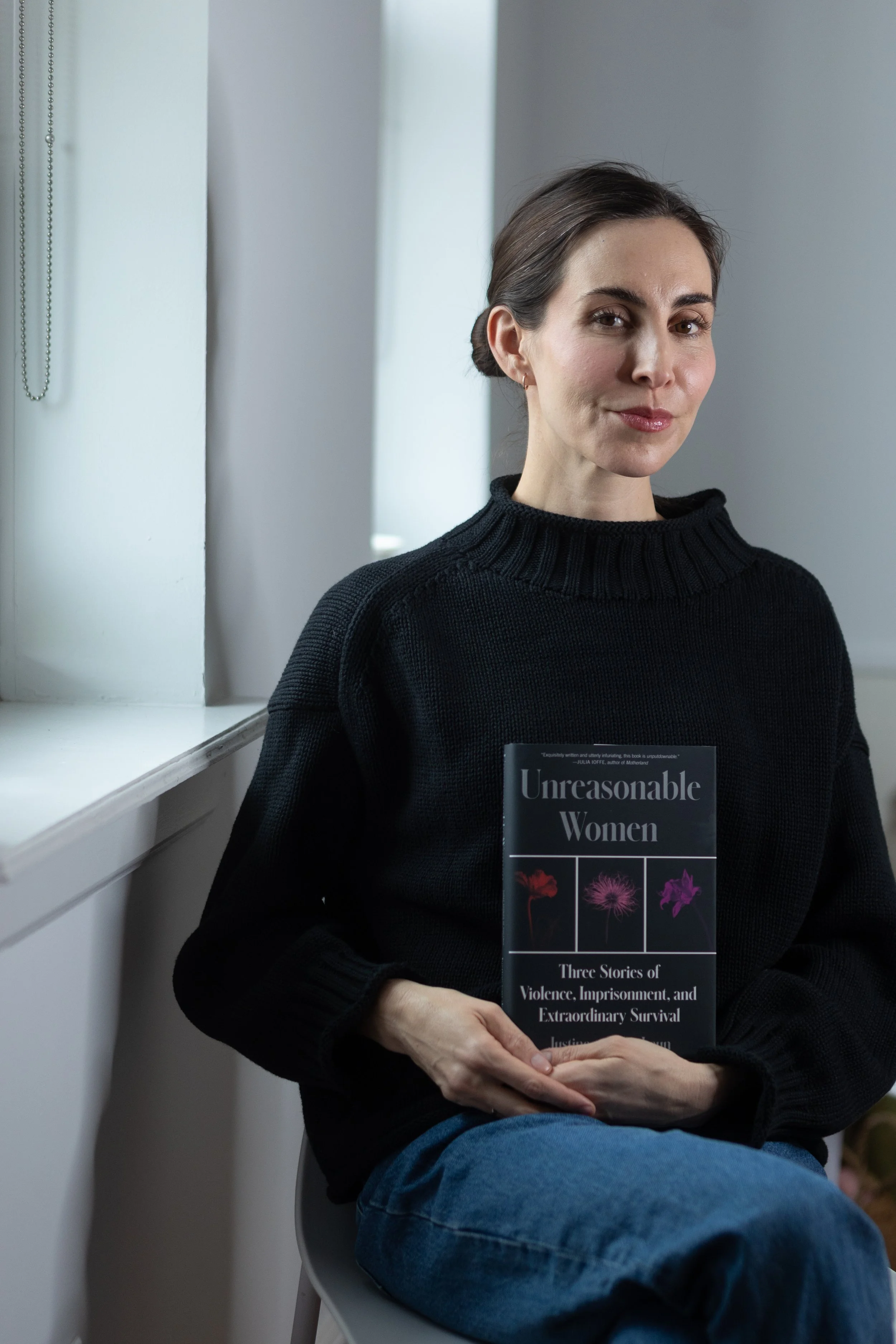
Today on The Stacks, we’re joined by award-winning independent journalist and author Justine van der Leun to talk about her newest book, Unreasonable Women: Three Stories of Violence, Imprisonment, and Extraordinary Survival. Based on seven years of reporting, research, and interviews with over 1000 incarcerated women, this book explores criminalized survival—a phenomenon in which people who defend themselves against abuse are subsequently prosecuted and even imprisoned—through the stories of three women who had to kill their attackers to survive. We talk about how Justine came to these types of stories, the details of the survey she conducted, and what she looked for in the women she spotlighted.
The Stacks Book Club pick for June is The Alchemist by Paolo Coelho. We’ll be discussing the book with Mary H.K. Choi on Wednesday, June 24th.
LISTEN NOW
Apple Podcasts | Spotify | Google Podcasts | Overcast | Stitcher | Transcript
Everything we talk about on today’s episode can be found below in the show notes and on Bookshop.org and Amazon.
Unreasonable Women by Justine van der Leun
Dear Sister by Michelle Horton
There Is No Place for Us by Brian Goldstone
Invisible Child by Andrea Elliott
We Were Once a Family by Roxana Asgarian
Believe Her (Lemonada)
Evicted by Matthew Desmond
Unreasonable Women by Justine van der Leun (audiobook)
A Hymn to Life by Gisèle Pelicot translated by Natasha Lehrer & Ruth Diver
Sad Tiger by Neige Sinno translated by Natasha Lehrer
Things in Nature Merely Grow by Yiyun Li
Passion on the Vine by Sergio Esposito
Marcus of Umbria by Justine van der Leun
We Are Not Such Things by Justine van der Leun
“Ep. 89 Staying True to Yourself with Jason Reynolds” (The Stacks)
“Ep. 193 Betting on the Kids with Angelina Jolie and Tokata Iron Eyes” (The Stacks)
“Ep. 172 The Art vs. The Artist with Quentin Tarantino” (The Stacks)
Consent by Vanessa Springora translated by Natasha Lehrer
Consent by Jill Ciment
A Nightmare on Elm Street (Wes Craven, 1984)
Random Family by Adrian Nicole LeBlanc
To support The Stacks and find out more from this week’s sponsors, click here.
Connect with Justine: Website | Instagram | Threads | TikTok
Connect with The Stacks: Instagram | Threads | Shop | Patreon | Goodreads | Substack | Youtube | Subscribe
To contribute to The Stacks, join The Stacks Pack, and get exclusive perks, check out our Patreon page. If you prefer to support the show with a one-time contribution, go to paypal.me/thestackspod.
The Stacks participates in affiliate programs. We receive a small commission when products are purchased through links on this website.
TRANSCRIPT
*Due to the nature of podcast advertising, these timestamps are not 100% accurate and will vary.
Justine van der Leun 0:00
I think that the subject matter itself really unnerves people, but there's just no two ways about it. That, if we're writing about, like, sexual abuse and violence, I just really can't sugarcoat what happened in their lives. I was the narrator for the audiobook. It's very relentless, I think, in a good, really propulsive way, but, like, I just, I had this guy was my audiobook editor, and I don't think he knew anything about, like, any of this. He was just a dude, and he'd be like, 'Can we take a break? So, it is like very intense, but it mirrors the intensity of their lives.
Traci Thomas 0:38
Welcome to The Stacks, a podcast about books and the people who read them. I'm your host, Traci Thomas, and we are joined today by award-winning independent journalist and author Justine van der Leun to talk about her newest book, Unreasonable Women: Three Stories of Violence, Imprisonment, and Extraordinary Survival. The book is based on seven years of reporting, research, and responses from more than 1000 incarcerated women, and it explores the ways the legal system criminalizes victims of domestic abuse, focusing on the stories of three women who had to kill their abusers to survive. Today, Justine and I talk about how she went about conducting her survey, what she was looking for in her three main subjects, and how she thought about herself in relationship to objectivity and her audience as a journalist. Our book club pick for June is The Alchemist by Paolo Coelho, and we'll be discussing that book with Mary H K Choi on Wednesday, june 24 Everything we talk about on each episode of The Stacks is linked in our show notes. If you like this podcast, if you want more bookish content and community, consider joining The Stacks pack on Patreon and subscribing to my newsletter unstacked on Substack, and each of these places you get different perks, including bonus episodes, access to our virtual book club, my hot takes, and so much more. And more than that, you get to know that your support makes it possible for me to make this podcast every single week. To join the Stacks pack, head to patreon.com/the Stacks, and to subscribe to my newsletter, go to Traci Thomas dot sub stack.com All right, and now it's time for my conversation with Justine Vander Loon. All right, everybody, I'm very excited. I, as you all know, when I book people on this show, sometimes I hear about a book and I book a guest, because I've heard about the book, and I think it's going to be good. And sometimes people pitch me, and I'm like, yeah, that sounds interesting. And then sometimes I start a book, and I'm like, I love this so much, I must speak to the author. And today's guest is that third type of book. I am so excited. I am joined by Justine Vander Loon. Her brand new book is called Unreasonable Women. It is about women who are incarcerated for murder under dire circumstances. It is fantastic, and I am thrilled to welcome Justine to the Snacks. Welcome, welcome, welcome.
Justine van der Leun 2:56
Thank you so much. What a warm welcome.
Traci Thomas 2:59
I'm just, I'm thrilled. This book is like such a me book. You knocked it out of the park. I loved it. I want you to tell people in like 30 seconds or so what the book is really about, because I sort of did a shitty job. I feel like there's like a, you have a better pitch than me.
Justine van der Leun 3:14
I'm not sure I do, but I can just tell that I really am not sure. I know that you're supposed to have an elevator pitch. My Unreasonable Women is about the phenomenon of criminalized survival, largely, which is when people, and it's usually women or girls, react to abuse or assault and are subsequently arrested, prosecuted, and often incarcerated for many years, that's criminalized survival, and I tell that story through unique data that I collected over many years from over 1000 women in prison, and through the deeply reported stories of three women, Tanisha, TC, and Gemma.
Traci Thomas 3:58
Yes, so this is one of those books, people, where you get the whole big story told through three people, which is again one of my absolute favorite nonfiction constructs. Can you? Okay, you mentioned your unique research, I need you to tell the people about it. This is the part of the book it happens in the introduction where you sort of lay this out for us, and I was like, oh shit, we.. this is.. this is the book. Like, at first I wasn't sure. I was like, I don't know if I need a book about women in prison. And then you explained how you got us here. So, can you kind of set up for the people how you came to write this book, and then what.. what you did with the surveys?
Justine van der Leun 4:38
Yeah, and I'll say that it's a book about women in prison, but I really think and hope that it's really just a book about women and violence in America, told through these stories of women in prison. Quickly, what I did was I got myself involved in reporting on this one story, the story of Nikki Adamondo in upstate New York. She was a young mom who. Who was abused quite severely by her partner had a lot of documentation of it, fought back one night and was just absolutely demolished by a prosecutor and sentenced to 19 years to life by a judge, and I reported on that story, and I knew, like, everything about that story, because I got so much access, and I just knew it was just really weird to sit in a court and know, you know, I don't know the 100% truth, but to know that she was abused, to know that she, you know, highly likely that she defended herself, and then to see a totally different story spun, so after that happened, and after Nikki got 19 to life, I just thought, well, Nikki is like white and small, and she's a preschool teacher. Well, she's a stay-at-home mom, and she has all this evidence, and like, she had, you know, maybe not the best lawyers in the whole wide world, but you know, not the worst either. She's outside of Manhattan, just, you know, in the sort of middle-class human community. So, if this happens to Nikki, like, what does this happen? What's going on? And then, when I talked to advocates and lawyers and formerly incarcerated women, everyone said, "Oh, yeah, we all know, like, literally everyone who works with women's prisons knows that they're just full of nickies, that's who we lock up, that's what we do.
Traci Thomas 6:26
I'm full of nickies, meaning women who were abused or in abusive situations, who finally fought back or stood up for themselves or said no to their abusers, and then became the criminal,
Justine van der Leun 6:39
or just somehow didn't die in a situation, somehow they somehow they survived the criminal, and that's the criminalized survival. So it was just full of women like that. We all know that, sure. And I said, well, great, so let's just, where's the numbers? And everyone said, well, there's no numbers, because you know, as soon as you get convicted in a court, that's the fact, like those are the facts of the matter, that is what we understand as the truth, and that's the true story. So, now the true story that follows these women is always she's a murderer, that's her conviction, that's her felony, and that's what she is, and there's no way to for them to break through that, because that's the accepted story. But I talked to an attorney in Illinois who works on cases like this, and I was saying, so how do I prove it? How do I report on how enormous the problem is? She said, well, you could just like ask the women, and I was like, oh, okay, I love asking people stuff. It's like, what I do, how would I do that? She said, you just send them letters, and I was like, well, how hard could that be? You know, she just said, get their names and send them letters, that's a great idea, I would love to do that. I had a friend at the time, whose name is Tanya Sanchez. She used to be a political science professor at Yale, and she had done some data, just like helping, helping me for some immigration reporting I was doing. I said, Tanya, could you help me out? Can we make, like, some way to assess what these women's backgrounds are, some way to communicate, like a survey or something, she said, like, "Sure, come over, we'll just do it. So I went over, sat on the floor of her apartment, and we did it, you know. We made this really simple survey, and then I started FOIA-ing states, or asking public information officers for all the women in the state convicted of murder or manslaughter serving time. And then I thought, what have I done? What have I done? Because now I started sending out the letters, and I thought when I started, genuinely I thought stamps were 29 cents, like it had been so low. I think I went to a post office in 1996 like that was the last time. So then I found out they're 55 cents, and I think now they're 65 cents, something, and then I realized it was just whole cost involved, but I was really committed, and I, and then I realized you can't put stickers on envelopes because they're going to have drugs on them, so the prison systems think, so you have to like handwrite it. I wasn't, I didn't know how to print it out in the printer, so I started like handwriting, and then I wanted to respect the women and make them think it was, you know, as personal as it could be, so I started to write, like, "Dear Traci, you know, but once I did it on the first 100 I had to do it on the next 100, and then, so I ended up sending out 10,000 letters.
Traci Thomas 9:17
Oh my god, so how did that partake you, like just the like printing packaging sealing,
Justine van der Leun 9:24
I the process was a few years, I think. I got them all out like fairly soon. I think I went into a kind of fugue state, and I was just.. it was also over Covid, so you know, I did have my two kids, but I also like didn't have.. I didn't have to do anything other than just this work, really, so I did that and got them back, and I just became really fixated on getting 1000 letters because I just thought he said she said is so strong that I just wanted 1000 she saids to sort of counter anybody saying like this isn't what's happening, I just thought. I can get 1000 so I actually, I did write to basically every name I got. A lot of names I didn't get. Some states just said no, you know, some states blocked me. But yeah, and then I got over 1000 letters back, and they form sort of the three women were that I report on are three women that wrote back, but also all of the qualitative and quantitative research kind of forms the infrastructure for the the larger or the more deeply reported stories,
Traci Thomas 10:30
and aside from like name, sentence length, racial background, age, what kind of things were you trying to get answered, what were the questions that you were the most curious about?
Justine van der Leun 10:44
So, because we didn't want to prime them, we never asked the questions I was most curious about outright, but I, you know, a lot of what I asked was kind of like, can you tell me about your relationship with the person you're convicted of killing, can you tell me about the days leading up to what happened? Tell me a little bit about yourself that would help explain why you're here, your truth as you see it, and those particularly I would say question 16, which was around sort of, which I think I often thought of as like question 16, it's about question 16, because that's the one where I sort of asked, like, why do you think, like, what led you here, more or less. I asked, and so people sometimes people answered very shortly, but a lot of people also wrote quite a lot about what they believed had led them to where they were.
Traci Thomas 11:36
As I was reading the book, I didn't know anything about you, I didn't know anything about these women, and you start with Nikki's case as like how you just started today. So I sort of assumed that she was going to be one of the three people, and she's not. So you picked three different people. How did you pick them, and why did you not want to tell Nikki's story in the book as much? She's in the book, but she's not a main subject.
Justine van der Leun 12:01
I, Nikki's sister wrote a memoir called Dear Sister, and I had just, I done the podcast on her story, I'd done her story, like her story had been, she's never written her story, you know, but like her story had been covered, and the reason that she's actually in the start is it became clear to me. I got some feedback. I think it was I started with Tanisha in my first draft. I was advised that people might need an easier way in to the topic than Tanisha, and I do think that Nikki is always a much easier way into the topic, not that anything, there's literally nothing easy about her story ever, but it seems to be a story that helps people get into the concept of criminalized survival, and you know, care about it and understand it in a really sort of clear way, and then we went to Tanisha, and Tanisha was my first main subject, and I think she's kind of.. I don't know, my husband read the book recently, he's not.. he hadn't.. he'd been.. he's never read the actual book until maybe a month ago. He said it's.. it's clear that, like, your greatest connection is with Tanisha, and you know people have their different people that they connect with, but for me she was always the start, so I had picked her, her case to me was really a perfect case, because she had testified for the prosecution for the state to make a case that meant that also all the documentation that I could find was like the state's documentation, so it was kind of a perfect inarguable argument, like you could not say that the things didn't happen, because it's all just the state's version of events, so there's a lot of backup for that for her story, and a lot of analysis to be made, and then once I chose her, because her story is about she was forced to take part in a crime, then I wanted also someone a little bit more like Nikki, who had a straight self-defense case, because that's such a big part of criminalized survival, and Gemma had that straight self-defense case, and once we had Gemma and Tanisha, I remember once my editor and I sitting there going like, because we had found a few options for the third person, but they just didn't quite work. You need someone really specific if you're reporting back and forth with someone in prison as well. They need to be so verbal and communicative and into the project, because you cannot go in their car with them and hang out with them. You have to be really talking with them. So we needed someone like very good at communication. We wanted somebody from, like, we sort of made up this. We were laughing at how ridiculous our wish list was for this person, like, we want, like, this person who had, like, and we joked about it. And then, within a couple weeks, looking through the piles, I had a research assistant had flagged this one woman and was like, this is amazing story, and I. Looked at this woman, TC, and I pulled out her, you know, 26 page letter that she'd written me, that was brilliant, and I was like, does this hit every mark that my editor and I thought of as our ideal third person. We also wanted someone that spoke to, like, the childhood trauma element, and she killed her abusive stepfather, so it was just those three fit really well into the main points that I wanted to hit on the topic.
Traci Thomas 15:30
On the show have had the pleasure of talking to many journalists who write books that follow subjects that are difficult topics. Brian Goldstone, who you know, Andrea Elliot, Roxanna Isgarian. Like I said, your book fits into a kind of book that I personally just love. However, every time I have someone like that on the show, we have to talk about some of the stickier parts of doing this kind of reporting, and that is sort of like your relationship to the work as a journalist, your relationship to your own, not that there's a broader objectivity, but your responsibility as a journalist, as you see it. So, I guess my, I have a series of questions, sort of in this vein, and my first one is sort of like you're pretty involved in these women's lives. I listened to the Nikki podcast, you're very close with her. It's clear that you're close with Tanisha. There's a section in the book that we're gonna talk about later where she's sort of, sort of advising you and like coaching you, and and there are you testified on behalf of her, I believe was it her, yeah. So I'm wondering, sort of, how what's your scaffold for what you are allowed to do, what you aren't allowed to do? How far Justine will get involved, and how much of your involvement you're willing to share with your reader.
Justine van der Leun 16:56
I mean, I, when I'm dealing with people who, who are living this right, I've been reporting on Tanisha's case for years. I'm not like I love her as a person, I'm just telling the truth about what happened, like this is all documented, you know. And, and the thornier things, like, you know, she's not perfect at all, and I'm not trying to hold her up to be to me, I'm not a J school journalist. I didn't work at the New York Times, a New Yorker. Like, I kind of taught myself how to do it, and for things, you know, I'm not paying people, I'm not doing anything like that. But if Tanisha has a chance at freedom, which I believe she deserves, and I could, and she would like me to say some words as to why I believe, as somebody who's an expert on this case, and who knows a lot about the topic. I just feel like, as a person, it's kind of crazy for me to be like, well, you know, I'm a journalist, so, so I can't, and I do, I think, become.. I wouldn't say exactly friends, like I would say I'm.. I wouldn't, maybe, but it doesn't feel like that, because I'm not going to them for.. I mean, I asked Tanisha for advice, but we don't have a two-way relationship where, but there is a level of like intimacy where I think that first of all, I'm just not a very formal person at all, and I'm asking a lot of them to share, and maybe in part it's a technique, like you, we need to be comfortable with each other, you know, we need to be comfortable with each other. I think in large part I'm pretty honest about it with the reader, I'm very present in the book, I'm not like a mystery of what I think or what I feel, or you know, anything, but I think that I would say that it is my journalism has a point of view. I believe all journalism has a point of view. I'm just coming out and telling you what it is, you know. Yeah, people have a point of view, you're not writing about these things without one,
Traci Thomas 18:58
right? Right. Well, that's sort of my second question, is like your, your point of view, your politics, like your beliefs are very clear, and they're on display here, and I'm wondering, like, did you worry about the choice to do that, because there is a world in which people could discredit your work as, like, activist journalism in the pejorative, though I, you know, I personally believe that's like a good thing. Yeah, but it's like there is a world where people can discredit what you've done because you sort of said the quiet parts out loud. Did you think about that? Did you and your editor ever worry about that, or is that not something that is your concern at all?
Justine van der Leun 19:36
I'm not first, I don't consider myself an activist journalist at all. Like, I think there's a place for that, but me
Traci Thomas 19:45
you don't?
Justine van der Leun 19:45
I don't, I don't. I'll tell you why. I think when I started out, and I have some more work that I'm doing that I think will prove this out, but you know, I think that I started. From an ideological place, which is like an in to writing about these issues, which is, I read a lot of abolitionist stuff, like I read about, you know, I read a lot about mass incarceration, obviously, like very lefty, right? I dispensed with that, like in my reporting, and I think you know we might talk about that chapter, but like I really dispensed with the ideology at a certain point, because I found when I followed that a part of me was just wanting to please the people in that space, and whenever I would write like that, the writing would just be bad, like when I would try to write according to the ideology to like hit the perfect notes that would be correct, I thought it was really boring, and the more and more that I reported on this topic, the less and less any ideology really fit, and I had to just decide, like, am I like, like, for a movement, like, because I'm not, I'm really first and foremost, have just want to tell the stories as I see them, so yeah, no, I really, really don't consider myself an activist journalist, though I know maybe we have different definitions.
Traci Thomas 21:10
Yeah, what is the definition of it like in my mind? I was thinking of it more as like a journalist who is like trying to persuade the reader towards like a like towards action or towards engagement,
Justine van der Leun 21:27
but then or like Brian
Traci Thomas 21:33
I would say Brian definitely is, for sure, for sure, Brian, I would not say Roxanna is only, well, actually, I read that book, so I'll go that her conclusion.
Justine van der Leun 21:46
I mean, if you define Brian that way, then Roxana, and then what about Andrea?
Traci Thomas 21:54
Andrea is the least, the least in my mind, and it's not, and again, I'm not saying it in the pejorative way that people use it as like a weapon, I'm saying it more as like a complimentary way, where it's like this per this journalist goes into this world, like another example for me would be like Matthew Desmond, like I mean, he's very much, I think, and I think he would say, I would assume he would say that he is an activist, because I feel like he's done a lot of work around poverty since he wrote Evicted, but I think of it more as like, because, like, there's a version of this book where you are never in the book, we don't really know what you think, and you're just telling us the information, and I feel like you, your point of view, and Brian isn't in his book, Andrea, she's is a little bit, because she goes to lunch with them, and it's like, while we're out to lunch, while we do this, but all of that to say is like, I feel like you are, because I feel like you're you are there, like, sort of guiding us. But I think, because we have different definitions, it makes sense why you would say you're not, and in my mind I feel like I'm like, you are, you are definition, you're not.
Justine van der Leun 23:07
I mean, I will, I think more, maybe that's interesting, because I think what happened is partway through, I was like, I can't be, I cannot be asked to adhere to the rules of movement,
Traci Thomas 23:18
sure,
Justine van der Leun 23:19
and so maybe I, then you know, so maybe it is or isn't. I guess the work can people can decide, you know, because I certainly have a point of view, but yes, I think at a certain point I was trying to adhere to like all of these ideologies, and I was like, I just don't, and the stories are not these are human beings, not human arguments, as Brian had said to me a few days ago, and I was like, that's really helpful, that was the truth, and so I guess from then on I was like, I am not an activist journalist, I am not an activist journalist, so maybe,
Traci Thomas 23:45
but do I guess back to the original question, which is like, do were you worried that by sort of playing your hand more clearly and like really pretty much stating exactly, not exact, not like you're not like this is what I believe, but like it's very clear, like you said, you're in the book. Did it ever become a concern for you that people would diminish your work because of that, or would, would be able to, like, diminish these women because of that?
Justine van der Leun 24:10
I mean, I suppose they, they are free to, but I just, I felt like just I wanted to be honest with the reader, I don't want to pretend that I don't think something, I just tell you what I think, like you know, but it's effed up, and if that, for whatever reason, you know, you don't give it credibility, then okay, you know, I think I just, I just didn't feel another choice, I didn't feel another, I had to be very like honest in this book, and I guess I just, no, it never really occurred. It never really occurred to me.
Traci Thomas 24:47
that's totally fine too. What about, like, the racial dynamics of it? Because, as far as I can tell, correct me if I'm wrong, Tanisha is the only black subject, the other two women and Nikki are all white. Right, and in your at the end of the book, you share like a lot of your findings from the study, and it's disproportionately black women who are sentenced longer, I believe, and also are overrepresented in this population. Were you worried that you didn't have like a proper balance or that there should have been more black figures, and how did you decide to stick with the balance that you came out with?
Justine van der Leun 25:25
So I think that black women are disproportionately represented in prison, but they're not the majority. So actually I believe it's 13% of the general population is black, and then it's 30% in, like, in women's prisons. I don't know about, I'm not going to men's prisons.
Traci Thomas 25:43
I think in men, yeah, it's different,
Justine van der Leun 25:44
so it to that, the three women, it's a third, you know, you know, TC is a lesbian, and that played a lot into her story, I think, and so, you know, I thought that was an.. I didn't pick her for that reason, but I thought that was, but the reality was, like, sure, I would have loved to have the most perfectly balanced representative, but I really needed a lot of things out of the subjects beyond them, just as representative of something, I needed them as, like, people to have these particular cases, and I needed them to just be the type of person that I could work with, and that really wanted to work with me, like that was really, you know, tricky. You just to have people who are really in it, so that.. that I don't know if I did wrong or right, however it was, but that was just how it turned out. And I do think that, you know, I don't know if you feel this way, because I haven't read it as a, you know, first-time reader, but I, to me, Tanisha's case is a bit bigger than the other cases. The story is a bit, is a bit bigger than the other stories, just a little bit. We tried to get the balance right, but to me, yeah, it takes up a bit more space.
Traci Thomas 26:53
Yeah, I would say her story is also just like feels the craziest, and so it feels really sticky, like in my mind I would say Tanisha is like, takes up the most space, then Gemma, and then TC, and also that they're their cases also fit that, like though there were many times where I was like, I actually need to get back to Gemma, like I was like, what, like, because that's a, that's also a crazy story, they're, I mean, they're all crazy stories, they are. TCS, TCS, we probably should tell people a little bit. So, in the case you said before, so in TCS case, she was abused by a stepfather, who she ends up killing, who was also abusing her mother, and they both, her and her mother, end up being convicted for this murder in a sort of, and all of these are sort of like in a shady way, you know, like every single one, it's like this happened in a shady way, and by shady I mean like the courts are shady, because the thing that you say in the book that I was like, oh my god, how come I've never thought of this, is like these women are in search of help and support their whole lives in need of a system, the system help, and it's not until they commit these crimes that all of a sudden the full weight of the state is there right there with them, but it's against them and it's well organized, and it's like they've got their shit together, don't try to file for some service if you need help, because then the bureaucracy is a nightmare, but the moment you commit a crime, all of a sudden you get the best DEA or the best DA ever from the movies is like the star prosecutor. I'm just like, how does this happen? So I found that to be, I think I knew that, but like having you articulate it, I was like, yes, of course. So that's TC. Gemma is a.. she's like sort of middle class, right? She grows up sort of middle class. She's an army kid. She's sexually abused multiple times growing up, she gets in this like accidental relationship, sort of with this man, like bad luck abounds in all of these stories, but she gets in this relationship and he's extremely abusive, they're raising her kids together and it's pretty much like he's abusing her, she finally fights back, and she kills him, and then, and then Tanisha's case, like you said, she is involved in a murder at gunpoint, basically at the hands of her sort of
Justine van der Leun 29:34
roommate,
Traci Thomas 29:34
ex-roommate
Justine van der Leun 29:35
a roommate that, like, rapes her, basically, yeah,
Traci Thomas 29:39
They are like domestic partners, they're like platonics, but she's like cleans for him
Justine van der Leun 29:45
He makes her do everything, yeah, she needed a place to crash
Traci Thomas 29:48
she needed a place to live, and she, I don't know, like, yes, they're roommates,
Justine van der Leun 29:53
that's the best, and she, that's the best term I could come up with, that your roommate can be right there, yeah,
Traci Thomas 29:58
but, but important. Suddenly he is her abuser, he and she has had, she has had a string of them in her life, and he, for some reason, decides to kill this neighbor, and she walks in, and he's like, "You're gonna help me, and she does her, I mean, the story, it's like when I say it out loud. I was trying to talk about this book with my mom yesterday. I was trying to explain what happened, and I was like, I don't know, you just can you just read it, because when I say it, it sounds dumb, but when you read it, it's like holy shit, all of these words, because there's so many little nuggets along the way, it's not like the kinds of true crime stories where it feels very clear and linear, especially Tanisha and TC, I would say, are both sort of like, like, kind of convoluted. Is that fair?
Justine van der Leun 30:51
I think I think Tanisha is complicated, but actually like pretty straightforward. What happened, because I've even talked to her roommate, ex-roommate, abuser, whatever, you know, and I've been like, did you like force her to take part in this, and he's like, yeah, like I would have done that, sounds about right, you know, like there's no two ways about really what happened,
Traci Thomas 31:13
I see,
Justine van der Leun 31:13
you know, the TC who killed her abusive stepfather, who had been abusing her for her whole life, and then was abusing her mom, that is the space in which some confusion exists. It's a long time ago, but I think you know, I was doing an event with Josie Duffy Rice just a few days ago, and she was saying, like, but the thing is, whatever it was, like, who cares, like, who cares if it was convoluted like that guy, and I don't necessarily feel that way, but yes, that case is a little bit more, and Gemma's is just straightforward. He broke into her house,
Traci Thomas 31:51
yeah,
Justine van der Leun 31:51
she had after she said to leave him,
Traci Thomas 31:55
right?
Justine van der Leun 31:56
But yes,
Traci Thomas 31:57
okay, we're gonna take a quick break, and then I want to come back to TC, okay, we're back. So, as I mentioned, I love the book, but there is a moment in the book that, for me as a reader, I was like, okay, I actually really respect this author because you ask yourself out loud in front of all of us some questions that I think sort of undermine you and your book in some ways, and to do that publicly and so straightforward, and sort of to take the questions that I think many readers might have, especially in this, is around TCS case to take some of these questions and present them to us. I think shows like a level of care and bravery, and also like a really critical understanding of what's at stake here, and what you'd sort of do is you say to your reader, like, look, I know that some of these women who I'm corresponding with, not just the main subjects, but just in general, they could be lying to me, they could be, they could have agendas where they are trying to make themselves look good or protect themselves from, you know, whatever, or just that they've, they've told themselves stories over the years to allow themselves to sleep at night, and how do I, a journalist, a person who's telling these stories, like, reckon with that? And in response to that, you say, sort of like, also the prosecution has a story that they're telling, and like the lawyers, and everybody is trying to tell a story, and everybody's trying to persuade the audience, whoever that may be, whether it's the jury or your reader, or whatever, to believe their side of the story. And I just found this section to be like, I think it makes the book better, like a lot better, actually, in my opinion. Like, I think it really elevates what you've done here, but I also recognize that it's a really risky move, as far as like being an authority and being in charge of these stories. So, I'm wondering, was it always in there? Did you decide to add it? Was there a moment where you were like, I can't go forward with this because I feel like I don't know the truth, and I don't want to move forward. If what if what if this person's lying to me? What if I'm reporting this thing as fact and it's not fact? So talk about this section
Justine van der Leun 34:32
that's little foxes, I think that you're talking about, think it's called little foxes, little foxes, little foxes. Yeah, and that was definitely. I started this endeavor with such a vim and vigor and such endless energy and such a like I was so strengthened by my belief in, you know, the righteousness of this, because I'd seen what happened with Nikki. I knew that, like, just factually, that was so wrong, and you know, this, this was a corrective, and I also really loved, like, the women that were writing to me that I was talking to. I just thought they were fantastic as people, a lot of them, but the letters kept coming, you know, and I don't know, like, there's something about reporting where sometimes you report, and if you really wanted to make like life easy for yourself, you would like stop right there, you know? Like, you got a good end to that story that's fitting with everything, and if you could just stop, then you could just wrap it up neatly, but like I always keep going, and some then you keep going, and you're like, oh no, oh no, I learned a new fact that completely complicates everything, and now I can't either have to leave it out, pretend I don't know that, or I have to confront it, and so doing this, you know, I think there was a certain point in the reporting when, like, I'm not dealing with, you know, people who are these elegant hostesses in, like, Connecticut. Like, I don't know what I.. of course, I'm dealing with a population that's incarcerated for murder, and that doesn't mean that their life was just like perfect, and then something went wrong in one stroke of bad luck. It means there was a law that happened first, and that they made a lot of errors, and maybe they made those errors because they had two bad choices, and they picked one of those two bad choices, and their circumstances are always dire, like every single one of them. You know, it's not that anyone is like, oh, I was, you know, working one day at my job at, you know, Bear Stearns, and then, like, things just went bad. It's just a series of bad choice after bad choice with no good choices offered, but then a lot, you know, so when I say so, when from the data I found that about 30% of the women incarcerated for murder and manslaughter were, you know, act taking actions that they need to take to survive, and I do think that's an undercount, because I didn't prime people, I didn't ask them, like, were you incarcerated for taking actions to survive, but there is a significant amount of women whose victim is a child, and to really contend with what that means is to just, if you, and I think this goes back to, like, the movement journalist, whatever, like, if you are just approaching this from, like, an activist point of view, then you just have an answer for that, you know? You just say, like, we all make mistakes, that you know, she couldn't help it, like, moving on, we don't think about that, but I did think about that. I did think about what does that really mean when someone has killed a child, and that, and some interactions that I had with women who were not honest with me, and that's not nobody that was in the book at all, but other women. It was really deflating, and I started to question, like, am I just a sucker for wanting to do this? So I went through, and I didn't ever doubt my main subjects, but I just started to think, what am I doing, like putting all this energy into people who, some of them, you know, who are often like, couldn't I put, you know, put the energy into something easier to put yourself behind, but ultimately that going through that process made me come back to where I started, which was really thinking through, like, so if you accept the truth, which is that there are a lot of people that are really complicated, that you're not, that you're going to be lied to again. I don't feel like that with my main subjects, but, like, you're not going to get ever the full truth, but not only from people in prison, but from nobody ever do you know, it. I just really worked through that for a long time, for a long time myself, to be able to come back to the writing and finish it, and care about it, because of it, you know. And a big part of that was just coming to terms with the fact that individuals will be messy, will not be, it will not be clean, it will not be a perfect story, and that doesn't take away from the fact that the structures in place are horrific and cruel and target only specific people, and you know that when I think, you know, I talked to Tanisha, and I said, like, am I naive, you know, have I gone in here just being sort of a fool, thinking everyone's gonna be this like quote unquote perfect victim, and she was like, 'You're not naive, you're not naive, like there's all... and she says, 'There's savages, there's savages everywhere, there's savages in here and there's savages out there, and really, that really helped me come to terms with, like, yes, you know, we know our world is, you know, and the seat of the board, and the head of a company, those are all savages, and so there may be some bad people in prison, but that doesn't take away, well, I don't even want to define them as bad, messed up people. In prison doesn't take away from the larger structural issues at hand,
Traci Thomas 40:04
right? Right. I think it's interesting because the way that you went about your survey, it sort of opens you or brings you into like very personal versions, whereas like when you're thinking about structures and systems, it's easier to think from like further away, and so it makes sense that you would get kind of caught up in that piece of it, because you, you're down like on the ground reporting is different than like if you're in the helicopter, right, like it just the scope of it, the intensity. Speaking of intensity, How were you thinking about audience?
Justine van der Leun 40:41
How was I thinking about audience? It was, I was, I was like, sorry, you know, like I was trying to tone it down, but I'm like, I can't tone it down. I tried, and it just didn't work, and, and you know, there's.. and I think that it is like it's a topic that I find a lot of resistance to when I go out with it, like if I try to publish something, even getting people to read this book, and I think that the subject matter itself really unnerves people. but there's just no way, there's just no two ways about it, that if we're writing about like sexual abuse and violence and domestic violence, I just really can't sugarcoat what happened in their lives, so you know early on I just didn't, and then when I went back, I think I tried in one draft to tone it down, and my editor was like, what, you know, you got to just tell the truth, you just have to write it, and and so I did, and then I, I was the narrator for the audiobook, and I never read my book out loud. I was reading it, I was like, wow, it's a lot. It's a lot for someone to take. It's very relentless, I think, in a good, really propulsive way. But, like, I just.. I had this guy was my audiobook editor, and I don't think he knew anything about, like, any of this. He was just a dude, and he'd be like, no, we can keep going, and he was like, I think I just need a moment, so it is like very intense, but it mirrors the intensity of their lives, and I think that I wrote for women, really, and I just thought, if women have experienced anything like this, and most women have on some very far end of the spectrum. I think they'll, they'll be able to handle it, and maybe even feel like it resonates for them.
Traci Thomas 42:34
Yeah, for my listeners, because you always, you always ask me, like, how intense is it, and given that, again, this is the kind of stuff that I actually like, like to read, because I don't know, I, something's wrong with me. This is an intense one. There, in the beginning, even I was like, okay, but that being said, to your point, Justine, it's very propulsive. I think the word I was actually messaging with Roxanna about it, and we were like, it's very tight, like it's like tense and tight, which is good. You do have to go into some pretty dark, horrifying spaces, but because the book is not that long, you're never anywhere for too long. You're never in a place where, like, you can't get out, which I appreciate, because for these women they were, but I think you balance that really nicely for the reader. But it is - it's a hard one. It's not because sometimes people write like you actually mentioned two books in this book that I read last year with the same translator, you or I went one this year, Giselle Pellico's book, and then also Nejino's book, Sad Tiger, and I would say, if for people who have read those, that like the Pelico is like it's about an intense thing, but it's actually not that intense, and then sad tiger isn't about intense thing, and it's more intense, and I feel like there, like there is a way to do that, like, but I do think you sacrifice some of the importance of the story, and I think, like, in the case of Giselle Pellico, it was important to do that, because it was for a broad audience, and, like, she's a figure, and you know, people were going to be picking up the book, and you don't want people to put it down and not get to the story. And I feel like I was thinking about that a lot when you, like, invoked both of those books. I was like, right, they kind of do similar things in these like different ways, but they have the same translator, which I thought was
Justine van der Leun 44:39
And she, yes, I love that translator. She's great, Natasha Latasha Lair. Yeah, yeah, she's really good. Yeah,
Traci Thomas 44:46
but I'm also like back to back sexual assault. She does all the memoirs,
Justine van der Leun 44:51
she does all the sexual assault memoirs. Yeah, she seems to, seems to be. But I loved Sad Tiger, I mean Sad Tiger, I mean, she pulls no punches. Yes, she's just tells you about it straight.
Traci Thomas 45:03
Yeah,
Justine van der Leun 45:04
I thought that.
Traci Thomas 45:05
And Sad Tiger is interesting because it's also about the relaying of these kinds of stories. Did you read the Yiyun Li book from last year about her sons?
Justine van der Leun 45:15
No, I read the article, but I didn't read the book.
Traci Thomas 45:18
The book is amazing, but it's in.. I would say it's very similar to Sad Tiger in that regard, where it's like it's about these horrible things, but it's actually really about how do we talk about horrible things in public, and how do we turn horrible things into like our own horrible things into memoir, or like into something to be consumed by people who don't know us, and like, I don't know,
Justine van der Leun 45:39
well, that was like, I mean, that I would look, I would read, I think. I, when you say that, I really appreciate it, because I, I'm such a long writer, I'm like, blah blah blah blah, and I was really conscious, a, that you know, we're competing now with social media in a way that we never have before, and I just thought about, like, I really wanted it to be as tight as possible, because I knew the material was difficult. I wanted you to be able to, like, really want to know what was next and go through it, and so I was real. I mean, there's so much more, obviously, that like I could have reported on, and I was stripping out like anything extraneous, because I really thought, let's get this reader in, like, come into this book, and, like, I promise you can get out of this book, you'll get something from it, but also you'll be able to, like, I think once you're hooked, like, you have to know what happens, and it was so, in terms of thinking about readers, I did think about that, I did think about, like, because I know for myself I'm so easily distracted now, and but when I get to read something good that catches me, like I've never been more grateful in my life for somebody, for an author giving me that, because God, I want to get off my phone. Yeah, but I can't do it if you're taking me on a slow meandering meditation. I just can't do it anymore. So I thought a lot about, like, giving people something to really be able to get through,
Traci Thomas 47:02
yeah,
Justine van der Leun 47:03
yeah.
Traci Thomas 47:04
What about the cover and the title? How involved were you with those things? When did you know you had the title? Did you have other titles?
Justine van der Leun 47:12
We never had other titles. At a certain point, I was like, this is not the right title, we have to find another title. Spent forever looking for, we could just never, we could never find the other title, like this was always it, and it remained it. I mean, we came up with every ridiculous title, and then it, but this had been it from the beginning, and it just went back to it. But I actually think it really works. I think it really works now, and you know that I won't, I won't bore anyone on self-defense law, but basically it's, it's a bit of, it's a sarcastic title, essentially it's a bit of a wink, and it refers to the fact that in self defense law juries are asked to assess if somebody acted in self defense according to what is called the reasonable person standard or the reasonable man standard, and it's this hypothetical standard that is very confusing to me. It's confusing where you have to envision like this person, if they, the defendant, if a hypothetical reasonable person, knowing what this person knew and being in this situation, would have reasonably believed themselves to also be in imminent danger, and then fought back. So that is a whole issue with self-defense law that doesn't really provide for women in domestic violence situations, but also, you know, it had been the reasonable man standard for many, many centuries, and then it was like changed the reasonable person standard, and there has never been a reasonable woman, so the idea is that all of these women are acting so unreasonably by living,
Traci Thomas 48:42
yeah. What about the cover?
Justine van der Leun 48:44
The cover was Alison Forner. I got some early covers that just weirdly had just a lot of women in states of undress, and so puzzled it. Just wasn't quite.. and then we had, like, yeah, it was. it was a. so Echo very kindly agreed that they would allow me to, you know, bring Allison Forner in. I love her work. She's done a lot of text-heavy covers, so I knew it'd be text-heavy, and she just gave me a bunch of options. I ended up, I ended up picking the one with these more psychedelic flowers on it, which was controversial in my home. Did they like wasn't the pick everyone would make, but I just.. there was something about the.. I wanted the women represented somehow, and it just sort of spoke to me at the time.
Traci Thomas 49:36
do each of the flowers represent one of the women to you? Like, is there like, like the pink one is one, or like, no.
Justine van der Leun 49:43
Well, I think that, like, when I showed it to the women, everybody knew who their flower was, like, right away. So, who do you think is Tanisha?
Traci Thomas 49:50
Okay, I'm gonna say that Tanisha is the pink one in the center. I'm gonna say that I don't know, I don't know, I don't know. I feel like I can make an argument for. Tanisha also being the purple one, I'm gonna.. I don't.. I don't know.. I'm like, I don't know. Okay, wait. Who do you think?
Justine van der Leun 50:06
I'm pretty sure that Tanisha is red, and oh, her nickname is also red.
Traci Thomas 50:11
Okay, I didn't have that information.
Traci Thomas 50:15
TC immediately picked purple for her, which I think is true, and I think Gemma is the pink that is, that is, and that is what they gravitated toward. nobody, no, but nobody ever, like nobody ever. I don't think anyone ever said that, but I've always been like those things. But maybe Allison Forner has a different take. I don't know,
Traci Thomas 50:33
maybe, maybe. Okay, um, is there anything that's not in this book that you wish could have been?
Justine van der Leun 50:40
No, no, I think my goal with the book, I was always just, you know, I just was very obsessed with it, because I've written books before that I like, after was like, I did not bring that to its full potential, like I did not do that, and so with this, that was like my one of my main goals was try to get it, not that it's going to be the greatest book of all time, though it may well be the greatest book, but no, I never like what I was like. I just need to have done this book as well as I possibly can. I just wanted to exhaust that. That was what I wanted to have after, because then you have the book forever, and if you don't do that forever, you're annoyed by, oh, I should have gotten that in. Should have left that out, like you know. Can
Traci Thomas 51:25
I ask you, with your other books, what is it that you feel like you didn't do? Like, did you know in the moment that it wasn't?
Justine van der Leun 51:34
No.
Traci Thomas 51:34
So, at the time, you at the time you thought you had done.. I don't.. you thought you had taken it to its fullest potential.
Justine van der Leun 51:41
Okay, my first book was like a co-written wine memoir with some Italian wine seller, so whatever, not my problem, really. Right? Yeah, I feel like needed someone to write his memoir. My second book was about a dog in Italy. Okay, I found a dog in Italy, and I wrote like a memoir, and I sold it to like a decent place, but the place collapsed moments after I sold the book. The book was published by Rodale, which does men's health books.
Traci Thomas 52:07
Oh yeah,
Justine van der Leun 52:08
so I had a dog memoir being published by a health publication. So I'm not really sure what happened to that book, but my friend drew the cover, and I don't know what was up. They didn't have a title, even though they didn't make sense. Nothing about that book made sense. And then my last book, yes, I mean that book. I just, I wrote everything you could possibly write. I don't think I got as much of a handle on the material, even though I spent years doing it. I didn't. I just was like, oh, I'll write a book, like I didn't know what I didn't have a concept in mind, and then my editor was like, looks good, and I was like, okay, you know, this time I'm like, I don't think so, like, I don't think so. So I think I didn't know until after that you need to, for me, I think, for me at least, that that you need to be really, I wanted to be really unsparing. I was like, I just want, don't tell me that it's good, you know? Like, don't let anything, don't know, don't push anything past, like I will change anything.
Traci Thomas 53:15
Yeah, okay. I just have a few more questions, of course.
Justine van der Leun 53:20
No, I love this. This is like such a joy to me. You're like, you might have something better to do than talk to somebody who loved your book and actually understands it about your book. I'm like, I'll make.. I'll make the time.
Traci Thomas 53:30
Have you found that people are not understanding it? Like, have you gotten feedback where you're like, you missed it?
Justine van der Leun 53:36
No, I have found that mainstream media is very, very.. I don't know, I don't, I can't tell you,
Traci Thomas 53:42
They're scared of it.
Justine van der Leun 53:43
Is that what it is? They're scared of it?
Traci Thomas 53:45
Yeah, I mean, it's a tough pitch.
Justine van der Leun 53:48
Well, I'm curious, because I, I have found that, like, people get it, the internet gets it, the people who read it really connect with it, and I've only gotten that feedback. I mean, you know that's just, but then in terms of like anybody going there, even people who like to report on domestic violence or report on issues against women, it's almost as if there's not a space for women living on the margins with convictions who aren't, say, an heiress, or you know, writing a dystopian tale, but are like real women who you know, so that is where I find resistance, and it's not like they've read it, it's just like give it a chance.
Traci Thomas 54:37
Well, you know what you say in the, I think you said this in the book, maybe you said it on the podcast, because I read the book, and then immediately listened to the podcast, like I was like, let me just get it, like, let me just inject all of this. I think you say it in the book, which is like, if you have to stop and sit and believe these women, what does it say about you, us? As a society, et cetera, and I do think that that is part of what is difficult for institutions, or like bigger, because then I mean we know there's just like a lot of bad men in the world who have done bad things to women, some like horrifically bad things, and then some sort of just like that's not great, like, like the spectrum of like bad things. like maybe don't talk to me like that, but I think you know, for talking about institutions, they're oftentimes run by bad men, people who are abusive, bad people. Period. People who are in service to abusive behavior, and so I think then you're asking them to, even if they wouldn't identify in that way. I think this book is sort of a confrontation in some regards to that, would be my sense as to why. And also, again, it is a tough sell, like it's like, do you want to sit down and read a book about, like, really dark shit? I say yes, and I think you, dear listeners, should say yes. I don't think you'll be mad at me when you read this book. I know you won't, but I understand why places that don't do this kind of stuff, and don't feel comfortable in, in the darker sides of what it means to be a human, especially in America, would be like cowardly in this regard.
Justine van der Leun 56:32
Yeah, but then I think you know anyone who's lived anything of this is just like, oh, got it, like into it, and like the thing about the book is that, and this is not even tooting my own horn, but it is that, like, the women in it are so amazing, like, you will love them, you will be rooting for them, and you will, I think, because this happened to me, really come out of the book. This sounds like a sales pitch, and I'm not even trying to do it, but I think you know readers come out of the book like the way that when I reported on the Nikki Adamondo case, which is what the podcast that you listen to is about, I mean, I,
Traci Thomas 57:10
the podcast was called Believe Her,
Justine van der Leun 57:12
yeah, so the podcast is called Believe Her, and then you know my worldview turned upside down and my worldview turned upside down again and again with this book, but I, but I'm glad for it. Like, I think I understand things a lot more clearly, and I think that there are a lot of things that we live that we don't quite understand, like the context in which we're living, and I certainly got a lot of clarity looking at the context in which they're living for the context in which I also live, because we live in the same world, the same world. Yeah, yeah,
Traci Thomas 57:46
this is like a real hard shift, but I have to get you on record as I get everyone on record for some of these questions, which is, how do you like to write, how often, how many hours a day, music or no, in your home, out in the world, snacks and beverages, that's important, rituals, etc.
Justine van der Leun 58:02
I'm a silent writer. I cannot have a single sound. I know that apparently there's all these writers that write with TVs on.
Traci Thomas 58:10
Yeah,
Justine van der Leun 58:10
impossible. No music, no TV, nothing
Traci Thomas 58:15
at a desk, on the couch, in a bed?
Justine van der Leun 58:18
all those things. any of those things, a lot of drinks, not alcoholic drinks, but a lot of coffee type drinks, various beverages at all times.
Traci Thomas 58:31
Can you say more about those? Like hot, cold, purchased? Is it made at home?
Justine van der Leun 58:38
I mean, I really admire anyone who can sit down and write for hours and hours at a time. I would, one thing that I like really needed was to not have to get ready to go out, because I have children, and so a big part of me being able to like do anything would be making sure I didn't have to do the morning drop off, because that would really mess up my day, having to like wash my face and put on makeup and like, get in clothes and walk and walk back. I would mess up. The best thing for me would be to wake up and have coffee and go straight in to writing. And so, sometimes when I really needed to do something, I would leave my house and get an Airbnb and go for five days, so that I could and buy like food that was made and just go live in this little one room Airbnb under some like guy's house. Well, like two men who were married, so it was very chic and stylish house, and I would like go under there with like all of these things and just spend like five days not really talking to anybody, and it was just a big part of being able to focus is no interruptions and not having to like arrive in the world for anybody and just being able to like have a little bit I sat on and wrote those are that was when I really needed to get stuff done I would do that I did it a few times actually
Traci Thomas 59:52
What about like your own mental health in writing about things that are so difficult especially knowing the. People who survived these like abuses,
Justine van der Leun 1:00:05
I mean, I have high immunity to all these things, like I have very high immunity to like violence and whatever. I mean, like, I can't watch a horror movie at all, like, anyone are scared, I'm so scared, nothing, you know, but like, when it comes to real life, like violence, I'm just like, sure, like, I just have a very high immunity to it. I sure, I took a walk, you know? No, like, I think I was just kind of like unhinged for a few years, you know, and just was like, sort of unhinged, like, I didn't really do anything, I didn't like do yoga, you know, I probably should have done yoga and breathing, but I was just like, I'm just completely obsessed with this, like, these lives, and I'm just, I just did it, and then I, I, I got burned out from it, and then I came back to it, and I don't feel burnt out from it anymore, because I'm really like energized by their stories, and I just want the world to hear them, so, but, yeah, no, I was almost, I was unhinged for a while, and maybe still am, I don't know, but like
Traci Thomas 1:01:12
I think everyone who writes books, sort of, that are like this, that's always her answer, of like, well, I didn't do a great job, yeah, like
Justine van der Leun 1:01:19
I went insane
Traci Thomas 1:01:20
I went to my therapist afterwards, because I probably should have had some practice, like things in practice, but I do think it's different, like living these traumas are its own thing, but, but being the sort of, like, the sharer of someone else's story, there's like a responsibility, there's a lot of things that are different for you, not that it's the same or like to compare, but just like it's a different level or different kind of traumatic experience in the like interpretation of the thing. Anyways, what's a word you can never spell correctly on the first try?
Justine van der Leun 1:01:55
I'm bad at niece.
Traci Thomas 1:01:59
Ooh, sure
Justine van der Leun 1:02:01
What's a word you can't spell correctly?
Traci Thomas 1:02:03
Oh, I can't spell anything. I always say recommendation, because I have to write it a lot, and I can never spell it correctly, but there's constantly words that I cannot spell correctly. That's how come I started asking this question, because at a certain point this podcast, I was like, I'm talking like, at the beginning, I was just talking to my friends, and then eventually I started talking to like really fancy authors, and I was like, I can't spell anything, I'm an idiot, and I think the first person I asked it to was Jason Reynolds. And then I just started asking, his is restaurant, there's a whole restaurant club, it's him, it's Angelina Jolie
Justine van der Leun 1:02:37
You talked to her, and she said restaurant? Oh my god
Traci Thomas 1:02:40
So did Quentin Tarantino. There's like a, there's like a restaurant group of people, and Jason is in that club. Those are the three big ones that I remember, but I have a lot of trouble with multiple consonants, so like, recommend I can spell tomorrow, but that word comes up often, and then like sometimes it's, it'll be like a really specific word given that person's work, I can't remember someone like I don't know, and then a lot of times like Frenchy words,
Justine van der Leun 1:03:08
like what,
Traci Thomas 1:03:09
like Renaissance or something, like
Justine van der Leun 1:03:10
Oh sometimes I can't spell Renaissance, but
Traci Thomas 1:03:12
yeah, I only can thanks to Beyonce
Justine van der Leun 1:03:15
I don't think I have to spell it very often, though, you know, that's why
Traci Thomas 1:03:18
I'm often talking about Renaissance
Justine van der Leun 1:03:20
I feel like I'm always like N I E, and then I'm like E I, it's E
Traci Thomas 1:03:24
I, I don't know, I don't, I think you would, yeah, you're not the person I wouldn't know, you know, I'm like a, I'm like a very bad speller, another word I can never remember is Reich, like the Third Reich, but I, I'm like, what do you want to be told, no, I get the e and the i confused, yeah.
Justine van der Leun 1:03:44
E and I are a problem, yeah, like Ian and I are, even though there's a problem, does that whole thing,
Traci Thomas 1:03:49
but it's never the every time that I need it, that thing, it's always the oh, oops, it's not just like I before e, except after c, but then it's like, oh, but sometimes also other words don't go in there, and there's no C, and I'm just like, well,
Justine van der Leun 1:04:02
I before can't trust it, like right,
Traci Thomas 1:04:04
I before E, but is it right?
Justine van der Leun 1:04:06
Sorry, yeah, E, okay,
Traci Thomas 1:04:07
yeah, okay, see, like it's like I need it there, I need that rhyme, don't have it, I, and same with wait, what is niece,
Justine van der Leun 1:04:16
but N E I,
Traci Thomas 1:04:18
right, wait, before C, is
Justine van der Leun 1:04:20
there anyone who says I spell everything right? I don't have that issue.
Traci Thomas 1:04:23
So, yes, there are people who are like, I'm a very good speller. and we usually boo them, and then keep it moving, but also, like, there are some people that are good spellers when they say that. I'm like, of course you are. Okay, like, I get that vibe from you. And some people, like, I won, like, my spelling bee, or they'll tell me the word that you know, there's all sorts of .
Justine van der Leun 1:04:44
Rhythm was a, was a, was a word I lost to spelling bee on.
Traci Thomas 1:04:47
Rhythm is a hard one. Also, you know, word I can never spell that's very me is athlete. I add an extra e, I do like athlete instead of athlete.
Justine van der Leun 1:04:57
I think I would, I think I might. Personally, identify as an athlete and not an athlete.
Traci Thomas 1:05:04
I identify as a person who can't spell it. So, okay. Last two questions, last two questions. What comes next for you? Do you know?
Justine van der Leun 1:05:13
I do have another podcast that I'm finishing up, and I want to give this book the best shot it can have, you know, through the summer. So I'm going to be just working on that. I have an article coming out in a little bit on my last piece on criminalized survival. I swear I'm not going to do any more. I'm right. Fast forward, and then no, I don't know. I then I have to think about what comes next. I have to figure it out,
Traci Thomas 1:05:39
and who's the coolest, coolest in your opinion, person who's expressed interest in this book?
Justine van der Leun 1:05:48
I am just a Brian Goldstone fan, and I did not know him before I sent him a copy of the book, and I had read his book before I sent him a copy of the book, because I don't like a hardcover, I like a paperback. To be honest, and I just thought it was the best, like it was so amazing. So, when he actually liked my book, I've been really pleased about that. So, I'm gonna call Brian Goldstone the coolest person. I love this, Brian. I mean, Brian Goldstone, like cool guy, like really nice man, but also his book is so great, and I am thrilled that he, that he had some nice things to say about mine. His book, his book was like a horror book. I was like, I felt his, and it was also intense.
Traci Thomas 1:06:39
Your book was more intense for me. Yeah,
Justine van der Leun 1:06:41
fair enough, fair.
Traci Thomas 1:06:42
But his book was intense. His book was the exact edge of what I can just like chill out in for years, you know? Like, like you were saying, like you have like a high like tolerance for that stuff, right? So do I. Usually I can just like, like Roxanna's book. People like, oh my god, how did you read that? I was like, I don't know, quickly. I liked it. Yeah.
Justine van der Leun 1:06:58
Well speaking of Natasha Lehrer, she did also a book called Consent. Did you read that memoir,
Traci Thomas 1:07:04
Jill? The Jill Ciment book?
Justine van der Leun 1:07:06
No Jill Ciment did an English Consent. There was a French translation. I'm actually Vanessa Spring Bora is the author. It's a memoir of, like, she was, you know, abused by another abuse memoir that Natasha Lehrer, but she was like abused by like a director or something when she was like in her teens as a young actress, and she wrote it, and I was like breezy, like you know, easy peasy, like great read, and my friend said like that she had read it and couldn't recover for you know, date, I was like, well, don't read Sad Tiger, then I don't think that's yeah for you, but that, that I was like, this is a read, you know?
Traci Thomas 1:07:44
Yeah, I know, I don't. I generally don't trust myself unless I have, like, a.. I only communicate my reaction if it's like a.. it was hard for me, because I sense that people don't have the tolerance that you and I have. But again, I can't do a horror movie either.
Justine van der Leun 1:08:00
I can't do a horror movie. I'm not..
Traci Thomas 1:08:01
I can't.. I can't do a horror book. I can't do anything scary. I can only do horrible. I could do real life horror, but I can't do fictional horror.
Justine van der Leun 1:08:11
The Bloody Mary, like, messed me up for a long time. I saw.. I saw, like, Freddie or whatever it is once, like, out of the corner of my eye. I had to recover for a long time. Yeah, yeah. But if you want to tell me about a horrible crime committed, I'm like, yes, can I take the picture
Traci Thomas 1:08:26
The worst things that have ever happened, I'm available, but the worst things that you imagined, not, yes, no,
Justine van der Leun 1:08:30
no, terrified,
Traci Thomas 1:08:32
for people who love this book, what are some other books that you would recommend that are in conversation,
Justine van der Leun 1:08:37
so you know, I think Roxanna's book, we were once a family. I think Brian's book, There's No Place for Us, of course. The greatest non-fiction book of all time, Random Family. You know who I really loved and was really influenced by was Svetlana Alexievich, not oral historian, yeah, because she really does her own thing, like she's not really writing journalism, she has a new take on it. She was, you know, she, she uses the oral histories, but she says that they're not real, they're not false, they're just, I think they are real, and I was really inspired by that kind of freedom, like Saidiya Hartman, and that idea, what I didn't do, what they did, but I was really inspired by writers who didn't follow all the rules, in part because following them would have taken away from the story, yeah, those were my kind of my idols that I was looking up to a little bit.
Traci Thomas 1:09:43
I love that last one. If you could have one person, dead or alive, read this book, who would you want it to be?
Justine van der Leun 1:09:52
So, maybe I'll regret this answer, but I don't think so. What comes to mind is that when I was in high school, I was. and this is such a weird answer, but it is true. So, when I was in high school, I, and I don't think he would be able to read this book, but still, I would be so amazed if he did. I was obsessed with the poet W S Merwin.
Traci Thomas 1:10:12
Okay,
Justine van der Leun 1:10:14
and I wrote to him. I found his letter, his PO box in Hawaii, and I wrote him a letter telling him how much I loved his poetry, and then he wrote me, like, a long letter back by hand, and he said, I can tell from the way that you write that you're a person for whom poems are written. I was like 17. Can you imagine getting that from your favorite poem? And he wrote this beautiful letter to me, like he really sat down and wrote it by hand, and he was my idol, and I framed it, and I still have it, and so I'm not sure that unreasonable woman would be for him. He has since passed on, but it would be pretty great to tell him, you know. I wrote this book that I think is really important, and mr. Merwin, thank you for your letter five years ago, because I am just in my mid 20s. So,
Traci Thomas 1:11:04
yeah, Justine, this was so great. Everybody at home, you can get your copy of Unreasonable Women wherever you get your books, as you heard Justine there. It's the audiobook. I have not listened to it, so I can't vouch, but you have a lovely voice, so I'm sure you did a great job, I was a, I was off, I was an off the page girly on this one, but I think, however, you can get to the book, however works best for you, you should do that. I think you should definitely read it. This is one of the ones that gets like the little gold star for me. So, please read this book, Justine. Thank you so much for being here.
Justine van der Leun 1:11:42
It has been a true privilege. Thank you for having me on the Stacks, Traci.
Traci Thomas 1:11:46
Yeah, and everyone else, we will see you in the Stacks. All right, y'all, thank you so much for listening, and thank you again to Justine Van der Leun for joining the show, and I'd like to say a big thank you to Lizzie Breyer Bowman for helping to make this episode possible. Our book club pick for June is The Alchemist by Paolo Comello, and we will discuss the book with Mary H K Joy on Wednesday, June 24 If you love The Stacks and want inside access to it, head to patreon.com/the Stacks to join the Stacks pack, and check out my newsletter at Traci Thomas dot sub stack.com Please take a moment right now to make sure that you are actually subscribed to this podcast wherever you are listening to this podcast, and if you are listening through Apple Podcasts or Spotify, take a moment to leave us a rating and a review. For more from the Stacks, you can follow us on social media at The Stacks Pod, on Instagram, Threads, and now we're on YouTube, and you can check out our website at The Stacks podcast.com Today's episode of The Stacks was edited by Christian Duenias, with production assistance from Sahara Clement. Additional support was provided by Cherie Marquez, and our theme, Music, is from Tagirijus. The Stacks is created and produced by me, Traci Thomas.