

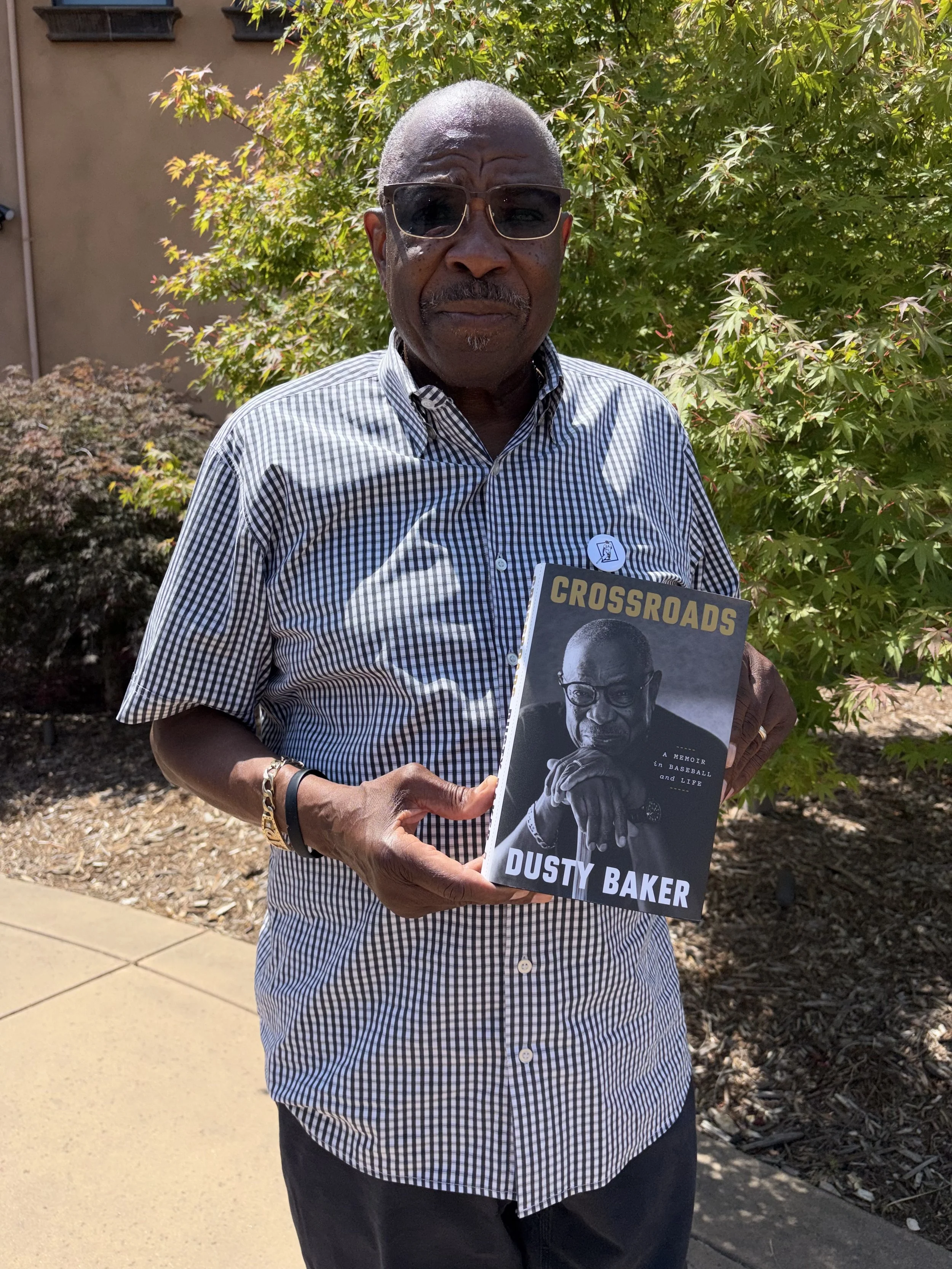
Today on The Stacks, we’re joined by legendary former major league baseball player and manager, Johnnie B. “Dusty” Baker Jr., to talk about his new memoir, Crossroads: A Memoir in Baseball and Life. In this book, Dusty reflects on his extraordinary life and baseball career while sharing the hard-earned wisdom and lessons he learned along the way. We discuss his thoughts on baseball's evolution over the years, his perspectives on winning and losing, and whether he thinks we’ll see a resurgence of Black American players in the MLB.
The Stacks Book Club pick for June is The Alchemist by Paolo Coelho. We’ll be discussing the book with Mary H.K. Choi on Wednesday, June 24th.
LISTEN NOW
Apple Podcasts | Spotify | Google Podcasts | Overcast | Stitcher | Transcript
Everything we talk about on today’s episode can be found below in the show notes and on Bookshop.org and Amazon.
Crossroads by Dusty Baker
“True stories of Dusty Baker: ‘I’m the second-most-interesting man in the world’” (Jayson Jenks, C. Trent Rosecrans, Patrick Mooney, and Daniel Brown, The Athletic)
“Basketball Jones” (Cheech & Chong, 1981)
Charlie Hustle by Keith O’Brien
Pike Place Market (Seattle, WA)
Crossroads by Dusty Baker (audiobook)
To support The Stacks and find out more from this week’s sponsors, click here.
Connect with The Stacks: Instagram | Threads | Shop | Patreon | Goodreads | Substack | Youtube | Subscribe
To contribute to The Stacks, join The Stacks Pack, and get exclusive perks, check out our Patreon page. If you prefer to support the show with a one-time contribution, go to paypal.me/thestackspod.
The Stacks participates in affiliate programs. We receive a small commission when products are purchased through links on this website.
TRANSCRIPT
*Due to the nature of podcast advertising, these timestamps are not 100% accurate and will vary.
Dusty Baker 0:00
I say what I mean, and you know, a lot of times it's gotten me in into trouble, but at the same time I was speaking out about the same things over and over and over and over, and see, to me, that's that's that's a waste of my time, especially if no one's listening, and it gets frustrating. I was not the only qualified black man to take a job as a manager, but it just seems like there's a quota of two. You hope that what you have done in your life has will help others, but it doesn't appear as such
Traci Thomas 0:43
welcome to The Stacks, a podcast about books and the people who read them. I'm your host, Traci Thomas, and today we are joined by legendary Major League baseball player and manager Johnny B. Dusty Baker Jr. to talk about his new memoir, Crossroads: A Memoir in Baseball and life in this book, Dusty reflects on his extraordinary life and baseball career, while sharing the hard-earned wisdom and lessons he's learned along the way. In today's episode, which is so very special to me, I get to talk with Dusty Baker about his decades-long career in baseball, the thrill of victory, the agony of defeat, and what has made him one of the greatest coaches in baseball history. Our book club pick for June is The Alchemist by Paolo Coelho, and we'll discuss this book with Mary H.K. Choi on Wednesday, June 24 Everything we talk about on each episode of The Stacks is linked in our show notes, and if you like this podcast and want more bookish content and community, consider joining the Stacks pack on Patreon and subscribing to my newsletter, Unstacked on Substack. Each place offers different perks. You can find community conversations and virtual book clubs on Patreon, and my writing and hot takes on the latest literary and pop culture news are over on Substack. Plus, your support makes it possible for me to make the Stacks every single week. To join us, go to patreon.com/the Stacks for the Stacks pack, and Traci Thomas dot sub stack.com for my newsletter. All right, now it is time for my conversation with Dusty Baker. I'm so excited,
Dusty Baker 2:19
You so silly.
Traci Thomas 2:21
All right, everybody, we are here. This is maybe the most special episode of the Stacks we've ever done. I am joined today by, well, he's probably like the greatest person to ever be in baseball, according to me. He is my Uncle Dusty Baker, manager, World Series winning manager, World Series winning player, all around baseball guy. They call you Forrest Gump of baseball, which I think is true. Dusty, welcome to the Stacks.
Dusty Baker 2:52
Hey, Traci, I am so proud of you. Now, now, I met you when you were like two years old or three years old or something like that.
Traci Thomas 3:00
Probably, you knew my dad before I was born.
Dusty Baker 3:03
Yes, well I guess I did. Thank you. I mean, it's a pleasure and honor for me to do this with you,
Traci Thomas 3:12
an honor for you, please. Yeah, an honor for me. Well, when I first asked you, you were like, you know, I don't really do podcasts, and I was like, oh my gosh, I can't believe I'm getting a no from Dusty. This is a pretty, this is a pretty harsh no,
Dusty Baker 3:28
but we're doing it, though.
Traci Thomas 3:29
We're doing it, we're doing it. Okay, so this is where we always start. Tell people in about 30 seconds what your book is about.
Dusty Baker 3:38
It's about my life, and it's about the ups and downs and turns and decisions that had been made along the way, and it goes from, you know, my childhood all the way up to where I am now. It, we wrote the book two years ago, so it cut off at 75 and you know, it's just about me to probably, you know, to try to help people, you know, that's that's what, what you know is intended to be
Traci Thomas 4:09
I got to tell you, I love the book so much, and I'm not just saying that because I know you, but one of the things I love the most about the book, and I called Brady, my brother, when I was maybe like a quarter of the way through, and I said, "Oh my god, it's so good, because there's so many people that we have met over the years who are Dusty's friends, who are like fancy people, like Ralph Garr Jr.
Dusty Baker 4:33
Yeah, but see, he's my godson, I held him the day he was born, too, so
Traci Thomas 4:37
right, but like hearing the backstory of all these people, and how they fit into your life, was really special for me.
Dusty Baker 4:44
Oh, thank you. Well, you know, something, the key is that, you know, we're still friends. You know, I mean, we were friends from the beginning. You know, we've had some ups and downs and fights, like all friends do. You know, from playing marbles to baseball to. To life, to girls, to you know, all kind of things, but you know, we remain friends after all these years, you know, some white, some black, some Mexican, some, you know, and after a while we don't have a color to each other, you know, he's just Kenny or he's just Dennis or he's just Ralph, and you know it's great to have friends like that, because see, one thing about it is I can't, I can't BS them, especially if I'm in the public somewhere, because they will, they will tell on me, "No, that ain't how it happened. Let me tell you the real truth, and so you know it's great to have those guys in my life that you know that keep me in check as well.
Traci Thomas 5:40
Yeah, yeah. Wait, I have a question. I've never asked you before. What is the B in Johnny B Baker? Is it just the letter?
Dusty Baker 5:49
Yeah, it's just the letter. Everybody asked me that. They try to give me a name. People like, oh, is it Beauregard? Is it Barney? Is it.. is it Binny? I'm like, no, it's just B, and see, my dad's from Florida, and in the South, you know, there are people that their names are JC, you know, JC Martin or JC, whatever it is, and people like, well, what does it stand for? Doesn't stand for nothing, you know, just, you know, like Johnny B, good, and you know, I'm Johnny B Baker Jr,
Traci Thomas 6:20
right? I just, as I was reading the book, I was like, I've never asked that question. I knew that that was your name, but I was like, maybe it stands for something.
Dusty Baker 6:28
But you know something, they have never called me anything other than Dusty and my family by any of my relatives. You know, my dad is Big John, my dad's Johnny B. The only people that, that, that call me Johnny were guys that I went to high school with. I'm sorry, elementary school with, because in elementary school they wouldn't call you by your nickname, and in Riverside we all had a nickname, you know. We had Buddhist, we had Beast, we had Roach, we had Chile, we had everybody had a nickname. My nickname was Dusty.
Traci Thomas 7:03
Yeah, well, you know, my dad, obviously he was a nickname guy, Chico.
Dusty Baker 7:07
Oh, yeah, Chico.
Traci Thomas 7:08
Yeah, so you knew everybody who knew my dad from before high school, because they still called him Leroy or Junior, because he was a junior too,
Dusty Baker 7:15
right.
Traci Thomas 7:16
Um, wait, how did you meet my dad?
Dusty Baker 7:19
I met your dad through through Billy North, and Billy North was my teammate. No, actually, me and Billy North met in 1969 at Arizona State, and he was with the Cubs, and I was with the Braves. We were going out with the same girl, and we didn't know it.
Traci Thomas 7:40
How scandalous!
Dusty Baker 7:42
Yeah, that's how Billy met, and we became partners. We put the girl down, you know, it's like, nah, man, she ain't no good. And so, so we became partners, and then we became teammates with the Dodgers. And then I met your dad, you know, through Billy North. Every time I go to, you know, to Oakland to see Billy,
Traci Thomas 8:01
That's so funny. No, I never.. there's so many questions as I was reading the book that I was like, I'd never thought to ask about that, you know, because you know someone has like an elder in your family, and it's like I just.. you know, though I do always ask you all my baseball questions, and I do have some of those for you. But before I turned out.. before we get to that, though.. Well, actually, I - this is a question I've asked you 100 million times, but I want you to tell people who are listening to my show, because obviously I have a book show, so everybody might not be a baseball person, and I've heard people ask me this before, which is like when you're a manager of a baseball team and your professional players have been playing baseball their whole life, what is it that the manager is doing day to day? What is your actual job? Because you're not telling them how to hold the bat or, like, you know, get the out at first base. They know that they're adults, they're professionals. So, what? What does it mean to be a baseball manager?
Dusty Baker 8:57
Well, to be a manager, you, you know, you're running the team, but without running it in a dictator type, you know, situation or feeling, you know, you run in every department with this pitch and hit and field and base running, but you have to let people do their jobs, you have to let you know, you can't micromanage everything, but you have to know a little bit, you know, about every facet of the game, granted, we, you know, we all have like specialties, you know. Mine, mine was more hitting outfield play, you know. I didn't know much about infield play, I didn't know much about catching, but I've asked a lot of questions from people that I played with. I was, I was very inquisitive, you know, as a manager, you know, the whole thing is just to let them play. I was listening to Miles Davis years ago on a, you know, he had an interview and he said he's the maestro of the of the band, he lets everybody, he had Billy Cobb on the head. The Herbie Hancock and all these famous guys playing with him in Montrose, and he would let them have their solo, but when he wanted to come in, he would like hit his horn, boop boop, couple times, boom, boom, and that means wrap it up, I'm about to come in, and I always thought about that as a, you know, as a manager, kind of, you let guys do their thing, you let them play, but you know, I'm the leader of the band and the orchestra. My job is to let them play and me direct them in the right direction,
Traci Thomas 10:31
Great And I feel like something that I've learned from you over the years is that the other thing is that you're really good about sensing what's going on with your players internally, like whether, like, someone needs a day off or someone needs, you know, to go go home for an extra night, or like, take a break, or whatever that looks like, and so I'm wondering, like, what is it, what is it that you pick up on in those moments, because I know all your players who have played for you, they loved you over the years, like, you are one of the most, they did that piece on you, was it in the athletic, where it was like everyone was talking about how great you were, and it was just like everybody
Dusty Baker 11:07
Not everybody, though. You know, I'm not doing my job.
Traci Thomas 11:11
Who wasn't in there? But, like, do what is that part of it like for you? How are you sensing like the personal vibes,
Dusty Baker 11:22
well, you know, something I learned that from from coaches in the past, and I've learned from coaches and managers how to be, which is important, and how not to be, and I learned from my high school coach, I remember I was missing layups, and my mom and dad had just separated, and then he asked me, what's wrong? I was missing layups and free throws, and I said nothing, and he said, "Nah, something's wrong. And so I broke down and talked to him about it. And then one time, when I was with the Dodgers, Jim Gilliam said something was wrong at home, and he says, "You want to talk about it? And, of course, I said, "No. And then later I broke down and said, hey man, and so therefore I've been able to use my experiences in my job to tell personality differences. I mean, if a person's talking a lot and he doesn't talk hardly, well, what's wrong? Or if a person doesn't talk and all of a sudden he's talking, I'm like, hey, something's wrong, or you can just see mood changes and attitudes, and you know people are looking for somebody to talk to, especially when they're having problems, but they, the hardest thing is to trust somebody, and and if somebody divulges their, their, their deepest, darkest secrets to you, you cannot tell anybody unless it's life and death, or a situation that is going to be a police matter, you know, you have to take it to your grave, and people really appreciate, you know, the fact is everybody's like, you know, most people like to gossip, or they say, you know, oh yeah, they, they say, you know, I hate gossip, but what else am I supposed to do with it? Well, what you supposed to do with it is eat it, and so you know these are just some lessons that I've learned, you know, from various people along the way.
Traci Thomas 13:08
I like gossip, but I mostly just like hearing people's secrets, like I just love to be, I love to know all the tea, which is, I mean, that's why I love after your games, coming back and hanging out with you and being like okay, tell me about so, like, I'm always wanting to know, because I feel like to have a good sense of people is so important in any sort of like managerial role or any sort of team role, to have a good read on people, and to like be receptive, and also to know like when to step in or when not to knowing all the gossip is good,
Dusty Baker 13:45
you know. The hardest part is knowing when not to step in, you know what I mean. Because a lot of times they don't want you to step in, or they might want you to step in at a future point in time, right? You know, and like, you know, the way I am, the way I was as a manager, I didn't make up any of that to myself, you know. Some came from my family background, being the oldest of five, so therefore I was probably more responsible than most. And then, being the captains, you know, being the captains on my teams, and then being the leader when I was in the Marines, or a lot of times I didn't want to lead, and I was forced to lead by somebody you know pushing you. Then after a while you quit ducking it, because you're going to be pushed out there anyway. And so you just take the lead, and you know, all my life in my I had trouble really, you know, fitting in, you know, I never really fit in, and so I kind of like, you know, took it upon myself. Okay, man, if I'm never really going to fit in, then I'll just, you know, do my own thing, and my own thing end up being right most of the time, or I was ahead, or you know, I was ahead of scale. Natural, you know, like, I'd like this cloth, you know, that clothing or that clothing, and everybody's like, man, why are you wearing that? That's so weird. And then six months afterwards, and everybody's wearing the same thing, and so, and so, just a lot of times, you know, you're different, but, but they, you're only different because you're, you're probably, you know, ahead of schedule or ahead of your time,
Traci Thomas 15:22
right? But okay, you said that everything is has nothing to do with you, and that you learned it from other people, but at some point you went from being like this rookie manager with the Giants to being Dusty Baker. I mean, you went from being a guy who was, who turned out to be good at his job, but they took a pretty big risk on you. They didn't know, and then eventually you become the guy they bring in in Houston. When they're in the team is in full-fledged crisis, you don't just bring in anybody. So, there must be some things that you've developed that have become like your signature in what you did.
Dusty Baker 15:57
You know, some.. I don't know, Traci. Honestly, I just tried to be myself and tried to be and tried to be honest as I could, and a lot of people, you know, recognize things in me that I didn't recognize or even want to see, you know. Al Rose, Al Rosen is the one who, who told me the idea fine manager, I didn't want to manage, I didn't want to be in baseball, you know, but he, he called me and said, 'Hey, man, we want to talk to you about a job, and I said, 'No, I got a job, I was a stock broker at the time, and I was, I was studying for my seven, I passed a six at 22 and I was trying to take over our company, you know, after my brother, you know, went down manic depression, and so I said, "Hey, I don't want to match, and I said, "You don't even know me, and he says, "Well, I've seen how you are across the field, and I was like, "Really? And that's one thing that I tell young people, you never know who's watching you, and the person that's watching you could be the guy that's going to give you a break in life, because at that time I was at a crossroads, and I really needed a break, you know, in life, because my marriage is upside down, my finances are upside down. I mean, you know, my brother Vic, you know, was in and out of institutions. I mean, I didn't know what to do, and, you know, to me, the Lord put me in that situation at the right time of my life, but I also tell young people, you have to be prepared to recognize the breaks, the breaks when you're getting them, because you, you don't know if you don't recognize your breaks, you won't follow that lead, and a lot of times that lead, you know, will take you to heights that you never thought about before, I never thought about really the Hall of Fame, take the truth, or being managing the year, nothing. I just like to win, and I figured I like to win, I like to make money, you know. And they come hand in hand, and you don't make money and then win, it'll happen like that. You win, and if you win, everything else will take care of itself.
Traci Thomas 18:03
I want to come back to winning and losing, but before we do, I want to just.. there's a moment in the book that you're sort of alluding to, which is like knowing when the opportunity presents itself to you, and there's this little anecdote in the book where the Giants have sort of offered you the job to be manager, and you are like, I don't know, I gotta go take a break and think about it. I gotta go up to Lake Arrowhead, and your dad's like, "Yeah, like go, go pray on it, like go see if you get a sign, and you're up at like Arrowhead, and you could tap on your shoulder, literally, and you turn around, and the owner of the Giants is standing there, and he says, "Dusty, come, come work for us, come, come manage, and you call your dad, and you're like, "Hey, Dad, this crazy thing happened. I ran into the owner of the Giant, and you're, and you're like, "I just.. I still don't know. And your dad says to you, "Hello, that is a sign he.. the man tapped you on your shoulder. What is wrong with you? So it's funny to hear you say, "You got to know when the opportunities present themselves, because you still almost missed it.
Dusty Baker 19:02
Yeah, and you know why? Because that's not what I.. that's not the sign I wanted to see.
Traci Thomas 19:08
Yeah,
Dusty Baker 19:08
you know, I mean, that was the last. I mean, I did not want to see that. And, like I said, he tapped me on the shoulder. I had known Bob Laurie from when I was on the Giants of one year in 84 and tapped me on the shoulder. I turned around, and it was Bob Laurie, and I hadn't seen him before that, and I didn't see him the whole weekend after that, so if I'd have gotten there two minutes earlier, two minutes later, I'd have never seen him, and my dad goes, "Son, if you went up there and prayed for a sign, and sign tapped you on the shoulder, even before you said a prayer, he said that's that's something that you don't want to see, so you better if you're going to ask for for something, then you better accept what you asked for.
Traci Thomas 19:51
Yeah, okay. Let's talk about winning and losing. When we were in Miami earlier this year for the World Baseball Classic, we were at dinner and. You were talking, you said to me, or you said all this, that the wit, the wins are never as good as the losses are bad, and I've been thinking about that ever since that was what, February, I've not stopped thinking about that, because I, I just, I relate to that so much, I feel that I have that competitive nature, though, obviously not an athlete, but I'm wondering, like, if that's true for you. How did you continue on in a sport where you're playing 160 plus games a year, you're losing a lot, even when you're winning a lot, you're losing a lot, like, how do you mentally do that, I as a person who feels the losses so hard.
Dusty Baker 20:46
Yeah, well, I feel them hard, and they, and they wake me up at night sometimes for weeks after I get came back from the WBC. I thought about that one game that we blew against the Netherlands. I mean, I was wondering, hey, man, should I have done something different, or is there anything I could have done, or whatever, because I take the losses personally, and like I said to you that night, I still can't figure out why the losses are so much greater than the wins, I think you know I'm supposed to win, you know, and my daughter asked me when she's, she's 47 now, she said, "Dad, why must you win all the time? And I was like, she might have been eight years old, and I was like, "What? She goes, "Why must you win all the time? I said, "Well, because I'm supposed to. Well, she said, "Dad, that's no, that's no answer, because I wouldn't let her win if we're playing jump rope or jacks or tiddly wings. I'll let you get close, but I'm not gonna let anybody win, you know, because, and I told her that they don't let you win in life, you know. If you win, it's because you beat somebody, and you try to beat them fair and square. But to answer your question, that keeps me driven, and I remember, I don't know if I said in the book or not, my dad, when we lost to Anaheim in 2002 my dad said, "Son, if you don't, if you didn't win that one, I don't know if you'll ever win. And I, that just stuck. I was like, "Man, I got to prove my dad wrong, because, see, back in the old days, the old dudes, they negative motivation was was prevalent. Now you can't use negative motivation, you know, everything's about positive motivation, but I believe that there's a certain amount. If you just sprinkle a little bit of negative motivation, you can't have too much, but that kept me driven in order to win in Houston, and then I wanted to win again, you know. And which is one reason why I went to Nicaragua, because I like that feeling of, of winning, and I can't stand that, that feeling of losing.
Traci Thomas 22:47
Yeah, I, my dad was a negative motivation person, and so I, I'm kind of partial to it on the shoulder.
Dusty Baker 22:55
Yeah, but that generation was, was like that.
Traci Thomas 22:58
I know, I know, but I tell my kids, like the other day, my boys were playing like a little soccer game, and one of them was losing, and the other one was like, 'You can have another turn, and I said, 'Don't give him another turn,
Dusty Baker 23:09
true, that
Traci Thomas 23:10
why not? I said, 'No. I said, 'If you're gonna play and one of you is gonna win, you gotta win, so that the other person knows they really won, because if you start giving away the win, then you don't even know if you really won or not. I'm like, one day he'll beat you, he'll turn around and beat you, don't worry about that.
Dusty Baker 23:27
But you're not gonna like it either
Traci Thomas 23:28
you won, yeah, yeah. Like, if you start handing out wins to each other, you don't even know what it feels like to have done a thing all the way to the end. I got, I kind of like got mad at them, and they were like, we're just sharing. I was like, don't share,
Dusty Baker 23:42
you're tough, Traci.
Traci Thomas 23:44
am, I am, I don't, I blame you guys, all you, all my dad's friends, who are competitive and winners and athletes, and you guys all like, were just high achieving people,
Dusty Baker 23:55
but you saw him, I mean, firsthand, playing pool, playing the cards, playing anything, huh? And nobody's gonna let anybody win.
Traci Thomas 24:03
But I beat him
Dusty Baker 24:04
Oh no, he didn't like that.
Traci Thomas 24:05
I, yeah, like I remember. I'll never forget, I was probably seven or eight, and Brady was probably like 12, and we did a foot race from our house to the telephone pole, and I beat Brady, and I was like, this is the best day of my life, and if they have been out here letting me win all the time, do you think
Dusty Baker 24:26
What did Brady say?
Traci Thomas 24:29
He was like, oh yeah, like he, you know, he was trying to act like he let me win, but he didn't, because he never let me win before.
Dusty Baker 24:35
I believe that
Traci Thomas 24:37
you hate losing, you win the World Series in 1981 as a player, then you go on to have a 40 year non winning the World Series streak, you play, you take five teams to the playoffs as a manager, teams that had no business being there, the Cubs had. No, they had not the Reds, the National, I mean, the Nationals were good when you got to them, but still you took them, you had these, you had great teams, you had sort of random teams, but you never actually won one. Was there a point in your life where you kind of came to terms with this idea that maybe you wouldn't win the World Series as a manager?
Dusty Baker 25:18
Uh, yeah, you know, when I was looking around at some of my friends as players like Dick Allen, you know, Billy Williams, Ernie Banks, Charles Barkley, you know, some of these guys, that's like, well, maybe, but I kind of just couldn't accept it, and I kind of semi accepted it when there was a two year period between the Nationals and the and the Astros, and I didn't have, I didn't have an offer, and when I left the Nationals, we had won 95 and 97 games. I mean, that really hurt, because I thought I did a great job, but you know, when you do a good job, and when you did,
Traci Thomas 25:55
yeah,
Dusty Baker 25:56
and then you know, rarely, as a manager, I wasn't fired, I just wasn't rehired, which is almost same thing, but you know that one hurt, because I really, really liked Washington DC a lot.
Traci Thomas 26:10
Yeah
Dusty Baker 26:10
you know that was as much my city in a short period of time as any city that I've been around, and I got a call from the Chicago, I mean from the Philadelphia Phillies, and they wanted me to interview, and I went there, interviewed, thought I did a great job, saw some old friends, Larry Boa from my hometown, and different guys who I interviewed with, and went back, and they said that they were going to go with Joe Girardi, and you know, and I like Joe, I mean, and I said, okay, man, and so I was a little down about it, and Darren came to me, and he goes, 'Dad, maybe God didn't want you to go to Philadelphia, and I was like, 'Really, I mean, little old dude, that's what I'm supposed to be saying to you, you know what I'm saying. So, and so next thing I, about two days later, I got the call from, from the, you know, from the Astros, you know, because they had had the scandal and all this stuff, and you know that was again out of my control, but like I said, there's too many instances in my life where you know I can't believe in God, you know, because it's like it just, just these random things just don't happen to everybody, and they kept happening to me in my life, even though I didn't deserve most of them, but you know, I tried to do the most with them.
Traci Thomas 27:34
Yeah, yeah. And then you won. That was so great. That was so great.
Dusty Baker 27:40
And then I wanted to win again, and you know something, I mean, that run in Houston was as good a run as, I mean, they were, if we don't want two more games, one each year, you know, we don't want to World Series four years in a row, and that's what I always wanted to do, because, see, as a kid I was a Laker fan and a Dodger fan, and I didn't like the Celtics because they beat the Lakers, and I didn't like the Yankees because they beat the Dodgers, and, and, and, and they won every year, like 10 years in a row or something like that, and I'm like, and, and once I became a manager, then that's the kind of run I wanted to get on
Traci Thomas 28:21
right,
Dusty Baker 28:22
like, hey, man, why can't we win every year? And then now I'm in a position where, where I think I can help you know, build a team, because I know what it takes to build a team, I know what you need, and you need speed, you need some, some this, and you, some that you sprinkle a little bit of this and a little bit of that, and, and you can win, and you can win for a sustained period of time, and that's where I am now. I'm in a consulting role. I do wish I would be dependent on more, but you know, but who knows, maybe in the future.
Traci Thomas 28:59
I seem to remember you telling me after you won you were going to do one more year, and you were going to retire, and then the next thing I know, you're back to work. So, I don't.. well, Melissa's sick of you.
Dusty Baker 29:10
No, no, but you know something, I did retire. I retired from the field,
Traci Thomas 29:16
sure,
Dusty Baker 29:17
every day, because I don't have the energy, you know, like I've had a stroke 13 years ago, I've had three ablations, two, two, you know, defibrillators, pacemakers, you know, that's enough, and you know, I need some time with my grandkids and some time to see Darren play and enjoy some of these, you know, some of the things I've worked so hard for, but I learned from my dad to see, my dad worked two jobs for 36 years. My dad worked, and so I talked to him out of, he worked for the military as a civilian, he worked for Sears as a salesman, and he was like salesman of the month for like 20 months in a row. Or something like that, so I talked him out of retiring, I mean, into retirement. I said, "Dad, why don't you just stop? You know, okay. Well, then my dad almost died. He got deathly sick, and then he went back to work at working like 15 to 20 hours a week, and he got well. So, I mean, you have to do something, you know, you can only play golf so much, you can only play, you know, fish so much. And I remember when Bill Walsh, Bill Walsh, who was like one of my main mentors, you know, we would have this, you know, these sessions at his house, and he had a grease board, and I still have all Bill Walsh's cards that he gave me, how he started the ers, and the papers off the grease board, and thing that I remember, probably most, he and he said that most men get depressed about 65 to 70 years old because they quit working, they have nothing to do, and then they have nothing to replace that 70% of time that work occupied, right. That's, and if you work 40 hours a week, I mean, how do you, how do you replace 40 or 50 hours a week? And so you have to, you have to do something to keep your mind sharp. Plus, I'm very aware that you know dementia is running my family. My dad died of dementia. My mom died of dementia, so therefore I try to, you know, not use MapQuest unless I'm lost. I try not to, you know, I try to, you know, memorize telephone numbers, you know, try to try to do whatever I can, you know, to stay sharp, including, you know, some part-time things, even though Melissa says, you know, she thinks I work too hard, but you know
Traci Thomas 31:55
One of the things about you that I think is so great that I don't feel like you talk about nearly enough is that obviously you know so much about baseball, you've been in the game for forever, but you are a man with many interests, you read, you listen to music, you care about a lot of different things, and so I'm wondering, how at all, if you feel like those things have, like, I mean, you hunt, you fish, you, there's so many things that you're passionate about, and I'm wondering how those things have played into your sort of success professionally, if at all.
Dusty Baker 32:26
Well, I think those things have played a major role because it keeps me yearning for knowledge, and it keeps me inquisitive, you know, for things instead of just saying, okay, man, I've accomplished this, and I know this, and I know that, and you know you can learn from everybody, and you know it's as you get older, the hardest thing to do to probably it is to listen, because like you've experienced so many things you can chime in on almost, oh yeah, let me tell you about that time, or oh yeah, I was over here and I did that, and as you get older, you know, if you force yourself to listen, then you know there are things that you can, you know, you can still pick up and still learn, and it helps me, you know, I'm, I'll be 77 next month, helps me having a wife that's 12 years younger than me, and it helps me to have a son 27 and a daughter 47 because they keep me young and they keep me hip on what's up now. The only thing that that I can't seem to grasp, you know, is the telephone and this technology.
Traci Thomas 33:39
Tell the people what you do with your emails. Can we please share that secret? It's the best thing about you that nobody knows.
Dusty Baker 33:47
Go ahead, Traci. You say it.
Traci Thomas 33:48
do you know? You tell them, how do you get your emails? What happens with your emails?
Dusty Baker 33:52
Well, they pile up, and then I erase them, and then I erase the wrong one sometime, or I have..
Traci Thomas 33:59
What does Melissa do with your emails?
Dusty Baker 34:02
Oh, yeah, she answers, or she, she, you know, hooks me up
Traci Thomas 34:07
She prints them out. She prints them out.
Dusty Baker 34:10
Yeah, that's because I like, listen, I like, okay, listen, I like printed stuff, you know, because I can read it, I can mark it up, I can go over, I mean, see, I make a list on what I'm going to do every day in the morning,
Traci Thomas 34:25
like a to-do list,
Dusty Baker 34:26
yeah, to-do list, and I try to do that on my phone, and, but sometimes I got my list on the phone, but I forget to even look at the phone, because sometimes I refuse to be a slave to that phone, I mean, and one time we, I was in Alaska with Darren and Kenny. I said, Kenny, I want you to film me, man. Okay? He goes, What are you gonna do? I said, I'm gonna throw this phone in the water, and I said, and I said, you film it, and it'll go viral, because you don't know how many people want to do the same thing, and so. So I was all poison ready to throw it in the water, and he was like, "Okay, let's go. I couldn't do it because I thought about how much the phone costs or how many contacts I had in that phone.
Traci Thomas 35:11
Oh my god
Dusty Baker 35:12
but someday if you hear about me throwing this phone in the water, because see, sometimes, sometimes I get tired, you know? You get tired of always having to answer stuff,
Traci Thomas 35:26
This is very relatable. Okay, I write a handwritten to-do list every day, every workday, every work day. Yes, yeah. And then, in my phone, I have another list when I'm not in front of my yellow pad, where I just add things in case I forget, like, oh, shoot, don't forget to do that. I'll put that in my phone, but then list and put it in. Yeah, no, when I found out the Melissa prints her emails, I.. it's the greatest thing I've ever heard in my life. I think it's so funny. I,
Dusty Baker 35:56
and only time she gets mad is when she has to go get some more ink or toner
Traci Thomas 36:07
It's so silly
Dusty Baker 36:09
or if I want, or if I want color, she goes color?
Traci Thomas 36:14
in this economy?
Dusty Baker 36:17
I'm telling you, and then we had to go buy a bigger printer, because, because
Traci Thomas 36:23
It's all you're printing, it's not like you're printing a bunch of other things, you're just printing emails
Dusty Baker 36:27
that's the only thing I'm printing. Yeah, or you know, contracts and things that I have to, I can sit down, study, read, dissect, you know what I mean. who told you that, Melissa?
Traci Thomas 36:40
You told us, I think Brady knew Brady brought it up at dinner a few months ago, and I think we were all laughing so hard. It's just the funniest thing ever, because I also think like you're you, so you don't understand fully what you mean to people and to the world, because you're you, but like you are Dusty Baker, you know, underlined exclamation point with, like, a little crown, you know, like you are the Dusty Baker, and so the idea that you, one of the most accomplished people in all of baseball, doesn't know, doesn't read his emails, but hasn't printed out, is hilarious.
Dusty Baker 37:15
No, but I do read them, but Melissa prints out the, the the important ones. I read them, I'm telling you, but it takes, but I'll erase some good one in a minute, because it's like, you know, nope, check, boom, delete, delete, delete. And so, like, I tell people, I'll read a text before I'll read, I'll read an email,
Traci Thomas 37:41
and you also, you're you also sign your text messages, dusty, as if we don't know who's texting
Dusty Baker 37:49
everybody don't do that?
Traci Thomas 37:57
There's a contact name, so I know when it comes in that it's you, though. Your phone number is private, which is always terrifying. I'm like, Who's calling me? But your text messages, we know.
Dusty Baker 38:08
No, not the reason I got it private is because, see, sometimes a certain members of the press, not many, you know, pass your number around.
Traci Thomas 38:16
Yeah. No, I understand.
Dusty Baker 38:18
Yeah, I was getting calls from everywhere, not North Dakota, Maine, I mean, you name it, Illinois on every subject, and you know how I feel about that phone, and see, and see all my friends, and Melissa, she says, you know, they all say I cut them off on the phone, and they were like they were calling me, like, you know, three minutes signal went through in the old days, because hey, the
Traci Thomas 38:46
As the phone is ringing in the background right now.
Dusty Baker 38:48
Yeah, and see, and check this out, and see, I'm one of the last people that has a landline,
Traci Thomas 38:54
yeah, you are,
Dusty Baker 38:56
yeah, and I have a landline because I don't want to leave my, my, my cell phone on during the day and at night I want to get sleep and and and I have a landline in case there's an emergency within my family because they have my landline
Traci Thomas 39:12
right when I want to talk about the media because I know that you have had a long relationship with them as a person who's been in the public eye for a long time, I remember there were certain cities that you didn't care for them as much as others. I won't name names, but I remember, and I'm wondering, you talk about in the book, you come from this family, your mother was political and sort of, you know, not necessarily political, like politically active, but was political and believing in the equality of black people, your aunt, you have a picture with your aunt with Martin Luther King in the book, which is so cool, and you know, I know you, so I know that you have political beliefs. There's things, there's mentions, there's comments about Obama in the book. In the epilogue, you sort of talked about this period in American history right now, but I also know. You, as a black manager and player, were really cognizant of your perception in the public eye, what the media would say about you, how they would twist your words, how they would make you, you know, what the media does, right? And so I'm wondering if there were ever times in your career, looking back, where you wished you had said something, or you wished you had done something that was maybe like spoke out more or stood up more for anything, when you look back,
Dusty Baker 40:29
not really, Traci, because, like, a lot of times, you know, when I spoke, I would speak in a sense of a parable that she had to look into what I said, you know, because I say what I mean, and you know, a lot of times it's gotten me in into trouble, but at the same time I think I spoke out, spoken out plenty. The problem was that I was speaking out about the same things over and over and over and over. And see, to me, that's that's that's a waste of my time, especially if no one's listening, and if you keep talking about the same thing, you know, the equality in sports every year it's during Black History Month, every year it's Jackie Robinson Day, and then after that we don't do nothing about it, I mean, there are less black players in the game now, less black players. I mean, people in the front office, black, you know, less black coaches, black scouts, you know, everything. And it gets frustrating because, you know, nothing's kind of, you know, been done. I mean, there are a few things that, you know, improvements in the game, but there are a whole bunch of things that have been deleted along the way, and you know, I was not the only qualified black man to take a job as a manager, you know, there's a lot of qualified guys out there, but it just seems like, you know, it seems like there's a quota of two, you know what I mean, that's been, and then before that is a quota of three or four, and it's just, it's, it's just frustrating when you see, you know, you hope that what you have done in your life have will help others, but it doesn't appear as such.
Traci Thomas 42:25
Do you think we'll see a resurgence of black American players in the league? Do you think that there's a path forward to that, or do we do that? Those like lines have sort of dried up over the last..
Dusty Baker 42:36
I think there's a.. there's a path forward, you know, baseball's doing, making a conscious effort to help black kids play, because it's a very expensive sport to play now, you know. I wasn't like that before. I mean, nowadays,
Traci Thomas 42:54
All the sports are expensive now.
Dusty Baker 42:56
Oh, yeah, I saw that with my son, you know, with the travel ball and the equipment and the travel and the hotels and different things and one of my godsons, Delvin Matthews, the son of Gary Matthews, one of my best friends. Well, he and Jerry Manuel, who's my homeboy here in Sacramento, used to, you know, be a ball player with the Tigers, he manages the White Sox, you know, they're in charge of, you know, putting on clinics, games, Dodgertown, just different games all over the country to help black kids play, and, and if they play, then you know some of the brothers have to have to make it, because they can play
Traci Thomas 43:38
Do kids even want to play, like, or do they want to be basketball players or soccer players? Like, I feel like culturally baseball is not like I feel like back in the day, like in the 70s and 80s and 90s, it was like Barry Bond, and like you know, in Oakland, obviously in the 70s it was the A's, they were such a big deal, they went three in a row, like, and there were all the brothers on the team,
Dusty Baker 44:01
but see, Traci, back then, you know, there were more brothers playing baseball,
Traci Thomas 44:09
Right? So that's why I'm wondering, like, and good, do they want to go into baseball? Are they still hoping they're going to get a basketball?
Dusty Baker 44:17
I love basketball too, though.
Traci Thomas 44:20
I love basketball too, like the kids aren't talking about. I feel like young people today aren't talking about and watching baseball in the same ways that even in the 90s I was like baseball was my number one sport when I was reading the book, and you brought up Ellis Burks. I was like, my guy, remember my 13th birthday I got a picture with him, and you got him to sign the ball for me, and my dad was like, why do you like this old man
Dusty Baker 44:48
And this old man could play, he could play
Traci Thomas 44:50
I loved him, he was my favorite
Dusty Baker 44:52
But Traci those guys are heroes, you know, a lot of kids don't have the heroes that we had then, you know. You know, my heroes were Jim Brown and Gail Sayers and Lenny Moore in football, and then I had, like, Bob Hayes and track, and then I had Elgin Baylor in basketball, and I had Tommy Davis, I mean, in baseball guys, you know, to emulate and look up to, and when I was a kid, you know, they had the sepia, Ebony, and Jet, and I think Ebony, or one of them, had the number of blacks on every team in the league,
Traci Thomas 45:29
right,
Dusty Baker 45:30
and I never forget that, that I was motivated at that point in time, because of Pirates, the Braves, the Indians, historically
Traci Thomas 45:43
The Giants right?
Dusty Baker 45:45
Yeah, and the Giants, you know, they had the most combination of black and Latins, and so, you know, once once some of these kids come back into the fold and make it to the big leagues, because, see, some of them going to make it, you know, and especially when you have a few brothers that are, that are number one draft choices, see, when you're number one draft choice, they're going to give you every opportunity to make it, because they want to return on the investment, whatever they signed you for, and see, and see, when you, I mean, it is a business, and when you're a lower round draft choice, you have to impress in a hurry, because they don't have a whole bunch of money invested in you, so you know, so hopefully soon here, and I hope in my lifetime that you know we'll see more and more and more, and then, and then it'll turn over, and then hopefully we'll see, you know, once they start talking about how much money some of these guys are making, right? You know, it's like, oh, wow, man, I better go play baseball, but it is hard, Traci, if you love basketball to get basketball out of your system, because see, the only way I got it out of my system is it hurt my leg. Yeah, I got hurt, and it almost cost me my career, and I didn't fall in love with baseball until I hurt my knee playing basketball, and there was a song when I was a kid, and I was a teenager, called Basketball Jones by Cheech and Chong. I had it bad, trust me
Traci Thomas 47:10
I mean, I listen, I grew up watching all the sports. I love all the sports. The older I get, the more I love baseball, which probably makes sense, but, but I do, I mean, like the World Baseball Classic. I think the USA team only had two black Americans on the team. That to me is crazy, like
Dusty Baker 47:28
me too.
Traci Thomas 47:29
That to me is just like, how are the kids even going to have role models in baseball when there's like three of them? It's like Mookie Betts and Aaron Judge, and that's it. I mean, Mookie Betts wasn't even on the World Baseball Classic team, he didn't make the, he didn't make the all-star game last year, but it's just like, I, I'm so worried because I want us to be out there, I just, I, and I mean, I also have so many, but let me ask you, What do you think of the runner on second and the pitch clock and all of the new rules to make the game faster?
Dusty Baker 47:59
Well, I mean, some of it's good, you know, the only thing I don't understand is why we got the runner on second during the season, and then once we get to the playoffs, then we don't have the runner on second anymore, you know
Traci Thomas 48:14
I don't like, that's the one I hate the most, I hate the runner on second one
Dusty Baker 48:19
right, because you got to earn your way on second,
Traci Thomas 48:21
yes it's like, Oh, someone's just gonna be there? No
Dusty Baker 48:24
Yeah but Traci, nobody. No, my opinion wasn't asked on any of this, you know. And listen, but sometimes you know people say, "How come you haven't stood up more this and that? Because see, sometimes you sometimes you realize that that that your voice not going to mean anything, because people going to do what they want to do anyway, especially those that are in power will do anything, and by all means necessary to remain in power. So, so, so, therefore, you know, sometimes I say, and sometimes I don't say, but if I don't say, then I'm waiting for the right opportunity to say. That make sense?
Traci Thomas 49:01
sense? It sure does. Sure does. Yeah, I, I don't, I don't like the new rules. I always tell people I feel like the most like my dad every time baseball makes a rule change. I get so mad about it
Dusty Baker 49:14
It's too late, Traci. I'm just telling you that we got to find a way. We got to find a way to play with them, these rules, whether you like them or not.
Traci Thomas 49:23
I know I still watch, but I just don't like it as much when we get to extra innings, and then they just trot out some fast kid and put them on second base. I'm like, where'd you come from? You're just out there now?
Dusty Baker 49:34
Yeah, you made your last out
Traci Thomas 49:37
surprise, here you are. I hate this. Um, there's a story that's not in the book that you've told me before. Can I make you tell the people about it, about Pete Rose?
Dusty Baker 49:50
Okay, go ahead.
Traci Thomas 49:51
Well, I just remember when I read the Pete Rose book, I text you, and I was like, I just read this great book about Pete Rose, and you know, I know I remember you saying you always liked him and then you told me why you liked him. Will you tell them?
Dusty Baker 50:04
I love Pete Rose, and you know Pete was cool with, with almost all the black players, especially back in the time when it wasn't cool to be, and and he was close to Vader Penson, and you know Frank Robinson, and he took a liking to me and Ralph Garth from the get-go, because you know we came into the league hit, and you know Pete loved competition. He's like, "Hey, Baker, keep up with me today. He always asked, "How many hits you going to get today? And I said, "I feel like that, two for four, Pete, and he said, "Two for four. He said, "Man, why are you giving away to two hours before you even get to the plate, and I was like, hey, that makes sense, and that's why Pete Rose got 4000 I have almost 2000 but you know, but Pete Rose told me, you know, man, I must be part black, you see this, but I got you see this ass, and I said, yeah, Pete, he used to kill me, but Pete helped me. Pete helped me at a time long after I was in my playing time, when I was, when I was having some problems off the field, and fighting Uncle Sam, and the taxes, and stuff, and when I was on first base as a player, Pete Rose, I asked him, I said, Pete, how are you doing this? Because in the middle of his 44 game hit streak, he was getting divorced, his dad died, all kind of stuff, and he told me that you have to use baseball as a sanctuary away from your problems, because when the games are with your same problems you came to work with are going to be there when you, when you get home, and then that really resonated with me almost 15 years later, but, but, but, but that goes back to what I tell these kids that Hank Aaron used to tell, ask, tell me things, and he said, "Dust, you understand? I said, "Oh, yeah, Hank, I understand, I understand nothing. So he's like, "He's like, well, I know you don't understand, really, but he says, "Whatever I'm telling you, he says, "to retain it, and that was some of the best advice I ever had, and then if you can call it up when you need it upon upon command. Boom, you'll know what to do in that situation. And that's what happened to, you know, the same thing that Pete Rose told me. I called it up, boom, and I was like, man, Pete is telling the truth, because see, you know when you get home, those problems are going to be there, but it's hard. It's easier said, easier said than done
Traci Thomas 52:43
yeah. Okay, so there's a few questions I ask everybody who comes on the show. So I'm going to ask you, when you were working on this book, how, what, what was your routine like for that? How much were you writing? I know you worked with the, with the co-writer, were you, how was that process? Did you have snacks and beverages? Did you go out of the house? Were you listening to music? Like, how are you getting into the creative zone for the book?
Dusty Baker 53:09
Oh, that's that's a good question. Depends on which part of the book I was in, you know? I mean, I was, I listen to music all the time.
Traci Thomas 53:16
Yeah,
Dusty Baker 53:16
and yeah, it just depends what kind of genre I'm listening to, depending on what mood I need to be in, and no, I didn't do much of the writing, I did a lot of dictating, Steve did most of the writing, because my hands, I have arthritis in my hands, and so when I love to write, and it had been, you know, too hard, I tell you, the hardest part of writing this book was to was to have to proofread the same chapters over and over and over and over, and it took two years to write. Spent hours and hours upon the phone. Steve came over to my house, you know. We met, you know, he was in Europe, he was in Cambodia, Vietnam. We were talking, trying to figure out the time difference in the hours, and you know, the hardest part, and also the hardest part was, you know, they gave me a limit on the pictures, and my mom kept.. oh, my mom kept everything.
Traci Thomas 54:19
There's three photo sections in the book. I loved it. I loved it
Dusty Baker 54:24
I could have had eight. I'm serious about that. And the next difficult thing about writing a book was having to kind of regurgitate and relive some of the, some of the things that I had tried to, you know, suppress and had suppressed it, you know, but if you're going to tell your story, you know, you got to tell some of the good with the bad. I mean, you can't tell, there's nobody's business of knowing everything, but you can, you can tell, you know, most things, and the thing I didn't want to do was to involve or tell on anybody else, and you know that's not, that's not me.
Traci Thomas 55:04
You didn't answer about snacks and beverages, and that part's important. So, I got to get you on record. Do you have writing snacks and beverages? I don't think I've ever seen you eat a snack ever.
Dusty Baker 55:16
No, I don't. I don't snack much. You know what I do? Do I just like in baseball, during the game, I eat fruit.
Traci Thomas 55:24
I was gonna say, I remember when we went to Seattle, 2018 Mom's thing, you brought peaches to the ballpark, and we were eating peaches in the seat and I was like, this was.. I was so pregnant.
Dusty Baker 55:36
I love Seattle, because I love going down to the to the market.
Traci Thomas 55:40
Yeah,
Dusty Baker 55:41
it's the finest market. I mean, I get Rainier cherries and come back with peaches and nectarines, and it keeps my sugar level up, and it keeps me sharp. Now that's what I do, you know, when I, when I'm writing, or in baseball, and it got to be a joke, because see, some of the guys who steal my fruit, I put it in the, in the ice chest, and have it like real cold, and I go in there, and then I like, hey, man, who stole my fruit? And I'm trying to act mad, but I'm not really not mad, you know, it's like a little kid, and so they guy would tell me, and they know I don't like snitches, so so they wouldn't tell me, but then some guy would point over here, like, and it was always the same guy, usually it was Framber, Framber would always, Framber Valdez, I mean, he was a culprit, I mean, he'd get my nectar rings, he'd get my peaches, get my apricots, and so, like you said, I know, I don't snack much now, my weakness is cookies, you know, like, yeah, late at night, you know, oatmeal raisin, kind of soft,
Traci Thomas 56:52
yeah. I love a cookie, I love a snack, I love a snack
Dusty Baker 56:56
but see, but see, I can't snack too much either, because, see, I'm a type two diabetic, and so, so I check my vitals every day to make sure that I'm staying right and stuff.
Traci Thomas 57:07
okay, another question I have to ask you on the record is, what's a word you can never spell correctly on the first try?
Dusty Baker 57:15
Perseverance.
Traci Thomas 57:18
Oh, good one, that's a good one, yeah. Okay, and then last question for you, if you could have one person, dead or alive, read this book, who would you want it to be?
Dusty Baker 57:30
Marcus Garvey.
Traci Thomas 57:35
Wow, that was a curve ball. I wasn't seeing that coming. I love that answer.
Dusty Baker 57:40
I love throwing you curve balls
Traci Thomas 57:41
I love it. You always surprise me, though. Every time I ask you a question, and then I'm waiting for the answer. Like what's he gonna say? All right, well, everybody, thank you so much for listening. You can get Crossroads out in the world wherever you get your books, you can read it and see all the pictures, you can get the audiobooks. It is out as you're listening, it's out now. Dusty, thanks for doing this. Thanks for coming on the show.
Dusty Baker 58:06
Dang, little Traci, you were, you're a woman now, that's hard for me to accept.
Traci Thomas 58:13
I'm gonna be 40 this year.
Dusty Baker 58:15
Yeah, you're looking great, and you are good. You're good. I mean, I admire you and your whole family, and I mean your brother, your mom, your dad, because you guys are on it.
Traci Thomas 58:27
Thank you, thank you. I love you so much. Thank you, everybody. We will see you in the stacks. Thank you all so much for listening, and thank you again to Dusty Baker for joining the show. I'd also like to say a huge thank you to Tammy Blake and Melissa Baker for making this episode possible. Our book club pick for June is The Alchemist by Paolo Coelho, which we will be discussing with Mary HK Choi on Wednesday, June 24 If you love the Stacks and you want inside access to it, head over to patreon.com/the Stacks to join the Stacks pack, and check out my newsletter at Traci Thomas substack.com Make sure you're subscribed to The Stacks wherever you listen to your podcasts, and if you're listening through Apple Podcasts or Spotify, take a moment right now, just go ahead and do it, and leave us a rating and a review. For more from The Stacks, you can follow us on social media at The Stacks Pack, on Instagram, Threads, and YouTube, and you can check out our website at The Stacks podcast.com This episode of The Stacks was edited by Christian De Wen, yes, with production assistance from Sahara Clement. Additional support is provided by Cherie Marquez, and our theme user is from Tagirijus. The Stacks is created and produced by me, Traci Thomas.