

Ep. 435 Behind the Beautiful Forevers by Katherine Boo — The Stacks Book Club (Julianna Haubner)
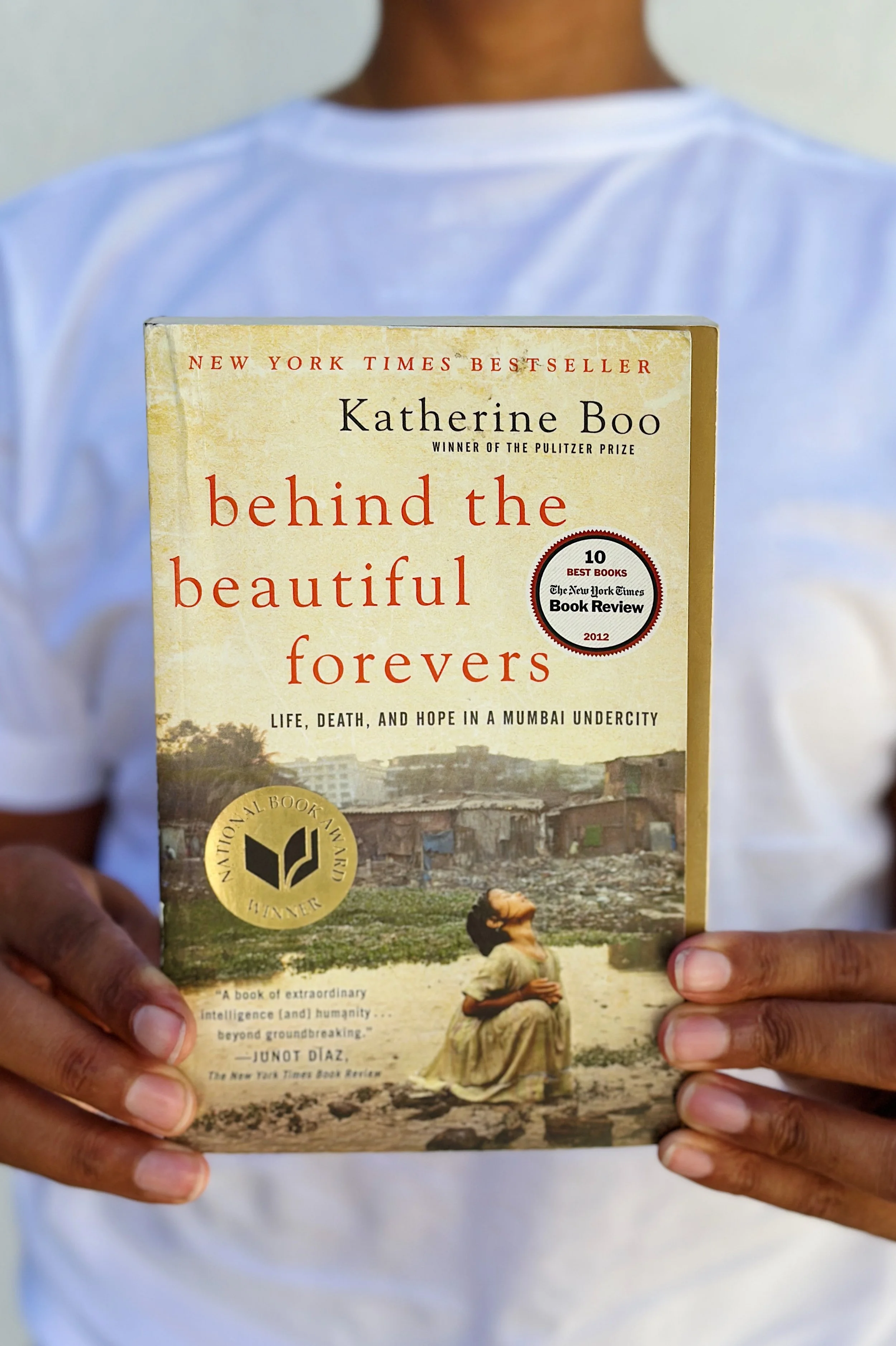
It’s The Stacks Book Club day, and we're joined by nonfiction editor Julianna Haubner to discuss our July pick, Behind the Beautiful Forevers: Life, Death, and Hope in a Mumbai Undercityby Katherine Boo. This book follows the families of Annawadi, a makeshift settlement near the Mumbai airport, as they strive toward a better life amidst tragedy, global recessions, economic upheaval, and social issues. Julianna and I chat about a journalist’s responsibility to her audience, what it means for a work of nonfiction to read “like a novel,” and how we think this book would be received if it were written in 2026.
There are spoilers in this episode.
Make sure you listen to the end of the episode to find out what our August book club pick is!
LISTEN NOW
Apple Podcasts | Spotify | Google Podcasts | Overcast | Stitcher | Transcript
Everything we talk about on today’s episode can be found below in the show notes and on Bookshop.org and Amazon.
Behind the Beautiful Forevers by Katherine Boo
Slumdog Millionaire (Danny Boyle, 2008)
Evicted by Matthew Desmond
I Am Legend (Francis Lawrence, 2007)
Just Kids by Patti Smith
The Swerve by Stephen Greenblatt
The Unwinding by George Packer
Age of Ambition by Evan Osnos
Between the World and Me by Ta-Nehisi Coates
Stamped from the Beginning by Ibram X Kendi
The First Tycoon by T.J. Stiles
The Hemingingses of Monticello by Annette Gordon-Reed
Slavery by Another Name by Douglas A. Blackmon
The Dead Hand by David Hoffman
The Emperor of All Maladies by Siddhartha Mukherjee
Devil in the Grove by Gilbert King
Tom’s River by Dan Fagin
The Sixth Extinction by Elizabeth Kolbert
Black Flags by Joby Warrick
There Is No Place for Us by Brian Goldstone
A Flower Traveled in My Blood by Haley Cohen Gilliland
Freedom Under Grace by Pope Leo XIV and Robert Prevost
And I Will Tell You Mine by Sophia Bush
The Steal by Alex Wagner
The Old Fashioned on Purpose by Jill Winger
“Ep. 186 We Need Better Voices with Danté Stewart” (The Stacks)
Fish Tales by Nettie Jones
To support The Stacks and find out more from this week’s sponsors, click here.
Connect with Julianna: Instagram
Connect with The Stacks: Instagram | Threads | Shop | Patreon | Goodreads | Substack | Youtube | Subscribe
To contribute to The Stacks, join The Stacks Pack, and get exclusive perks, check out our Patreon page. If you prefer to support the show with a one-time contribution, go to paypal.me/thestackspod.
The Stacks participates in affiliate programs. We receive a small commission when products are purchased through links on this website.
TRANSCRIPT
*Due to the nature of podcast advertising, these timestamps are not 100% accurate and will vary.
Julianna Haubner 0:00
There were moments where I felt myself mentally putting a pen down as if I were marking a draft to be like, say more. There were a lot of moments where I was like leaning in, being like, oh yeah, like this actually like has caught my eye as something I'm not familiar with, and then it kind of just moved on.
Traci Thomas 0:16
Yeah,
Julianna Haubner 0:16
and I I think as an editor, I would have been. I mean, and that's why some of the books I work on are like you know, 400 plus pages rather than 244 but like I think that those opportunities like should be taken a ton because that's actually how you are educating like a reader rather than just delivering that kind of action. Like the context is so important too.
Traci Thomas 0:39
Welcome to the Stacks, a podcast about books and the people who read them. I'm your host Traci Thomas, and it is the Stacks Book Club Day. We have got nonfiction editor Juliana Hobner back to discuss our July pick, "Behind the Beautiful Forevers: Life, Death, and Hope in a Mumbai Undercity" by Catherine Boo. This intimate feat of reportage follows the families of Annawadi, a makeshift settlement near the Mumbai airport, as they strive toward a better life amidst tragedies, global recessions, economic upheaval, and social issues. Today, Juliana and I talk about what we thought of this book, who the audience was, and what responsibilities the author Catherine Boo had to her readers. Stay tuned for our conversation and listen to the end of today's episode to find out what our August book club pick will be. Everything we talk about on each episode of the Stacks can be found in the links in our show notes. Do you like this podcast and want even more bookish content? You're in luck. You can join our community, the Stacks Pack, on Patreon and subscribe to my newsletter, Unstacked, on Substack. Each place has different perks. On Patreon, you can find community conversation, virtual book clubs, exclusive reading challenges, and on Substack, you'll find my hot takes on everything from literary gossip to the latest pop culture and sports news. In both places, you'll also have access to monthly bonus episodes. Your support makes it possible for me to make the stacks every single week and to make it free for all to listen, so consider joining the stacks pack at Patreon.com/slash the stacks and subscribing to my newsletter Unstacked at Traci thomas.substack.com All right, now it is time for my conversation with Juliana Hopner about behind the beautiful forever's. There are spoilers in this conversation. All right, everybody, it is time for book club. We read behind the beautiful forever's life, death, and hope in a Mumbai undercity. I am joined again by the great Juliana Hobner. Juliana, welcome back to the stacks.
Julianna Haubner 2:37
Thank you very much for having me. Happy to be here.
Traci Thomas 2:39
As we always do, you and I have not talked a lick about this?
Julianna Haubner 2:43
We have not. No, nothing.
Traci Thomas 2:44
I have no idea where you're coming in on this. You have no idea where I'm coming in on this. So, just broadly, where we always start, what did you think of this book?
Julianna Haubner 2:52
So, it's very interesting because I was thinking about our last conversation where you were asking me, like, does my brain do like editor brain or reader brain, and as I read this, I found my brain in real time splitting pretty much every time I was reading this book. Okay, so on a technical just level, which is the way that my brain defaults, I I feel this is an incredibly impressive book. I mean, just on the level of and knowing and intellectualizing what it takes to do the kind of reporting that she did, knowing that that has to be observed and noted and sort of put together was incredibly just like mind blowing to me. Like I felt like I in my head I was like the amount of stuff that she had to like you know have here. I thought it was also at the same time sort of like not quite knowing exactly what its story was. Yes, it was you know there's a ton of characters. There's a ton of you know things going on. It took me a second to realize, actually, when when about halfway through, it loops back to what's going on in the opening. Like at first, I was like, "Oh, we're like circling back in time now, and we've contextualized, and now we're meeting ourselves back at the beginning of the book. So yeah, I think I think like on a technical level, I was like, "Whoa, I get I get the award, I get the masterful, I get everything kind of in that capacity. But I think that this is-I don't know that I would give this book to just anybody the way that there are other nonfiction books that I would be like, this is your entry point. This is everything that you can you can and should do. But what did you think?
Traci Thomas 4:40
Juliana I did not like this book.
Julianna Haubner 4:43
Okay, wait
Traci Thomas 4:44
I really didn't like it. Like I struggled with it. I, I am stunned myself.
Julianna Haubner 4:53
Yeah,
Traci Thomas 4:54
because I just thought I was gonna love it. Like I just thought this is this is my kind of book. Multiple people telling one story, bouncing between a deep like ethnography or like like it's all of the things on paper that I think I would like. I found the pros to be so incredibly challenging to flow. They were so clunky that every time I picked up this book, I fell asleep. I'm not kidding you that I was reading the introduction for six days.
Julianna Haubner 5:29
No
Traci Thomas 5:29
Six days! Crazy. And eventually, after I got through the second chapter, I switched to audiobook, and I almost, and I'm not exaggerating, died because I was driving to Costco and I started to nod off in the car. I could not find the flow of this book to save my life. I mean, I did luckily save my life. I'm here. I survived. But like, I was like, this book is trying to kill me. Now, I agree. It is impressive that she embedded that she she did all of this. However, I don't think it was clear what story she was telling. Like I understand she did the research, and like I guess it's impressive in the sense that she went to a place and documented it. But I don't. I actually don't know that that's that impressive to me. Like I could not tell you what this book was about. I could not tell you why she wanted to write this book. I did then read the author's note and found out what she said she was doing, and I don't think she was successful at what she said she was doing. And I have a lot of questions around what she was doing, why she was doing it, how she did it, and then what actually ended up in this book. But this was like a big miss for me, like one of my least favorite reads of the year.
Julianna Haubner 6:51
I'm sorry to hear that, but I do hear that, but I do, but I do, I do get it though, because like I said, like my my reader side of the brain, so I also felt that it took like I I usually can read with ambient noise. I can read with other things going on. This I had to I had to dedicate brain and attention to. Like I really had to like focus. I also and I I will say as well that I think there's something also to this that is a weakness of my own, where I probably wasn't locking in as hard. But I do think too that that there is not a ton of the immersiveness is really impressive, but there is not a ton of time or space in the book used to really situate you in terms of people and characters, so I kept being like, "Wait a second, who is this person? and like, "How are they related to that person?
Traci Thomas 7:49
I really struggled not only with like, "What's the story? but who is the audience here?
Julianna Haubner 7:53
Yes.
Traci Thomas 7:55
What did you think?
Julianna Haubner 7:57
So this is going to also sound really terrible, and I apologize to everyone for saying it, but I I googled because as I was reading this, because I I think a lot about these types of books as well as I mentioned in our last conversation. Like I'm really fascinated by like what makes books kind of the moment they're published into like what makes them resonant, what makes them appealing to people.
Traci Thomas 8:17
Yes,
Julianna Haubner 8:17
and when I there is a line in here, and this isn't like a spoiler, I think, or anything. But we're spoiling on this. Yeah, we're spoiling. Okay, great, great. So there, there is a line at one point where somebody is either reading a newspaper or seeing something about Obama.
Traci Thomas 8:35
Yeah,
Julianna Haubner 8:35
and so I was like, okay, that's like oh eight or oh four. It's one of the two.
Traci Thomas 8:40
It's oh eight.
Julianna Haubner 8:40
And I was sitting there, and I was like, "Hold on a second. When did this movie come out in comparison to Slumdog Millionaire and a bunch of the other kind of content and culture that was happening around that time? There's actually a few years between it, but I, I, I also had that question. I think I think what this is is clearly a journalism book. Yes, you know, like it's a it is something that is very dedicated. But I I agree. Like yeah, I don't know who an immediate reader for it is unless you're someone who is just extremely interesting. interested in culture, and I guess yeah, just just kind of dropping in somewhere. But it's an interesting book to have read after our conversation about whether books should be serving as like portals to visit and portals to like go into other communities and cultures. But like, who also should be telling those stories?
Traci Thomas 9:41
Well, part of the reason that I'm like, who is the audience? Is because oftentimes I think when we talk about like cultural nonfiction, like books where you go into another culture, there is there are two options. One, it's like a book to teach people, or two, it's like a book. To just be like, if you get it, you get it, and I think this book was sort of trying to be like, if you get it, you get it. However, the author didn't know, like she was new to the culture, she didn't speak the language, and so for me, it's sort of like, how can you be our guide without giving us the context that you that yourself would have needed to understand this. Like, there's a moment where she's like, and this person's of the Dalit cast, which is the lowest of the low, and then just moves on. And I'm like, but wait, wait, wait, are you going to explain the caste system to your reader? Like, I have some knowledge of it, but like, I don't know. I just feel like in another nonfiction book in this about the same thing. She would have zoomed out and have been like, "This is how this started. This is what this means. Like, how did we get a slum next to all these fancy buildings? And like, I just wanted more context around it, and I felt like she should have given us that because she's an outsider. It would be another thing if this was like a memoir from a person who grew up in Anawadi, or if this was like from a person who's like who had a deep understanding of the place and time. But she doesn't, and she tells us she doesn't. She's like, I married this Indian guy, and I gained a country, and I wanted to see if my reporting in the U.S. on poor people translated to my reporting and and globalization translated to my reporting in India and poor people and globalization, and I sort of felt like it didn't like she didn't translate it for us, and I sort of think that that to me, I don't know who she thought her audience was, but I know she didn't think her audience was people who would have known all of that information because she didn't know that information.
Julianna Haubner 11:49
You were talking about the author note,
Traci Thomas 11:53
yes,
Julianna Haubner 11:53
and I was curious if you thought that the author note being at the end of the book had any role in sort like if it had been at the front of the book, would her shaping and disclosing sort of the the origin story and the tactics and just sort of how she's moved through it and her headspace? Do you think that would have shifted the way that you entered it?
Traci Thomas 12:19
Okay, so in full transparency, I did know that the author notes gave more information because I am in the Stacks Pack Discord, and someone mentioned like they had these questions, and they're like, "Oh, I finished the book, and the author's note was really helpful. But for the integrity of this conversation, yeah, I decided not to read the author's note till I got to where it was, so I knew she was going to say more. But by the time I got to the author's note, I needed her to write a full other book to make up for all of the thoughts and feelings I had had up to that point.
Julianna Haubner 12:54
Yeah, I think that the the other thing when we were talking about context was that I also noticed that I felt, and this this may be also that I am somewhat occupying the role of the you know tourist outsider that she brings into the book every now and then when the when the kids are by the airport or by the hotels or you know there's a lot of there's sort of conversation about that. I felt like I had there was more context provided for what the kind of globalization context and impact is, rather than the the context of the culture itself, which I thought was really interesting. Like there, like you said, there's not really an explanation of like you know how the caste system works, or how sort of these you know slums and towns get set up in the first place. But we understand that, like I think there's one line where it's like Universal Studios conference is in town, and like you know that they identify the fact that like India is going to be a new tourism, you know, route, and so there can be Disney and all these different things, and I guess I feel like those moments were were quite clear and quite telling and indicative of what these dynamics were going to be, but they weren't as clear, and there wasn't a lot of time and pacing taken in the narrative itself to kind of pull back to really contextualize like what the bulk of the book is actually about. If that makes sense,
Traci Thomas 14:30
yeah, I think you're right. And I and I read an interview with her where she talked about like someone was like, "What did what did you hope the book would do? And she said like three things, and one of the things was like to examine the sort of like globalization piece of it, and like and like how how the Olympics coming would mean that it was like good living, and then how like in 2008 when the stock market crash, how like things got really bad, and I feel like she does like. Highlight those moments, also like the terror attack in Mumbai, like how that impacted people. But I didn't feel like she had made it clear enough exactly what that impact looked like. It was more just like general, like hey, the cost of trash is up, so that's good. But it's like what it up up compared to what? Up how much? Right. What does up mean? What was Abdul able to do when when they were in a boom that he was not able to do in a bust? Like, I just felt like she didn't. I felt like the context she provided didn't connect directly to the people that she was covering, and it was more like it was more like setting the scene, if that makes sense. Yeah, like how you would be like, it's a cold winter's night, and then it's like okay, but like she didn't say like they're wearing a blanket or like their fingers are really hurting because they have rain odds or whatever. Like it was just like it's a dark and stormy night. So yeah, I
Julianna Haubner 15:59
yeah there were and there were there were a lot of openings too. Like I, I sort of in my head, and again, this is like where the kind of split between civilian quote unquote reader and editor reader comes in. Is like there were moments where I felt myself mentally putting a pen down as if I were marking a draft to be like say more because I the moments that I thought too that really opened conversations. I mean, there's one where she mentions, and I don't remember if it's Mina or another one of the women, but it mentions that she is trying to either lighten or maintain her skin being light because of what the marriage options are, if she is lighter skinned, and then there was also when the one of the babies in the house next door dies. There's sort of this momentary conversation she takes about how the death rate for young, very young children, is higher. I think. I hope I'm quoting this properly because, because there are some feelings about female children, but like hospital care is so expensive that some, you know, some things to do when a child is in utero is like out of reach, and all these different, and they're just it kind of just stayed there. And I was like, "Oh, this would have been like an amazing opportunity. As someone who isn't familiar, or maybe has some idea, but maybe it's not fully baked and like fully aware of like, yeah, what what are the gender dynamics within this, you know, the caste system, but also within like India at large, and sort of. So yeah, I think there were a lot of like even too. There's another moment where she's discussing. She brings up that there are there's heroin use and sort of like casual drug use every now and then too. Like, and I I realize too as I'm saying it that these are all kind of like negative sad things. But I just there were so many moments to kind of be able to pull back the camera and help situate a reader to understand: Is this kind of a an everyday thing? Is this something that that that is a broader cultural thing to examine? Is this something that has developed recently versus other moments in the history and the time period? You know, so like, yeah, there there were a lot of moments where I was like leaning in, being like, oh yeah, like this actually like has caught my eye is something I'm not familiar with, and then it kind of just moved on. Yeah, and I, I think as an editor, I would have been. I mean, and that's why some of the books I work on are like you know 400 plus pages rather than 244. But like, I I think that those opportunities like should be taken a ton because that's actually how you are educating like a reader rather than just delivering that kind of action, like the context is so important too.
Traci Thomas 18:43
I agree, and like that's why keeping like, who's the audience, or like what was this book trying to do? Because there is a version of this book where she's like, I'm not going to do any of that, and I'm just going to stick really close to the people, and that is what she did. And this book did win awards. It won the National Book Award. It won the LA Times Book Prize. It was a finalist for the Pulitzer, and I've been thinking a lot about like how or why that could be.
Julianna Haubner 19:08
Yes,
Traci Thomas 19:09
and I feel like my sense, and you correct me if I'm wrong because you know more. My sense is that especially the Pulitzer, a little bit the LA Times Book Prize for current interest is a prize about journalism. I mean, certainly the Pulitzer. It's a journalism prize, and this is a journalism book. And this is the kind of book that a journalist would look at and be like, "Wow, she really got in there, and she really reported. And this would have been a hard thing to make because it is like she really had to like go, you know, gasp, live with poor people. Oh no! But and and also this book, a lot of people in the stacks pack, and I'm assuming other listeners felt like they thought this book was fiction. So like it is written in a way. That is like stylized and takes skill, so like I understand those pieces of it. But for me, like an award-winning book should should do other things that this book just like did not do.
Julianna Haubner 20:17
Yeah, I I think so. Yes, to your to your kind of just initial question and framing. Definitely the Pulitzer as a as a journalism based award, and then from what I have observed and sort of studied as somebody, like I said, who's very obsessed and interested in kind of like market and context in that way, it is typically because I'm assuming this was general nonfiction, right? That it was a finalist. Yeah. So yeah. So that that award traditionally, from my kind of pattern recognition understanding, has been, you know, really rigorous and or immersive journalism that is typically focusing on a different culture or subculture, and also sort of like is is having some level of theme in the last few years. It's been I've noticed adjacent to or dealing with authoritarianism, but I do think that around this time that this book came out, which I think was the paperbacks 2012 so I'm assuming it's like 2010 2011 for the hardcover. That period of time also, I think, was a globalization focus, which tracks for this. So yes, so that that tracks for this. I was a little bit candidly, and it's not like any shade to anybody, but I was a little more surprised by the National Book Award, only because the National Book Award tends to not be always. I mean, I'm speaking in very broad generalizations without a list in front of me of the past winners, and also this was you know 15 years ago, but
Traci Thomas 21:48
this came out in 2012.
Julianna Haubner 21:50
Yeah, okay, so yeah, so like it's been a minute, and so obviously like the generalized responses to certain books have changed, but I, the National Book Award does tend to be a little more American focused, where the Pulitzer may go kind of outside of that. So, so I was just surprised, kind of based on setting and sort of what it's discussing, that it was there. Yeah, but I think that you're right in the in the fact that this book feels there's something about what I traditionally consider a Pulitzer and National Book Award winner, which this book has all of it, but but usually it is sort of a little more scaffolded by the writer, and sort of like like you understand that the writer is is guiding the story only in the sense that they are providing that context, they're zooming in and out. They are sort of in control of the camera, so to speak. And this one felt, to keep it the film motif, like a little more just like straight documentary, yeah, in a way that was interesting and surprising. And I do think that the other element that surprised me was the level of dialog, which is, I think, probably contributing to the feeling of like novelistic language, like the the level of of conversation, the level of not narration. Everything is really happening in the moment, and it's really just stated as action and behavior, which is what I meant earlier when I said like on a technical level, to think to myself at every pass, like Jesus, how did she like like just the sheer amount of information to intake and kind of then resituate and understand how you're doing it, like yeah. So I think there there's a lot of there's a lot of novelistic qualities. I mean, I'm curious because there's a lot of stuff that we say with nonfiction of like reads like a novel, and that's you know a big selling point for a lot of people who don't normally read nonfiction. But if if we've agreed that this is a book that like is not maybe the most immediate general readership book, is that reading like a novel a strength? Does that make sense? Like,
Traci Thomas 24:06
I mean, I feel like lots of like people who don't like nonfiction like this book. I I did not think this read like a novel. To be honest with you, I was surprised when people were like, "Oh, I didn't realize this was nonfiction. Because aside from the subtitle, which I think is sort of a dead giveaway, I I found it to be so like slow that I don't I don't know I feel like when I say reads like a novel for nonfiction, I sort of mean that it's like unput downable, very punchy, like you can really like yeah get into it. It's plotty. There's a lot going on. This to me read like nonfiction. Like to compare it to another book that I think does similar things though gives a lot more context. It reminded me a bit of Evicted by Matthew Desmond in the sense that it's like he's embedded with these. People and not a lot happens. I wouldn't say that that book reads like fiction at all. I would say it's a good book. It's well written. Like it, it moves for nonfiction, but it's not. It's not narrative in the same in the way that I would use to describe a book that reads like fiction. I just I keep coming back to like I feel like this book had an identity problem for me. Like it it didn't do like when I talk about books and when I read books and when I think about books, I'm always asking you know the same three questions, which is like what was it trying to do? Was it successful? And and did I like it or like was that a worth was it was it a worthy endeavor or whatever? And for me, I think I struggled so much with what this book was trying to do that the only answer to was it successful or did I like it was no. Do you know what I mean? Like I just was like, I don't even know what you're trying to do. So how could you be successful at this thing?
Julianna Haubner 25:59
Yeah. Can I ask a question? The plot thing brings me to a question, which is, I don't know if in your because I did a little bit of like outside reading on this as well as you did, and one thing I noticed that I wanted to ask you because we are both as we established theater kids is that this was made into a play,
Traci Thomas 26:17
play on like the West End in England, yes I saw that
Julianna Haubner 26:21
I was like, "What? And I and I, I saw that after I had finished it because I tried. I tried to go in blind so I could read it and then kind of like get the context after the fact. And I was sitting there and I was like, "Okay, well, Fatima, I guess. But like in in my head, I was like almost trying to translate it to like how you do this on stage, and I think there are definite ways, and I'm so fascinated now. And I want to like figure. I want to like learn more about this play. But what are the pieces that, as someone who's also done like you know productions and stuff, like like how how would you translate this to stage?
Traci Thomas 26:56
This is a this is me asking you back a similar question. Okay. Yeah. Because I think the real truth of this question is who are the characters or the subjects that really resonated with you. Yeah, and for me it was for me it was well. You go first. You go first. You're the guest.
Julianna Haubner 27:12
I mean, I thought Fatima was like a really fascinating character and person to follow. And I think that of everyone, it's interesting that sort of like even the cover or the the back cover copy, and then I think also the way that you enter the book. You know, she is she is sort of like this. I think she's the heart of the whole thing in a lot of ways. Fatima, but she's yeah Fatima, but she is but she is seen as like a a like I almost think that her character in some and again it's so weird saying character but like her presence in the book, I feel at times brought her into a space of like facilitator and instigator and and sort of like means to an end, like reason for these things that are happening to other people. But I, I did feel that she is almost like the most emblematic of of all the things that the book is talking about in different ways. So I thought she was very interesting, and I yeah, if I were doing it, I would sort of frame things. I almost feel like I would kind of frame some stuff around her, in addition to, in addition to some of the other. I mean, I mean, the women in general. Like, I part of me is like, I would love to see because it felt like a book so much also more about women than about men.
Traci Thomas 28:41
Yeah, yeah, I think that's right. women and children? Women and children.
Julianna Haubner 28:42
Totally, yes.
Traci Thomas 28:43
I think Fatima for sure. I thought Asha was pretty compelling as like this striving wannabe slumlord who is pushing up against sort of like all the isms around her, and like she's sort of this tragic figure, figure because almost the moment you meet her, you're sort of like it's not going to happen for you the way that it would happen for these other dudes. Yeah, and then I think Abdul, but also because that's where we start. So I think she sort of frames us around him. But then there were characters that I'm like, I cannot, I don't remember anything, like, or just like they did not move me at all, and you know, like you, like on my copy, there's a quote from Juno Diaz. It's like a book of extraordinary intelligence and humanity beyond groundbreaking, and I I don't know if this is like a 2026 lens or if this is my cold dead heart, but like I didn't, I sort of feel, I sort of feel like the idea of like going into another culture's like poorest area, or going into any poor communities as like a white journalist and being like, I'm going to show you these people have heart and hope and life, is. Just like ick, like it just it is big time ick factor to me. Like of course these people have hopes and dreams, and of course these people make dumb jokes, and of course these people do fucking stupid shit. Like they're fucking people. They're not special in any regard to being human. And I know that this is like to push against the way that they've been discarded, and like the way that just like capitalism wants to ignore the poverty that it creates. Like I understand the idea of like I want to go in here and show you and zoom you in on these people so that you remember that they're people. But there is this like real self congratulatory energy from journalists to journalists or to writers about like being near poor people or like being near brown people, as if that in and in and of itself is a feat.
Julianna Haubner 30:55
Well, and I I thought that it was also interesting that like at times, because again, this is like editor brain, but I I am a fan of books that really feature a lot of characters, but it is very clear who your protagonist is and like who your who your top three are. And I kind of the way that like you have the three questions, like I feel like I have always the three characters. I'm like, who are the three most important people that I need to be focusing on, and this book does to some extent have that. But I think what what I was kind of preoccupied by the whole time was it's an ensemble piece in a lot of ways, and I won't presume to speak for anyone involved with this book because I wasn't even in publishing when it came out, but I, as someone who, as if I were seeing this kind of just in front of me as a draft by any writer or anything, I almost feel like the use of an ensemble actually create, and I think this actually is true in any book, the use of an ensemble as your kind of cast and focus creates more potential for things to become archetypal than focusing on just a couple of people with whom you really go deep and really see multi faceted, you know, pieces of them. And so I thought that like the only the one other kind of drawback to this book, in some ways, was that it did feel like, and maybe it's also human nature that like people do just kind of fall into certain types as you tell stories. But you know, you yeah, like you said, like you had Asha, this like striving, you know, person who really wants to just kind of be in this position of power. But you kind of know it's not going to happen. You have the person who is the you know educated person who's trying to really get ahead of that. You have this kid who is really entrenched in his family and really and ends up like kind of taking the fall for people. You have Fatima, like everybody, kind of had their their predestined role in some ways, and maybe that's its own statement on you know the the cyclical, unbreakable thing that happens when you have this much larger cultural pressure coming down on you, and this you know globalization and capitalism, and like because that's clearly the big bad in this book is you know this presence looming over everybody. But I I did feel yeah that like what you're saying about like they're they're they're not special at all, and yet you kind of want them to be more, or at least more individualized in some ways. Like it's very impressive the way they're drawn, they're you know documented and drawn. But there was also an there was an epigraph in this book, and I don't have my copy right in front of me, but I think it was part three of the chapters that let or the the sections the book that the epigraph on it is like it's something that compares rich people and poor people.
Traci Thomas 33:46
Rich, okay, I found it. Yeah, rich people fight about stupid things. Why shouldn't poor people do the same? And that's from an Anawadi mother, Ramba Ja.
Julianna Haubner 33:56
Yeah. So I thought that was such an interesting quote. Kind of like stopped me for a minute what I was reading, because I mean, it felt a little meta commentary, obviously. But but I also was sort of thinking to myself, like that that itself, like, didn't quite feel like what the book was about. You know, like I think it's one thing to be examining a group of people with that kind of quote in mind, dealing with sort of like the ordinary petty and not making a story about what you what a reader might expect to be the traditional strife of a community or of a culture, and all of this felt like not stupid or petty things. You know, like it felt like real, like
Traci Thomas 34:43
life and death shit. Yeah, so education shit
Julianna Haubner 34:46
interesting. Like I was like, what an interesting thing to use as a framing piece for the book.
Traci Thomas 34:51
You know what? You're so right, Juliana. I actually think that like you've just cracked exactly what it is that I didn't like about this. Book because I've been having a hard time articulating my issues, and I think one of them is, I think you like flesh out what I was trying to say before, which is like, if the point of the book is to like deep dive with these people that nobody cares about, whatever, and then you spend the whole time giving them these like ridiculously high and depressing stakes. You sort of take away the fullness of their humanity and turn them into caricatures. Like she sort of does the opposite of the thing that she says in interviews that she was trying to do, which is just to be like, you know, there's like I read an interview, and I'll link to all these in the show notes where she was like, there were other things that people said that I didn't put in the book because I didn't want it to be like, oh, these people's lives are so sad or so depressing. But what she chose to keep in was pretty much 99% exclusively like wah wah, right? You know, yeah, and I do feel like if there had been more of like the pettiness, like I think you get some of that. That the to me the best part of the book, the most alive part of the book, the part of the book that I was like, okay, okay, I could do this, is right before Fatima self emulation when you're having like the neighborly fight, and it's like you're getting dirt in my rice, and she's like, "Bitch, we pay for this wall. She's like, "No, bitch, I'ma fight you in the streets. I'm like, everybody comes out to the streets and they're yelling at each other, and then she's like, "Oh, just wait and see. And I thought this was gonna be like this funny, fun scene, and I was like, "This is so alive. This is so fun. This is so dynamic. Like, yes, neighbors fighting. Like, it doesn't matter how rich or how poor you are, your next door neighbor banging on the wall is ruining your life. And I was like, "This is great. And then it quickly, obviously, devolved into like an extremely tragic scene that I still could have held onto.
Julianna Haubner 36:56
Yes,
Traci Thomas 36:57
but then it just like continues in that vein. Like
Julianna Haubner 37:00
I yeah, the one time that I was because I I also was like I want to go in blend with Traci. I'm not going to text her. The one time I almost texted you was in that part where I was like wow, like I love this. Like Fatima is crazy, and then she did that. I was like, no, I'm a terrible person. I have to keep that back. Like do not say that to someone else. And I think that that's like yeah, and I I think too that the like I yeah I found myself also really drawn to the moments where and maybe this is my this is why I love nonfiction too is that I feel the best nonfiction reminds you that it's not happening in a vacuum and while you while you really want the immersiveness, and you want the container, and you want to feel in it, and I think maybe now in my head it's lining up of maybe this is why it also some people have felt it's novelistic is like there was one moment where they go I can't remember if they're if they go to a movie theater, or they just like see it. But the movie that they see is is I think it's I Am Legend, the
Traci Thomas 38:07
Will Smith. Yes, yes.
Julianna Haubner 38:09
and but like a but a moment like that, I was like, oh my god! Like this is and this is gonna this is not this is gonna sound worse when I say it than I mean it. But it was a moment that actually like didn't take me out of the story. It reminded me, like this. This is happening on this in the same world that I live in.
Traci Thomas 38:28
Yes,
Julianna Haubner 38:29
you know, it was something that was like, and obviously it is, but like it was, it was a moment of just recognition of like this is real. You know, these these kids are wandering around and they see a movie that I've also seen, and there are there are just these touch points that I think are so important, and those that's the like mundane, random stuff that that makes the human experience feel that much more human and that much more ordinary. And I think that what would be equally like something that I thought was interesting about this book, that I felt I was getting from just the sheer presence of the of the of the people and their lives, was how this is just their lives, and it's it's so you know foreign to probably many readers, but there's just such interesting daily technical things that they do, and that the way that that she writes about kind of the matter of factness of like what different like materials are valued at, and the stuff at the airport that they can steal, like. But that that to me was like the most compelling because I was just like, this is just sort of the order of operations in a totally different life that like I don't know or understand, but but it seems that even what they go through in terms of the self immolation and running, you know, it seems somewhat expect that they seem to like expect that that's going to happen because it's clearly and written about in the book is like a culture of bribes and all these different things, but. But yeah, like the events themselves feel so large that you you sometimes lose just like what this everyday detail is. So yeah, that sounds maybe that yeah that maybe that's what it is is that like it just doesn't at times feel ordinary.
Traci Thomas 40:18
Yeah, it didn't have enough like ebb and flow.
Julianna Haubner 40:20
Yeah.
Traci Thomas 40:22
Let's take a quick break, and then we'll be right back. Okay, we're back. Okay, I want to ask you this about journalism and reporting and experts and whatever we know from the author's note, and we mentioned it already, that Catherine Boo is a white woman from America who spent a lot of her career reporting on poverty and and systems in the United States, and she married an Indian man who lived in Mumbai or spent split time between Mumbai and the states, and that is what sparked her sort of interest in the story. She doesn't speak the language. She goes in. She tries to write this book. She embeds with the people. She has translators. She has all of this stuff. And my question sort of is like, an expert could write this book, like an expert on India, an expert on by an expert on Anawadi or or slums in India or whatever. Maybe a sociologist, I don't know, whatever. But like an expert, a person who spent their whole life doing this, and a journalist can come in and sort of just like be like, "I'm going to be here for a few years and and write about this story. I'm wondering what you think about about that.
Julianna Haubner 41:46
So it's hard because it's like I mean this is like the kind of overly diplomatic answer, admittedly. But like I think it depends because I think it's also like how the journalist approaches all of it. I think it depends on on what the story is, and you know, maybe that's why, as I think we mentioned earlier, that like you know, Boo said in her kind of supplementary interviews and materials that like maybe one of the reasons she didn't do what kind of you and I seem to both have like craved a little more with this book, which is like the zoom out and the context and everything else, is that you know it it kind of puts the whole book in a framework that is all that you know she needs to be exercising her core you know skill set and experience in, which is reporting and like for most journalists, right? Like their function is to drop in, you know. There's and and kind of explore what's going on in a given moment and kind of snapshot it. Obviously, there's journalists who embed for years and things like that too. But I think it's it is a little tough because I think that you you don't if you're an expert and someone who has spent a lot of time researching or living in or being a part of, you know, a community or a culture, I think you also know questions to ask and questions to ask of yourself and lines to follow that are not always directly responsive to the lowest entry point that a reader may have. Like you have already this giant foundation of information, and so what you are looking for are those more detail, interesting, unique, small-you know-something that just like is more tree than forest. Which a journalist coming in for that sole purpose, you know, may be thinking in a more generalist capacity, and is sort of thinking to themselves, what does a reader need to just like understand about the landscape here to like get to the person, rather than almost like an rather than an expert, maybe understanding that like the landscape has created this person,
Traci Thomas 44:07
right?
Julianna Haubner 44:08
So yeah, I think I think it can be tricky, but I also think that like with this book in particular, like what we were talking about was like that the you know things happen in it, but it's also not like a plotty book, in the sense that like we have an initial well, there is an inciting incident, I guess, but like I I think that like
Traci Thomas 44:28
they don't all feel connected. It's not more like interconnected short stories, sort of, where it's like these people are all in the same place, but they have their own story, and like a few of that, like obviously Abdul and Fatima are connected because of this incident and like the aftermath, but Asha kind of like pops in and out. But like Sunil doesn't feel
Julianna Haubner 44:50
that's even not like a reveal, though. You know, like it doesn't have the the trademarks of like a narrative nonfiction,
Traci Thomas 44:56
yeah,
Julianna Haubner 44:57
sort of like moment where you realize like. Oh shit! Like everything, you know, is is culminating in something. Like we kind of know what we're getting at an outset. I think when when a journalist who is who is a visitor, so to speak, into a story is the is the most beneficial, and is that its its peak opportunity is when it is dropping into more of a story because they can report out a story versus kind of evaluate and introduce a much larger conversation culture,
Traci Thomas 45:35
right?
Julianna Haubner 45:35
If that makes sense, right? What do you? Yeah.
Traci Thomas 45:36
Well, I think what I'm like hemming and hawing. I don't know why. I just think that normally a journalist does a better job of bringing us in than an expert, because I think a journalist understands like what they had to learn, and like they're usually a better avatar for the reader because they come into it with their own biases and perspectives and limits and strengths and all of that, whereas an expert comes to it with like such a large foundation and such an expertise that they don't even remember what it's like not to know a thing. Like sometimes I have this, I'll be talking to someone, I'm like, oh, I put on my TBR, and it'll be like a person in my regular life, and they're like, what's a TBR? And I'm like, it's your to be read list. Have you ever read before? Oh my God, you're not on Bookstagram. And so I sometimes feel like an expert can be too high level, but in this case, and like in some of the interviews I read from her, she was really like, I don't want to be a part of this book. I don't want to be a part of this story. And I understand that because I don't like when a journalist is like, and then there I was eating peanut butter and jelly with Abdul, but I feel like she needed to lean into her ignorance a little bit more.
Julianna Haubner 46:55
Yeah,
Traci Thomas 46:56
you know what it is. I just never felt like there was a way in for me on this book. She did not open the door. I did not feel invited into the world that in which she was inhabiting, and I think that's really important for narrative nonfiction. Even if it's even if it's a world that I know and understand, like this isn't just because I I'm not from here or I'm not familiar with the culture. Like I feel like the best narrative nonfiction really invites you into the place, and that the journalist or the expert or whatever the writer brings you in and is like, "Hey, you might not get it all, but here it is. And and I think like some of that is like I don't know if you noticed, but there's no notes.
Julianna Haubner 47:42
Yes, I did.
Traci Thomas 47:43
There's no citations. There's no like where. Like she says in the author's note. So there is a note. There's an author's note. She says in the author's note, like all of this came from my reporting and the videos I made, and also like the Freedom of Information Act, but it's under a different name in India that I got a lot of the records from, but it's like, where are those records? Where are those citations? Like, I'm also like baffled by it not working for me. This is the first time in a very, very long time on this podcast that I have truly not liked a book that like wasn't sort of on purpose. Like, I didn't like the Colleen Hoover, but like I sort of knew that, and like I didn't like the Alchemist, but like that was sort of the point of reading it was to like revisit this thing that's so popular, whatever. But in this case, I really went in being like, "I'm gonna like this. Like, this is a good book. And for so many different reasons that I've said today over and over in different ways, I just, I just felt like it was not successful.
Julianna Haubner 48:42
What is tough with that outlook of I don't want to be part of the story is that I think at times, and I as an editor I talk to writers about this a lot. Is that there seems to sometimes be a feeling that like it is an all or nothing presence that you're either sitting and eating peanut butter and jelly with Abdul, or or you are or you are totally hands off, and it is your job to transcribe, document, and put it out. And I think that the best narrative nonfiction is narrative nonfiction where there is, and I call it a lot in like editorial notes, like narrative guidance. You know, it's it's a the best journalists and the best writers understand and anticipate a reader's moments where they may be asking these questions, and I think that this the the sort of mutual exclusivity feeling of of like reporter and writer is like really interest or narrator rather is is very interesting, and I think maybe also sort of a product of the time that this book was written in. Because I feel like a lot of the more current narrative nonfiction has found its way into finding the balance,
Traci Thomas 50:06
Right.
Julianna Haubner 50:07
So and I imagine too that like the knowledge that she had of of her not being part of the culture and not being part of it, like I would, I obviously can't speak for her, but I would imagine contributed in some capacity too to like not maybe not wanting to like wade into too much explanation or you know assumption of expertise when she has clearly set herself forth as someone who's meant to be more of a fellow traveler with a reader rather than the guide for a reader.
Traci Thomas 50:40
Yeah, and I think also like maybe it can't. Maybe I'm under or over understating the way that journalism was even just 15 years ago. Like it was so obsessed with objectivity, and it wasn't until the last like 10 and so years that like authors of color and right journalists of color and women journalists really leaned into this idea of like we are not objective, and like that's a good thing. And so I'm wondering about like the pressures that maybe she felt as a woman, as an outsider, like trying to tell this story in a context, like in her own context, where it's like, oh, a woman would get involved, or like a woman would feel emotions, and like blah blah blah, and so she's sort of responding to that by being like, "I'm not going to be in it at all, and you can't blame me for anything because like you can't say my bias shows up. You know, like that kind of posturing.
Julianna Haubner 51:30
Yeah, I mean, granted, sort of journalists who are identifiable and have had beats and have had personalities have been around forever, and so what I'm about to say is not like the determinant, but also like 2012 is sort of in the course of at least modern journalism, right? Like, it's not the heyday yet of Twitter. It is not the heyday yet of of social media creating and allowing journalists the opportunity to be more visible to people and to kind of have you know their work as accessible to everybody. Like this is still a time. I mean, many many things are going digital in 2012, but you know the New York Times is still growing its digital platform at that point, you know, magazine journalism and long form journalism is still very much like a print and black and white objective thing. It's not as you know heavy as it became 10 years later on commentary. You know, like I mean, commentary obviously has always existed, but I, I think you're right that like the moment that this is published into is also a very different moment in how people want their journalism, and and want to be told these stories, especially if they're happening, you know, over overseas, and it actually would be really interesting, and maybe I'll do it after we end our conversation, and I can send you it to you. But I'm I'm really curious to now go back and look and see what the the winners of the Pulitzer and the National Book Award were around, like in the buffer year. I just 20.
Traci Thomas 53:17
So I looked up the National Book Award list.
Julianna Haubner 53:19
Yeah.
Traci Thomas 53:20
So in the 2010s, it was Patti Smith, Just Kids, won. Stephen Greenblatt's, The Swerve, won in 2011. Then Catherine Boo. Then George Packer won for The Unwinding in Our History of the New America, and then Age of Ambition, which I was not familiar with. Evan Osnos' book. Yep. And then in 2015, we get Ton Has Coats Between the World and Me, and then Ibram Kendi stamped from the beginning, right? Also, sort of right before this, we get the first Tycoon by TG Styles, and then also the Hemingzes of Monticello from Annette Stormon Reed. So I don't. I was trying to see if there was like more of like a through line. I don't really know.
Julianna Haubner 54:02
I mean, so 20. This again, my like lizard market brain. But I mean, so 2012 is Obama two, right? Right. So I guess it kind of makes sense in some ways that that past 2012 we get the unwinding, which is very much like a look at modern America, like it seems it seems that a lot of the books that are following 2012 are, I mean, they're more American focused and they're more kind of like New Era focused, and then pre is a little more rooted in like history, but it's interesting that like this book is the only kind of like international focus.
Traci Thomas 54:46
Yeah, I'm looking at the Pulitzer list right now, and the winners. She didn't win; she was a finalist. But the winners around her include Slavery by Another Name, The Dead Hand, which is about the Cold War, Emperor of All Maladies. The swerve again. Wow. Devil in the Grove is what won her year. It's the Thurgood Marshall book. Tom's River, which I also am not familiar with. The Sixth Extinction about global warming. Black Flags about ISIS, and then Evicted in 2017. So those are sort of like what's surrounding her. Yeah.
Julianna Haubner 55:20
So Tom's Rivers is is American. Yeah, it's kind of a similar thing where like the stuff that's kind of around it is not necessarily global. I mean, the swerve I guess is is global, but
Traci Thomas 55:34
right. I do think that like in looking at these lists, also her this book, and I've read a lot of these. This book is the most like sort of like a casual reader could read this and just like have a good time and like hear a nice story. And I think that maybe you and I are so interested in narrative nonfiction that we forget about people who sort of just like want to learn about a culture, like want to visit a place, and like this is a strong sense of place book. This is like a oh cool like I now know about Mumbai and like it is very cinematic in that way of like
Julianna Haubner 56:09
it's very people forward too
Traci Thomas 56:10
yeah very people forward but does it get written in 2026 this book happened in 2026 as is?
Julianna Haubner 56:18
I'm not sure and it's not meant to be like a, you know, a commentary or anything more than just I think it's, I think it's just like a different kind of writing, and a different and a different and a different kind of readership nowadays that goes into books like this. You know, like
Traci Thomas 56:37
yeah, I think to your point earlier, if this book if she submits this manuscript. There's a lot of conversations about context, given her positionality as the author, and given what is popular nonfiction style now.
Julianna Haubner 56:51
Yeah, and I I will say too, this is this is sort of again a very technical thing, but one thing I was really interested in because part of with any any book, like I'm always really interested and paying attention to packaging, and I thought the I mean the two things I thought were really interesting were use of cover photo, yes, and also the use of the word Under City in the subtitle. Interesting, but yeah, I mean, Undercity. I just thought was so interesting because, as somebody who has to like with authors, of course, too. But a lot of the time, like I, I am helping to figure out subtitles, and as someone who under like there are certain you know words, there's certain things you want to evoke, there's certain things you don't use, like there's, there is kind of like a weird art and science to it.
Traci Thomas 57:45
Yeah,
Julianna Haubner 57:46
and I thought that undercity was such a fascinating term, right? Because to my recollection, like that word doesn't really come up in the text in the book at all.
Traci Thomas 57:57
The word is slum in the book.
Julianna Haubner 57:59
Yes, and so that was an interesting choice to me, and I thought that Undercity was so interesting because it it create and and to their to the credit of you know Catherine Boo or her editor whoever kind of packaged this all together like it's a it's an oddly selling word you know because it sort of it gives you that vibe of like hidden history, like thing you don't know about. But it also it's it's you know it gives the visual of something something under the surface and something that is almost like the engine of a bigger thing. So it's it's kind of like situating this story and this these people, which I think they are in some capacities, but like really situating them is like the core, the core engine of something, and there is this whole ecosystem below the one that we think. So, yeah, I was really interested by that word, and then I also was really interested in thinking about other books in this category, like Evicted, like the most recent Pulitzer winner, that this very easily could have been a book that simply had the houses or like the slot, you know, and and instead it shows kind of a single child in a picture that, like on first glance, it looks like she's in nature. Like, like it's not until you kind of see behind the haze that you recognize that it's actually, you know, Mumbai. So, so yeah, I just I thought the packaging was really interesting. But what, what, what, what did you think?
Traci Thomas 59:36
I love the cover. I think the cover is fantastic. Yeah, the photo is so evocative. I did think that with this cover that there might be a girl child in the book, right? I I think the word that I locked into in the subtitle was hope because I said, "Is the hope in the room with us? Like I just don't know that that's life, death, and hope. I don't know that that that's what you wrote. Certainly, life and death. Like there are so many suicides in this book.
Julianna Haubner 1:00:08
Yes, and harm and violence.
Traci Thomas 1:00:12
yeah, yeah. So much violence. But hope. I did not feel much hope in reading this book. So I thought that was an interesting choice. I did not lock into Undercity, but you're so right. And and as soon as you said that, I was like, right, that's like not even a word in the book.
Julianna Haubner 1:00:28
Can I ask a question as someone who is not who is like adjacent to the biz, but like is not kind of in it in the same way I am? When you see a book cover, and I've interested other you know stacks people as well. Like, do you expect that that image is a person in the book, or like is is meant to directly correlate to a person in the book? I think about this all the time when we're doing cover design stuff. So I'm just curious, like from
Traci Thomas 1:00:55
I don't always think that the a person on the cover in this kind of context is meant to be an exact one for one for a person in the book, but I think if you put a girl child on the cover of the book, I'm assuming there's going to be a girl child inside the book, right? Like a like a similar situation,
Julianna Haubner 1:01:13
because I I think about that a lot with the reported narrative nonfiction that I've done, is because especially if it's in a different, or actually, it doesn't even matter if it's in a different culture or place. But I think the only thing that I think about in that, when looking at that, is like, are you? Is the message being sent that like the individualism of it doesn't matter, you know? And like almost we were talking about like with the with the kind of story itself and the characters themselves is like yes that's that's any child and therefore it stands for like almost an every child and it's an ordinary child, but you know is it is it then sort of creating that archetype of just like it could be any of you know like it's so I I yeah I think it's a gorgeous gorgeous cover, but I was I was just thinking about that because I noticed that too. Once I was halfway through, I was like, wait, are like any of these people supposed to be the kid on the cover? But maybe not
Traci Thomas 1:02:14
I don't know. I hadn't thought about it that much. I don't know if I've thought about it that much in other books. A lot of the books I like don't have people on the cover, right?
Julianna Haubner 1:02:24
Yeah, I think that's like a pretty. That's also a fairly standard, I think, narrative nonfiction thing because it kind of you know you want to make it seem bigger than just one person. Also, if it's not a biography, yeah.
Traci Thomas 1:02:34
Usually, like the the books I like have a place on the cover, deeply saturated in a color, yeah, but not people per se. Though Haley's book, had people, but not identifiable people, just like a group of people, which was like you know, and and I figured those people would be in the book, yeah. Um, so yeah, I don't, I don't know. That's a good question.
Julianna Haubner 1:03:00
Did you like the title?
Traci Thomas 1:03:01
I liked it. It comes up in Sunil's chapter in chapter three, his first chapter. It's like they call he calls the place the beautiful forever. So I feel like she's like getting and like behind. But it's a I think it's a good title. I don't know that I feel like it is really like punched up in the book in a way that it felt necessary, but sure, it was like I feel like you could easily call it like Anawadi as well, but that's probably harder because people would be like, "What the fuck is that word? Like you know, like broad audiences. This is like more, more I think, like mysterious.
Julianna Haubner 1:03:36
I think yeah, I think it definitely lends itself to the idea that you're like entering a space you don't know. It's like behind. Although in my head forever, this book has been beyond the beautiful forevers, which is like really bad and like a different thing entirely, probably. But um, I I had the experience of when I was reading Sunil's chapter and it came up. It was like that Leo DiCaprio meme where he's like pointing at the TV. I'm just like, "Oh my God, that's it! That's one. Yes, yes, yes. I think the beautiful forever thing when seeing the full package with the subtitle, like it evokes. I think that hopefulness of like it's that ethereal kind of like somewhere else thing, and it feels lighter. Like I think the whole book is packaged in a really lovely way of like it's not dark colored, it's bright, it's you know, it is kind of ethereal looking. But yeah, no, I titles are also such a a hard and interesting thing to do, and I think this one actually like works extremely well for what it is.
Traci Thomas 1:04:38
I think that's a good place to end. Yeah, we did it. We did it. We talked about it. I'm surprised by how the book went for me, but I feel like we sort of agreed on it, which I feel makes me feel better because I think you're smart and brilliant, Juliana. Tell the people what the next book you have coming out into the world is that you've edited.
Julianna Haubner 1:04:58
Yeah, so I have. A couple things, but the the a few coming out this fall. One is a biography of of the new pope, Pope Leo. It is kind of a full his full life from childhood all the way through from two really fantastic NPR reporters and writers. I'm working on a book called "And I Will Tell you mine by Sophia Bush, the actress from Wonderhill, an activist, which is also wonderful, and also working on a book with Alex Wagner called The Steal which is about the Supreme Court, and a cookbook, which has been very fun as well. That is the old-fashioned on purpose cookbook, but a whole a whole range, but lots of great stuff coming in the fall.
Traci Thomas 1:05:43
And you have a book coming next year, I think, with friend of the pod Dante Stewart.
Julianna Haubner 1:05:48
I do, yes, summer 2027 and more to come on that for sure. But yes, friend of the pod, love to hear it.
Traci Thomas 1:05:56
Love it, I love it. Well, Juliana, thank you so much for being here. Everybody else, stay tuned to the end, end, end of the episode to find out what our August book club pick will be. But Juliana, you are the best. Thank you so much for doing this. You are the one else. Oh, please, everyone else, we will see you in the stacks. Thank you for listening, and thank you again to Juliana Hobner for joining the show. Our book club pick for July is Fish Tales by Nettie Jones. This book was originally published in the 1970s and follows a woman named Lewis Jones who is seeking a good time in her 20s, running around New York City and Detroit. This is what the marketing copy says about the book, quote: She guzzles champagne, snorts piles of cocaine, wakes up on silk sheets with a variety of lovers. Don't you want to read it? And if that's not enough, this book was acquired and edited by Toni Morrison. Our episode for Fish Tales will air on Wednesday, August 26th, and you can tune in next week to find out who our August guest will be. If you love the stacks and want inside access to it, head to Patreon.com/thestax to join the stacks pack and check out my newsletter at Traci Thomas. Substack. com. Make sure you're subscribed to the stacks wherever you listen to your podcasts, and if you're listening through Apple Podcasts or Spotify, please leave us a rating and a review. For more from the stacks, follow me on social media at the Stacks Pod on Instagram, Threads, and you can check out our website@thestackspodcast.com Today's episode of the Stacks was edited by Christian Duenas with production assistance from Sahara Clement. Additional support provided by Shere Marquez, and our theme music is from Tagirajis. The Stacks is created and produced by me, Traci Thomas.