

Ep. 432 There’s No Hiding from a Sibling with Shannon Sanders
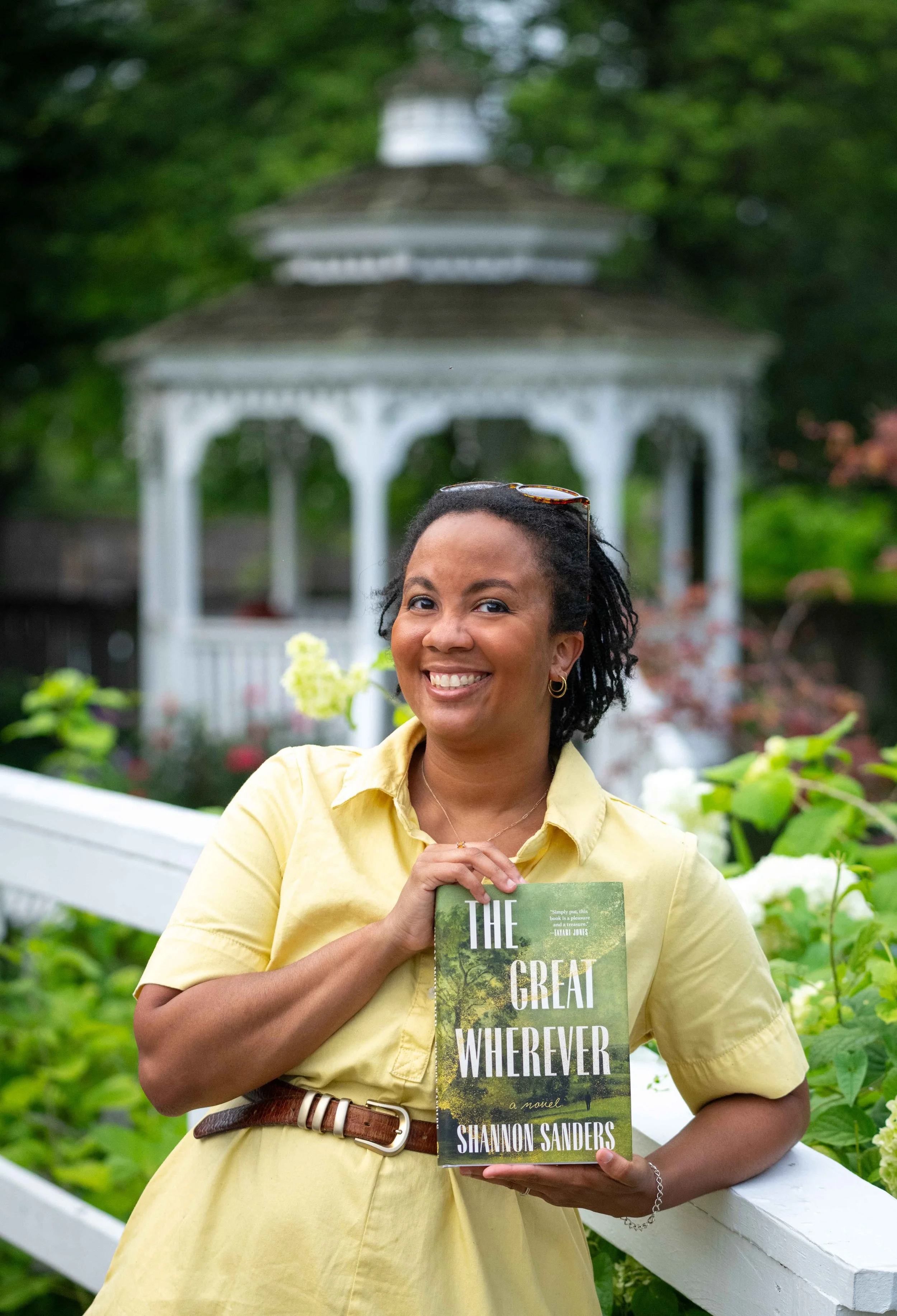
Today on The Stacks, we’re joined by author Shannon Sanders to discuss her debut novel, The Great Wherever. This book follows Aubrey Lamb, a young Black woman who inherits her late father’s share of a Tennessee farm filled with family history, secrets, and the ghosts of her ancestors. We talk about why she chose to use a ghost as her narrator, how she transitioned from writing a short story collection to an epic family novel, and her process for researching and planning the book's scope.
Our book club pick for July is Behind the Beautiful Forevers by Katherine Boo. We will be discussing the book with Julianna Haubner on Wednesday, July 29th.
LISTEN NOW
Apple Podcasts | Spotify | Google Podcasts | Overcast | Stitcher | Transcript
Everything we talk about on today’s episode can be found below in the show notes and on Bookshop.org and Amazon.
The Great Wherever by Shannon Sanders
Company by Shannon Sanders
Gone Girl by Gillian Flynn
Parable of the Sower by Octavia E. Butler
The Hunger Games by Suzanne Collins
Higher Learning with Van Lathan and Rachel Lindsay (The Ringer)
Cane River by Lalita Tademy
The God of the Woods by Liz Moore
“The 24 Best Books of Summer 2026” (Marion Winik and Charley Burlock, Oprah Daily)
The Love Songs of W. E. B. DuBois by Honoree Fanonne Jeffers
Homegoing by Yaa Gyasi
The Final Revival of Opal and Nev by Dawnie Walton
Commonwealth by Ann Patchett
Whistler by Ann Patchett
The Great Wherever by Shannon Sanders (Audiobook)
The Stacks Pack (Patreon)
To support The Stacks and find out more from this week’s sponsors, click here.
Connect with Shannon: Instagram | Threads | Website | Bluesky
Connect with The Stacks: Instagram | Threads | Shop | Patreon | Goodreads | Substack | Youtube | Subscribe
To contribute to The Stacks, join The Stacks Pack, and get exclusive perks, check out our Patreon page. If you prefer to support the show with a one-time contribution, go to paypal.me/thestackspod.
The Stacks participates in affiliate programs. We receive a small commission when products are purchased through links on this website.
TRANSCRIPT
*Due to the nature of podcast advertising, these timestamps are not 100% accurate and will vary.
Shannon Sanders 0:00
All of the good family stories come through whispering the details that are not part of the official story, right? Like some of the most interesting stuff to write about is in that delta between what people are actually saying and doing versus what they are thinking and feeling. I always want to include gossip in my stories, and with the ghosts, it's just fun because they have no rules of polite society. I want to talk to the reader as much as I can, and the reader getting to feel like they have ins that the characters don't. I think that it's, it's so much fun.
Traci Thomas 0:40
Welcome to The Stacks, a podcast about books and the people who read them. I'm your host, Traci Thomas, and today we are joined by author Shannon Sanders to discuss her brand new book, The Great Wherever. This book follows Aubrey Lam, a young black woman who inherits her late father's share of a Tennessee farm filled with family history, secrets, and gossipy ghosts today. Shannon and I talk about first and third person narration, why she wanted to follow up her award-winning debut short story collection company with a huge sweeping family novel, and how she came up with all of the names. Our book club pick for July is Behind the Beautiful Forevers: Life, Death, and Hope in a Mumbai Under City by Katherine Boo. And we will be discussing the book on Wednesday, july 29 with Juliana Hobner. Everything we talk about on each episode of The Stacks is linked in our show notes. If you like this podcast and you want more bookish content, are looking for a community full of readers, consider joining The Stacks pack on Patreon, and subscribing to my newsletter, Unstacked on Substack. In each of these places, you can get different perks. Over on the Patreon, you can have access to the Discord, attend our monthly virtual book clubs, be part of the mega reading challenge, and then over on the Substack, you're going to be reading my hot takes about sports, pop culture, books, and whatever else I'm into, and in both places, you'll have access to the nonfiction reading guide that is only available during the summer and monthly bonus episodes. Plus, by joining either the Substack or the Patreon, you make it possible for me to make this podcast every single week. Head to patreon.com/the Stacks to join the Stacks pack, and check out my newsletter at Traci Thomas dot sub stack.com All right, now it is time for my conversation with Shannon Sanders. All right, everybody, I'm so excited today. I am joined by Shannon Sanders. She is the author of a brand new novel, it is called The Great Wherever. You've probably seen it everywhere, it's on just about every list. I was nervous, I thought, you know, it's never good to be on every list, because that means that the book has to live up to the hype. But unfortunately for all of us, add it to your TBR, it is a quite good family novel. So, Shannon, welcome to the Stacks.
Shannon Sanders 3:05
Hi, Traci. Thanks for having me.
Traci Thomas 3:07
I'm so excited. Okay, why don't you do your authory thing in 30 seconds or so? Tell us about The Great Wherever.
Shannon Sanders 3:16
Okay, elevator pitch. The Great Wherever follows Aubrey, who's a woman in her early 30s, who's going through some life stuff and not really thriving at the moment. She is on the sort of on the heels of a recent breakup. She has also had some loss recently, and she has inherited a piece of family property, or a share in a piece of family property. So she goes to sort of investigate it and meet some relatives who are co owners of the property, and her journey to kind of understand that land is narrated by a ghost of an ancestor who should have gotten to inherit that land, but didn't get to, and has all sorts of opinions on what Aubrey is doing.
Traci Thomas 4:00
I was nervous about this book, because, as you know, I don't like anything scary, and I DM'd you, and was like, tell me a little bit more about this ghost. I was like, is it even a little bit scary, and you were like, no, but I asked my editor, and she was also like, no. So, anybody who's scared of anything, let me just, as the scaredy cat, resident scaredy cat of all of our reading lives, this book is not even a little bit scary, like there's nothing - they're not haunted ghosts, they're like observant, gossipy hangout ghosts.
Shannon Sanders 4:32
Yeah, fully. Okay, I'm so glad to hear a scaredy cat validate that, because I am a huge horror fan, and I know that my calibration is probably a little off, so what I think is not scary, I know that's not necessarily the universal standard.
Traci Thomas 4:47
Oh no, this isn't scary. Ghosts are more like I would say the ghosts are more like watching their favorite sitcom ghosts, as opposed to haunting a piece of land ghost.
Shannon Sanders 5:00
totally, yes, agree,
Traci Thomas 5:02
like they're they're like me, the reader, they're passing judgment, they're doing chit chat, they're filling in the blanks. It's like, oh, here's what you missed last week on our life down here on the farm. It's definitely not like I'm gonna, you know, trap you in a spider web and then have a tarantula suck your blood, or whatever. I don't know. I don't even know what happened. I don't even know what scary goes to. I just know they're not these people.
Shannon Sanders 5:27
No, yeah, they're not slamming doors and kind of like being, you know, boogeymen or anything like that. They are definitely more of a Greek chorus, I would say. Yes, who are there to sort of establish what's going on, and like you said, be kind of the proxy for the reader, and make sure that everybody is on the same page.
Traci Thomas 5:43
Talk to us about the ghosts. How did you, how did you get to ghost, ghost as narrator?
Shannon Sanders 5:49
Yeah, well, I had the idea for the story, kind of the through line of the story, which was young woman inherits family property and has to rise to the occasion of receiving that legacy, and I started working on the book. I wrote the first scene, which takes place at just a restaurant in the DC area, and as I was drafting it, this is the scene where she goes through this breakup, which is not a spoiler, because that's like the very first thing that happens in the book, and I found that I was writing sentences that were kind of like in the time I had been watching her, this kind of thing happened to her all the time, and I just sort of found that the narration came from a place of kind of gentle criticism, or maybe like loving, oh my gosh, what's about to happen to her, and I do feel like as a writer the voice kind of usually announces itself, and the POV usually will inform what the book is, or vice versa. Those two things kind of work together, so it felt like it sort of made sense with the story as I was starting to see it, which was, look what this child is doing, which is sort of the tone that the ghosts relate to Aubrey through, for the most part.
Traci Thomas 7:02
Yeah, you, so basically you kind of had that, that was already happening inadvertently, and then you were like, okay, I need to name this, or like, make this, I need to make this voice that I'm getting make sense for the story,
Shannon Sanders 7:16
yeah, yeah, and I guess because then the character who is that ghost, become such a part of the story too. Yeah, that wasn't clear to me right away. You know, how there's that meme that's like, okay, I'm gonna wake up, question mark, question mark, question mark, it's over for you, hose, you know, and there's sort of like a what's gonna happen in the middle. Yeah, I knew I had the setup, I always had the ending, and it was just like, such a.. I had, you know, there was such a journey that had to happen for me to figure out what the substance of the actual story was, but I did not necessarily have the answer to that as soon as I had the voice that I wanted to tell the story through.
Traci Thomas 7:56
Yeah, I see. So, are you one of those writers that, like, how did you come up with the answer? Like, what's your process if you're like, I know the beginning and the end. Do you write like 1000 different versions of the thing, or are you like, you know, some people are like, I'm waiting for the voices to talk to me, and then some people are like, I plan out every single thing, and I have a post-it for every single thing. Like, how do you actually turn the beginning and the end into a 400 page novel?
Shannon Sanders 8:26
No. Yeah, I would never be able to write 1000 different versions of a story to settle on the one that I liked best, because I just like don't have time. I am sort of in between a plotter and a pantser. I usually do have an outline of some sort, like I said, I always start with an ending, because I know that I want to be working toward that ending at all times, and so I really want..
Traci Thomas 8:49
would you ever change the ending? Would you ever like have an ending and then be like, oh shit, this isn't even that good anymore once you get there?
Shannon Sanders 8:55
Yeah, sure, I would. I think I don't know that that has ever happened to me, but.. but that would be like an exciting development that could happen during the writing. Yeah, no, no worries. Yeah, but so you and I have in common, I have twin sons who are pretty little. I also have an older child who is like still pretty little, and so I am just usually up against kind of this clock of I have to get this idea out while it's still really exciting to me, and also while I still have all of the, you know, all of the pieces of it working together, and so rather than doing a bunch of aimless drafting, I usually try to set little lily pads for myself, and so it'll be okay. I really want this to happen. I really want there to be a scene where they're all having dinner together. I really want to get her to this location, and then the fun part is getting to figure out where we go in between to find our way to that next lily pad.
Traci Thomas 9:53
This is a huge intergenerational family story. Why did you want your first.. I should say this. First book is a short story collection, and it's a teeny tiny one. It's a very short, short story collection. This next book is a, is a big boy. It's 400 pages, it's a lot of people, it's all, you know, it's fan, it's intergenerational, so it's all connected. We go back, I think, as far as Aubrey's great great great grandparents,
Shannon Sanders 10:21
I think, seven times. Yeah,
Traci Thomas 10:23
so like we're giving.. we're.. we are back in slavery. We are coming up to the very much present, like we get to at least a little past Covid. Why did you want to tell such a big story? What.. what was it about that that was exciting to you.
Shannon Sanders 10:41
Yeah, I mean, okay. And so, caveat for my first book, because it is - it's a much slimmer book, but it's 13 stories. There's bunches and bunches of characters in it. That has always been a little bit of a weakness of mine, is that I really want to fan out. I really want there to be as much of a community as possible, both because you know, for authenticity, and then also because that makes so many more dimensions that are exciting. I get to see each of the characters through each other's points of view, and I always knew I wanted this to be very multi-generational, because so I should start by saying this is like partly inspired by family history from my maternal grandmother, who co-owns a piece of land with her siblings, and then now some like nieces and nephews, but one thing that was really striking to me about that piece of family history is that my grandmother's great grandmother was enslaved, and then her parents, my grandmother's parents, they both were college educated. They had kids who were all college educated. They own this land, and so there is so little chronological distance between one state of being and then this other one that looks so different. And I, you know, I was writing this around the time period when we were kind of in like our hangover from the great reckoning of 2020 and DEI was beginning to be a naughty word again, and I just felt like there were so many forces where I was having to hear every day, you know, that like merit this and that about not deserving of different advantages or not deserving of different opportunities that people had been coming to finally get to experience, and I just really wanted to be like, no, this is such a short distance from this time period where there was nothing available to this family, you know, this is really like three generations are like a stone's throw, and so I started to sort of think about that in terms of being a person of a generation, able to like look across upon and see a person of another generation, that's that's the distance, like in terms of chronology and generationally, so yeah, so that was exciting to me, and then I also just really enjoy getting to tell lots of stories, and if a, if a book has, as I think this one does, I think there are like something, maybe 47 named characters or something like that, is what I was told.
Traci Thomas 13:14
Who tells you that? Your copy editor?
Shannon Sanders 13:15
yeah, because they have to send you a style sheet where they list all the names and make sure they're all like spelled, spelled right, but so that many people just means like that many more opportunities to come up with good gossip and to get more little bits of story in there, even if they're not part of the main story.
Traci Thomas 13:34
I mean, I, you know this about me, I don't read a ton of novels, like I'm not really a novel person, I do like a family novel. I do like, like in my family, I can tell you how all of my cousins are first, first cousins once removed, second, like I know all of that, like family tree stuff. I just call everybody cousin, but like I can actually do it. Yeah, and so I was thrilled by the sort of challenge of that in this book, because there's lots of siblings, and then who has these kids, and these kids, and how is this kid related to this kid, because the, the way that the, I don't think this is a spoiler, but the way that the, that Aubrey, our main character, kind of comes into this land is that she shares ownership of it with different cousins, and some of them are of her generation, and some of them are the older of her father's generation, and so I really found that also really exciting about the book, that we have this sort of intergenerational story in a way that felt not like it didn't feel like forced in the way that so many intergenerational stories are like mother to daughter to grandmother, like, yes, it felt more dynamic than that, and like sort of like weirder than that, right? Like, so much family can be sometimes seem like can be awkward, like if you live away from family that lives together, and I really felt like you. Captured some of the more awkward bits of family. I don't know, is that something you were interested in?
Shannon Sanders 15:07
Always. Yeah, I love that. I really am interested in, like, aunt-niece relationships, and, like, uncle, nephew, because, so, yeah, like you said, there's a lot of books that are, you know, this was passed down to me by my mother, which actually, this book does a little bit of that too, but sure, there is, I think, there's something really interesting about being a step removed from like that direct line, so you get a little bit of insight into what your parent was like when they weren't your parent, you know, and you get to relate to this child who belongs to someone else but has, but it's kind of like an expression of family values that you yourself were raised with, so yeah, I think that's really always fun to play with. And in this book, there is quite a lot of like auntie niecy kind of stuff that goes on,
Traci Thomas 15:56
yeah, because, like, siblings, I don't know, I think siblings are more interesting than parent child to me, like I just think sibling is so much more dynamic of a relationship, because I think there's so many rules about parent child, right? It's like there's a, there's a hierarchy of respect, there's like an obligation on both sides of behavior, but I feel like sibling can change quickly. Sibling can, you can be a bigger asshole to your sibling. Yeah, you can also be like more intimate with a sibling. And so I feel like this book is, while it's definitely a family book, a lot of it is like a sibling book, and the relationships of siblings to their offsprings, each other's offspring. So, I really had an eyebrow like that.
Shannon Sanders 16:46
Yeah, you can be, I mean, you can be really mean to your sibling because there is no veil of respect, or there's no hiding from a sibling. A parent has to hide a lot of things from a child, to you know, Ben, a child has to
Traci Thomas 17:02
hide a lot of things from a parent.
Speaker 1 17:04
Yes, exactly. Yeah, your siblings know you in a way that is different and that makes you like way more vulnerable to them. Yeah,
Traci Thomas 17:10
yes. There's a great scene later in the book, which I won't spoil, where there are three siblings, sort of like fighting, and I was like, this feels so right, this feels so correct to me. I'm curious. You mentioned in your acknowledgements about your own family story, and you said, like, I hope it's, you know, half as dynamic and rich as their lived reality. You said, like, this is not your family story, but you hope it is that. Would you ever write your actual family story like a non-fiction family memoir. Have you ever considered that?
Shannon Sanders 17:43
You know, well, because I just.. fiction is so much more exciting to me as a writer than non-fiction. I did help my grandmother, who is really into genealogy. I helped her do some compiling of stories and helped her put together a book that was about the stories, but I.. I'm certainly not like a journalist, and I'm not gonna do like a Cane River, Red River type thing, but I would be, I mean, I would be interested in writing like essays about them, for example, because there are so many, even just looking through my family tree with my grandmother, seeing these little details, like that this one father had children by his wife, and then these two children at the end, who were by a different lady who, like, live next door or something, and there's just so much there that I think would be so exciting, but I do feel like if I can't give it the depth that actually exists in the story, then I would rather just be inspired by it, that's kind of where I fall on it, but yeah, maybe one day I can, I can certainly
Traci Thomas 18:45
It felt like such a tease, you know, it's like we read this great, interesting book, and you're like, I hope this book is half as exciting as you guys, and I'm like, well, wait, wait, wait, wait, I need to know the story, I'm a gossipy alive ghost. let's talk about gossip a little bit, because I, I just, I love, I love the gossipy nature of this book, and I'm wondering, like, what does that free up for you, if anything? Why go that route? There's so many routes you could go with the gossip, with a ghost doesn't have to be gossipy, so why, what was that tone about for you?
Shannon Sanders 19:22
I, it's just so much fun, like I think that it is all of the good family stories come through whispering the details that are not part of the official story, right? Right. So, like, we always had family reunions, and there would be, you know, we would all go to church together, we would all have a picnic, we would all go and visit like the historical society together, but then, like, later in the hotel room, my mom would tell me more stories about her cousins when they were kids, or I would, you know, go out with my cousins later, we would go and get drinks, or whatever, and I would get all these details that were so oppositionally not what their parents. Presented necessarily at the family function, so I just, I think that you know, like, some of the most interesting stuff to write about is in that delta between what people are actually saying and doing versus what they are thinking and feeling, and you know the difference between like what they believe and what they present that they believe, so I just always, I always want to include gossip in my stories, and with the ghosts, it's just fun because they have no rules of polite society that are acting on them, so they get to be, you know, they get to be even more gossipy, especially if they are young, as some of the ghosts are in this book, and they have a little bit less, they might not have as much propriety or decorum that's that's binding them,
Traci Thomas 20:51
and also I feel like what it sets, like tension-wise, what it set up for me as a reader is like the ghosts have all this information, but they can't actually communicate it to our alive people, and so that also is sort of fun. It's like there's this tension, or like this dividing line between what they know and what our alive characters know, and how does that information cross the gulf, and I really liked that too, because it's like, oh, I'm in the know, like I know something Aubrey doesn't even know, and I was like, that's great, so I'm in on the gossip,
Shannon Sanders 21:30
yeah, that part is really fun, because like, it's a way to play with the reader, I really always want to be, I want to talk to the reader as much as I can, and the reader getting to feel like they have ins that the characters don't. I think you know readers like really hate being confused or alienated, and I think they just as much love being drawn in and whispered to. I think that it's, it's so much fun. Yeah.
Traci Thomas 21:58
Well, you also found sort of a loophole to my current pet peeve, which is first person, because you have a first person ghost narrator, but a first person ghost narrator is sort of omniscient, so I'm still getting sort of a third person, like there's so many parts of the book where I was like, oh, this reads like third person, because our narrator knows, she knows enough, she doesn't know everything. There's a few like disputed facts that come up in the book for the ghosts, but like she pretty much, she can see everything, she's in people's thoughts and feelings. So I'm like, this is the greatest first to third workaround. I was personal, just like my personal, I just, I get, I'm like anti-first person right now. I don't know why this happened to me, but it's my new thing this year. I'm just like, I hate it.
Shannon Sanders 22:46
Yeah, no, I know. I saw that you've been on a crusade against first person. If it's used to be sort of like a crutch and let things be to take away dimension from them somehow, or to make them more sparse, or to take away the responsibility to develop the world beyond what the one character can see. I think, yeah, I, I mostly don't write in first person for that reason, because I'm just too nosy about what's going on over there, you know.
Traci Thomas 23:17
I think part of the thing I don't like about first person right now is, a, I feel like everyone's doing it, but like for no reason aside from everyone's doing it. Yeah, like I don't have a pro, like Hunger Games is some of my favorite books, and those are all first person, and I love them because they feel like in my mind, and I guess this actually your book passes my like Bechdel test of first person, which is like either the person has to be so unreliable, like Amy Dunn in Gone Girl, or they have to be living through something so exceptional that the only way to truly understand how intense it is is to be inside someone's head or body, so like that's like to me, Parable of the Sower, yeah, or, or Hunger Games. It's like you can't really understand what Katniss is experiencing unless you are with Katniss,
Shannon Sanders 24:12
yeah, yeah.
Traci Thomas 24:14
And in your case, I feel like it's such an exceptional premise to be inside a ghost that it works, but it's also a workaround, because we still are sort of getting third person. Yeah, anyways, this is my whole rant. This isn't about your book, but to say that your book is, does it did it well, it felt earned like an earned first person.
Shannon Sanders 24:36
Yeah, the rule I always was taught, which, like, rules are not a real thing, and I don't actually think that people have to follow this if they don't want to, but I was always told you start with third person unless there is an unless an irresistible first person presents itself to you, and so I think that's kind of like echoing what you're saying, if there's something so intense about being with the character that you really have to do it yet. Yes, if there's no other way to tell the story, or if there's no better way to tell it, then go for it. But otherwise, the story itself, enough should be happening that you can tell it in third person, and it's dynamic and exciting. So, yeah, yeah,
Traci Thomas 25:14
but maybe I'm old-fashioned. I don't know. I've been asking around about this whole first person thing. Apparently, everyone else loves first person, so I guess I, that's what I've been told. Like, when I brought it up online, everyone was like, 'Ah, first person's the best. I was like, 'Oh, okay, I don't know, I don't know. And you know, I do have really intense opinions that are sometimes useless. So, anyways, I want to talk to you a little bit about food, okay? Because there is a meal, chicken and dumplings. It comes up in this book all the time. I love it. It's an intergenerational food. It's a passed-down recipe. Do you cook?
Shannon Sanders 25:51
Yeah, I love to. Do you
Traci Thomas 25:52
make chicken and dumplings?
Shannon Sanders 25:53
I have made chicken and dumplings. It's not one of my staples the way it is for these characters.
Traci Thomas 25:58
It's not one of your family recipes.
Shannon Sanders 26:01
No. And honestly, I don't have, like, a legacy of cooking from my mom and my grandmother, even though they both cook, and they're totally great cooks. But, yeah, yeah,
Traci Thomas 26:10
so why chicken and dumplings,
Shannon Sanders 26:12
you know? Because there are some things that happen with the recipe that get kind of contorted because a new generation had different values and I kind of was thinking about, you know, what is a food that is what's a food that appeals to different people for different reasons, and so there's one character who is vegetarian for a period, and so she wants to swap some stuff out, I thought it was a really good, easy kind of like motif for showing how people's values change, and then there's also opportunities to see people shopping for the ingredients to show kind of like the change in this town over time. I don't know, this is this was me overthinking the chicken and dumplings greatly, but I
Traci Thomas 26:54
obviously it was enough for me to be like, let me ask about chicken and dumplings
Shannon Sanders 26:59
I did talk to my grandmother, because I just, you know, I got like very overwhelmed with research at one point about trying to make this town have some accuracy, and I asked her about what kinds of things they would have for dinner, that was not one of the answers, but she did talk about having chickens around, she talked about like going with her mom to the market and stuff, and getting like these different pieces of meat, and so I sort of started there, and yeah, I wanted, I just really like, I wanted people to feel like something delicious was happening when, when it came up, and I think people respond to sensory input in a book.
Traci Thomas 27:38
I don't think I've ever had chicken and dumpling.
Shannon Sanders 27:41
What I'm not even like Cracker Barrel.
Traci Thomas 27:45
Oh, I've never been to Cracker Barrel.
Shannon Sanders 27:46
You're on the West Coast,
Traci Thomas 27:47
I'm in California. I never.. I don't think I've ever had it in my mind. It's like I don't.. anyways, I don't think I've ever had it. It's good. Sorry, everyone, don't.. don't.. I've had other food. I swear, I've eaten other things. Speaking of the research, how much did you do? What were you researching? What were you trying to, like, get right?
Shannon Sanders 28:11
Yeah, this is sort of the really hard - this is like the womp womp part of the story of writing this book, which is that I, you know, the beginning section is mostly in it's set in the present day, and it mostly follows that character, Aubrey, and she's going through some, you know, stuff that is like very relatable, I think, to a lot of millennials. And then I, as I discovered that this was going to have a big historical component, I, at this point, had my twins, were like, I think they were maybe 18 months old or something, and I got to the part where I needed to go back and lay out some historical detail about this town, which is in Tennessee, near Memphis, and specifically the history going back to pre-emancipation, like sort of the era that you know, and then through reconstruction, there's a lot of reconstruction stuff in there and I got so overwhelmed that I set the draft aside for like a year and I was like I cannot, I have these babies, I can't get to a university library right now, I can't lock myself away at a residency right now, and I truly, you know, at one point I was just like, oh, okay, well, I'm just not gonna finish this then, and then I partly because I was less sleep-deprived a little bit later, and then partly just because I sort of just found some willpower and made myself do it. I started researching little pieces of things, and so one was there is this real historically black town called Orange Mound near Memphis, that was, I think, it had its beginnings in the Dedrick Plantation, which is like a very famous, sprawling Tennessee plantation that eventually began to be a home for some freed people, and I started to read about that, and that felt manageable. Like that was one thing I could do. I looked at pictures, and I read some of the accounts. I read about, like, what some of the professions were in that town, because I just needed to have enough detail to provide texture, and I knew I was capable of writing the family story. And then I made myself, you know, like again, back to the lily pads. I was able to leap over that, that bit of it, and then get to the point where I wanted to research about types of homes people would live in, and so I did some research into Sears Kit houses, which were the, the like mail order houses that people would assemble in the early 20th century, which I had done some reading about already, because I just found that really interesting for some reason, and that kind of opened doors to reading a little bit more about the auto industry. My dad's from Detroit, and so I had a little bit of interest in that anyway, and knew a few things about that, but it sort of different little doors kept opening between these small pieces of what was going to go into the text, and then, of course, the classic thing that I think happens to all writers is that I would read about something for like a day and a half, and it would end up being four words in one sentence, you know, but I do think that, like, the sentence itself feels more accurate because of that, that time spent researching, so it was. I would say it was like not immersively researching, it was ad hoc research, as, as pieces as I had to. Yeah, so
Traci Thomas 31:37
I love that. I love that. Okay, wait, we're gonna take a quick break, and then we'll be right back. We're back. I want to talk about the names in this book, as you mentioned, there's 47 named people. There's also like a lot of place names, and just like there's names, lots of names. So, how were you naming? How do you name whose name did you know for sure? Yeah, talk about it.
Shannon Sanders 32:07
Oh, I names are so much fun to me. I used to be very, very obsessed with baby name trends over the decades, and so I have, like, a lot of now useless, because I'm done having kids, useless deep knowledge about like names,
Traci Thomas 32:23
Well not useless. You're a novelist.
Shannon Sanders 32:26
Yeah exactly! Okay, I found a way to use it, even though I'm done.
Traci Thomas 32:29
You started a career around a passion. The passion was not writing, the passion was children's names, and you were like, job I could do where I use kids' names.
Shannon Sanders 32:38
Yes, yeah, yeah, okay, yes. Thank you. I feel better about that now. Actually, yeah. And so you know, like, I went into it. I always go into naming a character wanting to be true to the period, true to the class, true to the, like, kind of the value systems of the parents of the character, Aubrey and Bellamy. You know, there's discussion about how they're named in the book. They were also characters in my first book, and in that book, they're part of this sort of like slightly bougie black DC family, where it is the case that a lot of kids are given sort of gender-neutral names that are supposed to allow them to blend in and, like, submit a resume and not have not be clocked immediately. I enjoyed there is like a little bit of a lineage of names. There are a great grandmother, grandmother, and so on, who have names in conversation with each other. That was a lot of fun, because I got to look and see what the top names were in each of those years and try to kind of work around that. There is, you know, of course, this is a Tennessee black family, and so the black church would have been a big part of their life, and it's specifically an AME church, and so there are a number of biblical names here, and then my editor, Emily Griffin, who's very brilliant, she pushed back on a couple of names that she wanted me to change. There's a character who was originally named Trip, and his name, she said that that sounded like a white preppy boy, but I have known a number of preppy black trips
Traci Thomas 34:15
Who was originally Trip?
Shannon Sanders 34:16
He became Trey, and so, yeah, and so, because, like, you know, whatever, his name's probably Charles Houston the third, right, or something. Yeah, but so he's he's Trey in the book now, instead of Trip. And then there's a, there's a family that are, they're very wasp coded in the book, but they are also, I just know from writing them, they're partly Irish Catholic, and so the there's a character named Bridget. My editor pushed back a little bit and wanted me to change that to something Waspier versus Irish, but I was like, no, this has to stay.
Traci Thomas 34:52
interesting.
Shannon Sanders 34:53
Yeah, and then, and then, other than that, yeah, it was mostly about trying to keep the generations in mind. And it's always the most fun part, I really love that, that part of
Traci Thomas 35:03
it, I loved the names, there's a few names that made me laugh, like Oliver obsessed. one of the sort of like naming things that happens in the book is like there is a last name that is sort of connected to a lot of different pieces in the family, and the family's last name is Lamb. And then there's like the town is named after the plantation owner, and that's Lanyr. And then there's like other versions of the name that sort of pop up. Was that something you discovered in your research, or was that something you sort of fabricated based on what you were trying to do with the story,
Shannon Sanders 35:42
well, yeah, I mean, I did just happen to know that that happens a lot, but also when I was researching with my grandmother to put together her genealogy book, her family name is a Scottish name, and it belonged also to a lot of other branches of the family, both black and white, in Tennessee, where she's from, but spelled in all different ways, and then also sometimes really changed in different ways, so that it was almost not recognizable, but she has done a ton of genealogical research, where she has, you know, she unfortunately, like, does the center DNA sample thing in 23andMe, and then gets all these cousins whose names are so different that you would never realize it, but then you put it together and you're like, oh, that's the same name, it's just, you know, two and a half centuries ago, somebody changed it a little bit or couldn't write, and they said it a different way, yeah, because,
Traci Thomas 36:37
so I've tried to do my own family genealogy, and I get stuck on my grandmother's maiden name, which is my middle name. We're from Baton Rouge and from New Orleans, or like Louisiana family, and with the French and the spelling, I cannot find anyone with this name the way that my name is spelled, and I can't figure out what the other versions of it are, and so when this part happens in the book, I was like, this is what I'm dealing with right now, like, and I also know I think Van Lathan, who does the like show with Rachel Lindsey Higher Learning, hit Lathan is his last name, he's also from Baton Rouge, and I believe he told me that the Lathans are connected to the Lawsons, L A S S E N or something like that, and I was like, well, what is the one for my name? And he was like, I don't know, or maybe he did tell me something, I can't remember, but anyways, so I was really taken by this as like there's hope that I could figure out what this French Creole name is.
Shannon Sanders 37:39
Oh, you totally can, you just have to like slur your name a little bit when you're saying it, and see if it sounds like something else, you know.
Traci Thomas 37:45
Also because it's like, like, any, it's like French spelling, so sometimes it has a t, sometimes there's no t, sometimes it's an i, it's me. Anyways, this, it's just, I was like, very, my like personal spidey sense was like, this is me, this is me, I can't figure out my name. Where's my family from? What about the title of this book, The Great Wherever?
Shannon Sanders 38:08
Yeah, so in the book, of course, the ghosts exist in this kind of liminal space where they are not able to interact with the living, but they're also not completely with the dead, and the narrator at one point, refers to it casually as just kind of the great wherever, and so that's where the title got plucked from the current draft of, well, I guess I should say the finished draft of the book only references it, I think, once, but I think I had them referring to it a little bit more often in previous drafts, and then I also thought it kind of echoed the fact that Aubrey is sort of in this wilderness of her own making, of not really knowing what is going on. It did have a different working title. It was for a really long time called Just Lanier County, which I, you know, I understand that is not as good. My editor pushed a number of times, and again, Emily is really smart and has really good ideas, and was right about so many things that she said, and she pushed for the great wherever, which came from the text, and I think it works. So, yeah,
Traci Thomas 39:14
Lanier County just feels like such a different book, but also Lanier such a confusing word to the eye for me. I kept calling them Laner, like I just kept flipping that, so I feel like Lanier also is like a hard word, but Lanier County feels like a totally different book to me, that's giving like, like more about the town,
Shannon Sanders 39:36
is that giving Cane River like the Lilita town, yeah, yeah, it's.
Traci Thomas 39:41
I don't know, it's just slightly different. The Great Wherever.. yeah, I don't know. I'm also influenced by it, because I've said that so many more times than Lanier County. But what about.. but.. but I don't know. I just..
Shannon Sanders 39:53
it's a little more sarcastic to the Great Wherever, and I think that fits your tone a lot better. It's the tone, and so.
Traci Thomas 40:00
so here's what was stunning to me about the book. I went into this book being like, ghost story might be scared, but I'm gonna try, like, I don't know. And then from the first page, the tone, it's funny, it's sharp, it's sarcastic, like I knew that it was gossipy ghosts, but I sort of thought we were gonna be like 1840s I don't know, in my mind I had decided this was like a historical novel, and obviously we get a lot of that, but it's really a contemporary novel,
Shannon Sanders 40:32
yeah, and I think that cover
Traci Thomas 40:34
was sort of giving me historical, so I sort of went in being like, oh, this is gonna be like, I thought the ghosts were gonna be old timey, you know what I mean, like I don't know, I just.. I was really like the first like 50 pages, I was like not at all what I thought I was gonna be reading, and like in a good way, but when I, you know, the job that I do, I read books early, so a lot of people hadn't read it, or.. and I also don't ever want to know anything about a novel, so I was like sort of pleasantly surprised by this book being like sarcastic and like jokey and super contemporary, and in a lot of ways like urban,
Shannon Sanders 41:17
yeah, yeah, she lives in DC, or yeah, in or around DC, but yeah, it's worth saying. I mean, you find out in the first two pages or something that the narrating ghost died like wearing a BCBG dress, so yeah, she, you know, she's she's of an age with a lot of the people who are going to be, I think, reading the book, yeah, and yeah, a lot of it is filtered through her perspective, so, which was helpful to me, because some of that old timey stuff had to feel accessible enough to write about it, so so helpful to have her there to help process it, yeah.
Traci Thomas 41:52
What about the cover? I love the cover
Shannon Sanders 41:54
yeah, me too
Traci Thomas 41:55
So good. Did you have any say, were you involved in it at all?
Shannon Sanders 41:59
Yeah, you know, it's funny because I published my first book with Gray Wolf, which, of course, being a smaller press with a more curated list, they are really good about soliciting author input, and they send you like this questionnaire: tell us about the vibes, tell us what colors you think of when you think of the book, and so when I came to Holt for this book, I just assumed they wanted all my opinions about everything, because Gray Wolf had, and they kept being like, "Wow, it's so great that you've thought about this so much. And I gave them feelings, I gave them senses of like what colors I thought belonged on the cover, and I gave them a couple of covers for reference that I really liked one is Liz Morris, the god of the woods, which it ends up being like quite a, almost like a, you know, fraternal twin with this, and then we did some work back and forth to adjust, there's a little human or maybe non-human figure on the front, and we went back and forth on how gendered that figure should be, and a few details like that, so I did come in with a lot of opinions, and I hope they were helpful, so yeah, I felt really excited by the result, I was so relieved, because you know
Traci Thomas 43:16
it's really beautiful, you got a nice package, we love a good package, we love a good cover. What has been the big difference for you going from this indie press at Graywolf to going to a big five at Henry Holt?
Shannon Sanders 43:31
Yeah, the biggest difference is reach, so well, I mean, I guess both, because, of course, a big five publisher is better resourced in a lot of ways, and so there have there are financial differences, and then, of course, like just generally reach. I will say that the smaller press experience is so intimate, and I felt like I, I just always felt like I was sort of part of a family with that team, I feel that way in a lot of ways at Holt as well, but because it was like so much more grassroots in a way, the feeling was just a little bit more, I think, intimate, but yeah, Gray Wolf is super supportive, and I had such a great experience there, and I was really thrilled to get my first publishing experience there, because it made me feel it made me feel capable and competent, I guess. If that makes sense, because they were so nurturing, and then with Holt, it has been so exciting to see just the reach and the way that the ideas that they have, which are in so many cases like so far beyond what I would ever have thought of, like, this book was on the Oprah daily summer list this year, which, that was just very stunning to me. That's something really easy that I can tell my grandmother, and she's like, "Oh, that's so exciting, versus almost everything else that happens in publish, which is publishing, which is so opaque to everybody who's not a books person.
Traci Thomas 45:02
yeah, yeah. No, that makes so much sense. I love that. Is there anything that's not in the book that you wish could have been?
Shannon Sanders 45:10
Of course, after hitting send, I immediately was like, I could have done this, this, this, and that. Mostly, though, one of the really fantastic things about working with Holt and with Emily was that in one of our, like, very first conversations, she said, "Okay, listen, I know this book is 360 pages, not every book needs to be a big book, I am okay with this being a big, as in, like, size-wise book, it ended up being 400 pages, and so I mostly felt like I got to explore everything I wanted to, which I was really excited about, but there are tiny tweaks that that I feel like I would have made. They're spoilery, though. They're about like other ghosts I could have added.
Traci Thomas 45:57
Okay, you can tell me when we're done. Okay, yeah. As you mentioned, you're the mother of three. I also follow you on social media, so I know you're a knitter. You make like the cutest little things for your boys, and I'm like, I hope my kids never see that other moms are doing cute things like this, because that'll never be me. But how do you write how many hours a day, how often, music or no, in the home or out, snacks and beverages, you know that part's important. rituals, all of it.
Shannon Sanders 46:25
Yeah. Okay. Here's where I have to call bullshit on so many writers who have been on this podcast. I don't know which one specifically, but here's what I know. I know lots of writers. I have hung out with them at AWP and at other stuff, I have listened to dozens, probably 100 episodes of this show. I can count on one hand the number of people I have heard answer the snacks and beverages question with the word wine, and that is, that's like a number one writing food group for me.
Traci Thomas 47:00
So funny, I feel like it comes up mostly with memoirists.
Shannon Sanders 47:03
Okay, okay
Traci Thomas 47:05
Memoirists and like personal essayists, those are the people that are popping into my head who have mentioned either wine or whiskey or something like that.
Shannon Sanders 47:12
Okay, this makes sense because I am mostly listening to the fic to the novelists, I guess.
Traci Thomas 47:17
okay
Shannon Sanders 47:18
I know that a lot of career novelists are doing their writing like by day at a desk, and it's maybe one of the main things they're doing that day. So, because I have a day job, and because I have kids, I have like sort of two phases of writing. One phase is I have to get unstuck, I have to get started, I have to take advantage of like this chunk of time I have, and so that's where usually wine comes into play. I'm a red wine lover, and I just, I just love it so much, and so that's that is like very generative for me. Once I'm on a roll, once I have like some momentum, and I am starting to be able to write in a more sustained, systemic way, I'll usually get started by like taking a weekend and being like far away from the kids and stuff, and I'll try to get started, and then after that I am writing every night after they go to bed, so this is like maybe 9:30pm to maybe 1230 or something like that, maybe five days a week, maybe six if I can, if I get to a point where I just am really stuck, stuck, then I have to stop and wait until I can go for a wine date again and start again. If I'm doing that, I usually have just room temperature water. I don't like for anything salty or sticky to get on my keyboard, so I'm usually not eating like a salty snack, but maybe something trashy, like Twizzlers. Okay, just for a little bit of a little bit of sensory feedback while I'm writing, but if I do, then it's usually like hanging out of my mouth while I'm trying to get through a paragraph or something like that, not even being chewed.
Traci Thomas 48:59
Okay, I love that you call Twizzlers trashy
Shannon Sanders 49:04
and black coffee. Black coffee is another big one. Yeah,
Traci Thomas 49:07
okay, I accept all of these very specific things. Thank you for presenting us with specific snacks, and I love you calling bullshit, because now I'm gonna be like Shannon said you guys were fucking drinking.
Shannon Sanders 49:18
I just know more of them are drinking than what are saying on saying
Traci Thomas 49:24
Now I know to push back. I'm gonna be like, but what about wine? Yeah, what about a word you can never spell correctly on the first try?
Shannon Sanders 49:33
I am so narcissistic about my spelling, but the truth is the word resistant.
Traci Thomas 49:39
Oh, good one. Can you do resistance?
Shannon Sanders 49:44
If I could, then I would. I, yeah, both of them. I try the wrong, okay, the wrong thing both times.
Traci Thomas 49:50
Yeah got it. Yeah, no, I couldn't do either. So that's a good one. Okay. Um, wait, can you tell us what your other job is? Your day job?
Shannon Sanders 49:57
Yeah, I investigate insider trading for. A financial regulator. Yeah, I'm a lawyer too.
Traci Thomas 50:06
Wait what? This is awesome. Write that book.
Shannon Sanders 50:09
Oh, oops. Yeah, one day they have been supportive of the fact that I also do this. I had to get, you know, permission and stuff, but the arts are fine as long as you're not doing something to compete with the regular.
Traci Thomas 50:22
I want to know about investing, investigating insider trading. I want that non-fiction book.
Shannon Sanders 50:26
It's juicy, also very.. it's very gossipy.
Traci Thomas 50:30
come on, Shannon, you're holding out on me.
Shannon Sanders 50:32
Yeah, eventually
Traci Thomas 50:33
You're like, yeah, not gonna do it. Um, what comes next for you? Do you know? Do you have a next book, a next idea.
Shannon Sanders 50:41
I do have a next idea. Yeah, promoting a book is extremely consuming, and the best wisdom that people give is that you should be working on the next thing while you're waiting for this to happen, but it's just so consuming that it's really hard to do that. But I really miss short stories. I'll probably be writing some more just to get that feedback loop going again soon. And then I do have my next novel idea, and I'm gonna really try to get ass in chair pretty soon to start working on that
Traci Thomas 51:13
Wine girl. Get that wine.
Shannon Sanders 51:14
There you go. Exactly, that's where it comes in handy.
Traci Thomas 51:17
There you go. For people who love The Great Wherever, what books would you recommend to them that are in conversation with it?
Shannon Sanders 51:22
Yeah, I would say definitely Honoree Fanon Jeffers's The Love Songs of Web DuBois, yeah, Jesse's Homegoing, those two for sure. I think Donnie Walton's work, The Final Revival of Opal and Nev, is in conversation with this because of the sort of historical journalism, he kind of,
Traci Thomas 51:45
and the tones are sort of similar. there's similar vibe, like, like, like that feels correct.
Shannon Sanders 51:51
Yeah,
Traci Thomas 51:52
yeah,
Shannon Sanders 51:52
100% I'm a big Anne Patchett fan and Commonwealth, which is a family novel that spans generations and has lots of sibling stuff going on, I'll just, that'll be my last one, but yeah, that too.
Traci Thomas 52:04
Okay, I've never read Anne Patchett, I know. Hot take, I don't think I'm gonna like it.
Shannon Sanders 52:11
I don't think so.
Traci Thomas 52:15
You think I'd like it? I'm sort of just avoiding it, because I'm like, I don't think it's for me.
Shannon Sanders 52:18
Yeah, I don't either.
Traci Thomas 52:20
okay, thank you for validating this. The new book, Whistler with the horse on it, I'm like, I know that's not for me.
Shannon Sanders 52:26
I'm not even sure that's for me, even though I love Anne Patchett.
Traci Thomas 52:31
I just feel like her covers are sort of signaling, like her marketing and sales and art team are sort of signaling to me, not for you, girl. Yeah, I think that's okay, like I can, like, like her as an idea cleanly, without having to actually grapple with the work. Yeah, I probably won't like yelled at, yeah, yeah, it won't get yelled at. I can just be like, she's a great writer, people love her, never read her, but maybe one day I will, we'll see. Okay. Last question for you, if you could have one person, dead or alive, read this book, who would you want it to be?
Shannon Sanders 53:05
I'm gonna say my grandmother, because she is alive and she has a copy of it. She doesn't do a ton of reading on the page at this point, but I would love for her to be able to experience it, the whole text, you know. I, yeah, I would love that. If she could,
Traci Thomas 53:22
can she do audio?
Shannon Sanders 53:23
She can do audio. Yeah, so, but I don't know that she does for novels, but I will try to get it in front of her.
Traci Thomas 53:29
the audiobook is quite lovely. I listened to some sections just to get a sense of it.
Shannon Sanders 53:34
Oh, great. Yeah, I got to listen to it.
Traci Thomas 53:35
Yeah, it's good. I feel like it's like it's a good, it's an improve, because usually for a novel with this many characters, I would never like it's too confusing, but I felt like she does a really good job, your narrator, of like differentiating the voices, and the writing is clear enough that there's not that many times where I'm like, wait, who's talking? Yeah, so I feel like I usually am very sensitive to fiction in audio, and this one worked for me.
Shannon Sanders 54:01
Yeah, she did a great job. Her name is Keeler Lee. I was very, I was very pleased to hear the samples that I got to hear, and I guess I'll also say I would love for Honoree to read it. Honoree Jeffers,
Traci Thomas 54:15
Yeah, I feel like she could read it. Yeah, on Honor, I read the book. Yeah, you send it to her.
Shannon Sanders 54:19
I think my editor did, yeah. So, yeah, fingers crossed.
Traci Thomas 54:24
Well, Shannon, this was so amazing. Thank you so much for doing this with me. And just to say, Shannon is a member of the Stacks pack, so we extra love you.
Shannon Sanders 54:34
Yep, the Stacks are so fun. Thanks, Traci,
Traci Thomas 54:37
Thank you for being here. Thank you, and everyone else, we will see you in the snacks. All right, y'all. Thank you so much for listening, and thank you again to Shannon for joining the show. I'd also like to say a big thank you to Abigail Novak for helping to make this episode possible. Our book club pick for July is Behind the Beautiful Forevers: Life, Death, and Hope in a Mumbai on. Your city by Catherine Boo. We will discuss the book on this very podcast on Wednesday, july 29 with Juliana Hoppner. If you love the Stacks and you want inside access to it, head to patreon.com/the Stacks to join the Stacks pack and check out my newsletter at Traci Thomas substack.com Please take a moment right now to make sure you are subscribed to The Stacks wherever you listen to your podcasts, and if you're listening through Apple Podcasts or Spotify, leave us a rating and a review. For more from The Stacks, follow us on social media at The Stacks Pod on Instagram, Threads, and YouTube, and you can check out our website at The Stacks podcast.com Today's episode of The Stacks was edited by Christian Duenas, with production assistance from Sahara Clement. Additional support was provided by Sri Marquez, and our theme music is from Tagurijus. The stacks is created and produced by me, Traci Thomas.