

Ep. 431 What Does an Editor Do? with Julianna Haubner
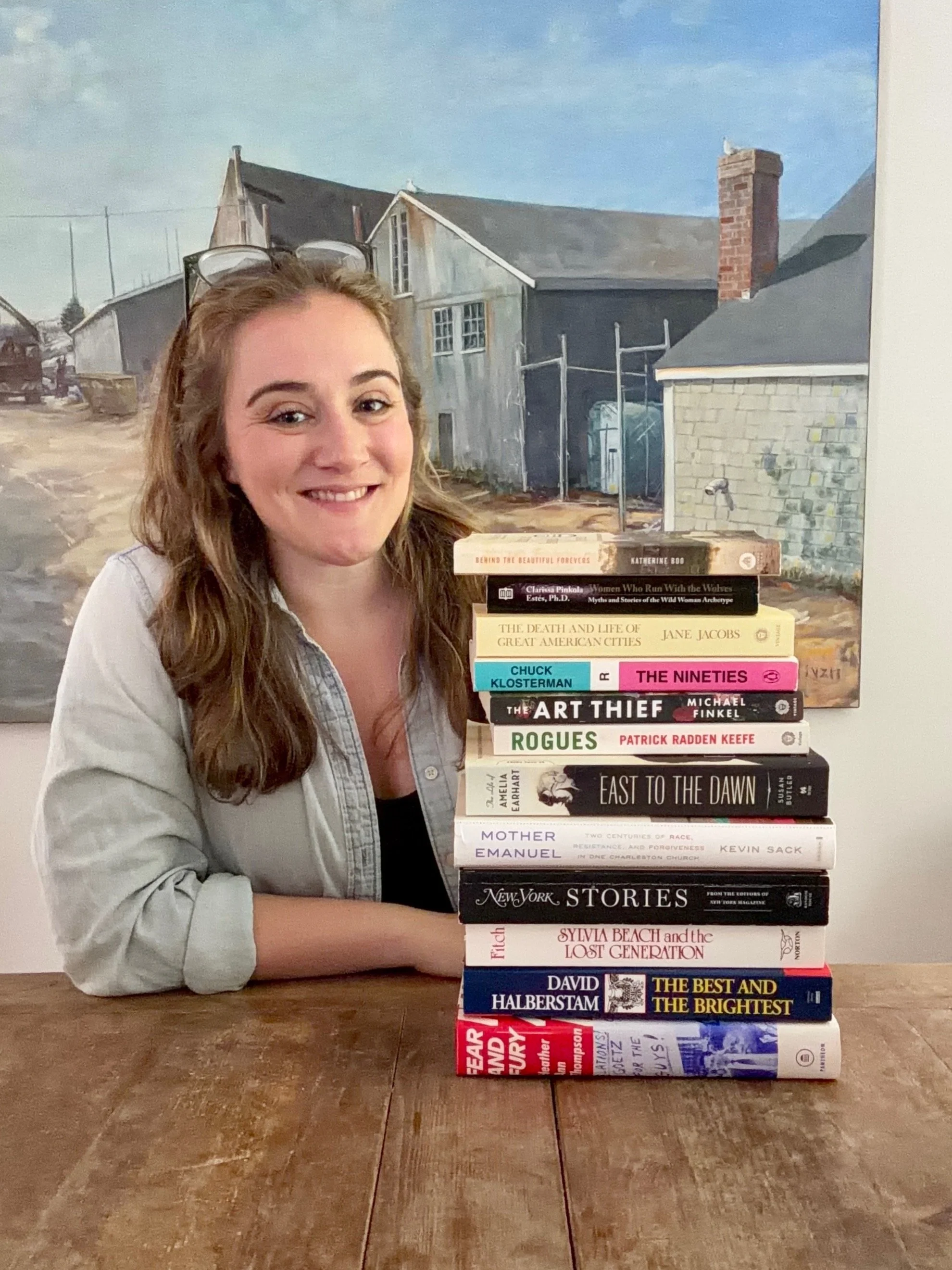
Today on The Stacks, we’re joined by book editor, Julianna Haubner. Julianna is an executive editor at Flatiron Books, where she acquires narrative nonfiction, history, pop culture, and social science books. We chat about her job as an editor, what she looks for in a proposal, who gets to write narrative nonfiction, and her surprising choice for her most-hated book.
Our book club pick for July is Behind the Beautiful Forevers by Katherine Boo. We will be discussing the book with Julianna Haubner on Wednesday, July 29th.
LISTEN NOW
Apple Podcasts | Spotify | Google Podcasts | Overcast | Stitcher | Transcript
Everything we talk about on today’s episode can be found below in the show notes and on Bookshop.org and Amazon.
A Flower Traveled in My Blood by Hayley Cohen Gilliland
Out Stealing Horses by Per Petterson, translated by Anne Born
The Marriage Plot by Jeffrey Eugenides
Wolf Hall by Hilary Mantel
Gone Girl by Gillian Flynn
A Game of Thrones by George R. R. Martin
World War Z by Max Brooks
The Alchemist by Paulo Coelho
Fifty Shades of Grey by E L James
“Remembering Alice Mayhew, Legendary Editor” (Samuel Freedman, LitHub)
The Art Thief by Michael Finkel
Say Nothing by Patrick Radden Keefe
There Is No Place for Us by Brian Goldstone
Madness by Antonia Hylton
Bad Company by Megan Greenwell
We Were Once a Family by Roxana Asgarian
Random Family by Adrian Nicole LeBlanc
“Ep. 368 The Homelessness Myth Doesn’t Match Reality with Brian Goldstone” (The Stacks)
“Ep. 232 What Should the Rules Be with Andrea Elliott” (The Stacks)
“Ep. 268 Over Burdened and Under Funded by Roxanna Asgarian” (The Stacks)
“Ep. 429 All Journalism Has a Point of View with Justine van der Leun” (The Stacks)
Tell Her Story by LaShawn Harris
When Crack Was King by Donnovan X. Ramsey
How the Word Is Passed by Clint Smith
The Beauty in Breaking by Michele Harper
Wayward Lives, Beautiful Experiments by Saidiya Hartman
Fearless and Free by Josephine Baker
Hidden Valley Road by Robert Kolker
Lost Girls by Robert Kolker
The Vanishing Family by Robert Kolker
The Interestings by Meg Wolitzer
In Cold Blood by Truman Capote
Capote (Bennett Miller, 2006)
Gods of New York by Jonathan Mahler
Ladies and Gentlemen, the Bronx Is Burning by Jonathan Mahler
Yuppies by Dylan Gottlieb
“You're Gonna Think About This Yuppies Interview All Day” (Anne Helen Peterson, Culture Study)
They Stole a City by Lauren Collins
Nazi Billionaires by David de Jong
London Falling by Patrick Radden Keefe
The Source of Self-Regard by Toni Morrison
Anna: The Biography by Amy Odell
The Fifties by David Halberstam
Working by Studs Terkel
What It Takes by Richard Ben Cramer
The Power Broker by Robert A. Caro
Turn Every Page: The Adventures of Robert Caro and Robert Gottlieb (Lizzie Gottlieb, 2022)
Working by Robert A. Caro
“The 99% Invisible Breakdown of The Power Broker” (99% Invisible)
The Power Broker by Robert A. Caro (audiobook)
Reagan by Max Boot
Northshire Bookstore (Manchester, VT)
Famesick by Lena Dunham
Into the Blue by Emma Brodie
Hiroshima by Jon Hersey
Narrative of the Life of Frederick Douglass by Frederick Douglass
Catcher in the Rye by J. D. Salinger
J. D. Salinger by Kenneth Slawenski
These Truths by Jill Lepore
Behind the Beautiful Forevers by Katherine Boo
To support The Stacks and find out more from this week’s sponsors, click here.
Connect with Julianna: Instagram
Connect with The Stacks: Instagram | Threads | Shop | Patreon | Goodreads | Substack | Youtube | Subscribe
To contribute to The Stacks, join The Stacks Pack, and get exclusive perks, check out our Patreon page. If you prefer to support the show with a one-time contribution, go to paypal.me/thestackspod.
The Stacks participates in affiliate programs. We receive a small commission when products are purchased through links on this website.
TRANSCRIPT
*Due to the nature of podcast advertising, these timestamps are not 100% accurate and will vary.
Julianna Haubner 0:00
I do think that there are still pockets of trade nonfiction that is still also focused on audience. There's an unfortunate tendency to think to ourselves that the author has to be a stand-in for the reader, and that if we are learning something new we're supposed to be like the discoverer, the anthropologist, and like going into these books, you know, and it's it's like dipping your toe and making it easy for a group of people to interact with something different rather than just like expecting that they they can
Traci Thomas 0:44
Welcome to The Stacks, a podcast about books and the people who read them. I'm your host, Traci Thomas, and today we are joined by book editor Julianna Haubner. Julianna is an executive editor at Flatiron Books, where she acquires narrative nonfiction, history, pop culture, and social science books. She's worked with authors like Sophia Bush, Garett M Graf, and Hailey Cohen Gilliland, and has acquired a number of bestselling titles, including two Pulitzer Prize finalists. We're chatting today about what exactly editors do, her taste in books, and the ever-shifting landscape of narrative nonfiction. The Stacks Book Club pick for July is Behind the Beautiful Forevers by Katherine Boo, which we will discuss with Julianna on Wednesday, july 29 Everything we talk about on each episode of The Stacks is linked in our show notes. And if you like this podcast and want more bookish content and community, consider joining The Stacks pack on Patreon and subscribing to my newsletter, Unstacked, over on Substack. Each place offers different perks. You can find community conversation and virtual book clubs over on Patreon, and then you'll get my writing and hot takes on the latest literary and pop culture news over on Substack. Plus, your support makes it possible for me to make the Stacks every single week and to make it free to all. To join, go to patreon.com/the Stacks for the Stacks pack, and check out my newsletter at Traci thomas.substack.com All right, now it is time for my conversation with Julianna Haubner. All right, everybody, I'm so excited today. I am joined by Julianna Haubner, who is an editor, a book editor, and she's not just any book editor, she is actually the editor of some of my most favorite nonfiction books over the last few years. You know her, you might know her work. She was the editor of A Flower Traveled in My Blood, which we featured here on the podcast. She's also friend of the show Garrett M. Graf's editor, or formerly was Garrett's editor. She was at Avid Reader Press. Now she's at Flatiron Books. Juliana, welcome to the stacks.
Julianna Haubner 2:45
Thank you for having me. Thrilled to be here.
Traci Thomas 2:46
I'm so excited. I'm so, so excited. Before we even get into, like, what is an editor, which we're gonna get into, will you just tell us a little bit about yourself? Where are you from? When do you remember getting into books? What is your relationship, sort of, to books? Give us a little backstory.
Julianna Haubner 3:04
Yeah, so I grew up in a suburb right outside of New York City, and I, like many in my field, was always a big reader growing up, but I think I had a really kind of intimate relationship with with storytelling and books, because I was raised by a bunch of educators, so I knew a lot about just the ins and outs of how books worked, and, and how you were, how they came into play in your life, and it was, it was an entertainment, but it was also education, which I think, looking back, kind of actually is maybe why the nonfiction thing happened, I always saw them as something to participate with and to learn from. When I was little, my grandmother used to read picture books to me and used to kind of also go for the books that didn't have words in it, and she'd let me make my own stories on post-it notes. So I always really loved just the interaction that you have with a book. Went through high school, really loved, loved reading, kind of recreationally. Loved to write. Loved English classes. Went to a small college in Maine, where I was an English and history double major. And then also did stuff for the newspaper, the litmag, kind of all the traditional extracurriculars that you have in that, in that space. And then when I was, when I was kind of older in college, I started doing some internships in publishing. I had a really amazing professor who was a trade nonfiction author, her name was Tilar Metsao, and she is still publishing books left and right. She's amazing, and she taught this class that was comparative lit in the 21st century, and it was all that year's award winners, so it was the winner of the Nobel, it was the winner of the Pulitzer, the winner of the National Book Award, all fiction, but the whole point of the class was to really dig into what the culture, what was happening in the culture at the time that these books kind of rose to the top in. The awards capacity, and I think it was, it was out stealing horses, was one of them. I want to say that was the Nobel, it was the marriage plot by Jeffrey Eugenides, Wolf Hall, and a couple others, but so it was, it was really thinking critically and culturally about, you know, what, what was going on that judges for these awards felt they were representative of the moment that we were living in, and I loved that class, and I spent a lot of time with TLR, and I was like, what if I can, I like, write my senior thesis on bestsellers instead of, you know, diving into an author or kind of doing the traditional route of looking at a classic or something like that, and she was super game, which was amazing. And so I wrote my senior thesis on the longest running bestsellers of the 2000s and what they said about us.
Traci Thomas 5:51
What were they?
Julianna Haubner 5:52
So they were Gone Girl, the first Game of Thrones book, World War Z, The Alchemist, but that was sort of the counterpoint. and then, oh man, there was one other, oh, 50 Shades
Traci Thomas 6:09
Wow, oh my gosh. Okay, at least The Alchemist Gone Girl and 50 Shades say we hate women.
Julianna Haubner 6:17
like my whole argument, and I found it recently, and I was like doing this in such a.. it's hilarious now in my job to understand like the resources I have and the kind of databases I have to understand this better, like I had no book scan as a college student, I didn't have anything to like actually like really interrogate this beyond just like the New York Times Book Review and a prayer, and I like going back, like reading it now. I was like, "Oh my god, you sweet, sweet child. But, but I basically like came to the conclusion that it was all like different forms of terrorism post 911 So, Gone Girl is like marital, you know, terrorism in some ways. World War Z with biological terrorism, 50 Shades is like, you know, sexual terrorism, all these different things, and I thought I was a genius.
Traci Thomas 7:05
I love that, I love that.
Julianna Haubner 7:07
Yeah, and it was, it was like a hilarious pro. I mean, all my friends were like, what are.. I was like, reading 50 Shades in my dorm room, everybody was like, what are you? I like Post-Its in it, people were like, what are you doing. And so, so I, I was working in, interning in publishing, kind of at the same time, and I, I had really wanted part of the reason I think I also did that thesis was I really had wanted to be someone who was like an arts journalist and like worked for the Book Review, and kind of was in that space, and then when I was graduating in 2014 it was a period of time where a lot of newspapers were going digital, like, there was, it was just sort of not clear where those things were going to be going, and I was introduced to the notion that, like, the publishing apparatus could be something that was, like, an alternative to that. I knew that I was, like, not built for freelance as a post grad, so I was like, corporate is totally fine, and so I went to the Columbia Publishing Course, which is a program in New York that does both book and magazine, and now digital publishing, and kind of gives you the lay of the land. And then ended up at Simon and Schuster at the end of September 2014 and was there for the flagship imprint. I was there for almost six years, and then was working for an editor who became one of the founding editors of App Reader Press. So, when they created that, they asked me to come with them, and was there through the end of 2014 and had a really wonderful decade. 2024 24 oh my god, 2014 2024 and had a really wonderful decade there, and got an opportunity at Flatiron, and was excited to kind of try something new, but worked on such, such incredible books over at Avid, like Garrett's and Haley's, and really got into it, was really great to be at Simon and Schuster with such a strong tradition of narrative nonfiction, you know, the place that has Doris Kearns Goodwin and Bob Woodward and David McCullough, and sort of all of these, these books that I had really loved, because I was like a total dad book reader, as a
Traci Thomas 9:07
yes, that's why we get along
Julianna Haubner 9:08
a 20 year old college student ordering Doris Kearns Goodwin to my dorm room, so it was really great to kind of grow up in that, in that, you know, editorial framework, and to understand so much about it, and to be around all these, you know, amazing editors, like, you know, Alice Mayhew, was it Simon and Schuster when I was kind of coming up there, Bob Bender, people who have just been such a cornerstone of that segment of the business, and to watch them work and understand how they, how they did their jobs, and, and what I could learn, even just by watching, was like such a gift, and, and, yeah, now I'm here, just still doing dad books, kind of a little bit, yeah.
Traci Thomas 9:46
I'm so like, you give me hope because you're younger than me, but you're doing dad books that, like, dad books will continue, because sometimes I have these like anxious fears of, like, no one's gonna write the books I want to write, because I. Too much online, and everyone only reads fiction online, which I do want to talk about, but I'm like, Juliana is a reminder that there are still people who want to make dad books for people like me. Okay, here's my first question. It's a big one, but I think you can handle it. Yeah, what is an editor? What do you do?
Julianna Haubner 10:20
So, so it's funny, because I, I have always thought of my job, I mean, my job is to edit, like, I edit books, that is definitely the most, like, you know, first important, foremost thing that we do, but really, what the editorial job at large is that I think a lot of people don't necessarily or immediately understand, is it's really a ton of project management. It is some we are handling, you know, depending on where you are and kind of what size of your list and the imprint you're at, you're working on multiple projects at a time, you're really, you know, the center conductor for all these different departments in, in the imprint, and in your team to put these projects together, so you're, you're not only editing a book when it's in manuscript form, but you're also monitoring, you know, stuff that's in production, you're looking at stuff that is pre-publication and marketing and publicity have taken over in some capacities, and are forming campaigns, you're communicating with authors when they're thinking about their next book, you know, you're really at every stage of the process, and it's a lot of switchboarding, it's a lot of knowing immediately where everything is, it's a lot of spreadsheets. I love spreadsheets, so there's a lot of spreadsheets also. I will get a lot. Yes, it's a very.. I'm a cancer, but it's like a very Virgo job that people should be, should be doing, and it's a lot of interfacing with a lot of different types of people. I think there's sort of a misconception that we, we in this job are all introverts, and that we are sitting in a room by ourselves, like reading all day or editing all day, and we do do that when, when we kind of have the opportunity during the workday, but much of the workday is like any other job that is kind of an inter team and dealing with internal and external partners and stakeholders. You know, I'm on calls all day, we are in meetings, we're talking about jackets, we're talking about campaign ideas for marketing, we're talking about how to announce a book. We're talking about acquisitions, so there's really a whole universe of stuff that we, that we are doing. And then we also edit, which is kind of amazing.
Traci Thomas 12:31
How many books are you working on at a given time? I know a few years ago I talked to a different editor, and they said something about like 12 in, 12 out,
Julianna Haubner 12:41
that's about right, I would say
Traci Thomas 12:44
People at home, that means you acquire 12 books in a year, and you, you are the editor on 12 books that are published in a year, obviously, if somebody's late, maybe it's 11, and then one year it's 13, or whatever, but like generally you're acquiring 12 and editing 12
Julianna Haubner 13:00
I would say it's like between eight to 12 on either side of that spectrum, because sometimes you know you've got bigger projects that are taking a lot of bandwidth, so your acquisitions might be like, you know, lower or higher, or whatever, at any point, but yeah, I'm usually doing about eight to 12 at a time, and that is both paperback and hardcover, because usually we are there. Used to be in the way olden days of publishing, there was sort of the separate entities of hardcover and paperback publishing. Now you know a lot of imprints and a lot of houses do both have the same umbrella, so yeah, I'm looking at stuff that I am publishing in what we call front list, which is like new to market hardcover or even trade paperback originals, and, and also backlist, which is, which is the paperback infrastructure. So, yeah, there's quite a few at any given time, and they're all at the different stages. So, you know, for example, right now I'm editing, I'm at different editorial and developmental stages of about six to seven books. I have one that came out this spring, and then a couple that are in production coming out in the fall, so like it's always sort of you're always on one part of the track at any different time,
Traci Thomas 14:11
right? So like your job is sort of from what I'm, what I'm understanding is like sort of three jobs you're in charge of, like you're in charge of like acquisitions, new things coming in, you're in charge of actually editing and shaping the book, like quality control, and then you're also in charge of like putting the product into the world,
Julianna Haubner 14:33
exactly
Traci Thomas 14:33
and obviously there's different people who do those jobs with you, but like you are the project manager on all three phases of a book, as long as you stay at the publishing house, or whatever, like, as long as you're there, and that's your book, you do acquisition stuff, editorial stuff, and also like marketing stuff.
Julianna Haubner 14:55
Yeah, so we delegate out to the other, to you know, we let our really brilliant colleagues kind of take over, but we're the ones just because we've had the most sort of consistent touch on it. We often, yeah, we're like we're always like in the room, but once it is something outside of our spot, like you know, our team takes it over for us, but it's always like three, like you were saying, kind of groups of people, so it's like at acquisitions, like we're interfacing with agents at development, it's you know, we talk to authors, and then we have our own like internal team that we're talking to, and that includes marketing, publicity, sales, art, design, sub rights, so we're kind of just, we're kind of always just there, but, but we luckily don't have to always do everything, but we're always kind of aware of what's going on
Traci Thomas 15:42
as far as the editorial process goes, and I know that lots of people have this question, mainly because for some of my listeners I have incepted them on this idea, I think, which is like sometimes I read a book and I'm like that was bad and the author is to blame, and sometimes I read a book, and I'm like, that was bad, and the editor failed, and sometimes I read a book, and I'm like, that book could have been really bad, but the editor clearly helped the book, and sometimes I'm like, an author is a genius, and like, how did they come up with that, and like, what a lucky editor to have such a great author. So, my, but I just.. that's all based on vibes from my reading life. And I think for a lot of readers who aren't as, like, plugged into the writing world, they're never thinking about the editor's hand in a book. They're thinking this book is by Traci Thomas, she wrote it, it's her thing. I now know how many people's hands are in the pot, but how deeply collaborative the relationship can be between an editor and an author. So, I'm wondering, how do we as readers know what you've done, what the editor is doing? Like, how can we know if the editor failed or the author failed? And, obviously, it's not black and white, but, like, how do we know?
Julianna Haubner 17:02
So, the goal is that you never do, kind of. I mean, I think one thing that's so.. for me personally, I.. it's interesting because there's a lot of people in publishing who also write, and I, though I enjoy writing, I never like wanted to be a writer, so I think I also brought a separate framework of that, like I could view it very independent of my own tendencies to, and like what I would do with something, though I am like a hands-on editor, and I'm happy to tell my writers when, like, I'm suggesting a direction or suggesting things, but it really is a role that you need to be okay, and you enjoy the fact that you are kind of behind the curtain, and I think that a reader, I would hope that a reader could tell that I've been involved if they're even thinking of me, and I think it's also just like something for, like, a lot of editors are like, I'm not in it, I'm not part of the equation here, but I think the best compliment I can get from someone is that they really felt engaged and absorbed in the story, and I think that editors are additive in that space, because especially in nonfiction, I am someone who comes to the process as a fresh set of eyes. You know, I've worked with journalists who have been working on stories for multiple years, and researching and reporting, and historians who have spent a lot of time digging into content, and they know everything about everything, and I view it's funny that you said earlier, sort of, that in the in-house and interactive infrastructure, we're kind of the translator, because I've also always said that I feel like I'm a, I'm a translator between author and reader, that I can sort of stand in as a general reader coming to a book and saying we're going a little off track here or we have, we haven't really gotten to know these, these characters or the story in a deeper way, so I think that maybe clarity is the biggest thing that, like, an editor can can bring, and that I, I would hope that readers recognize is that there's someone who's just there amplifying whatever the author is already good at, and I think that in the different books that I've worked on, I've been, as I said, like extremely lucky to work with some pretty fantastic authors, and everything that I have contributed in the capacity I have was really in the head space of maximizing what they already did so well, and I think that that's like, like, I think there's a reason that there's a lot of, there's like a pipeline, it seems. Sense, which is also why you and I get along, of like, there's like a lot of theater kids in publishing, there's a lot of people who played on teams, there's.. it's just like it's a very kind of similar head space we all have of understanding that like sometimes it's not always about like our exact presence in the process, and I think that it's something that like everyone brings together, and especially when you work with people, you work with writers for a bunch of different books. Like, I learned just as much from my authors as they may pick up from going through my edits a bunch of times, and I've had authors who have said to me, like, I now do this a little differently, because I know you'll catch it, you know, like, it's so it's sort of a fluid back and forth thing that we both kind of get to like learn from and participate in, but the long and the short answer is like we're sort of meant to be invisible, but the sort of ability to just make something really exciting for a reader, and I think in any capacity we're really trying to work on books and do work on books that we just really care about, so I think that, like, when there's when there's care taken from every part of it, from like title and packaging to copy to like the way the book is reading, like that's our, that's our handprint, is to just kind of show how much like we love it and why you should love it too.
Traci Thomas 21:19
Do you ever read a book, not something that you're reading for work. Have you ever read a book?
Julianna Haubner 21:23
Have I ever read a book? I actually can't.
Traci Thomas 21:26
I don't know how to read. Have you ever read a book, like, for pleasure? Now that you're in your job, and been like, wow, if they had just, like, put the ending first, or whatever, this book would have been amazing. Like, are you, are you reading with an editor brain on all the time now.
Julianna Haubner 21:43
Sometimes it happens more with books, I, because it's a very weird experience to, because I read in like kind of two separate tracks now. It's like I read stuff that are either classics or they're, and I will say, my one of my hot takes is there are non-fiction classics. Classics are not just novels, and they,
Traci Thomas 22:07
They're just a lot less old.
Julianna Haubner 22:08
There's a lot less old ones, but they, so, like, I can read, I can read those books, and books maybe from like eight years ago and backward with that not turned on in my brain at all, because, because, like, it almost feels like it's like pre me having that brain, yeah. And when I read, when I read new stuff, most of the time I actually don't. It's only really when I like saw a book on submission, and I read just being like, because, because we see books most of the time with nonfiction, the majority of the time we're getting a proposal for a book, we're not getting a full manuscript the way that it works on the fiction side. So I'm more am interested in like how these things got built out, and there is a little bit more of a development. It's also like why I mean, fiction editors do a ton of development with their writers too, but I love that in nonfiction I could kind of be on the ground floor a little more in helping somebody shape something, right? So, yeah, so it's just it's more, it's less of a like I wouldn't have done that, it's more of like a I didn't think to do that, or that's really actually like interesting way they did this.
Traci Thomas 23:17
You're so much more diplomatic than me, I would be like, yeah, there were some books that I read that fucking sucked, and I was like, if you just move this or cut this, the book would have been great, but I guess you have to be more polite than me. Okay, this is, this might be touchy, we'll see. Okay, we'll see what is so one of the things I hear a lot from writers and authors is like this whole thing about sales and social media, and having an opportunity to make a second book, and all of these things, but I also hear this other piece that's like, well, you want an editor and an agent who are like sort of invested in your career as an author, and like maybe they don't care that your first book doesn't do great, and like it just does fine, or maybe even like less than fine, because they believe in you. So I'm wondering, from your perspective, like what does success look like to you for a debut author or an author earlier in their career?
Julianna Haubner 24:16
Yeah, it depends on the book, and that's like maybe sort of a non-answer answer, but I, it really depends on what it is, because I can speak for myself, but I every time I acquire a project, obviously, like the goal is as many people as humanly possible read this book, like you know, it would be amazing if everything hits about seller list, if everything has accolades, etc. etc. but but success does look different for every type of project, you know, you have books that you read, that you have projects that come in, and you read them and acquire them, that you are thinking to yourself, yes, this is like a commercial project that, like, we know can do x, y, and z, some stuff comes in that you're like, yep, this is like the critical darling. Of a season, this is another book. Is there isn't a book about this topic, or about, you know, this person, and this will be the book that, when people are searching for something about this, they will find, and it's a steady backlist opportunity. So, success is has a lot of different forms in terms of kind of long term trajectory, I think I, I love the idea. Some, some books, I know it's going to be like a one and done, but, and actually, there haven't been that many of them that I've had in my career, luckily. But I think I go into every interaction at acquisition thinking to myself, you know, this is a partner, this is going to be a partnership if we do this, and sometimes it does take a book or two to, you know, hit a stride, and I think that it's really important to have that stamina and to have that vision, not only for the book that's in front of you, but for the person and the partnership that's in front of you, and I think that, you know, a really.. I'm trying to think if there's any like immediate examples coming to mind, but I see stuff in the market all the time. I mean, look at.. I mean, I did not work with him, but you know, Michael Finkel in The Art Thief. I mean, that, that is like not a debut, that is multiple books in, and I think that all it takes, especially with nonfiction, and I think there is a parallel in fiction too, but in nonfiction, it's just like it's just the right story lands with somebody, and I, and the person digs up the right direction, and the right weird person in history, or in our current climate, and it just works. I mean, Patrick
Traci Thomas 26:39
Patrick Radden Keefe is the one for me that I think of all the time, because he had two books before Say Nothing, but like it wasn't until Say Nothing, and not even when that came out, it wasn't until the New York Times put it on their 10 best year that it really, like, I mean, people had read it, but it popped off in a way after that, that was not necessarily like now we think of him as like Patrick Radden Keefe, like you know, my boyfriend, but he wasn't that
Julianna Haubner 27:12
like it's it's what I was saying before too, that like all of it is a learning experience too, you know, like debut writers go through writing a first book, and they don't always like, there's there's things that are learned between those projects that really kind of are additive that just make them hit their stride in a different way too. So I think it's you need to and should be, and I think a lot of us go into it being very invested in the idea that, like, there can and should be many, and what you're reading on the page of a proposal and of a book eventually is, is also the writing. I mean, you can have the best story in the world, and if that person doesn't, doesn't have, like, the talent or the skills within their writing to really captivate you, the story doesn't mean anything. So, if you recognize that that talent and that capability in a writer, you are aware that they can do it again and again.
Traci Thomas 28:11
So, that's the thing that's like sort of more exciting for you, is like the writing.
Julianna Haubner 28:15
Yeah, I mean, I think, too, that like with with nonfiction, it's a really kind of like special alchemy of somebody who can balance writing, reporting, research, storytelling, you know, like I think the person who can really adjust that and dial certain parts of it up or down for people, you know, Haley does it beautifully, a flower troubled in her blood, like, you know, it's, it's, it's sort of these breaks of, of deep history, but then such personal human forward action, and you know, Garrett does it really amazingly too, like, I think there's, there's just something in the way that they write that you read it, and you're like, oh, this, like, this person just has their hands on every piece of the story in a really amazing way.
Traci Thomas 29:06
Okay, I have one more question for you before we like switch to your taste in books, and this is, I think, like kind of a big one, and kind of a hard one, so we'll see how we do. Yeah, you and I both really love narrative nonfiction, like we, we share a love for the same kind of books, like Juliana and I have very similar taste, you skew slightly more history than I do, so I would say I probably lean a little more like true crime cult-y than you do, but generally people behaving badly, major, major bad things we're into. One of the things that I've run up against in the work that I do is that so few authors of color are given the opportunity to write the kinds of books that you and I like. Usually, when I read a book by a black author that's in kind of in this space, it's often like very personal narrative heavy, or or just. Like it'll be a book about black people, but it'll be written by a white person, and so I'm wondering, from your standpoint, like, what do you think is going on? Because it's not as if you know people of color can't write these stories, and it's also not as if they don't want to, but every year we're sort of presented with, like, a Martin Luther King biography written by a white man, or a James Baldwin biography written by a white man, and that's not to say that these people cannot write our stories, but I'm just curious, like, what's happening that we're not getting them? What's your sense?
Julianna Haubner 30:33
Yeah, that's an interesting question. I mean, it's something I think about all the time, because I mean, aside from my, my dad book proclivity, you know, one of, one of my major, and I promise I'll come, it's gonna seem like I'm going in it for, I'm coming back to it, but one of my big, one of my big goals in my work is also widening the aperture of women in nonfiction, not only author wise, but readership, because I do think there's a massive readership in women, as evidenced by the two of us on this call, that, like, I think that they're that it's a very, like, in some ways untapped community within the narrative nonfiction space, and I think a lot about books about women that are like also written by men, and I'm like, this is weird, but I think I think what it is is I've noticed that a lot of them, that books like the ones you mentioned, you know, those are their career authors, which I think offers a level of privilege and notoriety that, and like, so you know, supposed authority that they can tackle these big, these big subjects. I also have to wonder if on some level it is, it's almost like an access thing as well, of who's being, who's being given who's being given access to these archives, to these, you know, large university libraries, to you know, these infrastructures that can, that can help them get whatever new material is necessary to, you know, to create these big, these big new takes, or even, even just generalized nonfiction, not even like the big biographies, and I'm not sure it's something I grapple with, and I'm really not sure why, because I do believe that there is.. it's.. it's just a very different, and more intimate, and more, in my opinion, interesting experience to, to read a book about a certain, you know, person or place or community that is born of that community or place, you know, like I think there's so much more detail and things, and I think I believe strongly, as I said, in like reading for education and reading for a widening of perspective, and I think that if you're not reading as, like, I think it's important to read about things that are like different from you, but I also think you should read people who are different from you as well, because there's just things that get picked up differently. I wish I had, like, a firm, a firm answer.
Traci Thomas 33:15
I don't think there is a firm answer, but I feel like you're closer to a lot of this than I have my own theories, one of which is just like I think sometimes when people are from the communities of which they write, there's like a feeling that they should weigh in in a way when they're like from quote unquote marginalized backgrounds in a way that like white male authority doesn't have to have an opinion because it's the true authority, you know what I mean, like, so there's not the, like, memoir vacation of everything when it comes to men, and white men specifically. I also think the like journalistic idea of bias that is like so prevalent, I think sometimes negates the work of authors of color, because people like, oh, well, this is biased, whereas, like, and this is no shade at an author whose book I love, but, like, nobody says, like, Brian Goldstone is biased when he's writing a book about black people who are homeless in Atlanta, but if another author had written that, a black author from Atlanta, like, well, they're from this place, or, like, there's like this thing that sort of undermines, and I mean, this quote unquote thing is like racism, I don't know why I called it a thing, like it was unnamed, and then I also think, like, yeah, and I think to your point, like a lot of people are like career journalists, and so they get the opportunity, but I just, I hate it, I mean, Isabel Wilkerson is a black woman who wrote the shit out of The Worth of Other Sons, like I know we could do it, it's not a matter of, you know, it's like clearly something's going on on the side, on like the business side of it. It's not about like the talent side of it.
Julianna Haubner 34:49
Yeah, and I think that I think publishing, you know, in particular, you know, there's obviously a lot of pockets of publishing, but I think trade book publishing, especially, you know. We're all, for the most part, of course, the last few years have made doing the job not in New York possible, but it's still a New York, you know, centered industry. I do think that there are still pockets of trade nonfiction, in particular, that is still also focused on audience, and you know, like the dad book thing, like, who are the dads that we're talking about when we talk about dads, and so it is. It is also like that they, that there is a ha, there's an unfortunate tendency to think to ourselves that the author has to be a stand-in for the reader,
Traci Thomas 35:42
right,
Julianna Haubner 35:43
that the reader has to be able to relate to an author moving through a subject, going into a topic or a place or a community, and that if we are learning something new, that means that we have to be, we have to be kind of in that position of like, and I hate this word, because it's probably very loaded, to be like, it's like, it's like almost like, you know, we're supposed to be like the discoverer, the anthropologist, and like going into these books, and I think I think that's another layer of it, that just who we are, who we think
Traci Thomas 36:18
we, being like publishing
Julianna Haubner 36:20
yeah because publishing automatically defaulting to thinking that they're publishing for is a very specific group of people, rather than realizing that, like, they're, and I think, like, it's something that we discuss all the time, that people are really, I think, doing a lot of really amazing work to try to do differently, but I think traditionally that's also been the issue, is is thinking to yourselves as well, like even like retailers, reviewers, like it's just what are these traditional thoughts of like who the target audience is, and and maybe part of what you were saying about it being then having to be so hyper personalized or a memoir element is that idea that you are like trying to learn about someone else, rather than just going into it, you know, and it's, it's like dipping your toe and making it easy for a group of people to interact with something different, rather than just like expecting that they, they can,
Traci Thomas 37:14
right, right, right. Okay, we're going to take a quick break, and then we'll be right back. We're back. I didn't prep you for this, but this is Ask the Stacks, where someone writes an email and asks for a book recommendation, and coincidentally, though I didn't - I should have planned it this way, but I didn't. When the last question we were talking about, about authors in color and like narrative nonfiction, this question actually ties into that, so this is from Jessica, and they say I'm a big fan of the stacks. Shout out to my friend Sharon for inviting me to the live show in Chicago with Sam Irby and getting me hooked. One of the things I love about listening is that I read almost entirely fiction, and I get to learn about non-fiction books and hear from their authors in a way that can feel like less pressure than reading a whole book. I've started listening to audiobooks for the first time recently, and made space for nonfiction that way. I have loved a lot of your recommendations: Madness, There Is No Place for Us, Bad Company, We Were Once a Family. Do you have recommendations for more books by authors of color, especially black authors that have the same combination of deeply reported and telling individual stories. I have three here, and then if you want, and I can go, and then you can go. You only have to do one. Okay, so the first one is not by a black person. The second two are, but the first one is Random Family by Adrian Nicole LeBlanc. I have not read this book, but every journalist I know, I know, I own it, I own it. Every journalist I know, who I have loved on this show, from Brian Goldstone to Andrea Elliot to Roxanne Esgarion to just recently Justine Vander Loon, they all are like this is the gold standard of that kind of book. So, if you want that kind of book. It's about a black family, I believe, in the Bronx. Do I make that up in the Bronx? And I think this is the book that you want. It is, it's by a woman, but she's not black. That's what I have now. My second book just actually came to me while we were having this last conversation. Is Tell Her Story by LaShawn Harris. It is about Eleanor Bumpers, who is the grandmother in the Bronx, who was killed by the police in the 1980s for about $90 of unpaid back rent, and it was one of the early sort of like say her name type events in the 80s, similar to Michael Stewart, and it is LaShawn Harris is a historian, a black woman historian from the Bronx, who was 10 years old when this event took place. So, this is really, and this book is about, as you know, non-biased, as far as, like, there's no, there's not a lot of memoirs. She mentions in the introduction, this is where I was. But she's not giving you her personal story. This is a true historian writing. It's very narrative. It's an incredible story. A lot of people don't know it. So I highly recommend that. And then my third and final is When Crack Was King by Donovan X Ramsey, which follows four, I believe, four people in the 1980s and 90s, like through the crack epidemic in America profiles for people across the country, and it's really good, and sort of on the spectrum of like reported, reported, reported. This is slightly more creative in style. It's like more lyrical, but not lyrical, like fiction lyrical, but just like more lyrical in that genre, if that makes sense. It's still pretty fucking reported. It's deeply reported and researched, and really amazing, but it has like a flow to it that just is like a little, a little more stylized, I should say. So, those are my three. What do you have?
Julianna Haubner 40:56
So, I, I have two. One is a little bit more in memoir, but I feel like it is a larger kind of subculture, and like conversation. So, the first is, I mean, it's like a pretty standard at this point, but I do think it is a standard for a reason, and that is How the Word is Passed. I mean, I just think that is, I really do look to that book frequently, even as an editor of an example of just really incredible melding, and like seamless melding of history of reporting of sort of that personal commentary. It's one of those books that is like timely and timeless, like, and I think it's also structured in a way that I love, which is there is a singular arc and journey that you are following, but there are there is a capability of like putting it down and picking it up, and that you can kind of go through these different phases with it. Another, actually, I have two more. Oh my gosh, I'm like, now that I'm thinking of them, the other is that's the memoir, but also kind of as a larger commentary on stuff is the beauty in breaking, which Michelle Harper, I think, is her
Traci Thomas 42:12
Yeah the doctor, right?
Julianna Haubner 42:14
Yes, she's an ER doctor, and it's just, it's also like lyrical, it's kind of, it's not like, you know, it's like a Grey's Anatomy kind of like treatment of the of the ER, but it sort of blends what's going on in her life with having to go into a place where you have to leave that at the door and you have to take care of different types of people with different types of problems, and and it just is a really amazing look, not only at because I really love books too that are showing you and are really immersing you in, you know, different types of workplaces or different types of lives, and like going, moving through the world, and I think it there is such an added, not even added weight, but there's just a really, like, fantastic layer that is placed on that book, you know, because you are aware that she is a black woman. As a doctor, you not only know kind of what it required to get her there, but also, you know, she's very aware throughout the book, if I remember correctly, like when she sees certain patients, she's very aware that, like, if roles were reversed, you know, she would be in a different situation too. So it's just, it's a really kind of eye-opening and, like, lovely book. And then another one that is kind of like a standard at this point, but a really great one nonetheless, is Saidiya Hartman's book, Wayward beauty. Oh my god,
Traci Thomas 43:42
wayward lives, beautiful experiments, wayward lives, wayward lives, experiments
Julianna Haubner 43:48
It's like a vocal exercise.
Traci Thomas 43:49
It's a combination of the words wayward lives and beautiful experiments, but it could be beautiful experiments, wayward lives. I think it's beautiful experiments, wayward lives.
Julianna Haubner 43:57
Yes, yes, yes. And another one that, like uniform arc, but you can kind of pick up and put down. I love the ability to kind of like poke your head through a window and kind of like see all of these different, these different people and worlds. And, oh, okay, I do have one final one, which is, oh my gosh, I love this, yeah, which is again, it's it's it's sort of a like a hybrid of what we're talking about, but recently they republished a memoir. I think the person who put it together is not a person of color or black, but it's Josephine Baker's memoir.
Traci Thomas 44:36
Oh, yes,
Julianna Haubner 44:38
and they read, they kind of reorganized it all together. It was published, and was like long out of print, and then they recontextualized it and brought it back. I'm a big lot like 1920s theme reader, I love it, but, but I, I really, I read that book, and I just loved being immersed in that world. World, and she was so fantastic, and just had such a fascinating life, and so that's that's another one that's really great to also have it be a story, and a story kind of adjacent to a lot of history that other people usually like already, and then just getting the fantasy to it. So I went from zero to four.
Traci Thomas 45:19
I know I love this. Jessica, thank you for asking. Let us know how we did if you read any of our picks. And then everyone else, email ask the stacks at the stacks podcast.com to have your recommendations read on air. All right, Juliana, two books you love, one book you hate.
Julianna Haubner 45:33
Okay, so I, my two books that I really love are Hidden Valley Road by Robert Colker.
Traci Thomas 45:41
Okay,
Julianna Haubner 45:41
that is a book that I recommend to a lot of people. I think it's a similar thing of just like really, and again, Bob Colker, that was the second book, and it totally exploded.
Traci Thomas 45:53
I just went back and read his first book this week, because I knew that you liked him. Yeah, and I'm gonna read his third book that comes out this year, and I don't have done the complete Robert Coco Colker challenge,
Julianna Haubner 46:04
yeah. So that book is like a great blend of reporting personal, like, invest, like he's not really a character, but you, you see through him this like saga of just understanding and unwinding it, and then
Traci Thomas 46:20
it's about a family with, like, a lot of the family has schizophrenia
Julianna Haubner 46:23
Yeah, and it's the first kid is diagnosed, I want to say in like the 50s or 60s, because they had like 10, eight or 10 children, and so the between the first diagnosis of one child and then the last one who's diagnosed, which I think is creeping up into like the 80s, maybe you see the full scope of like how schizophrenia has been treated, like the first child you know they're telling the mother that like she's done something to damage them psychologically, and then as they get through there they're finding a place where you know medically and chemically they understand what's going on, and then the other one that I, I really love and has a very important place in my heart, is the interestings by Meg Woltzer.
Traci Thomas 47:05
Oh, that's fiction.
Julianna Haubner 47:06
It's fiction, I know. I have... so I really, I just think that book is so great. I think it's like a very good, like, multi-purpose, you can give it to someone at any point in their life, because it travels the 40 years. Got it, but I'm trying to think if there's one other, no, no, just two, yeah, just two. Okay, and then the one book. Okay, now you have to show the book you hate.
Traci Thomas 47:29
You only do two because I'm eager to get to that.
Julianna Haubner 47:32
I know, so, so in terms of a book I hate, I have a problem. It was just annoys, just annoying, because I actually really, I love this author in every other part of his canon, but I have a lot of issues with In Cold Blood.
Traci Thomas 47:52
Oh, wow! Hot, hot take! Holy shit, did not see that coming. Okay, why do you hate it?
Julianna Haubner 48:00
So I and like I said ... Um, maybe it's because I learned too much about Capote down the line that I just, like, I think maybe the context has ruined it for me, but I do, I do think that it is a book, and every book has an agenda, you know, like to some extent, like we.. there's a reason, especially with nonfiction, like you always go into it wanting to write about something. I, I find it somewhat inorganic, and, and sort of not.. yeah, I guess inorganic is the right way, like I think that he, he not only inserted himself a lot of it, as was his, as was his way, but I think that he also went into something deciding how he wanted it to go, and so I think in nonfiction that is something that happens, of course, but I do think that it, you can tell when an author wants, of wants it to go a certain way, and, and that their feelings have, have come in, and I also have since learned that there is a lot of questions about whether part of that book is also written by Harper Lee.
Traci Thomas 49:23
I've heard this, I've heard this take. What's the last great book you read?
Julianna Haubner 49:28
I gotta say, I am not brown nosing here, but Stack's favorite gods of New York was really up there
Traci Thomas 49:39
Ah banger, that's a banger, that's a sneaky banger, too. It did not get enough appreciation.
Julianna Haubner 49:45
It really did not, and, like, I know that, that I mean, living in New York, ladies and gentlemen, The Bronx is Burning is like kind of a cult favorite. Like, I feel like a lot of people have that on their, you know, shelves, and it's a really.. I think that. Book is fascinating too, but I, I really was impressed by there is a very thin line, I think, in nonfiction of those types of kaleidoscopic books veering potentially into survey, which is like, which turns it into like a totally different kind of book, and it's more just like, oh, and like listing, and kind of giving you a full scope, rather than like sticking to narrative framework, and I think he did it absolutely masterfully, of covering the amount of ground that he did, but like keeping it organized and making you realize that like everything felt intentional about that book, it did not feel kitchen sinky, it did not feel like, oh, I have to talk about these different people or moments, and like they have to connect to these. I think that that's one that I was just very impressed by the execution in that book. and and I just loved, I loved reading about a place I'm very familiar with, but a time that I was not alive for and and had heard so many I love books too that like are taking something that I've heard about and think I know about and then telling me how dumb I am basically and that was that was one of them and it was it was really great it also was like a very I felt like with this book and the and the John Ganz I felt like every three pages and I mean this in a very complimentary way, but I was like, not this man again, like there's like I feel like every time a name came up that I was like these expletives are still around, like I was like not him
Traci Thomas 51:36
every time he said Giuliani, I was like oh my god,
Julianna Haubner 51:38
like it's just yeah, like there's just so many people that I was like, I like,
Traci Thomas 51:43
and then they'd be like Spike Lee, and I'd be like, oh, yay, fun, exactly. I was like, finally somebody I like. I'm like, back to the movies,
Julianna Haubner 51:50
exactly, exactly. So, yeah, I do. I loved that book. I thought it was a great recommendation from you.
Traci Thomas 51:55
Thank you. I love to hear this feedback. What are you currently reading?
Julianna Haubner 52:00
So, I just picked up Yuppies by Dylan Gottlieb, which was just the kind of focus of a newsletter from Anne Helen Peterson, who I love and think does really great work in also this space, and I was on like a tear of which is like how the Mahler book came into, like, I wasn't like a tear of just like 80s, 90s, you know, culture and history, and sort of trying to, because I, I really like stuff that just kind of, I look to books a lot of the time for, like, why are we like this, it's been really nice to like recontextualize all of my feelings about what's happening in the world now, with like understanding kind of like where it came from and where the parallels are. So this is about the 80s in New York specifically, and the rise of this, you know, image and I mean stereotype and reality of this like you know upwardly mobile class of people, because yuppie is young up young urban professionals, I think it is, and sort of just like this was it seemed, I think it's coming out of a dissertation that the author wrote, so there's a little bit of an academic bent to it, but it's really interesting, of just like how it interacted with capitalism, and like the greed is good era, and all of these different things, so that's what I just picked up, and then I also yesterday actually picked up a copy of, was, is it We Own This City, the new book about Wilmington, North Carolina.
Traci Thomas 53:36
Oh, yeah, yeah, yeah,
Julianna Haubner 53:37
that's been on my list, so I got a copy of that too. My like summer reading is like,
Traci Thomas 53:45
so it's so not what everyone else's summer reading is. Yeah, and I feel like I do some of my best work in this time. I do some of my deepest, most fucked up stuff during between May and September. I'm just really digging into the archive, I feel like last year I read Nazi Billionaires during this time frame. Just a casual light, that book is so good. That's a Patrick Radden Keefe rec. I gotta give him credit. Exciting. What are some books you're looking forward to reading?
Julianna Haubner 54:17
Oh, so I mean, I'm really trying to move through books that I feel like I missed, because with my job, like, I'm working like a year, about a year, a year and a half out, so I'm always like aware of stuff that is in the pipeline at like other houses or with other editors, and then I just kind of like, and I always like get the galleys, or I, you know, have them on pre-orders and things like that, and then I, I just, I'm on a different cadence than kind of the general public in terms of what they're reading, so I like, I haven't gotten to London Falling yet, which is like number one on the list, I also have some, I have the. Is it the source of self-regard that's Tony Morris? Yeah, so I kind of have just stuff that I feel like I've had a copy of forever, or have had in the back of my head, is something I really want to read and get through that I haven't gotten to yet. Another book that I, it's kind of like the, like a fun, like beach, this my equivalent of a beach read, is like Amy O'Dell, book on Anna Wintour, like I kind of want to, like, sit, like, you know, a crystal glass of rose, and read, and then I also have a couple of old, like, like the really old ones, like I have, like, David Halberstam's The 50s, and like Studs Terkel's Working, I like hardly want to read. Also, been trying to make my way through what it takes for like however many years I've been that Richard Ben Kramer, but I love you.
Traci Thomas 55:51
Have you ever read The Power Broker?
Julianna Haubner 55:54
Oh, Traci, The power broker is going to be the book that, like, I, when I retire, I will finally be able to read that book.
Traci Thomas 56:06
I've not read it either
Julianna Haubner 56:07
I, I love, I mean, I love, like, the, the, like, I loved the documentary "Turn Every Page" that was about Robert Caro and Bob Gottlieb, and, like, it's such a.. I love Bob Caro also, just from, for his whole approach, like, his book, working is actually like an amazing, quick, but like really informative and amazing book. And I this summer, actually a colleague of mine and I were like, we're gonna do it, like we're gonna, we're gonna read The Power Broker, and we put in our work calendars, like we have the dates of like how many chapters we did it after the 99% invisible plan that they did, and then I had to do a bunch of edits, and that book has been like it has posted in it, but it's on my nightstand, so I'm gonna, I'm gonna get to it. It's my goal. It's my white whale.
Traci Thomas 56:53
It's okay. I'm like, I want to read it, but also I'm like if I never get to it, it's fine.
Julianna Haubner 57:01
It's also one of those books, like, I don't know if you can do on audio, because I feel like I want to, like, really.
Traci Thomas 57:04
I started it on audio, and the narrator was giving, can't do this for 48 hours, like, if I had started it, and been like, because, like, I love a biography on audio, like a big boy, like I read that Reagan biography on audio was just like, let's go, but because it's an older book, the narration is kind of older, and it's like a different style, it's like a little more like Robert Caro. Do you have a favorite bookstore?
Julianna Haubner 57:31
I do. My favorite bookstore is North Shire Bookstore in Manchester, Vermont.
Traci Thomas 57:36
Okay,
Julianna Haubner 57:37
though, I grew up in the New York suburbs, I. I've spent.. my parents now live in Vermont, and I spent a lot of time there, and I was a competitive skier growing up, so that was.. that was like my hometown bookstore, because my town did not have an independent bookstore until the year my parents sold our house,
Traci Thomas 57:57
so you were actually holding the town back, your family was. they were but we don't want you on it to be happy.
Julianna Haubner 58:05
We don't want her to be happy, but yeah, Manchester, and there's also one in Saratoga, also. But their original is Manchester.
Traci Thomas 58:12
What's the last book that made you laugh?
Julianna Haubner 58:15
I would say it was more.. it was.. it was laughter. I'm actually quite hard to make laugh in a book. It was more laughter of like self recognition. Okay, and some of the stuff that the some of the stuff that was happening, but I, I was reading Famesick, Lena Dunham's book, and I was just like, oh man,
Traci Thomas 58:38
did you like it?
Julianna Haubner 58:40
Drag me, I have like mixed feelings. I really loved it, because I do think she is like a very good writer, and I think she just like knows how to, how to put this stuff together. Like, I think she's for all the other mediums she's done, like she's a writer, like she just gets it. And I appreciate, I appreciate that it was something that she took so long to put together, because I do think if it had come out at any other time earlier than this, it just like wouldn't be landing the same way. I do. At I did at times, it brought me back into the slightly triggering millennial, like 2012 to 15 era of just like hyper personal and like hyper disclosing writing that I was just like I don't know all these things
Traci Thomas 59:30
I think I'm going to, but I have anxiety about doing that, I'm like very apprehensive. What's the last book that made you cry?
Julianna Haubner 59:42
I think it was probably.. it was probably a novel, but I cried at the end of weirdly enough, Into the Blue by Emma Brodie, which was recently like a Jenna pick or Reese's pick, but that book just.. yeah. That book made me cry, but one book that has made me cry a few times, because I've reread it over the years is Random Family. Actually,
Traci Thomas 1:00:08
okay, okay, okay, I need to read that so bad. Um, what's the last book that made you angry?
Julianna Haubner 1:00:14
I gotta say, like, I mean, it seems like a cop-out, but, like, God's in New York kind of made me angry, and not, not in like a way that it was like intended, but just I, I read it feeling very frustrated, and maybe I find it happening with a lot of nonfiction books lately, but like I, I am getting increasingly frustrated of our inability to like learn from ourselves, and so I like read it, just being like it's all just been here, and we should, we should be learning more things, but I did, I did recently the other book that has, that has made me another book that made me angry, I'm not far into it, but the book that just won the Pulitzer for general nonfiction.
Traci Thomas 1:01:00
oh yeah, Brian Goldstone's book, there is no place,
Julianna Haubner 1:01:03
yeah, Brian Goldstone yeah it's just one of those things that I like on a, like, us, just like an intellectual, but like a soul level, it just like makes you want to raise totally,
Traci Thomas 1:01:19
what is your ideal reading setup, location, time of day, snacks and beverages, accoutrement? Please explain.
Julianna Haubner 1:01:30
Yes, so my ideal is on a screened-in porch, specifically the screening porch of my parents' old house.
Traci Thomas 1:01:42
How East Coast of you
Julianna Haubner 1:01:46
but it was, we had like trees all around it, so I need to be like somewhat outside, but like somewhat shielded from the elements, I guess. with like a big glass of like water or lemonade, and also like a glass of wine. I just like love having those options, and then like golden hour, like I just feel like it really, I love the idea and the feeling of it being light and fading, and then realizing that I want to go inside and keep reading, like I want sort of that feeling of like, oh no, I like don't want it to end, and so I keep going, especially now with like phones and email and all these other things that can take your attention, like I like feeling as though I'm actively choosing to stay with a story.
Traci Thomas 1:02:36
This is very good answer. Okay, if you were a teacher in high school, what is a book you would assign? You can pick your subject, you could pick whatever, but like you're a high school teacher, what are we giving the kids to read?
Julianna Haubner 1:02:51
I'm giving the kid, I gotta say, I really think that the journalism is not well taught. I'm giving them like I'm giving like Hiroshima, I'm giving you know, like just Martha Gellhorn, who I think is like criminally undertaught and under read. I'm giving like, yeah, like even like Capote's profiles, like I think there's like a real segment of just like how what we think of in high school as like history and reading and understanding the world, like I had a teacher who, like, gave us, like, yeah, like, we read old New Yorker articles about, like, World War Two, and all that stuff, and it was just, like, it was short that it wasn't, like, you know, assigning a ton of stuff, but it also just, it was, it was fun and captivating, you know, and I think, especially now, with like all these concerns about, like, attention spans and everything, like, just like really good journalism should be taught, and it should be, and I also think that, like, by extension, you know, you're you're teaching people to critically read the news, you know, and I think that's like really important, but I will say, if I was ever on an episode of Subway takes, my, my, my biggest, like, hot take is that with high school, we are not, and maybe it's different since I was there, but I, I think that we are taught, especially with like fiction, and then other certain types of non-fiction that you typically read, it's taught too much to theme and archetype, and like adapting to lessons for high school kids. So, like, catch her in the Rye, it's like, oh yeah, this is like a book to teach you about being a loner and like being a jerk, and like it should be taught alongside Salinger's biography, so that you can understand that, like, he, his first day of combat in the war was D-Day, and, like, and he, you know, had a nervous breakdown when he was serving in the army, and then was, like, in Nuremberg, like, doing, you know, de-nazification processes, and came back to New York to his rich Upper East Side family, and nobody would talk to him about the war. Work, and so all the phonies, like it's PTSD, so like it's just like that changes so much of how you think of and read that book, and I think we need to, like, context is so important, and I think we just need to, we need to do more to do that in schools.
Traci Thomas 1:05:14
This is a great, I want to, it's not a great subway take, but it is a great take. I feel like we need to do subway takes for like too hyper specific for subway takes. I feel like the audience would be like, aren't you supposed to be giving me a take about like toenail clipping or something?
Julianna Haubner 1:05:31
They would, they would fully be like, please go in the other car and like find a more compelling take.
Traci Thomas 1:05:42
Yeah, okay. Last, last, last, last one. This is from the New York Times by the book. If you could require the current president of these United States of America, and you're our guest in July, so it's the 250th anniversary, and we've got this shit president. What would you want this fucking guy to read?
Julianna Haubner 1:06:00
Oh God, I mean, the answers are coming to me in various capacities, that can you know, I think it's a trap, because the books that I'm thinking of would not be read, so it's like, you know, I do think that anybody, you know leading this country should, you know, probably know what the Constitution looks like, but aside from that, I really do think that, well, I have, I have 211, is quicker, but I think I do think the poetry and work of Phyllis Wheatley is like critical, and also should be taught, and I think now it is taught a little bit more, but I think that is a key just perspective on this country in the light of the 2/50 I think that's just like as a writer who I think is not often given the due that is needed in general education, and I also think that Jill Lepore's These Truths is really an incredible book, and I think that, that to kind of get the look on a look on history that still has, you know, it's not a perfect one by any means, but I think that it's it's a different perspective, and something that takes into account our more contemporary views of things.
Traci Thomas 1:07:21
Okay, everybody, the great Juliana will be back on july 29 for our book club discussion of Behind the Beautiful Forevers. Is that right? Behind, beyond, behind,
Julianna Haubner 1:07:34
behind,
Traci Thomas 1:07:35
behind. I got it right. Don't ever doubt, don't ever doubt yourself. Behind the Beautiful Forevers by Catherine, but you've never read it, right?
Julianna Haubner 1:07:43
I have not. So very exciting.
Traci Thomas 1:07:46
Me too. I'm really excited to read it. I think there's gonna be lots to discuss. Everybody else, read it with us. You have until july 29 when the episode drops. Juliana, thank you so much for being here.
Julianna Haubner 1:07:58
Thank you for having me. This was so lovely.
Traci Thomas 1:08:01
This was wonderful, and everyone else, we will see you in the stacks. All right, y'all. Thank you so much for listening, and thank you again to Juliana Hoppner for joining the show. Our book club pick for July is Behind the Beautiful Forevers: Life, Death, and Hope in a Mumbai Under City by Katherine Boo. Juliana will be back to discuss the book with us on Wednesday, July 29 If you love the Stacks and want inside access to it, head to patreon.com/the Stacks to join the Stacks pack, and check out my newsletter at Traci Thomas substack.com Make sure you're subscribed to The Stacks wherever you listen to your podcasts, and if you're listening through Apple Podcasts or Spotify, please take a moment right now and leave us a rating and a review. For more from The Stacks, follow us on social media at The Stacks Pod on Instagram Threads, and now we're on YouTube, and you can check out our website at The Stacks podcast.com Today's episode of The Stacks was edited by Christian Duenas with production assistance from Sahara Clement. Additional support was provided by Cherie Marquez, and our theme music is from Tagurijus. The stacks is created and produced by me, Traci Thomas.