

Ep. 437 I Do a Ton of People Watching with De'Shawn Charles Winslow
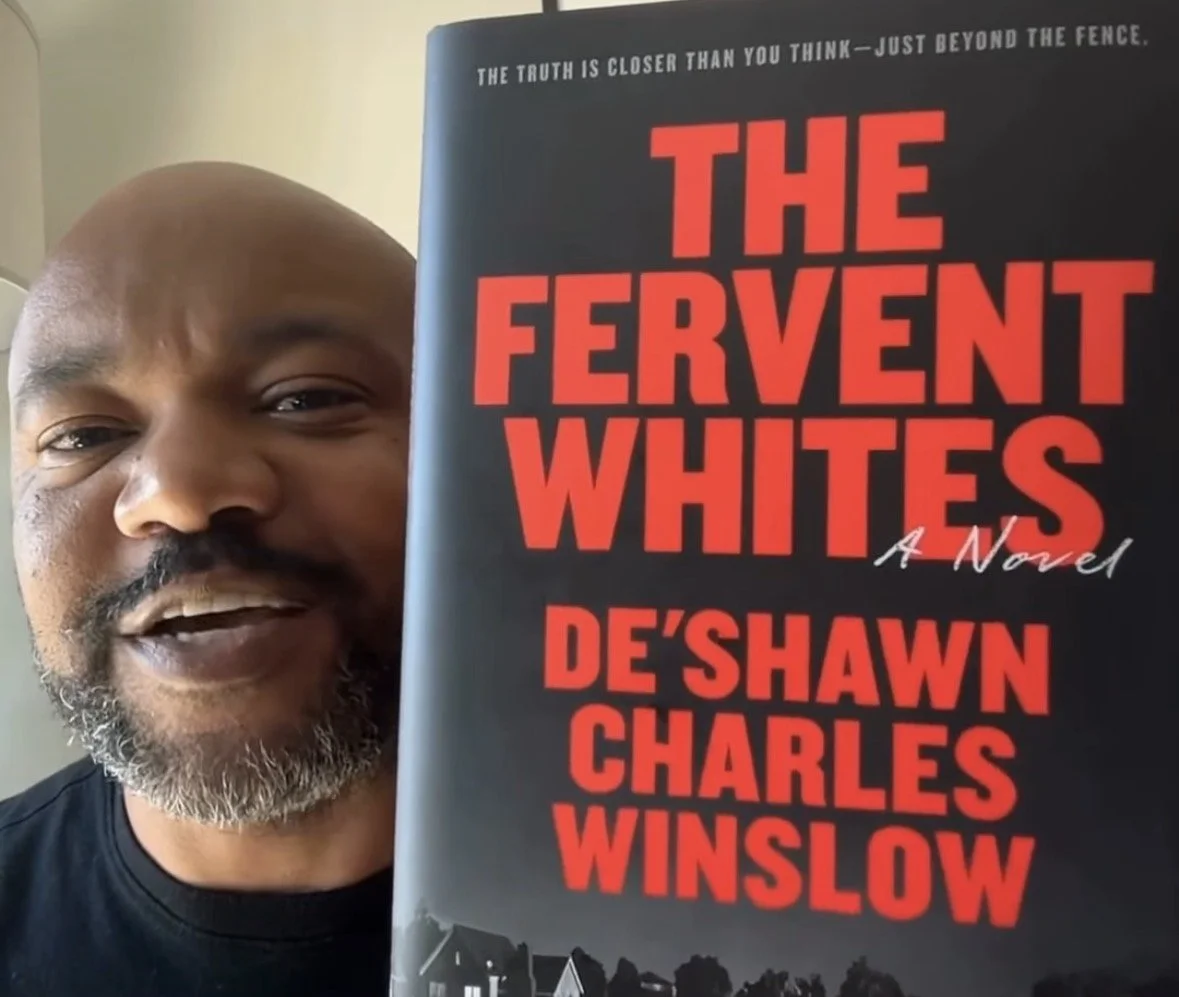
Today on The Stacks, we’re joined by award-winning author De’Shawn Charles Winslow to talk about his latest book, The Fervent Whites. Set in 1982 in the Hudson Valley community of Fervent, this book explores the long-simmering tensions that erupt when their former neighbors, James and Ella White, return with a vengeance after being exonerated of a homicide that once rocked the small town. We chat about how De’Shawn writes his endings, the lack of Black authors in the thriller genre, and how he became a nostalgic person.
Our book club pick for August is Fish Tales by Nettie Jones. We will be discussing the book with Sequoia Holmes on Wednesday, August 26th.
LISTEN NOW
Apple Podcasts | Spotify | Google Podcasts | Overcast | Stitcher | Transcript
Everything we talk about on today’s episode can be found below in the show notes and on Bookshop.org and Amazon.
The Fervent Whites by De'Shawn Charles Winslow
In West Mills by De’Shawn Charles Winslow
Decent People by De’Shawn Charles Winslow
Devil in a Blue Dress by Walter Mosley
This Is Us (NBC)
Just the Nicest Couple by Mary Kubica
Drowning with Others by Linda Keir
King of Ashes by S. A. Cosby
“Ep. 375 The Gospel of the Dispossessed with S. A. Cosby” (The Stacks)
The Fervent Whites (audiobook)
To support The Stacks and find out more from this week’s sponsors, click here.
Connect with De’Shawn: Instagram | Threads | Website
Connect with The Stacks: Instagram | Threads | Shop | Patreon | Goodreads | Substack | Youtube | Subscribe
To contribute to The Stacks, join The Stacks Pack, and get exclusive perks, check out our Patreon page. If you prefer to support the show with a one-time contribution, go to paypal.me/thestackspod.
The Stacks participates in affiliate programs. We receive a small commission when products are purchased through links on this website.
TRANSCRIPT
*Due to the nature of podcast advertising, these timestamps are not 100% accurate and will vary.
De'Shawn Charles Winslow 0:00
I went back and forth with the fervent whites as to whether I wanted to confuse or make my reader work for the answer, or if I wanted it to be just slightly. Oh, of course, that's who did it, you know. As hello, folks, the world has not changed very much, and I feel like I landed on. I don't want there to be any big surprise. I'm okay if readers figure out three quarters of a way in that they know who's the culprit is.
Traci Thomas 0:37
Welcome to the Stacks, a podcast about books and the people who read them. I'm your host Traci Thomas, and today we are joined by award-winning author Deshawn Charles Winslow to talk about his newest book, The Fervent Whites This book is set in 1982 and explores the long simmering tensions that arise in the fictional Hudson Valley community of Fervent when former neighbors, the Whites, return from prison with a vengeance after being exonerated of a homicide that rocked their small town. Today we talk about the intimacy of neighbors, black men writing genre fiction, and why Deshawn has chosen to write three books with female protagonists. Our book club pick for August is Fish Tales by Nettie Jones. We will be discussing the book with Sequoia Holmes on Wednesday, August 26. Do you like this podcast and want even more bookish content. Well, babe, you're in luck. You can join our community, the Stacks Pack, on Patreon and subscribe to my newsletter, Unstacked on Substack. In each of these places, you'll have access to a variety of perks, including bonus episodes, virtual book club meetups, exclusive hot takes and opinions, and by supporting us through either of these platforms, you make it possible for me to make the stacks free every single week. So consider joining the stacks pack at Patreon.com/thestax and subscribing to my newsletter unstacked at tracy thomas.substack.com. Now it's time for my conversation with Deshawn Charles Winslow. All right, everybody. You guys give me such a hard time because you're always telling me how I don't read enough genre fiction. Well, guess what? I have been reading genre fiction, and I just read a fantastic little thriller, and I wanted to bring it to you. It's called The Fervent Whites, and the author is here today. His name is Deshawn Charles Winslow. Deshawn, welcome to the stacks.
De'Shawn Charles Winslow 2:23
Hi, Traci. Thank you so much for inviting me.
Traci Thomas 2:26
I'm so happy to have you. I'm so happy this worked out. I have been telling people this is like the perfect little shot of a book. It's short. It's sweet. It goes down smooth. I mean, it's not sweet. It's like murder. But it's like it's like exactly what you want from this kind of book. So for people who are listening, who have who don't know about it, who haven't been listening to me talk about it, will you tell folks in about 30 seconds or so what the Fervent Whites is about?
De'Shawn Charles Winslow 2:54
Sure. The book is about Sylvia Upshaw and her friend Fate, and they are a bit shaken up because their former neighbors have just moved back to the neighborhood after being wrongfully convicted of a murder, and some stuff went down while Ella and James White were in prison, and Seal and Fate may have had a hand in some of those things. So the white couple are a bit upset, to say the least, and Seal and Fate are are afraid.
Traci Thomas 3:29
And of course, in like the tongue and cheeky way, the white couple's last name is the White. So we love this for them. It's very clear. It's very clear. It would be confusing if their last name were Black. Exactly. That would be that would make it really hard. This book. Well, I guess why did you want to write this book, and why did you want to write this book now?
De'Shawn Charles Winslow 3:50
So for one year, I lived in Socrates, New York. It was during, I guess, the earliest, earlyish part of the pandemic, and I lived on a hamlet called not fervent, fervent is the fictional hamlet. The real hamlet was called Maldon on Hudson, and it is a predominantly white hamlet, as most of them are upstate New York. But my landlords are people of color, and I rented their up. I rented their garage apartment, and it didn't take me long to realize that we were, you know, we were very few people of color there. And I asked my landlord one day, "Are you are you guys the only people who own and live here full time, people of color? And he said, "I believe, I believe so. And he told me about how some of the neighbors don't don't acknowledge him and his family, and some do, and so on and so forth. And as I start to go for walks and that sort of thing, I started to notice that I also wasn't being greeted by people very much. And at first, I kind of you know I shrugged it off as well. I'm you know they think of me as a city person who's coming up to invade the. Quiet upstate, but the hamlet has a little a little park where people come and take their boats out onto the river, and those are people who live in the city and other places in New York. And I noticed that when they would go on their little walks after they bring their boat in and and and reattach it, I would notice that neighbors would stop them and chat them. Oh, where are you guys from? And blah blah blah. And I was like, Oh wow, they see me every day, and they don't. So anyway, that gave me the first piece of the idea. Another part was after, I think it was in 2022, the Tops shooting happened up in Buffalo, New York. Racially motivated massacre, you know, for lack of a better word. And in a conversation about that that tragedy with someone, I can't remember who, but we were talking about how how upstate New York is a lot like the South, you know. Once you get up there in the trees, and can be a lot like the South. And so I began to Google for some reason. I began to Google like upstate New York race relations, upstate New York racially motivated crimes, or something like that. And it pulled up an old article or several old articles about a serial killer named Joseph Kristoff, I believe was his real name, and he did racially motivated killings upstate and and also down the East Coast a bit, and I was like, I've got to use this, I've got to write a novel. I've got to include this racist neighborhood and the serial killer, racially motivated serial killer. And then I started to sort of put together a very loose plot with that. And then I started to think about family dynamics. You know, within my own family, my mother adopted two children, and she did foster care. My parents did foster care a lot before that, and they had children, white, black, Hispanic in the home, and so all of these things just going on. And I just, so that's where the book came from of like four or five different directions, a bunch of different things.
Traci Thomas 7:18
But in your book, the town of Fervent, which also is a word I cannot say. I always want to call it frevent.
De'Shawn Charles Winslow 7:24
Frevent.
Traci Thomas 7:25
Frevent. I know that's not right, but I'm all like every time I would go to spell the title, I was like adding R's everywhere. I was just like F R E R V R N R T R. I don't know. Yes. So if I say it wrong in this recording, just I'm sorry. But in your town of Fervent, the it's a black town. It's a predominantly black town. What did you feel like you could kind of do there that maybe like flipped your sort of lived experience for that year?
De'Shawn Charles Winslow 7:57
Yeah. So well, the neighborhood starts off as a white neighborhood, and then when black as they often do, as they often do, and so as the town, as more black people-not town, but as the the neighborhood becomes black, white people flee. And so I thought, oh, what would it be like if after the neighborhood has become mostly black, there are still a couple white white households, you know, and and what is it like for a racist person or a racist couple? What is it like to live to be the minority in a place when you dislike or even hate everyone around, and and so that gave me something to something to play with, you know. And um and so that's why I have um that's why I have James being so awful, and Ella is about 50% awful.
Traci Thomas 9:02
Mostly, but not fully, right?
De'Shawn Charles Winslow 9:05
You know, so that's where, so that's why I wanted to do the flip and have it predominantly black, couple of white households.
Traci Thomas 9:13
Yeah, I mean, I think what's so interesting about this book is it's set in the 1980s, which I want to talk about in a second, but it feels so like contemporary and so like of this exact moment because I think a lot of the things you're talking about predate the 1980s and certainly like what we're seeing right now. I mean, I'm I'm watching the news and I'm seeing this like tragic story about Nolan Wells and his proximity to these white kids and and his like sort of, you know, I'm not going to fully call it a murder yet because we don't have all the evidence. But his very suspicious death, right, and the conversations we're having right now about you know the precarity of relationships across racial lines and intimate relationships with friends. There was a story. A little bit ago about another black woman who sort of disappeared after like a sleepover with her girlfriends, and so I'm wondering, like, how were you thinking about the precarity of these relationships?
De'Shawn Charles Winslow 10:13
That's a good question. I mean, I don't know if I if I was. I think what I was drawing on a lot from was like where I grew up. I grew up in a small town, so it's it's not like we had an east side and a west side. But black people and white people, if you so the road I grew up on was a long road. It might have been a mile, and longish road, maybe a mile, and we did sort of segregate ourselves. One one half of it was black, one half was white, but parents still sort of interacted a little bit, PTA and stuff like that. They weren't friends, but there was always a little bit of tension. And I remember an incident when I was I must have been in the second or third grade, and I had brought home a friend of mine. Decided we were going to swap towels. I don't remember why we took towels to school at that age, but we decided we were going to swap towels. And I brought his towel home and and stuff. And I was like, "Look, Ma, I bought so and so's towel home, and and she was like, "Okay, that's nice, but don't bring another white person's towel to my house. And right at that age, I was like, "Oh, okay, it's not cool to be that intimate with a white person. They are only to go to school with, and you know, to work with, and that sort of thing. But we don't. And so, I think I was just playing on little moments in my childhood and teen years, where I where these racial these racial moments were like bam in the face, and I thought about you know I thought a lot about my mom when I when I sold this book it wasn't quite finished, and she passed away like three weeks later, and so she was on my mind a lot when I was finishing this book, and so I went and added anecdotes between two mothers, and you know scenes rather between two mothers-one white, one black. But yeah, I mean, in terms of precarity, what I-I don't know that I was consciously thinking all the time about them being precarious. I know that's a wild answer, but
Traci Thomas 12:22
no, it's not. I just think it's like one of the things that's so interesting, and I and this book really made me think about this. Is like how intimate it is to be a neighbor, even if you don't know your neighbors. You know, like in the case of this book, this community really sort of like knows each other. They're very gossipy, which I love. But even if they weren't, you still see things like you still hear when your neighbors are having to fight or like somebody wakes up early or the normal or somebody's not around as much? Yep. And I think like that's already sort of a tricky thing to navigate sometimes. And then you add the racial dynamics in a place that is not particularly diverse, and so I was just thinking about how that works because there is such an intimacy to living near someone.
De'Shawn Charles Winslow 13:10
Right, right. Yeah, I think now I, I think now I see what you mean with the question, especially in a small neighborhood where people can almost see everyone else's homes, so that goes you having an affair. That goes your teenager sneaking out of the window. There's all these things.
Traci Thomas 13:29
Yeah, and I feel like I don't know. Maybe this is like a more modern thing, but we're so removed from each other these days. Yes, and like in a way that even you know, 40 years ago in the 80s, like we just were more involved with each other because we had to be. You couldn't, you couldn't be involved with people 1000s of miles away because long distance phone calls were expensive. You didn't have social media on your phone. You didn't. The most you could know about a person far away was what was on TV or in a movie, and so we, even though it was more gossipy, which some people might not like, I can't imagine. It was also, it was also like more your business and more of your life in a way. Now that we've sort, we've become so isolated from each other. I feel like this book had some of that nostalgia in it too.
De'Shawn Charles Winslow 14:19
Yeah, yeah. I think I feel like everything I write, if I'm honest, has a lot of nostalgia. Even even the stuff that I've written that was set long before I was born. I think I was channeling memories into it. You know, I'm a nostalgic person. I really am.
Traci Thomas 14:38
You are. So have you always been?
De'Shawn Charles Winslow 14:40
I think I've always been, and I think the reason for that. People have asked me, "How did you become so nostalgic? Like, what what makes you long for the past so much? And I think that's due to my parents and my aunts and uncles because they were always talking about the grandmother that I. Didn't get to know because she, I was two when she passed, the great grandmother, and they all these stories that have made. I think it continues to make me wish that I could just go on a time machine for I don't know a month. Yeah, you know.
Traci Thomas 15:13
Yeah, yeah, yeah. Do you ever do like your family genealogy or any of that stuff?
De'Shawn Charles Winslow 15:18
Oh my God, I'm obsessed. I have an ancestry account, and I have. There are months when I log in, like every other day.
Traci Thomas 15:26
How far back can you get?
De'Shawn Charles Winslow 15:29
Let's see. On my father's side of the family, I've been able to to go back until about 1830s.
Traci Thomas 15:36
Wow!
De'Shawn Charles Winslow 15:37
Because he had some early freed ancestors.
Traci Thomas 15:40
Got it.
De'Shawn Charles Winslow 15:41
But my mom's side less so. About 1852 was when the oldest ancestor on her side was born. Wow! You know, and that's assuming that that number that's written down is actually right. She could. She was probably guessing at her age. You know.
Traci Thomas 15:59
Right. Right. Right. Right.
De'Shawn Charles Winslow 16:00
Yeah.
Traci Thomas 16:01
This is I've talked about this on the show before, but I cannot get very far on my dad's side, and it's like the saddest thing for me. And it's just like we had like a we have well Thomas, tough last name, and like it's just I mean it's just it's a hard one. There's a lot of Thomases, and also on my my grandmother, she had she's Creole, so she had a French last name, so it's misspelled everywhere.
De'Shawn Charles Winslow 16:30
Got it.
Traci Thomas 16:31
And so it's just got really complicated. The furthest back I can get is like 1900, maybe. But I I'm so jealous of everyone like you who can like go far back. I every time I bring it up, I'm always like, ah, it just it's such a cool thing to like know where you come from when you're a Black American because we just don't really know. And like, even when you can get pretty far back, a lot of it is just like speculation. It's like
De'Shawn Charles Winslow 16:59
absolutely
Traci Thomas 17:00
a lot of sort of fill in the blank. This feels right. This sounds like something somebody maybe mentioned. Like I, we do have that middle name. Like could be connected. Such a crazy thing. Anyways, not to go to tangent.
De'Shawn Charles Winslow 17:14
I know. It's addictive. Don't get me started.
Traci Thomas 17:17
But you said something earlier about about the Hudson Valley, upstate New York, kind of reminding you of the South a little bit. Is that is that why you wanted to like explore that place more? Because your other book, your your first book, takes place in the South, right?
De'Shawn Charles Winslow 17:36
Yeah, I think so. I think you know once I moved up there and started to feel something similar, something familiar, I was like, "Oh, I think I can write a book set up here, and it wouldn't be all that jarring from from my first two books, actually. And and Socrates sort of reminds me of my my hometown in a way, but yeah, I I wanted to do that also to point out how the North or other parts of the country were are not free and have never been free of racism. Yeah, you know, and for there to have been a serial killer born and raised in New York, killing black people specifically. I was like, "This is something right out of South Carolina or Mississippi. Right. So I I felt like I had to had to use that material and that I had to set the book in New York so that we can sort of shake out of this myth we have that racism only or mostly resides below the Mason Mason Dixon,
Traci Thomas 18:46
right? I think. I mean, I'm a lifelong Californian, and I lived in New York for a little bit. But I feel like one of the things that I've learned through reading is like the racism, of course, is there everywhere, but it just it manifests in such a different way because in the North and in the West, it's almost more segregated than in the South because in the South, these families like grew up, were were evolved together. Like you're like like I'm saying like the last name thing. It's like those are your cousins, even if they're white. You know, like there is a connection. There's a reason y'all have the same last name, and like the schools and like the the places aside from like the church maybe it's just you're more in proximity in the south than you are in the north and because the way that the Great Migration worked and there was like these influxes of black people to these places outside the south it was easier to sort of segregate and push people together and so I find that to also be such an interesting, like the the racism is the same. It's just like physically manifests differently.
De'Shawn Charles Winslow 19:50
Absolutely, absolutely.
Traci Thomas 19:52
One of the pieces of the book that we're sort of talking about it, this place, this town of Fervent, it's so well. Developed. I don't usually use like the term world building because I don't read a ton of like world building books necessarily. But I feel like you really built this place and this community, like the people in it. They're so specific to me. As soon as you know, you get a few lines about certain characters. I'm like, oh, I know who she is. I know who he is. So, how do you, as a writer, think about sort of creating these worlds for your characters to live in?
De'Shawn Charles Winslow 20:28
A lot of it is based on just personal experience and people watching. I do a ton of people watching, and when I was living in Sogarties, most places were closed, or you could only go and get takeout in the window, and and that sort of thing. But there was a coffee shop, and I'm forgetting. I think it was on Main Street or or intersection, but near Main Street. But there was a coffee shop that would open, and they you could go in there. You had to you couldn't all the tables couldn't be occupied, so they had the mark to make sure people were plenty of feet apart, and I would go just a couple days, a couple mornings a week. I was working on my second book, and I just paid attention to the people who came in, and some people clearly knew each other, and and you know, and obviously worked in the same field or or whatever, and some people clearly knew each other but didn't like each other. It would be good morning, Marge, and that was all Marge got, you know. And yeah, and so I would sit there and I would just come up. I was like, oh, she doesn't like Marge, probably because they had a fight about something 10 years ago, and I would just make up shit, you know. And you know, I dreamed up the the owners of the coffee shop, their daughter worked there, and I dreamed up that she was the gossipy nosy daughter, which became the the gas station in the book, you know. Right, right, right. But a lot of it is is my own experience and observation is how I. It's part of how I build a world. Now, fervent, I can say I can probably admit I cheated a little bit because it's so similar to South Mills, North Carolina. So I did not have to create a world from scratch. I was like, I'm gonna borrow some stuff from what I what I've already done, and just move it to a different part of the country. Yeah.
Traci Thomas 22:26
When you're borrowing from things like whether it's the coffee shop girl or your hometown, do you consciously like write that down? Are you like, okay, Megan, coffee shop girl? Like this, these are things. Or as you're writing, does she sort of just come back to you and like, oh, she would be a good fit for this for this plot device.
De'Shawn Charles Winslow 22:45
Yeah, it's normally normally the first in the first draft I may not be thinking as specifically about that coffee shop lady, but in a second draft I may say, oh, why am I setting it in the coffee shop, I can I can transpose that to a gas station, and instead of making up this character, trying to make up a character, I could make her based on the daughter at the coffee shop. You know, so right. So it's not always on. So I'm not jotting anything down, but it's usually on round two or three of a draft, and I'm like, oh yeah, I could just use that person I actually saw.
Traci Thomas 23:27
And how about like with plot when you go in? How much do you know, especially in a book like this? That's like sort of a I don't know thriller mystery. What do you call it?
De'Shawn Charles Winslow 23:36
I think it's a hybrid of the book of the two.
Traci Thomas 23:38
Okay it's a thrystery
De'Shawn Charles Winslow 23:41
It's a thrystery. Yep.
Traci Thomas 23:43
How much are you going in? Like, when do you know the ending? When do you know the plot points? Do you kind of outline it all and have an idea? Do you start with the end and you're like, how can we get there? How do you, Deshawn, figure it out?
De'Shawn Charles Winslow 23:58
I do a very very loose outline, and then when I say loose, it's very loose. It'll be this is how the book will end. This thing has to happen in the middle, and the end will be this. These big three, maybe four major plot points, and I fill in the rest as I go, and that can be that can be aggravating because you change your mind a lot about how to get to point from one to to two and so on, but yeah, I would I would say with the last two books, plot sort of came first, I believe. Yeah,
Traci Thomas 24:39
and then as far as like your reader, how much do you think about their experience in a sort of thrystery? Like, do you want them to solve it? Is it your goal that you've left us enough breadcrumbs that we figure it out, or are you like, if you see like a review and someone's like, "Oh, I figured it out, are you like, "Ah, dog." Like I really wanted to surprise you.
De'Shawn Charles Winslow 25:02
Yeah, so I went back and forth with the fervent whites as to whether I wanted to confuse or make my reader work for the answer, or if I wanted it to be just slightly. Oh, of course, that's who did it. You know, as hello, folks. The world has not changed very much, and I and I feel like I landed on. I don't want there to be any big surprise. I'm okay if readers figure out three quarters of a way in that they know who's the culprit is, because I am trying to send that message, this is is kind of Jim Crowish, you know, all all over again. But I don't want it to be like I said. I I don't want people to figure it out absolutely until about three quarters the way in. Yeah, I do want that to be a bit of a um of a treasure hunt, treasure for lack of a better word. But yeah, okay.
Traci Thomas 26:00
Well, that's I think what happened to me. I did figure it out before, but not super before. Like I was like, "Oh, okay, I see what's happening here.
De'Shawn Charles Winslow 26:09
Yeah. Yeah.
Traci Thomas 26:12
Okay. Good. Okay. I did the right thing. I did. I did what you wanted. I'm a good student. You are. Okay. Wait. Let's take a quick break, and then we'll be right back. All right, we are back, and I want to talk about genre because I don't know if you even identify as like a genre writer. I don't know. Some writers don't like that. Some writers do. I think some readers. I don't know. It's like such a touchy thing,
De'Shawn Charles Winslow 26:39
yeah, I guess for me,
Traci Thomas 26:41
you don't care.
De'Shawn Charles Winslow 26:42
I don't mind. I've, you know, I have been labeled, I've been labeled a literary writer, which I disagree with, but fine if people think I am.
Traci Thomas 26:54
Why do you disagree with that?
De'Shawn Charles Winslow 26:56
I don't. I don't know. It may have something to do with what I compare my work to. When I think of a literary, I'll be specific. When I think of a black male literary writer, I think of the Baldwin, you know, Baldwin work and Ta-nehisi Coates and just people with really, really, really high vocabularies and much more education than I have, so like I don't consider my first or second book literary at all, you know. And I definitely don't don't think of the fervent whites as literary. I think of it as a thriller with a little bit more character.
Traci Thomas 27:36
Yeah, I would say I was calling it a literary thriller.
De'Shawn Charles Winslow 27:40
That's funny
Traci Thomas 27:41
because it has a little like I sometimes think of like a thriller can be just like so plot focused, but like I said before, you build the town, you build the community. These characters have some depth to them. They're pretty like well developed to me, which feels a little more literary.
De'Shawn Charles Winslow 27:58
Thank you.
Traci Thomas 27:59
But I don't. I'm so, I I don't know. I don't love all of the different differentiation per se, but I also do find it helpful. Like I think genre is like such a helpful construct, though I acknowledge it's a construct.
De'Shawn Charles Winslow 28:11
Yeah,
Traci Thomas 28:12
but I feel like one of the things that I've noticed a lot, and I'm not sure if you've noticed it. And again, I'm not as much of like a genre reader, but when it comes to black male writers in the genre space, I don't feel like there's that many. Do you feel like there are a lot?
De'Shawn Charles Winslow 28:28
There aren't at all. I can probably only name, let's see, Walter Mosley, and I think his work is very literary.
Traci Thomas 28:36
I think so too.
De'Shawn Charles Winslow 28:37
You know, even though his books are in the mystery section in the library and stuff, but Walter Mosley, SA Cosby, I can't even think of.
Traci Thomas 28:48
There's more. Who am I not thinking of?
De'Shawn Charles Winslow 28:51
I can think of.
Traci Thomas 28:52
Well, there's some like in like the sci-fi space, but in the like more mystery thriller, it's sort of yeah. I feel like we're forgetting an obvious person though, we are forgetting. I can't. There's like somebody that's like I was just talking about yesterday that I'm forgetting, and everyone's gonna be like, "I can't believe you guys forgot. I know. You guys can DM me and tell me I'm an idiot. It's fine. You do it anyway. Yeah, I mean, are there any other one like people that you can think of that maybe like we don't know or or that have, or even like some previous generations that maybe have inspired you, or not even.
De'Shawn Charles Winslow 29:26
I think partly Walter Mosley, you know, because because his work is so is so literary. Yeah, partly by Walter Mosley, but I'm also one of those writers who wants to try different things, you know, and that was something I was afraid about. I was like, because there, all this discussion around branding, and I was like, am I going to be able to, after what I did with In West Mills and Decent People, and now with Fervent, what happens if I say I want to write a romantasy? Is the industry going to say no? Are you crazy? And so that's I think that's the reason why I am doing some lane hopping because I want to give it a shot and and I'll take the risk to a degree if I want to do something very very very different. Then we'll talk about a pseudonym, but but yeah, I I like to change things up a bit.
Traci Thomas 30:19
Do you think you would do romantasy?
De'Shawn Charles Winslow 30:22
Not romantasy, but romance for sure.
Traci Thomas 30:25
Okay, okay, okay, okay. I love this. I love this. I mean, there's definitely not a lot of male romance authors.
De'Shawn Charles Winslow 30:32
No,
Traci Thomas 30:33
so interesting. I wonder why black men aren't writing genre, because I feel like people like it.
De'Shawn Charles Winslow 30:41
Right. Yeah, and there are definitely a lot of black men who love it because I see the bookstagrammers who have accounts that are all fantasy, all mystery thriller. You know
Traci Thomas 30:54
I mean, like there are authors, male authors who have white male authors who have made full careers of writing, like Dennis Lehane or whatever, he just does this kind of stuff, and like Stephen King, I know he does horror too, but like he's not writing a ton of literary fiction, you know. So I'm wondering why. I'm wondering if it's like blackmail authors don't aren't as like drawn to it, or if it's something within the industry that makes it hard to do it.
De'Shawn Charles Winslow 31:22
I also think that it's possible that we put a lot of pressure. I'm not going to say we because that would be a lie. I don't do this, but I wonder if a lot of my fellow black male writers, whether queer or straight, feel that if we're going to write and be published, that it has to be serious work, and that we are not allowed to write playfully.
Traci Thomas 31:49
You know,
De'Shawn Charles Winslow 31:50
I wonder that a lot, and especially when I'm on threads and I'm reading posts and the stuff that I agree with 99% of the time, but sometimes I think to myself, I would love to see you write a funny post. You know, yeah. And I and I wonder, I wonder why you won't allow yourself to write a funny post because I have heard you are a lot of fun in the ball. You know,
Traci Thomas 32:17
I do know, I do know.
De'Shawn Charles Winslow 32:19
So that might be a part of it,
Traci Thomas 32:21
yeah. But yeah, now I'm now I'm thinking, I'm thinking, I'm like, what's going on? I wonder if it's something also within publishing. If there's like, I don't know, I don't know, and also maybe like, maybe there's some outside racism around like, or or a fear of writing towards like crime stories as black people because of that sort of prejudice and racism, but I feel like I mean it's it's weird to me that S. A. Cosby exists and there aren't like nine copycats. You know like he's successful. It's not like he's out here floundering. You would think that his success would have made like seven or eight people jump in and be like, I want to do that. I could do that. And maybe, maybe like there hasn't been enough. But even Walter Mosley, like he's been around for a long time. The fact that like it's like you and SA are the only two, like is but like Devil in the Blue Dress came out like 1990. Like there's been time. I don't know. No one's really thinking about this. This is going to become one of my obsessions. I'm probably going to take it to threads later today. I can't wait. I oh, I do. This is what I want to talk about about the 1980s. So one of the pieces of this book, we talked a lot about race, but there is also this sort of you know not sort of. There is this homophobia in the town. There is a queer character who it's 19. It's 1980s. So AIDS is happening. The crisis is happening. I'm wondering what about that piece of the story was interesting and exciting to you, and why you sort of wanted to explore this angle as well.
De'Shawn Charles Winslow 33:59
Yeah. Well, I chose the '80s primarily because of the serial killer when he was doing his his thing, and I said, "Okay, I'll set it around that time because it'll just make it a little more real for me. But in terms of the homophobia piece, I had said that after decent people, I was not doing homophobia anymore. I was like, I said what I said. I did it one time, but as I start writing fate more, I was like, I can't just pretend that everyone is okay with a gay neighbor.
Traci Thomas 34:38
Right.
De'Shawn Charles Winslow 34:39
I just can't do it. And but I had sort of put the AIDS epidemic out of my mind. I didn't want to deal with that, and my agent said you got to mention it a couple times at least, you know. And I said, damn,
Traci Thomas 34:56
yeah,
De'Shawn Charles Winslow 34:57
but I just didn't want to deal with it
Traci Thomas 34:59
I mean, I actually. Thought it was sort of great because you do mention it, but it's not like a huge plot point. But it is a piece of the story because Fate's partner-I don't. This is not a spoiler. Fate's partner lives in the city and kind of like comes up to visit, and so I loved that idea of like this this like scary thing that's happening in the city, and then this gay person who he already don't like because he's gay is bringing his gay boyfriend from the city with the disease to our town. You know what I was like? Right, of course, because that is the dynamic of of like the homophobia of the anti like HIV and like all the scare and all. And I just thought that was like really smart. I really like that. How did you name your characters?
De'Shawn Charles Winslow 35:46
Let's see. This time it was less strategic. Okay. Sylvia is a name that I just like because I I grew up with a girl named Sylvia. Now Fate's name Double Entendre, but I had a family member named Lafayette. His nickname was Fate, so I named him after this. I named the character after Fate, but also I had ideas about Fate, which I will not talk about.
Traci Thomas 36:20
Okay, because of spoilers?
De'Shawn Charles Winslow 36:22
Yep. So it made the name more powerful. But everybody else, those names were. I just kind of grabbed them.
Traci Thomas 36:31
Did you always know the whites were going to be the whites? Like, did you have the title in mind?
De'Shawn Charles Winslow 36:35
There was one title before it, and it called. It was oh how fervent.
Traci Thomas 36:44
Okay.
De'Shawn Charles Winslow 36:45
And then as I got to writing James and Ella, and at some point I was like, I'm just gonna name them white. It's easy, and people would think it's funny that it's a white couple named white. And then I changed the title the title to the the fervent whites.
Traci Thomas 37:03
Okay.
De'Shawn Charles Winslow 37:03
Yeah.
Traci Thomas 37:03
Okay. And what about the cover? Were you involved in it at all?
De'Shawn Charles Winslow 37:07
A little bit. They showed us that cover with various color schemes. So I always liked the cover. The color. We went back and forth just a little teeny bit.
Traci Thomas 37:21
What was the other one?
De'Shawn Charles Winslow 37:23
It was like some blue.
Traci Thomas 37:25
I love this cover. This is one of my favorite covers this year. This is one of my favorite covers of the year for sure. I mean, I'll be honest with you. I saw this. Maybe I saw it on PJ's Instagram, and I was like, "What is that? I was like, "I need to read that. I didn't know any. I mean, I recognized your name, but I was like, "What's happening here? That is like doing it. It's doing it big time for me.
De'Shawn Charles Winslow 37:48
Yeah, yeah. We love the covers, especially after the red came in.
Traci Thomas 37:53
Yeah, the red. Yeah, it just. I don't. It's like funny, and also like kind of scary, and you're like, "What's going on here? And I feel like the the actual title just looks so good, and it's like the title is so provocative. I don't the the team effort for this package is one of my favorite packages. I think of the year so far. I just I think like I think a good, I think a bad cover is like unfortunate, but I think a good cover is can be huge. Like this pops on the at the bookstore for sure.
De'Shawn Charles Winslow 38:30
It does. It does. I can't take a much credit for it.
Traci Thomas 38:33
Well, but the title you can. You name the town and you name the characters, and I feel like I don't know. Plus, like your name, you can't really take credit for, but the three lines, like the symmetry of your name, and that's like it just works. It just really works for me. I'm just like really into it. I guess we'll have to give your parents or whoever named you credit for that. But and how do you like to write? How often? How many hours a day? Do you listen to music? Do you have snacks and beverages? Are you in your home? Are you outside? Set the scene.
De'Shawn Charles Winslow 39:04
Yeah, I mostly like to write outside of the home, in a coffee shop or a library, and if it's a busy, busy coffee shop, I can't do it because I'm a people watcher, and I'll type five words and then eavesdrop. In terms of times a day, mostly afternoon and evening. But lately, I've been writing a little bit in the morning, because I'm finding that I don't do, especially on during months where there's no teaching. I waste a large chunk of my mornings, and I was like, I should be writing. Yeah, yeah. And I do. I go to the gym and stuff like that. But I'm not at the gym from nine to four. I could write.
Traci Thomas 39:55
Right. And what about snacks and beverages? What are you ordering when you go to the coffee shop?
De'Shawn Charles Winslow 39:59
Usually, just a regular drip, and I'll get a muffin or something.
Traci Thomas 40:04
What kind of muffin?
De'Shawn Charles Winslow 40:05
If they have that those green pistachio nut muffins, I'll get one of those.
Traci Thomas 40:12
Okay, and what sort of stuff do you like helps you to sort of tap in to your creativity and like to your writing process, especially if you're writing later in the day. How do you sort of like reset from whatever's happened before to focusing on the work?
De'Shawn Charles Winslow 40:32
Sometimes it's playing a song or two from that time period. That wasn't the case with Fervent so much. With fervent, it was opening the manuscript and reading one or two pages back from where I left off. It's it's funny how sometimes different things get me in the zone.
Traci Thomas 40:54
Yeah. Did you always know you wanted to be a writer?
De'Shawn Charles Winslow 40:58
No, not at all.
Traci Thomas 41:00
What did you think you wanted to be?
De'Shawn Charles Winslow 41:02
I thought I wanted to be a teacher, and like, but not college students.
Traci Thomas 41:08
Right.
De'Shawn Charles Winslow 41:08
I thought I would be like a fifth grade, sixth grade teacher or something. And I have an entrepreneurial side, so I also at one point thought I was going to own a big chain of laundromats.
Traci Thomas 41:20
Oh okay
De'Shawn Charles Winslow 41:23
Yeah, because I worked at a dry cleaner laundromat combo when I in my early 20s, and I kind of love the industry.
Traci Thomas 41:32
You got to write one of those books. I feel like that's like a good place for some some nefarious stuff to go down.
De'Shawn Charles Winslow 41:37
Yeah, yeah.
Traci Thomas 41:38
Do you think like also all the people coming and doing laundry, like, what are you guys watching?
De'Shawn Charles Winslow 41:44
Exactly.
Traci Thomas 41:45
You know.
De'Shawn Charles Winslow 41:46
Yeah, you cleaned up a murder scene, or like an affair.
Traci Thomas 41:50
You know, someone else's draws. Like, I don't know. I feel like I would read a laundromat. I would read a novel about like a laundromat kingpin, who's like laundering money, but also like the town, the affairs. You know, like I'm into it. Maybe he's got like a kid, like a super smart kid or something, who's like in the bit, like getting everybody's business, like a Harriet the Spy situation,
De'Shawn Charles Winslow 42:20
and he's queer,
Traci Thomas 42:21
for sure. There's so this is this is good. This is good.
De'Shawn Charles Winslow 42:26
We're gonna write that one together.
Traci Thomas 42:28
I would read this, but also I feel like we could sell the rights to this. because that would be a great vehicle for a TV show. You know, you just episode like, ugh,
De'Shawn Charles Winslow 42:40
Hulu, right?
Traci Thomas 42:40
Yes, I feel like you get what's his face. This is us guy, Sterling K. Brown. Yes. Oh my God, he would. Oh, he's he's like such a nice guy. He owns the laundromat, but really, really, he's doing something really bad.
De'Shawn Charles Winslow 43:00
Right. He's a pimp. He's selling coke.
Traci Thomas 43:03
Oh my God! Yes, not only drugs, but women also, or men.
De'Shawn Charles Winslow 43:05
Yes,
Traci Thomas 43:06
he and he know what? I bet he, as an actor, is ready to do his villain turn character. He hasn't done it yet. No, he doesn't have a training day. You know, like he's he needs it.
De'Shawn Charles Winslow 43:18
Yes.
Traci Thomas 43:19
Okay. What's a word you could never spell correctly on the first try?
De'Shawn Charles Winslow 43:24
Roommate.
Traci Thomas 43:26
Ooh, because of the M's.
De'Shawn Charles Winslow 43:28
The M's. I lost the spelling bee. It was either fifth or sixth grade over roommate.
Traci Thomas 43:34
Wow. Do you know the correct answer, or still you don't know?
De'Shawn Charles Winslow 43:39
Now I got it
Traci Thomas 43:41
Fine. I don't know. 2m's.
De'Shawn Charles Winslow 43:42
It's 2m's.
Traci Thomas 43:44
2m's. Wow. That's a hard one. Doesn't seem like it would be hard. I know the 2m's. That you're right. I'm a really bad speller, so almost every word gets me. I'm always like, gosh. I don't know. Wait, I I skipped over this. So how did when did you figure out you wanted to be a writer? What was it that changed from laundromats to novels?
De'Shawn Charles Winslow 44:07
So I was a business major at Brooklyn College, and my father died suddenly. And I knew my father very well. He was he he he and my mother raised me together, and but he had a very fascinating life that I knew about mostly from other people's lips. And when he died, I was like, I didn't ever get a chance to ask him that directly. And and so I went into a creative writing class thinking I would write a biography of my father, some grand idea.
Traci Thomas 44:45
Yeah,
De'Shawn Charles Winslow 44:46
and I got in there and lost interest in that particular project and started fictionalizing other family lore, for lack of a better word. And it just kind of went from there, and I'm like, oh my god, I'm addicted. I could do this all the time, and but I didn't think like MFA become a novelist. I thought maybe short stories and send them out to lit magazines. I didn't intend to go quite this far. Yeah,
Traci Thomas 45:20
you're like I found a little hobby and I turned it into my job.
De'Shawn Charles Winslow 45:23
I turned it into my job.
Traci Thomas 45:24
Same here. What a mistake!
De'Shawn Charles Winslow 45:26
You know, I still want a few laundromats though.
Traci Thomas 45:28
Yeah, I. This is research now. You know, it's a write-off. Yes. Do you know what comes next from you besides the laundromats?
De'Shawn Charles Winslow 45:39
I am working on a romance. Very very early stages. I don't even know if I'll stick with it, but I tend to finish what I start. So probably it'll be a romance, but it may not come out in my name. I've been very clear about that. That if it's very different from my work, I will keep it separate.
Traci Thomas 46:03
Okay, but let me ask you this: If you so, because we're in an interesting era of like these pen names, where there's lots of people who have them, and we know them, and we know their pen names, would you try to release it and like not do press around it, and like keep it totally separate, or would you just put it in a different name, like because it's like good for branding?
De'Shawn Charles Winslow 46:26
What I think I would might do is put it out, let it be out for three years, and let's just say hypothetically it becomes a bestseller, and everybody's like, "Who is this Jane Winslow. I would give her a different last name, but then I would be like, "Okay, it's me.
Traci Thomas 46:47
Oh, oh! So you would go with a lady's name?
De'Shawn Charles Winslow 46:50
probably. Yeah, yeah. Because I don't. All my books have female protagonists, or the female protagonist is the lead. I would say. So I think I would go with a with a woman's name.
Traci Thomas 47:10
Why do you think all your books have women main characters?
De'Shawn Charles Winslow 47:14
Because I'm a big old girl.
Traci Thomas 47:15
Like, but would you ever want to write a man as your lead.
De'Shawn Charles Winslow 47:23
Well, he would have to be. I would write a queer male lead.
Traci Thomas 47:27
Okay,
De'Shawn Charles Winslow 47:28
and I am not quite yet ready to write a fully queer novel.
Traci Thomas 47:34
Okay. What does it mean to be a fully queer novel to you? Like, what makes it fully as opposed to like partially.
De'Shawn Charles Winslow 47:42
For me, it's the protagonists are all queer, and a lot of the novel has to do with their sexuality or how the world receives them.
Traci Thomas 47:58
I see.
De'Shawn Charles Winslow 47:58
Yeah, and I know that novel. I'm gonna write it, but right now I'm more interested in people that are not me so closely.
Traci Thomas 48:08
I see. that makes sense. That makes sense. I mean, most men don't like to write, or not. Maybe they don't like to. Most men don't write women, and they certainly don't write women well. So it is it is of noteworthy that you have chosen to write women and like women like your books because a lot of men who write women, women are like this is trash.
De'Shawn Charles Winslow 48:28
I know
Traci Thomas 48:29
They're like I hate it here. What's wrong? Do you have a sense of of your readership? Is it mostly women?
De'Shawn Charles Winslow 48:37
Oh, most definitely. Yeah. The DMs I get, the people who attend my events, it's 90% women.
Traci Thomas 48:47
Interesting, interesting. This is sort of related. I guess the book has been out in the world long enough that you might have an answer for this. But who's like the coolest person who's expressed interest in this book, in your opinion?
De'Shawn Charles Winslow 49:00
Well, you
Traci Thomas 49:05
that wasn't a setup, but thank you.
De'Shawn Charles Winslow 49:07
And I would say the second coolest person. Her name on Instagram is Jina J-I-N-A dot something. She's a big influencer. Well, not an influencer. She talks about things going in the world. Okay, and she she did a post one day of a reel. She had picked up a copy of the book from Baldwin and Sons and Co.
Traci Thomas 49:37
Yeah, Baldwin and Co. in in New Orleans.
De'Shawn Charles Winslow 49:40
Right, and she did a video, and I was blown out of my mind.
Traci Thomas 49:44
Oh, I love it! Okay, we'll link to that and everything else in the show notes. Okay, for people who love this book, The Fervent Whites, what are some other books you might recommend to them that are in conversation?
De'Shawn Charles Winslow 49:55
Let's see. I would say just the. Nice couple, just just the nicest couple.
Traci Thomas 50:03
Okay,
De'Shawn Charles Winslow 50:03
by Mary Kubica, K U B I C A. Um, I would recommend Drowning with Others, and by Kier. I'm forgetting the whole name.
Traci Thomas 50:20
It's okay. We'll link. We'll link everything in the show notes. So as long as you give me a good title, I'll be able to find it.
De'Shawn Charles Winslow 50:25
Gotcha. And S. A. Cosby's Ashes, King of Ashes.
Traci Thomas 50:31
Yeah, he came on the show last year for that one. I really liked it. Two more questions. One is, what do you hope folks will keep in mind as they read this book.
De'Shawn Charles Winslow 50:41
I think I hope people will remember that mothers can be really good mothers to a child they didn't birth. That's one thing. Another one would be love thy neighbor as best you can,
Traci Thomas 51:02
yeah. Even if they're racist, don't love those ones, okay?
De'Shawn Charles Winslow 51:04
Don't love those.
Traci Thomas 51:07
We don't. We're on the fence about the whites.
De'Shawn Charles Winslow 51:10
Yeah, yeah. But otherwise, in general, like try to leave people alone if they're not bothering you and you're not bothering them, and just try to coexist to a point.
Traci Thomas 51:24
Yeah, yeah, yeah. If you could have one person, dead or alive, read this book, who would you want it to be?
De'Shawn Charles Winslow 51:31
Ooh, I would say I would love for Walter Mosley to read this book.
Traci Thomas 51:37
Did you send it to him?
De'Shawn Charles Winslow 51:38
No.
Traci Thomas 51:39
You should.
De'Shawn Charles Winslow 51:39
I should. I'm scared. Of what? Did he not go like it? Who cares? He might say, "How dare you send me a book? Do you know who I am?
Traci Thomas 51:49
As many books as he's publishing, he can't get mad at someone else for publishing one book. These are like seven books coming out this month. Doesn't he have two or three books this year?
De'Shawn Charles Winslow 51:59
I think at least two, at least two this year.
Traci Thomas 52:03
Yeah, he's listen. He needs to take a break and read your book. I don't know him, but he's in LA, so maybe I'll go find him. Like knock on his door and be like, "I've got a book for you." Well, De'Shawn, this was amazing. Thank you so much, people at home. You can get the fervent whites wherever you get your books. I did listen to a little bit of the audio. It's quite good. Someone in the stacks pack said that they put the audio book on for a long drive. They had them and their husband, and that the husband, who's not a big reader, ended up loving it and was like, "Put the book back on. Put the book back on." So, so it's good on audio too. I I mostly read it off the page, but it's it's a good one either way.
De'Shawn Charles Winslow 52:40
Cool. Thank you so much, Traci, for having me. This has been fun, and this is one of my dreams.
Traci Thomas 52:49
Oh yay! that's very nice of you to say. Thank you so much, and everybody else. We will see you in the stacks. All right, y'all. Thank you so much for listening, and thank you again to Deshawn Charles Winslow for joining the show. I'd also like to say a thank you to Georgia Brainard for helping make this episode possible. Our book club pick for August is Fish Tales by Nettie Jones, and we'll be discussing the book with Sequoia Holmes on Wednesday, august 26. If you love the stacks, if you want inside access to it, head to Patreon.com/the-stacks to join the Stacks pack, and check out my newsletter at Traci Thomas.Substack.com. Make sure you're subscribed to the Stacks wherever you listen to your podcasts, and if you're listening through Apple Podcasts or Spotify, please leave us a rating and a review. For more from the Stacks, follow us on social media at the Stacks Pod on Instagram, Threads, and YouTube, and you can check out our website at thestackspodcast.com. This episode of The Stacks was edited by Christian Duenes with production assistance from Sahara Clement. Additional support provided by Cherie Marquez, and our theme music is from Tagirijus. The Stacks is created and produced by me, Traci Thomas.