

Ep. 438 Hot Odyssey Summer with Paul Yoon
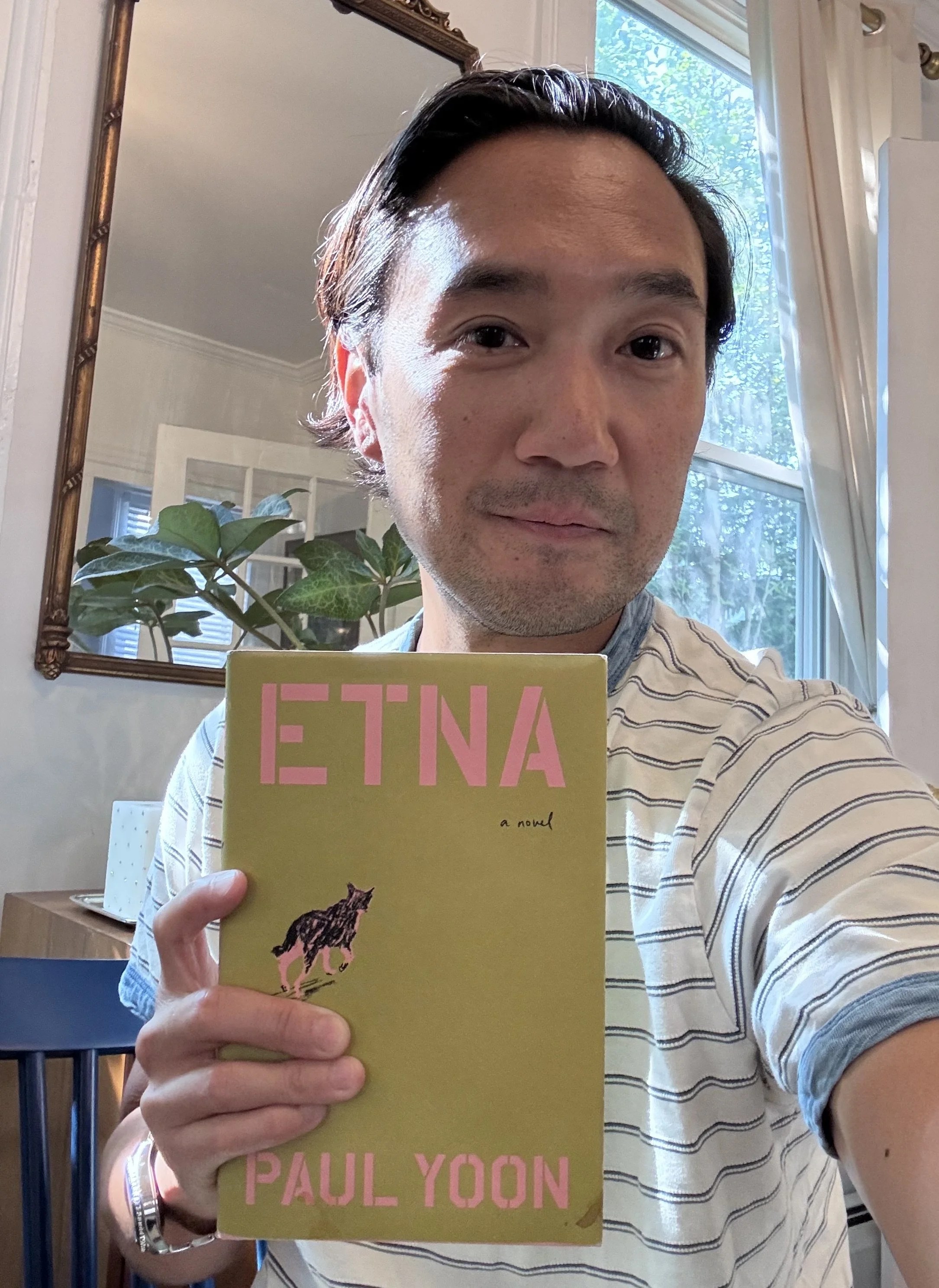
Today on The Stacks, we’re joined by award-winning author Paul Yoon to talk about his latest book, Etna. Told from the perspective of Etna, an ex-military dog, this book follows his long journey home after years spent fighting in a devastating war. We talk about why Paul wanted to write from a dog's point of view, how his love of reading led him to writing, and the movie he's shockingly never seen.
Our book club pick for August is Fish Tales by Nettie Jones. We will be discussing the book with Sequoia Holmes on Wednesday, August 26th.
LISTEN NOW
Apple Podcasts | Spotify | Google Podcasts | Overcast | Stitcher | Transcript
Everything we talk about on today’s episode can be found below in the show notes and on Bookshop.org and Amazon.
Etna by Paul Yoon
“9 books to read this summer” (Happy to Be Here)
Nerdette (podcast)
Happy to Be Here (Greta Johnsen)
The Odyssey by Homer, Translated by Emily Wilson
The Odyssey (Christopher Nolan, 2026)
“For Ukraine’s Animals, a Home Is Getting Harder to Find” (Patricia Cohen, The New York Times)
In the Skin of a Lion by Michael Ondaatje
The English Patient by Michael Ondaatje
King by John Berger
Homeward Bound (Duwayne Dunham, 1993)
Call of the Wild by Jack London
The Story of Ferdinand by Munro Leaf
Beethoven (Brian Levant, 1992)
Charlotte’s Web (Gary Winick, 2006)
The Hive and the Honey by Paul Yoon
The Disappearing Act by Maria Stepanova
One Boat by Jonathan Buckley
Small Boat by Vincent Delecroix
Air by Christian Kracht
In the Distance by Hernan Diaz
Everyone Knows Your Mother is a Witch by Rivka Galchen
Stag Dance by Torrey Peters
Charlotte’s Web by E. B. White
Open Throat by Henry Hoke
The One and Only Ivan by Katherine Applegate
The Unlikely Tale of Chase and Finnegan by Jasmine Warga
Stuart Little by E. B. White
The Trumpet of the Swan by E. B. White
To support The Stacks and find out more from this week’s sponsors, click here.
Connect with Paul: Website
Connect with The Stacks: Instagram | Threads | Shop | Patreon | Goodreads | Substack | Youtube | Subscribe
To contribute to The Stacks, join The Stacks Pack, and get exclusive perks, check out our Patreon page. If you prefer to support the show with a one-time contribution, go to paypal.me/thestackspod.
The Stacks participates in affiliate programs. We receive a small commission when products are purchased through links on this website.
TRANSCRIPT
*Due to the nature of podcast advertising, these timestamps are not 100% accurate and will vary.
Paul Yoon 0:00
When I was growing up, my first love in terms of art was painting, and something that I loved about painting, or like looking at something in a museum, is that there's a border there. You do what I mean? There's like literally like there's a canvas hanging in front of you that's limited, right? And yet within that kind of border, these artists were able to portray an insane amount of things, and I think I was inspired by that. I'm always thinking of my projects in terms of like kind of there's a frame, there's like a border, and so I'm trying to fill it as much as possible rather than think I'm gonna make the canvas bigger and bigger and bigger.
Traci Thomas 0:46
Welcome to the Stacks, a podcast about books and the people who read them. I'm your host Traci Thomas, and today we are joined by award-winning author Paul Yoon to talk about his latest book, Etna. This book is told from the perspective of an ex-military dog, Etna, who after spending years fighting in a devastating war, decides to embark on the long journey back to the home he was taken from when he was a young pup. In this episode, Paul and I talk about where he got the idea to write from the perspective of a dog, his interest in conflict journeys and home, and how his love of reading led him to becoming a writer. Our book club pick for August is Fish Tales by Nettie Jones. We will be discussing the book with Sequoia Holmes on Wednesday, august 26. Do you like podcasts and want even more bookish content? Well, hello! You are in luck. You can join our community, the Stacks Pack, on Patreon, and you can subscribe to my newsletter, Unstacked, on Substack. Each of these places offers different perks. Over on Patreon, you can be part of our community conversations on Discord, our virtual book club, join our year-long reading challenge on Substack. You'll find my hot takes on everything from literary gossip to the latest pop culture and sports news. In both places, you get a monthly bonus podcast episode. And by supporting the work on Patreon and Substack, you make it possible for me to make this podcast every single week and to make it free for all. So please consider joining the Stacks Pack at Patreon.com/slash The Stacks and subscribing to my newsletter Unstacked at Traci Thomas Substack.com. Okay, and now it's time for my conversation with Paul Yoon. Hi everybody! I am so excited today because I get to talk to an author of a book that has sort of become an inside joke for the Stacks community in a lot of ways, and Paul, I'll tell you why in a second. But the book is called Etna. The author is Paul Yoon, and if you listened to me talk with Greta and MJ earlier this year on Greta's podcast, she mentioned this book about a dog, narrated from the perspective of a dog, but it's about war, and that's how she sold me on it. She said, "Tracy, I don't know. It's about a dog, but it's also about war. And this book has become this great joke of do I love war more than I am ambivalent about animals and so Paul they got me to read it they got me to read the dog book I liked it so much I had to have you come on so welcome to the stacks
Paul Yoon 3:17
I'm so happy to be here that's like the greatest hook I love it. I love that. That's sort of how it got you. That's great.
Traci Thomas 3:25
Yes, it was. I don't know if you know Greta Johnson. She used to host the Nerdet podcast. Now she hosts her own show, and we did a preview of like summer books. And she kind of comes on the episode, and she's like, "Tracy, you probably are going to hate this, and she starts explaining the book because I'm really not a dog person, and we can talk about that later. She starts explaining the book, and then she's like, "But it's kind of bleak, and there's war. And I'm like, "Wait, Greta, if this was about a person, I probably would love it. And so it's become this thing of everyone's like, "Are you gonna read the dog book? And I read the dog book, so that's a not a great way to actually introduce the book. Why don't you be a professional author and tell people in about 30 seconds or so what Etna is actually about?
Paul Yoon 4:10
Sure, Edna is about an ex-military dog who, after a devastating war in a fictional country, decides that all he wants to do is go back home, or at least try to find his way back home. And it's essentially an odyssey of sorts, where it's his attempt to navigate this decimated countryside to get back to where he was born, and along the way meets a lot of humans and animals alike who are trying to rebuild after this catastrophic event?
Traci Thomas 4:45
It's I think like you mentioned, it's Odyssey like, and right now I feel like that is very SEO friendly. I'm wondering how much you were thinking about the Odyssey, if at all, before you kind of. This book into a summer that is essentially Odyssey only
Paul Yoon 5:05
For having our hot Odyssey summer. Yeah, yes. Obviously, Christopher Nolan and I had many discussions about you know we thought it would be best if he just sort of paved the way and that that Edna would come in to close the summer out. No, I mean, well, first of all, we we had no idea the movie was coming out, and so that was, you know, a bit surreal and and also lovely that people are using that word. I I completely, the Odyssey was certainly on my mind. A lot of books were on my mind, but I think on a kind of base level, The Odyssey for sure. In that, I think it was one of the first books that I read when I was younger that had a really profound impact on me. And in a lot of ways, journeys and conflicts and trying to find home have been sort of recurring themes in my work throughout my entire writing career, and so a lot of that has to do with being inspired by that story.
Traci Thomas 6:07
There's a lot of books about each of those three things, right? Like journey, conflict, and returning home. But what do you think it is about the coming together of those three things that interests you in your work?
Paul Yoon 6:19
I think that's a really great question. I don't think anyone's ever asked me that before.
Traci Thomas 6:24
In your face, other people. Yeah, totally.
Paul Yoon 6:26
No, that's a really beautiful question. I think that as sort of an artist, as a writer, it's I've never been interested in just like one thing, or at least I don't think I've been interested in one thing. And and part of it is that there are, say, three things I've been interested, which is you know creating home, finding home, starting over again, conflicts and journeys. A lot of that has to do with I think on a this is probably really boring, but you know when I was growing up, my family was really itinerant. We were moving around a lot, right? And so, I think I grew up in a kind of state of endless journeying, if that makes any sense. My family also has history with conflicts because them being Korean immigrants, you know, my father's family experienced the Korean War firsthand, and so that was that's sort of on my mind, but as we were constantly itinerant, I think I was thinking about what what is home, like what makes a home. If we're moving around a lot, where do I feel rooted? And ultimately, is that a place thing, or is that something else that I'm looking for? You know?
Traci Thomas 7:38
Yeah. Do you feel like you have an answer? Where's home? What is home?
Paul Yoon 7:42
Home is the family that I found, which you know who is my wife and and and my dog, my 12-year-old pup is going on 312, going on three. But I think it's also you know like home is like is them, but also we we found a place that we love. We're in the Hudson Valley, New York, and and we we have a great community here, and and and we sort of see a future here, and we and we have also been itinerant, and so it's really nice. We've been here for about three years now, and it's just really nice to feel rooted, or or it. I think it allows you to kind of like like be hopeful about the future and see a future, right? Where because you're you're building towards something, you know. Yeah,
Traci Thomas 8:29
yeah. And I think you know it's so interesting. I'm just thinking about the book, your book, and the Odyssey, and what you're saying, and how when you're kind of in the journey or amidst the conflict, or headed home-all of these three things, kind of together, the future feels very specific. Like Etna is going to the coast; that is the only future. Whereas once you get to a place that feels like safe enough, where you can sort of relax, you can envision this future, like what you're saying-that's much less specific and more sort of maybe hopeful or open or just like imaginative, and I think that's really interesting because I think a lot of people. I mean, if you would ask me 30 minutes ago, I would have said when you're in the middle of doing something like returning home, the future feels very concrete, and like when you have nothing that you're working towards, it feels very abstract. So I don't know. I love this.
Paul Yoon 9:25
Yeah, no, I think that's really beautifully put. But even Etna, you know, I think part of working on this book was I had this like you were saying, Traci, like a very tangible goal for this character, this dog, which is I need to get home. I just want to go home. It's repeated like a mantra in the book, like "Where's the coast? I need to get to the coast. And along the way, you have this character who's been essentially cored out because of everything that's happened. And and as he slowly gets healthier, stronger on his journey, as he meets fellow being. Animals, humans. As he slowly begins to build himself back up again, I think the idea of home slightly evolves too, where it's no longer just about the place. Because I think deep down he knows, as you know, like the a war has happened. Like there may not be like an actual like physical like place that exists anymore because of that, right? And so, this kind of idea of like what is home, you know, and kind of, I think as his journey progresses, that evolves slightly and changes.
Traci Thomas 10:32
We have to talk about the dog of it all. Yeah, obviously.
Paul Yoon 10:35
Yeah, sure.
Traci Thomas 10:36
I am so curious. How did the dog's point of view being your main point of view in the book come about. Did you know you wanted to tell a story from a dog's point of view, or did you kind of come to this war story and think I can't just do it like with people? Like, how could I kind of like? How does this come to you?
Paul Yoon 10:58
I wasn't thinking of a war story at all. I was actually literally so to backtrack. It probably just sounds so cheesy, but when I'm writing, I'm writing on the couch, and and my dog for the past 12 years because you know I I've had him for 12 years. He just likes to like be on me, like when I'm writing, like a lot of him on me, and so I've tried to. I've had to like learn how to figure out like how to light with a laptop with a dog on me, you know. And I'm sure it's like altered like my skeletal, like sure. You know, you need to get like different massages or something. The acupuncture pain all the time. But you know, as he gets older, I've been thinking about, like, what is life going to be like after he's gone, you know? And and and and part of that was sort of imagining, like, his voice and kind of imagined conversations that we're having. And so, the project started because I was kind of just sort of playing around with voice and just being like, oh, I think this is what Oscar, my dog, would sound like, and just kind of played around with some sentences. So you know, the opening, I was born near water, I was born on a farm, etc. I was just sort of imagining if he was like, Dad, I'm going to tell you my life story, you know, like, and and it's so it became kind of like me just kind of creating something voice-driven, and also in a way because we we don't actually know where he came from. Kind of imagining like where he came from, and then I think just being the writer that I am, with the you know preoccupations I have and the things that I've been kind of like wrestling with for like two decades now, it just kind of like it just kind of you know blended together. Part of it was that. Part of it was I. I just remember like early on during the war in Ukraine, there was this article. I can't remember what it was. I'm sorry, I don't know who the author. I just don't remember who the author is. But it was in the times, and this group of people had decided to like go back into the war zones, like, and had in these places that had just been decimated. But these civilians had to leave all their animals behind, and so this group decided to like try to rescue as many of the surviving animals as possible and bring them into safe zones or across into safe zones. And I just remember reading that, and I think just something inside me broke. You know, like I was just, I was just a puddle. You know, and and I think I I 100% believe that part of that kind of reaction, that really strong emotional reaction, propelled a kind of story, like an imagined story too.
Traci Thomas 13:40
So interesting. I'm gonna look for that article and if we can find it, we'll link to it in the show notes.
Paul Yoon 13:45
Okay, cool, cool.
Traci Thomas 13:46
I personally am a big reader of war things. I I like I like love war and like a very it's very weird, but I I like anyways, and I have never once considered the animals, so this was sort of like a like, oh yeah, there's animals in war. But the other thing that it made me think so much about is like innocence and participation in war, because I think most people would probably agree that a dog is an innocent party to a war. However, this dog, you know, behaves in this in the face of war in sort of brutal and violent ways. And so, I'm wondering what what you were grappling with, balancing sort of the innocence of a dog and also the realities of war.
Paul Yoon 14:41
Yeah, 100% I think it was. It's exactly that. I think what was sort of interesting to me was you have these innocent beings who are sort of taken and turned into soldiers, and to me, like my gut is like that's horrible. It's just absolutely horrible. It should never happen. And. Yet, like as there's also a part of me that also finds like these dogs who will bond with their people in these extreme times and work together and die for each other, protect each other. That's also something that feels very powerful to me and potent. And I think part of the book was, I am gonna do my darndest to not judge anything. If that makes any sense, like war happens in life, so war is happening in this book. Dogs are soldiers in life, and therefore there's gonna be dogs who are soldiers in the book. The tricky thing, I think, for me was just like I'm just going to kind of lay it out as objectively as possible with a kind of distance, and maybe through that, like the reader can kind of build their own sort of emotional experience through that, right?
Traci Thomas 15:56
Yeah, I mean, I guess that's sort of a question of with the dog as your narrator, how much when you were writing were you having to stop and be like, "That's a human way of seeing things, or like how how were you sort of checking your own Paul brain and thinking like, "What would Oscar do or Etna?
Paul Yoon 16:14
Obviously, yeah, yeah. I think there are several ways to answer that. I think one way is that I was very much aware, like at every turn and every sentence, that I wanted the reader to experience like dog, and so therefore there are a lot of doggy things. Like for the dog people who read this, there are like a lot of doggy moments in this, and and they'll know. And yet, I think for me the tricky thing or the balance was I also wanted times where it was not dog, in that I needed to create a bridge for the human reader to kind of experience this narrative and this story and the world that they've entered, and a lot of times know about the world that they've entered in ways that a dog may not know, right? And so, I think that was the hardest. That was the challenge for me: was how do you balance that dog and not dog, right? To create this narrative where there are times where it sort of feels like it's more than dog. You know, I don't. My hope is it doesn't feel like human, but it just feels like more than dog, you know. Yeah. There are times when I think, and it like I just remember like there are times where I think I got carried away with the dogginess of it too much, you know, where where like there's a scene of levity where you know Etna kind of in the middle of the book like plays tug of war with another dog, you know, and that was important for me to include briefly to kind of remind the readers that even though no matter what he's gone through, there's still a little bit of like play in him.
Traci Thomas 17:52
Yeah,
Paul Yoon 17:53
but I also like I remember drafting it. Um, it went on for like you know pages and pages, and I was like, I don't need to like have pages and pages of of playing tug of war.
Traci Thomas 18:05
Well, I mean, the book's also super short, so that would be like really. There's like not pages and pages of anything in the book.
Paul Yoon 18:11
Exactly.
Traci Thomas 18:13
We've arrived. It's like that's like your Circe moment. It's like a year of tug of war in the middle of the Odyssey. But did you did how how did you do it so short? I mean, I think that's really impressive. This book like does a lot, and it's really tiny.
Paul Yoon 18:33
I've always been interested in like how to be a maximalist in the most minimalist way possible.
Traci Thomas 18:39
Okay, say more.
Paul Yoon 18:41
You know, I'm. I'm half of my books are short stories, right? And and so half of my time is spent writing short stories. But I still, in my mind, I want my short stories to pack as much of a novelistic punch as as my longer work, right?
Traci Thomas 18:59
Wait, can I ask a clarifying question? When you say you want to be as maximalist, like in your minimalist writing, If the constraint, if the minimal constraint is the amount of words or pages, what are you trying to be maximalist with?
Paul Yoon 19:14
Emotion, distance traveled, temporal, you know, distance, everything, just like to to sort of feel like the reader has gone through a life, and and but within like under like you know 20 pages or something like that, right?
Traci Thomas 19:35
And are you really thinking about those things like on a craft level? Are you like, okay, I really want to like tamp down the length and like punch up the emotion, or is it something that that's just sort of how how you write?
Paul Yoon 19:50
I think it's both. I think just my natural tendency is to sort of write a bit more like short than than other writers, but no. I'm very much aware of it. I'm very much conscious of it. I think I don't know if this is the best answer, but when I was growing up, my first love in terms of art was painting, like was the visual arts. Not that I was I wasn't a painter. I just mean like on a kind of like a fan, right? Yeah. And something that I loved about painting, or like looking at something in a museum, is that there's a border there. Like, like it's just a like you do what I mean. There's like literally like there's a canvas hanging in front of you that's limited, right? And yet, within that kind of border, these artists were able to At times, portray an insane amount of things and convey a lot of emotion and a lot of history, et cetera, et cetera, et cetera. And I think I was like early on in my life. I think I was just kind of inspired by that and and formed by that. And so I'm always thinking of my projects in terms of like kind of there's a frame there's like a border there's like a canvas right and and so I'm trying to fill it as much as possible rather than think I'm gonna make the canvas bigger and bigger and bigger like there's just like a fixed canvas and I'm my job is to like fill it in as much as possible you know
Traci Thomas 21:19
okay so then this brings me to one of my favorite things to talk about, which is audience. How much are you thinking about audience as you're filling your frame, if you will?
Paul Yoon 21:27
I don't think I. I think I'm thinking less about audience. I'm thinking more about like the books that I love and the books that inspired me. And partly, I think it's because, like, I started writing because I fell in love with books, and so writing became sort of a response. I mean, like love. Like, if when you're in love, you want to respond to love, right? And so, I fell in love with books, fell in love with some contemporary fiction, and I wanted to respond to it, and so I started writing, and to this day, like that hasn't changed, you know. And I really mean this. Like, I'm every time I finish a book, I'm sort of like, do I have another book in me? I have no idea, you know. And I'm actually, don't tell anyone, but because no one's listening. But like, I'm, I'm totally okay with that. Like, if I don't have another book in me, I'm totally okay with that. I think for me, what I couldn't live without is if I wasn't able to read, right? Like reader first and foremost, like fan of of other people's books first and foremost, because I'm always sort of looking for that inspiration, that fire, and that, and it's it's continuously being lit, and and that's how I write. And so when I'm working on a project, I'm thinking of books I love. Yeah.
Traci Thomas 22:48
Okay, I want to ask you about the books you love, but I also want to just slightly push back on you. Is like maybe you don't think you're thinking about audience, but everything I've heard you say so far very clearly is you thinking about audience to me, like when you say that you want to pack this big emotional punch. Well, obviously it's emotional punch to your audience.
Paul Yoon 23:08
Yeah, yeah, right.
Traci Thomas 23:09
And like when you talk about like even like you said, like the dog parents, like dog dog people, they'll get it. Like you are sort of maybe it's something that's like more inherent in the way that you write, but like the reason I asked is because I was like, this is a person who's like interested in audience, so I think it's interesting because you definitely are, and I felt, I mean, as a reader, I could feel you in some ways. I think in the book, like trying to do things to and with the reader, like I was like, oh, this is like such an interesting feeling. So I don't, I'm not not real pushback. It's just offering. Perhaps you are thinking about audience.
Paul Yoon 23:44
Perhaps I am. No, and maybe it's like I'm just sort of not really conscious or aware of it when I'm drafting.
Traci Thomas 23:51
Yeah, and I think also like for authors, there's a weird thing about audience that I think, like in the like what I've learned from doing the show in the literary space is it's almost sometimes people like well I don't think about audience because like I want and it's almost like there's like a negative thing sometimes with authors so maybe that's also why sometimes when I ask about audience people are like well I don't think about that because it's like it makes it sound like maybe you're writing towards something like you know I don't know
Paul Yoon 24:19
yeah yeah no I think that makes sense. Yeah, absolutely.
Traci Thomas 24:21
But what I wanted to follow up about is what are some of those earliest books that you remember that you just like loved and made you feel like I have to write?
Paul Yoon 24:30
Oh God, so many. I remember reading like Michael Andachi for the first time. You know, his early books like In the Skin of a Lion, The English Patient, and just sort of being so blown away by how he like builds stories. I don't know if you've read Michael and Doctor Traci, but it's sort of he was like that one of the first authors where like everything felt like non linear. I don't know if that makes any sense. Like when you're when you open a book, you know. That kind of traditional, like, oh, we're starting here and then we're here, like rather than that kind of experience, it was this almost like you were experiencing a kind of like collage where everything just kind of like collapses into one thing, and so I think he's been like a tremendous kind of like just person that I absolutely love, or whose work I absolutely love. So Michael Andachi, John Berger, who was an art critic but also a fiction writer. His novel King inspired this one. I was going to ask you about that. That was in the yeah. That's also yeah yeah yeah. So that's also I remember when it was written. I'm blanking on maybe the '80s or the '90s, but you know that was sort of that was a that was a book that was written in the perspective of a dog that was navigating this this unhome community in like a fictional. I think it's a French city for 24 hours, and it just kind of blew my mind away, so I'll at least remember that too. Yeah,
Traci Thomas 26:04
you can tell me to get lost, but how much was the film Homeward Bound in your mind as you were writing this book?
Paul Yoon 26:12
Okay, no one's gonna believe me, but you've never seen it. I've never seen Homeward Bound.
Traci Thomas 26:17
Oh my God, Paul! As soon as we hang up, that's like that's like the greatest piece of dog artwork I've ever experienced in my lifetime. I know love all around.
Paul Yoon 26:31
I I feel like there's me a lot of reactions to that.
Traci Thomas 26:33
Yeah, I mean that's scandalous to be honest. Like you needed to do your research, okay? You needed to respect your elders and the work that came before you,
Paul Yoon 26:43
I I think for me, like I've been thinking about kind of like the the the books and the films that sort of like were like close to me when I was writing this, and like I think books obviously Jack London, you know, Call the Wild, you know, even like Ferdinand the Bull, the char story, but I like one of my favorite, right? Um, in terms of movies, I mean, this is gonna sound so silly, but like, like I can't stop thinking about Beethoven because he's like one of the best, you know, great dog. And so, so he's you know he's up there, he's up there for me. Beethoven is up there for me. But no, I've never seen Homeward Bound.
Traci Thomas 27:20
You you have to see it.
Paul Yoon 27:22
I will. I will.
Traci Thomas 27:22
You can't do like a full book tour about this book in every city. Someone asks you about Homeward Bound, and you're like, I've never seen it. They're gonna be like, Paul, why not? Like, aren't you gonna fly somewhere? Like, it's it is so good. There's also a great cat in it. I don't know if people have told you, but there's a great cat in it because it's two dogs and a cat. It's great. It's great.
Paul Yoon 27:42
Okay, great, great, great. Yeah, yeah. No, I've seen like I've seen everything. I've seen Charlotte's Web. Like I've seen y'all, but I haven't seen Homeward Bound. Yeah, you can do it. And now, okay, now you outed me, and so now I have to watch it.
Traci Thomas 27:54
And now I'm gonna tell all my listeners like we need to continue to check in on Paul and make sure he's okay until until he sees the movie, I can't believe this. I'm so thrown. Actually, let's take a break since I'm already like off my off of it because of this this controversial answer, and then we'll come back and we'll talk more about the book. Okay, we are back. I want to ask you something that I was thinking a lot about when I was reading the book, which is I think sometimes when like really bad things happen to people over there somewhere else, not wherever you live, it's it can be sometimes hard to connect with the like humanity of people, especially I think you know we see this a lot in the United States when it comes to like black and brown children, or or you know trans people or people from marginalized backgrounds who experience sort of violence, maybe not even a war. And the thing I kept thinking about in this book was how I just know there are so many people who will relate to war differently because this book is centered around a dog, and that they're able to find compassion for a dog in a way that they can't always find compassion for actual humans, and so I'm wondering if that was something you were thinking about at all in writing this, or or since writing it
Paul Yoon 29:24
I think no. Again, I think that's a really beautiful question. I think for me, the the first domino and to enter this, like deciding to enter this, what I would call this very scary, terrifying, batshit experience of like writing, deciding to write from a non-human was, I just remember like the past few years, I would wake up and and the newsfeed is just filled with like heartbreak after heartbreak, and also this kind of you know as John Stewart would say, you know like how is this happening? How is this happening? You know, and this, and I think like I I think. The stacking of that, right? I think it led to a kind of human fatigue. I don't know if that's the right. I don't know if that makes any sense. But like, I think I I felt like sort of exhausted by it, right? And I think what you're also part of like hinting at is I think through that exhaustion, I kind of became sort of numbed by it too, right? Where there was just so you know it was just so much that I wasn't entirely sure what to like like hold on to and and what was kind of like there and so I thought it might be interesting if I created this story or a project where we as humans we are and then for the you know it's beautiful that we are center stage, right? We are the center of the stage, but what if I just pushed us aside, just and focused on something else? Like, what would that do? Like, what would that would that change anything, right? And and so, I decided to push humans aside and have a different kind of narrator or a different kind of lens through to see the world through, and I think in this weird way by not actually focusing on the humans, I thought deeply about us and and about kind of where we are in this world, there are cycles of sort of violence and hate and all of that, and it was this kind of sort of unexpected thing where I actually sort of was like, I I'm going to push all that aside and focus on this one thing. But then the the more I pushed it aside, the more I just I was sort of thinking deeply about it.
Traci Thomas 31:40
Yeah, I mean that that is sort of how I felt in reading the book. Like the more that I was with the dog, the more that I was thinking sort of about like the humanity of the people in a lot of ways.
Paul Yoon 31:52
Yeah, yeah, and I think it was important for me where like as he's navigating this really treacherous world with a lot of bad people and bad animals in it. The I really want to focus on like the good people. So in a lot, there are a lot of people that he encounters who are actually very, very good, who are really, really trying to help the country and do good and rebuild. And and it felt important for me to to kind of include that and have that be a part of the story too.
Traci Thomas 32:27
You don't have to tell us, but do you have a specific country in which this book was set, like where the war was?
Paul Yoon 32:35
Yeah, I mean, a lot of it is sort of the Korean Peninsula, just because my parents are from Korea, they were born there. My father's side was, you know, deeply affected by the war there, and so I was thinking a little bit about that. But we're in a time that's slightly kind of you cannot call it kind of an alternate present or like slightly futuristic. There's there's some like technological elements in the book that don't technically exist like in our reality. Do you know what I mean? And so so so I think part of it was it was fun to kind of have be completely imaginary too. Yeah.
Traci Thomas 33:18
Right. And some places are named. Like the United States is named
Paul Yoon 33:23
The United States is named some European countries are named Greece is named but again like I I wrote it during you know on the onset of of Ukraine and so like I was for sure thinking about Ukraine too right and so so it's like this weird mishmash, but I think that's why it felt important to just kind of open it up into an unnamed fictional place, you know?
Traci Thomas 33:47
Yeah, I think I think that's right. I think that was the right choice because then all of a sudden it becomes about like accuracy when that's like you know if you start naming places and be like this is where we are, it's like oh well you couldn't have walked that far. Like it's like okay, exactly. Thanks, MapQuest. Right, right, right, right.
Paul Yoon 34:03
It's like there are no train lines there. Yeah, how dare he jumps on a train? You know,
Traci Thomas 34:09
totally,
Paul Yoon 34:10
totally, totally.
Traci Thomas 34:11
What I mean, I think the other thing that sort of was surprising for me reading this book is again, I told you, you know, my friend Greta was like, it's about a dog, a war dog, and war and dogs, and I was like, "Oh, okay. But a lot of this book, and I guess I should have put that together when she said, "Going home after the war, is about after the war. It's not a lot of actual wartime stuff. There's some sort of like, I mean, it all takes place after the war, but there's some like flashbacks to during and like the like Etna's training and stuff, but what what was the aftermath of war that was interesting to you?
Paul Yoon 34:50
I think for me, that's it was sort of you know what happens after a conflict. I was I think I was more interested in that and and kind of. You know when quote unquote peace is declared and there's quote unquote no more fighting, what happens and is all of that still true, right? And and that felt like a very interesting space where Edna is trying to rebuild himself, the country is trying to rebuild, humans are trying to rebuild their lives, and not everything is going according to plan at times. And so, they survived a war only for these smaller wars and battles to continue, both figuratively and literally. And and that felt like a very interesting and potent space to be in through through through the story.
Traci Thomas 35:46
I have to ask you about the cover and the title. Sure. Yeah. And I guess in that in the title also just how you name your characters, since Etna is the name of a character, so the title feels sort of obvious. I guess it's it's a it's a it's a good option for a title. I feel like it's not you know you didn't have to go too far for it. But did you have other working titles before?
Paul Yoon 36:08
No, this was the only title. I think I first. This is one of those ineffable. I don't even know how to explain this. I just love the word. I just I thought ever since I kind of I was in Sicily one summer and and and was sort of was aware of Mount Etna and I think I just like the word just kind of haunted me, but also, and then I started thinking about kind of like the long history of volcanoes, you know, and and and you know whether they're dormant, active, all that stuff, and sort of in a lot of ways, sort of the way they exist even before time, and and I knew I wanted to kind of instill that sense of long history in this book, and the sense of things sort of existing long before other things and other beings possibly existed, and so that sort of became the seed. And then, then I started thinking, oh, how interesting! It would be really interesting if all the dogs in this book were named after volcanoes. And so, all the dogs that are named by the specific character who recruits the who recruits the dogs for work-they're all named after volcanoes. So you have Fuji, you have Etna, and you have Samuru later on, which is a volcano in Indonesia.
Traci Thomas 37:31
So, what about the cover? Did you have any say in it? Were you involved at all?
Paul Yoon 37:38
My involvement was I adore and revere and worship the designer. His name is Oliver Monday, and he's he worked on my previous book, The Hive and the Honey. And I've been a fan of his for a long, long time. I think he's one of our great designers, and so I pleaded with my team to ask him to design the book. You know this one when we were thinking about what to do, and he he sent us this, and and they literally the I just I think we all just gasped. We were we were just yeah we were just we were speechless, and I think very haunted by it. You know, where you have this, like physically, this sort of like dog kind of walking into this kind of unknown space, and and there's like a lot of emotion attached to that, right? So there's that, the unexpected combination of colors, where you have an almost sort of militaristic green, almost right, and yet there's this surprise pink, which felt very bright and hopeful in a lot of ways. And yeah, there was just a lot there that I think spoke to the book. So Oliver, you know, hit it out of the park from from draft one,
Traci Thomas 39:02
yeah. You talked a little bit before about how you write on the couch with your dog, and something that I always ask writers is how do you write? So what I want to know besides where you're writing, which is on the couch with your dog, are there snacks and beverages? What time of day? How often? Are there rituals that go around your writing? Anything like that?
Paul Yoon 39:26
Oh yeah, 100% If I'm writing, I don't write every day. Yeah, but no, I have weird rituals. For sure, I have to always go for a morning run.
Traci Thomas 39:35
Okay, how long?
Paul Yoon 39:37
Like a late morning run.
Traci Thomas 39:38
Are you running like 10 miles?
Paul Yoon 39:40
Like 10 mile, a 10 miler.
Traci Thomas 39:41
Yeah. Are you very fast?
Paul Yoon 39:44
I'm faster than I was. Yeah. I I don't actually keep track of my times.
Traci Thomas 39:49
Well, 10 miles if you are slow is like a long time. Do you know what I mean? Like like you know. So I'm just wondering, like, how long are you out there on the road?
Paul Yoon 39:59
I know. I'm not keeping track, but it's not like it's not like an epically a long time.
Traci Thomas 40:03
But it's not like two hours or three hours.
Paul Yoon 40:06
No, no, no, no, nothing like that. Oh, I wish I had that much time. That's what I'm saying.
Traci Thomas 40:10
I'm like 10 miles is a lot.
Paul Yoon 40:11
I but it's the running thing is weird. It it's almost like a kind of it prepares me to write. Like it, it kind of empties my mind, and and and I like sort of start thinking about like what I'm going to work on. And again, this is not every day. This is only when I'm working on a project and I'm keeping it. So I do my run, and then you know, you shower, eat something, and then I need to make an espresso, and and that's sort of my thing. Is I have to have Nespresso and I have to light like an incense stick.
Traci Thomas 40:45
Okay, is it a specific scent?
Paul Yoon 40:48
No, no, I'm not like too too kind of like picky about that stuff. But there's those two things are very important to my ritual, which is some kind of incense stick that isn't too like powerful, like overbearing, just something I don't know, like calming and lovely, like lavender or something, and then and an espresso, and then and then it's couch and dog time for like I don't know, like I can't go more than four hours, so I would say like two to four hours depending on Oscar's mood.
Traci Thomas 41:21
Okay, I love this. And how did you know you wanted to be a writer? I know you talked about wanting to write back to the books you love, but at what point were you like, this is like something that I could do for real?
Paul Yoon 41:36
Yeah, I I think I fell in love with writing. I would say maybe senior year of high school, early in college. I I remember like looking. I'm just looking back on those years, and I was so young. I think it was less a question of like this is something I can do. It was more I don't want to do anything else, and I can't imagine doing anything else. You know? Do you know what I mean? Like there wasn't that kind of like I don't think I was mature enough to be like I can actually do this. It was more like this is all I want to do. You know, like and I meaning like I just want to spend the days doing this. And so there was that for a while, And then, I think I had been doing it long enough. Eventually, where, like you know, a few years later, I think I was like, "Oh, I think I I want to kind of like try to do this professionally, you know. And and and so it sort of, I think it gradually kind of evolved from you know that kind of compulsion and not knowing what else to do because I can't imagine not doing anything else too, or kind of like oh I think I can kind of do this in a professional way.
Traci Thomas 42:50
Are there words you can never spell correctly on the first try?
Paul Yoon 42:53
I don't. I can't think of one right now. There are tons, but my brain is totally blanking.
Traci Thomas 43:00
Oh, okay. I was gonna say, were you a good? No, no, no. Some people are like, "Oh, I can't think of any. I'm just like a good speller, and I'm like, "You, why? No, I think like, oh,
Paul Yoon 43:08
I'm thinking of like, I think I always misspell parallel.
Traci Thomas 43:11
Oh my gosh, impossible word. There's so many ways you could spell it incorrectly.
Paul Yoon 43:19
I think that definitely that's sort of. I'm actually like sort of seeing it like in my mind right now, and I'm like, I'm seeing it incorrectly in my mind. Yeah, totally like misspelling it in my mind.
Traci Thomas 43:32
Um, I normally I don't ask people about this, but since you brought it up earlier, I have to know what are some of the like really good books that you've been reading recently that have got you excited to to write back or like think about?
Paul Yoon 43:44
Oh, that's a great question. I just I just finished the disappearing act by Maria Stepanova. It's a short novel that's about a character who's only known as M, who is going somewhere on a train, Gets off, realizes she missed the connection, and then decides to never go to her destination, and kind of basically starts a new life. I just thought it was unbelievable and really haunting, and so I love that. I love I love this book called One Boat by Jonathan.
Traci Thomas 44:23
Oh yeah, wait. Oh, that's a different One Boat.
Paul Yoon 44:27
Oh, is there another One Boat?
Traci Thomas 44:28
This other One Boat book was in translation earlier this year.
Paul Yoon 44:33
Are you talking about Small Boat?
Traci Thomas 44:35
Oh, you're right. I'm talking about Small Boat. You're right. You're right. You're right. I was like, Is there really another One Boat?
Paul Yoon 44:40
That was also good. Small boat. That was also good. Yeah, yeah, yeah.
Traci Thomas 44:44
Okay, but tell me about One Boat.
Paul Yoon 44:46
One Boat is about a narrator who travels to to an island in Greece, but twice, both after sort of certain traumas in her life, and it does this incredible. Where there's basically two timelines, like there's a past visit and a current visit to this island, and those two like timelines just sort of like the way the writer was able to juggle those two, I just thought was unbelievable, and again, like very just sort of haunting and and and beautiful. So I love that book. I don't actually know how to pronounce his name, but I'm going to guess that Christian Procht wrote a novel called Air that just came out this week, and I just started it, and I'm really loving it.
Traci Thomas 45:31
So yeah, and you read a ton it sounds like
Paul Yoon 45:34
I read a ton during the summer. So during the during the other seasons during the school year, I teach, and so it's hard to, if the right word is reverifying it.
Traci Thomas 45:47
Yeah. What do you? What texts do you teach?
Paul Yoon 45:51
I teach a lot of short stories, contemporary short fiction. But I'm also doing like this semester or this year. I'm teaching Hernan Diaz's in the distance.
Traci Thomas 46:03
Okay,
Paul Yoon 46:04
Rifka Galchins. Everyone knows your mother is a witch. Tori Peters is a stag dance.
Traci Thomas 46:09
Right. Those are short stories, right?
Paul Yoon 46:12
No, those are long. Those are those are novels. The stag dance is actually a novella, so that's pretty short.
Traci Thomas 46:18
Right.
Paul Yoon 46:19
And that's what I meant. Stag Dance was short stories
Traci Thomas 46:22
Yeah, yeah. The other two. Sorry. Yeah, exactly.
Paul Yoon 46:25
Yeah, yeah, yeah, 100% And Kazuo Shigiru, who I love. So yeah,
Traci Thomas 46:29
cool. Okay, I'm wondering. This book has been out as we're recording for almost a week. Is there anyone like really cool or exciting to you that has expressed interest in the book, or reached out to you about the book.
Paul Yoon 46:43
I heard that the the New York Times writer Frank Rooney really liked the book, and so that that was kind of amazing to me. I was very touched by that. So that's that that literally just happened a few days ago. So so so so Frank is on my mind, and I'm sending a huge gratitude to him.
Traci Thomas 47:03
I love that, and I know you sort of mentioned some of the texts that are in conversation with this book. You mentioned King. We talked about the Odyssey. Are there any other books you can think of that are in conversation with Etna for people who read this book and sort of love it? Things like you'd recommend.
Paul Yoon 47:20
I mean, again, like I, I can't not think about Call the Wild, you know. I can't not think about Fernand the Bull, and I mean that in all sincerity, you know. I think it's one of the great sort of anti-war books, you know.
Traci Thomas 47:33
Yeah,
Paul Yoon 47:33
yeah. I mean, I think like all the kind of when I think about sort of like the trajectory of like experiencing books as a child to now, and and knowing that that whole history, there are books that sort of have inspired me to write this one. I think that's a very cool thing. You know,
Traci Thomas 47:51
it's so interesting. I've got young kids or six, and we've read a handful of books this year that are animal protagonists. And I was thinking, actually, reading your book about how many books for kids have animal protagonists and animal points of view, and they're all first person animal, or if not very close, you know, like Charlotte's Web. It's not first person, but we're we're with Wilbur, like we are in his world.
Paul Yoon 48:18
Yeah,
Traci Thomas 48:19
it's so interesting that there aren't more for adults. Like, when does that change happen? That we don't like. It's like because we can totally be in on it as kids, and then as adults, it's just like there's just a handful.
Paul Yoon 48:33
Do you think it has to do with um? Do you think it has to do with what you brought up earlier? This kind of idea of innocence, you know, where you know as we get older, maybe we lose a bit of that innocence, you know, and so it's kind of like how do we get back to that point, right, or that get back to that moment, yeah. So it could be that I don't know. I think it's a great question. Yeah, I think did you read Open Throat by Henry Hoke? That came out of.
Traci Thomas 49:02
I did not read that, but that's set in LA and it's on my list because I live in LA.
Paul Yoon 49:06
Oh yeah, yeah. That's like again, I mountain lion, not a dog, but that book.
Traci Thomas 49:12
I heard that book was great.
Paul Yoon 49:13
I think that book is tremendous, and and and so and I think in terms of the recent sort of what I don't know what you want to call it, like animal fiction, like it's one of the it's one of the best that I've read,
Traci Thomas 49:26
Yeah, I mean I know there are some, but I just was thinking like the books I because I'm reading out loud to my kids. They're not old, they're not readers enough to read like chapter books, but I've been reading out loud, and there's like the one and only Ivan, and that's about, and then there's like the Chason Finnegan book and Charlotte's Web, and then E.B. White also does Stuart Little. He also does that stupid goose book that I hated. I can't remember what it's called, but he's got a book about a goose or something that can't honk, and I hated it. And apparently, people love this book, so I like was like, let's read it, and I was like, this is bad. Anyways, but. I just I feel like since April I've read so many books from animal points of view, but they're all I mean obviously all the picture books like for an animal there's so many picture books, and I think it's interesting that as we get older we're like no can't do it and I mean I'm one of those people it was definitely like they were like just try the dog book I was like I don't know you guys I don't know if I could do the dog book. Like, I got a brand to protect. I'm I'm a non dog person, but I did it. I'm so proud of myself. Old dog, new tricks.
Paul Yoon 50:31
Wait, but no I want to know. Am I allowed to ask this? Like, has it changed your sort of view on? Like, do you still consider yourself like not a dog person, or do you know what it is?
Traci Thomas 50:42
I'm going to tell you this, Paul. I am not not a dog person. Like I don't like dogs. I'm not a dog person in like I think that dogs are animals and they should be treated with the respect that I would treat like a lion, which is wow, cool looking animal over there. Do you know what I mean? Like so, and I do feel like your book actually falls in line with my worldview. Like Etna can snap, you know. Etna has the ability to be a real dog, but I just am like I. I'm a very respectful person. Like if I come to your home and you have a dog, I do the hand, I do the sniff, and then I'm like, great. If the dog sits next to me, like I might even like pat it a little bit, but I'm not like on my hands and knees. I don't want to be licked. I don't like. I'm just like I feel a little anxious about dogs, and I feel this way about cats too. I'm just not. I'm not a pet person, and it helps that I have a pretty good pet a pet like allergy allergy. You know, so it's like I'm also just like I don't like your lab is like it's gonna give me I'm gonna have itchy skin.
Paul Yoon 51:45
Oh yeah, 100%
Traci Thomas 51:46
But I'm not like anti animal. It's not like I'm like you dogs. I'm just like dogs are dogs, and that's so great for them. Yeah, and they don't take up a lot of space like in my in my thinking, except for when I'm reading a book about dogs. So like I enjoyed being with the dog, and also I didn't have to be physically with a dog. Like, I could enjoy the majestic wonder of this animal in the world, and I do also really like animals moving free from humans. Like, I that is interesting to me, whereas pets are less interesting to me.
Paul Yoon 52:21
Yeah, and I think what you're hitting upon is something that I was thinking about when I was working on this book, which is like a sense of mystery. Yeah, like I was creating this character, but I also wanted this character kind of to contain this mystery where we, as like readers, as human readers, like we don't always have full access to like what's going on in his mind, his motivations, all that stuff, right? And that that I think that was that was an intentional thing on my part where I wanted to create a character that was also mysterious because I do think no matter how much I feel bonded to my dog, he is every day a mystery to me. Do you know what I mean? And so like that's like I think you like I think I think it's right on what you're saying you know yeah
Traci Thomas 53:06
thank you I'm glad we can be friends you a dog person me a non dog person coming together 100 no conflict here my last question for you is if you could have one person dead or alive read this book who would you want it to be?
Paul Yoon 53:22
I mean, because it was inspired by King. I think John Berger, who is no longer living. I mean, I think it would be really lovely wherever he is if you know he snuck in ghost form and opened the book, and you know he doesn't have to tell me what he thinks about it. But I like the idea of ghost John Berger reading the book at night sometime,
Traci Thomas 53:42
I love that so much. Everyone at home, you can get your copy of Etna wherever you get your books. Like I mentioned before, it is a slim little novel. It's this is one you want to just like take it with you on an afternoon or a plane ride. You could knock it out. It's just like a nice, intense one sitting read. If if you have the time, though, I actually read it over a few days. But if you had the time, I think that would be the ideal way to do it. But Paul, thank you so much for being here. This was fantastic.
Paul Yoon 54:15
I was so happy to be here, Traci. Thanks for your time and thanks for all that you do for the readers out there. We really appreciate it.
Traci Thomas 54:23
Oh, thank you, and everyone else. We will see you in the stacks. All right, y'all. That does it for us today. Thank you so much for listening, and thank you again to Paul Yoon for joining the show. And I'd also like to say a thank you to John Mark Bowling for helping to make this episode possible. Our book club pick for August is Fish Tales by Nettie Jones. We will be discussing the book with Sequoia Holmes on Wednesday, august 26. If you love the stacks and you want more of what we're doing here-perks, bonus episodes, all of that good stuff-head to Patreon.com/thestax to join. The Stacks Pack, and check out my newsletter at Traci Thomas. Substack. Com. Make sure you are subscribed to the Stacks wherever you are listening to your podcast right now. And if you're listening through Apple Podcasts or Spotify, please, please, I'm asking so nice. Take a moment and leave us a rating and a review. For more from the Stacks, you can follow us on social media. We are at the Stacks Pod on Instagram, Threads, and YouTube, and you can check out our website@thestaxpodcast.com. This episode of the Stacks was edited by Christian Duenas with production assistance from Sahara Clement. Additional support provided by Cherie Marquez, and our theme music is from Tagirigis. The Stacks was created and produced by me, Traci Thomas.