

Ep. 400 We the Animals by Justin Torres — The Stacks Book Club (Mikey Friedman)
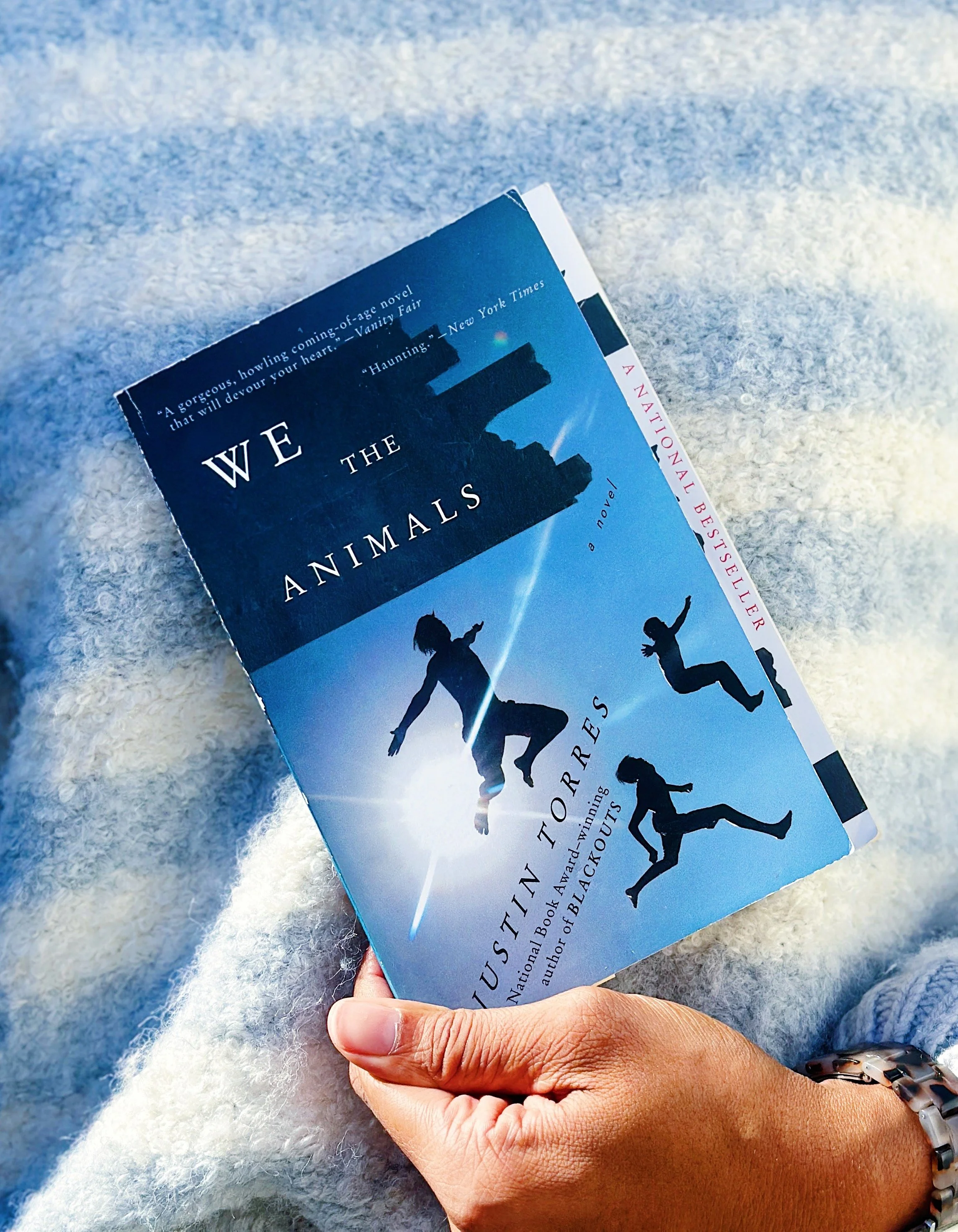
It is The Stacks Book Club day, and Page Break founder Mikey Friedman is back to discuss National Book Award-winner Justin Torres's debut novel, We the Animals. Set in rural upstate New York in the 1980s, this coming-of-age novel traces the experiences of three mixed-race brothers bustling through boyhood while navigating the violence and chaos within their household. In our conversation, we chat about what sets this book apart from other coming-of-age stories, how it functions as a sensory novel, and the ways the book explores shame and desire without judgment.
There are spoilers in this episode.
Make sure you listen to the end of the episode to hear what our January book club pick will be!
LISTEN NOW
Apple Podcasts | Spotify | Google Podcasts | Overcast | Stitcher | Transcript
Everything we talk about on today’s episode can be found below in the show notes and on Bookshop.org and Amazon.
We the Animals by Justin Torres
Blackouts by Justin Torres
We the Animals (Jeremiah Zagar, 2018)
Frankenstein by Mary Shelley
“Ep. 396 Frankenstein by Mary Shelley — The Stacks Book Club (Angela Flournoy)”
“INTERVIEW: Justin Torres, author of ‘We the Animals’” (Sara Ortiz, Electric Literature)
Moonlight (Barry Jenkins, 2016)
Friday Night Lights by H. G. Bissinger
To support The Stacks and find out more from this week’s sponsors, click here.
Connect with Mikey: Instagram | TikTok
Connect with Page Break: Instagram | Website
Connect with The Stacks: Instagram | Threads | Shop | Patreon | Goodreads | Substack | Youtube | Subscribe
To contribute to The Stacks, join The Stacks Pack, and get exclusive perks, check out our Patreon page. If you prefer to support the show with a one time contribution go to paypal.me/thestackspod.
The Stacks participates in affiliate programs. We receive a small commission when products are purchased through links on this website.
TRANSCRIPT
*Due to the nature of podcast advertising, these timestamps are not 100% accurate and will vary.
Mikey Friedman 0:00
The fragments allow for a really nuanced portrayal of sexuality and of discovering yourself. We're getting the fragments where those types of memories would stick out to a gay person more than they would stick out to someone else, like the scene where they go into the basement and watch the weird video. Yeah, certainly that would affect a lot of young people, I'm sure, at a former age. But I think, you know, I can say, as a gay person, there's certain memories that I have growing up that, like, just really stick with you. And I think that the fragment approach allows for this almost like, kind of like aching suspicion or like aching feeling to build throughout the book, that it's not just that this narrator has this really tough life and has this really complicated family, but it's only going to get harder when he has to step into himself in this other way.
Traci Thomas 0:54
Welcome to the stacks, a podcast about books and the people who read them. I'm your host, Traci Thomas, and today is the stacks book club day. I am joined by Mikey Friedman, who is the creator of Page Break and is back to discuss our November book club pick with us. We the animals by Justin Torres. This novel was published over 10 years before Justin Torres won the National Book Award for his novel blackouts. It is his debut, and the book explores the lives of three mixed race brothers in upstate New York trying to navigate the chaos and violence and tenderness within their household. Be sure to stay tuned to the end of today's episode to find out what our December book club pick will be. Everything we talk about on each episode of the stacks is linked in the show notes. If you like the stacks, if you want more bookish content and community, consider joining the stacks pack on Patreon and subscribing to my newsletter, unstacked on sub stack. Each place offers different perks that range from community conversations to hot takes on pop culture and, of course, bonus episodes, plus your support makes it possible for me to make the stacks every single week. So to join, head to patreon.com/the stacks for the stacks pack and go to Traci thomas.substack.com for my newsletter. All right. Now it is time for my conversation with spoilers, with Mikey Friedman about we the animals by Justin Torres.
Alright, everybody, it is the stacks book club day. I am so excited. I am joined now by friend of the pod. And you all know this future partner, because we're going on retreat to Joshua Tree, January 23 through the 25th so make sure you sign up for that. I am joined by the man behind Page Break, Mikey Friedman, Mikey, welcome back to the stacks.
Mikey Friedman 2:40
Thanks. Traci. Can't wait counting down the days till our retreat.
Traci Thomas 2:43
I wish I had a counter going, I don't, but soon, like two months gonna be epic. But today, you and I are talking about we the animals by Justin Torres for The Stacks book club. Everybody listening at home, there will be spoilers, so please read the book. It's 125 pages. It is the fastest, little, tiny, lovely novella novel ever. And you could probably read it and come back and listen before the day's out. So Mikey, we always start here, just generally, top line. What did you think of the book?
Mikey Friedman 3:21
Absolutely loved it. This is the exact kind of book that I like, and I'm so happy we've got to read it. I'm honestly alarmed that I haven't read it yet now that I've read it.
Traci Thomas 3:31
Okay, here are my top line thoughts. Loved, absolutely loved this book. I think after I finished it, I was talking to some people, and I go, I know that everybody loves this book, but I actually think it's underrated. Like, I don't think we're talking about it enough, even though I feel like everyone who's read it is like, it's great,
Mikey Friedman 3:53
totally. I know I said I feel like because also blackouts got so much praise too, that I agree. I think I everyone who even just like talking to people and posting like the story, even today, I've had like 10 people reply and say, that is an all time book.
Traci Thomas 4:08
It's an all timer. I mean, it's incredible. It's so good. I just I felt like I maybe this is my problem. But I felt like people were like, Oh yeah, it's good. And I felt like I needed more people to be like it is
Mikey Friedman 4:23
Yeah, get ready. And the fact that it's so short, so short, and packs such an emotional punch, and like, the restraint that it takes to be able to do that is beyond
Traci Thomas 4:36
and it is a perfect book from the opening line, the first line of the book is, we wanted more. Bye. Justin Torres, you can have all my kids. You can have my house like I'm done. I love it. I love it. Okay, I'm glad we're on the same page, though. I'm sort of sad we're on the same page because we're not gonna get to fight about the book, but it's so good.
Mikey Friedman 5:02
I'm a lover.But this is like, I yeah, this, like, I felt so much reading this book. I cried, yeah? Or, like, on this up I'm on the subway, like,
Traci Thomas 5:10
yeah, oh no. I like, ugly cried and like, text my friend was like, I'm a terrible mom. I like, took it to therapy the next day. My therapist was like, how are you? I was like, I cried so hard last night. She was like, is everything okay? I was like, No, there was a chapter about kids turning seven.
Mikey Friedman 5:32
Just my book club weighing on my heart
Traci Thomas 5:34
To be fair to my emotions. I have, as you know, twin boys who will be six in December. So I think this seven chapter really took it out of me, because I'm not ready to guard my heart against my children. I'm not ready for them to punch me in my already black eye like totally I'm not ready for that. And it just, it just broke me.
Mikey Friedman 6:00
I also think, like, the way, I agree, from the beginning, you're like, instantly empathetic to all the characters, yes, in a way that's like, I think takes 100 pages to get to in some in a lot of books, yeah, but you can immediately see the stakes, and also, like the feet, you can feel every character and like a really, I think Justin writes like from a child perspective, yeah, in a really remarkable way, like the way you're sort of seeing feeling your loss of innocence and seeing your parents, and the same way the mother is sort of seeing her children, it's really, yeah, okay.
Traci Thomas 6:40
Let's start with just, since we're here, just the shortness of the book, like we said, it's 125 pages. I basically never say this. I could have read 600 more pages of this
Mikey Friedman 6:52
book, same I wish it was longer. I
Traci Thomas 6:55
wish it was 1000 page book like because the way that it is so like, vignette ish, the vignettes happening. It's like, right as you would get comfortable, you're on to the next thing. I know they made it into a movie, but it would make a great TV show.
Mikey Friedman 7:15
Oh, they did. I have to see the movie.
Traci Thomas 7:17
I haven't seen it either. I didn't want to see it.
Mikey Friedman 7:19
I agree, and that's kind of what I was saying. Look at the restraint to be able to do that, and not fill in the gaps for us and spoon feed us. What happens next in their life? Like, you get these mile markers, right? Like they turn seven and then later, you know, they've, like, aged older towards the brilliant shocking end of this book, yeah. And so it has these mile markers, but it's not spoon fed to us. And I think that's just like trusting the reader. And yeah, every I wanted every scene to last a little bit longer, and I wanted to know, like, what was gonna happen immediately after that
Traci Thomas 7:45
Yes, what had happened before, what was gonna happen after? And I think to your point, like, yes, the restraint is so good. And also he does such a good job of telling you everything you know need to know about a character in one sentence. Like the first scene we have with Ma is on page five, and I took a note, because I was like, this is insane, but he says like she would wake randomly mixed up, mistaking one day for another one hour for the next. Order us to brush our teeth and get into PJs and lie in bed in the middle of the day, or when we came into the kitchen in the morning, half asleep, she'd be pulling a meatloaf out of the oven saying, What is wrong with you, boys? I've been calling and calling for dinner. We had to learn not to correct her or to try to pull her out of the confusion. It only made things worse. And it's like, instantly you get a picture of this woman who is just like, out of her depth, out of control, and like you also know exactly how they feel about her exactly. And it's like five sentences,
Mikey Friedman 8:55
five sentences, and exactly it places you in the environment of the house. Yes, so clearly, because you're understanding from both characters perspectives and like you're saying such a short
Traci Thomas 9:04
amount of time, and like the chaos, the smell of the meatloaf, just like the uncertainty and the way that the way that he flips, like the kids are taking care of the mom, like there's so much just in those sentences where I felt like I know exactly who this woman is. I know exactly what this life is, and I am feeling all the tension and the anxiety of being a small person in a world that is so uncertain
Mikey Friedman 9:33
totally I also think it's like, it's a really, I want to talk about how it's like a visceral novel and like you feel and hear things. But I think it's like, what you're describing is like, almost an ability to create visual image. I can imagine this book so clearly, yes, but it's not written in a way that's so colorful and, like, kind of obnoxious, like,
Traci Thomas 9:53
it doesn't describe the kitchen. He's not like mom pulled the meals out of our pink tiled kitchen. You know, we have so many. Doorknobs, like, it's like, I don't need that. I already can see this hideous kitchen with Lucy
Mikey Friedman 10:04
Exactly. It's like, which is so refreshing, because I think there are, there is a lot of very poetic books like this that lean on, really, you know, like limited prose to try to tell a story in a really, like, affecting way. But it doesn't deliver on this, like, visual, it didn't deliver on it doesn't deliver as visually as this did, which is, like, I think such like a magic, magical art that you're able to do that, yeah?
Traci Thomas 10:30
And the opposite is also true. There's so many novels that spend so much time trying to paint the picture of the scene. You get, like, 50 pages about the kitchen, yeah? And then it's like, mom pulled a meatloaf out. It was 11pm and it's like, I just spent so much time with you, describing the curtain, and when you the family bought the house, and blah, blah, blah, and then just nothing happens. And I think something that came up last month in Frankenstein, which we're actually going to talk about Frankenstein a little bit later today on this episode, but in the stacks pack book club that we did after the episode aired, like through the Patreon, someone said to me, why did you like Frankenstein so much? Like not a lot happens, and there's, like, a lot of description, because I famously don't like books where things don't happen. And I realized in reading this and also thinking more about Frankenstein, it's that I don't care if nothing happens. I don't care if the book is just like a bunch of character study. You know, this is just a day in the life type book, but what I do need in a book is that when people are together, stakes are high. Everybody wants something, and everybody believes they're right. And I feel like in this book, we get that it's like mom believes it is dinner time, yeah, and mom wants the boys to come inside, and she's fired up about the fact that the boys like, where are you guys? And the kids are like, mom's fucking nuts. We don't know what's going on. She gets like this, and it's our job to protect her. And it's like nothing does really happen in this book until the very end, technically, but so much happens because there's so much interaction between people, so I don't need the kitchen if I have these moments
Mikey Friedman 12:13
totally and the stakes are so high, like so high, the tension in this book is You can feel it in every scene. And then when something does happen at the end, it's like, I was like, so locked in. It was like, Oh yeah, here we go, because you're already feeling that tension build. But I totally agree. I was curious what you, you know, knowing your your stance on, like, kind of like vibes novels, or vibes books, I was curious your thoughts, but exactly like you're saying, like the relationship between them is what
Traci Thomas 12:43
happens, right? This is a vibes book, but I would never describe this as a vibes book I think, I think technically, it is like, this is, you know, it's just it's like, the past or whatever,
Mikey Friedman 12:54
especially because it's fragments too. So it's not like, it's not building plot in that traditional way, like you're getting these little scenes and fragments, right?
Traci Thomas 13:03
There's really no plot in this book, like it's just, like, it's just coming of age, which I guess is its own sort of plot trope. But, yeah, you know, it's sort you realize it's been moving towards this thing when you get to the end, but the whole time, it's just a bunch of scenes. But I just love a scene. I just want a high stakes interaction between people. And we've been talking about ma a lot, but paps or pops is the highest stakes of human beings on the face of the earth. I mean, he is a force.
Mikey Friedman 13:32
He's He's the maker of the most terrifying parts of this book, but also the most tender, yes and touching scenes.
Traci Thomas 13:41
And similarly, you know, I think the first thing he says about pops, I was like, Oh, I know exactly, like, who this person is, right? Like, it's like, and I think it's early he's, it's literally in the first chapter, he's talking about how he and his brothers fought with stuff, and then he says, And when our pops came home, we got spankings, and it's like, that's all you needed. I literally know exactly what that is. I know who your dad is. I know what kind of kids you are. I know what that vibe is like. You hear the shoes when dad walks, like that whole thing in one sentence.
Mikey Friedman 14:18
I'm also Yeah, that's reminding me, like I talked about, like, the use of we in this too. I'm sure that's on your list. Well, we just come back to but maybe think of something for pops. What was it? Oh, just that the like, he'll the writing of this is really direct around things like abuse, yeah, and it's, it pulls No, I was gonna say pulls no punches, but it's like, very direct and unrestrained in some places that's really hard to read and really like chilling. But then there's these moments where I was so curious about that Justin doesn't give us. Like the sex scene at the very end, like, sort of like making me and like losing it, like, just to be able to not give us some of those details and, like, leave that out. Like, I think that's what I when I think about restraint. It's like knowing when to use it. It's not just that. This book is like, pulled back and restrained for the for the sake of it to try to prevent us from figuring things out. It's like the thoughtful choices of when to do it and for what scenes.
Traci Thomas 15:26
I feel like when you read a book and you feel like taken care of by the author, I feel like that is this book. It's like Justin Torres has such a clarity of story that he wants to tell us, and it feels so clear that he knows what he's doing, that he's a competent guide into this world, that he knows exactly when to pull back and when to give a little more, and when to lean into the funny and when to lean into the like brutal. And the balance is, I mean, it's extraordinary. It's extraordinary that this is a debut novel also
Mikey Friedman 16:04
totally, yeah, I had to do a little research to like, learn about but I think in an interview, you said, five or six years, yeah, this 120 pages, which speaks to this level of care and the level of like, every word is thoughtfully selected, and it shows in how the sentence structure fits together and how it flows. And after we after our last chat, you're like, Oh, do you read out loud? Because we read a lot on our retreats. I was like, I'm gonna read parts of this book out loud. Yeah, I did. And it's like this, what a what a joy to be able to read this kind of language out loud, right? Like every single Yeah, word matters.
Traci Thomas 16:37
It matters. I actually didn't read this out loud because I was on an airplane, but airplane reading is some of my best, most like emotional just like in my feels. Though I did read the first few chapters at home on my couch, crying, and then I got on an airplane. So I didn't cry on the airplane. I cried at home on my couch.
Mikey Friedman 16:56
I love an airplane cry like coming home from vacation, reading a sad book, watching a sad movie. So good.
Traci Thomas 17:02
Let's talk about the writing style. So I always ask the stacks pack, what are things you want us to talk about on the episode? And someone brought up that they actually they didn't read about the book at all. They weren't really paying attention. They read it on their e reader, so they didn't even really look at the cover, and they thought it was a memoir, yeah. And I thought that was really interesting, because I just didn't go in with that mindset at all. But it totally could be, because it's written again, so clear, such economy of language, yeah, and like the sceneiness of it,
Mikey Friedman 17:36
and it feels like there's so much truth in it, in the way that the characters operate with, like it's so open in a lot of ways, that it feels like it would, it feels like it's a real thing, right? It feels like it would be hard for someone to make up that level of truth
Traci Thomas 17:53
Right? And because, because he gives us so little about each person, but it feels like so much. It's like, Justin Torres knows these people obviously, like, these are people he is. These are his brothers. These are his parents. Because it feels so real and so rich and deep. And then you're like, Wait, this is fiction. And I know people say it's auto fiction or whatever, but I read some essays or some interview from him. And he was like, this is not actually my family, yeah. But he has, like, siblings. He has siblings. He is Puerto Rican. And like, I think the, I think the framework of the novel fits his life. But he was like, These things didn't happen to me. Let's talk about we, the use of we. What did you want to say about that?
Mikey Friedman 18:41
I wanted to say that it's really hard to do that too. Like to be able to give us so much personal depth from the narrator by not using I
Traci Thomas 18:50
Yeah. He uses it pretty sparingly, until the and then the end. I guess he uses it. He uses it. He uses it in a few scenes, like he uses it in this scene, this the scene in chapters, or the scene, yeah, in seven. But that's because the brothers have left, and he's alone with the mom before he is brutal to her and makes me cry. So he does use it, but mostly he uses we and, and, you know, the title is we, the animals, like
Mikey Friedman 19:18
exactly, and the and I think the thing that stuck out to me was that late, at the end of the book, it's no longer we Yeah, which I think is like, that's such a genius use of form to fit the story, because, yeah, we're allowed to do spoilers so, but by the end of the book, he's no longer in The pack of animals with his brothers, right? He's othered in that scene that I can see so vividly of them in the snowstorm. And then it's no longer we, it's they. They did this. They acted this way. He has these, really, you know, descriptive portrayals of his brothers. But it's now, it's they, yeah, and then he, you know, runs away. Now it's I, so I think that that use of, right?
Traci Thomas 20:03
He says at the end, like, I lost my pack, or something, right? Yeah, exactly these days I've lost my pack. I think also, like, at first, when I read the book, or when I started the book and I was looking at the cover, and there's, you know, the three I have the cover with the three boys jumping. And I had thought that the we was the three brothers, but I realized that, I think for me, like the we is actually the whole family, like that. They're all five, yeah. And I think that became more clear to me in that final scene, when it's like the four of them, you know, trying to first, kind of expose him and then protect him, yeah, and that shift is, like, really powerful, of like, it's not just the brothers, it's the whole thing. It's the whole world they've created.
Mikey Friedman 20:54
And I think building on that, it's like the idea of escape in this book comes up, so comes up so much the dad, you know, Pops, basically saying, like, we're not going to be able to ever escape this. And reflecting on the book as a whole, I'm thinking, like, you know, animals, especially the last piece, it's like in the zoo. And like, this notion of, like, escaping from captivity, right? Isn't just about the brothers, right? It's also about pops and Ma certainly like that scene where she basically is like, I was gonna, should we just leave? And never come back.
Traci Thomas 21:25
should we leave? Yeah. What do you leave? Yeah. And they
Mikey Friedman 21:29
were like, and then there, and then it's like, oh, we're now we're pulling up back to home. It's like,
Traci Thomas 21:34
yeah. But it's like, there's a part where Manny, the oldest brother, talks about wanting to leave, then the mom wants leave, the dad, the dad wants to leave the world, but none of them end up leaving. And then it ends up being our unnamed narrator, who is the one who, like, gets out, but it is, like, the most forceful, brutal sort of, like, launching out into the world, right?
Mikey Friedman 21:56
And its own form of captivity, yeah, and it's not,
Traci Thomas 21:59
he doesn't leave. He gets kicked out in a lot of ways, right? Like they eject him from, from, from the world. And I think, like the ending, for me, it mirrors that really well, before we get well, I want to talk about the ending, but it mirrors, for me, this scene really early in the book. It's called Never, never time. So this is, like, sort of that first real scene we get with Ma. And they're like, mashing ketchup and tomatoes, yeah. And the mom's like, this is like, when you were born. And she says, like, do it to me. And they say, What? And she says, Make me born. And Manny says, we're out of tomatoes. Use ketchup. And so then they're like, Mom, close your eyes, whatever. And then it says, And the mallet swung through the air. Our mother yelped and slid to the floor and stayed there, her eyes wide open and ketchup everywhere, looking like she had been shot in the back of the head. It's a mom. We screamed, congratulations. We ran to the cupboards and pulled out the biggest pots and heaviest ladles and clang them as loud as we could, dancing around our mother's body, shouting, happy birthday, happy new year. It's zero o'clock. It's never, never time. It's the time of your life. And I, first of all, I loved it because it was giving Frankenstein vibes for me born, everything is Frankenstein. I feel like every episode for the rest of the year. I'm gonna tie back to Frankenstein so far. I'm do so far. I am 10 for 10, but I felt like it mirrors this birth ejection of our narrator at the end, because he too is sort of like the other person on the other end of the family and ejected out into the world, and it sort of has that same forceful energy as, like, a birth, right? Like they're like, it's like, so physical. And I just couldn't help but feel like even though the ending is so different, which we should talk about next, it is still really rooted in who these people are, and it feels so of the piece. Before we go to the ending, let's take a quick Well, you say what you were gonna say then, I'm gonna break
Mikey Friedman 24:09
I think that's just that scene is also emblematic of how audio somehow plays like you could hear this book, yes, like it's the volume is turned up in so many of these scenes, either, either through being so quiet and tender that you can feel how hauntingly quiet it is. But then the fact that the brothers are running around, howling, screaming, banging, like shooting things, like throwing things like it's such a accomplishment to be able to do that too.
Traci Thomas 24:41
It's like a such a sensory book, sensory book. I feel like that's right. Okay, let's take a quick break and then we're gonna come back and we're gonna do the ending.
Okay, we are back. There are other things I want to do, but I do think we should do the ending so we can come back to some things. so every chapter is basically super duper short. Then we get to this final scene. This chapter is called The night I am made, and it's like a bunch of parts. It's like three parts, nighttime, midnight, late night and deep night, oh, and Dawn and Don Do you want to tell the people what happens in this section?
Mikey Friedman 25:25
Yeah, the night I am made. So this is the beginning of the end with the brothers. It starts off with our unnamed narrator falling out with his brothers. They tease him horribly for what they suspect is him being gay, and they like he's the narrator later describes the feeling that they could like, smell it on him, that they've like, come to sort of see him as other and different from them. And this is where that shift in language happens too, right? It starts with they grew up wiry, long torso and lean. And it's not no longer we and our narrator runs off after like, a brutal fight with his brothers, and goes to cruise the bathrooms at the bus station where he is made for the first time. AKA, has his virginity taken
Traci Thomas 26:14
and he's going to the bus station and, like, just kind of observing for a while
Mikey Friedman 26:19
Yeah, feeling it out scouting.
Traci Thomas 26:22
But eventually he goes and does it with, like a trucker,
Mikey Friedman 26:25
with a trucker in the truck, not in the bathrooms, yeah, and just for the I can just keep moving to the next then the next chapter. He walks home in the and gets home at dawn and his entire family is sitting in the living room, and his mom has his journal on her lap, and inside this journal, our narrator's written all these gay fantasies, both innocent and not and very like shocking, personal entries into his diary, And he knows immediately that not only has she read it and knows the truth about him, but his entire family has. And it's like, this whole scene, for me, happens in like slow motion, and I think it's written in this way too, right? It's like, you know what's happening, but every I have to, like, read every sentence twice, like every sentence. It just like, is like a slow motion montage, and the father kind of lurches out to hit him, and the brothers restrain the Father. And it's like this, like slow motion scene where the narrator says, you know, he was both, but the brothers are both restraining him, but at the same time holding him up, which is, I think, speaks to the complexity of this scene and the feelings, and then finally, after temperatures decrease, right?
Traci Thomas 27:50
Well, well, after the thing, he sort of had, like, freaks out. He says he was behaving like an animal, so they're like, restraining him. After the father, he starts hitting himself, or he starts hitting himself. He starts tearing at them, scratching at them, like a wild animal that's in captivity. He's like trying to get out, get away. The shame, all of it, the betrayal, is just like physically manifesting in him.
Mikey Friedman 28:13
Yeah, it's a complete break. And I said ended animal unforgiving things. Unforgivable things is like this last line in section, what else but to take me to the zoo. And before he's taken to the zoo and sort of exiled by his family to, I assume, a psychiatric ward, right? Yeah, there's this really tender scene with pops and the bathtub. And I was a little unclear in this one like that happened right after that moment.
Traci Thomas 28:42
I think it happened after they subdued him, before they took him to the psych ward.
Mikey Friedman 28:46
Right okay. Because they're like, talking about how, you know, the narrator, like smelled and hadn't, like watched in days, and so I was unclear if that had been like, from him living like, living on the street, separately from that. But no, I think you're right. I think it was, yeah, I think it happened right after that. But essentially this, like final moment of care, where pops is hand washing the narrator and his son in the bathtub, fully clothed and then unclothed, and MA is sort of outside the bathroom coming in, and it's just like this really heartbreaking moment of final care. And then we get to the final page of the book, which is zookeeping. I mean, should we just read the whole thing? So short, it's like two senses. These days, I sleep with peacocks, lions on a bed of leaves. I've lost my pack. I dream of standing upright, of uncurled knuckles, of a simpler life, no hot muzzles, no fangs, no claws, no obscene plumage, strolling gayly with an upright air. I sleep with other animals in cages and in dens, down rabbit holes, on tufts of hay. They adorn me. These animals lay me down, paw me, own me, Crown me, Prince of their rank jungles, upright, upright. I say, I slur, I vow. Wow. I was like, Yeah, I sort of interpret this as, certainly, he's in the zoo, right, in captivity. But is it that this, this slight glimmer of optimism, of like, vowing to persist, right, like, vowing to be upright?
Traci Thomas 30:17
Yeah, I think that I sort of took it as, like he's been in this sort of rural world of chaos and all these things. And I feel like for him, I sort of envision him as like an adult at this point, like in New York City, right? Just like being I took it. I took it to mean, like, so we the animals is like, we think it's their family, we think it's the brothers, and we think it's their family. And then I sort of took it to mean that, like, maybe he is an animal air quotes, like as a gay man with other gay men, and so now he's being observed by everyone else, and sort of like otherized and they're enjoying each other, and like having their own Zoo. But it's like, like a zoo, or like a world of animals that he chose to be in, like his own animals, as opposed to the animals he was born into, like that he found that he actually found his new pack, his new pack, or like his world Interesting, yeah, yeah. But it is unclear. I mean, it's, it's the only part of the whole book that's not like, this is what happened,
Mikey Friedman 31:26
right? Well, it's like, I one way I think to read it is that it's like, literally, still in captivity of sure, like at the psych ward, still at the psych ward, still sure and hoping that he may like, behave in an upright way in the future, but I really, I'm I like your there's another interpretation too, which is, like, this is further in the future, and it's a larger message about how we're all animals, and you have to sort of find your type of animal, Yeah,
Traci Thomas 31:54
or like your Yeah, like your ecosystem. Maybe you're a forest and a woodland creature or a desert snake or something. Yes. I mean, I think, like the way that sexuality, his sexuality, is sort of slowly drawn through the book I obviously am familiar with who Justin Torres is, and I know that blackouts is like, about who is about like, gay men. And so I went in assuming that this book was going to be about like a gay kid, and it is, but it is not what I thought it was going to be. Like, I was like, oh, like, maybe he's not, like, maybe he's not like a gay kid. And then there's like, all these little moments, these glimpses of him, you know, kind of stepping into his own self. I mean, there's the moment where the dad, like, calls him pretty, yeah, whatever. Oh, sorry, go ahead.
Mikey Friedman 32:52
No, completely. I mean, that's what I think is a really smart way the fragments allow for a really nuanced portrayal of sexuality and of discovering yourself for that reason, because we're getting the fragments where those types of memories would stick out to a gay person more than they would stick out to someone else, like the scene where they go into the basement and watch the weird video. Weird video, yeah, or I know, right? I mean, I think that's what we're left to ask. But it's like, we certainly that would affect a lot of young people, I'm sure, at a former age. But I think I, you know, I can say, as a gay person, there's certain memories that I have growing up that, like, just really stick with you. And I think that the fragment approach allows for this almost like, kind of like aching suspicion, or like aching feeling to build throughout the book that it's not just that this narrator has this really tough life and has this really complicated family, but it's only going to get harder when he has to step into himself in this other way. So I just think that whole thing was so brilliantly done because then the ending is so focused on that it all comes to a T, right? All you're sort of building suspicions from these fragments is then confirmed and then tipped the entire other way.
Traci Thomas 34:05
And also, I mean, I think what's really well done in this book, especially when we think about, like, coming out stories, because in a lot of ways, this book is also a coming out story, right? Or, like, yeah, an outing story, yeah. And I feel like so often the trope is either it's like this really tragic, sort of like weeping in the corner, suicidal, whatever. And I felt like what was really interesting about how he did this is it's still a very, kind of painful coming out story, but the fire behind it felt so different than how we're told a like, a traumatic coming out would be usually, we're told like, I was so sad I was cutting myself, or like nobody liked me, nobody wanted to be my friend. But it's like he's never really alone, even in all of this, like he's never really passive. And it's also tough. Tied to these descriptions of his mom talking about how capable he is, how smart he is, he's embarrassed for his brothers because they're not as good, as smart as whatever as him and I liked the coupling of this like inner turmoil and this pull and this feeling of being different and other, and even the rage and the shame of the actual moment when he realizes, coupled with He's capable, he's eight, like he is almost in control of this. She says, he's capable of destroying anything, including himself, right? And so it feels like almost empowering in some ways. I don't know if you felt that at all,
Mikey Friedman 35:41
I definitely did. I felt like that description towards the end of the book of the mother describing the narrator, felt so true to like, when a mother knows, she knows, yeah, kind of like, right? She's pointing out, oh, there's something special about him, yeah. I think that is, that is an element that is, I think, really true between a gay man and his mother a lot of times, and so that feels really honest. But what I agree with, like, overall, what you're saying, is empowering. It. What I find empowering about this portrayal is that the entire story and character is not only defined by their queerness, sure, and gayness and like they to your your point, entering into a book with some of the like, you know, just knowing the high level about Justin or knowing the high level about the book, you could almost expect that, oh, it's a gay coming of age novel. So this is what it's gonna really wrestle with, right? And, and it is, but it's not only that, and I think, like, that is something queer people always grapple with and always have to try to deal with. Is like, it's not the stereotypical gay thing, just because,
Traci Thomas 36:42
and it's not focused on his sexuality from a young age, which I also appreciated, because I feel like regardless of sexuality, most children are not concerned with sexuality at seven, totally, like they're not thinking about they want food, yeah, and like they want to play with their brothers or whatever. And so the way that it sort of slowly emerges, like even the scene between the parents and the bathroom, where they're, like, getting for a ski, and he's noticing and like understanding that this is, like something that's making him feel and think things it's not it has nothing to do with his sexuality, and yet has Everything to do with his sexuality, but I feel like it's that is such, like an almost universal thing for kids, like seeing your parents have a sexual desire, or seeing the adults in your life have that that is like an awakening in a lot of ways, regardless of What happens to you and your sexual life, whether you become polyamorous or become asexual, like, it's not something that you forget. And so I felt like he touches on these big Touchstone moments without showing his hand as like, Yes, this is a queer story,
Mikey Friedman 37:59
right? And every, literally, every chapter of this book has some kind of lasting shaping impact on this character, yeah, like, and I think even that, just like, as you're reading it, every after every single chapter break, I'm like, wow, okay, this is like, notes are taken as far as like, the reader, but also like, this is just such impactful scene after impactful scene that it the collectiveness of that. Like, when you add those scenes up, you really see this, like, loss of innocence and this growing up. There could have been a whole, like, the second third of this whole book there was, like, a big jump, right? Yeah, he's older. I can't believe we didn't get the gap, yeah.
Traci Thomas 38:40
I mean another, another moment like this that, again, is a Frankenstein moment is, is the swimming scene at the lake? Yes, where the dad and this is, this goes into a thing that I really want to talk about, which is, like, how good this book is at showing how ill equipped most adults are to becoming parents. I feel like it really tapped into a lot of my feelings about being a mom, even though, like I'm I wasn't 17 when I had my third or 18 when I had my third child. But like this sense of you're just you are a person who is trying to live a robust life, and also you're responsible for these other people, and you don't know what the fuck you're doing. And like in this scene, the dad the older brothers are swimming at the lake, the mom and the dad and our narrator are there, the mom and the narrator can't swim, and the dad's like, I'm gonna teach you hold on, yeah. And he, like, basically just dumps him in the water and is like, sink or swim. And the mom freaks out and starts basically climbing her way over. The narrator. Is like drowning. The narrator essentially to get to safety. And the narrator, he says, I sank down for a long time. I'm disoriented and writhing. And then suddenly I was swimming, kicking my legs and spreading my arms, just like pops had shown me long before, and rising up to the light and exploding into air. And then that first breath, sucking air all the way down into my lungs. And when I looked up, the sky had never been so vaulted, so sparkling and magnificent, I just and then he jumps out. He says they had never been so happy to see me. They had never looked at me with such intensity and hope. They had never before spoken my name so softly. I remembered how ma burst into tears and pop celebrated, shouting as if he was a mad scientist and I a marvel of His creation. He's alive. He's alive. He's alive.
Mikey Friedman 40:43
Nice Frankenstein, also that is such a vivid scene, but also like, what a what a beautiful and and heartbreaking first moment to feel wanted by your parents,
Traci Thomas 40:58
right? And to feel independent. He did it on his own,
Mikey Friedman 41:01
and to feel that your parents are proud of you. To me, that was like, Oh, this is the first time in this kid's life that his parents have ever been proud of him, which is so heartbreaking.
Traci Thomas 41:10
Well, it's the first time he's felt like his parents are proud of him. He's felt right. He's like an unreliable narrator. I'm sure if you asked Ma, she would say she was proud of him at other times, but it's the first totally feels that, right?
Mikey Friedman 41:22
And because we're only getting the fragments, I'm reading every chapter as if it has like landmark, yes, first, I think that's of this, of this coming of age. And I think it that scene also has elements of what the whole book has, which is the visceral, animalistic quality, in this case, with Ma, right? Ma is doing fight or flight, animal violent things really, like basically drowning her own son, you know, out of her own alarm and, like, for in service of her own safety and survival, which is, like, such an animalistic thing, right?
Traci Thomas 41:56
Yeah, and it's like, not what she's supposed to do. She's supposed to save her kid, right? Totally. And I think again, that I think that just points to this. Like adults, they might be parents, but also they are their own full human with their own wants and desires, and like she wants to live and swim, bad enough to do anything she can do, right? And even though she probably shouldn't, and if it was her book, we'd be hearing from her saying how, like I feel so much, you know, shame around what I did, but I just there. I mean, there's just so many scenes. I think that's, I mean, that's the other thing that I have a lot of notes around, is how huge a part, how much shame is a huge part of this story, like shame within shame within the walls of the family. You know, the brothers not wanting to look at him after they are shown the gay porn scene, right? Like them realizing what their brother is, right? And like the narrator says he feels embarrassed of his potential, and he's feeling pity towards his brothers, and obviously, I mean the big dick truck stuff with pops, and like not having a job and having to rely on his wife, and then ma being in a relationship with the man that beats her up and gives her black eyes, and like, there's just so much, I think maybe like a dichotomy between shame and desire in this book that just plays so beautifully together and is almost presented without judgment, which I think is extremely hard to do. Totally.
Mikey Friedman 43:39
Yeah, you, you feel, you feel the shame from each of the characters in these scenes. But it's not in like, an exploitative way,
Traci Thomas 43:49
because it's not really named, right? Like he doesn't have the capacity to name it oftentimes, like in the big dick truck scene, he doesn't really know what he's seeing. He's just relaying information. And we're able to, with our big adult brains, to project shame or pity or whatever. But at the time, he can't do it. It's not till that last scene when he really says, like, I'm embarrassed about my brothers.
Mikey Friedman 44:17
Totally, yeah. And it's like, that's writing from the younger child's perspective, it forces you as the reader to reckon with the very adult implications of what's happening, right? So, like you as an adult reading it, you have to, you have to. You're imbuing what you think the parents should or shouldn't be doing. Or you you read in like, what you would or wouldn't be doing in the world of these, these kids, it's so yeah, it's not, it's so good, yeah, but it's not, it's not, it's not judgy, because the kids, like you said, kid can't, can't see that, right? And
Traci Thomas 44:52
he doesn't have anything to compare it to. This is his life, right, right? And it feels pretty insular, like we don't really hear much about going. To school. We don't hear much about outside influences, and so, you know, whether or not they're doing those things, it's not that important.
Mikey Friedman 45:10
But what is the dad? We don't really know. I guess the dad's like, a security guard, but then they go on to this trip to Buffalo or to Niagara Falls, right? Yeah. He's like, to, like, pick something up. Yeah, exactly. There's a lot of stuff like that that's like, left unknown also, or, like, I don't really know there's something with MA in the factory. Oh, ma brewery. She works at a brewery, and she's, like, in a romance, in a sexual relationship, with her co worker. Or is that just like a tender kiss on the lips?
Traci Thomas 45:38
There's like, I don't know. Yeah, the lady who comes by, the
Mikey Friedman 45:41
lady who comes so it's like, again, all these things that could have been entire chapters of a normal layperson book. Yeah, reading this, like insanely beautifully constructed, restrained book we don't get. But it's like, there's so many things like that too.
Traci Thomas 45:57
And he just trusts the reader so much. He's like, I don't know you guys will figure it out. It doesn't matter if the mom's in a relationship or if it's just a tender kiss, like, all that matters is that these kids saw their mom kiss a lady, you know, like, that's it. And and again, in your like theory of each of these scenes being a formative moment that's not a nothing moment for no especially a kid who's maybe exploring their
Mikey Friedman 46:20
sexuality. And I think maybe what is smart about that is it force. Then you get into this, this habit with yourself as the reader, which is like, oh, maybe, why do i Why do I want to know? Or do I want to care? Yeah, what judgment am I bringing to some of these scenes? Right? As I try to be the adult reader in a story told through a kid's eyes, right? I
Traci Thomas 46:41
think the last thing I want to make sure we talk about that we really haven't talked about it all, but is very important to this book. And I really appreciated was the racial dynamics of the book. I so the dad in this book is Puerto Rican. He is, he is not white Puerto Rican. We don't know exactly what he looks like. We know he has, like, a little bit of an afro. We know he's Brown. And the mom is a white girl from New York, and she's 14 when she gets pregnant, and he's 1616, yeah. And they go to Texas and they get married. And there's a scene very early in the book, in my copy, it's on page 10, where the dad is playing music, and he's like, saying, like, you know, shake it like you're white, shake it like you're Puerto Rican, shake it like you're poor, shake it like you're rich. And like, telling the boys to dance. And then he's like, you know, you're none of those things. You can't dance. This is how you dance. This is your heritage. He said, as if from his dance, we could know about his own childhood, about the flavor and grit of tenement buildings in Spanish, Harlem and the projects in Red Hook and dance halls and city parks, and about his own pops, how he beat him, how he taught him to dance, as if we could hear Spanish and the movements, as if Puerto Rico was a man in a bathrobe grabbing another beer from the fridge and raising it to drink his head back, still dancing, still stepping and snapping perfectly in time. I love this scene so much as I mean, the dad calls them mutts. He says, mutts. He said, You ain't white and you ain't Puerto Rican. Watch how purebred dances. Watch how we move in the ghetto. I love this scene so much as myself a mutt, famously, I just it is so spot on to what it is like to be a mixed kid, like at a young age, when your parents, sort of, like mockingly, know who and what you are, but the world hasn't really gotten a hold of you yet, like you are not fully aware of what it means, what the implications are of your existence, and also the understanding like that your parents are different from one another and also different from you. It's just, it's such a perfect scene. I was like smiling ear to ear reading this scene.
Mikey Friedman 49:00
Yeah, yeah. And, like you said, because these, because we don't see the siblings outside of the context of the home with other people that much, yeah, I can imagine an even more exacerbated those, those feelings are even more strong in that comparison, because you don't have other role models or other people to compare yourself to, write,
Traci Thomas 49:20
right? Yeah, he just, I feel like the thing about the book is he renders so much so beautifully, but barely any of it is actually on the page. Like all the things you think about and feel as you're reading this book, and all the thoughts and just everything that comes up, none of it's on the page. He's not like, we felt shame, or like this is what it's like to be mixed, or I'm gay now, like none of that happened, but you're thinking as a reader about all of these things and the intersections of all of these things. And he really has captured sort of like in a great movie, like, for example, in moonlight. The movie moonlight, there's not a lot of like, I'm gay. Am I gay? But like, it is beautiful, and you feel it, and all of those things are there. But Barry Jenkins isn't like, let's talk. Are we do? Are we vibing right now? Should we make out like, I don't know. I just love when a when an artist is like, I am so clear on what I want to do, you're either going to come with me or you're not. Because most of the time when a when an artist has that level of confidence and clarity, it translates totally
Mikey Friedman 50:35
I completely agree, and I still think there's something in this book for literally everyone, because it's about growing up and the loss of innocence and how you exist in the world, yes, with your family, and maybe if you're queer or if you're of a mixed race background, or other things, you might get certain, you know, certain scenes might hit more than others, but, you know, Justin Torres has just opened open the door for you to see like humans, Right? And like and animals, I guess, but humans and like how we exist in the world?
Traci Thomas 51:04
Well, humans as animals. We are humans as animals. You know, it's like we forget that at the core we are animals. We the animals. Is there anything else you want to say about this book before we get out of here? We are sort of at the end of time,
Mikey Friedman 51:20
I think we we killed it. I'm just looking at my notes. I haven't all capital letters, fragments, yeah, restraint. My notes are a little chaotic for this one. Yeah? Sensory book. I mean, I really just think that the sounds, the language, the individual words, how they fit together. It's such a joy to read in that sense, like it really is.
Traci Thomas 51:42
It's a joy to read this book. Is just, it's, it's an absolute. It's, I mean, it's such a feat, I don't know. I'm almost scared to read blackouts, because I'm almost like, there's no way I could like it this much.
Mikey Friedman 51:53
Totally. Someone who I talked to about it, who's read both, they said we've animals by far their favorite compared to blackouts. What I do think is cool about blackout pseudo, is it similarly, it's about, you know, as redactions, right? Yeah, in the text, yeah. So that's like almost a physical prose manifestation of what we're talking about, which is like leaving things out for the reader to then fill in the gaps, which I think plays on the lost history of queer people. And yeah. And so I think that is a compelling idea. But I'm, yeah, I'm excited. I'll read anything. Yeah,
Traci Thomas 52:24
I'm locked in. I mean, he's gonna have to write 20 bad books for me to be like, Okay, I'm done with Justin Torres. Like, I it's, it's a new, new all timer for me, I just same on this podcast, we do a lot of book club picks. It is extremely rare that I have two back to back book club picks that I just think are spectacular, five star reads, and that has what is, what happened between Frankenstein and this? Like, I'm just like, I don't our December book club pick. You'll have to listen to the end of the episode to find out what it is. I don't know that I'm gonna love it this much, but I gotta say it is an all time classic non fiction book so that I've never read. So it might be, I might get a three, three way, three, three in a row,
Mikey Friedman 53:07
trifecta,
Traci Thomas 53:09
three peat. Three peat.
Mikey Friedman 53:11
That's yeah, I'm manifesting that for you. And I'm so happy we chose this book. Thank you for inviting me to read this book with you.
Traci Thomas 53:20
Thank you this was fun. and everybody listening. Don't forget, if you haven't yet, go check out the page break website. What's your website?
Mikey Friedman 53:26
Page Break, dot NYC, yeah. Page Break, dot NYC on the web. It's both actually, Page Break, dot NYC on the web or on Instagram. And stay tuned. I think we should get we should. We're gonna breadcrumb and tell them the dates, right?
Traci Thomas 53:39
Okay, if you made it to the end of this episode, we are gonna breadcrumb the dates of our stacks break retreat, which is happening in Joshua Tree. I said it at the beginning of the episode, but I'm gonna say it again in case you weren't paying attention, because twice is better than once. We're gonna get Joshua Tree January 23 through the 25th you're listening to this November 26 you're going to be able to sign up first week of December. So get yourself together. This is a perfect thing to put on your holiday wish list.
Mikey Friedman 54:13
Absolutely. This is it's going to be so major in Joshua Tree, First Page Break ever outside of New York. First ever collab with the stacks. It's gonna be iconic.
Traci Thomas 54:24
It's the first ever collab with the stacks. It's not the first ever collab, though, ever, right? You've collabed with others,
Mikey Friedman 54:30
not other book club.
Traci Thomas 54:33
Regardless, best ever collab.
Mikey Friedman 54:37
Yeah, and I can't wait. I can't wait. I can't wait to share
Traci Thomas 54:42
it with I can't wait either, and make sure you listen to them episode to find out next month's book club pick and everybody else we will see you in the stacks.
Thank you all so much for listening, and thank you again to Mikey Friedman for joining the show. Here is the announcement. Announcement for our book club pick for December. It is Friday Night Lights a town, a team and a dream by H G Bissinger. We will be discussing this book on the very last day of the year, Wednesday, December 31 be sure to tune in next week to find out who our guest will be. If you love the stacks, if you want inside access to it, head to patreon.com/the stacks to join the stacks. Pack and check out our newsletter at Traci Thomas dot sub stack.com make sure you're subscribed to the stacks wherever you listen to your podcasts, and if you're listening through Apple podcasts or Spotify, leave us a rating and a review for more from the stacks. Follow us on social media at the stacks pod, on Instagram, threads, tick, tock and now YouTube, and you can check out our website at the stacks podcast.com Today's episode was edited by Christian Duenas, with production assistance from Sahara Clement. Our graphic designer is Robin Mackey. Music is from tahirigis. The stacks is created and produced by me, Traci Thomas. You.