

Ep. 414 Toni Morrison Broke the Novel Form Open with Namwali Serpell
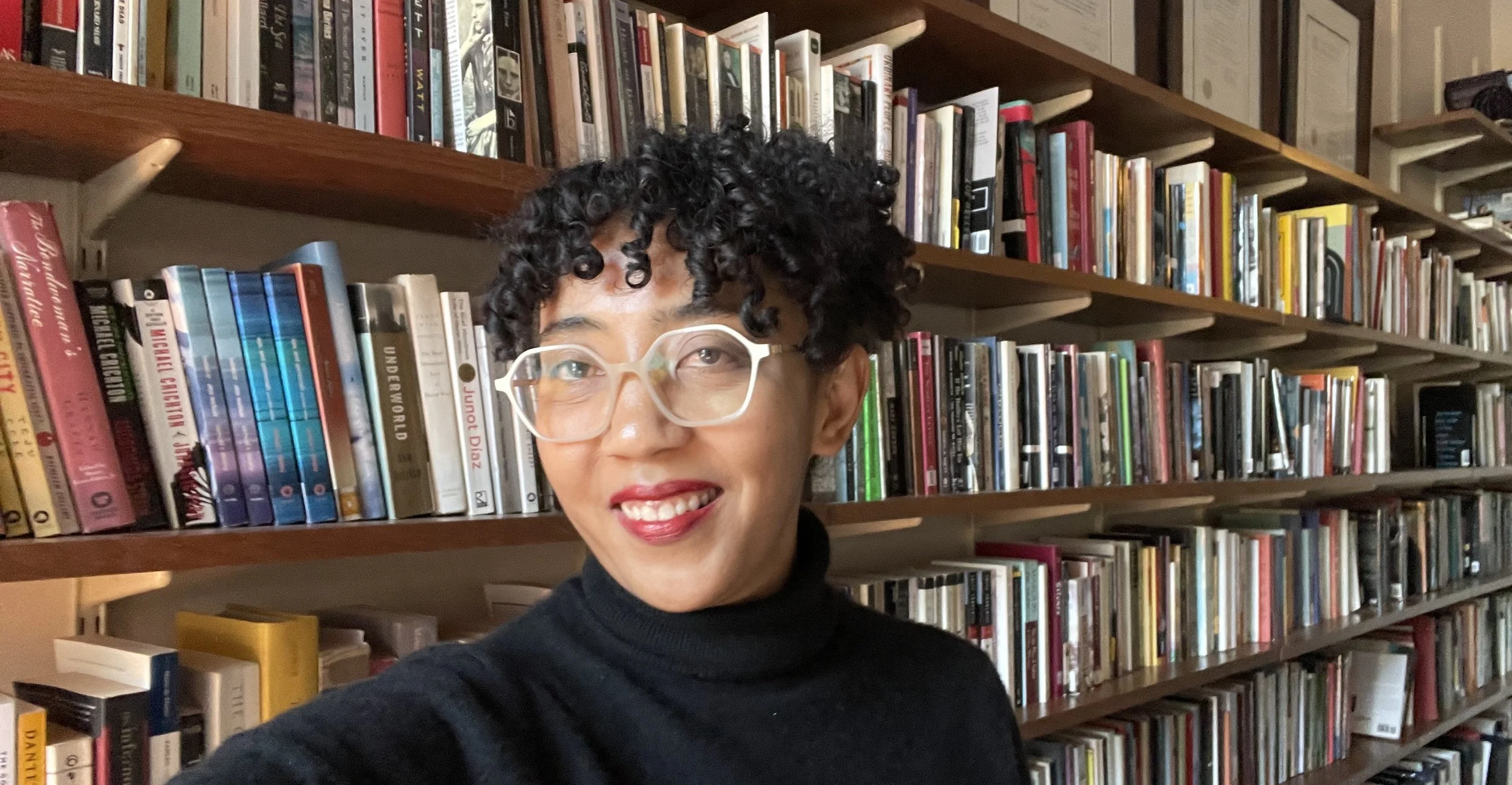
Today on The Stacks, we’re joined by writer, literary critic, and Harvard University professor Namwali Serpell to discuss her latest book, On Morrison. In this book, Namwali offers a deep dive into Toni Morrison’s career, guiding readers through close readings of everything from her well-known fiction and literary criticism to her lesser-known dramatic works and poetry. We talk all about why Namwali wanted to write about one of the most beloved—and misunderstood—authors of all time, exploring Morrison's place in the literary canon, why she and her work have been considered "difficult," and how her novels can teach us how to read them.
The Stacks Book Club pick for March is Paradise by Toni Morrison. We’ll be discussing the book with Namwali Serpell on March 25th.
LISTEN NOW
Apple Podcasts | Spotify | Google Podcasts | Overcast | Stitcher | Transcript
Everything we talk about on today’s episode can be found below in the show notes and on Bookshop.org and Amazon.
On Morrison by Namwali Serpell
The Coral Island by R. M. Ballantyne
Bridge to Terabithia by Katherine Paterson
Nancy Drew: The Secret of the Old Clock by Carolyn Keene
The Hardy Boys: The Tower Treasure by Franklin W Dixon
The Tripods Collection by John Christopher
The Bluest Eye by Toni Morrison
Their Eyes Were Watching God by Zora Neale Hurston
The Color Purple by Alice Walker
UC Berkeley (Berkeley, CA)
The Joy Luck Club by Amy Tan
The Bourne Identity by Robert Ludlum
Beloved by Toni Morrison
Jazz by Toni Morrison
Sula by Toni Morrison
Paradise by Toni Morrison
Love by Toni Morrison
Home by Toni Morrison
“Ep. 34 The Bluest Eye by Toni Morrison -- The Stacks Book Club (Renée Hicks)”
“Ep. 191 Song of Solomon by Toni Morrison -- The Stacks Book Club (Dawnie Walton)”
Song of Solomon by Toni Morrison
A Mercy by Toni Morrison
“Ep. 208 A Mercy by Toni Morrison -- The Stacks Book Club (Imani Perry)”
“Ep. 60 Beloved by Toni Morrison -- The Stacks Book Club (DaMaris B. Hill)”
“Ep. 126 Sula by Toni Morrison -- The Stacks Book Club (Brit Bennett)”
Tar Baby by Toni Morrison
“Ep. 290 Tar Baby by Toni Morrison — The Stacks Book Club (Minda Honey)”
“Ep. 338 Jazz by Toni Morrison — The Stacks Book Club (Eve Dunbar)”
God Help the Child by Toni Morrison
“Ep. 382 God Help the Child by Toni Morrison — The Stacks Book Club (Dana A. Williams)”
Desdemona by Toni Morrison
Othello by William Shakespeare
Dreaming Emmett by Toni Morrison
Beowulf: A New Translation by Maria Dahvana Headley
The Warmth of Other Suns by Isabel Wilkerson
These Truths by Jill Lepore
White Trash by Nancy Isenberg
America, América by Greg Grandin
The 1619 Project edited by Nikole Hannah-Jones
The Things We Carried by Tim O’Brien
We Were Once a Family by Roxanna Asgarian
Roots by Alex Haley
Gone with the Wind by Margaret Mitchell
Moby Dick by Herman Melville
Stamped from the Beginning by Ibram X. Kendi
The History of White People by Nell Irvin Painter
The Fountainhead by Ayn Rand
Infinite Jest by David Foster Wallace
Hangman by Maya Binyam
Uncle Tom’s Cabin by Harriet Beecher Stowe
Jane Eyre by Charlotte Brontë
How Should a Person Be? by Sheila Heti
Happening by Annie Ernaux
My Struggle: Book 1 by Karl Ove Knausgaard
All Aunt Hagar’s Children by Edward P. Jones
The Transit of Venus by Shirley Hazzard
Leaving the Atocha Station by Ben Lerner
10:04 by Ben Lerner
Transcription by Ben Lerner
Mother Mary Comes to Me by Arundhati Roy
Gorilla, My Love by Toni Cade Bambara
Season of Migration to the North by Tayeb Salih
A Wrinkle in Time by Madeleine L’Engel
A Game of Thrones by George R.R. Martin
The Old Drift by Namwali Serpell
The Furrows by Namwali Serpell
I’ll Make Me a World by Jarvis R. Givens
Ulysses by James Joyce
Middlemarch by George Eliot
The Portrait of a Lady by Henry James
The Adventures of Huckleberry Finn by Mark Twain
Anna Karenina by Leo Tolstoy
King Lear by William Shakespeare
Hamlet by William Shakespeare
Bartleby, the Scrivener by Herman Melville
Angels in America by Tony Kushner
Angels in America (HBO)
Topdog/Underdog by Suzan-Lori Parks
To support The Stacks and find out more from this week’s sponsors, click here.
Connect with Namwali: Website | X/Twitter
Connect with The Stacks: Instagram | Threads | Shop | Patreon | Goodreads | Substack | Youtube | Subscribe
To contribute to The Stacks, join The Stacks Pack, and get exclusive perks, check out our Patreon page. If you prefer to support the show with a one-time contribution, go to paypal.me/thestackspod.
The Stacks participates in affiliate programs. We receive a small commission when products are purchased through links on this website.
TRANSCRIPT
*Due to the nature of podcast advertising, these timestamps are not 100% accurate and will vary.
Namwali Serpell 0:00
I often read, like, 10 pages, and then I need a nap, and I take a little 15 minute nap, and then I never fall asleep again. So it's not like reading makes me bored, or it's just like, there's, I think it's because I used to read to fall asleep, and so it's like this like Pavlov's dog or whatever, but it's actually really, you know, sometimes I've had really incredibly vivid dreams that are about the book, and so those, those little naps have become these kind of, like delicious literary naps. For me, I've never talked about this before, so it's exciting that you asked this question.
Traci Thomas 0:37
The Welcome to the stats a podcast about books and the people who read them. I'm your host, Traci Thomas, and today I am joined by award-winning writer, literary critic and Harvard University professor, Namwali Serpell. She's here to discuss her newest book On Morrison. In the book, Namwali offers us a deep dive into Toni Morrison's literary career. She takes us through close readings of her novels, her short fiction and her literary criticism today. Namwali and I chat about how she came to this project, what it means for a book to teach us how to read it and about difficulty and Toni Morrison. Our book club pick for March is Paradise, by Toni Morrison and Namwali Serpell will be back on Wednesday, March 25 for that discussion, everything we talk about on each episode of the stacks is linked for you in the show notes. If you like this podcast, if you want more bookish conversation and content, consider joining the stacks pack on Patreon and subscribing to my newsletter, Unstacked on Substack. Each place offers different perks. You can think of Patreon as your community hub. We're doing a discord over there. We're doing monthly virtual book clubs. It's a place to connect with other readers in my newsletter, I've got a lot of hot takes. I've got opinions on pop culture and books. So that's more of a place centered around writing and thinking. And in both places, you get access to a monthly bonus episode, plus your support makes it possible for me to make this podcast every single week to join head to patreon.com/the stacks and check out my newsletter at Traci Thomas, dot substack.com. Alright, now it is time for my conversation with namwali serpell. Alright, everybody. I am joined today by Namwali Serpell. I don't know that I've ever used this as an introduction for someone, and I don't know if I've ever felt this way, but after reading her brand new book On Morrison I think Namwali might be the smartest person we've ever had. I am so excited to have you here for Toni Morrison month. We do one Toni Morrison book a year on this podcast, and you are our chosen interlocutor. And I think I found the smartest person ever. So Namwali, welcome to The Stacks.
Namwali Serpell 3:04
Oh, thank you so much. Well, I think Toni Morrison was the smartest person that ever lived. So for me, it's just an honor to write about her. So great to be here to talk with you.
Traci Thomas 3:13
That's a very diplomatic answer. You'll like this. So I have, I have six year old twin boys, and I get a ton of books sent to the house, right? And I had already read your book. I had an arc of it, and yesterday, last night, the finished copy came, and I, like, opened it, and my kid goes, Mom, is that your great grandmother? And I said, I wish, I was like, spiritually, yeah, for sure, but I was like, I like to think that in some ways, Okay, before we even get to the book, I want to talk about you a little bit sure we How did you come to books? What is your sort of bookish origin story? Where did you grow up? What do you remember from childhood reading any and all of that?
Namwali Serpell 4:02
Oh, that's wonderful question, and it's wonderful to think about my mother. My actual mother was a big reader, growing up in a small village in Zambia, which is where I'm from. She grew up in a place called Mbala, and she would tell a story of reading books under her bed with a candle, you know, that's and staying up late at night and having this candle under the bed. And she told me that there was a point when we first moved to Baltimore, and I had become a really I had become a real bookworm. I had already learned to read very young. My dad taught me to read very young. I think as an experiment, he's a developmental child psychologist. He's like, let's try this out. I mean, I remember reading from the age of, you know, like reading whole books, like from the age of, like, five. You know, but when I when we came to Baltimore, I got very obsessed with reading. I was very lonely, and books were the best companions I could find. And my mom would find me with my little like side lamp under the covers reading, and I would, of course, fall asleep. And it's so funny. There was a while where I believe that that lamp turned itself off automatically, not realizing. But the reason she let me do that is because she'd had the same thing growing up. My dad was a, you know, a big reader. My grandpa on that side, that's the British side of my family, so books were just always around. And there, I do think that the moving from Zambia to America when I was about eight and a half years old, really intensified my relationship to books. I basically lived at the local library, you know, after school. Like, that's where I wanted to be. I read so many books that it was, like embarrassing. Actually, I don't know if you I think I think I'm a little older than you, but we used to have this, like, Pizza Hut contest, and I won the Pizza Hut contest, but it was, like, embarrassing, because they were like this, the prize would have read like eight books in the wall, I read like 52 books. Like, did I actually read those? Or did I just, like, immerse myself and drown in other people's words? Because I was so lonely, you know, yeah, so that's but I, I think you know, being lonely and having that be the path to this whole world of literature is a gift, you know? Yeah, I just love it.
Traci Thomas 6:39
Do you remember what you were reading as a kid?
Namwali Serpell 6:44
Yeah, so the book that I was saying I remember reading, and like trying to read, I should say, when I was five, is called the coral island. Okay, it's like an adventure book I remember reading, and there's a there's a story that my mom used to tell about, and this will be relevant when we talk about paradise later on, that my mom would go to church every Sunday. Her father was a minister, and my father did not, and so he would stay home, and I read the Children's Bible, you know, so not the original, but the Children's Bible cover to cover, when I was about seven years old, and I had all these questions, and my mom was like, okay, read it again. So I read it again, and I still had questions, and she's like, okay, you can stay home with your father. So I remember, that's another book when we came to the US, one of the books that really grabbed me was this book, Bridge to Terabithia. Broke my heart. Broke my heart. What an incredible book. I know I was like, I still, you know, I still have a real interest in, like, speculative fiction in my own work. And Morrison also made use of enchantment, as she called it. I read a lot of like, like detective stories. Nancy Drew Tom, you know, the Hardy Boys, that kind of thing. And then, you know, in school, we were reading really amazing things, the tripod trilogy, I remember reading as a like my introduction to science fiction.
Traci Thomas 8:27
Do you remember the first Morrison you book you read, and how old you were and what any if you remember any thoughts you had at that time
Namwali Serpell 8:41
I do. So, you know, I think a lot of people encounter Morrison through reading The Bluest Eye in school, yeah, but which I'm like, she even thought that that was inappropriate. So just like, who's teaching the class? Like, it's less that the book is inappropriate, which it is, but also like Miss Jackson, or like more, like Miss like Miss Miller is just teaching it. There's this real confusion, and it really upsets me, actually, that I think it's book about a young person, and so they assume it's a book for young people, and there's this kind of, like, tokenistic, like, we're gonna and actually, the experience I had with that in high school was being given Their Eyes Were Watching God, which was, again, like, not taught to me, well, but they were like, We need a black woman, you know? But I was like, we're reading about very intense things
Traci Thomas 9:38
We did color purple in high school.
Namwali Serpell 9:40
Oh my god
Unknown Speaker 9:42
that book is
Traci Thomas 9:43
like, and
Okay, so on the show, we read one Morrison a year, this will be our ninth one, which is crazy
Was that your Is that your favorite? Do you have a favorite?
Namwali Serpell 10:03
So the way I like to say it is, Sula has my heart, okay. Beloved has my soul, okay. And jazz has my mind.
So you only got two to go right, because there's eleven?
Traci Thomas 9:44
You know what, I to this day, don't love the color purple. And I think that's why, like, I don't like the movie. I've seen the musical, I don't like the musical, like, for whatever reason, it didn't click with me in high school. And I just cannot do it like, I'm just like, yeah. It's fine, so I don't know, but sorry. So you guys know you're as you're watching God.
I think I have. Well, this one will be this. One will be nine. Paradise will be nine. So then after that, we'll just have love and home. Yeah, amazing, which it's when we first set out to do it. We started with Bluest Eye. The show was brand new. I did it with a friend of mine, Renee. Neither of us had read it. I had never read any Morrison going into this project. So every time I read a Morrison for the show, it is my first time which is, I mean, it's really fun, but also, like, I feel it's the most vulnerable I ever feel on the show, because I'm like, it's really hard to publicly be like, I don't I have no clue. Like, I probably need to read this again. But when we started, it was just like, whoever wanted, whatever black woman wanted to come on the show and do Morrison each year, they could pick so we started with Bluest Eye, and then we did beloved, and then we went back into Sula. And then, like, after Song of Solomon, we did A Mercy. And, like, we did it out of order. And I think in some ways it was sort of fun to do that, and in some ways I'm like, maybe we should have done it in order. But now that we're getting to the end, like the last few years, we've done Tar Baby and Jazz, and now we're gonna and last year we did, God help the child. And then this year we're doing paradise. And I do feel like myself as a reader of Toni Morrison and also my audience who's been on this journey with me, we're so much better at reading Toni Morrison, because I think jazz is a really hard book, and I struggled so much with jazz, but also I didn't feel any of the like, I'm failing. I felt a lot of the like, this is possible and this is possible. I'm like, this is probably wrong, but this is what I saw. And like, Oh, she loves to do this, or like, so I do feel like going to read your book on Morrison, where each chapter you take us through a book, except for at the end, we get a few books together. We get a mercy and a few of the later books together. Yes, was such an enjoyable experience for me. And I think for people listening to the show who have been reading Morrison with us, like you guys are gonna love it, because we did. We've done this like slowly, over the course of eight years, or whatever. So I guess the question here for you is like, why did you want to write this book, and how did you decide how you would tackle it? Because there are 1001 ways that you could write a book about Toni Morrison's work.
Namwali Serpell 10:00
But you know it's interesting, because I did not read the color purple in high school. I read The Color Purple as a professor at Berkeley to teach a class on genre fiction. And I was like, doing all the genres, right? So I was doing bestsellers. And so we read, you know, the Joy Luck Club, and we read like, the Born conspiracy, and we read the, you know, we read the color purple. And the thing about the color purple is that I do think you have to be older to read it, because it's actually really funny, and it's like, it's kind of remarkable to me, because that's not what people associate with that book at all. But I was cracking up when I was reading it to teach. But the same thing happened to me with Morrison. Is that because my family moved back to Zambia my junior year of high school, I missed a lot of the things that kind of books that you normally get to read in that year, including the bluest eyes. So I didn't really get to read Morrison until college. I had, I do remember, though, picking up my sister's copy, my older sister, who was in college, her copy of Beloved, like, from her shelf or from her coffee table, and opening it and being like, what? Like, just did not understand anything that was happening. So I then, like, had to, you know, actually had to read it because it was assigned to me, and jazz was also assigned to me in college. So I read those, and I wrote papers about them. And it was very like, I mean, to me, I was like, I'm being assigned, you know, great canonical literature as a young English major in college, like I didn't really, I didn't really read that many books without a pencil in my hand in college. I and so my the experience that sits with me the most about an encounter with Morrison was reading Sula in when I was in graduate school. I was like, procrastinating. I'm supposed to be working in my dissertation. And I had read Morrison. I had written about Morrison, but I had never read Sula, and I saw on my advisors shelf, because I was house sitting for her. It was like, Summer, that old edition of Sula that has, like, the Afro and like, the best cover. And I was like, Oh, I always meant to read this one, and I opened it, and the whole day was just devoted to that glorious experience at the end of which, of course, like everybody, I wept and wept and wept.
Traci Thomas 10:49
You call yourself a close reader in in the introduction chapter. And I was laughing so hard, because I think of myself as extremely, like, not a close reader. And so I was like, Oh, we're gonna have so much fun, because I can't wait to read a book with a close reader, obviously, like you've written about paradise. And so for people listening at home, I have not read paradise yet. Obviously, you have. I will read paradise between our between the time we record, and I skipped the paradise essay in Namwali's book, so that we could have, like, a real, true conversation. Once we finish recording, I will run and read it, because I'm really excited to but I was like, let me not get Namwali's like, thinking in my mind, so that we can really, like, come at it and discuss the things that maybe we come to differently.
Namwali Serpell 15:47
This is exactly how I read. You know, when I when there's like, a review or a work of criticism, an essay about a novel, even a preface or forward, I skip it because I'm like, I want my own experience first. And I also think Morrison is one of those writers where she is so careful about what she wants you to experience through the form of the book. So you actually have to, like, let it pass over. You have to join the creation of the of the book the world. You have to feel all the feelings. Yeah, it's only like, when you revisit it, either rereading it, or, you know, hopefully reading a work of criticism or an essay about it, like the ones in my book that you then start to understand. How did she make me feel those things, right? Like, how does she do that with language? So it, for me, it's very much a book that promotes the rereading of Toni Morrison.
So there are different ways that, as you said, when you read more Morrison, you've, you feel like you've learned how to read Morrison, yeah, and part of that is because you start to recognize patterns of what she's doing. But part of that is also because Morrison cues you with, you know, the, the technical term for it in literary studies is covert metafiction. But to break that down, what it means is it's like subtle ways of pointing to what the text is doing, even as it is telling you the story, right? So for you know, a wonderful example is actually from the opening page of The Bluest Eye, where I should say, it's always complicated for me when I cite this, because I'm like, it's not exactly the opening page, right? Because she begins with this very experimental Dick and Jane story, right? That she then runs together. But then when the novel, you know, really begins. We have the famous opening line quiet as it's kept. It was wonderful to look at the manuscripts in the archives and realize that she added that, that that was not originally the opening as she but she knew that's the one, that's the line. But the end of that opening, which gives you the whole plot of the whole novel in the first paragraph, which she does in jazz as well. She loves
Traci Thomas 19:15
she doesn't believe in spoilers, even though I do.
Yes, it does. I mean, my big thing is, once we finish all the books, I plan to do a Toni Morrison year where I read one of the novels a month after having read them over the course of, like, 10 years or 11 years. That's my that's my own little personal plan. I want to know about you say this in the book. And I think Toni Morrison says this as well as, like, a not a novel should teach us how to read it. Or, like, yeah, the novel itself just how to read it. What does that mean to you? How do you interpret that?
Namwali Serpell 10:49
That's a really good question. I mean, I think, you know, the way that you've described your podcast, it's like, you know, it's, it's like a reading group. It's also like, like a course there's like, it's like a syllabus, you know, like, it's like you read the text together and you talk about it, and that's precisely where my book came from. I taught a course on Morrison, and it was a lecture course, and I moved chronologically, and it was an opportunity for me to revisit a lot of the books, but it was also for me an opportunity to fill in the gaps to read books for the first time that I hadn't read. So The Bluest Eye, I really read maybe, maybe I read the second time. But for me, it felt like a first reading of The Bluest Eye, and it was the first time I read tar baby. It there was a way in which it allowed me to kind of see the whole of Morrison, which felt very important for two reasons. One, I wanted to show my colleagues and my students that Morrison is a single author course, type of author that you can spend a whole semester. I mean, you could spend a whole year and she would not even reach, you know, level one of the depths of Morrison's work. Every work is so profound, so rich, and they're all very different from each other. I know we have a sense like, oh, Morrison has a style, and there are patterns, there are things she likes to do, but the every she's challenging herself, every book to do something new and interesting, because like to interest herself. You know, she's like often does things on a lark. She does things just to see. And I think that allows students to see the ambition right. And of of that, I also felt like it was important to to have that breadth, just for my own sake as a writer. And Morrison said, you know, writing for her was a slow and advanced form of reading, and I always felt the same way, like people would ask me about my writing process as a novelist, and I would say, I feel like I read my books into being and being able to think about reading as this really productive way of thinking through the possibilities of what the novel can do. I mean, Morrison broke the novel form open. People don't really say that they I think they're much more interested in, like, what the stories were about. But as a as a practitioner of the art of writing fiction, the kinds of things that she was playing with and doing, the way she was pushing black forms in particular, you know, the book jazz, she says, you know jazz, that novel is not about jazz. It is jazz. She is using improvisatory techniques. And when you were talking about, like, you know, not knowing or being wrong about something, that is a crucial part of the form of jazz, where the narrator, at some point is like, Oh, I got the characters wrong. It's incredible to be able to do that kind of thing. And I just, I just, was like, this is going to be an education for me to write this book. And then when I got the opportunity to visit her archives, revisit her interviews, and get all of the context for what she was trying to do, I just it, just, I it was, it was a project that felt like it was meant to be.
Yeah, exactly the thing about is like, as she says at the end of that, she says, there's really nothing more to say. I've told you the story. Yeah. And then she says, except why? Why did it happen? But since Why is difficult to handle, one must take refuge in how. And what she's doing is she's immediately making you, priming you to, okay, I'm going to be reading this not with an eye to what happened and like that suspense of like, Okay, what's next, what's next, what's next, yeah, and what's the plot twist? What you're going to be reading it towards is, you know what happened, right? But why did it happen, and how did it happen, right? And that that's the kind of thing I mean by covert metafiction, right? These subtle ways of like, I'm going to teach you how to read this. I'm going to show you, through my language, through my form, exactly how you're to approach this book. So there's, there's all these scenes, for example, in Song of Solomon, where men are joking with each other about really dark things. And, you know, I talk about this as a kind of version of signifying, or the dozens, as we call it, which always has this edge. It's always a little aggressive, you know. But I think part of what Morrison is doing there is she's cueing us to understand that the purpose of reading this book is to be in conversation about it, and you can disagree. Actually, you might have a totally different understanding of who's right and who's wrong. Who did the right thing, who did the wrong thing, even what happened in the book? Yeah, but there is something productive about talking about it. There's something pleasurable about talking about it regardless, right? So that's, that's what I mean about Morrison teaching us how to read in the book itself.
think Morrison is one of those writers where she is so careful about what she wants you to experience through the form of the book. So you actually have to, like, let it pass over. You have to join the creation of the of the book the world. You have to feel all the feelings. Yeah, it's only like, when you revisit it, either rereading it, or, you know, hopefully reading a work of criticism or an essay about it, like the ones in my book that you then start to understand. How did she make me feel those things, right? Like, how does she do that with language? My goodness, yeah. So it, for me, it's very much a book that promotes the rereading of Toni Morrison.
Traci Thomas 20:39
Yes, it does. I mean, my big thing is, once we finish all the books, I plan to do a Toni Morrison year where I read one of the novels a month after having read them over the course of, like, 10 years or 11 years. That's my that's my own little personal plan. Yeah, I want to know about you say this in the book. And I think Tony Morrison says this as well as, like, a not a novel should teach us how to read it. Or, like, yeah, the novel itself just how to read it. What does that mean to you? How do you interpret that?
Speaker 1 21:14
So there are different ways that, as you said, when you read more Morrison, you've, you feel like you've learned how to read Morrison, yeah, and part of that is because you start to recognize patterns of what she's doing. But part of that is also because Morrison cues you with, you know, the, the technical term for it in literary studies is covert metafiction. But to break that down, what it means is it's like subtle ways of pointing to what the text is doing, even as it is telling you the story, right? So for you know, a wonderful example is actually from the opening page of The Bluest Eye, where I should say, it's always complicated for me when I cite this, because I'm like, it's not exactly the opening page, right? Because she begins with this very experimental Dick and Jane story, right? That she then runs together. But then when the novel, you know,
Namwali Serpell 25:49
that's almost a direct quote from Morrison. She says, you know, I'm not here to give her the answers. The novel is there to open up a bunch of questions. And she she she actually connects us back to African folk tales, where she says, You don't close in those stories with the moral of the story or the message. What you do is you turn to the reader or to the listener and you say, what do you think? What do you think happened? Right? And that is an ethos for her, because she's like, that's the purpose of this work of art is to create conversation in a community and to talk about the big things. It's almost like a work of philosophy. You know, you're supposed to argue about it, you're supposed to talk, you're supposed to be in dialog about it. And you know, for me, as a interpreter of literature, what I'm trying to do for students is, is just to articulate, you know, what is the question? And why is there a question, right. And also, how does that question manifest in the book? So, you know, the reason that we don't know what happens at the end of tar baby is because she very purposefully merges the narrative events that have been taking place. We have characters. We know they're going to a place that we know they're approaching, you know, an island, but everything is dark, and then she's using her language to incorporate the tones and even like the words that we associate with myth, right? And this is specifically the myth of the Chevaliers, on isle de Chevalier, where it's the myth of these horsemen that are blind, you know? And that's why it's dark at night, yeah? And no it's at night, isn't it?
Traci Thomas 22:19
Okay, speaking of these discussions and like, what happened in the book, there are a few books too that come to mind for me that have these big questions that every reader is like, what was that? In jazz, it's like, Who is this narrator? And then in tar baby, it's like, what's happened here? I remember closing the book and being like, I love that. I have no clue what the ending was. And I text friend of the podcast, Kiese Laymon, and I was like, Hey, I just finished Harvey. Be like, what happens at the end? And he was like, dude, nobody knows. And I was like, oh, okay, thank God. I was like, I thought I missed something. But in your book, especially for this narrator, you offer an answer. I won't say it's the answer. You offer an answer. How much pressure did you feel in writing this book to answer some of these types of questions that many readers sort of come away with?
Namwali Serpell 25:33
Well, I think it's always more important in talking about literature to clarify the question than it is to answer it. Okay, because part of the reason,
Traci Thomas 25:47
see, you are so smart, oh my gosh,
I thought he walked into the mist, but I can't remember, yeah, in my mind, in my mind, the image that I have, because I'm like a reader who visualizes, is that he walks into like a misty thing, but there's also a lot of mist in that book in general. So it could be that I've just sort of put it could be night. It could be a foggy night.
Namwali Serpell 20:01
I think it, I think it probably is a foggy night. And you're right, and I hadn't, I hadn't actually recalled that. But that is, that's, this is the kind of thing I love about talking about books together, is that I talk a lot about, like the fog, which is being compared to, like the hair of on the on, yeah, right, and, and that is fog at night. But it only just occurred to me that that is a pattern that she's coming back to at the end of the book. Wonderful. That's a wonderful observation in either way. You know, fog, dark, both obscurity. But since she's also introducing the language about this myth, which is that these that there was a slave ship that was wrecked and the Africans swung to shore and then learned how to ride these horses, and that they are still riding at night, and they're but they're blind, right? It's just an incredible image. And she makes all this up, by the way, the island is made up. The story is made up. But She adopts the language of the myth while she's talking about a character. So the character is running, but then you have, like, the sound of horses, you know. And so you're like, Wait, are we in the myth, or are we in the story? And because we don't know whether he reaches his goal, we are, she's doing this classic morrisonian trick of opening the door to multiple different interpretations. And she's talked about this with tar baby in particular, she says, you know, because it's like he's going back to a former lover, or he's trying to and so the question of whether he joins the chevaliers and is just with those men riding in the dark, or whether he goes and finds J Dean, she wanted that to be an open question, because that book is very much about love, but also about the war between men and women.
Traci Thomas 27:57
Yeah, we have to come off this. I could do like, seven hours with you on this book. One of the things that I always talk to people about when we talk about Morrison, I have a background in theater. I know she had a background in theater, and I cannot read her work and not think of Shakespeare. And I feel like she does not get enough comparison to Shakespeare. And I like, to me, Song of Solomon is like, so Shakespearean. I just to me. And also tar baby, like, the scenes in tar baby are so theatrical. Like the two dinner scenes. I'm like, put this on a stage so I don't know if you in your research and your trips the archive, if you came across any connections to her and Shakespeare, but if you did want you to tell me about them,
Namwali Serpell 30:28
yes, no, of course. Well, so the theater was very important to her. She She played Queen Elizabeth in a Shakespearean play at Howards. There's a wonderful image of her looking regal.
Traci Thomas 30:42
She always did,
Namwali Serpell 30:43
but it's nice to see. It's like young but, and at that time, it was young Chloe, because Toni was her, was her nickname on her baptismal name. But she also studied drama in various capacities. She's interested in Greek drama in her master's thesis, but I think most pertinently, to your question about Shakespeare, she wrote a play called Desdemona, which is a response to Shakespeare's Othello. And what's interesting you might it might be sort of surprising that she would choose to write about the white woman in the play. But actually, what she's interested in is desdemona's nurse, who, in Othello, is named Barbary or Barbara, which is very likely an allusion to barbarian, right to the barbarians and the coast of Africa was called that during Shakespeare's time. So there's a really strong implication that not only does she fall in love with an African, but that her nurse was an African. And this nurse who Morrison renamed Sauron, she gives her like an African name ends up playing songs and singing songs, and is a plays a role in her version of this drama, it's a remarkable play. It's very odd. she also Morrison also wrote a play called dreaming Emmett that for a long time we thought was lost. We thought all copies had been destroyed. It was only produced once when Morrison was at SUNY, I think, for a year, but now we have copies of it in the archives that we can study and talk about, and I know that she gave a copy to a critic to write about, and also to a company who was thinking about producing it. So we might actually get to see that again someday. Be so great.
Traci Thomas 32:40
The Barbary scene in Othello is my favorite. Is my favorite scene in all of Shakespeare, the scene between Amelia and Desdemona. It's like the most, I mean, maybe not all Shakespeare, but it is up there. It is perfect scene. Beautiful. It is a beautiful scene. So when I was reading that in your book, I was like, of course, it comes like the seed comes from this perfect seed. Yeah. Okay, before we come off, Morrison, my last thing I want to say to you, and this is actually where your book starts. Your introduction is about how Toni Morrison was a difficult woman, complimentary. So the way that I read your book, speaking of books, teaching us how to read them, is I actually read, I would say 75% of your book, essay by essay, one day at a time, out loud, full voice to myself. So I would sit in a room alone, and I would read it out loud, because I sometimes need to hear arguments made. I oftentimes will start Toni Morrison books in this way, and then once I get the rhythm, I'll switch to just reading in my head. But I also started this book the week of the internet freak out about how Toni Morrison was mean to someone at a book signing, and it was like, you know, I hate to say it. Someone put on threads. Hate to say this, but I met Toni Morrison once, and she was rude to me, or something along those lines, yeah, the entire thread, universe, Instagram, just everybody was then either saying yes, she was rude to me or No, she doesn't owe you anything. And in the midst of this chaos, I am reading your opening chapter about how Toni Morrison was a difficult woman. Again, complimentary. Yeah, I would love for you to tell me why you wanted to start your book with us thinking about her in that way.
Namwali Serpell 34:33
I absolutely. I mean, it's well, one of the things that's so telling about this recent discourse, let's say to me, is that it's, it's not new, like this is how they all this is how people talked about Morrison from the beginning, right? And there I start with, you know these profiles that they that two different magazines did of her, or newspaper and magazine did of her right after song Solomon came out, and they both are like, yeah, she's real, like, spiky and contrarian. And in one of them, she says, I really relish being difficult. It's something I've come to really relish. And I was really fascinated by the way this public image of her difficulty intersected with what we might call her contrarian political takes, which often are very not off putting to people, but they can really, like, you know, shock you. Yeah. And I was really interested in how both of those, the personal difficulty and the political difficulty, intersected with what is widely acknowledged to be her literary difficulty, right? Which is something we prize in people like Shakespeare or people like Faulkner or people like James Joyce, but that we tend to find frustrating, you know, in people like Morrison. And she cites someone in one of these early interviews who was like, I found it really hard to, you know, understand what it is was you were trying to convey. She's like, wow, you must have had a really hard time with Beowulf. And it's like this kind of sense that, like, you know, a black woman should not be difficult, I think really pervaded her career from beginning to end. You know, Paradise, which we were talking about before someone interviewed her. And this is 97 right? So those earlier quotes are from, like, the late 70s. In 97 she gets someone saying this book has been widely considered to be difficult. And she says that makes me breathless to hear that this is difficult writing like she was incensed. And she was like, to me, black readers, we are fastidious. We are and she was like, jazz is one of the most difficult forms ever to exist, but we still love jazz like, what is the what is, what is making this so pervasive a way of understanding me and of judging right me for this. And I found, you know, in going through the archives, I found her notes for you know, she did lots of little public events, and she was asked to speak at the opening of a center for music, and it was in honor of a black woman who's a pianist and a composer named Mary Lou Williams. And Morrison says, you know, I never met her. I didn't know her, but I asked around, and I said, You know what she like? And people said difficult, and she said difficult, like in the work or like in her person, and they were like, all of that. And she was like, and this really pleased me, because it means that she insisted on being taken seriously. And I was like, this perfectly captures what I think needs to happen in our understanding of what difficulty might be for a black woman writer, that we need actually to take it seriously, rather than take it as an excuse to judge her or not to read her or dismiss her, or to tear her down and be like she doesn't deserve all of that. You know, that aspect of Morrison had purpose. What was really interesting to me is how much of her interviews is dedicated not explaining her work, but justifying it, right? Justifying the ambiguity, justifying the difficulty, and talking about what it is meant to produce for us, what is meant to do for us, right? I think we think of difficulty as something that pushes you away. It's like, oh, this is off putting it's, it's so smart, but it's, and it's also like, so hard that it's like, it's, it's too challenging, and I'm tired, you know, I want to enjoy my book, but she felt like, if I give you everything, then you're just going to passively receive it. Yes, and what I want is for you to lean in and work out what it is that's happening. And that participatory ethos, she says, I had leave gaps in spaces in the text for the reader to step in. It's not easy, and I think we are losing, as I'm sure you know, the capacity to read in this way. But I think you're right, that openness, allowing yourself to experience it, allowing yourself to be challenged, allowing yourself to be confused, uncertain, knowing that there is a payoff here. There is a reason that we're doing this.
Traci Thomas 39:46
I mean, I think that's why this project of reading these books, kind of publicly for the first time, has been, like, I said, like, both sort of a little bit embarrassing and also, like, really fulfilling. Is that it I do feel like, in some ways, I get to model that, like it's okay not to know what happens at the end of tar baby, like it's okay I, you know, I think he's dead. I think he dies. That's what I think. But like, you know, who cares, you know, and I think that, like I do, I do think we've really lost the ability to be uncomfortable with being challenged in a lot of what, not all of us, and not for everything. But I do think like engaging with art in a challenging way is just something that, like we are not teaching people is not valued. And I think Morrison really makes us confront that in a lot of ways. Yeah, okay, we're gonna transition. We're gonna take a quick break. We'll be right back. We're back. I didn't prep you for this, but we do this every month. It's called Ask the stacks. Somebody emails ask the stacks at the stacks podcast.com, I need more of these, so please send them to me. This one's from Deanna. She's asking for a book recommendation. We're going to give her a few so here's what she's looking for. Hello, Traci and guest, I am in the process of building myself a personal curriculum for the 250th anniversary of the US such as it is, insert all the caveats I already read with the podcast and participate. So I know I'm always learning about this country with this crew, but I'd like to be more intentional about the selections for this curriculum. My question is, what are some recommendations that you feel are quintessentially American, or explain something about this country that I simply must add to my list? Can be fiction or non fiction, genre, poetry, whatever. Here's what I have thought of so far, The Warmth of Other Suns. This would be a reread, but it's a duh for this project. These truths by Jill Lepore, white trash, America, America, the 1619, project, the things we carried we were once a family roots, The Joy Luck Club, and then, as the final sign off, as a total troll move, Deanna says, I know Traci is going to say Gone With the Wind, and I'll allow it. What else would you add to the list? And it's true, I would say Gone With the Wind. So you can do one to three recommendations. If you would like to start, you can or I can start. If you need a moment to think
Namwali Serpell 42:14
I don't need a moment to think. I will suggest two possible Morrison novels, a mercy, which is about America before it really consolidates into the America we know and is a wonderful evocation of the chaos of what was both an Edenic and a kind of hellish world where people from all different walks of life and cultures are kind of intersecting in very surprising ways, and Morrison did a lot of actual historical research for that novel. So it's it's a really amazing book, if you find it too complicated, it is a complicated book has multiple narrative styles, and there's a narrator, but then there's also a character who narrates, I would recommend her book home, which is a novel that's very interested in the homeland that is America, and is very interested in the various aspects of American history that have to do with claiming a home, but also being pushed out of your home. And I think it's again, a really wonderful book where you again have a character sometimes talking back to the narrator, which is amazing. But I think those are two very slim Morrison books that would be great. And then I'm gonna have to say it, and I don't know if you're gonna have time for this, but Moby Dick, gotta go with my Melville. I mean, that is a wild book, and Morrison loved that book. Her reading of that book is incredible. You know, we we often talk about, like, Ahab is going after the great white whale, and she's like, Yeah, the whiteness of the whale, which is the title of a chapter that's American whiteness, right? Let's talk about it, and let's talk about it in relation to the multicultural crew of the Pequod, right? So I think those are my three that I would those are so good.
Traci Thomas 44:21
We did a mercy here with Imani Perry, which was, and that's her favorite Morrison. And so she picked it. And that was, that was, I think, for me, the hardest one, because we read it sort of early in the process of reading these books. And it's a tricky one, but it brought so much to it like, because Hello.
Namwali Serpell 44:42
So one of the one of my favorite possibilities, is that, because the book was originally titled mercy in drafts and then last in the very last manuscript, someone has penciled in a and both on the title page and on the last page where it's cited and my friend Neil was like, you know, a mercy is almost an anagram of America. And I was like, wow. So I talk about the novel's anagrammatic style, because I do think it's like jumbling identity.
Traci Thomas 45:14
Yeah. So good. Okay. Deanna, here are mine. My first one is stamped from the beginning by Ibram x kendi, I think in some ways, some of his books have sort of lost he's lost his way in some of his books. Not this one. This book is a banger, okay. It won the Pulitzer for a reason, or the National book award or whatever it is, doing a lot of heavy lifting for the creation of race in America. And it is worth every page. My other recommendation, which I the other two I have not read, but they are on my American reading list. One is the history of white people by Nell Irvin painter. I've heard it's a fantastic history about whiteness, which I think, you know, we talk a lot about white people, but we don't talk a lot about whiteness in the ways that we talk about and sort of pathologize other ethnic, racial groups. So I'm and she's brilliant, so I'm just really curious about that. And then this other one, I have this crazy Reading project going on this year, by accident, where I'm reading like white nationalist texts. It's happened to me somehow this year, and so now I'm fully in it. And the one that's on my list that I actually think maybe we all need to be reading this book is the fountainhead by Anne Rand, because this book, every man in power loves this fucking book. Okay, all these assholes, they love this book. It is a Republican just fucking manifesto. I bet, I bet Ted Cruz has a tattoo of it on his heart. And I think that the books that these men are reading are currently shaping our country in a way that we're not giving them credit for. I also think, like, Infinite Jest. All these men love Infinite Jest. I'm like, what is that doing to the men, and in turn, what is that doing to the rest of us, right? So, like, I do think there's something interesting about reading a book like The Fountainhead that is this novel that has captured the imaginations of so many people who wield power and in an evil way. So I don't know. So, like, that's like, something that I would throw out there. It's not as like, you know, it's not as enjoyable as, like, The Joy Luck Club, certainly, but I think it might help, like, shape some of the other pieces of the history that you're bringing in. So those are my suggestions. Great people at home. Email, ask the stacks of the stacks. Podcast.com to get your questions. I read on the air, and now we turn to you. We always start here. Two books you love, one book you hate.
Namwali Serpell 47:54
I mean, when we were talking about difficulty, a book that I read that's a debut that I really love came to mind, which is my opinions. Hangman, oh yeah, yeah. I really, I really love that book.
Traci Thomas 48:10
It's difficult complimentary.
Namwali Serpell 48:13
Well, it's difficult in the sense that you really don't know what's going on, but then it like clicks together at the end, and it's also very funny. And I'm very into, like, books that are smart and funny. It also, like, resists a lot of the things that we want to say about Africa, because it's set in a kind of unnamed African country. And so I also really love that about it. I mean a book I hate. I'll just jump to because it came to mind when you said, Gone With the Wind is I really hate Uncle Tom's Cabin. Oh, yeah, but it's an important book, and in some books, you know, it's a book that you could put on a list about America. I was just thinking about it because I recently taught Jane Eyre by Charlotte Bronte, and was realizing, in looking over my old notes, that she was a huge fan. She was really interested in slave narratives, in the slave movement, and thinking about or the anti slavery movement and the abolitionists, and thinking about how she incorporates parts of that into Jane Eyre has been fascinating. I think I'll say Jane Eyre, I just taught it. It's a book I adore. Every time I read it, I find something new. And there are parts of it that like pierce my heart, and that also just, you know, my students were like, this is a really radical book. And I was like, yes, there is a moment. This is a woman in 1847 saying to her boss, who is twice her age, I am your equal. Like, that's an actual quote from the book. It's incredible. So yeah, I'll say, I'll say, Jane Eyre,
Traci Thomas 49:55
what are you reading right now? And do you read multiple books at once?
Namwali Serpell 49:59
Well, I'm reading to teach, and so it's very hard for me to read books for pleasure when I'm in the middle of the semester. I just finished rereading Jane Eyre. I just finished rereading for the other class I'm teaching Sheila Heti's how should a person be? So I'm teaching a genre fiction class, which is also a creative writing workshop. So they're going to write their own genre fiction, and I'm teaching an auto fiction so that says very, very different from each other. So Jane Eyre and, you know, Sheila Heti, I just reread Annie Ernaux's happening also for the auto fiction class. And I have in my possession, I only taught the opening of Knausgaard my struggle, but I have volume one, and if I can find even an inch of time in the next stretch of book tour, I'm gonna, I'm gonna try to spend time with that book.
Traci Thomas 50:56
Are there any books besides the first volume of my struggle that you're looking forward to reading personally?
Namwali Serpell 51:05
Can I say two? One is Edward P Jones's all aunt hager's Children, Which is, it's a book of short stories mostly set in DC, and I'm writing a novel that's in DC, and his stories are just incredible, my God. So that was like, I was like, I was like, this is literally a new favorite, you know, short story of mine, which is called Spanish in the mornings, and then the other, the other book I read for the first time last year is a book by Shirley hazard called the transit of Venus. It's just an incredible book. Okay, but so what am I looking forward to for personal reading. I'm teaching Ben Lerner's Leaving the Atocha Station and I'd like to read 10:04 and he has a new novel coming out, so I'm looking forward to that. I'm really excited to read Arundhati Roy's memoir about her mother, Mother Mary comes to me, yeah, I would really love to read that. But you know, a lot of the books I'm surrounded by, mostly my husband's books here in our house in Cambridge, and it's like, I just walk around and I just like, pull up. I'm like, Oh, I always wanted to read this one. And right now, Toni Cade Bambara's, gorilla, my love. And I don't know how to pronounce his name, but Tayeb Salih season migration to the north.
Traci Thomas 52:35
So we did that for book club here a few years ago.
Namwali Serpell 52:38
Yeah. So that's, that's the other one that I but these, I mean, I know that I should be saying, like, newer books that are on their way out, but I don't have to say that.
Traci Thomas 52:48
Everybody gets to say what they want. Are there any genres that people might be surprised to know that you love, or any genres that you sort of avoid?
Namwali Serpell 52:59
I love and this is like, music. For me, it's like, I'm like, I love all music, but I'm not really that well versed in heavy metal.
Traci Thomas 53:09
Yeah, that's how I feel, I love music, except for, I don't know seven different kinds of music,
Namwali Serpell 53:16
And for, for genres. Again, I'm a very I'm like, right now I'm, like, thinking about a spy novel that I want to write. Like, I love all genres, but the one genre that I have some trouble with is fantasy. it isn't my favorite. But I'm sure there are exceptions. Like, I love like, A Wrinkle in Time is one of those books that I read as a young person that just like, blew my mind. There are aspects of bridge to Terra with you that are a little bit fantasy, like, you know what I mean, so, and I love Game of Thrones. So, you know,
Traci Thomas 53:49
I don't, I don't particularly care for fantasy either. I think speculative is sort of like speculative with a twist of science fiction. I can go but fantasy is a struggle for me. I just, I'm such a nonfiction lover that it's sort of hard for me to go there mentally. Like, I, like, I it's easier for me to be like, this is something that could happen, as opposed to like, dragons. I'm just like, Okay, it's a lot of suspending my disbelief.
Namwali Serpell 54:15
Yeah, yeah. I just like, I like, there to be certain like, limits to ground me.
Traci Thomas 54:20
Yes, need an anchor.
Namwali Serpell 54:22
Yeah, totally. But like my first, my first novel, The old drift, has historical fiction, magical realism, or, you know, fairy tale, social realism, science fiction, and then a little bit of spy fiction at the end. And my second novel is really interested in, like noir, but also like Gothic, like, I'm riffing a lot on Edgar, Allen, Poe and Hitchcock, so I'm like, yeah. I mean, like, my goal in life is to be as open to different genres as Morrison was, right. She incorporated genres from all over the place in her work too.
Traci Thomas 55:08
That's a controversial take right there,
Namwali Serpell 55:08
If I'm drinking tea, I am, like, literally jumping up after
Traci Thomas 54:55
Yeah. How do you like to read? What is your ideal reading set up? Where are you, how many hours a day, snacks and beverages, temperature, music, you know? tell us what's the dream reading sitch for you.
Namwali Serpell 55:00
So no music, because it's too distracting. I like quiet space. I really need to be warm that can involve as I have right now, an electric blanket on my feet or my lap, or ideally, sunlight. I just, I love being I love reading in the sun. And so that can be outdoors, if I'm in a, you know, I'm in a sunny place, but it can be indoors. I'm usually sitting down and but sometimes I'm lying down, I won't lie and I mean snacks and beverages. Oh yeah, I love I, like, just the other day I, you know, girl dinner, as we call it, I've just had, like, tortilla chips and salsa next to me while I was reading. Jane Eyre, yeah, I love having snacks and like bubbly water. I don't particularly like tea or coffee, because that's just too many bathroom breaks to interrupt the reading. And also, in terms of
Traci Thomas 55:25
That's fair. I'm just like, I love it. I follow the logic. It's just like, you might be the first person ever to say that on the show. And I really like, and, you know, in terms of the amount of time, like, three to five hours are like, perfect, like, and it really sort of depends on the book, right? So it's like, if it's a book that's like, hard and, you know, or if it's a short story, or a short story collection, like three hours, but if it's like, longer than five hours, and I it's something that is, and this is maybe because I don't do caffeine, but I've realized that recently, I mean, I shouldn't say recently. This started when I moved to California, because I remember distinctly this happening. I often read, like, 10 pages, and then I need a nap, and I take a little 15 minute nap, and then, and then I never fall asleep again. So it's not like reading makes me bored, or it's just like there's, I think it's because of what I was telling you at the beginning, which is that I used to read to fall asleep. And so it's like this,
Like Pavlov's dog or whatever
Namwali Serpell 57:23
Exactly, but it's actually really, you know, sometimes I've had really incredibly vivid dreams that are about the book, and so those, those little naps have become these kind of, like delicious literary naps. For me. I've never talked about this before, so it's exciting that you asked this question.
Traci Thomas 57:42
Okay, this is our little speed round, and then we're pretty much out of time. We're out of time, but yeah, like you. So we're gonna keep going, as long as you'll let me. What is the last book you purchased?
Namwali Serpell 57:56
Jarvis Givens. I'll make me a world.
Traci Thomas 58:01
Okay, it's a friend of mine. Amazing. What's the last book that made you laugh?
Namwali Serpell 58:06
How should a person be?
Traci Thomas 58:07
What's the last book that made you cry?
Namwali Serpell 58:10
The Transit of Venus
Traci Thomas 58:12
What's the last book that made you angry?
Namwali Serpell 58:15
I read an article about about AI recently, and it it made me really angry. Because I was like, I know the writer of this article is smarter than this, but they completely and totally drank the Kool Aid that AI is thinking and feeling and speaking. And I was like, This is so irresponsible to write this essay, which I know that you know better. So I'll say that,
Traci Thomas 58:46
Okay is there any book that you feel proud to have read?
Namwali Serpell 58:52
Many the long ones, especially. I'm very proud to have, I'll just say reread James Joyce's Ulysses. That's like a real it's a real doozy of a difficult book.
Traci Thomas 59:09
Are there any books and people take issue with the word I'm going to use, so sort of go with the spirit of the question, are there any books that you feel embarrassed that you've never read?
Namwali Serpell 59:19
Oh, there's so many. This is, like, my favorite like thing to ask you know other people in the books world at parties like, what's your shame book? Yeah, I'm slowly remedying my shame books by reading them every summer. So I actually have to think now. But I hadn't read middle March by George Eliot. I hadn't read A Portrait of a Lady by Henry James, so I read those. Oh, I am ashamed that I have not read all of Proust
Traci Thomas 59:48
None of the books you've listed have I read. But you're like a serious person.
Namwali Serpell 59:55
Well, it's, I would just say I'm very serious about literature.
Traci Thomas 59:59
You're like a serious, you're like a serious, like literary figure. This is my this is like my it's my job, but I'm an unserious literary person, and so I sort of got to craft this like unserious person, so I don't have to read Proust or whatever.
Namwali Serpell 1:00:17
But part of the reason it's embarrassing is because the parts that I have read of Proust have been so influential, and so I'm like, I really ought to have subjected myself to, you know, the the months it would take to read all of In Search of Lost Time, because I just know it's going to be revelatory. The way that reading all of Morrison has been revelatory
Traci Thomas 1:00:40
Right, right, right, right. Okay, I know that you are a professor, so this so you kind of have to go with me here. You were teaching a high school class. What is the book you would assign in school?
Namwali Serpell 1:00:55
Just
This is gonna be controversial. I mean, it gets assigned all the time, but I would Huck Finn, Oh, okay. A lot of people are like, Oh, we shouldn't teach that book because it has the N word in it and but I'm like,I think it's, I think it is a remarkable book, and I think it's a book that students really respond to, and it really, actually makes them think about things that they hadn't thought about before. I taught it in a college level course at Berkeley, when I was teaching there. And I mean, students were their minds were blown. They, you know, you assume it's this, like little adventure story or what have you, but it's like, this is moral philosophy.
Traci Thomas 1:01:38
Actually, I've never read that. I'm not that embarrassed about it.
Namwali Serpell 1:01:42
No, you don't need to be embarrassed. Yeah, yeah, no. There's no reason to be embarrassed about not reading any book.
Traci Thomas 1:01:48
That's why people always bristle when I ask that question. They're like, I'm not embarrassed about not having read. And I'm like, Okay, you get the vibe. I'm just saying, like, what's the book that everybody's read that you haven't read?
Namwali Serpell 1:01:58
Well, it's like, it's like, what's the book that's like, on your to do list? Yeah, you know what I mean that, like, you really know you ought to have right?
Traci Thomas 1:02:05
Mine is miles long. You've mentioned many of the Moby Dick I've never read and I don't feel the need to read that. I'm gonna be honest.
Namwali Serpell 1:02:12
I really, ah, you're missing out.
Traci Thomas 1:02:16
I've been told it is boring
Namwali Serpell 1:02:21
It's boring in stretches. It's also very funny.
Traci Thomas 1:02:24
I need a little I need a little pacing. I need a little movement. I can do long, but I need things to happen. And I feel like Moby Dick just feels like I'm setting myself up to go into a year long reading slump upon finishing it. You know, like Anna Karenina, loved, things happen, right?
Namwali Serpell 1:02:47
Yes, really, really fun.
Traci Thomas 1:02:49
But I don't think Moby Dick is that, right?
Namwali Serpell 1:02:52
Moby Dick is not giving Well, you mentioned that you're very interested in theater. I am, and it is very Shakespearean, actually,
Traci Thomas 1:03:01
is it like Lear? Because that's not my favorite. Like Hamlet also what I hate? I'm one of the loudest crit I'm one of the loudest Hamlet haters on record. Everyone loves Hamlet but me.
Namwali Serpell 1:03:17
I think, I think it's, you know, but there are parts of it that are actually formatted as a play. And so there's that part of it. There's also like, it's also like, it's very funny, you know,
Traci Thomas 1:03:31
and people hate it. I just, I think I got to get through the rest of my shame list, and then the very last one on my deathbed, I'll just be like, Well, I'm gonna be check out.
Namwali Serpell 1:03:40
Let me recommend to you a shorter Melville, which is, like very, very short Melville, which is Bartleby the Scrivener, basically a short story. It's like a novella length short story. it is also extremely funny and but it's also like it has that quality of like tragedy and farce. Day is very Shakespearean, okay, just when you read it, let's just like, keep a like, keep in mind that then the person telling the story is unreliable. Is an unreliable narrator. But I really think like, like, dip your toe in and see if you like Bartleby.
Traci Thomas 1:04:16
I love Bartleby. What a great name. Okay, last one for you, and then we're really out of here. I stole this from the New York Times. If you could require the President of the United States to read one book? What would it be?
Namwali Serpell 1:04:30
the current president?
Traci Thomas 1:04:31
Yes,
Namwali Serpell 1:04:32
oh, he can't read.
Traci Thomas 1:04:33
Okay, well, we got to go with it. Maybe he can listen to the audio book. I don't know.
Namwali Serpell 1:04:39
The man that man does not read. That man has no literary sensibility whatsoever, but I know he likes musical theater, so maybe he could watch, okay, a musical, okay, and maybe the musical I would recommend. That he watch is, oh, Angels in America. That's a play. Oh, it's not a musical, okay,
Traci Thomas 1:05:09
okay, but you know his best friend is in it, right?
Namwali Serpell 1:05:13
Exactly? Do you think? But maybe, maybe that's the book he should read.
Traci Thomas 1:05:18
I feel like he's probably seen that play would be my already well, because it was so huge when it came out in New York, it's true. And then they did a movie with it, with Al Pacino and Meryl Streep. Oh, it's a great recommendation, honestly.
Namwali Serpell 1:05:31
The other one that maybe it's Susan Lori Parks,
Traci Thomas 1:05:37
Top Dog underdog.
Namwali Serpell 1:05:39
That's my favorite of hers.
Traci Thomas 1:05:40
So good. It's a great it's a great play.
Namwali Serpell 1:05:42
But I don't know, I don't know. The thing about it is, like, you know, literature, some tries to change minds, but it doesn't usually succeed. And so if the aim is to try to get Trump to be a good person or whatever, like, that's not happening.
Traci Thomas 1:05:59
I mean, the question predates Trump, like I said, I stole from the New York Times. So like, back when I, you know, been subscribed there for a long time, and it used to be like for Obama, and the recommendations were always so great. And then we went to the Trump years, and then I think they stopped doing it. But this podcast spans Trump one, Biden and then Trump too. So seeing like, the range of answers has been very fun. I think you've come up with good answers. I do think both the Susan Lori Parks and Angels in America are actually kind of brilliant answers to that question.
Namwali Serpell 1:06:33
I mean, I think, I think, I think I want to stick with the with Angels in America, because I think, you know, this is the thing is, like you can't actually force people to reconsider their racist assumptions through literature. I know that sounds crazy. I agree with you. I feel like a lot of people think that's the way to do it, but I don't believe that. But I think Angels in America because it is about his his friend, and because he loves theater, and because it is actually a really interesting portrait of queer life, I think that
Traci Thomas 1:07:10
And it's his era, it's his that it's, it's set in his 1980s New York, right?
Namwali Serpell 1:07:17
Like I don't think it would necessarily get I don't think it would necessarily change his mind, but I think this is a person who willfully tries to forget things.
Traci Thomas 1:07:25
Let's remind her. Yeah, I love it so much. Okay, everybody, I told you Namwali's great. I told you I already knew you're gonna be great because I read the book and it's so smart. The book is called on Morrison as you're listening to this. It is out now in the world. It is fantastic. Slow down. Read it slow don't do the thing that readers do where they try to read a book in a day. You're going to hate it if you do it that way. It is not to be treated like a speed read people. It is to be treated like a long read over the course of the year, read an essay a month. Like, take your time. If you've not read the novels yet, you can wait.
Namwali Serpell 1:08:13
Think of them as a companion to the reading.
Traci Thomas 1:08:15
Yes, yes. This is, this is a, this is like a role, a Rolex of a book. It's gonna last you generations, right? It's not, this is not a tomorrow only book, okay? But all of that being said, we get more Namwali. She will be back on March 25 for our book club discussion of paradise. By Of course, the Toni Morrison, Namwali this was amazing. Thank you so much for your time and sharing all of this with us.
Namwali Serpell 1:08:38
Thank you so much, and thank you so much for your questions. It was just a lovely afternoon to spend with you,
Traci Thomas 1:08:44
yay, and everyone else, we will see you in the stacks. All right, that does it for us today. Thank you so much for listening, and thank you again to Nam Wally sarpel for joining the show. And I'd also like to say a huge thank you to electric colvis, Michael tockkins, Carrie, Neal and Peter Dyer for your assistance in making this episode possible. Our book club pick for March is paradise, by Toni Morrison, and we will be discussing the book on Wednesday, March 25 with namwali serpell. If you love this podcast, if you want inside access to it, head to patreon.com/the stacks to join the stacks pack and check out my newsletter at Traci Thomas dot sub stack.com make sure you are subscribed to the stacks wherever you are listening to your podcasts right now. If you listen through Apple podcasts or Spotify, go ahead and leave us a rating and a review for more from the stacks. Follow us on social media at the stacks pod on Instagram, threads and YouTube and check out our website, at the stacks podcast.com this episode of the stacks was edited by Christian Duenas, with production assistance from Sahara Clement and Additional support provided by Cherie Marquez. Our theme music is from taggiergis. The stacks is created and produced by me, Traci Thomas. You.
Hey everybody, it's me, Traci and I have got some exciting news for you this year. The stacks is turning eight years old, and we are celebrating with our very first meetup day on Saturday, April 4, we are inviting you all to meet up in cities across the country and around the world to hang out, play games and build community around our shared love of all things, books, reading and of course, snacks. Head to the stacks podcast.com/meetup, for more information over there, you're going to find a list of all the cities we have meetups scheduled for. You'll be able to RSVP, and if you don't see a meetup near you, there's also information on how you can host one. Again, the website is the stacks podcast.com/meetup, and meetup day is April 4.