

Ep. 419 I Don’t Want You to Know Where I’m Going with Patrick Radden Keefe
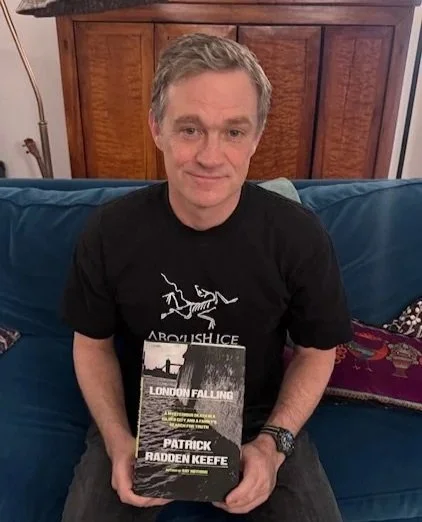
Today on The Stacks, I’m joined by award-winning New Yorker staff writer, New York Times best-selling author, and investigative journalist, Patrick Radden Keefe, to talk about his newest book, London Falling: A Mysterious Death in a Gilded City and a Family’s Search for Truth. Set in London, this true crime story chronicles the sudden death of 19-year-old Zac Brettler and his family’s quest to uncover the details of his secret double life. Today, we discuss how Patrick balances sources' expectations with his own integrity, the connection between his reading habits and his writing, and the meaning behind the title.
The Stacks Book Club pick for April is Room Swept Home by Remica Bingham-Risher. We’ll be discussing the book with Mahogany L. Browne on Wednesday, April 29.
LISTEN NOW
Apple Podcasts | Spotify | Google Podcasts | Overcast | Stitcher | Transcript
Everything we talk about on today’s episode can be found below in the show notes and on Bookshop.org and Amazon.
London Falling by Patrick Radden Keefe
Say Nothing (FX)
Say Nothing by Patrick Radden Keefe
“A Teen’s Fatal Plunge Into the London Underworld” (Patrick Radden Keefe, The New Yorker)
Empire of Pain by Patrick Radden Keefe
The Oligarch’s Daughter by Joseph Finder
Anatomy of a Fall (Justine Triet, 2023)
Say Anything (the movie)
“London Calling” (The Clash, 1979)
“Ep. 164 Breaking a Story with Patrick Radden Keefe” (The Stacks)
Rogues by Patrick Radden Keefe
Kin by Tayari Jones
Days of Love and Rage by Anand Gopal
London Falling by Patrick Radden Keefe (audiobook)
To support The Stacks and find out more from this week’s sponsors, click here.
Connect with Patrick: Website | Instagram | Threads | Bluesky
Connect with The Stacks: Instagram | Threads | Shop | Patreon | Goodreads | Substack | Youtube | Subscribe
To contribute to The Stacks, join The Stacks Pack, and get exclusive perks, check out our Patreon page. If you prefer to support the show with a one-time contribution, go to paypal.me/thestackspod.
The Stacks participates in affiliate programs. We receive a small commission when products are purchased through links on this website.
TRANSCRIPT
*Due to the nature of podcast advertising, these timestamps are not 100% accurate and will vary.
Patrick Radden Keefe 0:00
Without, without giving too much of the book away, there are family secrets that are in the book, and those were things that I think initially they really didn't want in the book. But if you invite me into your home and your life, I'm going to do what I do, which is to dig. And I became quite attached to these people. You know, you develop a very intimate relationship. Over time. I feel enormous compassion for them. And you know the line I use with them, which I've used with other people before, is it, when you see this story about yourself and your life, it's not going to be like looking at a photo, it's gonna be like looking at a painting, like it's it's all, it's all filtered through my kind of sensory apparatus, the way I perceive. You.
Traci Thomas 0:46
Welcome to the stacks, a podcast about books and the people who read them. I'm your host, Traci Thomas, and today I am joined by award winning New Yorker staff writer, New York Times best selling author and investigative journalist Patrick Radden Keefe. He's here to talk about his newest book, London Falling: a mysterious death in a gilded city and a family search for truth. Set in London, this story chronicles the suspicious death of 19 year old Zac brettler and his family's quest to uncover the details of his secret double life. Today, I get to talk with Patrick about how he found his way to Zac brettler's story, the ways this book is similar and differs from some of his previous works and how he came to the title London Falling. Our book club pick for April is room swept home by Remica Bingham Risher, and we'll be discussing that book with mahogany l browne on Wednesday, April 29. Everything we talk about on each episode of the stacks is linked in our show notes. And if you like this podcast and want more bookish content and community, consider joining the stacks pack on Patreon and subscribing to my newsletter. Unstacked on substack. Each of these places offers you some different perks, things like being a part of our virtual book club, access to our Discord, many, many hot takes from me. Plus, by joining Patreon and sub stack, you're supporting the work that I do here, and you make it possible for me to make this very podcast, to join head to patreon.com/the stacks and check out my newsletter at Traci Thomas, dot sub stack.com All right, now it is time for my conversation with Patrick Radden Keefe.
All right, everybody, I think you all sort of knew this day was gonna come, because when your fave writes a book and you have a book podcast, you get to have him on the show again. So I am thrilled to welcome back to the podcast, Patrick Radden, Keefe, Patrick, welcome back.
Patrick Radden Keefe 2:37
I'm so delighted to be with you again.
Traci Thomas 2:39
I'm thrilled to have you, if this is I've been waiting, you know, I like to be patient, because I want you to have time to write your books. But I'm, I'm glad you've come back. London Falling it is, well, why don't you tell, you tell the people what the book is.
Patrick Radden Keefe 2:53
So the book is about, it's a true story. It's about a boy named Zac brettler, a 19 year old kid in London who died in mysterious circumstances in 2019. He went off the balcony of a luxury building overlooking the Thames, the river that runs through London. And after he died, his parents, Matthew and Rachelle, were trying to figure out what had happened to him, and they made this alarming discovery, which is that he had had a whole secret life that they hadn't known about. He had been pretending that he was the son of a Russian oligarch. So their 19 year old kid had been moving around London with this kind of secret Alter Ego. His name was Zach brettler, but he went by the name Zach Ismail off and he had a whole story about how his father was a billionaire Russian oligarch, and he got mixed up with a bunch of unsavory people. And so the book is really following Matthew and Rachelle in the years after their son's death, where initially they're kind of counting on the cops to get to the bottom of what happened to him, and then, for a variety of reasons, the cops don't and they have to sort of become detectives and figure out, not only how did he die, you know, who's responsible, what happened here, but also who was he really in life, they're trying to kind of see him more clearly than they had when he was alive. So it's a book about about loss, and it's a mystery in a way, and on a deeper level, it's a book about London.
Traci Thomas 4:26
Yeah, I loved it. You know, I do really love what you do and how you do it, but I do have, I have so many questions, because there's so much in here, and we're not going to spoil but also, this is a true story. So if you Google it, like it's out there, you know, one of the interesting pieces about this book is that you kind of become a character in the book because you're brought in. I mean, you're not brought in. You have this like interaction when you're on the set of, say nothing, with the man. and you realize there's like, this weird connection. And he's like, You should meet Matthew and Rachelle brettler. Like, you know, I think I have a story for you. And you sit down and you meet them. And I guess my first question is, how often are you getting pitches from people to like, oh, I have this crazy story. You should write about it, because you now are like, capital PRK so I feel like it's different, maybe than before, like are people constantly asking you to write their mysteries.
Patrick Radden Keefe 5:27
It's a weird thing, right? So, so say nothing. Which came out in 2019 was about this murder from 1972 and this strange thing happened at the end of four years of working on that book, which is that I figured out who the murderer was and published that person's name in the book. And the challenge for me is that you get a little bit of a reputation because of something like that. And that's good and bad it is. You know, it's good in the sense that people do kind of seek you out. It's bad in that, you know, for instance, with the brettlers, the family that this story is about, I had to say to them right at the at the beginning, when we first started talking, don't tell me your story and open up to me with some unspoken assumption that it's a quid pro quo, and in exchange, I'm going to solve the mystery of your son's death, because that's kind of not fair to you, in the sense that it shouldn't be a transaction like that, and it's not fair to me, and that that's a lot of pressure on me, and I might not do it. And I have a website, and the website has my email address, I'm very findable, and I need to be, because a lot of my best sources have come to me because they've just randomly written to me. You know, sometimes I'll publish a New Yorker story, like some of the sources for this book, this started as a story in The New Yorker published the story. A lot of people read it, and then there were people who came out of the woodwork who read the story and found me and emailed me. So the email address has to be public. That means I get a ton of email, unsolicited email from strangers, and the vast majority of it is people saying, I've got a great story for you, and I can tell almost immediately this is not a story for me for one reason or another. I don't know that I've ever gotten a cold email from a stranger with a story that I ended up doing the for one reason or another. The ones that often take hold are situations like what it was with this book where I was out in the world and just started a conversation with a stranger. I mean, it makes my kids, you know, when we anytime we get in the back of an Uber, I will start talking to the driver, and my kids are kind of just quietly mortified and rolling their eyes because they think, you know, not unreasonably, you don't need to start a conversation with every person you encounter, right? This is what I do. And occasionally people have amazing stories to tell. And so in this case, I randomly met a guy on the set of say nothing, and we started chatting, and at a certain point he said, I might have a story for you.
Traci Thomas 7:55
Wow. How do you know when a story like something that you write in the New Yorker? How do you know that this should be a book?
Patrick Radden Keefe 8:02
So I've, I've been writing for New Yorker for 20 years, and I've written a whole bunch of pieces, and there have been exactly four cases where I wrote a piece, and at the end I knew there was a book in it. This is the fourth, the fourth time it's happened. It's funny, because I think when people think of New Yorker stories. They think of the stories as sometimes kind of endless, you know, like length, fairly long and and I will say, for me in my day job, part of what I love about it is that I have a lot of real estate to play with, and I can tell a story at great length. And the vast majority of the time, what happens is, I'll spend six months on a piece, and then I tell the story, and I'm kind of, you know, I'm I'm done. I've done it. I've moved on. And I love that. I love walking away from something and feeling like I've said everything I have to say about this. In this case, that night when Zac died, there are these three guys. There's actually a woman in the apartment earlier in the evening. But ultimately, there are these three guys in the apartment, Zac and these two other guys, and he dies. And in coming back again and again to what was going on in that apartment, you end up with this question, which is, well, who are these people? Where did they all come from? And it turns out that each of them was sort of pretending to be somebody he wasn't. Yeah. Then they all have these interesting backgrounds. And then when you look into it, they all have really interesting family histories, yes, and I started just kind of excavating, I mean, to give you an example, Zach has this. Zach had two grandfathers who were both Holocaust survivors, and one of them was a really famous rabbi in London, and that's not even mentioned in the magazine article, but boy, do I make a meal of it in the book, because, you know, there's so much there. And Akbar shanji, who is another character, you know, his family was expelled from Uganda in 1972 so as soon as I start sort of tapping into that kind of thing, it would overwhelm a magazine article. But in a book, there's room to be a little bit more limber and bring in those, those kind of back stories, which I love.
Traci Thomas 10:09
Yeah. I mean, I think, to me, the back stories and the way that each chapter sort of sort of starts, and I'm like, where is he going with this? Like, how is this going to tie in? I think that's what is so thrilling about reading your work, and it's such a reminder that, you know, all of us have such bigger contexts for our lives, even when you're just, like, I'm just a teenager in London, like, who goes to this like, I didn't even get into the good school. Like, it's like, but you have this whole history and and all of these secrets and these stories and so I guess, like, the question around that is, how are you seeing it? Like, it's not a great question, but I guess, like, how are when you're writing it, how are you moving the pieces around in your brain to figure out, Okay, I'm going to tell Hugo's story in this way. Like, do you have note cards that you literally move around. Or does it come to you more formed? Is it, you know, you write a draft and then you're like, actually, this chapter should be in the front, like, how are you kind of literally piecing it together? Because what you do so often in your books is take all these little pieces and weave them together in a sort of, I don't know, I don't want to say braided, because now we have all these braided memoirs, and I hate them, but like it is, it's like these disparate threads that sort of come together.
Patrick Radden Keefe 11:28
Yeah. I mean, so a couple of ways to answer that I don't like braided either, because one of the, I guess the first thing I should say is, when I sit down to write, what I'm always thinking about is my experience as a reader. And thank you. I think I got better. I think I've gotten better over the years at paying attention when I'm reading to what excites me and to what drags for me. And so every night, I will read in bed for half an hour, and I just try and take note of if there's, if there's an opening chapter that I find impossible to get through. What is it that the writer is doing that is is giving me so much difficulty, and I have this kind of weird thing where I think, like any of us, you know, I've got one of these that's that's breaking my brain in real time, and killing my attention span. And so I have this experience, I feel like you'll relate to this. I mean, it's a kind of, it's an embarrassing thing to confess, but every morning I wake up and I read The New York Times, and I scroll through and I'm reading the times, and I noticed at a certain point that there's this thing happening. It's not even happening consciously, which is, I will open up an article and I'm reading the first few paragraphs, and on a subconscious level, what I'm thinking is, how soon can I get out of this thing. Like, well, how much exactly do I need to absorb? Because before I feel like I've done it, and it might be three paragraphs or five paragraphs or seven paragraphs, but I'm looking for the off ramp always. And the off ramp I hit at the point where I feel like, okay, I got it. Okay. I know where. I know where this is going. I got the gist. And then I move on. I wish I didn't approach it this way, but there is a part of me that is that way. And so being mindful of that. What that means is that when I sit down to write, a big thing that I'm trying to do is make the experience somewhat unpredictable. I don't want you to know where you're going at all times. The last thing I want is for you to see where I'm going. And so in terms of, like, a braided structure, where you're kind of going, AB, AB, AB, yeah, that would be deadly for me, because I the last thing I want you to do is kind of get to the end of one chapter and you be able to tell me you be ahead of me and say, Oh, I know where we're going to start the next one. So I'm always thinking about trying to maintain some element of narrative surprise, which is not to say that you want, you know, a piano to be falling out of the sky, kind of random things, to be sure, it has to feel like it has a design. But I, as a reader, love the experience of feeling like the writer has all the cards and they've thought a lot about them, and then they're dealing them out to me in exactly the right order. And so I'm a fiend for structure, I structure and I outline like crazy. Before I ever start writing, my structure starts. Usually I start on the back of an envelope. I'll just kind of come up with, what are the big moments, and then slowly I populate that, that becomes a document, and I'm moving things around and thinking. And so if there's going to be a moment in the book where suddenly you turn a page and we're in Uganda in 1972 I know that that'll be a kind of pleasurable experience, because you'll feel as though, well, wait a second. We're just in London in 2018, How did we get to Uganda in 1972 how are we going to find our way back to the main road? The question for me then becomes, well, when do I do that? At what point do I at what point have you got in. Enough of the of the kind of a story for me to feel like I've, I have the license that I can say all right, now we're going to pause and I'm going to take you to the other side of the globe and to another time and place.
Traci Thomas 15:12
Yeah, I love it. Okay, thinking of your readers, because this is something that I was thinking about reading this book, and I hope this is a compliment, so I'm phrasing it this. I don't I just never know how people I'm a very direct, and I don't know how people take it, but I think London Falling is maybe some of your best writing, personally, like, I think as a storyteller, the way that you're braiding things together, the way that you've crafted this story, I'm just like, sure Patrick Rodden Keefe has, like, upped the ante in, in like, in the structural way that we're talking about. I do think this is a much smaller story than your last two books, which have become such like, especially, say nothing has become such a juggernaut. So I'm curious if you've thought at all about, or if you care at all about what readers think of this book, knowing that many of them have come to you after you've written this sort of historical book. And like, you know, the troubles are such a big thing. And, like, opioids are such a big thing. And like, yes, London, big city, like, the underworld gangsters, like, that's a thing, but it's much smaller. So are you thinking about that at all, like, how people are going to receive this or is that none of your business, and you don't really care?
Patrick Radden Keefe 16:24
A few ways to answer that question. One is that I have found that the best thing I can do is follow my own attention span and my own passions, and that, generally speaking, really, throughout my creative life, if something feels like I'm doing it in a kind of dutiful way, generally, what I make kind of sucks. And if, and if something feels like a kind of compulsion, because I'm so passionate about it that I'm drawn to it, and I feel an excitement for one reason or another. I feel like I'm usually able to transmit that sense of excitement to readers. And so the first thing to say is, generally, I, I try to kind of listen to my own to what excites me, and feel as though I'm going to go in that direction. And if there's a story that feels really compelling and urgent to me, that's the thing I should be doing. So I don't, I don't sort of think what would be the right next book for Patrick to write. It's not that at all. I just have to wait and find a subject that feels like it's kind of grabbed me by my propels. I guess. The other thing is, it is true that say nothing is a book about the troubles, and that empire of pain is a book about the opioid crisis, but they're also fundamentally just stories about people. And like, I wouldn't have written an opioid crisis book if I didn't have the Sackler family. I wanted to tell the story of a family, and so I think there's a lot going on in the backdrop of London Falling there's all these questions about, you know, a big global city, and the way in which it's been kind of corrupted by foreign money, and the sort of culture of like, the sort of hustle culture, the aspirational culture of bling and raising adolescent kids and parenthood and parental Love and and, frankly, the legacy of the British Empire. I mean, there's a bunch of these types of things that sort of thread through the narrative. But I wanted to keep this really intimate. And I actually kind of to the degree that this was a bit of a that I was sort of zagging instead of, instead of doing the same thing again, that was appealing for me, I don't want to. I think some writers get without mentioning any names, some writers who have commercial success with a certain kind of book then feel the need to keep producing that kind of book. And I wouldn't want to sort of think particularly with say nothing. I definitely got pitched a bunch of sort of, what if you did say nothing but for Beirut? What if you did say nothing but for Israel/Palestine? What if you did say nothing but for fill in the blank, and that just wouldn't be what I would do. I, you know, I liked about this, that it felt like a different kind of thing, and that the story was so intimate and and in the past, I've written often about people who either won't talk to me or are dead or are threatening to sue me. And this time around, I had this family who's I mean, there were people in the story who wouldn't talk to me, but I had this family who said and who were dead. But in this case, I had this family that said, you know, come in and we'll, we're just going to open ourselves up to you completely. And that was a new it felt like a real test for me, a new sort of experience, but really galvanizing.
Traci Thomas 19:53
Yeah, did you feel like also writing a book that's like such a recent event. How was that different for you, versus writing like the Sackler story starts, I mean, the first character we meet, Arthur Sackler, is dead before there ever even, is Oxycontin. So like we're talking, you know, decades and decades ago, obviously. So I'm wondering, like, how this was for you, where it's like these people are five years older than they were. Like, I mean, our main character was only 19 years old, so we're talking like, born in the 2000s like, so, so fresh. So, how was that for you? Did you like it?
Patrick Radden Keefe 20:34
I liked that. Yeah. And I think that the kind of the sort of recency of the story in a weird way, will be kind of cool for readers, because, you know, there are moments in this story, you know, part of this, partially this story about Russian oligarchs in London, and at a certain point, Russia invades Ukraine, and we all remember that moment. You know, there's a, there's a not long after Zac death, covid hits, and so you have this kind of strange feeling of isolation for the parents, where the police investigation is happening, but it's a little unclear how it's happening, because covid is going on, and is anybody even in the office? And the family, which had been no they had been a family of four, and suddenly they're a family of three, which is a sort of surreal and intense experience, as you can imagine, that's compounded by the fact that they're all in the house together. You know, Zach's absence, in some ways, is even more profound, because the family unit in the way that many of us had this experience, you know, you suddenly you're very, very isolated in covid. So I think having those reference points, it makes it feel to me. It made it feel very kind of fresh and current. Does it change how you research or like do your investigations? You know, every project is different. Honestly, it doesn't. It doesn't. I mean, in this case, I spent hundreds of hours talking to the brettlers, which was, again, kind of novel for me, the idea that the main people, the stories about are just a phone call away, and you can text to them all day and and this book is written in a very intimate way, so it's written in this very kind of close third person. So I'm saying Matthew thought, Rachelle felt, and there's a license that you take in doing that. Now we fact checked the book. The family has read the book, and they're going to come to New York for the launch. They feel, they feel good about how it came out, but that's a different kind of experience, right, where you're as the author, you're I really want to kind of make you feel like you're in rochelle's head as she's going through all this. In this case, you know there were like the police wouldn't talk to me, but they had all these police files that they gave to Matthew and Rochelle without any strings attached, without saying, Oh, here's this thing which you can never share with anybody. Matthew and Rachelle just gave them to me. So, you know, it's, I feel as though the research on every project is a little bit different, but there's always a lot of it.
Traci Thomas 22:57
Yeah, I appreciated that those notes in the author's note when you talked about, like, if you if I said something, and then it turned out to not be true, that's because that's what they thought in the moment that I'm writing about. I really loved that, because there were definite parts where I was like, This doesn't make sense. Like, why is he like? This can't be right? And then I was like, Okay, I get it. But in your acknowledgements, you obviously start by thanking the brettler family and you. You say, I hope I have written a book that feels commensurate with the magnitude of that gesture, which is them sharing their time with you. That is not to say that aspects of this account won't leave them feeling discomfort. They've read it. Did they report did they report back to you like, about things. Were there things that you were worried going in that they weren't going to like?
Patrick Radden Keefe 23:44
Yeah, I mean, I don't, you know, without, without giving too much of the book away, there are, you know, there are some family secrets that are in the book, and those were things that I think initially they really didn't want in the book, and it was a long ongoing conversation with Matthew and Rachel, but also actually with some other relatives in the family, because there were things that I thought were really important to get in there. And there may be a sense in which I sort of joke that I'm, you know, I'm like a vampire. You have to, you have to let me in, you know, you have to sort of invite me in. But if you invite me into your home and your life, I'm gonna do what I do, which is to dig. And I think that there was a line that I had to kind of police, which is that I became quite attached to these people. You know, you develop a very intimate relationship over time. I feel enormous compassion for them, and yet I'm not their lawyer and I'm not their shrink, and I'm not their rabbi and I'm not their PR person, you know, my my chief duty is to the truth and to my readers and so there always comes a time when I have to go and write, and when I write, I can't be pulling punches. And I was very transparent with them about that. From the beginning, I kept saying, you know, when I write this, it's, it's going to be kind of, from my point of view. And, you know, the line I used to them, which I've used with other people before, is it, when you see this, this story about yourself and your life, it's not going to be like looking at a photo, it's gonna be like looking at a painting, like it's, it's all, it's all filtered through my, you know, my kind of sensory apparatus, the way I perceive you, and so that's going to be weird. There's just no way around it being weird. And I think they're happy with how the book came out. I think that they understand why I included all of the things that I included. But I also think that it may be the case that, you know, if they were in control, if they were editing it, that they wouldn't have included some of that stuff, but, but I think that they sort of understand and respect the reasons why I insisted that that stuff should be in
Traci Thomas 26:08
hypothetically, let's just say they were like, We don't want you to include that stuff. What do you do? Like, is there an ethical line that you have for yourself that's like, I include it because the story needs it. Or, like, how, how would you thread that needle?
Patrick Radden Keefe 26:26
Well, it would depend on how the how the information came to me. So there are, you know, my view, generally speaking, is if there are things that I find out independently, or if there are things that people tell me on the record, then it's everything's fair game. And sometimes people would say, Hey, can you please not put that in and I, you know, we'd have a conversation about it. But most of the time, my impulse is going to be, it's fair game. There were things that came to me, in this case, off the record, and that's a little harder, because sometimes you learn about something off the record, and then ethically, I can't use it unless I can persuade you to get it on the record and I should say, you know that that sort of persuasion, by that, I don't mean, I don't mean manipulative persuasion. I'm not just trying to get to yes and then walk away like it matters to me. It matters to me that this family feel as though I've, I've captured the truth of their experience in the book. That I wasn't doing it for them, and yet, at the same time, I'd be lying if I told you I didn't care. There was a moment where the where Matthew and Rachelle and Joe, the son that I sent them all copies of the book, and they went, weirdly enough, they went to Majorca for vacation, and they, the three of them, sat on the beach and read the book at the same time next to each other. And those were nervous days for me in New York, knowing that they were reading the book all together and waiting to hear from them. So of course, I care what they feel about it. And so what that means is just that in terms of trying to get certain things on the record, I had to do it in a way that felt sort of honest and transparent and that they would feel okay about.
Traci Thomas 28:18
Let's take a quick break, and then we're going to come right back. Okay, we're back when you found the story, when you met the guy on set at say nothing. Were you supposed to be getting other jobs? Like, were you supposed to be journalisming? Because it kind of felt like you were supposed to be movieing or TV showing.
Patrick Radden Keefe 28:36
Yeah. I mean, come on. You know, we all, we all gotta hustle where we can, right? Yeah, I was, you know, I was very involved. To say nothing. I was an executive producer. And sometimes that doesn't mean anything. Sometimes executive producer means you kind of go and hang out at the craft services and shake a few hands. But, um, I was very involved. But the reality of a film set, as anybody will tell you, is a lot of sitting around waiting, and so in this case, I just happened to chat this guy up, and I'm glad I did.
Traci Thomas 29:12
Once you sort of enter the scene, we get to hear about some of the interviews that you conduct. And there's, I mean, this book is about some of the, I think you might call them, the unsavory element of London. We're talking gangsters, underworld, underworld guys. And you sit down to interview one guy, and he's asks you how your wife and kids are by name. First of all, how did you respond? And second of all, were you ever worried for your own safety when you start digging around in a story like this?
Patrick Radden Keefe 29:48
It was a very weird moment this guy, Andy Baker, who is kind of a minor character in the book, but he he worked very closely with and was good friends with one of the major characters, one of the guys who was in the apartment with Zach, a guy whose name was verinder Sharma, but he was known in the underworld as Indian Dave. That was his nickname this gangster. And Andy Baker, you know, we're still in touch. He's actually back in prison, but he calls me from prison. It's been an interesting relationship. He actually he's trying to get me to come and do a reading at his prison in the fall, which I think I'm gonna, I'm gonna try and do, but, um, he was out of prison briefly, which is when we met. We met twice. The first time around, I was pretty I was nervous. I mean, he's a, you know, he's a, there's a story in the book about Andy Baker and Indian Dave castrating a guy. So he's, you know, he's a he's a tough cookie. And the funny thing about it was, he's a big guy, firm handshake, kind of watery, blue eyes, unblinking. And we met at a coffee shop in Swansea, of all places, and he had a monitor on his ankle, because he was just, just been released from prison, and he kind of shook my hand, and he smiled with this big smile, and he said, and how's Justina? And what about Lucien and Felix? And big smile on his face, unbroken eye contact. And the reason that I mentioned that story in the book is just to emphasize that that's the way these guys work, is that he wasn't threatening me at all in a kind of overt way, but the first, his first move was to tell me, I've done my homework on you. I know the name of your wife, I know the name of your sons. That's the way these guys operate. It's just a kind of strange dynamic. It's very sort of macho. It's a power thing, but it's also kind of roughly charming in a weird way, in terms of safety, I don't know. I mean, I try to be very, very careful. I do have a wife who I talk with all the time about these types of questions, you know, these, this questions of, like risk management and where are you willing to go and who are you willing to talk to? And these aren't decisions I make in a kind of loose way, like i Everything is in conversation with her, and I think generally, I'm careful, and, you know, I don't, I don't do, like war reporting. There's certain things that I won't do, but sometimes I mix it up with unsavory folks, but I try to be very transparent with those people. And I think there's a way of managing those relationships where I just say, listen, here's who I am, here's what I'm doing. I'm very transparent with you. And, yeah, I generally, I generally feel okay. I guess the last thing I would say is I used to say about say nothing, that that's a book that I couldn't have written, at least not the way I wrote it. If I lived in West Belfast, and if my wife worked in West Belfast and my kids went to school in West Belfast, I had this passport where I could just leave and London's a little bit the same way. I mean, I love London. I've spent a ton of time there. I used to live there. I go back all the time, a lot of close friends there, but I don't live there. And in terms of the English gangsters, If I lived in North London somewhere, my feeling of exposure and vulnerability might be a little bit different than what it is living in New York.
Traci Thomas 33:20
Interesting. I mean, I just think, as I was reading this book, and there's all these, like, coincidental deaths in situations, I was when you show up and you're like, going to meet these guys, I'm like, Oh my gosh, Patrick, be careful. You don't want to be a coincidence.
Patrick Radden Keefe 33:37
Don't stand near that open window.
Traci Thomas 33:38
Yeah, yeah, exactly. I have a I have a book idea for you or anyone listening. It's about coincidences, because one of the coincidences in this book is that the day that Zac brettler dies is also the same day as like the con stabbings in London. And I've had this idea for a really long time, but I'm just gonna offer it to you or anyone. I want a book of all the coincidental moments in history, like when Jonestown happened, it was just a few days later that Harvey Milk was killed. And so like in that moment, everybody thought that it was like they were related. And like on 9/11 there was also this huge cult in somewhere in Africa that, like, killed a bunch of their their members, and nobody remembers this because it was like on the same day in history at the time. Yeah, I want a same day in history book, like, I want a book about all the weird coincidences that happened on the same day that we forget.
Patrick Radden Keefe 34:38
I would read that book.
Traci Thomas 34:39
I would read it too if you don't want to write it. Find me someone who will get convinced to write it. But okay, one of the coincidences of this book, but I guess maybe not a coincidence, is that both of Zac brettler's grandfathers survived the Holocaust, and this is sort of becomes almost like a framing in this book, and I'm curious what, what that connection to the Holocaust was for you, that you felt like it was a good foundation or framing for this story?
Patrick Radden Keefe 35:11
Well, it changed. I mean, it's an interesting question, because it changed for me. So when I first learned that both Matthew and Rachelle so Zach's parents, they both had fathers who'd escaped the Holocaust, and both of them their their families, entire families, virtually were wiped out, and both of them arrive in the UK as teenagers. And the thing that interested me at first was that you get these two guys, Hugo and Benny. So it's rachelle's father and Matthew's father. And they're, I think, I think they're 14 and 16 respectively when they arrive in the UK, and they have to kind of reinvent themselves, and they have to sort of become new people, because they've lost everything. Their whole families have been murdered, and they have to decide who am I going to be. You know, they have no attachments in England, they're learning English, and they have to decide what kind of person am I going to be? And to me, thematically, that felt really interesting and rich, because part of what the story is about, in a broader sense, is that a city, a big, kind of global city like London, is a stage for reinvention. Families and individuals are always kind of reinventing themselves and becoming something new in a city. A city is a place where that's really possible in kind of a thrilling way. And, and I should say, thematically, this links up with other you know, this is Arthur Sackler in Brooklyn. You know, at the turn of the last century, there are other places and times where this theme has been really interesting to me. And in the grandest sense, the book is also about London's reinvention as a city over the last several decades. And then Zac's kind of taking this notion of reinvention to its logical extreme, where it's not just I was this kind of person, and now I'm going to be that kind of person. It's I was, you know, Zac brettler, upper middle class, Jewish kid from Maida Vale who goes to private school, but ultimately is, you know, living a kind of fairly normy life, and I'm going to literally take on a fake name and create a fake alternative history and pretend that I'm Zach you smile in our son of a Russian oligarch. So all of that seemed to me like a kind of rich strain thematically and a kind of interesting way to just explore these echoes. The thing that I didn't count on is that, as I was going and I got to know Matthew and Rochelle better and better, I was really struck by how beautifully they've handled this most awful thing imaginable, which is the death of a child. And you know, there last September. So this is after I finished the book, was what would have been Zac's 25th birthday. And Rachelle said to me, you know, we're going to have a kind of private celebration at our house, just a kind of memorial for Zac to celebrate what would have been his 25th birthday. And she invited me to come. And I was very touched that they would book was written at the store stage, but that she would include me in such a thing. And but, but secretly, I was a little nervous that it would be a really morose, kind of maudlin, unbelievably sad. It's the 25th birthday party for a kid who has died. And I went, and there were probably 30 or 40 people in their apartment, and it was this joyous event. It was all these family and friends, people who knew Zac, people who loved him, remembering what he was like in life. And I had this thought, not for the first time, which is, if I had a loss like this, you know, I could only hope that I would grieve in the way that they're grieving, where you get out of bed each morning and you kind of, you're still able to find joy. And we had this incredible night where the three of us were having dinner and we were talking about this, and I was sort of asking them, like, how do you do it? How have you managed to, sort of to, you know, to keep going to concerts and seeing friends and traveling and finding things to live for. And they both said, well, it was our fathers, you know, that we both grew up with these fathers who had experienced the most horrific things a human can, but somehow found a way to keep moving forward and not to be defeated by it, but to create new life. And I just found that so moving and so profound that, and it's something I get into at the end of the book, but that wasn't a place I expected to go. I thought that the sort of Holocaust and these survivors was all just about reinvention. I didn't think of it as actually being this kind of gift that these two people had been given by their fathers, which was the a lesson in how to live joyously in the face of catastrophic loss.
Traci Thomas 40:18
Yeah, I think in a lot of ways this is like a book about grief, which I was sort of surprised about. I mean, I think obviously it's a book about this crime, like this potential crime, whatever. But I think in a lot of ways, it's a book about grief. My mother is Jewish, so I'm Jewish, and it I do find that that like worldview about grief and loss does feel so Jewish to me. Like, as I was reading the book, I was like, yeah, like, my mom's favorite catch phrase is, like, life is for the living, like, you know, like, I just felt, I felt such a connection to that piece of the story. Yeah. I thought it was really nice. I have just a few more questions for you. One is, why did you pick the title London Falling?
Patrick Radden Keefe 41:08
Well, since you asked my working title for a couple of years was the oligarch's son, which I really liked. It was the title. You know, The New Yorker does this weird thing now, where we have there's the title for the article in print, and then there's the online one, then there's the online title, which tells you everything the article is about for search. But it was the title of the article in print for various reasons. My publisher wasn't thrilled about the oligarch's son. It's funny also, because Joseph finder, the spy novelist, just recently published a novel called The oligarch's daughter, and it would be kind of fun thinking of them on a shelf together. He's and he's a lovely guy. So, you know, we could, like, meet cute on book tour. But I had had a, there was a chapter of the book called London Falling. And I was thinking about, I mean, I can't resist a clash pun, right? I gotta love the clash. And I was thinking a little bit about, you know, it's funny. I mentioned a bunch of movies in the book. There are certain movies that Zac was obsessed with, and certain movies I'm obsessed with that thread through the book. One movie I didn't mention is anatomy of a fall, but that was a movie that, really I was already working on the book when I saw that film. And it was, I think it's a really brilliant film, but it's actually the whole film is about a guy who dies and he goes off a balcony and is Is it, is it an accident, or is it suicide? Or is it, or is he pushed? Andso I liked the idea of kind of bringing in, bringing in that notion of a fall being kind of central to it. And obviously there's a sort of a double meaning with, you know, is London, really? I London really? Is London itself falling, but the I don't know. I think sometimes with a title, it's it's helpful to have something that people will remember. But what I'm finding is, to this day, people will come up to me and tell me that they love my book, say anything. And I always chuckle, and have to remind them that say anything was the 1988 romantic comedy. But in this case, people are now calling the book London calling. So I think it'll be a similar thing.
Traci Thomas 43:33
I keep messing it up too. Is it London following a London calling now that I've read the book, I won't make or I read it, I was like London. Last time we talked, it was during sort of that 2021, covid. Times you were outside because your wife needed the office, which we spoke about, and we talked about how you wrote empire of pain in your bed, essentially. How did you write this book? The world has opened up quite a bit more. Where were you?
Patrick Radden Keefe 44:00
This is my new home is my own home office right here. You're looking at it. See, look at you. You know, I got my own get some success, and you got an office. Yeah, my wife has her, we moved and my wife has my wife is actually next door in her home office. And so I get to keep this place a mess with, you know, books everywhere, and all my little post it notes, and my kind of, my, like, murder wall of my carry wall of,
Traci Thomas 44:27
do you have one with, like, your strings and stuff?
Patrick Radden Keefe 44:31
Super messy, but here we go. There you go. That's the new one. That's the one for my, my current piece.
Traci Thomas 44:37
So it's only a piece, or is that a book?
Patrick Radden Keefe 44:39
It's a piece. It's a piece.
Traci Thomas 44:40
Is there gonna be another book? Have you thought about another book?
Patrick Radden Keefe 44:44
I'd love to do another book. I haven't. I haven't found I had a moment where I thought this new piece might be a book, but now I think maybe it isn't. So watch this space. Oh, I will. Don't you worry if there's something coming. I will like you'll be the first to know, I need to know. I do want to ask you, before we get out of here, a little bit about saying, say anything. Say nothing. The show huge success. The book was a huge success, but the show was its own, whole other own thing. Do you have you felt pressure because of that, stepping back out with this book, like, do you feel differently knowing that you are more of a thing than you even were before? Like, does that is that something you think about? Is that something you care about?
No, I mean, I think that I will say that this time around. So we are talking just, you know, about a 10 days before the book is released, but people won't hear this until it's out in the world, and it'll be a day this will come out the day after the book comes out. Okay, so, so the I will say it does feel different this time, you know, say nothing kind of snuck out into the world when it came out, nobody. There weren't any great expectations for that book. It just kind of came out. Empire of pain came out during covid, as you remember, because we talked then. But weird to be releasing a book during a pandemic. My next book was rogues, which was a collection of New Yorker pieces. And, you know, it did much better than any of us thought it would, but it, but it, but nevertheless, so good. But the but most people, you know? I mean, I think again, like a collection of stories at this point, is not something that anybody's, you know, it wasn't reviewed in a lot of places and so forth, which is just the nature of these things. So this time around, it does feel a bit different, just in the sense that there's a kind of other booksellers and reviewers and readers and so forth, there are people kind of ready to read it. And it's not that I don't spend a huge amount of time thinking about that, and I certainly don't. It's not that I would do anything differently. It means that book tour is going to be pretty extensive. You know, it's only three weeks in the US and then UK and Ireland and Canada and Australia and New Zealand and so forth. And that's I'm sort of bracing. I feel very lucky to have that opportunity, but also I am bracing and hoping that TSA works its shit out before I have to start taking all these flights. But honestly, like, I take none of this for granted. I'm 20 years into my career. It's my sixth book, and it does feel different now in the sense that I think there are people who are going to pick the book up and read it. They may they may like it. They may not. I don't know. All I've done is kind of write the best book I can and put it out into the world. And I feel really, really fortunate for that. And I, to go back to where we started when I talk about myself as a writer and as a reader. Reading takes time. It's and it's a different kind of commitment that you make. And I think it's sort of beautiful, the concentration that you can have when you really immerse yourself in the story. But I, I don't take that for granted, and so I'm sort of, I'm just grateful for the fact that, you know, I put these things out in the world and and people might engage with them.
Traci Thomas 48:15
Yeah, I'm really excited to see the reception of this book, because, like I said, I think, like, the writing is just so good, I feel like I can see you like that better, and like figuring it out even more as a writer, which is really as a reader, that's my favorite thing. Like, when I have a favorite writer and I'm watching them do their thing, and I'm like, Oh, look, he's really, like, that was so tight, that little bit, you know? Like, I love that, and I'm curious to see, because I know so many people who, quote, unquote, don't like nonfiction, right, who love your books. And this book, to me, feels more like a book for of nonfiction, for people who love nonfiction like this, because it's smaller to me, I'm just like, right this? I'm like, Oh, this is a book for me, like Patrick really wrote to us. Love nonfiction, and so I'm curious to see how people will receive it, because people are so primed to like you already.
Patrick Radden Keefe 49:10
But I, it's funny, I see it sort of the opposite, in the sense that, I mean, I have no idea who will and won't respond to it. But I, I'll put it this way, there's a certain kind of nonfiction reader who, I think, and these people drive me crazy, honestly, who, who they sort of approach the project of reading nonfiction purely in terms of, you know, what are the what's the nutritional content that I'm going to take away from this thing? Yes, I mean, there was a guy who this chilled me to my bones, but a guy who a very nice guy who said to me recently, I love the New Yorker. I've subscribed to The New Yorker for 30 years. I started subscribing when I was in high school. It's so great. I love it. These days, what I do is I'll take a 10,000 word New Yorker piece, feed it into chat GPT and ask it to give me a summary. And I said to the guy, I said, You're doing it wrong, like you. You shouldn't use the New Yorker for that. If what you want is to suck out all the nutrients and the kind of informational content, just go somewhere else, like, read something else. Because the New Yorker, the whole point is, it is supposed to be a kind of literary pleasure, right? And and, like, don't even bother with my stuff, if what you're looking for is the kind of 10 bullet points of, yeah, 10 nuggets of news that you get out of it. I do think that with Empire of pain and say nothing, those are both books where somebody could read them, and whatever literary pleasures they may or may not have, you could sort of walk away and say, Well, I understand the troubles now in a way that I didn't before. I understand, I understand this big subject in a way that I didn't before with this one. You're right that, that there's not necessarily that same kind of as much as there's all kinds of things about London and history and all these various things. It's all a little bit more amorphous. But to me, this is more like a novel than anything I've ever done that's like, what makes it
Traci Thomas 51:01
Yes, I agree. Yeah, I agree. Like, pacing wise, but I think, I guess I'm, I genuinely said this yesterday on Instagram. I'm genuinely very excited to hear from readers what they think about this. Because I, you know, given the nature of the work that I do, which is screaming about books online, I'm always being like, Oh, you have to read Patrick Rodden Keith for like, you have to read Jon Krakauer. And I'm always trying to convince people who think that they don't like nonfiction, that they actually do like nonfiction, they just haven't read the right book. So I'm very curious to see how the people that I've forced to read your stuff feel about this book because of that departure. Because I think for a lot of those people, they're like, Oh, I didn't think I liked non fiction, but I did learn so much, and it was so interesting. And so I'm wondering how they're gonna feel about this book, which almost like, and I hate to use this I hate to use this phrase, but I'm gonna know if this is not offensive, but like, this is more true crime in some ways. You know what I mean. Like, it feels closer to that, though, I would sort of argue that all your books are true, or like, both the other two are true. The other two are true, and rogues is also sort of true.
Patrick Radden Keefe 52:05
I would say my Sackler book is a true crime story,
Traci Thomas 52:09
yeah, but like this one feels like much closer to that. And so I don't know. I'm just I don't know. I genuinely am excited, because I have no clue how people will receive this.
Patrick Radden Keefe 52:20
Yeah, I don't either start it starts. It starts in a kind of true crimey way. But I think, as and you said this yourself, but I totally agree it in a kind of surprising way. It turns into a book about grief, like it turns into a book about something quite different,
Traci Thomas 52:35
a lot of different things. So I, I love when I read a book and I have no clue how people will receive it. Like on the flip side, I read kin by Tayari Jones, and the moment I read it, I said, people are gonna love it. It's fantastic. I know exactly what this book will do in the world. I know exactly who this book is for. And with London Falling I finished it, and I loved it, and I sent like 10 voice memos to my my dear friends being like, oh my god, oh my god. But in every one, I was like, I can't wait to see what people think. Like, I have no clue which is fun and exciting. And it's also like, I think for you not to speak for you, but I think, like, it's probably kind of fun for you to to be writing and have this career and to put something out in the world where you're like, I don't know. I really don't know. Yeah, I think that's so great
Patrick Radden Keefe 53:20
No, and it keeps things it keeps things interesting for sure, and keeps me on my toes and and I and part of the fun of doing this work is that people, people, I'll put it to you this way. I mean, in the kind of, in the in the months and weeks leading up to publication, when people have read advanced copies like you have, one of the things that's caught me by surprise is that people who read the book almost invariably, with few exceptions, a lot of the time, what will happen is people start talking about their own families. They'll start talking about their own kids, or their relationships with their parents. And that, to me, is fascinating, because it's not, you know, it's you sort of see the things people can kind of read their own colors into it, which is, it's a thrilling thing for a writer to put a thing out in the world and then sort of see it develop its own life as people, as people read it.
Traci Thomas 54:08
Right? Last question, because we're out of time. If you could have one person dead or alive read this book, who would you want it to be?
Patrick Radden Keefe 54:17
I mean, I think I'd want it to be Zac, the kid at the heart of it. The thing that's so interesting is, is, is talking to people who knew him, I would get these different reactions. Some people would say Zac would be so psyched to know that you were writing this book about him, you know, that this kid who sort of had a certain grandiosity to him, yeah, would like the idea of being, you know, kind of built up into this sort of almost mythical figure. Other people said Zac would be so mortified to think that you were writing this book about him, because he was somebody who he chose different faces to show to different people. He compartmentalized his whole life. And so the idea of a book that kind of forensicly tries to see him from all these different angles that anybody could pick up. He would feel really exposed in that way. But I spent so much time thinking about this kid, and I, you know, I developed a fondness for him. And, yeah, I think it would be Zach,
Traci Thomas 55:17
yeah, I was thinking about what he would think about this book, also, as I was reading, right? Like, there's so many parts, I'm like, I bet he would hate this. Because, like, you really, you know, you're exposing this, this lie, these lies, and, like, nobody wants to be exposed
Patrick Radden Keefe 55:37
Yeah. And there is a kind of, you know, I mean, without going into too much detail. It's like, there's a whole, you know, I got his Google searches, and there's a whole riff on on what he was looking for on Google. And none of us would want to be exposed, I don't think, and right of that manner, you know?
Traci Thomas 55:53
Right? And like this book, one of the things that made me think about was just like, how, when, especially when a young person, dies, how, how it freezes everything, yeah, like, I think about, like, what I was like at 19, and how much I've grown and changed, and it's like, this could have been a phase. He could have been doing this for six months or a year, and then by the time he was 21 it would be like, Oh, I'm Zach brettler, like, I did these crazy, weird things that was so nuts. Or it could have been the beginning of his career. You know it's like and you just never, you just never know. And this book really puts that.
Patrick Radden Keefe 56:26
I'm so glad you said that, because I thought about that so much while I was writing that if he just survived that night, for better or for worse, probably for worse, we live in an economy here in the US, in England, and in a moment where a lot of people are kind of faking it till they make it, and then they sort of fake it all the way up, and it works out we live in a kind of hustle economy now. And so I do think that there's a universe in which Zach could have survived that night and today, he'd be some super successful 25 year old real estate guy in London.
Traci Thomas 57:00
Yeah, yeah. Well, Patrick, I am so glad that you came today. I love the book, you know, I'm such a fan, and I whatever you do, you know, I subscribe to The New Yorker, just for you. I mean, other people there are great,
Patrick Radden Keefe 57:14
you know, I'm told there's some other good writers there. There are, I mean, listen, there's some great books I read. I did on your sort of recommendation. I did read days of love and rage, which is one of your fellow
so great, right?
Traci Thomas 57:27
Yes, talk about reading a New Yorker piece that turned into an even longer piece. So, I mean, I'm a big fan of the publication, but you're the reason that I first subscribed.
Patrick Radden Keefe 57:38
So I finally having, after a long after a long absence from the magazine while I was working on this book, I have a new piece coming in just a couple weeks, so keep an eye out.
Traci Thomas 57:48
Oh, can't wait, everybody. You can get your copy of London Falling a mysterious death in a gilded city and a family search for truth wherever you get your books now, Patrick reads the audio book, which I have not listened to, but I'm gonna have to do a full reread just to hear your audio narration, so we'll see. But thank you so much, Patrick,
Patrick Radden Keefe 58:06
thank you. It's great to see you again.
Traci Thomas 58:08
You too, and everyone else we will see you in the stacks. Thank you all so much for listening, and thank you again to Patrick, rad and Keith for joining the show. I'd also like to say a huge thank you to Michael Goldsmith, Kayla steinorth and Anne jackanette for your assistance in making this episode possible. Our book club pick for April is room swept home by Remica Bingham Risher, and we will be discussing the book with mahogany l brown on Wednesday, April 29 if you love the stacks and you want inside access to it, head to patreon.com/the stacks to join the stacks. Pack and check out my newsletter at Traci Thomas, dot sub stack.com make sure you're subscribed to the stacks. Wherever you listen to your podcasts, and if you're listening through Apple podcasts or Spotify, will you please leave us a short little rating and a review. It is a great way to have people stumble across the show and know what they're getting out of it. For more from the stacks. Follow us on social media at the stacks pod, on Instagram, threads and now YouTube, and you can check out our website at the stacks podcast.com Today's episode of the stacks was edited by Christian Duenas, with production assistance from Sahara Clement. Additional support was provided by Cherie Marquez, and our theme music is from to gear, just the stacks is created and produced by me. Traci Thomas.