

Ep. 443 The Dark Underside of America with Kai Bird
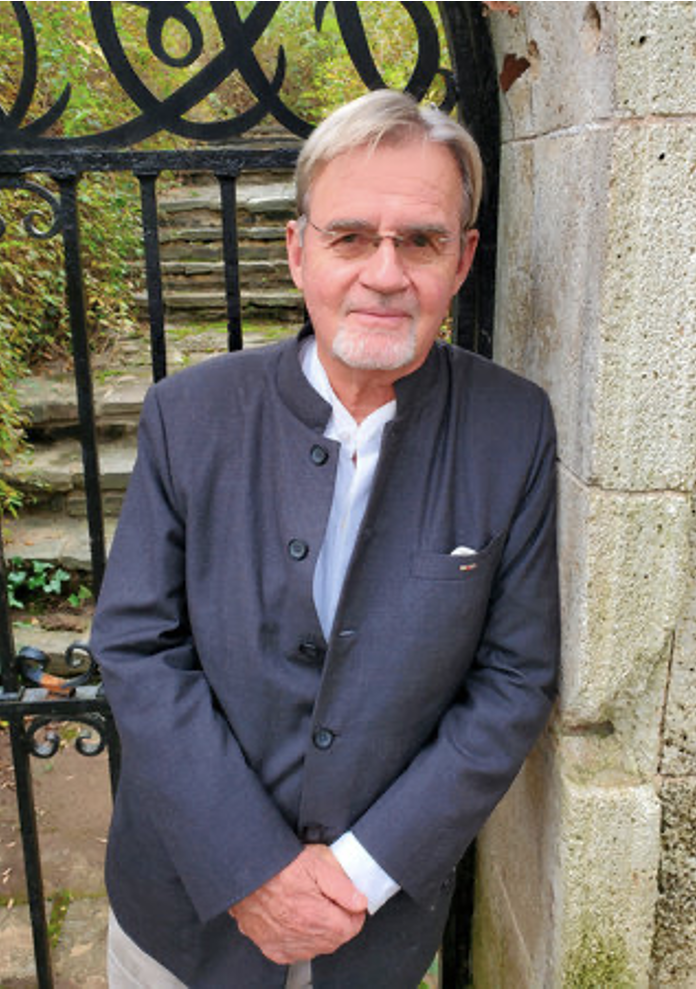
Today on The Stacks, we’re joined by Pulitzer Prize-winning biographer, journalist, and author Kai Bird to discuss his new book, American Scoundrel: Roy Cohn's Dark Journey from Joe McCarthy to Donald Trump. This book explores the life of high-powered lawyer and fixer, Roy Cohn, and how his controversial four-decade career directly influenced modern politics. In this episode, we talk about why he chose to cover Roy Cohn’s life now, how biographers shape stories, and the most surprising source for the book.
Our book club pick for September is Brother, I’m Dying by Edwidge Danticat. We will be discussing the book with Natalie Green on Wednesday, September 30th.
LISTEN NOW
Apple Podcasts | Spotify | Google Podcasts | Overcast | Stitcher | Transcript
Everything we talk about on today’s episode can be found below in the show notes and on Bookshop.org and Amazon.
American Scoundrel by Kai Bird with Susan Goldmark
Angels in America by Tony Kushner
The Chairman by Kai Bird
The Color of Truth by Kai Bird
American Prometheus by Kai Bird and Martin J. Sherwin
The Outlier by Kai Bird
The Good Spy by Kai Bird
The View (ABC)
Audition by Barbara Walters
“Exhuming McCarthy” by R.E.M.
Bully. Coward. Victim. The Story of Roy Cohn (Ivy Meeropol, 2019)
“My 2026 Summer Reading & Music Lists” (Barack Obama, Medium)
Oppenheimer (Christopher Nolan, 2023)
The Odyssey by Homer
The Odyssey (Christopher Nolan, 2026)
The Apprentice (Ali Abbasi, 2024)
Angels in America (HBO)
Reagan by Max Boot
Baldwin by Nicholas Boggs
The Disappearers by Marlon James
G Man by Beverly Gage
To support The Stacks and find out more from this week’s sponsors, click here.
Connect with Kai: Website | X/Twitter
Connect with The Stacks: Instagram | Threads | Shop | Patreon | Goodreads | Substack | Youtube | Subscribe
To contribute to The Stacks, join The Stacks Pack, and get exclusive perks, check out our Patreon page. If you prefer to support the show with a one-time contribution, go to paypal.me/thestackspod.
The Stacks participates in affiliate programs. We receive a small commission when products are purchased through links on this website.
TRANSCRIPT
*Due to the nature of podcast advertising, these timestamps are not 100% accurate and will vary.
Kai Bird 0:00
One of the hardest things to explain about his life in in the 60s and 70s and 80s was how influential he was here in New York City, which is you know home to liberalism as such. Yet he had many many powerful celebrities and judges and politicians who were all his friends, when Roy held birthday parties, 200 or 300 of New York's most famous and powerful individuals would show up, knowing exactly who Roy Cohn was, knowing how nefarious he was, and they would come to sort of gawk at him. He was a train wreck, but Roy sort of reveled in that image.
Traci Thomas 0:51
Welcome to the Stacks, a podcast about books and the people who read them. I'm your host Traci Thomas, and today we are joined by acclaimed biographer, journalist, and Pulitzer Prize-winning author Kai Bird to discuss his new book *American Scoundrel: Roy Cohn's Dark Journey from Joe McCarthy to Donald Trump. This book explores the life of high-powered lawyer and political fixer Roy Cohn and the ways in which his controversial career directly shaped the rise of Donald Trump. In today's episode, we discuss why Kai wanted to write a whole book about Roy Cohn. Why Kai decided to write this book with his wife Susan Goldmark, and he tells us about one of his very surprising sources. Our book club pick for September is "Brother, I'm Dying" by Edwidge Danticat. We will discuss the book with Natalie Green on Wednesday, september 30. If you like this podcast and you want even more bookish content, please consider joining our Stacks communities. We've got the Stacks pack over on Patreon, which is all about connecting with other readers. You're gonna find perks like our virtual book club meetups, our community conversations on Discord. You'll also be part of our mega reading challenge, and then I've got a Substack where you can find my hot takes on everything from literary gossip to pop culture, I rate and review everything I read over there, and in both places, you get a monthly bonus episode. Your support makes it possible for me to make the stacks every single week, so please consider joining the Stacks Pack on Patreon at Patreon.com/slash The Stacks and subscribing to my newsletter Unstacked at Traci Thomas Substack.com. All right, now it is time for my conversation with Kai Bird. All right, everybody, I am so excited. This book has been on the top of my list all year. It is finally here. It is the Roy Cohn biography. It is called American Scoundrel: Roy Cohn's Dark Journey from Joe McCarthy to Donald Trump. It was written by Kai Bird with Susan Goldmark, and I am thrilled to have Pulitzer Prize-winning biographer author Kai Bird here on the Saks. Welcome.
Kai Bird 2:58
Well, thank you, Traci. It's I had a lot of fun writing about a villain.
Traci Thomas 3:02
I, you know, I love a villain, and I was first introduced to Roy Cohn. I was a theater major, so it was studying a scene from Angels in America, and someone was like, "He's a real person, and I said, "No, couldn't be." And then from there, I just I became obsessed with him, and this was like you know over 20 years ago. And when I found out this book was coming, I was beyond excited. So I guess for people who don't know, will you just in 30 seconds or so tell us a little bit about what this book is about?
Kai Bird 3:38
Well, Roy Cohn was a scoundrel. He was a lawyer. He was the prosecutor who sent the Rosenbergs, Julius and Ethel Rosenberg, to the electric chair in 1953, and then he became chief counsel to Joe McCarthy, and he was the sort of brains behind McCarthyism, and of course, in that position, he ruined 1000s of lives. Civil servants having to leave the government, being fired for either being homosexual or because of their left-wing political views, and then he goes on to New York, back to New York, where he was from, from the Bronx, and he becomes a high-priced divorce lawyer, and a lawyer to all five mob families in New York City. And then, of course, he's probably best known these days because in 1973 he became the lawyer for a young real estate developer named Donald Trump, and he he was his lawyer from 1973 until he died in '86 of AIDS, always in denial about his sexuality, always in the closet, and. Anyway, he's a an incredible Zelig-like figure in 20th century American history, and I think he explains a lot about the Trump era of the last 10 years.
Traci Thomas 5:12
Yeah, I think what's so fascinating about him for me is that he's a figure that touched so much of American politics that we sort of don't talk about. Like he's sort of a person that's not forgotten to history because he has been revived because of Trump, but sort of a person that you you don't really talk. You know, people know the Rosenbergs, but they don't really talk about Roy Cohn in that same way. I'm wondering what made you want to dedicate a portion of your life to writing this book about him?
Kai Bird 5:46
Yes, no, I've spent the last four years obsessing about Roy Cohn things, so it's been quite a journey. He's a name, but he's kind of forgotten, and his significance is way underplayed. And I, I did. understand it myself. You know, I'm a biographer who's written six biographies of individuals who were sort of members of the American establishment. John McCloy, a powerful Wall Street lawyer close to the Rockefellers, liberal Republican, George Bundy, former Harvard dean, national security adviser to Kennedy and Johnson, and then Robert Oppenheimer, the atomic physicist who gave us the atomic bomb, Jimmy Carter, a president, Robert Ames, a CIA officer, and you know, in all of these biographies, I mention Roy Cohn. He pops up as this rather annoying, crafty lawyer who sort of gets in the way and upsets the apple cart momentarily. But I have to confess, in in in my accounting of him in these other books, in a paragraph or a few pages, he he's he comes across as sort of historically inconsequential. But you know, I was wrong, and and in 2021, after I finished my presidential biography of Jimmy Carter. I was casting around for a new subject, and I suddenly realized that I had underplayed the importance of Roy Cohn, and that the people I had been writing about for 40 years and the establishment-well, that world is all gone. The establishment's been fractured, and it's no longer what it was. This bipartisan political consensus of lawyers and powerful foundation people and CEOs-that's all. That's a different world. It's gone, and it's been replaced by the sort of political divisiveness and the culture and the ethical lapses of one Roy Cohn, who is haunting us from the grave. So that's that's how I came to spend four years of my life on Roy Cohn.
Traci Thomas 8:15
Do you remember specifically what it was that made you rethink him, or that made you want to go back and sort of examine him a little more closely?
Kai Bird 8:25
Well, obviously, it was it was the arc of Donald Trump, the rise of Trump in 2016. In 2021, when I decided to sit down and write a proposal on Roy Cohn, Trump was out of power. He'd been defeated, although he never admitted it.
Traci Thomas 8:46
Very Roy Cohn of him.
Kai Bird 8:48
Yes, and and I suddenly realized that you know Roy Cohn is the connection between Joe McCarthy and Donald Trump, and McCarthyism. We all. all sort of thought was the a low point in American history in the 20th century, but the witch hunts had been defeated and would never return.
Traci Thomas 9:12
Right.
Kai Bird 9:12
Well, that that that's clearly wrong, and we're having a second witch hunt as we speak, and Trump's second term is even worse than at the height of McCarthyism in 1954. So there's something you know about Roy Cohn that explains the dark side, the dark underside of America, and we need to understand that dark side. It's it's a very sort of a politics of resentment and divisiveness. It's very anti-establishment, anti-intellectual, anti-immigrant, anti-black. It's very racist. And it's isolationist, you know. They're American firsters,
Traci Thomas 10:04
right?
Kai Bird 10:04
So there's an ideological rootedness that is very deep in American history that we're living with now a revived brand of it. But every few generations we become obsessed and paranoid about the other.
Traci Thomas 10:22
Yeah.
Kai Bird 10:23
Anyway, Roy Cohn and Donald Trump seem to have been able to tap into deep-rooted fears and resentments that have are are part of the American psyche.
Traci Thomas 10:36
Yeah. I guess I guess my question is really about how you work as a biographer, when do you decide to sort of like spend time with someone, and then when do you know that it's actually a book? Do you ever have false starts? You pick a subject, and you're like, you know what, this is I can't do this for a few years. Like this person doesn't have enough. Or how do you go from sort of idea interest to I'm doing Oppenheimer, 800 pages. Get ready, world.
Kai Bird 11:06
Right. Well, you do have to have fire in the belly. You have to be obsessed and really curious. And you know, with this book, I knew I knew something about Roy Cohn and his trajectory, and particularly his that early part of his life when he was working for Senator Joe McCarthy, but I didn't know much about the mafia, and I didn't know much about the gay world of the 1950 s, 60 s, 70 s, and so that was, you know, that was a learning experience. And the biographer, you want to choose a subject where you're also learning as you go along because it's, yeah, it's a it's a long journey.
Traci Thomas 11:56
Yeah.
Kai Bird 11:57
This book took four years, but that's actually very quick. Most most biographies take five to 10 years. This one went a little faster because, for the first time in my career, my wife Susan Goldmark joined me on the journey, and she became sort of director of research and muse. Okay, and she she actually grew up in New York City, and so she was very curious about that aspect of Roy Cohn's life, where he's a fixer and a transactional deal maker for New York City politicians. She was also curious about his sex life and the gay culture that he denied that he was part of, but was very much a part of his life, and and she she was really curious about the mafia, so she dug into those subjects. And anyway, it was a turned into a good partnership, and the book took us only four years, in part also because Roy Cohn left behind no private archives.
Traci Thomas 13:08
Oh,
Kai Bird 13:08
he destroyed everything. He destroyed his papers. Of course, papers existed. He didn't want to leave any record behind. Even when he was a working lawyer, he conducted his law practice over the phone largely, and he taught Donald Trump. By the way, you know that it was a bad thing to take notes of your meetings, and to this day, you know President Trump is uncomfortable when he sees people taking notes. He was taught by Roy Cohn to that that that could have unfortunate legal consequences if you take notes.
Traci Thomas 13:46
Yeah, there's the bit in the book with Nixon and Watergate and Roy Cohn's like, well, why didn't you just destroy the notes?
Kai Bird 13:56
Yeah, why didn't you just burn those tapes?
Traci Thomas 13:59
Yeah, he's like, why? Like I don't understand how this happened. Like that was really an option for everybody. Yeah, he
Kai Bird 14:05
had he had no problems with Tricky Dick's ethical lapses in the White House. He just thought he he should have had a complete cover up and should have burned the tapes, and then he wouldn't have got he wouldn't have been forced to resign.
Traci Thomas 14:21
Yeah, Roy Cohn was such a piece of work. Oh my god, that's what I kept saying throughout the book. Of just like, wow, he's like worse than I had imagined. He's just so thoroughly himself. Like every at every turn throughout the book, I was so captivated by the way that he just Roy Cohned every situation, you know, there was never a moment where he was like, you know what, I'm gonna do the right thing, or I'm gonna back off, I'm gonna help someone. And I feel like in a lot of people's lives, there is a moment where they stray from sort of who they are. They try to be a better person. Roy Cohn, not once.
Kai Bird 14:59
No. No, he enjoyed enjoyed very much being a scoundrel, and he his mother Dora. I blame Dora. You know, it's always the mother. But she raised him as an only child with no guardrails, with no rules. She told him, you know, the rules aren't for you. The rules are for the small person, and you're exceptional, and you can do what you want. And of course, this led to sort of completely unethical behavior again and again.
Traci Thomas 15:35
Do you think? I mean, one of the really big turning points in his life is after his mother passes. He's very much a mother's boy. He, you know, leading while she's alive, he dates women. He sort of carries on publicly as as a as a straight man. And then when she dies, it seems like that's really the the turning point for him in his like personal life. Do you think that people like how how much did you feel like people knew that Roy Cohn was a homosexual in his time, and did that sort of change over the course of his life for you?
Kai Bird 16:12
I think you know Roy knew it and his friends knew it, but you know in the 1950s and 60s in the heterosexual world, there was a certain, well, yeah, ignorance about the gays among us.
Traci Thomas 16:28
Right.
Kai Bird 16:29
People just, you know, they knew it, but they were in denial about the extent of gay culture, and it was an underground culture. So, but Roy, as a young man in his 20s, you know he he was gay, but he did have sexual encounters early in his life. We believe with women, but only with prostitutes. And he was the kind of closeted gay man who would never ever admit to it, because if you were a public figure in the 1950s, as he was, he was on the cover of Time magazine at the age of 27 in 1954. You know, you would never admit to this. That would be the end of your public career if if you admitted to you know there were Roy was in 1953, 54 was interrogating people under oath, federal civil servants about their sex lives, and and if you were an admitted homosexual, you were fired. You know that was the world of the 1950s. But even in the 1970s, you know, in the aftermath of Stonewall in 1969, when gays began to assert their civil rights, Roy was publicly lobbying against gays having civil rights.
Traci Thomas 17:54
Right,
Kai Bird 17:55
publicly would say outrageous things like, you know, gays are national security risks because of their sexual lives, and they're they're not the kind of people who should teach our our children in public schools. He publicly lobbied against legislation here in New York City to guarantee civil liberties for gay rights and employment and discrimination and such.
Traci Thomas 18:24
Why? Why do you think he did that? Why? Why do you think he was so committed to being anti-gay even later in his life when he it was a more known piece of information about him?
Kai Bird 18:38
Yeah, he was living a double life. You know, he was a straight lawyer during the day, and at night, he was frequenting gay bars. He actually owned several gay bars and pornography cinemas, and it was just part of his performance art. He he was determined to sort of prove how tough and macho he was. He went on 60 Minutes, and when Mike Wallace asked him point blank, "Are you dying of AIDS, Mr. Cohn? and Roy answers,
Roy Cohn 19:12
Is there that much public curiosity as to whether I had AIDS?
Mike Wallace 19:15
That is the question that everybody asks.
Roy Cohn 19:18
That's amazing. My doctors have gone on record as exactly what I did have.
Mike Wallace 19:24
No, they haven't. They say it's a life-threatening disease, but the words "liver cancer" are not in their affidavits at all.
Roy Cohn 19:31
Well, if you want to get them, just call up Dr. Safai or Dr. Dick or any of them, and you'll
Mike Wallace 19:36
Dr. Sam Broder?
Roy Cohn 19:38
Sam Broder is fine.
Mike Wallace 19:39
We called them, and they said that without Roy Cohn's permission, they couldn't talk to us. But we were told by other sources that Roy Cohn's name was on the NIH computer for AIDS.
Traci Thomas 19:49
Were there any things that you discovered in your research that surprised you about him that were not what you were thinking?
Kai Bird 19:56
Yeah, you know. One of the hardest things to explain about his life in in the 60s and 70s and 80s was how influential he was here in New York City, which is you know home to liberalism as such, and yet he had many many powerful celebrities and judges and politicians, who were all his friends, and how do you explain that?
Traci Thomas 20:28
Yeah,
Kai Bird 20:30
you know when he was being disbarred in by the bar association in the New York courts in 1985 and 1986 for Very specific reasons of ethical lapses in his legal career. 36 individuals showed up to testify on the record as character witnesses to say what a great man Cohn was. They included Barbara Walters, the famous broadcaster, William Safire, the New York Times columnist, Donald Trump,
Traci Thomas 21:10
George Steinbrenner too, right?
Kai Bird 21:12
George Steinbrenner, yeah. And when Roy held, he typically hosted his own birthday parties, very lavish events at places like Studio 54 or the New York Armory. You know, 200 or 300 of New York's most famous and powerful individuals would show up, knowing exactly who Roy Cohn was, knowing how nefarious he was, knowing all the crimes and misdemeanors he had committed, and knowing that he was a mob lawyer, and they would come to sort of gawk at him. He was a train wreck of a man. He he looked he he as he grew older, he had a terrible image. His face was scarred on his nose. He had these hooded eyes. He was something to look at. But Roy sort of reveled in that image. He allowed photographers like Robert Maplethorpe to take these images of him that made him look like Satan,
Traci Thomas 22:26
yeah,
Kai Bird 22:26
made him look very fearsome with him scowling, looking straight into the camera eye with these hooded eyelids, and and of course you now look at our current president's official White House portrait of Donald Trump looking straight into the camera, scowling, looking like looking exactly like Roy Cohn. But for both Roy and for Trump, they you know they like this image. They like the idea that they they appear to be frightening. Yeah, for Roy that brought good legal business clients who wanted a tough, fearsome lawyer, and for I guess for Trump he does it for the same reason.
Traci Thomas 23:16
Yeah, I also was really surprised by all of the powerful and influential friends that Roy Cohn had, specifically Barbara Walters, that was news to me. I had no idea they were friends. I am a longtime fan of The View. It was my favorite show as a kid, although I used like recorded in college, and I just I found that I don't know why that tidbit was just like so interesting to me. I do need to read her biography, but it's or her autobiography, but it's really long. It's like 1000 pages.
Kai Bird 23:50
Well, when Barbara was first introduced to Roy, it was by her father, who was a nightclub entrepreneur in New York City and Miami, and you know she was sort of aghast-a young woman in her 20s when she was introduced to Roy. She knew exactly who he was, and she had remembered seeing him on the Army McCarthy televised hearings, and and she disapproved of him, but he he pursued her, asking her repeatedly to go out on dates, and she finally relented. And one day was being driven to the 21 Club in Midtown Manhattan by him. He was a terrible driver, by the way. Anyway, they get caught in midtown traffic, and Roy suddenly turns off the engine and opens the car door and says, "Okay, Barbara, let's go. We're walking the rest of the way, leaving the car just blocking traffic. She thought this was so outrageous, and yet you know she got to know Roy. He could be very charming over the dinner table. He could, he was a terrible gossip, and she found him, you know, interesting company to hang out with. She knew he was gay, and she sort of just agreed to be his beard on public occasions and to show up on his arm, but they actually vacationed together in the 70s, and I found a handwritten letter from Barbara that I don't think has ever been read before, and it you know addressed you know dear Roy, you are the dearest man. We had so much fun. You were fascinating on our trip together. I'm. I cherish our friendship over all these years. We went gushing on and on. Yeah. And of course, she too knew his history and disapproved of his politics, but there you have it.
Traci Thomas 26:04
Yeah, when you're doing like researching a person like this, and you're you're reading what people have to say, and you're you know you're doing you're finding all of the text and all of this, how much are you Kai Bird trying to make sense of it? Are you sitting there saying like, why were these people friends with him, or are you just your job? Is the way you see it is just to say these people were friends with him?
Kai Bird 26:27
Oh, you know the biographer has to make selections. You can't put in everything into the biography, so it's your choices. And as such, you know it's my story about Roy Cohn. It's a very subjective story. I'm the first, you know, to admit that it's colored with my my choices, my biases. But you have to, you know, it's not a novel, and every quotation has to have a footnote, and you have to do your best to make it authentic and authentic to the facts. But you're you're you're shaping the facts by the virtue of which facts you decide to put in and which you decide to leave out, and you know that's why we have multiple biographies of Abraham Lincoln or other prominent figures. So this is not the first biography of Roy Cohn, and I maybe it won't be the last. Who knows? But it's mine.
Traci Thomas 27:36
Yeah,
Kai Bird 27:36
and it's my take. And you know I'm fascinated by his how unbound he is, how unethical he is, how uncaring he can be, and I. But the biographer's task is to explain that he is a human being. So how did he come to this this way? And you you try to explain and shove the reader to in in a direction so that they understand his humanity as well as his evilness. That's why biography is a very difficult art and often the most time-consuming of scholarly pursuits.
Traci Thomas 28:20
Yeah, we're gonna take a quick break, and we'll be right back. Okay, we're back, and I want to know. You were just saying that biography is one of the most difficult sort of scholarly pursuits. What for you for this book? What was the hardest part of writing it, and then what came easily?
Kai Bird 28:43
Well, the hardest part is to sort of know that we don't know a lot of things. He burned his papers. He trashed his papers. He didn't want to leave anything behind. So that's a missing treasure. Also, because there were no papers, we immediately filed a Freedom of Information Act request to the FBI, and the FBI initially turned us down, saying they didn't have time to do a research search for the papers, and they had done this recently, so they weren't required to do so again. Well, I I sued them. I found lawyers to pro bono file a lawsuit, and within three months, the FBI agreed that well, there were about 10,000 pages in Roy Cohn's file, and they were classified. But they would review and declassify as much as they could, they set set up a schedule of releasing to me 500 pages a month. So that became a great source. There were wiretap transcripts of mobsters in Las Vegas talking about Roy Cohn. There were. Descriptions of him, you know, he was indicted three times in the 1960s. So there's a court record, and the FBI had to investigate on behalf of the prosecutors some of these cases. So that became a major source. But you know, being a biographer is it's like a treasure hunt. You're constantly looking for documentary records or interviews that can cast light on your subject. So here's a funny story. At the near the end, after I'd finished a first draft of the manuscript, it became known to us that Michael Stipe, the REM rock star,
Traci Thomas 30:43
yeah,
Kai Bird 30:44
had might have some photographs of Roy Cohn. So we arranged took a few weeks, but we arranged a meeting, met Stipe in Lower Manhattan at his at a studio that he where he stores a lot of his artifacts, and he took us in and explained that he had a hobby. He likes showing up at auction houses, and one day he discovered that there was an item listed in the auction catalog of Roy Cohn memorabilia.
Traci Thomas 31:25
Oh my god!
Kai Bird 31:25
So he bid on it. He'd always been interested in Roy Cohn. You know, he had a big hit song back in 1989 called "Exhuming McCarthy, which some of the lyrics talk about Roy Cohn. So he bought this memorabilia for 13,000, $13,000, and he brought the three boxes to us at a table, and we opened them up, and there were 150 photographs, family photographs of young Roy Cohn and his parents, and
Traci Thomas 31:59
oh my gosh,
Kai Bird 32:00
and two copies of his last will and testament, and a cigarette, silver cigarette box engraved to Roy Cohn from Gene and Joe McCarthy.
Traci Thomas 32:17
Oh my gosh!
Kai Bird 32:17
And a 220-page neatly typed script, unpublished. memoir that Roy was trying to work on. So bingo, this was you know a fabulous discovery,
Traci Thomas 32:31
right?
Kai Bird 32:31
But of course, it meant we had to go back and sort of rewrite the first draft of the biography with all this new material. So biography can be a lot of fun, but it is an arduous research job.
Traci Thomas 32:46
How did they know that you were writing the book? How did his people reach out to you? Like, how did that even happen? The Stipe people.
Kai Bird 32:53
Oh, this-we reached out to Stipe. We had seen that Ivy Mirapal, the documentary filmmaker who had done a documentary film on Roy Cohn. At the very end of her documentary, she had some images of Polaroid photos, and I reached out to Ivy, and she very generously helped us on the research, actually, and volunteered that Michael Stipe might have more photographs.
Traci Thomas 33:24
God,
Kai Bird 33:24
she she didn't realize the full extent of his archives.
Traci Thomas 33:27
I see. I see. I'm assuming I have the advanced copy of your book, no pictures. But are are there is there a picture insert in the finished copy?
Kai Bird 33:37
There are two inserts. There are over 70 photographs.
Traci Thomas 33:41
Oh my gosh! Oh my gosh!
Kai Bird 33:42
I worked very hard on the photos.
Traci Thomas 33:44
Okay, I got to get my finished copy. I love I love a photo insert. And two is even better than one. Is there anything that's not in the book that you wish could have been?
Kai Bird 33:59
Well, I wish I could have, you know, found a diary, a Roy Cohn diary or a Donald Trump diary. I wanted to know more about their relationship. You know, we we write quite a bit. There's a whole chapter about Trump and his relationship to Roy, and he appears in other parts of the book as well, and you know, I had four telephone interviews with Donald Trump.
Traci Thomas 34:28
Oh, you did?
Kai Bird 34:29
Yes, I called him up cold. Someone in in Washington gave me a cell number and told me, "Oh, just try calling this number on a slow news day."
Traci Thomas 34:41
Oh my God!
Kai Bird 34:43
So I, with some trepidation, one day last summer, I I dialed the number, and a voice answered "Hello, and it was Donald Trump.
Traci Thomas 34:53
Oh my God!
Kai Bird 34:55
He had no idea who was calling, who I was. I introduced myself. And said, you know, I'm an historian working on a biography of Roy Cohn, and he says, "Oh, that's terrific! He was such a wonderful man. He was a great lawyer. We won a lot of cases together."
Traci Thomas 35:12
Oh my God!
Kai Bird 35:14
And you know, it was pretty weird. We had this bizarre conversation. He talked. I got him talking a little bit about their first meeting in New York at the club, this private dining establishment. And you know, he he's not a Trump is not a great storyteller. He has strong opinions, but he couldn't really tell many stories about Roy, but he had strong opinions, and he still admires him to this day. And this is the the extraordinary thing about this book. It's it's a book about a scoundrel who ties McCarthy witch hunts to our current political divisiveness under Donald Trump and and Roy Cohn is the link, and he is a completely unethical lawyer who eventually gets disbarred at the end of his life, but Donald Trump admires him to this day and misses him, and credits him with his political career. He even claimed at one point in my phone conversations with him that you know Roy predicted that I I might someday be president.
Traci Thomas 36:30
Yeah, and and I mean your book ends with a quote from him where he says like boy do we miss him.
Kai Bird 36:37
Yeah,
Traci Thomas 36:38
just crazy ending. I remember just being like, "Wait, what? Wow! I can't believe you just called him up, and then you, and then you had three more conversations with him.
Kai Bird 36:50
Yes.
Traci Thomas 36:50
So he was like thrilled, thrilled. Are you going to send him the book?
Kai Bird 36:54
That's a good. That's a good suggestion. I have not sent him the book yet. The pub date formally is on Tuesday, september 1. But yes, maybe I should send him an inscribed copy.
Traci Thomas 37:07
Yeah, you definitely should. I mean, Barack Obama still does his summer reading lists, you know, and maybe Donald Trump would do his first ever reading list, and it would just be your book.
Kai Bird 37:21
I don't think he's a great book reader.
Traci Thomas 37:24
No, I don't. I don't think so either. But I do think if he was gonna read a book, I feel like this could be it. He's in it. You interviewed him for it. It's about his mentor and someone he admires greatly. There's a line about him predicting him being the president in the book. I don't know. Feels like this could be the one. I feel like you could do it,
Kai Bird 37:44
Traci. Let me tell you, my last phone interview with Trump, he he answered the phone again, and I reminded him, you know, this is Kai Bird, and we're we've been talking about Roy Cohn. This time, instead of politely listening to my questions, he says, "Oh, this is unbelievable! Unbelievable! I can't believe you're you're calling me still. You should not be using this number
Traci Thomas 38:09
after four other calls or three.
Kai Bird 38:10
I'm too busy. I'm you know I'm the president. I have Russia calling. I have China calling.
Traci Thomas 38:17
So funny! So funny!
Kai Bird 38:20
So I tried to keep him on the phone, and I said, "Well, I just have one question for you, mr. President. You know, did you know that Roy Cohn in 1976 voted for Jimmy Carter? And he says, "Unbelievable, unbelievable! Why would he do that?" And I explained, "Well, it's true. I know he Roy said this to a reporter in 1981, and he did so because he thought Carter was a fresh face, and he was really frustrated with the old guard of the Republican Party, symbolized by Jerry Ford," and so Trump interrupts and he says, "Oh, I can understand that. That makes sense." And I tried to get myself invited to Mar-a-Lago to do a sit-down interview.
Traci Thomas 39:14
Do a sit-down, yeah.
Kai Bird 39:15
And he says, "No, you know, I'm too busy. I'm too busy. So I said, "Well, you know, I I just want you to know this book is coming out in the autumn, and he says, oh, terrific! Maybe I can promote it.
Traci Thomas 39:29
See, you got to send the copy.
Kai Bird 39:32
Anything I promote goes to number one.
Traci Thomas 39:36
I mean, I feel like you really have yourself a a quant. What do you call a quandary here? Like, do you want him to promote this book, right? Because I feel like then you have another problem on your hands. But I mean, I guess I guess that is sort of a question that I have for you. Is like, how do you think about audience? You are Kai Bird. You know, you wrote American Prometheus, which is the Oppenheimer book. I think Christopher Nolan probably really helped people discover your book who maybe wouldn't have known about it, and you know he did the same thing for Homer. Who knew The Odyssey? Never heard of it, and now everyone knows about it. But I'm I'm joking, of course I'm joking. But I I wonder like for you what what is audience for you? Who are you writing for? Who who do you envision reading reading your book?
Kai Bird 40:27
Well, you know, biography takes a long time. Essentially, I'm writing for myself. This is the book I wanted to write to explain to myself Roy Cohn and the Trump era, and but I hope you know that it also appeals to a lot of readers who are trying to to struggle to understand the world in which we live, where for the last 10 years, off and on, Trump has just been such a disruptive force.
Traci Thomas 41:01
Yeah.
Kai Bird 41:02
So how did this happen? Where did he come from? I think it's kind of impossible to write a biography of Donald Trump because he's so slippery and elusive, and he's not a storyteller, and you can't get your fingers on him.
Traci Thomas 41:18
Yeah.
Kai Bird 41:19
But you can to a certain extent, understand Trump and the Trump phenomena through the life of Roy Cohn, who was the man who really molded him into what I regard as the worst and the most consequential president of the last few decades, and so that's that's an important audience. Now, I'd also like any MAGA voters who are fans of Donald Trump to read this book. This is the president's mentor.
Traci Thomas 41:58
Right.
Kai Bird 41:58
So, if you want to understand your, you know, if you you are a partisan of Donald Trump, you want to understand him. You need to understand the man who molded him.
Traci Thomas 42:08
Right.
Kai Bird 42:08
And but I I I don't have a lot of confidence that MAGA folks are going to pick up this book. So far, I I have not been invited on Fox News.
Traci Thomas 42:19
Not yet, but they maybe don't know that you interviewed Donald Trump four times. I feel like this is really gonna open doors for you. Did you watch the that movie, The Apprentice, with Sebastian Stan and Jeremy Strong?
Kai Bird 42:31
Oh yeah, I thought it was terrific.
Traci Thomas 42:33
I thought it was so good.
Kai Bird 42:35
Yeah, it's a surprisingly good film, and Jeremy Strong plays a really right on, right on the mark, Roy Cohn. He's very spooky.
Traci Thomas 42:47
Yeah.
Kai Bird 42:47
And by the way, Jeremy Strong wrote a nice blurb for this book.
Traci Thomas 42:54
Oh.
Kai Bird 42:55
Partly because he, during the course of the research, he he knew I was working on this, and he turned over all his research that he had been given. You know, YouTube clips of Roy talking, newspaper articles and such, so that he could prepare for the role. Well, when he was finished, he gave all that material to us. So he he's thanked in the acknowledgements for his support and anyway he played a a really good Roy Cohn yeah Stan Sebastian I think did a good job on the young Donald Trump showing his insecurities yeah it was a terrific film largely historically accurate so
Traci Thomas 43:41
yeah, I really loved it. I, I, I personally just think Jeremy Strong is so talented, and him as Roy Cohn was so good. And I guess the other Roy Cohn that I'd ever seen on film, to my knowledge, would be the Al Pacino in the Angels in America,
Kai Bird 43:57
right?
Traci Thomas 43:57
Like HBO movie, which just, I mean, also like very intense and spooky. Like he also, but but very Al Pacino, you know. One of the things we talk to authors here about is sort of their process. I know you mentioned that you and your wife worked together for the first time. How how did you how did you all work together? Was were she writing chapters? You're writing chapters. You're meeting up on at the dinner table. You're meeting up in a Google Doc. Like, how are you two sort of more logistically? Like, how does it work working with a co-author with with someone?
Kai Bird 44:35
Well, this is the first time Susan has worked with me on one of my books, but she really got into it, and she researched a lot of Roy's sex life, as I explained, and the gay culture of New York in the 1960 s and 70 s. And she she was fascinated by the mafia, so she did a lot of that research. As well, she went into the archives and and copied every single gossip column that appeared in the New York Post, and there were hundreds of them that mentioned Roy Cohn. So she did a lot of the research. She accompanied me on a lot of the interviews and telephone interviews that we did, and I did the the writing. And she, once we had a first draft, she would read it very carefully and and make heavy, heavy editorial suggestions. Some of which we would argue about. It's you know co-authorship can be dicey. We we all have big egos, and so I was a little nervous about taking on my wife as a yeah collaborator. But it turned out to be a very successful partnership, and so she has a byline on the book, and that's terrific.
Traci Thomas 46:03
Yeah. So I know that you're a very serious, important person, but I'm gonna need you to just sort of like relax a little bit for this next question and just go with me. I ask everybody about this, but how do you write? How many hours a day? How often? Music or no? Do you have snacks and beverages, rituals? Are you in the home? Are you out of the home? Sort of set the scene for us.
Kai Bird 46:29
Well, I typically, when I fall asleep at night, I try to think about what lovely, funny, vivid anecdote I could get up and write on the next morning, and I do that, and that gets me started.
Traci Thomas 46:46
Okay,
Kai Bird 46:47
but I only try to write for about three or four hours at most.
Traci Thomas 46:51
Okay,
Kai Bird 46:51
because that's it's it's hard work, and it's kind of exhausting after three hours, and my goal is is you know 350 words. It's you know two pages, page and a half. Not much.
Traci Thomas 47:10
Not much.
Kai Bird 47:10
But if you do that every day, it adds up. And in the afternoons, I then have time to find the research that I'll need to you know the quotes that I'm trying to find that I'll use for the next day, and you know I I try when I take on a project. So on Roy Cohn we did nothing but research for the first year, year and a half maybe, and then I started to write, and that's when you only really know what you don't know. So that's when you know what you have to find. Go back and still research and find out. Yeah, but the writing on this went very quick. You know, I I wrote the entire book in about 18 months, 10,000 words a month, which is quite a lot.
Traci Thomas 48:03
Yeah,
Kai Bird 48:04
steady, steady, steady. But I had a lot of fun with it. It was, you know, it was just Roy is incredibly fascinating in that he he is so untethered and outrageous and uncaring about what other people think. As a result, he's very colorful. Yeah, it's it's a colorful story that gets you to learn a whole lot of history along the way about you know the 1940s and his family life in Bronx and and growing up, going to college in New York, and then the McCarthy era, and then the the '60s Cultural Revolution, and and gay culture, and the mafia, and then all this politics, and it's you you know you learn about Richard Nixon and Ronald Reagan, and and even you know Roy makes an appearance in the Carter administration.
Traci Thomas 49:10
Yeah, yeah.
Kai Bird 49:11
So it's it's that's the best thing that his that biography can do. I argue is it's it's such a accessible vehicle for absorbing a lot of complicated history.
Traci Thomas 49:26
Yeah, I agree. I read that Max Boot Reagan biography a few years ago, and one of my big takeaways was just like because Reagan lived for so long, it's really a book about the last, you know, about like a whole century of the United States. But wait, something that you have to tell us about, which is why I wanted you to sort of get loose with this question, is like, what about snacks and beverages? What about music? That's the part that I really want to know in your writing process.
Kai Bird 49:58
You know, when I. I was younger, working on my first biographies. I I actually did play to, I did write, with loud rock music in the background.
Traci Thomas 50:09
Okay,
Kai Bird 50:10
Bruce Springsteen and okay
Traci Thomas 50:13
yes,
Kai Bird 50:14
but I I have to admit that I don't do that these days. I I sit at my computer quietly and write for three hours, and then I go play.
Traci Thomas 50:26
Yeah, coffee, tea?
Kai Bird 50:28
I have coffee. Yes, yes, I have several espressos in the morning, and you know, often my routine often is to write in the morning, and then in the afternoon I go for a mile swim.
Traci Thomas 50:42
Oh wow! Okay,
Kai Bird 50:44
I get in my exercise, and and swimming is very boring.
Traci Thomas 50:50
Yeah,
Kai Bird 50:50
laps, but it can become very meditative, and so I think about you know what I need to write next in the narrative and what I'm still, you know, curious about and wondering about.
Traci Thomas 51:06
You can tell me no, leave you alone. But do you know what comes next for you?
Kai Bird 51:12
No, I would tell you if I knew, but I don't have any idea of what's next.
Traci Thomas 51:18
Is that exciting for you?
Kai Bird 51:19
There may never be another book,
Traci Thomas 51:21
you think?
Kai Bird 51:23
Well, I don't know. We'll see.
Traci Thomas 51:27
Is it exciting not to know, or do you feel stressed? Like I don't know what I'm going to do next.
Kai Bird 51:32
I have in the past often felt sort of untethered and disturb disturbing in a way that I don't have a new project. You know what am I doing with my time? But I don't know. I'm at a point in my life now where I'm happy to just concentrate on promoting this book and telling people about it. And I do have a sort of day job where at City University, I run a biography center, and it's a great job in that it doesn't involve teaching really, but mentoring five working biographers, and we give them a $72,000 fellowship and a research assistant, an office space, and it's a Plum Fellowship, and we have five a year. And I'm I'm focused on trying to actually raise an endowment for this institution.
Traci Thomas 52:36
Wow,
Kai Bird 52:36
Leon Levy Center for Biography.
Traci Thomas 52:39
Amazing. Have any books come out of that so far yet?
Kai Bird 52:43
Oh yes, about 50.
Traci Thomas 52:45
Oh my gosh! We got to plug some. Let us know about some.
Kai Bird 52:49
Well, Nicholas Boggs last year published one
Traci Thomas 52:55
Baldwin fabulous
Kai Bird 52:56
James Baldwin biography. He was a fellow.
Traci Thomas 52:59
Do you know what's funny? I was actually going to mention this earlier when you said that Roy Cohn popped up in all the other books that you had written. Is that I'm, as I was reading this, I was also reading Marlon James's book, The Disappearers, and Roy Cohn pops up in that. And the reason I'm saying that for people at home who have no idea is that Nicholas Boggs's partner is Marlon James, so just just a weird little connection. But I was like, oh, I should tell him that. And I was like, oh, I won't say anything. And then you came back.
Kai Bird 53:27
So so wait a minute. This this is his new novel right?
Traci Thomas 53:31
His new book. It also comes out on september 1
Kai Bird 53:33
And he had he mentions Roy Cohn?
Traci Thomas 53:37
Roy Cohn is mentioned in the novel. It's about like a it's about a hate crime that happens in Jamaica in the 1980s, and sort of how that reverberates over time through the characters who are involved. And one of the like, this is not a spoiler, but one of the peripheral characters dies later in the book because the book spans like 25 years or something. And at the funeral, one of the main characters says he looked like so like slimy in his coffin. He looked like Roy Cohn, and I was like, "This is so great! I had literally finished your book the day before I read that section and laughed so hard because I, you know, it's there's nothing better than when what you're reading and what you're reading kind of like come together at a moment, especially these two books that feel so different, but they're actually of the same time. They're they're of a similar time. But anyways, but yes, okay. Nicholas Boggs's book was part of this fellowship. Wow, incredible. Okay, I just have two more questions for you. One is for people who love this biography of Roy Cohn that you've written. What are some other books that you would say are sort of in conversation?
Kai Bird 54:43
Well, let's see. There's the book by Beverly Gage, the biography of J. Edgar Hoover.
Traci Thomas 54:49
Yeah, G-Man
Kai Bird 54:52
G-Man. Yes, and she covers some of the same ground. She writes about Roy Cohn and his relationship to Jedgar. Hoover, and it's a terrific book that won the Pulitzer, and she's a great historian, so I would recommend that.
Traci Thomas 55:09
Yeah, that's that's high on my list of like serious biography. I got to get to that one. Okay, last question for you: If you could have one person, dead or alive, read this book, who would you want it to be?
Kai Bird 55:24
Well, I think coming back to President, I think that man needs to read more.
Traci Thomas 55:29
Yeah, start here. You're it.
Kai Bird 55:32
Start here. It's all about his great friend and mentor, and he could learn a lot.
Traci Thomas 55:39
He could learn a lot. I I love this answer.
Kai Bird 55:43
And I'd love to he's to see him write a tough book review.
Traci Thomas 55:48
Yeah, I I can't wait for his review in the London Review of Books, similar to Emily Emily Wilson's on the Odyssey. Well, everybody, you can get your copy of American Scoundrel wherever you get your books. If you want the two photo inserts, though, you got to get the physical copy because that's where they are. Kai Bird, thank you so much for coming on the show. This was fantastic.
Kai Bird 56:12
Well, thank you, Traci,
Traci Thomas 56:14
and everyone else. We will see you in The Stacks. All right, y'all. That does it for us today. Thank you so much for listening, and thank you again to Kai Bird for joining the show. I'd also like to say a huge thank you to Paul Samuelson for making this interview possible. Our book club pick for September is "Brother, I'm Dying" by Edwidge Danticat, which we will be discussing with Natalie Green on Wednesday, September 30th. If you love the stacks and you want inside access to it, head to Patreon.com/thestax to join the stacks pack, and check out my newsletter at Traci Thomas. Substack. com. Be sure to subscribe to the stacks wherever you're listening to this podcast right now. This way, you'll never miss an episode of bookish conversation and chatter. If you're listening through Apple Podcasts or Spotify, please leave us a rating and a review. And for more from the Stacks, you can follow us on social media at the Stacks Pod on Instagram, Threads, and YouTube. And you can check out our website@thestaxpodcast.com. Today's episode of the Stacks was edited by Christian Duenas with production assistance from Sahara Clement. Additional support was provided by Cherie Marquez, and our theme music is from Tagurajus. The stacks is created and produced by me, Traci Thomas.