

Ep. 444 Brother, I’m Dying by Edwidge Danticat — The Stacks Book Club (Natalie Green)
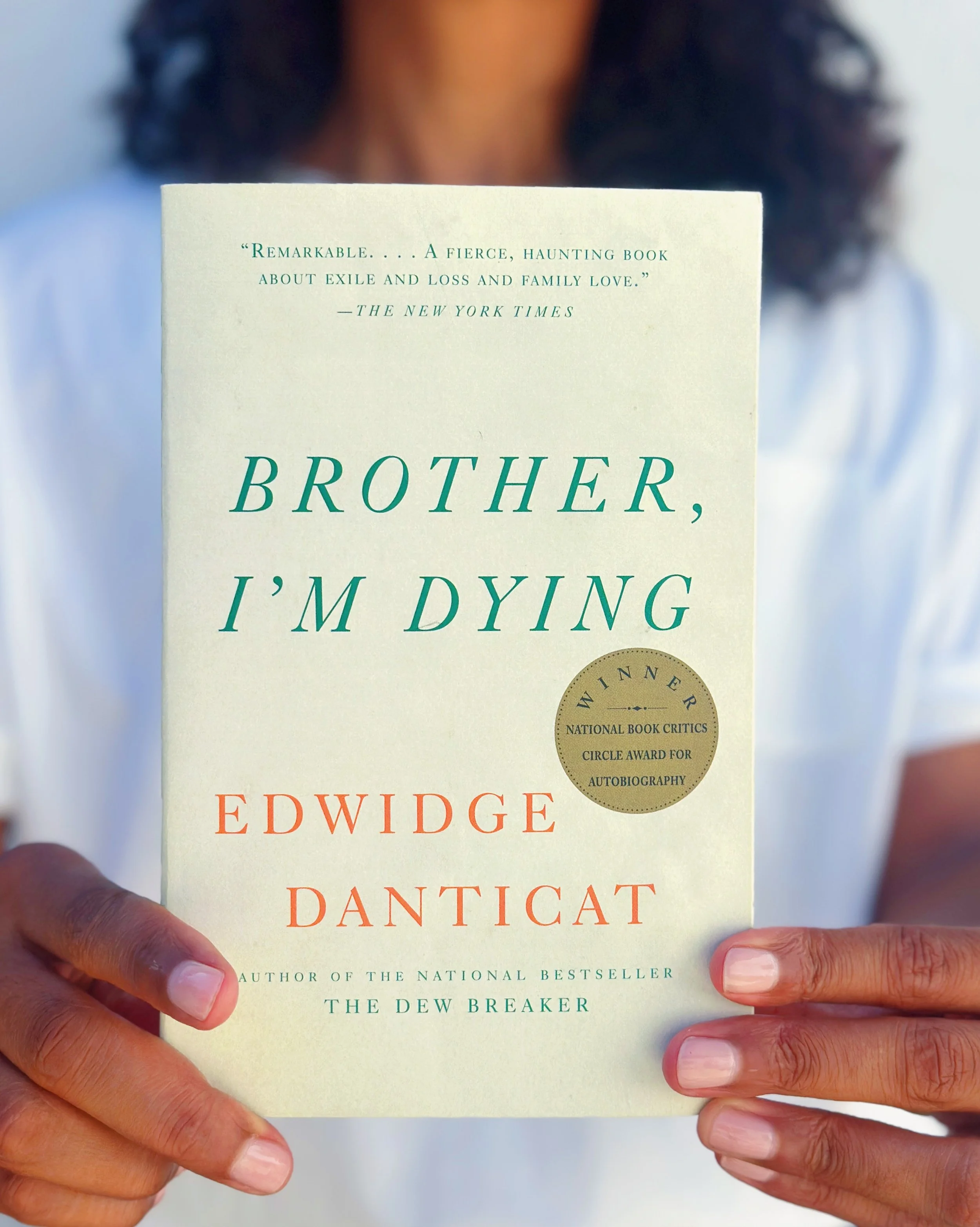
It’s The Stacks Book Club day and Natalie Green, Director of Programs and Partnerships at The National Book Foundation, is back to discuss Edwidge Danticat’s critically-acclaimed memoir, Brother, I’m Dying. This National Book Award finalist explores Danticat’s relationship with her two father figures—her uncle Joseph, who raised her as a child in Haiti, and her father, Mira, whom she reunited with in the U.S. when she was 12—and the impact of their deaths. Natalie and I discuss why we think this is a successful memoir, the moments that stuck with us most, and the many ways that politics and policies affect our lives.
There are spoilers in this episode.
Listen to the end of the episode to find out what our October book club pick is!
LISTEN NOW
Apple Podcasts | Spotify | Google Podcasts | Overcast | Stitcher | Transcript
Everything we talk about on today’s episode can be found below in the show notes and on Bookshop.org and Amazon.
Brother, I’m Dying by Edwidge Danticat
“The 2026 National Book Awards Longlists” (The New Yorker)
Déy by Edwidge Danticat
A Dead White by Wendy S. Walters
Let the Poets Govern by Camonghne Felix
Paradiso 17 by Hannah Lillith Assadi
The Fight of Our Lives by David Levithan and Gabriel Duckels
Your Presence Is a Danger to Your Life by Samar Yazbek, translated by Leri Price
The Yellow House by Sarah M. Broome
Seasons of Fury by Rozina Ali
Dangerous, Dirty, Violent, and Young by Zayd Ayers Dohrn
Pierre Dumas Bell (“Ohio case highlights toll on immigrant students,” Fox 5 DC)
Heavy by Kiese Laymon
Men We Reaped by Jesmyn Ward
The Year of Magical Thinking by Joan Didion
Last Chance Live! by Helena Haywoode Henry
To support The Stacks and find out more from this week’s sponsors, click here.
Connect with Kai: Website | X/Twitter
Connect with The Stacks: Instagram | Threads | Shop | Patreon | Goodreads | Substack | Youtube | Subscribe
To contribute to The Stacks, join The Stacks Pack, and get exclusive perks, check out our Patreon page. If you prefer to support the show with a one-time contribution, go to paypal.me/thestackspod.
The Stacks participates in affiliate programs. We receive a small commission when products are purchased through links on this website.
TRANSCRIPT
*Due to the nature of podcast advertising, these timestamps are not 100% accurate and will vary.
Natalie Green 0:00
She so beautifully captured this ideal of like the lived experience of exile for these two men is all of the lost opportunity of time that they could have been together, and I feel like especially towards the end of the book, she keeps kind of reminding us that they actually didn't get that much time together, but there's still this like unfathomable amount of love and knowing between them, like despite the exile, despite living in different countries, like how she captured that, I was just I was so moved by that.
Traci Thomas 0:38
Welcome to the Stacks, a podcast about books and the people who read them. I'm your host Traci Thomas, and it is the Stacks Book Club Day. Natalie Green, the director of programs and partnerships at the National Book Foundation, is back with us to discuss our September book club pick, "Brother, I'm Dying" by Edwidge Danticat. This National Book Award finalist explores Danticat's relationship with her two father figures: her uncle Joseph, who raises her as a child in Haiti, and her father Mira, whom she reunites with in the United States when she's 12 years old, and their impact on her life. In this episode, we talk about grief, immigration, and the myths we create around the people in our lives. There are spoilers in today's episode, and be sure to listen all the way to the end of this episode to find out what our October book club pick will be, if you like this podcast and you want even more bookish content, please consider joining our community, the Stacks Pack, on Patreon and subscribing to my newsletter, Unstacked on Substack. Each of these places has different perks. On Patreon, you can find community conversations, virtual book clubs, and on Substack, you're going to get my hot takes and everything from literary gossip to pop culture and sports news. And in both places, you have access to monthly bonus episodes. Plus, and this is important now, your support makes it possible for me to make this very podcast the Stacks every single week and to make it free for all. So consider joining the Stacks Pack at Patreon.com/slash/TheStacks and subscribing to my newsletter Unstacked at Traci Thomas substack.com. All right, now it is time for my conversation with Natalie Green about Edwidge Danticas' book, Brother I'm Dying. All right, everybody. It is The Stacks Book Club Day. I am joined again by Natalie Green of the National Book Foundation. Natalie, welcome back to the Stacks.
Natalie Green 2:30
Thanks for having me back, Traci.
Traci Thomas 2:32
I'm so excited to see you again. We are talking today about "Brother, I'm Dying" by Edwidge Dantica, which is coincidentally somehow we magically did this because we picked our book club pick before the National Book Award long list came out, and she's on the list again this year for her novel this time Day.
Natalie Green 2:53
I think that should count double for you, Traci,
Traci Thomas 2:56
and I did predict that one. I did predict that one. I got three this year,
Natalie Green 3:00
but this is like a bonus point.
Traci Thomas 3:03
I do feel like this is a bonus point, and also I feel like this was a particularly impossible list lists to predict. It was they were surprises across the board. I got the white paint book, so I feel like that counts like times 1000. I don't. I hadn't even heard. I didn't even know anybody else knew about the white paint book, so I felt like bonus points for white paint book, and I am making my way through the list. I'm on my third book on the nonfiction list. Have you started your reading of the list so far?
Natalie Green 3:30
I have started my reading. I have basically like one book per category at this point, and I'm just.
Traci Thomas 3:38
How do you pick where you start? Is it just based on like panels you have to do?
Natalie Green 3:42
Yeah, that's definitely influenced. And then sometimes I have like the good luck of a book landing on the list that I've already read, which feels like that's brownie points for me. And that happened with Kimone Felix's beautiful book this year.
Traci Thomas 3:56
Same for me. I'd already read that one. Already read that one.
Natalie Green 3:59
And then I'd already read Paradiso 17, which also the last time we spoke, I was like raving about that book, and I had no idea.
Traci Thomas 4:06
So good, so good. Well, I'm excited. I there's there's like there's one book in every category this year that I'm like legit like pumped about. So I'm excited to kind of read a few things in other categories because I normally just like hunker down in nonfiction, which I am gonna do. But I there's like there's like that YA nonfiction book about the AIDS epidemic, and I'm like this is really my wheelhouse. There's a translated nonfiction that I'm like okay let's go about Gaza. So I I'm I'm excited. I'm I hate it when it's a list that like I I have a lot of hate. I hate it when it's a list of books that I don't know because it's hard for me to categorize what's happening. But I also love it because I do get to find new books and try to like make pair. Like I'm trying to like psychoanalyze all the judges. I'm like, how did we get this list? Like, what is this group of judges trying to tell us about this year in books? And like, is that what I think about? So. I'm locked in, but that's not what we're here to talk about today. We're here today to talk about "Brother, I'm Dying" by Edwidge Dantica, which I found out in reading the book I'd been saying her name wrong this whole time. We don't pronounce the T, ladies and gentlemen.
Natalie Green 5:12
I found that out too, Traci.
Traci Thomas 5:14
Yeah, and it doesn't happen till late in the book.
Natalie Green 5:17
So I was like, "Oh yes, it's French. It's French. We're being French. Okay, got it.
Traci Thomas 5:22
Yes, of course. And and in this case, the tea's actually not even supposed to be there.
Natalie Green 5:28
That it was really a fun fact that she's saying to Erie Laden.
Traci Thomas 5:32
And then also, like I don't know if you even noticed, but in the in the like dedication, it says for the next generation of quote cats, and then it's dedicated to Bob's kids, Kelly's kid, and Mira, all of all of her dad's grandkids.
Natalie Green 5:51
The cats.
Traci Thomas 5:51
That's so good.
Natalie Green 5:53
The cats without pronouncing the T.
Traci Thomas 5:55
Oh, the cats. Yeah, I love it. Anyways, so that's what we're talking about. This memoir for people who haven't read the book. We will spoil it. And while this is nonfiction, it is a memoir. You could definitely spoil this because this isn't a story that you wouldn't necessarily know. So if you want to wait and read the book and come back to it, you can do that. But quickly, just what the book is about: Edwidge was born in Haiti, and when she was two, her dad left and went to the United States, you know, to to make a better world for him and himself and his family. And then her mother left about two years later when she was four. And then for another like eight years, she was raised by her uncle Joseph and his wife Denise. And it's about both her father and her uncle and her relationship to them, their relationship to each other, and all of their relationship to the country of Haiti, and about both of the men at the end of their lives, and sort of how Edwidge sort of related to them.
Natalie Green 6:51
How'd I do? Oh my God, you crushed it! It was so good. It's so good.
Traci Thomas 6:56
Okay, well, here's where we start. We always start here for book club. Broad strokes. What did you think of this book?
Natalie Green 7:03
Broad strokes. I really liked it. I felt like it was one of those memoirs where if I read it and it was a work of fiction, I would be like, "That's unbelievable! Like so many times there were these moments that captured the family at such like extreme, especially with some of the health stuff. Like the book kind of opens with just this like gut wrenching parallel of her getting the diagnosis that her dad is going to die on the same day that she finds out that she's pregnant. And I feel like there are so many moments like that in the book where I'm like, if this was a work of fiction, I would be like, that's over the top. But because we know it's like for real life, I found it like so unbelievably moving and like meaningful. And I also was like, kind of almost surprised by the prose. Like it was maybe sparse is too strong of a word, but it was so just like clear and concise, and like such a quick read in so many ways that I wasn't necessarily expecting.
Traci Thomas 8:10
I definitely agree with that. I really love this book. I was I've been sort of out on memoir for the last few years, like I've sort of been just like over memoir, and I think it's because I know that memoirs like this exist that are so good that when I read other memoirs that aren't as good, I just like hate it. So going into this book, I was a little bit like, okay, we're gonna do a memoir, but like we'll see. And I just loved it, and it was a reminder why memoir is my most read genre across all of my reading. I've read more memoir than anything else, even though I'm like the biggest memoir hater these days. I loved it. I think like the pros to your point, the way that I sort of was thinking about them is it felt like you know when you go to like maybe it's like a teacher or like a mentor, like an older person in your life who you're just like sort of obsessed with, and they start to tell you a story, and it's like kind of a long story, but they're so good, and they sort of string you along, and you're just like sitting at their feet, like, yes, tell me everything, and you're like, oh my god, I can't believe it, and they're like, well, let me tell you this, and they kind of talk slow, you know, that person who's like, they know they've got you wrapped around their finger. That's how I felt like this book was. It was like there was like a confidence and an ease, and she was like, "I don't have to do a lot because I know that the story is doing so much for me. and then on top of that, my other sort of broad thing, which we can talk about later, is that I didn't know anything going into this book, and it really hit home for me because my dad died of like a pulmonary situation, so all the stuff about the oxygen and the breathing, and like there's a part in the book where she talks about him going downstairs to take his dinners, and then like not being able to like all of that. I was like, oh my god, this is like my life. So when I posted that we were doing this, a lot of people were like, get ready to bawl your eyes out, and I was like, okay, please, like. Get a grip! Like, have you met me? And I did, and I and I didn't ever bawl my eyes out. Like, I'm gonna be honest, but I did have my first tears on page 21. Like, it did hit me pretty early. I think because I wasn't expecting it, and because I could so closely relate to like this particular kind of illness of a father, and so I really felt like tied to that piece of the storyline.
Natalie Green 10:26
Yes, I feel like I got teary-eyed like so early on, and I feel knock on wood. I feel lucky enough that my parents are both living, and and also they're getting older, and just I am lucky enough to also like love and have good relationships with both of my parents, and yeah, my dad has always been my buddy, and so I felt I don't know I felt so moved by all the sections and comparisons with both her dad and Uncle Joseph, and there were so many the ways they showed her love felt so resonant and moving to me,
Traci Thomas 11:03
and also how they like shared her as a as fathers, like that her dad would refer to Uncle Joseph as her other papa, or like, aren't you so proud of our daughter? Or your grandchild is coming, and like all of those moments, I just I felt like that was such a special thing. I don't. I just there were so many little moments that I wrote down. I even have it on like my notes for today. Just like special moments that, like, if we have time, we can talk about. Because a lot of the notes that I took, like you know, a little bit of it was like plot stuff, but a lot of it were just like these special little like moments that like make a life. I don't know. There was it was so tend. I just I really loved it. Like
Natalie Green 11:45
yeah,
Traci Thomas 11:46
I was surprised by how much I loved the book. Um, which I sometimes hate for book club. I'm like no, don't like it. Like there's not even anything to talk about. But I do think this book has a lot to discuss. And one of the things, just like since you represent the National Book Foundation in your in your professional opinion, I'm curious to know just like what you think about this book as a National Book Foundation book. Do you feel like it fits in with what you know about what a National Book Foundation book is? Do you feel like you see parallels between it and other books on the lists over the years, or just like anything about that as like a represent as the book as a representative of the list.
Natalie Green 12:24
I mean, I it's so interesting. Like, I love the way you talk about memoir plus because I think that that is. I can also be a bit of a memoir hater, but I feel like that's the category of memoir that I gravitate towards. Like, one of my favorite all time favorites of a National Book Award winner, Sarah Broom's The Yellow House which I feel like is very much like memoir plus. And when I was reading this, I felt like it was actually very straightforward memoir. Yeah. And but you know, like I said, I loved it. And so when I was thinking about it in the universe of like today. I'm like, oh, would this be a finalist today? Because I think so often in this present moment, especially with a category as big as nonfiction, our judges are looking for books that like hit so many different notes and categories. And so it's such a good question. And also, I feel so grateful that it is and was a part of the National Book Award ouvre. like I think the historical and journalistic connections she draws are so relevant and like evergreen. And I think I was also kind of thrown off by the jacket copy, which I so often am thrown off by jacket copy. Like based on this description, I was like, okay, Edwidge's family was in the like this huge historical event, and I'm just like a dumb American, and I had like no idea. But then actually, like the the family death that she talks about that like made like New York or domestic headlines. Not that it wasn't a meaningful event. I I don't think it was like you know an earth shattering moment of journalism.
Traci Thomas 14:12
Yeah, I didn't read the jacket copy, and my paperback doesn't have anything that even sort of mentions that. I don't think it does. Wait, where does it say this?
Natalie Green 14:22
It says. Their story made headlines around the world.
Traci Thomas 14:27
Oh, you're right. Okay, I see. You're right. You're right. You're right. That's the last sentence of the jacket copy, so I didn't read it. I actually don't read. Okay, I didn't. I didn't have that anticipation, but you're right. That would make you sound like it was like a more well-known story. I see. Interesting. I was thinking of this book. I was trying to think of this book, like if it fits in with my thoughts about the National Book Foundation, and I feel like where I see it aligning is in the way that this is sort of like a complicated. Story plainly told or like personalized. I feel like that sometimes happened, and maybe it's because what I'm the two books. So I'd already read Camone's book when I when the award list came out, and I was halfway through Seasons of Fury by Rosina Ali, and then I finished that, and I immediately went to Dangerous, dirty, dark, and young, and fun, and whatever the heirs born, the heirs dorn, and I feel like both the Rosina Ali, which is about Muslims in America, has so much to do with like immigration and policy and how that policy is tied to like racial and ideological, you know, beliefs and systems reminded me a lot of this book, but also I felt like the Airs Dorn book so far is very similar because it's a family memoir pulled through the perspective of like the child who doesn't really understand what's going on, and so I thought it was sort of fun for me to be like write these stories that we're telling, like she wrote this book in 2007. These events happened in 2004, so it was a very like quick turnaround. But in a lot of ways, I feel like the story that she's telling is so prescient to this current moment. Totally, especially when we're talking about like ice and all these things. So it does feel like there's something about like standing the test of time that this book does so well that like in like almost 20 years later, I was like, didn't we just have? I mean, we just had that young man from Haiti, Pierre Damas Bell, who just apparently took his own life. That's what that's what they're saying because of his immigration status and because of ICE. And I just like the trauma and the shame and the like hysteria and cruelty around immigration in the United States-it just like felt so. I was like, "This is today, right? This has not changed at all. And so, I think in a lot of ways, like what is sort of you know confirming, affirming about this book is that like it still works, like it still really works, which isn't always true for like current interest books,
Natalie Green 17:09
right? Like horrifyingly so. In the instance of this book, like the section towards the end that's like named after Uncle Joseph's like case number that he didn't know about, like alien, a lot of numbers, and the scene where he's at the airport and he has his passport and his visa, like he and his temporary stay visa, like he could have just left the airport, and then because he's being honest, he asks to seek temporary asylum. It's like that scene just makes you want to like bury your head in the sand, like the person that has done everything by the book, and then is an 81 year old who's then taken to a detention center. It was just like horrifying.
Traci Thomas 17:59
I want to come back to that part of the book because I want to spend a little more time on it later. But I yes, yes, that part is horrifying, and we will say more about that horrifying part later. Okay, I want to start with the structure of the book because I thought it was brilliant. I mean, I think the book is brilliant. Like I do, I just think this book is like it's like a small, great book, which I think is what a memoir should be. I don't want a big memoir. I don't like when a memoir tries to be big. I'm like, nope. You just be you just be your story. That's it. You don't have to be everyone else's story. You just be your story. You be your story so good that everybody wants to be you, you know. like I feel like that's like what's special about like heavy by Kiese Laymon, it's like this is so specifically his little story, and it's done so well. Or like similarly, Jesmyn Ward's Men We Reaped. It's like this is her only she could write that book, and it is so good. And she's not trying to be like black people in America. She's like these boys that I knew, you know. And I'm just like that works. Yeah. This book starts with this epigraph from Paul Oster, and it says, "To begin with death, to work my way back into life, and then finally to return to death, or else the vanity of trying to say anything about anyone, and I mean, if that's not the whole book right there, right? Like the structure of the book follows that exact thing. It begins. We begin with like the death diagnosis for her father. We go back to life. We we learn this whole story, and then we come back to both the deaths at the end. And it's like you-you know that's what's happening, right? She doesn't pull any surprises. She doesn't trick us. She's just like, here you go. She's like, this is what I'm gonna do. Just gonna let you know, we're gonna start here. We're gonna go back. We'll be back to this. So if you're worried about what happens, don't worry. We're coming back. And I think that kind of like. Confidence in a writer is so powerful.
Natalie Green 20:06
Traci, did you think like Uncle Joseph was like a little bit of a surprise, like not fully, because the whole time we're dwelling so heavily in like the repercussions of colonialism in Haiti, so it's like you know bad things are happening to this family, but also like I feel like the parallels she's dropping between her father and Uncle Joseph is that like Uncle Joseph is like kind of fit as a fiddle, like he has like some minor health stuff, but he's like being treated by the family, and like and so I feel like that escalation towards the end did feel not like a total surprise, but like especially heart wrenching because you like want this man to be okay because you know her dad's side and you want the other dad to be okay.
Traci Thomas 20:53
Okay, yes, and I felt like she gave us so many clues along the way that like I knew when it was escalated. Like, there's a part. There's a part where, like, obviously later when he's like, "Brother, I don't know when I'll see you again. Like, I leave you with a heavy heart. I was like, "Well, I know you two aren't seeing each other again. Like,
Natalie Green 21:14
totally
Traci Thomas 21:15
storytelling rules tell me it's not going to happen for you two.
Natalie Green 21:18
Yeah,
Traci Thomas 21:18
and then also, like the in that same scene, he's like, "Oh wait, I do know when I'll see you. I'll be back in October. And I was like, "Okay, so that's not happening either. And so she sort of like set us up like that, and the way that she was setting him up to be so fit was making me be like, "But he's 81. Yes, I also think it's possible going into the book, I knew that the uncle died, like that someone had told me that, or like that piece of information, or maybe even with the title, I assumed that brother was the uncle, and I don't know why I would assume that brother was the uncle and not the father, but for whatever reason, I felt like I thought this was a book about her uncle dying going in.
Natalie Green 21:58
Oh wow, yeah.
Traci Thomas 22:00
So, but I don't know who someone must like. Someone must have told me.
Natalie Green 22:03
But you're right. Like there are so many clues. There's like she definitely sets this up.
Traci Thomas 22:10
And then there's the other clue that was huge. Is like, do you remember when they're in the house and like all the shooting is going on outside, and he's upstairs with Maxo and all the family, and he's like, you guys have to leave, and and then at the end of that chapter, it's like in the morning he awoke like in a bullet riddled room or something like that, and I was like, oh, he's a goner. Like I like I actually thought that that was him being dead because she also was like she also said something like we'll never know exactly why he did that, and I'm like, well, if you spoke to him after that, we would know. So, like, we clearly something happens where we don't get an answer,
Natalie Green 22:48
right?
Traci Thomas 22:48
Because everything else, it's like he told me this, he said this, this is what happened, and so that was also a clue of like whatever this scene is, however long this scene goes, we're not getting. He's not coming back to them in any like meaningful way.
Natalie Green 23:04
I was so scared during the shooting scenes, and I was so closely tracking exactly like what you're saying of like when they kept dropping his perspective. I was like, that is going to be that as soon as they don't get his perspective, that's the end of his life because the family wasn't able to, you know
Traci Thomas 23:28
Communicate with him.
Natalie Green 23:30
Communicate with him, and the fact that he survives that
Traci Thomas 23:33
all of that
Natalie Green 23:35
and then dies on in the U.S. I'm like, this is oh, I I was I was dumbfounded. I was dumbfounded.
Traci Thomas 23:44
I was I mean yes yes I was tracking the same thing I was like who how would someone know this piece of information right like it kept being like who has he like so I knew as it kept going it's like okay well he's still in contact people he's still in contact people so he's still alive and then when it started being like the medical records.
Natalie Green 24:01
The medical records!
Traci Thomas 24:02
I was like, okay, so this is where it happened, and but again, I sort of always knew, and then and then it did dawn on me, sort of later in the book, as this was happening, that he was going to die before the dad, and that also was upsetting to me. I mean, so much of it was upsetting to me, and I feel like one of the things I don't know if you've ever had like someone very close to you who's like an older person pass away, like maybe a grandparent or like an uncle or something. But one of the things that like my dad died almost 15 years ago, but one of the things that haunts me still to this day, like 15 years later, is the faces of his old friends. So I was 25 when my dad died. I only knew him for 25 years. He was 76 when he died, which means there were people. His best friend from kindergarten. He was still best friends with, and like when that man came to the door after my dad had died.
Natalie Green 24:58
Yeah,
Traci Thomas 24:59
it still. Makes me so emotional, but like that, like the way she captures like the bond between the brothers and like how I'm gonna cry and like how how much they meant to each other. She does it so well because like Edwidge could never have that history, right? Like as the child, you can never have the same history. You have a different relationship, and arguably, you know, like maybe it's closer in some ways. You're with them every day, right? But like, there's something about like the face of a person who has known your beloved family member for longer than you could even fathom, right? Like I'm still not as old as they were friends long. You know?
Natalie Green 25:45
Yes, yes.
Traci Thomas 25:47
Like I have to be 50. No, I have to be 70 years old before I will be. I have 50 more years, basically, or not 40 more years, or whatever, before I will ever match up to the length of time that they had together, and I just, I don't know. That always like is so such an intense thing to think about.
Natalie Green 26:07
Totally, and she so beautifully captured exactly what you're gesturing towards of like this ideal of like the lived experience of exile for these two men is all of the lost opportunity of time that they could have been together, and I feel like especially towards the end of the book, she keeps kind of reminding us that they actually didn't get that much time together, but there's still this like unfathomable amount of love and knowing between them, like despite the exile, despite living in different countries, like how she captured that, I was just I was so moved by that.
Traci Thomas 26:45
I was yes. The other thing that she like reminds us so much is like we're all dying. Like there's that bit where it's like if people really thought about births, they'd cry because it's the beginning of the end, day one on your journey to your grave, and like like the title, there's so many chapters about it, and like the way that she sort of more broadly than just the dying is like the grief of life. There's so many instances of grief throughout this book, like obviously Uncle Joseph losing his voice and like battling with that, the the bit where she's going back, where she's going to the United States, and it dawns on her on the airplane that she may never talk to her uncle again. Obviously, like the death, but like the moving away from home, like being away from your people, not being able to share your life with your beloved family, and and it's just like so heavy, and also also the grief of country, like the way she talks about her dad watching like Haitian television shows and only wanting to talk about like Haitian politics, and we don't really talk about the like grief of moving away when we talk, like when people talk about immigration, a lot of it's like the hope of the future, like getting a better life, and all of these things. I'm like, sure, I miss my family, I haven't seen them, but like the grief of like the little tiny things, like the food. There's that bit where they talk about the the meal that her dad would make for everyone when they would move when they would come to the United States from Haiti, and like,
Natalie Green 28:31
oh,
Traci Thomas 28:31
I don't know.
Natalie Green 28:32
And she talks about how often she goes back to Haiti and makes the juxtaposition with her father and how he wasn't able to do that, and I just thought about like the the generational separation and loss of place too, and like her father being closer to that place, but in so many ways farther from it because he's not able to go back in the same way. And I was just I was devastated by that, and then I think that generational grief continues with Edwidge having a baby amidst all this death, and then these men not getting to be a part of this baby's life.
Traci Thomas 29:11
I know it's like that's like the all at onceness of life, right? Like I kept thinking about that of like she gets her father's diagnosis the same day she finds out she's pregnant, and like she's headed to get an ultrasound, as you know they're headed to the hospital, and it's just like, and also just like how literal that is. Like life literally goes on. Like people continue to live, and I think the dad says, "What's the line? I'm so touched that my daughter wants me to come back. He said, "But my home is now here in the land of the ancestors. Tell my daughter for me that when one is alive, one is alive, but when one is dead, one is dead.
Natalie Green 29:55
So good. That's the that's like the story, right? That her. Grandma, or maybe her aunt. Yeah, I loved those. I loved the little vignettes of the stories that the family would tell because they were always, yeah, they were always perfect like that to just encapsulate the whole book within a few lines.
Traci Thomas 30:16
This is actually exactly what I want to talk about, but we're going to take a quick break and come back and talk about these like fables. Okay, we're gonna talk about these family lore fables. It's Grandma Melina, the grandmother, and she has a lot of them. But there's other ones. There's the one that I just read from, and one of the things I thought was really interesting, as like a literary device, perhaps, is how she used these fables as sort of like as a way to create mythology around the two men. Like that, like that, the fables were tied to each of their own struggles without being like this fable reminded me of my uncle Joseph. Like she just sort of drops them in. Like I think the first one we get is about the girl and the mother and the snake, and the the girl's like, "You're not my mom. You're hissing too much, and then it's like you're not my mom. You're not hissing enough, and then the snake eventually realizes that he could just kill the mom, and the girl would have to come out, and then he could kill the girl, and the girl's like, "No, you will not kill me. I will die in this house.
Natalie Green 31:34
I will die in this house
Traci Thomas 31:36
before I let you kill me. And when you get to the end of the book, and you're like, oh, the girl is Uncle Joseph.
Natalie Green 31:42
Yeah,
Traci Thomas 31:44
but also when they tell the story, you think that the girl is the dad.
Natalie Green 31:48
Yeah,
Traci Thomas 31:49
right. Because it's like early in the book, and it's like when you're finding out about the dad's like, like he's gonna die with this disease, and it's gonna slowly kill him.
Natalie Green 31:57
Right.
Traci Thomas 31:58
I mean, that's how. I mean, that's how I read it.
Natalie Green 32:01
No, I agree. I agree, and then you start getting the stories that feel like fables of Uncle Joseph, like traveling for a doctor's appointment, and then later, like traveling to New York for the operation and the voice box, and like those stories almost take on like a really similar quality to the like like the hero's journey, and then I do. I think you're right. I think it evolves, and then you realize, oh, all along, Uncle Joseph would rather die in the house. He had this beautiful quote that I loved so much, where he was like, I think he was maybe talking to Edwidge, but he was like, "Not everybody's cut out for exile. Like somebody has to stay in the home country to like receive the letters. And like, I was like, "Oh my god!”
Traci Thomas 32:52
Yes, yes. Well, and his biggest fable moment, I feel like the moment for me where I was like, "This man, this man is the Marie Micheline stuff, where he treks across the country and up to the mountains and waits and saves her and gets the baby and she's you know her whole her whole life is ruined and and it's like you know the the evil boyfriend and then in some ways, like his wife becomes sort of like the evil stepmother, and she sends her away to be married off, and he go, and it's like it has so much like fairy tale, the way she tells it, that I was like, oh, this man in her brain, in her small brain as a child, like that's what he is. He is the hero. He's the hero of the family. Like he can't even talk, and yet he does, and he puts the voice box, and like he makes it happen no matter what. And I just, I found like because you, you know, you imagine, and and I mean, this book, I guess, is in some ways her carrying on the legacy of the grandmother Melina, right? It's like she's gonna tell these stories about this man and these people, and I, I don't know. I just really, I loved it at first. I didn't, I didn't know what was happening. I was like, oh, okay, a story, and then I was like, oh, okay, like I see this. These stories like are part of part of this whole thing,
Natalie Green 34:24
and like, do you wonder in the idea of like the true hero of this book? Like for me, it's Uncle Joseph as seen through Edwidge's eyes, and that's not to knock her dad or her relationship with dad, which is also depicted with so much love, and I like wondered how much of that was like Edwidge, as we see in this book, is following a similar hero's journey to her dad. Like she leaves New York and she goes to Miami. So like I feel like in some ways it's like all in the eye of the beholder. Like her and her dad are the. People who left to like make these new futures for their children, and then in like Edwidge's perspective, it's like, but the real hero is like the one who stayed.
Traci Thomas 35:11
Yeah, I mean, I think that's right. I do think I do think that he is the sort of hero of the book through her eyes. And you know what? I'm just realizing now you're saying this. You know why I think that I thought that the uncle died is because brother, I'm dying is the title, and he's the one who says that when he is going to collapse with his throat thing, right? He's in the states and he calls Edwige's father Mira and is like brother, I'm dying. So I think maybe that's why I thought he would die later because the title-I don't know. Just by hearing you said, I'm like, right, I forgot he like goes to the United States and has all of his surgeries and stuff. Yeah, let's talk a bit about the ending, about what happens to Uncle Joseph because it is well. Before we do, one of the things she also does in this book, which we haven't spent really any time on, but is important now at this point, is that in addition to telling her story and their stories, she's also telling the story of the politics of Haiti over basically over Uncle Joseph's life. I think I do think he's the hero because I also think the book is mostly framed around his timeline.
Natalie Green 36:17
Yes, I think that's right.
Traci Thomas 36:19
Because like it starts with like his her grandfather his father talking about like I mean doesn't start with that but like that the grandfather hopes that they'll be free like so I do think and like his birthday ends up becoming like election day or whatever yeah
Natalie Green 36:33
like the evolution of his politics yeah
Traci Thomas 36:36
yeah but so throughout the book she gives us sort of these little quick Haitian politic politics updates and breakdowns, which I definitely needed and appreciated, but also was glad she didn't go too deep into that because I feel like that could have that would have taken us like too far into memoir plus category, yeah, and would have required which would have been a very different book. But I think one of the things that that this remind this part like so she so she's setting us up she's telling us about like baby doc and like all the different people and and who the uncle was politically aligned with at different points and how the ousting of one leader in Haiti was so heartbreaking to him that he turned to becoming a pastor like he was like gonna be in politics and was like, no, no, no, no, and I kept thinking about how, like, you know, people like, oh, I don't do politics. Like, I'm not. I don't do politics. And this book's reminding me so much of like, well, you might not do politics, but politics is gonna do you. You know, like, oh yeah, like it's like not that not that any of the people in this book said that, but I think about people who think none of this matters, and it's like, oh, okay, who cares who the ruler of Haiti was in the 1960s? Like that doesn't affect me, and it's like actually that thing is important. Like who the president was when your parents are born is gonna be connected to whatever, however you die is probably gonna be related to that, you know? Like yeah, and I think we don't think about these things. It's like, oh, politics isn't part of our life, but it is so important. Like, who decides to bring in the UN and what their policies are, and the fact that the people who were working there were like from Brazil and they didn't speak French, and like that's meaningful. That's a meaningful policy decision that has huge ramifications on people's lives, and I think like she does it so gently, but I do think she really makes that point.
Natalie Green 38:30
Oh, absolutely, and like over and over again, drawing to our attention the U.S. centricism of our understanding of politics, and being like, okay, if you want to talk about U.S. centricism, let's talk about all of the ways the U.S. were involved in this and complicit in this. And yeah, she does it not heavy-handed at all, but so effectively.
Traci Thomas 38:54
So effectively, it's like this decision, like all these little pieces of history that I've dropped along the way, are actually part of what make a life, like the politics of a place is part of who you are, whether you agree or not, whether you want it to be or not. Like these things are meaningful, and it's not just about a pipeline or a data center or whatever. Like it is fundamentally going to be part of who you are and what will happen to your kids, and I was just like, "Oh, you hate to hear it! You hate to hear that all these fucking people are gonna ruin your life.
Natalie Green 39:33
And Uncle Joseph didn't even want to stay in the U.S. He always wanted to go home, and he just so deeply believed in in the change that could happen in the hyper local community, which I think is the only thing that gives me faith in a moment like right now, and is just devastating. That ultimately, that is what kills him because it's less.
Traci Thomas 39:57
Yeah, but it's but it's even before that. It's like. When the U.S. gets involved because of the the the leader who escapes and goes and is exiling the United States, he comes back. He comes back, and then the Bill Clinton and the U.S. are now have this new interest in Haiti, and that's what leads to like this next level of turmoil, which is what is which? Eventually, like the the ghosts or the gang members turn on him because they believe in his investment in that in that politics, even though his investment had always been in Bel Air, in the neighborhood, in the community, and it's like to think that he had always been like privately been like I'm not leaving here, and everyone in his life is like you have to go; it's not safe. And he's like, I'm here, and that the being there because of the external factors is what leads to all of that outcome. He's like even someone who is trying to do the hyper local right thing and show up and opens his church amid gunfire. Like this is the thanks he gets, you know.
Natalie Green 41:07
And he's convinced that he can change their minds because of the work he's done and the person he is. And he's seen these young men grow up, like has known them since they were kids in the neighborhood, and how heartbreaking is that to then have that realization that oh, it actually doesn't matter what I say or do because this has become so much bigger than me,
Traci Thomas 41:33
right? Okay, so what happens to him? Here's what happens. I'm gonna try my best to recreate this, but if but you help me if I get lost. Okay, so october 24, 2004. There is lots of gunfire over the night in the night, and they all sort of hunker down. Sunday is the next day, or maybe it is that day, but whatever. The gunfire is overnight, so Sunday morning, yeah, things have chilled out. Maxo, Uncle Joseph's son, is like, let's not like do church. And Uncle Joseph is like, but there's like there are people outside, and like we do church, like we do church, we do church, we're gonna church, and so they do church. They don't turn on the loudspeaker, which I don't know if that is like she make she mentions that detail, and I guess I'm wondering, like, do you think that if he had, maybe things wouldn't have gone as bad because people would have known what was going on in there, and so they wouldn't have there wouldn't have been like the secret of what happened.
Natalie Green 42:32
I don't think so. I think it was a demonstration about the attempt to be proactive and thoughtful, and it not mattering.
Traci Thomas 42:42
Yeah. Okay. They do church, and while they're at in church, a group of the sort of government-sanctioned police who are fighting against the ghosts, aka like the gangs, comes in, and they're scary and they have guns and they sort of are like intimidating and they ask a bunch of questions like where are the gang members and nobody responds and they go up onto the roof and they start just shooting out into the community and they kill at least two gang members but like 15 people are injured. Other people are definitely, but we know for sure there are two two gang members are killed. They leave. Everything sort of calms down, and in the aftermath of that, a woman who is sort of friend friend of the pastor, friend of Uncle Joseph, comes by and is like, "Listen, everybody thinks that you took money, and to let them come up there and shoot up the town, and now everybody is gonna cut you up into pieces, and they hate your guts, and or and if you don't want that to happen, you need to pay for everyone's like hospital and medical and every like you basically need to either take care of everybody and pay for everybody's funerals, or they're gonna cut your head off, and Uncle Joseph's like, I don't love this, but like, no, I've been mostly good. And he tells his family to leave. The next day, he goes out. He kind of like tries to sneak out. As he's trying to sneak out, people from the gangs come into the community where his or to the church where his house and school are, they loot everything, they burn it down, they destroy everything, and they tell him we're gonna cut your head off. So just either give us some money or it's over. And he's like, I gotta call my family to get the money. He escapes by the help of the same young woman and her mother. They help him through disguises, phone calls. He eventually gets to his sister's house. The next day is the day that he's supposed to be taking this flight to Miami. He all he's taken with him is like $1,000, his medicine, and his passport and his visa. He does stop after all this, like at the like UN police station to like file a report. As does his son, which I thought was like, I don't know that I really liked that little tidbit because I was like, right, you were raised by this person who clearly believes this is like the most important thing in this moment, and like it's just like a reminder that who your parents are is who you are. Like you grow up to become your parents, right? It's like we're literally leaving in 24 hours. People want to kill you, and you're like, "Hey, just wanted to quickly file a report. I'm like, "Okay, Uncle Joseph, what are we doing here?
Natalie Green 45:26
Meanwhile, like my debit card gets skimmed, and I don't file a police report because all cops are bastards. Yeah, and then the bank is like, "You need to file a police report when things happen.
Traci Thomas 45:38
Yes, exactly. It's like it's a different time. It's a different place, but like I just thought that little mirror image, like unbeknownst to both of them, they had both done it. I was like, "This is amazing. They get out, they get on an airplane, and then no, they get to the airport, and then we don't hear from them. nobody knows what's happened to Maxo and Uncle Joseph, at the same time, Edwidge's father getting sicker and sicker. There is this hope of this like Columbia treatment, this experimental treatment that might work for him. We hear from the aunt who's like, "I dropped him at the airport. We don't hear from them. We don't hear from them. Eventually, she gets a phone call that's like, "Hey, we have your uncle here, and he's in like we've got him detained and got to go bye. And they're like, "What's going on? Over and over. Finally, we find out that at the airport, instead of just handing over his passport and his 30-day visa, he's like, "I'd like to file for temporary asylum, which triggers all sorts of horrible things. They take away his blood pressure medications. They do a translated interview with him. They do not follow up in certain questions about his health. He is 81 years old. They say that he has this number. There's this whole bureaucratic alien number that you alluded to earlier. Eventually, Edwidge is able to hire an attorney because they've taken him to this like really bad detention center. The attorney and him go to a hearing, so like they're like he's going to get released. He's 81, like he's not a flight risk, whatever, and in this meeting, he has what they think is like a seizure. It's it's horrible. It's graphic. I was it was very upsetting, and he sort of never recovers from that. And while this is going on, they call for a medic. They're like, "We're in a lockdown. We can't get you a medic. Then the medic comes. It was a fucking piece of shit medic. Literally, they’re like he's faking. It's like, bitch, what? I don't care what you think, mother. Get him an IV. Like, you can figure out if he's faking in a minute. What are like? Who died and made you God? Like, I just ew thinking he had a vomit coming out of his trachiomy. What are we talking about? That part was like, anyways. So I hate him. And then he goes to the hospital, and within like 24 hours, he has died. Um, and it's really sad,
Natalie Green 48:16
It's so sad
Traci Thomas 48:17
enraging.
Natalie Green 48:18
And his son, so Maxo, they had, they were ultimately able to buy Maxo a plane ticket so that he could accompany Uncle Joseph on this flight, and then Maxo is detained with his father, but then they're separated because of like the age and the health issues and all this stuff, and so this was also like at the same time he's having the seizure. They're calling the medic. They need an interpreter. The attorney keeps being like, his son is here. His son is here. Maxo's a fluent English speaker, and then there's all of these levels of bureaucracy with also like not calling Maxo. And can you imagine your father is essentially dying within like a stone's throw, and it's like you can't even be there with him. Like I just I couldn't fathom that,
Traci Thomas 49:10
and like the thing that I think really stuck out to me about this and about this whole section in the United States is like it's just so cruel. Like it's just so it's so dark. It's so dark. There's there's another character, Officer Reyes, right? Who's like the intake person who does the interview, I believe, who is just like a lying ass hoe who I hate. And it's like it just reminded me of like the Stanford prison experiment where it's like, oh, you guys have a fucking badge, so now you can be the worst people on the face of the earth, and I get that. Also, like this is these people's jobs or whatever. But, but the fact that the system is created to be as cruel as humanly possible to. An 81-year-old man. You think this guy is like Leonardo DiCaprio? You think he's that good of an actor? You think he really is pulling off a full like semi-comatose state? Please, please forgive me if I think that that's a stretch.
Natalie Green 50:17
And then, like Edwidge so calmly and matter-of-factly writes after this just harrowing detailed experience, like after Uncle Joseph has died, I've gotten multiple doctors at this point to review the medical records from the hospital, and they all say it was like gross mismanagement, mistreatment, malpractice. And what would the difference have been if this man wasn't in the ward for detainees, if this man wasn't an immigrant, if this man wasn't black, if this man wasn't a non-English speaker, like regardless of all those ifs, this person was treated totally inhumanely and basically left to die.
Traci Thomas 50:58
Yeah, and I mean, I I don't think we can put too fine a point on it. Like they are Haitian, and of all the sort of immigrant groups from North America, they have historically been treated the worst. Trump called it a shithole country. Like there is so much policy for hundreds of years since Haiti became, you know, had their revolution, they have become the sort of villains in this part of the world. Let me ask you this: one of the things that this book also made me think about before we even got to all the immigration stuff at the end was the just like the child separation of it all. Like thinking of her as
Natalie Green 51:42
oh my gosh, yeah, Traci, we didn't even talk about that.
Traci Thomas 51:44
Yeah, talk about it.
Natalie Green 51:46
Oh wait, no, what were you gonna say? Finish your thought.
Traci Thomas 51:48
I am not a particularly empathetic person. Like I think I've learned this about myself over the years. Like I sort of am like, oh, that's so bad. Bad things happen. Like I'm sorry, but as I've gotten older, and definitely as I've had kids. The child separation thing, like I just like I think about and like not in this case, it's not even like separated from family. It's just like having to move between these like two loving for like all intents and purposes, like loving families that are hers, and just like how, I don't know. It just really like made me sad for her.
Natalie Green 52:25
It made me so sad, and I thought so early on, like the luck involved in it being that she was still with family, like this idea of child separation, like it just made me think about like the foster care system and so many troubling systems where you're taken out of the equation of love and care. And so it was such a beautiful thing that she essentially did have you know two sets of parents, loving families in multiple places. But then, yeah, the child moments, like when her parents came back to work on some visa stuff, and she like didn't really want to go over and hug them, and she felt so unsure about their relationship. And then they had like these new babies, and she was like, "Where do I fit in with this equation? And yeah, it made me, it made me really feel for her, especially like from a child's perspective of just how that must have felt. Like it must have felt like they chose these new kids over her and her brother.
Traci Thomas 53:32
Well, that they like replaced them. They wouldn't have two more new kids.
Natalie Green 53:36
Yeah,
Traci Thomas 53:37
yeah. I just I don't know. I was really there's so many parts of this book that we're like touching, and before we leave, because we're like sort of out of time, but we have to talk about baby Mira,
Natalie Green 53:49
baby Mira.
Traci Thomas 53:51
I just that was a part that got to me when she finally has the baby. She names the baby Mira for her dad, which was it's she has a daughter, but the dad's nickname is Mister, and they meet, and he holds her, and the baby's falling asleep. And the dad's like, "I have waited my whole life to meet you, and you're falling asleep. And I was like, "I love this dad so much. I love him so much. That's exactly what my dad would have said, like I just I loved that moment so much. I loved that he got they got a month together. I just like and then when he's like take a picture, take a piece like and he's coughing every time he smiles, and then in the picture he doesn't cough.
Natalie Green 54:37
Oh, get out of town
Traci Thomas 54:40
whole thing and the part where she's like, the friend is like, you got to tell him it's okay to go, and she's like, no, I can't. And then they talk, I can't do that. And then they talk about how he like does go, and then they call in the, the like 911, and they do the whole like um, they do like the DNR, like they don't have a DNR, so they have to like try to resuscitated him. And I was just thinking like that. That part to me was very unlike what happened with my dad. But it it I just like I I know that feeling like I understand how that could happen. And I think like that's probably a part for people who have never experienced something like that. Where like you would be like, why would you do that? But like I do understand. I don't know. I just really. I also thought it was really brave of her to share that part because I feel like that's part of the story where people probably are the most would be the most judgmental of her. Like why? How could you let this happen? Why would you? He was dying. Like why? He clearly was ready to go. You know,
Natalie Green 55:41
and she was so honest too about the work of being shared between her and her siblings, and kind of like who was doing what, especially when she made the decision to move to Miami. Like materially, that meant that her siblings were the ones that were there, like bathing her father, like she was very specific about her brothers coming every day and bathing her father, and I thought that was, again, somewhere that I think a lot of people would maybe write around, and she really leaned into it, which I thought was really special.
Traci Thomas 56:16
Yeah. Okay. Last thing, what did you think of the title and the cover of this book.
Natalie Green 56:22
Oh, I love the title, brother. I'm dying. I think it's perfect. I also do. We both have the paperback.
Traci Thomas 56:30
Yeah,
Natalie Green 56:31
I think the paperback covers like whatever.
Traci Thomas 56:35
Okay, I love the title. I loved all the chapter titles. I even loved like how part one and part two were parts of like the same, like it's like he is my brother for adversity, and then like the quote, like the quotes for the he is my brother is this is how you can show your love to me everywhere we go. Say of me, he is my brother, and then when we get to part two, It says for adversity, a friend loves at all times, and a brother is born for adversity. And I just, I loved, I, I loved everything that she did. I loved. Yeah, I think that this cover. There's another cover, the yellow cover with the pictures of the of the family. Family. Those pictures are on the inside of the book that we have, I actually think it's racist that they changed the cover. Like, I genuinely think they were like, "We're not putting black people on the cover of this book to try to sell more copies.
Natalie Green 57:31
I'm like, "We're not freaking cutie patooties.
Traci Thomas 57:32
I know the pictures are so great, and I think they made it not yellow to make it like not seem ethnic. Like, that's the vibe I get because the other cover is like it's vibrant, it's yellow. You have these, you have this black family, and now it's like it's cream. It's giving, it. You know what it's giving? It's giving. Joan Didion's book did really well, and this is also a book about grief. Here you go. Though I don't know if that matches the timeline, but that's what it looks like.
Natalie Green 58:00
No, yeah, for sure. Also, you know, I'm biased, but like a national book critic circle, yeah, instead of a national book award finalist.
Traci Thomas 58:11
She won that one, though. You guys had to give her the award to get the full sticker. But I did think that I feel like some books would have had both. I know. I wonder if that's like different at the time. Like I wonder if at the time people only did like one sticker. like you did your big your biggest one? Because now people might have like two or three stickers. Well, why don't you just stick your National Book Award finalist sticker over?
Natalie Green 58:35
I was gonna do that actually before call as a joke, and then I ran out of time.
Traci Thomas 58:40
I love it. Okay, well, Natalie, you are amazing. Everyone else, you can listen at the end to the end of this episode to find out what our October book club pick will be. And Natalie, tell people if they want to know how they can watch the National Book Awards and when.
Natalie Green 58:58
Thank you, Traci. We're announcing finalists on october 6, a Tuesday, with the New York Times, and then I hope everybody, everywhere, everywhere, can tune in for the National Book Awards on Wednesday, november 18 at 8 p.m. Eastern. We live stream it for free so that everybody can tune in and be a part of the party. It'll be on our website, on YouTube Live. We'll even have a special host that's text based for our YouTube Live audience because the virtual audience is just as important to us. And I hope that everybody can tune in.
Traci Thomas 59:30
And I just want to tell everybody that I have been a virtual attendee as well as an IRL attendee, and being a virtual attendee is kind of sort of great. I just want to let you know it is worth tuning in. You get to wear your Jimmy Jams, and you get to still be part of the party. And so, shout out! I'm so excited. I can't wait to see what makes the list. Thank you so much for doing this, Natalie. This was better than I even imagined in my dreams. So, thank you so much, and everybody else. We will see you in the. All right, y'all. That does it for us today. Thank you so much for listening, and thank you again to Natalie Green for joining the show, and a huge thank you to Ale Romero for making this episode possible. All right, now it is what you've all been waiting for. Time for our October book club announcement. Next month, we are going to be reading Last Chance Live by Helena Haywoode Henry. This YA novel is the story of a teenage girl who is on death row and competes in a reality show in the hopes of winning her freedom. We will be discussing the book on Wednesday, October 28, and you can tune in next week to find out who our guest will be. If you love the stacks and you want inside access to it, head to Patreon.com/thestax to join the stacks pack, and you can check out my newsletter at Traci thomas.substack.com. Make sure you're subscribed to the stacks wherever you listen to your podcasts, and if you're listening through Apple Podcasts or Spotify, please leave us a rating and a review. For more from the stacks, follow us on social media at the Stacks Pod on Instagram, Threads, and YouTube. And you can find our website@thestaxpodcast.com. This episode of the Stacks was edited by Christian Duenas with production assistance from Sahara Clement. Additional support provided by Sheree Marquez and Grace Barry. Our theme music is from Tagiragus. The Stacks is created and produced by me, Traci Thomas.