

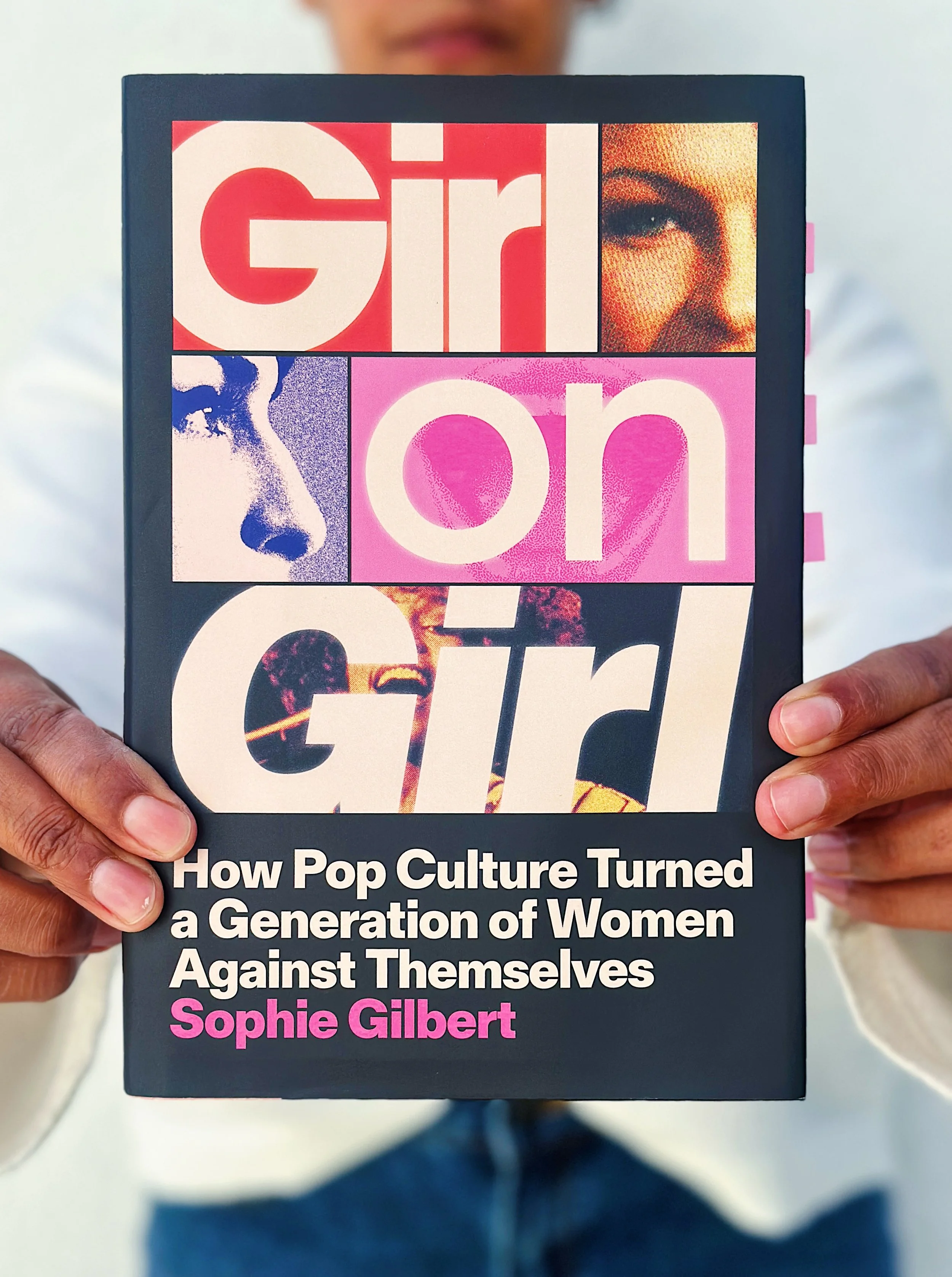
It’s The Stacks Book Club day, and I'm joined by Emmy-nominated TV writer, journalist, and host of Pop Syllabus, Christiana Mbakwe Medina, to discuss Girl on Girl: How Pop Culture Turned a Generation of Women Against Themselves by Sophie Gilbert. In this book, Sophie Gilbert highlights the ways the rampant misogyny of '90s and early 2000s pop culture continues to shape attitudes toward women today. We talk today about how the book tackles reality TV, postfeminism, incel culture, porn, and more.
Make sure you listen to the end of the episode to hear what our February book club pick will be!
LISTEN NOW
Apple Podcasts | Spotify | Google Podcasts | Overcast | Stitcher | Transcript
Everything we talk about on today’s episode can be found below in the show notes and on Bookshop.org and Amazon.
Girl on Girl by Sophie Gilbert
Terryworld by Terry Richardson
Jagged Little Pill by Alanis Morrisette
Chuck Berry’s Greatest Hits by Chuck Berry
Man’s Best Friend by Sabrina Carpenter
“Stupid Girls” (P!nk, 2006)
American Pie (Paul Weitz, 1999)
BoyMom by Ruth Whippman
Barbie (Greta Gerwig, 2023)
The Hangover (Todd Phillips, 2009)
The Baby-sitter’s Club
Paw Patrol (Nickelodeon)
Gabby’s Dollhouse (Netflix)
“TRUMP IS A LAME DUCK NOW - AND THE (LATEST) OLIVIA NUZZI STORY” (Countdown with Keith Olbermann)
American Canto by Olivia Nuzzi
“Part 1: How I Found Out” (Ryan Lizza, Substack)
The Bachelor (ABC)
“The Golden Bachelor and the Age of Authenticity” (Glamorous Trash: A Celebrity Memoir Podcast, Chelsea Devantez)
“The 10 Best Books of 2025” (The New York Times Book Review)
Mother Emanuel by Kevin Sack
The Apprentice (NBC)
“Goodbye Thin. Hello Sculpt.” (Christiana Mbakwe Medina, Pop Syllabus)
“Torture at Abu Ghraib” (Seymour M. Hersh, The New Yorker)
The Fort Bragg Cartel by Seth Harp
“Ep. 407 The Fires of the Future with Jacob Soboroff” (The Stacks)
Firestorm by Jacob Soboroff
Girl on Girl by Sophie Gilbert (audiobook)
Girls (HBO)
Sex and the City (HBO)
Insecure (HBO)
“The Wing Shuts Down” (Katherine Rosman, The New York Times)
To support The Stacks and find out more from this week’s sponsors, click here.
Connect with Christiana: Instagram | Pop Syllabus Podcast | Substack | Threads
Connect with The Stacks: Instagram | Threads | Shop | Patreon | Goodreads | Substack | Youtube | Subscribe
To contribute to The Stacks, join The Stacks Pack, and get exclusive perks, check out our Patreon page. If you prefer to support the show with a one-time contribution go to paypal.me/thestackspod.
The Stacks participates in affiliate programs. We receive a small commission when products are purchased through links on this website.
TRANSCRIPT
*Due to the nature of podcast advertising, these timestamps are not 100% accurate and will vary.
Christiana Mbakwe Medina 0:00
I think sometimes the influence of these movies and these musicians, it's overstated, but I think it's culturally specific. I think there are cultures where media is hugely influential, and there are cultures where that are maybe more community oriented, where you learn how to be yourself through other people, right? Like you're like that. I learned how to be me through the older women I was watching and my peers. But I do think there is a suburban malaise, or like a city loneliness, where there are people that American Pie was their text. They didn't have necessarily a big brother or older cousins in real life, they were looking at, I'm like, I want to be like him.
Traci Thomas 0:50
Welcome to The Stacks, a podcast about books and the people who read them. I'm your host, Traci Thomas, and it is the first book club day of 2026 we are joined again by Christiana Mbakwe Medina, who is an Emmy nominated TV writer, a journalist, and now the host of a brand new pop culture podcast called Pop syllabus. Today, Christiana and I are discussing a girl on girl, how pop culture turned a generation of women against themselves by Sophie Gilbert in this book, Sophie Gilbert takes us back into the 1990s and early 2000s and asks us to interrogate the ways women were objectified, hyper sexualized and infantilized across the pop culture landscape. Christiana and I talk about all of that, plus we link the era's rampant misogyny to the rise of the incel and so much more. So stay tuned for our conversation and make sure you listen all the way to the end to find out what our February book club pick will be. Everything we talk about on each episode of the stacks is linked in our show notes. And if you like this podcast, if you want more bookish content and community, consider joining the stacks pack on Patreon and subscribing to my newsletter. Unstacked on sub stack, each place offers their own unique perks. Over on the Patreon, you're going to get a lot of community like our Discord, our virtual book club meetups, our mega reading challenge. And then over on the sub stack, you can think of that as more of a space for hot takes, literary pop culture, news and more of my opinions. In both spaces, you will get access to the monthly bonus episodes, plus you get to know that your support makes it possible for me to make the stacks every single week and to make it free to all to join. Go to patreon.com/the stacks for the stacks pack, and you can check out my newsletter at Traci Thomas, dot sub stack.com All right now it is time for my conversation with Christiana Mbakwe Medina.
All right, everybody, it is the stacks book club day. I am joined again by Christiana Mbakwe Medina. We are discussing girl on girl, how pop culture turned a generation of women against themselves. By Sophie Gilbert, Christiana, welcome back to the stacks.
Christiana Mbakwe Medina 3:04
Thank you for having me. I'm so excited.
Traci Thomas 3:07
I was really excited to have you on the show, but I didn't know what we should do for book club, and this book popped into my head. I sent you a list, and you picked this one, and I was like, this is the exact correct answer for this, for this coupling you and I. So I'm really excited for people who are listening at home, there won't be spoilers. So if you haven't read the book, that's totally fine, but we are going to talk about everything. So if you feel like something's a spoiler that's on you, that's not on us, don't DM I always start here for book club, just generally, broadly, what did you think of the book?
Christiana Mbakwe Medina 3:38
Oh, I really enjoyed it. I thought she took a really big swing. And I love when people write books and they have ambition. There's a thing with big swings you may miss, right? I don't think she did. I think she did what she intended to do. I hope she feels that way. It's a great book. It's a great book. And I think it was the cultural history part of it, like, the pop culture junkie in me. I was like, oh my god, I remember that. I remember that. Like, I think it's good when a non fiction book makes you, like, recall things and, yeah, right, loved it.
Traci Thomas 4:12
Okay, I think I'm slightly more mixed on this book than you, but I agree with the ambition I think that this book is really I'm so glad this book exists. Yeah, I love when people take pop culture seriously. I think that there is this deeply sexist thing of like, pop culture is not a serious thing. It doesn't matter. It's just the Kardashians. And I believe that she gave pop culture and women's representation of pop culture a serious treatment, which I absolutely love. I think, where I struggled with the book a little bit was that her thesis felt unclear to me, like I like each Tell Me More each chapter I really liked, but overarching, I don't feel like I have a better sense of like, why? She wanted to write this entire book. Like, what was the point of the book as a whole? As opposed to, like, each essay felt very clear, but I struggled to draw a through line. And that's not to say that I can't be convinced by you or others. No, I just like, I just kept being like, okay, so because one of the big pieces of the book is, like, everything's informed by porn, right?
Christiana Mbakwe Medina 5:23
Oh, yeah. She's very anti porn, which we can get to, but yeah.
Traci Thomas 5:26
And that's like, a huge like, to me that ended up feeling like the thesis of the book was, like, women are are only in pop culture based on porn. And I sort of, there's a part, like, much later in the book, I want to say it's, like, on page 180 or something. And she talks about how, like, what happened, what happened to me when I was watching the treatment of pop so, okay, it's in the Gossip Girl section, the degradation of women and fame, and it's on page 181 and she says, But I'm interested, too, and what this moment did to those of us who were simply spectators, curious and even envious of the stars, whose degradation was offered up to us as thrilling, perpetual stakes, free entertainment. How did it condition us to see ourselves and maybe more crucially, what did it condition us to think about other women and what they might be capable of? And to me, I think that is what maybe I thought that this book was going that was the question this book was going to answer. And I don't think it really got there until that part. But like, that's the way that the book felt, pitched to me, how pop culture turned a generation of women like I thought it was going to be more about what all of this did to women as spectators, as opposed to like, what this book like, what men's desires did. Does that make sense?
Christiana Mbakwe Medina 6:47
Yeah, I think maybe because I had a different reading, I felt that the book's core argument was about and maybe she doesn't say this as explicitly, and maybe because she didn't want to, I'm really, I'd love to speak to her about it, actually, but I think it was about the impact that post feminism, this idea of post feminism, had on pop culture. Yeah, post feminism, choice, feminism, trickle down. Feminism. How that like saying we don't need that anymore. Let women be women. How it informed how we treated women in pop culture, whether it's like a Lindsay Lohan or a Britney Spears or a Pamela Anderson, and how women themselves began to behave, I think because she does, doesn't seem to have an overly positive view on pornography. And you know, the thing about pornography, everyone feels differently about porn too much. I'm gonna let people do it. Yeah, I think the industry itself is very exploitative, like, I think the actual like mechanisms of the porn industry, I think need to be deeply interrogated the work itself. I don't want to sit down and deconstruct porn scenes. Yeah, I want to maybe some other people can do that work, and that's very important work, but I think because she has a negative view of porn, but doesn't necessarily speak to women in porn who have then informed pop culture, that's why I think for you, it didn't land, because that piece of the interview portion wasn't there in the book, But I don't think, I don't think that's what she wanted to set out to do, to also do, like,
Traci Thomas 8:25
Yeah, I think, I think what I struggled with was, like, trying to answer the question for myself of, like, what was she trying to do, and did she do it? Because whenever I read something that's I always go with, what was the author trying to do? Did they do it? And then, did I like it? Yeah, which is, you know, the most subjective piece of it. And I think I kept struggling of, like, Wait, what is she trying to do here? Because I didn't always feel like everything felt connected. But again, I thought each chapter was really good, like I was interested in the arguments within each chapter. I was interested in the treatment she gave, and then my other, like, very big overarching kind of critique, which she does acknowledge in the introduction is that this book is just so straight. And I think some of the ways I would have loved for her to explore, especially some of the ways that like trans women complicate this because of men's obsession with them, especially when it comes to like porn and sexualization. And I know that that's like, not necessarily what she wanted to do, but I think it does add something about like the way we've moved, like the way that trans women have started to take up this huge piece of pop culture thinking and like political thinking, and I would love that to show up later.
Christiana Mbakwe Medina 9:38
Yeah, I think she kind of acknowledges, like I'm a cis heterosexual woman, and you know, that informs my lens, and that that kind of informs the scope of this project. I think that those are that's a very important piece of this. I don't know if it belongs in this book like that. Examine. Eight that tracing of the influence of trans women on pop culture, on pornography, on beauty standards. I think that's a separate text that deserves like you have to just sit in that topic.
Traci Thomas 10:12
I think it deserves, yeah. I think it deserves many texts. But I do think, for me, I think there was a place for it, yeah.
Christiana Mbakwe Medina 10:18
She talks about in reality TV, right? That she talks about how the whole gotcha moment of that reality TV
Traci Thomas 10:24
Yes of that show, yeah, which? But like, for example, in that section that woman, Miriam, ended up killing herself, yeah? And that's not mentioned in the book. And I thought, you know, like, they're just and, like, there's a part where she mentions Laverne Cox in Orange is the New Black, yeah, but I just there is something about the treatment of trans women in popular culture that I felt deserved a little more attention, because I do think it's connected to to some of the other stuff she was doing. And obviously, again, I know that's not her wheelhouse. I know that's not her thing, but I think what she says in the introduction is like this book skews specifically like cis and het and and all and all these things, because that's the lens through which pop culture is created. And I think that pop culture is starting to turn its lens to trans people. And I think towards the end of the book, like power section, I don't there's just it's become such a political conversation about power that I just thought there was, like, a little bit of room for that. I understand what. You know, yeah, I don't expect her to do, like a queer text. And I think there are people who can and do can and will do that, and I will read those books, but I think she had a little room to kind of be like, and something is happening,
Christiana Mbakwe Medina 11:47
yeah, I think so that's like a really interesting perspective, and not one that I necessarily thought of because, and I think it, then again, comes down to, like, the premise of the book, right? I actually think the post feminism argument part of post feminism and how, like liberal ideology came, there was a more openness, I think, to the idea of trans women being in CIS women's spaces very briefly. And then, you know, you know, the moment we're in right now, how things have turned so much, and I think there is a portion where that could be woven in, but maybe I don't even want to speak on her behalf. I think sometimes people feel like I'm not doing this justice, and I'm just including trans women as an afterthought. And that's why my argument is like I think, and it's why I like this book, and why I think it needs to be done for the trans experience, of the queer experience, a kind of retelling of the 2010s and the oughts and right, the journey within pop culture and mainstream culture, and how that had political ramifications, and how that became about, you know, people are defending their humanity, and We're reducing it to like what's happening in sport, right? Yeah? People like, right? Just want medical care. I My daughter doesn't actually want to play netball or football with you. Like, yeah, my daughter just needs help. And so I do think that's a separate project. But again, because it's so ambitious and so rich, yeah, there are going to be those blind spots and you're reading it, and you're like, Well, I have a longing for a taste of this, you know. =
Traci Thomas 13:22
Right that's why I'm sort of like, I think this is just something that I wanted to see. I don't know that that's her fault, but it did. There was like a little hole for me, yeah, one of the places she starts. And I'm curious if you if you agree, because I sort of love this line where she says in the introduction, analyzing history together is an act of hope.
Christiana Mbakwe Medina 13:42
Um, I think that's, that's her personal position. Like, yeah, I think I the way I analyze history and kind of being an afro pessimist, like, yeah, it's only gonna get worse. Guys, things were never better, right, right. So that's her reading. That's, I think that's very much her lens. But interestingly enough, the book is not a hopeful book.
Traci Thomas 14:08
No, no. I mean, she starts it off by saying, like, things were bad in the 90s, and honestly, they're worse now. Yeah, ever heard of Roe v Wade? Maybe you know it. It's gone.
Christiana Mbakwe Medina 14:17
Yeah, exactly.
Traci Thomas 14:22
It's not a hopeful book
Christiana Mbakwe Medina 14:23
which I enjoy. I think, like, you know, this knee jerk response to be like, it's gonna be okay, it's gonna get better. And I think there is actually a valid place to say, Hi guys, they are really bad, and we are kind of reaping the fruit of all of that mess we did in the 90s, not we, that people did to young girls and women.
Traci Thomas 14:46
I think a lot, you know, this book came out in 2025 and I think a lot about how, in that last chapter about power girls on top, she talks about Hillary Clinton, but she also talks about Kamala Harris. And I think about how this book would be different if Kamala Harris had won in 2024 Yeah, that there that, like, there would be probably a push, maybe from the publisher, or just the general feeling of like we did it, you know, and that in the same ways that we were talking about last time, about Trump kind of being this, like mirror, who exposes, like he just kind of makes he's like, one of those lights that, yeah, that that Kamala Harris's loss allows a book like this to actually be more real with itself than maybe it would have been had she won
Christiana Mbakwe Medina 15:38
Perhaps, but I think this book is so informed by Roe v Wade and the explosion in pornography and the rise in the manosphere that she'd be like it. The tenor may have been okay, it's good that this woman won, but I'm just laying it out. I don't know how much more hopeful it would have been because of, you know, we talk about the fact this is not a hopeful book. So she may have, it may have become like, oh, well, we have this symbolic bright spot of the first black woman president, right, which is deeply symbolic. But I don't think it would have changed any of, like, the structural legislative thing, it doesn't change the makeup of the supreme court, it doesn't change what's happening in the manosphere. And, like, you know you're a podcaster, you know what the industry looks like
Traci Thomas 16:35
But you remember, like, when Obama won, yeah, it was like, oh, we're post racial now, and it's like, Well, none that didn't change anything. Like, I think knowing publishing, yeah, that they're probably gonna push on her to be like, you know, women like power, women in power. We're on top now. Like, sky's the limit, glass ceiling. And I, I don't think that necessarily Sophie Gilbert would believe that to be true, because she's clearly smart and analytical and then, like, she's a real talent. I mean, she's a Pulitzer finalist, yeah. But I think there's, like, this way that people want to be hopeful, and it's easy to be like, all these things are bad, but now that Kamala is here. Like, yeah, women could be perfect, yeah. Like, men will be gone. So I don't know I that needs to there's neatly in a bow. The neat bow, yes, yeah. She doesn't get to do that, even if, even if it, if it is or isn't, her impulse. None of us get to read that, or have to read that, and I think that the book is better for it.
Christiana Mbakwe Medina 17:39
Yeah, I agree with you completely.
Traci Thomas 17:41
Okay, so I think the best way to kind of go through this is to kind of just hit the chapters.
Christiana Mbakwe Medina 17:46
Okay, I'm on your show I love this.
Traci Thomas 17:50
I know this is one of those books where there's so I have so many notes
Christiana Mbakwe Medina 17:54
I want to follow you on it, because you have you didn't like it as much as me
Traci Thomas 17:58
I didn't like it as much as you. And I think there were some chapters that I loved, and then there were some chapters that I kind of was like, Yeah, we know this. Or like, this doesn't need to be a chapter. You know? I also think part of that is because a lot of the people she cites in this book, I've read their books, a lot of it felt like, like, Tressie McMillan Cottom, Imani Perry, Kate Mann. I was like, yeah, no, I know.
Christiana Mbakwe Medina 18:20
Hello. No, everybody, no, not everyone has
Traci Thomas 18:23
I know, but it's hard for me to remind myself that not everyone has.
Christiana Mbakwe Medina 18:26
I think about like the target audience for this book.
Traci Thomas 18:30
Who do you think it is?
Christiana Mbakwe Medina 18:31
I think for like, a millennial, a bane, perhaps white insert race, straight woman who may be a mother right now, maybe child free by choice. This is a walk down memory lane, in a way that I kind of crave, because I'm always in my head about this stuff. You know me, I'm all swirling and to see someone later, I had moments where I was like, wow, she remembered that. She remembered that. And I've read a review of it, and they were kind of saying that they thought it was more like stenography than anything. But I disagree with that, because I think that we're so accustomed to a woman, especially who works in this genre, to have written a book, that there's it's the essay format, and then you have to infuse it with a part of you. You have to bring your trauma into it. What happened to you? Did you get raped? Did your dad tap you? Did you like, you know, all of these things that we expect women to bear their souls in order to think the book is worthy of being read. And she pushed back against it. She doesn't. I mean, she has, there's brief glimmers of her
Traci Thomas 19:37
There's moments where she's like, I remember this. Or, yeah, I was this age, this happened, yeah, like, but it's, you don't know her any better
Christiana Mbakwe Medina 19:44
And I think it we needed that. We needed kind of, like, I'm not the queen. I don't believe in, like, this idea of, like, journalistic objectivity. But we needed somebody that, like, steps out of themselves and says, here, guys, this is, this is everything.
Traci Thomas 20:00
I think, for me, the way that I think about that, and I think I just said this at the beginning, is, like, it's the taking serious of the text, yeah, like, not making it personal, but giving it, like a serious academic or, like, intellectual treatment, yeah, that is what I appreciate most about this book. And, like, yes, she pops in. I remember J Lo wore this dress? Yeah, it's a big deal. I remember watching the show, and it was insane that this happened. But it's not I remember this show when I was in high school and my high school boyfriend kissed me for the first time. It's like, No, babe, I don't, I don't want you doing that with this, because I want people to see these stories and this, this, you know, text as the pop cultural text as worthy of a Pulitzer Prize finalist writing about it. And so I really think she I think she understood that because she talks about in the book, when she took the book out on submission, people were like, can you put more of yourself in it? And she was like, no
Christiana Mbakwe Medina 20:56
I love a boundaries queen.
Traci Thomas 21:03
Me too. okay, so the first chapter is girl power, boy rage, and it's the, what I'm calling the music chapter. And basically, you know, the premise this chapter sort of sets up how we're going to get the rest of the book, which is, this is what happened in the 90s, and sort of, this is how we're moving through this. Yeah, it's also, again, maybe one of the Theses of the book, which is that women are doing things and men are freaking out, cannot handle it. It's, is that always how it goes? Just women are great and doing cool shit, and men are like, Nope, can't have it.
Christiana Mbakwe Medina 21:40
You mean in the book, or, like, in the world
Traci Thomas 21:43
In the world, in the book. Like it just feels like the book could be one sentence, which is, women are awesome, men are freaking out by Sophie Gilbert
Christiana Mbakwe Medina 21:53
yes, but what I will say is that she highlights, and this is I feel like, now I'm like, defending this book, but, like, I think it's the cruelty, because they're so normalized at the time, right? You're not like, wait, they were taking upskirt pictures. Like the line about Emma Watson and I'm jumping it. She says it's like, they photographers used to take pictures. They would be on their backs, underneath woman's skirt, and they would like, judge whether she was wearing underwear or not. But why are you under there taking a picture of that? Yeah, there's a picture of Emma Watson on like, her 18th birthday. That the day before would have been illegal, right? And so it's like, I think what she does is like, yeah, women are doing stuff and men are freaking out. But it was just like, but the systems were so horrible to these women and I forgot that part
Traci Thomas 22:47
We believed, I mean, I can't speak for you, but, like, culturally, we women in general, I'm a millennial, so this, this is all my shit. We believed it, yeah. Like, we believed that Emma Watson was like, a slutty girl
Christiana Mbakwe Medina 23:02
Emma Watson, Lindsay Lohan all yes, they were like, they're slutty bad girls. And the thing that I was taken by was, like, how much money was made off these women?
Traci Thomas 23:12
How much like, there's a part where she talks about the three websites that were founded off Paris Hilton alone, TMZ, fleshbot and Perez Hilton, all were founded on being obsessed with harassing being cruel to Paris Hilton, yeah. Like, talk about knowing your power
Christiana Mbakwe Medina 23:31
Yeah, yeah. And so that's what I think you know was interesting. But yeah, the music chapter sets up the music portion of all of this
Traci Thomas 23:41
Yeah, it sets up the music portion. And to me, was like, not my favorite chapter. I think she gets into a lot more, but that's also where she sets up the porn thing. And then she takes it to the next chapter, which is the fashion chapter, showgirl, overexposure and the new millennium. And I thought this chapter was pretty fantastic. I'm not a fashion person.
Christiana Mbakwe Medina 24:01
So why did you think it was fantastic?
Traci Thomas 24:03
I thought she did a good job of explaining how the aesthetics of porn were showing up in fashion, and how fashion is visually so important to how the culture looks like. I thought she drew a really clear line for me between porn being what was exciting to fashion people, and fashion people being what was exciting to the rest of pop culture. So like the ways that those work together, I thought that was really interesting. And I also thought, like just talking about, she talks about how sex was culture, and there's all memoirs and documentaries, and they're all coming together and like that. This is how raunch culture sort of started. It started in the fashion industry. And so I thought that that was, like, really clear in my mind of like, Oh, I I was too young in the early 90s, while all this was happening to to see and understand. I just remember being like, oh, like, you know, Demi Moore's pregnant and topless, like, whoa, crazy. But I didn't understand. I didn't know, like about Terryworld.
Christiana Mbakwe Medina 25:08
Yeah, yeah. So the fashion, I knew a lot of that stuff. You know, if you follow me, you know how much I love fashion and fashion history, but I don't think people often make that connection of like, fashion and porn. I hadn't myself, you know, because I do think there is an element of fashion that is very desexualized. Like, they don't want women who have voluptuous, sensual they don't like flesh, you know what I mean.
Traci Thomas 25:39
Not even like hair. Sometimes it's like the hair so slicked back
Christiana Mbakwe Medina 25:44
hanger walking down the runways, yeah, that's what they would do, which, to me, is the opposite of sexy. Like, when I think of like a sexy woman or the act of sex, you think flesh, sweat, you know, curve, boobs, whatever it is. And fashion is like the opposite of that. But then it is this very like, curated, sanitized version of sex and pornography, which, you know, fit with the aesthetic at the time. So it did kind of rupture some of my pre existing, like, points of view about stuff.
Traci Thomas 26:14
Yeah, I think that's what I liked about this chapter, is like, it sort of like, shook up my thinking a little bit more. I think the music chapter felt a little more obvious to me, of like, yeah, for sure, yeah. Like, I mean, I was kind of like, oh yeah. Where did all those angry women go?
Christiana Mbakwe Medina 26:30
Alanis Morissette, and do you know what they were so cool. And there was so it was like, stylized, like they were embodied. I think, yeah, they were really embodied women. And she does a good job of showing us it's like, then we just got, like, the cookie cutter pop star I started thinking of, like, the Sabrina carpenter album cover. You know, when she's like, on your knees and like, yeah, you know, her response to it is, like, it's not that deep. And then I'm like, Oh, the girls don't know the history, like they don't. That's why I think the book is actually important. Like, if you go back and you're like, Well, we came for an era where women were free to do this, they were angry, they didn't have to be sexual. And then we end up where we are now. And I like how she spoke about pink, stupid girls, which was actually very mean to women, right? You know, the woman becomes a problem, rather than the system. But yeah, it was good to the memory lane of it all, which maybe some people at home may not enjoy. Because I think sometimes maybe what you are longing for is it to be more contemporary? Like, whether it's like, the trans the trans element, or, like, exploring where we are now in relation to the past
Traci Thomas 27:52
I think sometimes I wanted more connection to the current. I liked revisiting the past. Like, I was like, like, the Janet Jackson stuff. I was like, Oh my God, yes, yes. Janet, okay, then we go to chapter three, another chapter that I love. This is the movie chapter, girls on film,
Christiana Mbakwe Medina 28:08
Which I didn't love because I don't like films.
Traci Thomas 28:11
oh, I don't love films, but I'm obsessed with incels. And this is our deeply incel chapter. This is about what the fuck is wrong with boys and men? And you know what? I thought she laid this out so well. She starts with the movie American Pie. Which I always hated. Hated hated. I think it's stupid. I don't like that kind of shit. I don't I don't like the bromance movie. I was a true rom com girl. I still am.
Christiana Mbakwe Medina 28:45
They're just as problematic, the rom com
Traci Thomas 28:49
Sure, but I don't like dirty boy humor, like, right? So for me, my problematic thing of, you know, just, I'd rather have it be like, romance, romantic versus like guys trying to fuck but I guess, like she's asking this, or she's telling us that, like these millennial boys are learning about how to be adult men through these movies. And I not to sound naive, I really had never considered that people were learning how to interact with each other from watching movies which saying it out loud sounds so
Christiana Mbakwe Medina 29:26
no, I don't think you're wrong, because I actually I don't, and this is where I actually differ from a lot of people who write about pop culture as a living I think sometimes the influence of these movies and these musicians. It's overstated, but I think it's culturally specific. I think there are cultures where media is hugely influential, and there are cultures where that are maybe more community oriented, where you learn how to be yourself through other people. Right? Like you're like that I learned how to be me through the older women I was watching and my peers. But I do think there is a suburban malaise, or like a city loneliness, where there are people that they are learning American Pie was their text. They didn't have necessarily a big brother or older cousins. In real life, they were looking at him like, I wouldn't be like him
Traci Thomas 30:25
and like men aren't talking to each other, yeah, in American culture, in this way at all. They're not like and I think maybe in America, women are still more talking to each other, like I used to go get my nails done with my mom and her friend. Yeah, and like that. There was some intergenerational interactions that were happening more so yeah, in the 90s, and also that girls know how girls are taught how to build relationships with one another, so you have a sleepover with girlfriends and you're talking about things. This happened. I was embarrassed. This happened. I had butterflies, whatever. And boys are going to a sleepover and they're playing video games, and they're talking about the video game, and they're not taught how to interact with each other. And a great book that I read last year, though there's, I have issues with it, but overall, I thought it was really fantastic. Is, I hate the title, but it's called boy mom, and it was all about, sort of the title is just the title. I almost didn't read it. I heard the woman do an interview, and it was so good that I got, okay, the title is my death, I hate the fucking title. but she talks a lot about, like, kids books, and how for little girls, they have books that are pink and purple, and it's like, it's like traci's birthday party, and it's all about how Christiana has two birthday parties to go to, and she doesn't know she doesn't want Traci to be sad, but she doesn't want her friend Megan to be sad. And how do you balance expectations and being a good friend? And that book is hot pink and purple, and that book signals to boys. This is a book for girls. So even if your parent is like, hey, eight year old, you should read this book. Yeah? An eight year old boy is gonna say, No, that's a girl's book. But what's inside the book is how to be a friend. Yeah? And the boys books are blue and green, and it's like, Johnny goes into do adventures by himself and conquers this and does this. And so that she's talking a lot about how, like, boys don't even have access to some of the same information that girls have, because it's packaged in a way that is, like, a turn off for boys. Or like, she talks about the movie Barbie. She took her sons to see Barbie, and they were like, I don't like, there's no man in this movie who's even redeeming.
Christiana Mbakwe Medina 32:38
I mean, Barbie's a movie. Why would
Traci Thomas 32:43
Sure, but I think the point is, like, there. I think her point is more that, like, not only do boys not know how to do this stuff, they're not taught how to do it by the men in their lives, but they can't even go find a movie that's not like, boys doing bad shit. Yeah. I mean, I think about, like the movie, like the hangover, that's a friend movie, but really it's about it's a hero's journey. We got to go find our friend. They're not sitting around talking about how much they miss him and they love him and like what it means to be without a friend, or like, Babysitter's Club. There's no boy babysitter who's like, friends with girls like, you know
Christiana Mbakwe Medina 33:16
I don't know, maybe. So I'm buying a lot of books for my son. The books I read to my son are the books I read to my daughter.
Traci Thomas 33:21
Yes, but that's when you're still in control. I think when your kid turns eight and you're not like,
Christiana Mbakwe Medina 33:27
I mean, my son is very self directed, so he's into the things he's into. Yes, is he skewing a certain way? But he'll watch Paw Patrol, but he'll watch Gabby's dollhouse. But Gabby's dollhouse is interesting because, like, as much as she's got a girl audience, a lot of boys do also want to watch the movie. Because I think these are the cats or whatever it is. I don't know. I mean, I'll have to read the book. I do understand what she's saying, but,
Traci Thomas 33:56
and I'm also not doing a great job. No, I think she does a better job than me
Christiana Mbakwe Medina 34:00
I think more so that women are socialized into doing certain types of kin work that bond you to other women, whereas boys don't have to do that
Traci Thomas 34:11
I think her point is like that they're not even shown that that's what girls are doing
Christiana Mbakwe Medina 34:15
That's your that's not, I don't, I don't. You raise what you raise. I think there's this now. There's this culture where people are like, Oh, my son's an incel because he read all this. And I'm like, raise your kids. I don't know. It's how you socialize them and how you raise them. Like, there are cultures where the boys actually cook, right? There's parts of Caribbean culture where, like, it's that you go to the house and it's the man is the one that can throw down, because you were taught to cook. And as a result, like men, and a lot, I've seen Caribbean families with the men do the cooking, right? And so that's because of how you're raised and how you're socialized, and it means that the man is going to be next the jerk draw, I'm all like, even in American Culture. Men barbecue at the grill. Yeah, they're at the grill. So it's just like, how you're socialized and what you're taught. The consumption argument. I don't buy it, and maybe that's why the boy mum thing gives me the ick, because I noticed the mums want the boys to be that way. They're like, he's so he's a boy. He's so rough and tumble. And I'm like, is it the material, or what the stories you are telling him, you know, like, are you allowing him to be more cerebral? Are you allowing him to do activities that are like, my son fences, but I want my daughter to fence too. My son swim. My daughter will swim too. Like, like they're not even doing sports that are, the sports are divided by gender, but like girls and boys can also do those sports. My son does piano. My daughter is doing piano too. So I don't know, even when you're when they're making their own choices. How have you set them up to make choices? But I don't want to. I don't want to be rough on her book, because it's
Traci Thomas 35:53
I'm curious to hear you think of the book, because also I think one of the things she talks about is like, boys and girls are the same in a lot of ways, until like, seven or eight.
Christiana Mbakwe Medina 36:06
Yeah, I know that, like, that thing about boyhood, like, boys are actually more affectionate, I think up until age nine or something like that, yes, and then they change. So I do
Traci Thomas 36:14
And I agree that it is socialized, yeah, I agree that it is like, I don't I think that, you know, you, you we, as a society, we raise the kids that we raise also, like you're saying, I do think there's something about what options there are for boys. And I think that's really her point. Is, like that the options for for boys, air quotes, I guess, are the stories they're being told are, like, about individual boys going to do things. It's not about how boys navigate, like, having a fight or like, yeah, she tells a story how one of her kids was like, got in trouble, and the teacher said, Well, what would you say to your best friend if he was being this hard on himself? And he said, Well, that's not my business. I wouldn't tell him what to do. Whereas a girl would be like, you know, girls are taught to care about other people and like
Christiana Mbakwe Medina 37:02
I mean, I like the boy's response, like mind your business. I think girls should be. That's my other hot take, is that sometimes I think girls should be raised to be more than like boys. You know what? Mind your business
Traci Thomas 37:17
I agree. Okay, wait back to the book we're actually talking about girl on girl. But I was thinking a lot about boy mom as I was reading, especially this chapter. So yeah, back to the incels. I do think she talks about Sophie Gilbert, talks about the boy, the man who did the shooting in Isla Vista, and how in his manifesto, it's filled with film, pop culture references. And I said, Oh, my God.
Christiana Mbakwe Medina 37:51
So I like I used to work. The reason I know some of this stuff, I used to work with somebody who I won't name, who's who reads a lot of shooter manifestos, and they're very tragic, but there's also, like a comedic loneliness and pathetic nature to it. I did know that they are filled with like these references to like pop culture and like the world outside and and I wonder how, like, is that true for boys in general? You know?
Traci Thomas 38:25
Like, are the movies their friends? I guess that's kind of the question. Like, are these things where they're able to, like, feel
Christiana Mbakwe Medina 38:33
We can't use like, an incel who shoots up the school manifesto to figure out what's going on in like, boys and men's mind. Even though I don't think boys and men are having good thoughts in general, I'm just like I am. Because, you know, there is that she mentions Andrew Tate, right? And the Andrew Tate of it all. And we know these men have big audiences of young very, I don't know, young boys susceptible to not the most positive messaging, but, and maybe it's my my timeline, the people I follow, you'd be surprised how many women are in those likes. That's all. I will say,
Traci Thomas 39:13
No, you're gonna say more. Why do you think that is?
Christiana Mbakwe Medina 39:17
I think that we have, we have made the dialogue around the manosphere as if only men are consuming their content and only men resonate with their message. But you will, if you speak to women in the world and in the wild, and if you look at the likes, you would be surprised. How many women agree, how many women are in the comments when it comes out that a rape accuser was lying, saying we need to create prison sentences for women who lie about being raped, when the data shows overwhelmingly that it's incredibly rare, and the most likely thing that's going to happen is that a man is going to get away with rape, then a woman is going to lie about rape, right, right? So I think that these whether it's like the men that have these huge followings of incels, or like women who do like them, they are so crude and visceral, it makes people feel something, and people want to feel something, you know what I mean. And so they are gravitating to that. And what's happened is that the left, or more progressive men and women have kind of like, ceded that ground because they're just like, oh, the internet. It's so everyone's so messy, messy and nasty. So you've just seeded that ground, and that's, that's what's taking up the space.
Traci Thomas 40:32
Yeah, okay, I want to stay on this topic, so let's take a quick break, and then we'll be right back. Okay, we're back. I think one of the things about like the incel and the Andrew Tate and that, like really far extreme, is that it lets a lot of people much closer to the middle who are saying crazy shit into a microphone. My current example, are you up on the like Olivia newsy stuff?
Christiana Mbakwe Medina 41:04
Oh yeah, of course, the drama.
Traci Thomas 41:07
So we're recording this in the beginning of December, so a lot of this has probably changed as people are listening to this at the end of January. That being said, I was, I did not know that Olivia newsy had a relationship with Keith Olbermann. I didn't know. I did not know, but now I do, I know all about it. Yeah, because Keith Olbermann, a sort of center left center political figure, political commentator, sports guy, went on his podcast for an hour and talked about every little thing in their relationship, and I said to myself, this is one of the most disgusting things I've ever heard. I cannot stop listening. And also, this belongs over there with the deep manosphere stuff, but it's all the same shit packaged by Keith Olbermann.
Christiana Mbakwe Medina 42:03
Well, I like the tweet where, because, for the people at home that don't know, Olivia is a young journalist who found herself in a scandal because she was dating a significantly older man, and I think they were living together. They were going to write book together. They're both journalists. Ryan Lizza, and it comes out that she's having an affair with RFK Jr that was never physical. And she goes off in her shame. RFK Jr stays being the MaHA man and in his happy marriage. And then Olivia gets a book deal, and she also gets and she releases the book, and she also gets a job at Vanity Fair as their West Coast editor. So it seems that she's having this redemption arc, and then her ex is on substack right now, like scorching the earth, revealing various affairs she's had with significantly elder man, older men. All that to say, though, Ryan speaks about how much money Keith spent on her rent and her college and her buying her jewelry. I was like, Well, he seems like a good boyfriend. And I appreciated the fact that he tweeted, like, you say I spent this month on jewelry, but over the course of a relationship, that's only like $2,000 per gift. And I was like, Oh, you're quite generous. So that was, that was, like, my reading on it. I was like, she's just running. She's running game when these old men and old men like to give a young, pretty girl some money, and she's getting what she can out of this situation, she may have a bit of a fetish, but like less for her to deal with.
Traci Thomas 43:29
Well, I don't care what she does. I care about Keith Olbermann, a 66 year old man, going on his podcast and saying her parents were on my side in the breakup. She was 18 when they dated.
Christiana Mbakwe Medina 43:42
Which makes me feel deeply for her. That makes me actually feel so much compassion, because that tells me so much.
Traci Thomas 43:50
So much I mean. But the thing is, like it's not even about her, this whole thing about him feeling okay to go to a microphone and speak about his ex, who was 18 years old, that she was like, 21 when they broke up, he was 52 crazy. You are a grown man. Now, you're pushing 70 and like that men are taught that, like, this is the way. And it's also, like, it also made me kind of feel bad for him, because I was like, Oh, you're still broken up that she dumped you
Christiana Mbakwe Medina 44:26
The power!
Traci Thomas 44:29
Yeah but I think all of these things are connected to the manosphere in a way that we only pigeonhole like some of the most dark, violent, and we don't, we don't acknowledge Keith olbermann talking about Olivia Newsies eyebrows as anything. And I'm like, that's sick too
Christiana Mbakwe Medina 44:46
I'm with you. I think the center and the left also has an issue of rampant and dangerous misogyny. Like the men like I think that because the right are so naked with it. It, and because I think it's very easy to point the finger at the right we can be like the manosphere is a right wing problem, but when you start to pick apart even more apparently progressive and centrist the men in these podcasts, or what they're saying or just creating media, right, you're like, ew, you know, so I agree with you
Traci Thomas 45:22
And I do think, like, broadly, that's this book, right? She's talking about all the ways. I mean, the next chapter is about reality TV. It's all created by men
Christiana Mbakwe Medina 45:32
I don't like her reality TV chapter.
Traci Thomas 45:34
Okay, oh, talk about it. Talk about it.
Christiana Mbakwe Medina 45:36
Yeah, you know, as a big what I do, I think she does a great job of, I want to give her, her things. Is she has all of this data and research. She cites all the best people talking about just like the imagery at the stereotypical imagery in reality TV, and like the kind of like 1d 2d imagery of women, it creates, in a way that she finds negative. But maybe it's because I come from a different television tradition. I think the thing about reality TV that cannot be understated is that the fact it's one of the few places where you can see older women on television, and I just say women over 40, it's one of the few places and they are the central they are the protagonists. They are the subjects. They are not objects, right? It's one of the few like out of like, outside of a prestige drama that maybe Nicole Kidman or Reese Witherspoon is in. Yeah, it's own like. And older women are central. Older women are driving their own stories, and older women are showing you what it's like to age in public, to be discarded by the man, to be forgotten by your kids, to be dealing with alcoholism or an eating disorder or whatever it is. And scripting has decided it's not going to do that. Music has decided it's not going to do that, right? Yeah, reality TV is the only place where older women exist now. Do we like the content that I think that's a normative way of looking at television, that I think the viewer is there to decide. Because I don't want to watch a show about very pristine older women who never get plastic surgery and have perfect politics. Like, I like mess. I want to see the mess. Throw the drinks. I want the Nene Leakes memes. Like that's why I'm back to this thing, because it's real, right? It's real, and as much as some of it is manufactured and all that stuff. Karen huger going to prison because of her fourth DUI tells me something about black women and alcoholism, a conversation that we're not having in our community, but it's being thrust in our face now, like we have to talk about it, and so I think she comes too hard on reality TV in a way that I didn't. I just didn't agree. But I agree some other women may read it and be like, you're completely right, like Flavor of Love, Love and Hip Hop, the bachelor, the swan Extreme Makeover. These were all, for the most part, harmful and should not have existed in our culture,
Traci Thomas 48:01
and also both things can be true, yeah? Like, like, something like Real Housewives can be harmful, and also be one of the few places we're having conversations about colorism, yeah, you know, like, it can be both things. I do. I do agree with you. I don't think she gives reality TV enough credit in a lot of ways, even a show like The Bachelor that is, like, deeply fucked as like an idea. I think that the bachelor has really, has had really interesting things to say about the changes in our country. A friend of this show, Chelsea devontas, who hosts glamorous trash, she believes that, how goes the bachelor, so goes the nation. Oh, I love like, as the bachelor was getting more progressive, so was the country, and then there was, like, the shift in the politics. And that was actually a question I had for Sophie Gilbert, which was like, I'd be really curious to have her plot out some of these cultural changes with the changing presidential administrations, like, at what, like, mapping them onto each other, yes. Like, when exactly in Bush's time, did we make this shift? And, like, what was the shift from when Obama was president to when Trump like, Yeah, how did these things change? Because I think right now a lot of people are noticing, maybe anecdotally, that like, institutions seem to be kind of like, more conservative. The New York Times just released their 10 best books of the year. There's not a black book on it. Oh, interesting or not, a book authored by a black author, like, feels weird.
Christiana Mbakwe Medina 49:31
So it's everyone. Is everyone, unless white or, like, what
Traci Thomas 49:34
There's other people of color, okay, but there's a book about Mother Emanuel church, but it's written by a white historian. And so I think there's this sort of thing of, like, who's telling the stories, whereas in 20 whereas, like, two or three years ago, three of the 10 books
Christiana Mbakwe Medina 49:50
And they would never have put that, there wouldn't have been that blind spot, or there would have been the care to be, like, we should have a black author on here
Traci Thomas 49:58
Correct. And so I think. I would just love to see, like the graph where she plots all these moments in time against the presidential administrations. Because I was trying to like, you know, obviously there's the part where she talks about 9/11 and what that does. And I thought that chapter was really interesting, though challenging to read, because it's pretty graphic. But like that, like the ways that the politics of the moment were informing the pop culture. I was really interested in that. And I think that that goes hand in hand with reality TV.
Christiana Mbakwe Medina 50:29
I think she, it's just a flourish, but she mentions that like, oh, the the judge of the apprentice ends up being the president. But I think there is, I think if she sat in the reality TV of it all, more she'd maybe think, okay, so why people think it's so ludicrous that people voted for Trump even though he was the host of The Apprentice but, and I'm like, You guys do not understand the power of reality TV and how much people just love the villain in the reality TV shows. Like, you like, you love that person, and his brand became, you're fired. And he's kind of known for the guy in the white house who fires people all the time. Like, I mean, and so, like, I think if you have a lot of judgments about reality TV as a vehicle and the reality TV viewer, then you kind of, I think some of the stuff is that's attributed to pornography that you could was maybe misattributed, and I think that reality TV is actually more of a cultural engine that's shaping women and shaping outcomes and shaping pop culture far more than perhaps pornography. But maybe that's because I haven't sat with pornography enough to, like, really see the connections. But I wasn't necessarily compelled by the pornography argument. Neither do I think that the judgment has its place in this particular book, even though I think there are plenty judgments that are fair to be had of pornography.
Traci Thomas 51:57
Yeah, I agree with that. The next chapter is the beauty standards chapter, which I was mixed on. I just didn't, kind of, like, obvious to me, like it was, like, skinny lip filler. People spent a lot of money. Like, biggest loser was bad. Yeah, you know, we called all these, you know, the fact that Nicole Richie is being called voluptuous, he's crazy to me, yeah, I have met Nicole Richie in real life, a very slight,
Christiana Mbakwe Medina 52:26
Now she is, but she wasn't
Traci Thomas 52:28
But also in height, she's just a little person.
Christiana Mbakwe Medina 52:32
But I think that, and I've said, I said this, I've said this to other people, what we miss when we're analyzing Nicole Richie is that she's a woman of color, right? And they, I think people forget that they're receiving her as one, but they're forgetting she's one and she was juxtaposition with Paris Hilton who's super lily white, but yeah, like it's Yeah, everyone was skinny and lip filler and hair extensions. I think that unfortunately, because beauty standards is written about so much, people are growing bored of it and so, and you have to be I struggle with it too. Like, how can I say something not novel, but something piercing and clear and legible? And it's now, I think it feels like ground that's I was going to write a book once, like, you know, when that book proposal that really never was, but it was about, like, our beauty standards. And unfortunately, it's because it's been written about so much that, yeah, that people have that response that you do, like, womp womp
Traci Thomas 53:29
It just feels like low hanging fruit. I just feel like it's been, it's been written about, it's we now know that we were being mean to Jessica Simpson. She was really a size two. Yeah, it was horrible. Every like, I think the more interesting thing is what you've written about now, which is, like, the rise of sculpt, yeah, which I'm just like, this is, and obviously that's not in the scope of this book, yeah? But to me, the interesting thing is not retreading how cruel we were
Christiana Mbakwe Medina 53:53
yeah, it's the next frontier. And that is, I think maybe the limitations of the book as the thing you're yearning for about what happened in the past. How is it informing now? You wanted it. You wanted it to keep jumping forward, but the books a retrospective, right? So that, like, the conceit of the book is like, hey, we sit in the past and understand the past and what it meant, whereas I think that for somebody like yourself, especially in your people listening at home who probably read a ton. They're like, Yeah, I know that, but I think a lot of people don't know that.
Traci Thomas 54:25
I think that's right, you know. And I think that's why the chapters I liked the most were the ones that I was like, Oh, like, the next chapter, final girl violence and extreme sex post 911
Christiana Mbakwe Medina 54:36
That when you're learning about what they're doing in Iraq and Afghanistan and like not too many spoilers, but she does show how, like, the military industrial complex maps on to porn and sex, and as a result, pop culture like how they're speaking to each other in ways that I did not know about because it's so graphic
Traci Thomas 54:59
and I hadn't even considered like, I know I think this is, again, what I wanted like from like, how did the presidential administration line up? I think I would have loved more chapters like this one that talk about how the political moment, the energy like, because she talks about how post 911 It was either celebrity fluff or, like, revenge. Yeah, those were the two aesthetics. Like, the two things that people were interested in, it was either I don't give a fuck, like, no Surreal Life or hostile
Christiana Mbakwe Medina 55:32
We're gonna kill you
Traci Thomas 55:35
Yes we're gonna, we're gonna, and we're gonna make it hurt. Yeah. And how Abu Ghraib, like, how those images were sort of this real life movie, right? Like this real life scary thing. And I just, I mean, it made me text a friend, another serious writer, and be like, what's the definitive Abu Ghraib book?
Christiana Mbakwe Medina 55:53
So I'm gonna pitch you a guest that you have to have on. He's a dear friend of mine. His name is Seth Harp. He's a contributing editor to the Rolling Stone, and he's written some of the definitive journalism on like the military and terrorism, and can't wait you. You need to speak to Seth, because Seth writes a lot about Fort Bragg, and he knows a lot of stuff. His book is great, but like talking to some I think the reason I think she couldn't do that is because that's a job of, like a Seth harp who, in my mind, is so, well read, so brilliant. But I think the military beat military and politics and, like, not even conspiracy, but the thing, things that exist at the subterranean level in the US military industrial complex. That's the job of somebody who's that. That's their beat. They're really well sourced. He's a vet himself who just understands the culture intimately. But then can be like, zoom out historically. I she just wouldn't be in her bag there
Traci Thomas 56:55
Right, but when she does it in this book, you're like, yes, yes, yes,
Christiana Mbakwe Medina 56:58
But maybe that's the work of she should have just gone deeper into that.
Traci Thomas 57:04
Yes. I think, I think, like, the way that she maps everything onto porn, I wish she had mapped a little bit more things back onto politics, or, like, what else was going on at the time. Like, you're in LA, I'm in LA, and I my guest. I have a spoiler. I have a guest next week who wrote a book about the LA fires, but, but one of the things he talks about that I always forget is that when the fires were happening, so was the funeral for Jimmy Carter. And I feel like one of the things I love is when books take things that were happening at the same time to be like, Oh, as this, as, like, the war in Iraq was going on, this is what was on reality TV, or, like, these were the movies coming out. And so I love when that happens in this book,
Christiana Mbakwe Medina 57:48
yeah, and that's why I think it should, that's why I make the argument that it's at its most powerful as a retrospective. Like, I didn't think pulling us into the present isn't the job that she should do, because she just uncovers all of these things that I didn't know happened. Yes, and I think that they were things that were acting on us that we weren't aware of, that were really Yeah, but yeah, and it's very vivid as well. Probably trigger warning, right? I don't know if you put those out there, but like, it's like, no, but it's like, graphic. It gets very it gets graphic, like, in a way, that I was like, Oh, I also listened to the audiobook. So some of it, I was, like, driving my kids to school. So I'd be like, okay, you know
Traci Thomas 58:30
yeah, no, I think you're right. I think that those moments are when the book is sort of at its best and like, when the retrospective is most powerful. And I think maybe that is why I felt like it didn't always hit for me is that some chapters she does this really well, and some chapters she doesn't, which maybe made me yearn for her bringing us more to the moment, like making it make sense, yeah, but like in this chapter, the final girl chapter, I didn't feel like she needed to bring it to the present, because I felt like she was really rooted in the time and what it meant.
Christiana Mbakwe Medina 59:01
Yeah, I think it's just, I I think it's because you read so much and know so much, and maybe nobody and I think maybe your audience will feel like the Stacks listener may be the same, you know, but yeah, for, like, just your regular, like, my friends who are, like, super intelligent, great careers, but they're like, I ain't reading all those books. So, like, totally, I think for the like, maybe your typical, like, casual reader who likes pop culture this they were like, maybe, because some of it is, we have to realize that some of these ideas are new ideas to some people. Like, not everyone is, like, reading from the moment they wake up, or even analyzing pop culture or the news in that way. So maybe, I think some of it may be specific to, like, really voracious readers will be like, Yeah, but I remember that. I think about that because I'm reading cultural criticism in that Atlantic or the New Yorker. So this is well trodden ground for me
Traci Thomas 59:53
and also people who like and think about pop culture in general, yeah, like, there. A lot of people who think pop culture is frivolous, and so this will feel like new in a lot of ways for those people, because they'll be like, Oh yeah, okay. The next chapter. My least favorite chapter in the whole book, girl on girls confessional a tour. This is the Lena Donald Issa Rae chapter. It was a snooze for me, I, the only thing I took away from this chapter was, am I a bad person if I don't like Lena Dunham and Taylor Swift? Because I don't like that.
Christiana Mbakwe Medina 1:00:29
I love Lena as a spectacle. I think she's so she's the funniest. She makes no one makes me laugh more than Lena Dunham, like, just the stuff that happens to her, the stuff with the dog, like she gave the dog back, and then the people, the people that gave she's about for, like, you're a bad person. I'm like, Wait, why? White people fighting over dogs? She doesn't want the dog for, like, I just really funny, and I like her work, but, yeah
Traci Thomas 1:00:53
I just it's not for me. She's not for me. And so this chapter, I was just like, okay, like, I guess she's revolutionary. I don't care.
Christiana Mbakwe Medina 1:01:00
I personally because, you know, I feel like girls is kind of like the kind of annoying stepchild of Sex in the City. Like, if Carrie Bradshaw and big had met in another timeline, no big already came in with a kid. It would have been Hannah. He would like, you weirdo. Where are my fendi bags? She's just like, You're a bad step mom. That's what girls like in conversation to each other. So I would have, I actually think the tracing would have been more interesting being Sex in the City and girls and talking about the ways those two shows are so different, showing a different type of New York, also the issues with diversity like and I think they're both really important show. I don't, I don't I don't actually think girls should be more diverse, because those girls don't hang around with black girls. So like I neither should Sex in the City. So I think that would have been a better retrospective in Traci. I don't enjoy the insecure to girls comp, because I think insecure, insecure LA is a character and insecure in the way that New York is a character in Sex and the City, but the girls and girls, they could have been in Portland, they could they could have been in a lot of places, anywhere they could have, you know, I mean, they should have been important. But, yeah, I just I that I felt the same way. But I do think, and this is where I'm going to defend Sophie Gilbert, I do think the comp is important, because I don't know if history will remember insecure in the way it should be remembered.
Traci Thomas 1:02:26
I agree. I think insecure deserves it's own whole treatment
Christiana Mbakwe Medina 1:02:30
Of its things, and to not even elevate it, to put it where it should be, which is next to guess, in the, you know, the television canon and these two like, you know, first of all, it's like, kind of semi autobiographical pieces of work. Yeah, I don't like, especially where the country is, where this anti dei backlash is, the way they're trying to erase the past. Yeah, I'm worried that people won't realize how, like, 10 years from now, is it on a streamer, like, where, where does it live? You know, in the way television is consumed now, like, things are going to be erased from history. Guys, right? We don't have DVDs. We don't have, like, these physical items, these things just exist on the cloud. So there's a version where they scrub black art from the 2010s and the 2020s they just get rid of it. And I'm worried that's going to happen. So I think from the archivist in me, is really glad she did that, that it's in text that, hey, this thing existed. It was really important, and we can't
Traci Thomas 1:03:26
forget, yeah, I agree with you that, with that, I just thought the chapter was a little bit. The next chapter is girl boss, female ambition. And this is the chapter that's all about the sort of scammy girl boss era
Christiana Mbakwe Medina 1:03:41
Nasty Gal, Sheryl Sandberg, the away luggage girls like, yeah, the wing, all of it, yes. It's all very American specific, yeah, the gumption. It was just all these kind of the girl boss thing didn't because, you know, pop culture. Sure, she does focus on America, but, you know, the Spice Girls are very British. And, right?
Traci Thomas 1:04:05
And then, like, the Jennifer girl was British, yeah?
Christiana Mbakwe Medina 1:04:08
And, I mean, she's British herself, right? She's British, yeah? And so the girl boss thing is, like, that's a very American, even the lexicon, the whole thing is very American. And it was a part of the book that I was like, this is fine, but I think it belongs. It belongs in a book about, like, venture capital and yes, and tech and company glossier. All of it is just like, it belongs in the book about, like, entrepreneurs and yeah, and some of those entrepreneurs permeated pop culture, but like, your regular person did not know what the wing was like. That's a very like coastal elite thing, you know? Yeah, maybe the regular person knew what the away back is yours, because they started seeing them at airports. But the you can't put the girl boss in the same category as, like, the Spice Girl.
Traci Thomas 1:04:54
Yes, it's not ubiquitous.
Christiana Mbakwe Medina 1:04:56
Not ubiquitous in the same Yeah, it's. And I think this book was about these girls that were ubiquitous, like Lindsay Lohan. Everyone knows whether it's your mom who shop, your dad who goes to Costco. And everyone knew about Lindsay Lohan. Did everyone know about the wing? I don't know. Did everyone know about glossier? I don't know. You know? I mean, and then now, when you're reading it, when you think about the Kylie Jenner's the Haley Bieber, you know, Hailey Bieber, just selling Rhode like we have a new iteration that's a way more the influencer, you know, like,
Traci Thomas 1:05:24
Yes, I think there was a way to do that chapter that was more in line with sort of like social media girl boss and like that rise, that fits the book better.
Christiana Mbakwe Medina 1:05:36
We're in ballerina farm, Nara Smith land, it, it just it didn't have the same punch. Now, when I think the girl boss never really died, a lot of people never don't like the word, the term, and we're seeing a reinvention and a reimagination in it with, like a lot of these Trad wife adjacent influencers who are building empires, you know. So yeah, that was a bit, it felt a bit flat.
Traci Thomas 1:06:03
Okay, we've come to our last chapter, girls on top, power.
Christiana Mbakwe Medina 1:06:07
See, I didn't like the pun of, maybe this is the church girl in me. Like the sex position, like, already the titles, like, yeah, sex position, which, like porn genre, which I think will put some people off. I'm gonna realize, like, some people don't, you know, being, yeah, I'm thinking about my girls on the tube or on the subway, and it says, like, Girl on Girl, like, some people are a bit more shy of those things, right? Yeah, the girl on top. I didn't like the pun, but maybe that's my own stuff.
Traci Thomas 1:06:38
The one thing I thought was super interesting about this chapter was how it opens. She's citing Alice Evans, who studies gender divergence, and it's about like why some cultures are more favorable to women than others. And what Alice says is one of the single biggest drivers of gender equality is romantic love, if in societies where love is actively disdained in favor of consolidating male networks and power in which marriage is often valuable bargaining chip women tend to have much lower status. Thought that was pretty interesting. And Sophie then takes that into the swing away from rom coms towards the bromance and like the ways that art in culture is currently embodying that, like, move away from and I thought that was really interesting. This chapter actually goes on to talk about Hillary Clinton and Sarah Palin.
Christiana Mbakwe Medina 1:07:28
It's very ambitious. and I feel, you know, when you mentioned earlier about the publishers, some of it felt like that. Maybe the manuscript got the note of, like, can you do this? You know?
Traci Thomas 1:07:42
Yeah, yeah. I agree. I agree. I think. I also think, like, those last three chapters of the book feel the most like, oh, I need to add these on in a way that the other stuff felt like urgent to the topic,
Christiana Mbakwe Medina 1:07:54
yeah, yeah. I, I just couldn't get over the chapter title
Traci Thomas 1:07:59
You're like, I'm not reading this out of protest.
Christiana Mbakwe Medina 1:08:03
It didn't the the pun wasn't deserved because it didn't have the mirror effect of, like, if you're going to do the girl on top, girl on top. Like, talk more about the this is where the porn, like, yeah, porn relating to the political let's, let's make it happen. Let's go there. Yeah, hit it. Like, hit your mark, because you're reading it as a book about porn, whereas I'm reading a book about a book about post feminism and its impact on pop culture. But if you're gonna have this, like, this is your final chapter, you're gonna have this very ballsy title, pun unintended. You really need, you really need to, like, you know, it needs to be really tight. And it didn't do that for me. But what I do, think it does a good job, is emphasizing the sadness, maybe, and, like, the hopelessness of it all, about the fact that, like, girls are actually not on top, you know, yeah, yeah.
Traci Thomas 1:08:53
Okay, we've come to the end of our rainbow. We did it. This has been amazing.
Christiana Mbakwe Medina 1:08:57
Thank you so much. And this is one of my fun interviews I've done. This is great.
Traci Thomas 1:09:01
I love it. Everybody at home, if you haven't yet, we think by now, Christiana's brand new podcast, pop syllabus is out in the world. Go listen. This episode comes out January 28
Christiana Mbakwe Medina 1:09:18
Oh yeah, yeah. It should be out. It'll be out in the world, it should be out.
Traci Thomas 1:09:20
This episode. It should be out before we weren't sure no matter what. Go find it. Go follow her. Subscribe to the sub stack. It is so good. Christiana, thank you for not only coming on the show, but for exceeding my expectations. You were even more brilliant than I thought you would be.
Christiana Mbakwe Medina 1:09:36
Flatter me. Flatter me. I had such a fun time, and thank you for not laughing at me too much because of all my notes
Traci Thomas 1:09:46
Oh my gosh, I love them. And everyone else. Stay tuned to the rest of this episode to find out what our February book club pick will be, and then we'll see you in the stacks.
All right, y'all that does it for us today. Thank you so much for listening, and thank you again to Christiana Mbakwe Medina for joining the show. Our book club pick for February is Indigo by Beverly Jenkins. This 1996 romance novel is a classic from a legend. So you need to tune in next week to find out who our guest will be for this conversation. If you love the stacks and want inside access, head to patreon.com/the stacks to join the stacks pack and you can check out my newsletter at Traci Thomas, dot sub stack.com make sure you're subscribed to the stacks. Wherever you listen to your podcasts, and if you're listening through Apple podcasts or Spotify, please leave us a rating and a review for more from the stacks. Follow us on social media at the stacks pod on Instagram, threads and Tiktok, and you can check out our website at the stacks podcast.com this episode of the stacks was edited by Christian Duenas, with production assistance from Sahara Clement. Additional support was provided by Cherie Marquez, and our theme music is from tagiragis. The stacks is created and produced by me. Traci Thomas.