

Ep. 417 Paradise by Toni Morrison — The Stacks Book Club (Namwali Serpell)
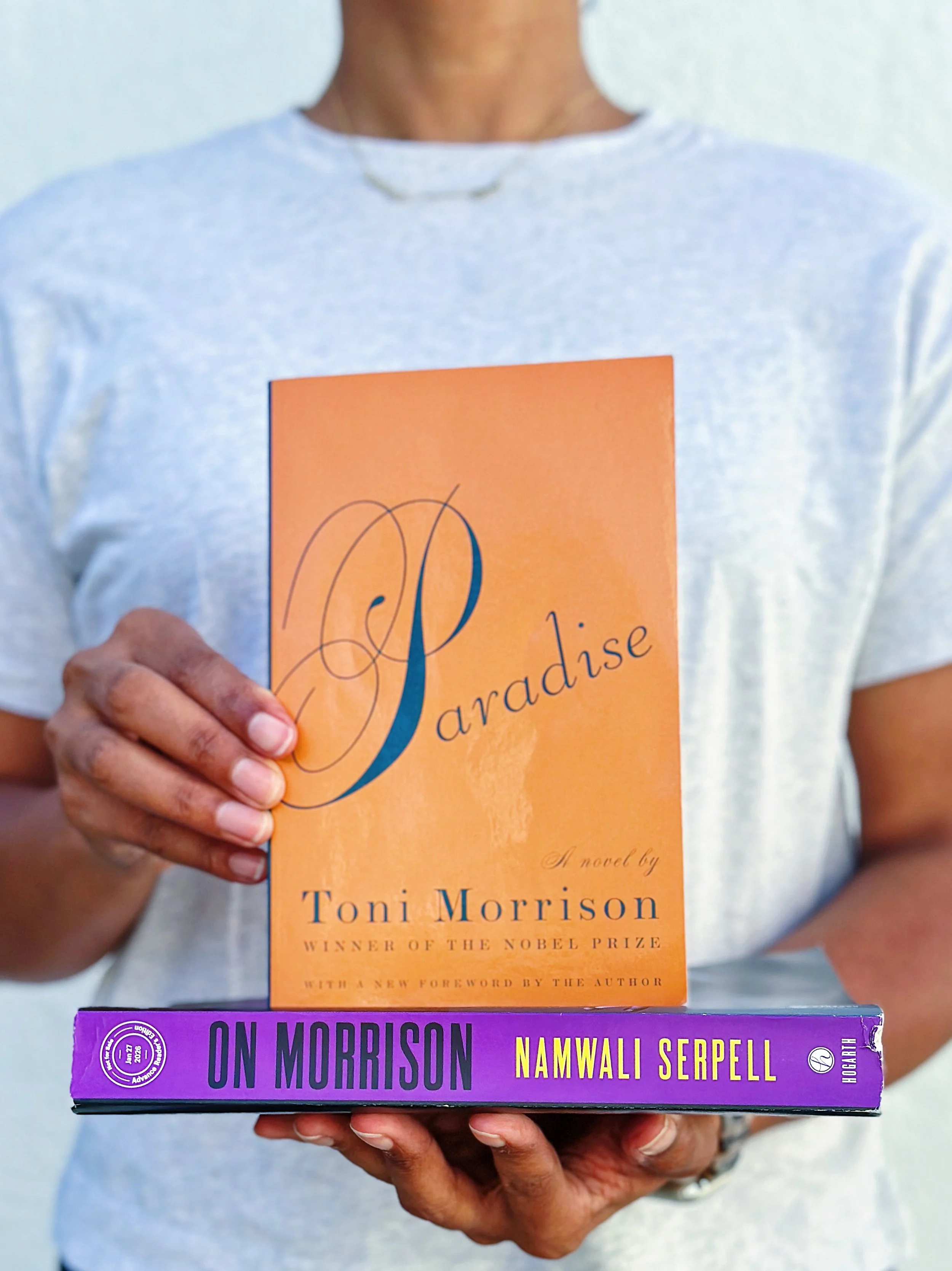
It’s The Stacks Book Club day and Morrison Month here on The Stacks, and today, we're diving into Paradise by Toni Morrison with award-winning writer, professor, and On Morrison author, Namwali Serpell. This book tells the story of Ruby, a small, all-black town in rural Oklahoma founded by the descendants of freed slaves, and its violent conflict with a nearby convent of women. We chat about the novel’s complexity, how it tackles faith and gender, and its connection to Beloved and Jazz.
There are spoilers in this episode.
Listen to the end of the episode to hear what our April book club pick will be!
LISTEN NOW
Apple Podcasts | Spotify | Google Podcasts | Overcast | Stitcher | Transcript
Everything we talk about on today’s episode can be found below in the show notes and on Bookshop.org and Amazon.
Paradise by Toni Morrison
On Morrison by Namwali Serpell
“Ep. 414 Toni Morrison Broke the Novel Form Open with Namwali Serpell” (The Stacks)
Beloved by Toni Morrison
Jazz by Toni Morrison
Goodness and the Literary Imagination by Toni Morrison
“Bonus Episode: Toni Morrison’s “Goodness” with Saeed Jones” (The Stacks)
A Mercy by Toni Morrison
One Hundred Years of Solitude by Gabriel Garcia Marquez
The Bluest Eye by Toni Morrison
Love by Toni Morrison
Recitatif by Toni Morrison
The Stacks Pack (Patreon)
Room Swept Home by Remica Bingham-Risher
To support The Stacks and find out more from this week’s sponsors, click here.
Connect with Namwali: Website | X/Twitter
Connect with The Stacks: Instagram | Threads | Shop | Patreon | Goodreads | Substack | Youtube | Subscribe
To contribute to The Stacks, join The Stacks Pack, and get exclusive perks, check out our Patreon page. If you prefer to support the show with a one-time contribution, go to paypal.me/thestackspod.
The Stacks participates in affiliate programs. We receive a small commission when products are purchased through links on this website.
TRANSCRIPT
*Due to the nature of podcast advertising, these timestamps are not 100% accurate and will vary.
Namwali Serpell 0:00
I think Haven and Ruby are supposed to be an inverse, or like a reflection of the logic of racial supremacy, which we usually associate with whiteness in America, and is, by its nature. And Morrison gets into this in her preface, exclusionary. So there is a dignity to the desire to create these towns that Morrison really wanted us to understand. But there is a danger in trying to replicate the logic of America just black this time.
Traci Thomas 0:40
Welcome to the stacks, a podcast about books and the people who read them. I'm your host, Traci Thomas, and it is the stacks book club day, and it is Toni Morrison month, and I am joined by award winning writer, professor and author of on Morrison, namwali serpell, she's here to discuss Paradise by Toni Morrison. This book tells the story of Ruby, a small, all black town in rural Oklahoma, founded by the descendants of freed slaves and built on patriarchy and the violent clash they have with a nearby convent of women. Today, we discuss this book in detail, including how it fits into the beloved trilogy, why this is one of Toni Morrison's most difficult and complex novels, and what this book has to say about faith, race and gender. There are spoilers on this episode, and be sure to stay tuned to the end of the episode to find out what our April book club pick will be. Everything we talk about in each episode of the stacks is linked in the show notes. If you like this podcast, if you want more bookish content and community, consider joining the stacks pack on Patreon and subscribing to my newsletter. Unstacked on sub stack. Each of these places offers you a bunch of different perks, like bonus episodes, hot takes on pop culture, being part of the virtual book club, and honestly, it's a great way to support the show. It's really not that complicated. Joining the Patreon or the sub stack helps me to make the show every single week. So if you like what you hear, head to patreon.com/the. Stacks to join the stacks. Pack and Go to Traci Thomas, dot sub stack.com, for my newsletter. All right, now it is time for my conversation with Namwali Serpell about Toni Morrison's novel paradise. Alright, everybody. It is the stacks book club day. It is Toni Morrison month. This month, we are joined again by the author of on Morrison, a scholar, a critic, a novelist. Y'all's favorite guest so far this year. Namwali Serpell, welcome back to the stacks.
Namwali Serpell 2:45
Thank you so much, Traci. It's so great to be here.
Traci Thomas 2:48
The people loved everything you had to say. Loving the episode. I loved it too, but I never know what the people are gonna
Namwali Serpell 2:56
Yeah, no. It's always great
Traci Thomas 2:57
Today for book club, we're talking about Paradise by Toni Morrison. It is her 1997 novel about a town of people
Namwali Serpell 3:12
It is a people book about a people and it's very peopleed. There's many, many, many people in it
Traci Thomas 3:21
and they all have names. There's so many names. We'll get into, like, more about what the book is about, but for now, it's a book about people. That's what you need to know. For people listening at home, there will be spoilers. So if you have not read the book and you care about spoilers, which Toni Morrison famously did not, I do. So I'm warning you, don't be mad. We're gonna spoil all right Namwali, we always start here with these book club conversations, which is sort of broadly, what do you what do you make of paradise? What did you think of paradise? And also, because I know you've read it at least once, how many times have you read the book?
Namwali Serpell 3:59
I believe I have read paradise five times. So I read it in college. I read it in graduate school. I read it to teach, and I've taught the course on Morrison twice. So that's two more, and then I reread it in order to write my chapter of it in on Morrison, so, five, five, but I am not an expert. I should say
Traci Thomas 4:31
No one's an expert on Toni Morrison, we're all doing our best. Let me tell everybody at home, if she's not an expert. I'm really not an expert.
Namwali Serpell 4:41
Well, you know, Morrison's books beg rereading. They and they, they, they are enriched by rereading. They afford rereading almost better than any other contemporary writer that I can think of, because every time you go back, you discover something different. And so when you say, what do you think of Morrison's on Paradise, my feeling is each of those five times I had a different impression. I really loved beloved and jazz, which are the first two books of the love trilogy. Paradise is the third of which. And so when I read it in college, I was baffled. I didn't understand how it was related to the other two books. I didn't really understand what was going on. I didn't know who to have an alliance with in terms of the characters, like who was, who was my person, who's navigating me through this world. I did not understand. I found certain parts of it exquisite, just beautiful, especially the ending. Something about that ending. I mean, Morrison's endings are incredible, generally.
Traci Thomas 5:49
And her beginnings
Namwali Serpell 5:51
yes, but the beginning of this is so, like disconcerting and almost shocking. And you know, but the end, I just, I remember loving it that first reading. I'll jump the other three and get to the fifth reading, my most recent reading of it. Now I had a theory of Paradise, and watching her execute that and realizing that she had put clues there the whole time that had led me to this theory. I think my last impression, my most recent impression, and my fifth reading of paradise, is that this is a really masterful work of epic literature, right? So, so going from like bafflement and liking the poetry but real confusion to just awe at her mastery.
Traci Thomas 6:49
Okay, so this is my first read. As you all know, I read each of these first with you guys. I'm gonna say my first impression, and then I'm gonna say what happened when I went back and read your essay. Because, as I told you last time, I did not read your paradise essay on purpose so that I could have thoughts and feelings that were totally separate from you, because I feel like that's going to make this a better conversation.
Namwali Serpell 7:16
It's also just correct. It's the way to do it.
Traci Thomas 7:12
Yes, it's the correct way to do it, especially with a book that I think is as complicated and confusing as paradise. My impression of paradise as I was reading it broadly was like I think, and I have, I have not read beloved since I read it in 2019 but of the books that I remember very well, to me, this is the best writing craft, narrative storytelling, what she is doing with like revelation, when she tells us what She tells us how she tells us, like, the writing, the unraveling of the story, the complicated nature of the narrative. To me, I was like, That is a professional at work, yes? Like, I am reading a skilled professional doing what they do at a high level, right? Like, to me, that was like the instant, big takeaway, there's so many characters, she's weaving them in. I never, I didn't always know who was who and what was what, but I never felt like she didn't know who was who and what was right. And it felt like, yeah, yes. It felt like this was her sort of showing out after having finally gotten the accolades and the flowers. And she was like, you guys, you don't want me to write a book with 80 people in it. Well, I just won a Nobel Prize actually, like, let me just type away. And I love that confidence. I also thought this book was so dark and perverse and like a real confrontation with the reader, which I love. Like, there's a chestiness to this book that I really, really loved. And I also felt like each chapter, each woman, the style, was slightly different, like dovey's Chapter felt sort of like a love story. And like when we're in the Gigi section, it's like, oh, this is, like a big like a city girl, like had a little bravado, and, like Patricia's thing, felt like almost a mystery, of like, trying to figure out what's going on here. And I loved so, like all of these pieces, on a writing level, I loved emotionally, though this book never quite resonated for me, because I was always trying to figure it out. I felt like kept at a distance from the characters and sort of what you're saying, of like, who am I supposed whose side am I on? Whose team is I Am I on? I never felt settled in the reading of this book. When I finished the book, I reached out to friend of the pod and your colleague, I guess, Saeed Jones, and I sent him this voice memo, and I said, I need to talk to you about the book, like I'm recording with Namwali. I want to, like, I just want to toss some ideas out to you. And I was like, what's so interesting to me is like, everybody talks about it. This is, like, such a Christian book, and this is a book about Christianity, and I'm not a Christian, and I just didn't feel like it was that Christian, and that cut to me immediately going to pick up your essay, and it's like, this is Toni Morrison's book about Christianity, faith and belief. And I was like, Oh, my God, I'm so dumb.
Namwali Serpell 10:10
No, I don't think I think you are absolutely right on, because it is a book about faith. And Morrison was a Catholic. She converted to Catholicism. But it is not, I would say, a book about Christianity, yes, it is a book about various forms of faith, yes, and it is about, I think it's like her version of trying to write a biblical story like, this is Exodus, right? This is Morrison's Exodus, right?
Traci Thomas 10:46
With all the people and the names and the ages and that, totally
Namwali Serpell 10:51
but what's really interesting, people often quote from the sermons in the book, right, Reverend, Reverend Pullman and Reverend Misner. And I, I really, I noticed something really interesting. I was reading a book called goodness in the literary imagination, which is
Traci Thomas 11:06
Yes, Saeed and I did that on this show
Namwali Serpell 11:09
Oh, amazing. And so David, David Carrasco, who was Morrison's friend and is a professor at the div school, asks her all these amazing questions in the in that book, there's like an interview part of that book, and she gets he asks her, which of the reverends she is more closely aligned with the new school, right? Who has a very particular understanding of what Christianity and faith and love is, or the old school and everyone, I think, expects her to say, Misner, who is the new school. And she says, Actually, I'm more of a Pullman. And so it's really, this is what I'm saying. It's like, like Morrison's understanding of Christianity and faith is just much more complex, and this book, I think, reflects that complexity. So I think when you are feeling like, this isn't a Christian book. It's because it's about Christianity and all of its different darknesses and elements and contradictions, you know.
Traci Thomas 11:56
And I think a lot of people, like, commented, oh, this book, like, really helped me reevaluate my relationship. Like, I was raised Evangelical, all of this stuff, so I was thinking, and I knew about, like, the sermons, because I had read that stuff from goodness, and so I sort of thought I was going to go into a book that just was, like, a fight about Christianity. And like, to me, this was a book about, like, race deeply, and also, that's what I'm interested in. I'm mixed, so I'm constantly thinking about colorism and who belongs and who doesn't, and what it means to be part of, you know, like, and the construction like. So for me, I was so much more interested in that, that the Christianity sort of, I was like, the sermons, I barely remember them. I feel like they sort of washed away, whereas, like, the eight rocks up. I was like, and I think there's also like, the other lens that I think a lot of people probably read this book through, which is, like, through feminism and like, patriarchy, right? Like, those are kind of like, I would say, like, the three bigger umbrellas, like, yes, the faith piece, the race piece, and then the like, gender piece
Namwali Serpell 13:23
For sure. I think when you think about like, what the women who we know are not an all black community, because we know there's one white, at least one white girl, right first, and we also know that, you know, the Consolata, who is kind of the priestess, let's say of that space, is from Brazil, and has light eyes and light skin, right? So we know that, like, race is something that's happening in an interesting way there. It's also an all female space, except sometimes men can come there and they're practicing a form of Christianity that is closer to Candomble. It's more like secret or Voda. It's like, this is not like your usual Christianity. It's in a convent that used to be a gangster's mansion. Do you know what I'm saying? So I'm like, race, gender, faith are all being mixed up in that space in a way that's just like, I think, fascinating,
Traci Thomas 14:26
yeah, and I do want to see for people listening, I'm sure for some of you, this is your first Toni Morrison book. And I'm sure for some of you, you're revisiting this. You've read them all. There's a wide range of people, I will say very candidly that this book was a challenge for me, certainly, I know we talked about difficulty. It was a challenge I enjoyed, like I did mark up my book. You can see here, like my little corners, those are all my little notes almost every other page, just constant, constant note taking, highlighting, underlining. But it was like I said, I never felt fully settled in the book, because I was always trying to figure things out. So if you did read this and you did struggle, I am right there with you, like it was probably for me, so far aside from beloved, which I read too early to really get a grasp on it, the hardest one this and a mercy to me, have been the two most challenging
Namwali Serpell 15:19
I just spoke this morning, I had breakfast with a French publisher who said the exact same thing. She was like, Paradise is the hardest one. I think paradise is really hard. And I say, I say as much in the chapter. It's, it's difficulty, I think is, you know, characteristic of Morrison. But she says, the idea that this is difficult writing makes me breathless, like she's so indignant, you know, and she's asked specifically about the difficulty of paradise. And this is the book where, when she went on the Oprah show, an audience member was like, Why did you make this so hard? And she again, got very like indignant about it. But I was like, Ms Morrison, this is a difficult book, and you should not pretend otherwise. And a lot of what I'm trying to do in my book, as you know, is not clarify that difficulty, but help us understand why it's difficult. What is she? Why is she making it so difficult to what end right? And we can tell you.
Traci Thomas 16:20
So this is a question that came up for me maybe halfway through this book, which is, I know we talked about this last time you you say that Toni Morrison teaches us how to read her books. Yes, how would you say she is teaching us to read paradise? What are the clues of how she wants us to read this book?
Namwali Serpell 16:30
So, one, I think specific chapter, which I think is I would consider meta fictional in the sense that it is aware that this is a book, and it's commenting and giving us clues about the way this is a book and how we should read it. Is the chapter about Patricia, who is the town genealogist? And as you're reading that chapter, she is listing names of people in the town. She's listing their history. She's and she's doing this genealogical work of trying to sort out what all of this means, what all this signifies for this town, and it's so complicated, and all she can do is kind of trace it. And what I realized in that moment is that I was like, Oh, I'm not supposed to be keeping track. You know what I mean? Like she has put in the book a person who is trying to keep track and is struggling. That suggests that she knows that we would struggle to keep track. And I was like, oh, okay, I can just suspend all of the usual versions of reading practice that I, you know, tend to adopt of the book. I don't need to find a character to relate to. I don't need to be thinking all the time about how I'm supposed to feel I don't need to keep track of everything. I can just engage in this like I am living in a world of people, and these are people who are negotiating their relationship to each other, to a community, and to God. And that's the level at which I can engage in this book. So I would say that chapter feels to me like, where she's giving us clues.
Traci Thomas 18:25
Okay, I love that so much, because it really was that chapter for me, after which I was like, I don't know, like the fleetwoods, you know what I mean? Like, I was like, okay, they're part of these two families. Like, pool is all I need to know. I don't need to know which pool. Exactly. And I do feel like, and I would not have pinpoint that, pinpoint that moment at all, or that chapter at all. But as you're saying that, I literally was like, I remember this, stop caring about people like, when she's like, this person is a second cousin and also an aunt and an uncle. And I was like, I can't, I can't like you like, I've tried. I'm trying. I'm being a diligent student of the text. But I can't. I'm not.
Namwali Serpell 19:03
I think I, you know, I, I was just arguing today that I don't think that Morrison is influenced by Gabriel Garcia Marquez, because she was already doing things with storytelling and magic and enchantment, as she called it, before she even read him. But I often present it as an example, 100 Years of Solitude in particular, which is very influential book on my writing, as an example of the kind of reading process or lens to apply to a book like paradise. There's a point in 100 Years of Solitude which I don't know if you've read or if you're if your listeners have read, but there's a point where you're like, Jose Buendia the fourth like, what like am I do? I really do. I need to keep track of all these people. And at a certain point you realize you don't that actually the point is not individuation. It is not individual persons. It is about their relationship to others. It's about a people. It's about a community, right? The same thing is true in the Bible, where you have and so and so, beget so and so and so and so, beget so and so and so and so. It's like, that's not. The point is not for us to, like, know that lineage Exactly. The point is to get a sense of what it is to be a people.
Traci Thomas 20:15
Right, that, like, there's a depth to this community and that there's an interconnectedness. Sure, that makes so much sense. Because, as I was thinking about this question of like, What is she trying to teach us how to read this book, I just kept thinking a lot about like, this is a book about revelation in the way that she chooses to reveal or foreshadow things and then reveal it to us, and so that there's like, she wants us to sort of revel in the unknowing, and like being comfortable with her like that. It's like, No, you're with me, kids. This is not a book for you to figure out. This is a book for me to reveal to you, to unpeel, to uncover, and that there is, I guess, still to what you're saying this sort of like, just let it happen, babe. Yeah. Like, don't you don't have to force the issue here. And unlike in a book like The Bluest Eye, where she tells us from the beginning everything that happens, this book is framed around this beginning moment, right? This first scene is like, all before the gunshot or whatever. But then the rest of the book sort of unfolds. She reveals all of the rest. Becomes clear. We don't know why there's like, weird candelabras. We don't know. And she just says, You know what, I I will reveal this to you in time. Allow me, and I really, and I do think that that is part of why I felt so comfortable with her confidence and, like her bravado, because I was like, I'm in good hands.
Namwali Serpell 21:40
Yes. And I think as you, as you describe it, you know as Revelation, what's interesting to me is there are things that she sets us up to want to know, yeah, and then there are things that she satisfies that craving in us, right? We learn what this means. We understand why these men are shooting these women at the beginning of the book. But there are also things that she will not tell us she will not tell. And to me, what one of the you know, there are different reasons to, like, withhold information in beloved I think it's functioning in a different way. It's asking us to do something different, asking us that they're about, like, ethical, moral judgment here, I think one of the reasons she's withholding information is to preserve mystery, because mystery is quintessential to Morrison's understanding of faith. And so for me, like the sense of like, and I call it like an asymptote, right, which is a mathematical term where you're a line that's approaching another line but never quite reaches it. That particular esthetic, I think, produces a particular feeling, and I think it also has a correlation with what Morrison would describe as faith.
Traci Thomas 22:55
Yeah, okay, I want to start with the first sentence of the book
Namwali Serpell 23:01
Which remains a mystery by the end of the book
Traci Thomas 23:05
So the first sentence for those who haven't read the book or just want to hear it again, is, they shoot the white girl first. I mean, that's a novel. That's literally an entire story right there. Here are my two questions for you in your work, in researching Morrison and going to the archive and all of that stuff, how much do you know of how hard she worked on first sentences? Were they super important to her? Because she strikes me as a person with the best first sentences, the best first paragraphs, and often the best first chapter. I'll never forget finishing the first chapter of reading the first chapter of jazz and going amazing starts with Sth, the best first word, the best first paragraph, and then finishing the chapter and going, this is the best first chapter I've ever read in my life. So what? What do you know about her sort of rigor around first sentences?
Namwali Serpell 24:01
I know that they were incredibly important to her. I know that, for example, the famous first sentence of The Bluest Eye, quiet as it's kept. There were no marigolds, etc, etc, that quiet as it's kept was a later insertion we can see in the manuscripts, and you can feel her pleasure in having landed it
Traci Thomas 24:25
Found it. And that line, quiet as it's kept, is in this book.
Namwali Serpell 24:28
It is well, because it's a phrase, it's an it's and this is so she says in her preface to The Bluest Eye. That line is supposed to give you this sense of like black colloquial speech, quiet as it's kept, is what you say right before you're about to share some gossip. She wants that intimacy, but it is a black idiomatic phrase. It's something that is very important, right? And when she talked about some of her other words so she describes coming up with that opening or Sth. Or whatever it's sth at the beginning of jazz. It's because she was trying so hard to figure out how to start the book, and she was so frustrated, because she was like, I know that woman. And so she was like, I know that woman. And then that became the first sentence of the book, right? And when she's talking about her book, the book that she was writing before she passed everybody that she told about it, and I haven't, I haven't gotten the secret yet, because this isn't written down, but I know that there are some writers and critics that she spoke to, she was like, I know the first sentence and I know the title, and she often said she knew the beginning and the end and the middle part was what she would like allow herself to play with. So I know that beginnings were incredibly important to her, and she worked really hard to hone them in. It's like 2013 I think she gave a talk at the hay Festival, and she talked about how important the rhythm of the opening of beloved 124, was spiteful, full of a baby's venom, and how she puts a period between those two things. Because she was like, I need the pause. And she was like, I know full of a baby's Venom isn't a complete sentence. That's a sentence fragment. But she's like, I didn't care, because the punctuation was necessary. And she complains about the audiobook readers for that book before she read her own book. Getting that wrong. She's like, they don't pause long enough, you know. So it's like it was so important to her. And she actually talks about the first sentence of paradise as well in that interview. What's interesting to me is she, she, I mean, she I mean, she was getting older, but she changes the verb tense so she, when she recites it, she says, you know, they shot the white girl first, not they shoot the white girl first. And she says, I mean, how can you do better than that? You know, it's perfect, you know. So, yes, that just to confirm your sense. First sentences incredibly important to her. And this one, I mean, this sentence dictates the whole book.
Traci Thomas 27:07
It does, and this is okay. So I read the book, and then I went back and read her forward in my edition, which is like this, like, yeah. And she talks about, and you talk about in your chapter of foresa Tati, I believe about this, like race, race specific, slash race free prose. And, of course, this question of they shoot the white girl first is, well, which one's the white girl? So I'm here to ask you, Who do you think in your reading. I know this is different than the work that you do, but like, Who do you I'll tell you, because this is okay. I'll tell you mine first. Okay. Again, I miss a lot of things. I was 99% certain that the white girl was palace, and I thought I had been told that in the book, so I never even questioned. I thought for so I had read it that she was white. And I was like, Oh, she's the white girl. It was not until I went back to read your essay, where it was like, Who is the white girl that I was like, Oh, wait, who's the white girl? I confidently was like, Palace is the white girl. I don't know what it was. I don't know why, but once I decided she was the white girl, I never questioned that any of them could have been. Like when I read Mavis chapter, I was like, well, she's definitely not white. Like to me, I was like, that's not a white person, Seneca. I was like, maybe, like, Seneca was the only person that sort of crossed my mind. Could also be white, but like, Gigi, not for a second. Like, I just it did not. And I know that this is like a really like, I don't know it's sort of like an elementary way to read a text and be like, Oh, I've made this decision. But I did make this decision, and I and I think I felt like I had been that had been communicated to me specifically, so I never even questioned it. So that was my reading Similarly, similarly in your essay. I also missed that gene was seneca's Mom.
Namwali Serpell 29:15
Well, it's revealed in this very slant way.
Traci Thomas 29:18
I missed it. I totally missed it. I just took a note after I read your essay, and I said, Senecas mom is Jean? Since when?
Namwali Serpell 29:27
Well, she she calls her, she thinks that she's her sister, right?
Traci Thomas 29:30
Yes, that's what I thought.
Namwali Serpell 29:31
But there are all of these little hints that actually she's her mom. So okay, so what is interesting to me? I think I have a theory about why you thought Palace was the white girl.
Traci Thomas 29:43
I have a lot of theories. But, yes, go ahead
Namwali Serpell 29:45
I think she's, it's a class reading, right? She's, she, it's a, it's a wealthy teenager whose mother sleeps with her boyfriend, like
Traci Thomas 29:55
and she runs away from home,
Namwali Serpell 29:56
exactly. It's like, who gets to do that, right?
Traci Thomas 29:59
And I thought she was the one wearing the short pink shorts, maybe, or is that Seneca? I can't remember.
Namwali Serpell 30:05
When walking into town?
Traci Thomas 30:06
someone, they tell the person when they go to the wedding
Namwali Serpell 30:10
oh, yeah, it's possible
Traci Thomas 30:12
someone has on short shorts. And I was like, only a white girl would wear shorts to a wedding.
Namwali Serpell 30:16
No, but when, when I think it's, is it? Is it Gigi who walks into town and all the men lose their minds?
Traci Thomas 30:26
Yes, she has on the high, high, sky high heels
Namwali Serpell 30:28
but she's got a halter top, and she just walking down the street. So why not her? You know? So my feeling, yeah, my feel. And there's also, I think Seneca is the one who is kind like, like, what kind of snaps for her right is seeing something happen at a race riot or civil rights protest
Traci Thomas 30:52
That's right, she's the one who's like, boyfriend is in prison. Yeah she's the other one that I thought could have been white, because I was, like, a white, like, I could imagine a white family naming their daughter's Seneca I guess, like it was, I was like, in the 60s, because she's only, like, 16, or whatever. She's the youngest one. It's true. So I was like, she could definitely
Namwali Serpell 31:14
also, like, a long tradition of Roman names and Greek names being passed down black lines, because the Yeah, Africans who were enslaved were often given those kinds of names. So there's, there's a black teenager in Morrison's novel love whose name is Roman. So I don't know Seneca is really a clue.
Traci Thomas 31:37
Yeah I just think I was not even thinking. I think I was like, there's one white person. I read that first sentence, it's like, there's one white person, right? And it's this one white girl and everyone else is black. Was just my assumption
Namwali Serpell 31:51
no, but that's, that's the way they that's the way that the novel structures, right? So recitatif, this short story where we have a black girl and a white girl whose nicknames are salt and pepper, so we know one's black one's white, but we never find out which one of them is black and which one of them is white. And this is the trick of that story, right? So it's interesting. Someone was just telling me that her husband taught that short story to some high school students, and they didn't, they didn't get that they didn't get who's which race was, which they just made they as you did, they just made an assumption. And read the story in that way. And this is what's the brilliance of Morrison, is that you can absolutely read paradise and decide which of those girls is white, and then the novel will just will make a complete kind of sense to you, even in its experiments and its thoughts and theories about race. The same is true for recitatif, but the minute you talk to somebody else, yes, you realize, oh, actually, I was never given that information. I conjured it, I projected it.
Traci Thomas 33:01
Which is why I want to know who your white girl is. You got to tell us who's your theory of the white girl.
Namwali Serpell 33:07
You know what's so funny? Someone just asked me this about recitif. They were like, has it ruined the story? Now that you've seen in the archives, a screenplay where the races of the two girls is made explicit, which is an earlier version of the story. And I was like, No, you know. And I was like, and I was like, this is very interesting, because you were saying you're mixed race, right? I'm mixed race as well, but I am Zambian. I grew up in a very different context, and I grew up with the moniker colored, right, which means something very different in Zambia, I have a black mom, a white dad. I it's not, it's not that I don't see race, you know, I don't read. That's not what I'm trying to say. But when I'm reading, Recitatif, my sense of those characters in terms of race is, is a dynamic. It is a relation rather than an identity. And so I don't know if this is just specific to me, but, like, if you ask me right now, I have no idea which of those girls I thought was white in the beginning. You know what I mean. And when I and I say this in my in my chapter, what I think that Morrison actually does when you realize that you don't know which character is white, is that she sets up this oscillation where you read a sentence and you're like, how would this read if she were black? You read a sentence, how would she read if she were white, right? So what does it mean for Mavis to have, I mean, allowed her children to die. I don't want to say she killed her children. Yeah, what does that mean if she's black and working class, and what does that mean if she's white and working class? Do you see what I'm saying? And so there's, there's a note where I'm like, for me, my brain is just always moving. And this is what we were saying about the reading experience of this novel as a whole. You never can settle yes and she doesn't want you to. You know what I mean?
Traci Thomas 35:04
Correct, correct.
Namwali Serpell 35:07
I don't even know she knew, to be honest, that's fair.
Traci Thomas 35:11
And I also think like, I also think for me now, knowing that I didn't know, I have been doing that since I finished the book, right? Like, I have been going back in my mind and been like, okay, Mavis is really different, or like, or like, Gigi and KD is a totally different thing. And I feel like, I mean, the other thing I did as soon as I finished the book, I finished your essay, I read the foreword, and then I went back and read the whole first chapter again. I needed to see the setup, knowing who was who and what was what. And I do feel like this is a book, maybe more than any of the others. And I do say this every year that I want to reread again immediately, like I need to do it again, because now that I have all the big pieces, I can go back and relax into it more in a way that I think will uncover things, and I'll be like, Oh, okay, I see, I want to talk about the town of Ruby, which we haven't even done yet, but first, let's take a quick break. Okay, we're back. We're going to talk about the town of Ruby. So Ruby is a second town. The Ruby is a town founded by nine black families who had a town before that, called haven that was founded by their grandfathers and fathers and family previous generation. And basically what happened with Haven is it was supposed to be a black city, and it was, and then white people and light skinned black people, sort of racism got in the way. And so they did a take two. They they went to Oklahoma. They did a take two. It is a city that this next generation founded on the back of the admiration and reverence for this first town Haven, which is important. Two of the pillars of Ruby are these identical twin brothers, Deacon and steward, aka deke. Deacon is called deke. They are identical twin brothers. They are the grandsons of big papa. I can't ever remember if it's big papa, Big Daddy, big big pop, Zachariah. They are the grandsons of zacharra Morgan, who had many children and and they own the bank. They've got the money, they've got the land. They're the fancy people. And they sort of have, they sort of own the town, literally, with the money, piece of it, and also in attitude and persona. They're sort of like the mayors. And they have a nephew. His name is KD, the nephews, his name is actually coffee but his nickname is KD because he won a race, and they started calling him KD for Kentucky Derby, which I died laughing. That was so good. And he's the son of a soldier named coffee Smith, and the sister of the twins Ruby, and Ruby is the first person to ever die in this town. Turns out she's like the only person for a very long time to die in this town. And so they named the town, instead of naming it New, New Haven, or, you know, whatever religious thing they name the town Ruby. I love this origin story to your to your theory about this being an epic or being like biblical. It feels so biblical. It feels so fantastical, so it's it's just giving, like, it instantly gives the town gravitas. You've got twins, you've got forefathers, you've got this young kid whose mother, like, it's just like, Ah, this is a place. These are a people. And I, I love it. This is all taking me to my big question, which is about twins. There are, by my count, three sets of twins, possibly four. Question, are the pool boys that Billy Delia likes? Delia likes? Are they brothers or twins those boys?
Namwali Serpell 39:41
I honestly can't tell you.
Traci Thomas 39:43
I feel like it's maybe not clear, but there is coffee and tea, aka Zachariah and his brother, who he later disowns. There is Deke and Morgan, and then there are Mavis's twins, which I think people maybe forget. There's a lot of twinning happening in this book. I know what I thought about it. What do you make of the twin stuff?
Namwali Serpell 40:04
I think this is Morrison leaning into reflection, exact reflection as an image for the kind of purity that this black utopia is interested in manifesting. So I think the fact that there are two cities is another kind of twinning, right? There's this real sense that the older generation wants to duplicate itself in the younger generation. This is what an outsider to the town, Reverend Misner says, It's like they just want to replicate themselves again. So this idea of mirroring or reflection, which I think speaks to the racial purity, right? It's like you have to reflect your genome exactly if you're going to keep the town all black. Anything else that would enter into it is an impurity, right? And would interrupt that exact reflection. And I think for Morrison, that produces a sense of the static, right? If you're just replicating the same thing over and over again, in order to achieve some kind of purity, some kind of fixity, because these towns are also very much oriented around a grid system in their street, the houses are supposed to look the same, the people inside them are supposed to look the same, that prevents us from ever growing and changing. And difference for Morrison is incredibly important, and difference within blackness, right? So not just this for not just difference, like opposed to blackness, but difference within blackness, and that difference, I think, is precisely what gets manifested in the opposed utopian space of the convent.
Traci Thomas 42:10
Yeah. So I have identical twin sons, and so I have become, sort of, if you have twins close in your life, or you are a twin, you sort of become, like, thrust into this, this world where people tell you what they think about twins, and there's so many questions and all this stuff. But one of the things that I found fascinating is that she does make a choice to say that Deacon and steward never actually look at each other for, like, years and years, not until the end of the book. And I think that's interesting, like, especially knowing that my kids, like, literally just stare at each other all day. It's so crazy, and they're, like, obsessed with each other, but like, your reflection point, it's interesting to think about these two pieces of, like, the same thing being reflected, but not ever actually looking back at one another.
Namwali Serpell 43:00
Well, it's like they don't need to, right? You know, right?
Traci Thomas 43:04
Well, they think, yeah.
Namwali Serpell 43:06
Exactly, what I find very interesting is, because we have a sense, and for it's a mystery for a while, which one of them gets involved with someone at the convent with right? And so that becomes a really important difference between them, and that actually means they can no longer be a consolidated like unified front, which is what I think the not looking at each other is about, right?
Traci Thomas 43:31
Right, right? Because I think it does become that later when we find out about coffee and tea and how coffee could never look at his twin again because of the shame and like what he saw in him, and I think that's the same thing for them. There's another sort of dichotomy thing. This is a theory. So I'm sure you've thought about this, and I'm probably wrong, but I'm going to tell you one of the things I thought about Ruby and so Ruby and Haven are twins of a kind, right? Yes, but that to me, Ruby and Haven are a twin to white America, and that they are doing and replicating the same dynamic of this, like racial purity and and like no desire for outsiders this, like sort of inbred hatred and fear and shame, that is the thing that allegedly, they're forming their Utopia against, or whatever that like, that was something that sort of stuck out to me, because the way that everything falls apart at the end feels so American, right? It feels so white American, where you're just like your paranoia, your fear, your distrust of someone doing something differently, of women being in charge of all of these things leads you to literally get not just violence, but like you get fucked up so hard, too, the dude's got a knife deep in his shoulder. There's all the infighting it tears the brothers apart. Like, yes, you hurt these women, but in the most American of American ways, you fucked yourself I feel like there's something, there was something there for me.
Namwali Serpell 45:11
Absolutely no, I think that's a really I think that's absolutely true. I think Haven and Ruby are supposed to be like an inverse, or like a reflection of the logic of racial supremacy, which we usually associate with whiteness in America, and is, by its nature. And Morrison gets into this in her preface, exclusionary. You can only have a paradise, if, right, exclude people or difference or change from that paradise that's every pair. Every Eden has walls right? And so that exclusionary principle, if you adopt it for yourself, and you just reverse it, and you're like, instead of an all white community, I'm gonna have an all black community. The same thing is gonna plague you, the same self destructive thing is going to happen to you. And I really do think Morrison is interested in, like, what motivated actual African Americans historically to do, to do this. And it's like there's a protectiveness, there's an attempt to hold the line. There's also an attempt to, you know, replicate traditions, right? To keep our traditions going, storytelling, you know. And also to, yeah, to give your people dignity, right? And, you know, the black Americans who migrated to Kansas, I want to say we're called the exodusters, right? So Exodus right, being a really important part of this, right? So there is a dignity to the desire to create these towns that Morrison really wanted us to understand. But there is a danger in trying to replicate the logic of America just black this time. And I think her whole project in this book is to get us to, like, stop trying to imitate that technique of trying to accumulate wealth, accumulate power, accumulate like, exclusion is not the way that is not a true utopia.
Traci Thomas 47:22
Right, and I feel like the use of the word danger for me just that's that is, like, underlying the whole book, right? Like, and that's that unsettling thing, and she does, and she sets that up for us in that first sentence, right? You can never feel settled again, like, it's just like, Wait, they're shooting people. Like, I just read the word Ruby. We're shooting people? Okay, so at the center of this town, literally, is an oven. Yes, they built the oven in Haven when they moved to Ruby that they dismember it, they disassemble it, dismantle that sort dismember dismantle, and then they carry it with them on their exodus to the town that becomes Ruby. And they rebuild this whole thing in this journey. The inscription that is on the oven is there's a piece that's missing the first word, so what we have is an oven that says the furrow of his brow, there is a younger generation in the town of Ruby. They're hanging out at the oven. They're drinking, they're chilling. These are kids who are raised in coming into consciousness during the Vietnam War, and they are at odds with this older generation, the Deke, the Deke and steward generation that are World War Two vets. And I think this time period framing is so interesting. And they're these factions, the young and the old. They're fighting. They don't agree. They're having a debate about what the first word on the oven that they're gonna put back up should be the old heads are like, it said, Beware the furrow of his brow, and that's what we're gonna put back and the younger generation's like, but it could have said be the furrow of his brow, and the older generation's like, No, we remember, because the twins don't forget anything. And then Misner, who I was calling Meisner, the priest, is like, you don't I think Misner is right anyways, but he's like, I mean, you guys don't know know for sure. Like, you don't know know. And the old heads are like, this fucking priest that we brought in, this preacher, like, shut the fuck up. You're not even from here, bro. Like, you're not even a nine family dog. Like, we hired you, shut the fuck up. And the kids are like, B is kind of great. Like B is kind of like dynamic, like we can be that we can do that. And the old heads are like, God, first, shut up. What do you make of this debate of this generational bit, what? And then what do you think the oven is a metaphor for?
Namwali Serpell 50:04
So as ever with Morrison, it's this incredibly rich metaphor, right?
Traci Thomas 50:11
As I was reading, I literally was like, now Molly can explain this to me? I was like, I know I'm not getting it
Namwali Serpell 50:18
I mean, the fact that you build a town around a hearth. A hearth is a is a home. It is where the fire is, it's where the warmth is, it's where you make the food. It's where you gather around to tell stories, right? This is the it's like, it's a version of that fireplace around which, you know, I think wooly haired humans, I think said, would sit around and just tell each other stories. So it is, it is like the center of community, storytelling, sustenance, warmth, shelter. They dismantle it, and they take it with them, and then they put it back together, and it starts to slide right to me, this is Morrison being like when you try to hold on to a symbol that hard, it's gonna start to slip. And when the young people say, be the furrow his brow. Part of what they're saying is the righteousness of God. Christ, as a revolutionary figure, is what we're going to take from this. And the older generation are like, No, we must fear God. God is actually he's much more powerful than we are, and it is sacrilege to think that we could ever touch his righteousness, right? This means that you have between the generations just interpreting that single phrase,an articulation of their different relationships to politics, right? You have the paternalistic old school Booker T Washington, notion of black community, and then you have black power, and you have a revolutionary spirit. So she's using the image of like, what is, what is going to hold this community together? And she's saying it all comes down to how you interpret your relationship to each other and to God, right? And so I think in that sense, I think that's why she uses this. I think the fact that Misner is like, actually we don't know. I think that's what she believes. I don't think she would take the side of either the old generation or the young generation. I think what she's interested in is the fact that we cannot know. Her Nobel Prize speech has this story about an old woman and children, and there's a, I think it's a bird that's placed in her hand, and they're asking him, what does the bird mean? What does the bird mean? And she's like, you tell me. That, to me, is exactly how Morrison felt about interpretation between generations, but also about the power of storytelling, which is that that phrase teaches you more in its undecidability than if you chose one meaning or the other.
Traci Thomas 53:16
Yeah, okay, I we're running out of time, and we have to talk about the ending like, I feel like people will, they'll come and shoot me. Please don't! Okay. So we have this opening chapter, this Ruby chapter, then we have an entire book of a whole bunch of shit we didn't get to and then we have loans chapter, which is the second last chapter where we come back to this moment in 1976 this morning in the convent where these women are, one of whom is white, could be Palace, could not be. Who knows? I certainly don't, turns out, and we get to see this scene again, and we find out that they shoot the white girl first, and then there's like a full fight scene. These women are fighting back. They are surprised. They are in the doing the shit that they do every morning, baking bread, getting ready for their life. They have no clue. These men come. They think they're just going to drive these women out of town. Loan overhears their plan, tries to alert people. They get up to the house, and it's a it's a bloodbath. I mean, it's a violent slaughter, and it this the end of chapter one is like, there's some men downstairs in the cellar, and they're about to shoot someone. Basically, is how the chapter ends, or how that part of the chapter ends. We realize now that we're here, we are. We're downstairs. The person they're about to shoot is Consolata. The men are Deke steward and KD, and Deke has had this affair with Consolata years ago, and he sees her, and he raises his hand, to stop it, to say fire, we don't know. Out of excitement, out of fear, who knows? He raises his hand and someone, right? Or do we know for sure? It's steward? I can't remember. We know. I can't remember if we know for sure. Anyways, she's shot in the head. Okay? So what we do know is she's not the white girl, because she was not shot first. So cancel it out. We know one thing for sure, and then sort of the rest of the book plays out from here. They lay her out on the table. The other women run into the grass, into the field. They call for the doctor, who's out of town by the time he gets there, there's no trace of the women. There's no trace of the car. We don't know what's happened to them. They are all five gone, four, five, gone, five. And the men sort of start to have rifts between them. The brothers, the twins, can't really look at each other, there's a shame, there's a distrust, there's all of this stuff, a sadness. KD starts ratting out people immediately. He's like, Oh, Dupree, did it or whatever? Like, okay, KD, chill out, pal. And then the next chapter starts, and a child has died in in Ruby, it's the first death of a main family person, because we have Patricia's mother dies, but we find out that she is not main family and she is not eight rock black, yeah, she is something else. And so this is the and this child is there's something wrong with these kids. They don't she doesn't say exactly. They don't speak. There's some sort of disability happening. There's four of them, and she doesn't articulate what it is. But this is the youngest of these four children, and she dies, and there's a funeral that nobody's experienced. And we kind of get to see these rifts happening. And then do you want to talk about any of this at all before we get to the last, last bit of the end? That's a lot of information.
Namwali Serpell 57:07
Well, I mean, I think, I think what you're describing is the is the coming apart of the utopia as a result of the violence it's imposing externally. And so, yeah, that that's yes, but I think, but I Yeah, but keep going. I'm not sure. I'm not sure exactly where you're going.
Traci Thomas 57:25
So okay, so as we get to the end of this chapter, the last voice we hear from is this girl, Billy, Delia. How did you say it?
Namwali Serpell 57:35
I think I've been saying Delia
Traci Thomas 57:38
Delia, I was, I make up words. So the for the first half of the book, I was calling it the covenant, not the convent, I just made up, like, I just like, oh, the covenant anyways. So I was calling her Billy Delilah, but that's wrong. But Billy Delia is sort of, she's our last voice from Ruby, and she is the granddaughter of the woman who died in the who's the mixed woman who died and she or the light skinned woman who died, and she has been ostracized in the community because she was sort of like enjoying riding horses when she was a child, and she sort of, they turned her into this kind of like a slutty girl, and her mother, who's Our Town genealogist, realizes that maybe that's because she's not pure eight rock and it has less to do with her being a slutty girl, and more of them just hating that family. But so she sort of gets our last lines, and then there is a chapter break, but no new chapter title, and we are visited by our women of the convent. We we see Mavis is reconnected with her daughter, Sally at a diner. Seneca is reconnected with her mother, sister Jean, who, in like, the most tragic way, like, doesn't quite remember the thing, so she doesn't even get the moment with her, which I found just devastating. Is it Gigi is reconciled with her dad, who's in prison. And then Seneca is they're all reconnected with the loves of their lives, loves of their lives in as ghosts in the afterlife, possibly? I have to tell you. And this goes against everything I believe. In my reading of the book, I sort of thought that three women who we, who went into the grass, actually like had lived. And so I actually thought that this was real at first, and I did feel sad when I realized that, oh, these people are dead.
Namwali Serpell 59:44
I mean, I think that this is the same. I remember having the same experience where, because she leaves us suspended, these women are running
Traci Thomas 59:53
Yes, and they have the car. And I thought maybe they just
Namwali Serpell 59:57
Maybe they escaped? You know and so when you're reading these little vignettes at the end, you read them, and you're like, Oh, she survived, especially because they appear with their heads shaved. And we know that their heads are shaved at the end of their time at the convent, because they've shaved their heads as part of these rituals that they do, yeah? And so you're like, Oh, she's not. That's the one that survived. Oh, that's the one that's and then it keeps going. And you're like, oh, that's more than three. None of these girls survive? And it's so funny because, as you know, my chapter on Morrison in on Morrison about this novel is all about math, and it's, it's when you get past three that you're like, the math is not math thing, the math is not math thing. They must have all died. And when you get consolatas final reunion with her mother, then you start to read these previous ones differently, differently, right?
Traci Thomas 1:01:00
Yeah. And it is really just, it's like, I feel like the town of Ruby, for all of its bullshit, is like sort of fun. It's like sort of fun town drama. And then you get to this, and it's like, right, they killed those women.
Namwali Serpell 1:01:14
Yeah. I mean, but the convent too. I mean, this is the part that I think that we didn't talk about, and that I want to make clear, because when I say that this novel is an attempt to give dignity and an origin story to these all black towns, like Haven and Ruby, but also to show their danger, I think there's a very common reading of this, that It is a these. This is a patriarchal society. It is overly conservative, it is too traditional, it is too wed to God and and the alternative, which is the convent, which has all these wayward women who are like living in this commune type situation where they're dependent on each other and and helping each other, and they're doing all this like trauma work with each other and confessing all these horrible things that have happened to them, that this is Morrison's alternative vision of what is truly a utopia. But my reading of the novel is that that utopia is just as troubling to Morrison as the other, and so yes, it is true that the men of Ruby destroy the women of the convent, but the women of the convent are well on their way to self destruction by the time that happens.
Traci Thomas 1:02:32
And it and, I mean, I took a note that was like, it's giving Manson girls
Namwali Serpell 1:02:36
Totally and that, like, that's why the 70s context that you mentioned earlier is very key.
Traci Thomas 1:02:42
So important. Yeah, okay, I have a few questions I just have to ask you, if you have answers to, you might not. Okay. Coffee is the grandfather of Deke and Morgan, or, sorry, Deke and Stuart Morgan, and that's his name. But then later we find out that that is also the name of Ruby's husband, the soldier coffee Smith, no relation, and also the name of KD is coffee related to the grandfather, great grandfather. But my question is, when they say that Ruby son is KD and like whatever, they say that he looks nothing like the coffee that's his dad. Is he illegitimate? Like, what am I? Is that why she dies?
Namwali Serpell 1:03:33
Is it why who dies?
Traci Thomas 1:03:37
Is the reason Ruby dies because she had had an affair, and that's why he looks nothing like his dad. Like it's just, I'm so confused how the dad, who's not related to the Morgans, has the same first name, which is coffee, which is not like Michael, you know, like it's not like John.
Namwali Serpell 1:03:55
Well, except that it's that, as the novel suggests that it might be a different way to spell kofi, K, O, f, i, right. So there's like an African indigenous line there, and Kofi is, like a more common name, I'm not sure. I mean, I think there's, there's an intimation that affairs of any kind, right, are a serious problem, because problem of, like, it introducing a racial impurity, right? There's also, like, the question of the native woman, or the red bone woman, right? That one of the descendants maybe has a relationship with, and that becomes a problem as well. Yeah, I mean it's totally possible.
Traci Thomas 1:04:44
Yeah, there's something there, because it says you could tell from his photograph there wasn't a brush of private Smith and his son. KD. And it says he was a mirror of black horse and Morgan blood. There's some. There's something. Because why would she include that?
Namwali Serpell 1:05:00
I mean, I think this is, like, Patricia is like, doing a lot of this kind of digging up of the of the family. I mean, the Black Horse line also suggests that there's native blood, right, of course, and the flatwood line, right, exactly. So it's like, there's, there's no such thing as purity. I think that's the main that's the main thrust of these. Of these like speculations and rumors, okay?
Traci Thomas 1:05:28
And because people will scream at me if we don't do this quickly. Beloved jazz paradise, you write about this in your book. So I just want to say to people at home who are mad at me for not spending more time on this. It's written about in the book read on Morrison like we can't do everything, but can you just explain how or why? These are a trilogy.
Namwali Serpell 1:05:49
I think Morrison thought of them as the beloved trilogy, and in each case, she was interested in the way specific kinds of love can be distorted by external forces. So Mother Love in beloved is distorted by slavery. Romantic love in jazz is distorted by freedom, which is, I think, a very counterintuitive thing, but more so is very interested in a way and new and sudden sense of freedom can actually distort how you perceive other people, in particular those that you love and in paradise, I think you can read it as love of community, like loving your people, but I think that's very tied to love of God. And in both those, I think those are threatened by, or can be distorted by the will to purity, right? And so the there's a way in which this, like fixity and this ideal of a perfectly pure utopia, can actually make it impossible for you to love other people and love God in what Morrison would say would be the right way, or the way that would be closest to an ethical way. So I think in all three, two, she's very interested in, like, what she calls self regard, and the way that these different forms of love, especially when they're distorted in these ways, can interrupt what I would call your integrity, your sense of yourself. So it's not narcissism, not that kind of self regard, but this sense of I am a whole person, and I am worthy, and I'm not going to displace or lose myself for my child, for my lover, for my community. So I think that's her trilogy. That's like a philosophy of love.
Traci Thomas 1:08:02
Yeah, that's so good. We always talk about the title. And one of the things I learned from your book is that the time Morrison wanted the title of this book to be war, and her publisher was like, Okay, I know you won a Nobel Prize. Chill out. We still sign the checks, and she made it paradise, which to me, again, that twin dichotomy. I mean, people might say war and peace are opposite, but I do think there's some tension between war and Paradise. What do you make of the choice to go from war to paradise? She did not stay on the same track. She wasn't like it's called fighting or problems.
Namwali Serpell 1:08:42
But I think so this is, this is what's it's so interesting because it's like, imagine if this novel were called War, and there are references to real wars, right? WWII, the Vietnam War, the novel would be read entirely in those terms. Yes, right. But what she actually wanted to get at is the violence that lies at the heart of any attempt to build a paradise. Right, that exclusionary violence right that she says, is actually the basis for most conceptions of utopia that we have. And she was very interested in that. And so I think she was interested in the way that like to create a paradise is essentially to start a war with everybody else, with everything that is not pure. But I also think, and I say this, this is kind of the structure of my chapter. I think she's creating a novel that tells the story of two different paradises, the convent and Ruby, that end up at war with each other. And you can see, like the Cold War, in a way, it was this. It was the Russian version of communism, which they presented as a paradise versus the American version of capitalism, which they presented as a paradise, and then they're locked right? And they're excluding each other, and they're destroying each other because they cannot actually, you know, admit that maybe their vision might not be perfect
Traci Thomas 1:10:18
Right? I hate to agree with the bosses, but I think paradise is a much better title. Like, I don't think war serves this book. I'm sure, from when that choice was made, she probably revised the book and changed things, and, you know, realized that if this was the title, maybe there were ways to kind of make it feel but like I cannot imagine this book being called War, like it seems, that seems so like,
Namwali Serpell 1:10:46
I like it as its shadow title. I love that she would do this. It's sort of like what we were saying about be the furrow of his brow versus, beware the furrow of his brow. Yeah, both of them. They both have to be there, yeah, in order for the novel to have that tension.
Traci Thomas 1:10:59
Or, like, not knowing who's what race. It's the same kind of thing. It's like, how would I read this if the book was called War? I mean, this one makes her brilliant. Thank you so much. This was amazing.
Namwali Serpell 1:11:10
This was so fun.
Traci Thomas 1:11:11
I am so glad we did not do this book until it lined up that your book was going to be in the world. I just think this was great. I feel like you and I, and me, and anyone who's ever read this book could do years on this book, like we didn't talk about the random snow blizzard white couple. We barely talked about Gigi and KD. We barely talked about Deke and Consolata. We barely talked we didn't even mention, like, the Mother Superior. There's so many things in this book we couldn't get to and so I invite people to slide into my DMs. If you have things to say, Join the Patreon. We're going to do a live book club next week. We will talk about this book. This episode will exist for those of you you know who want to revisit it. But I just want to say thank you so much, not only for this conversation, but also for the work that you did in your book on Morrison. I think it is like, I think that that your book will be such a guide for so many people. It's like something I wish that I had had when I first started my Morrison journey, and I, like, can't wait for other people to to get to read it. So thank you for everything.
Namwali Serpell 1:12:16
Thank you and anything that has people reading Morrison and talking about Morrison like we just did is my pleasure and my honor.
Traci Thomas 1:12:26
And everyone else stay tuned to the end of this episode to find out what our April book club pick will be, and we will see you in the stacks. Thank you all so much for listening, and thank you again to Namwali for being a guest this week. I'd also like to say a huge thank you to Elektra colvis, Michael tackins, Carrie Neal and Peter Dyer for helping to make this episode possible. Our book club pick for April, which is National Poetry Month, is the poetry collection room swept home by remeka Bingham rischer. This episode will air on Wednesday, April 29 and you can tune in next Wednesday to find out who our guest will be for this conversation. Reminder, if you love the stacks, if you want inside access to it, if you want to support the work that we do here, head to patreon.com/the stacks to join the stacks. Pack and check out my newsletter at Traci Thomas, dot sub stack.com. Make sure you're subscribed to the stacks, wherever you listen to your podcasts, and if you're listening through Apple podcasts or Spotify, please leave us a rating and a review for more from the stacks. Follow us on social media at the stacks pod, on Instagram, threads and YouTube, and check out our website at the stacks podcast.com Today's episode of the stacks was edited by Christian Duenas, with production assistance from Sahara Clement, additional support was provided by Cherie Marquez, and our theme music is by taggiergis. The stacks is created and produced by me Traci Thomas.