

Ep. 433 A Con Man Caper with Pamela Colloff
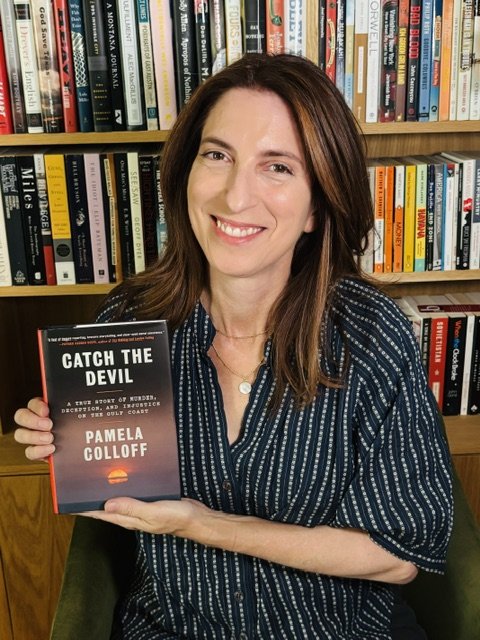
Today on The Stacks, we’re joined by ProPublica reporter and The New York Times Magazine staff writer, Pamela Colloff, to discuss her book, Catch the Devil: A True Story of Murder, Deception, and Injustice on the Gulf Coast. This book delves into the life of career con man Paul Skalnik, whose pattern of trading fabricated prison confessions for his own freedom landed a Vietnam veteran on death row for a murder he didn’t commit. We talk about the power of investigative journalism, the hard lessons Pamela has learned as a journalist, and why people are fascinated by con men.
Our book club pick for July is Behind the Beautiful Forevers by Katherine Boo. We will be discussing the book with Julianna Haubner on Wednesday, July 29th.
LISTEN NOW
Apple Podcasts | Spotify | Google Podcasts | Overcast | Stitcher | Transcript
Everything we talk about on today’s episode can be found below in the show notes and on Bookshop.org and Amazon.
Catch the Devil by Pamela Colloff
“Ep. 419 I Don’t Want You to Know Where I’m Going with Patrick Radden Keefe” (The Stacks)
“How This Con Man’s Wild Testimony Sent Dozens to Jail, and 4 to Death Row” (Pamela Collof, The New York Times Magazine)
All the President’s Men by Bob Woodward and Carl Bernstein
The Thin Blue Line (Errol Morris, 1988)
“Where the River Took Us” (Aaron Parsley, Texas Monthly)
Harriet the Spy by Louise Fitzhugh
Harriet the Spy (Bronwen Hughes, 1996)
University of Missouri School of Journalism (Columbia, MO)
“They Killed Their Abusers. Should They Spend Their Lives in Prison?” (Pamela Colloff, The New York Times)
Unreasonable Women by Justine van der Leun
“Ep. 429 All Journalism Has a Point of View with Justine van der Leun” (The Stacks)
London Falling by Patrick Radden Keefe
You Won’t Get Free of It by Rachel Aviv
The Vanishing Family by Robert Kolker
Lost Girls by Robert Kolker
Hidden Valley Road by Robert Kolker
In the Days of My Youth I Was Told What It Means to Be a Man by Tom Junod
To support The Stacks and find out more from this week’s sponsors, click here.
Connect with Pamela: Instagram | Threads | X/Twitter
Connect with The Stacks: Instagram | Threads | Shop | Patreon | Goodreads | Substack | Youtube | Subscribe
To contribute to The Stacks, join The Stacks Pack, and get exclusive perks, check out our Patreon page. If you prefer to support the show with a one-time contribution, go to paypal.me/thestackspod.
The Stacks participates in affiliate programs. We receive a small commission when products are purchased through links on this website.
TRANSCRIPT
*Due to the nature of podcast advertising, these timestamps are not 100% accurate and will vary.
Pamela Colloff 0:00
I had done all the things. I had gotten my national magazine award wins, and I had done every kind of story you can imagine. I got to ProPublica, and I was like, "Wait, I'm not an. These people are investigative journalists. Like, I'm just a magazine writer. There was such a learning curve. It was learning on the job, right? It was learning as you go, and it's so fun. I mean, I feel like that's the thing that sometimes lost with investigative journalism when people talk about it is you're uncovering a mystery.
Traci Thomas 0:41
Welcome to the Stacks, a podcast about books and the people who read them. I'm your host Traci Thomas, and today we are joined by ProPublica reporter and New York Times Magazine staff writer Pamela Koloff to discuss her debut book, Catch the Devil: A Story of Murder, Deception, and Injustice on the Gulf Coast. In this book, we delve into the life of a career conman, Paul Skalnick, whose pattern of trading fabricated prison confessions for his own freedom landed a Vietnam veteran on death row for a murder he did not commit. Today, Pamela and I talk about why people cannot get enough of conmen, how she handles reporting on the worst parts of people's lives, and why she wanted to be an investigative journalist in the first place, our book club pick for July is "Behind the Beautiful Forevers: Life, Death, and Hope in a Mumbai Undercity" by Catherine Boo. We will discuss the book with Juliana Hopner on Wednesday, July 29 If you like this podcast and want more bookish content, more community, consider joining the Stacks Pack on Patreon and subscribing to my newsletter Unstacked on Substack. It's not complicated. By joining either of these places, you support the work that I do. You make it possible for me to continue making this show to work with my incredible team here at the Stacks, and you, dear listener, get bonus content for yourself. You get access to our virtual book club. You get to hear me wax poetic about sports and pop culture. You get to be part of our Discord. You get a monthly bonus episode, and again, you make it possible for me to make the show every single week. So to join, you're going to go to Patreon.com/slash the stacks for the stacks pack, and you can check out my newsletter at Traci Thomas. Substack. com. All right, now it is time for my conversation with Pamela Kolof. right, everybody! I am so excited. Every so often, I get to read some juicy narrative nonfiction that makes me feel like, oh, books are awesome. And today, I'm talking to an author of one of those exact kind of books. The book is called "Catch the Devil: A True Story of Murder, Deception, and Injustice on the Gulf Coast. And my guest is the author, Pamela Koloff. Pamela, welcome to the stacks.
Pamela Colloff 2:51
Thank you so much for having me.
Traci Thomas 2:52
I'm thrilled to have you. Let's just dive in. 30 seconds or so. Can you tell folks about the book?
Pamela Colloff 3:00
So the book is about a man named Paul Skalnik, who is a former police officer turned con artist extraordinaire, and he figures out a get out of jail free trick, which is every time he gets caught doing what he's doing, he goes to police or prosecutors, and he says, "Hey, that guy in the cell next to me, like he just confessed everything that he did in this crime, and be happy to help you guys out. And then he would be the star witness against that person, and in return, he would get his freedom and be released to do more. And so the book follows him through his nine different wives, some of whom he was married to at the same time, and these various cases and the collateral damage of the women and men left behind.
Traci Thomas 3:53
And there's one particular case that you sort of talk about in the book. Will you tell us about Jim Daly?
Pamela Colloff 4:00
Yeah. So Jim Daly is currently still on Florida's death row. He landed there in 1987 because of testimony that Paul Skalnik gave against him at his capital murder trial, and what what we see as the this investigation proceeds is that the person who likely committed this crime was his housemate at the time, who has confessed to it multiple times and then retracted those confessions. But because Paul Skalnik's testimony stands that Jim supposedly confessed to him, Jim is caught still. He's 80 years old on Florida's death row and could be sentenced or could receive a death warrant at any moment.
Traci Thomas 4:48
I know this is going to sound really crazy, but I know that people like are put to death, obviously, and I know that people die in prison, but for some. Some reason it has never actually occurred to me what that means to die in prison. Like that is a thing that happens that is so deeply cruel and inhumane. Like the idea that you could just be in a place, a prison. I don't know if it's it's an upsetting thought.
Pamela Colloff 5:19
It's well, you're making me happy in what you say because the book really wants you to contemplate that. I actually just wrote a cover story for the New York Times Magazine about the subject and about how Florida, where much of my book is set, is executing more people per year than all other states combined, and I tell the story of a priest who works with these men, preparing them to die. And I think we don't really think about you know we think about they're they're bad guys, they're terrible crimes. Some maybe in some people's opinion deserve death. We don't really think about what that looks like, and we don't think about in Jim's case. I was able to tell what all those decades. I mean, think about life in 1987 versus now, right?
Traci Thomas 6:10
I was born in 1986. Okay. Okay. So, so this whole thing takes place in the course of my life.
Pamela Colloff 6:18
Yes. Right. Right. And one of the one of the interesting struggles that yielded something I'm really proud of in the book was how do I how do I convey to readers what that time is like? What is it like to sit in a room that's when you're on death watch? You have 30 days before your execution, and and he was on on death watch in 2019 before getting a stay. What is it like to sit in a 12 by 12 foot room with no windows and await that? What is it like to be there for decades? And so, something that sounds so dark, but one of the things that came out in my reporting, I connected with his pen pal in the Netherlands, who he had been writing to since the '90s, and it was the depths of the pandemic. And I was just like, "Oh my God, how am I going to tell this story? And I said to her, "You know, do you have any of his letters? You know, is it possible that you kept any of that? And she said, "Let me look. You know, I've got lots of time. It was during lockdown. She crawls into her attic. She finds this stacks and stacks boxes of she kept every letter he had ever written her since 1998, and so I'm able to use the letters and their really beautiful relationship that develops over the course of those decades, she goes from being a single woman to married to a mom. You know, all these different transitions. They each have all these different losses, and they find this connection. And the the letters allow you to hear what he was thinking and feeling with contemporaneous accounts in real time, because it's so hard when you go back and try to interview someone. Yeah, what were you feeling on that afternoon in 1999? Right, you can't recapture it, but with a letter you can, and that was such a gift.
Traci Thomas 8:13
Yeah, I mean, I think this-not to get too nerdy, but like from a craft standpoint, what's really interesting about this book is that you've juxtaposed these two men, and you sort of use Jim as a way to tell Paul's story, and you're using Paul in a lot of ways to tell Jim's story. So, how were you sort of thinking about these two, you know, protagonists, antagonists? Though I mean, I think Paul is the protagonist, like he's like the evil villain. It's an evil villain story, but like, how are you thinking about that?
Pamela Colloff 8:46
I know from your conversation with Patrick Rad and Keith that braided narrative is not a term that we like.
Traci Thomas 8:53
Well, it's not that I don't like braided narrative. I use it. The thing is that I feel like people use it for everything.
Pamela Colloff 8:59
Absolutely.
Traci Thomas 9:00
You know, it's like everything's a braid. It's a braided memoir. I'm like, okay, okay.
Pamela Colloff 9:04
Right. What does that even mean?
Traci Thomas 9:05
Yeah, I like braided narratives. Like those are the kind of books that I like to read when you're pulling all these different pieces together. But I think the term is like starting to mean be meaningless,
Pamela Colloff 9:14
totally. And the the book kind of has, I'd say, three different strands. So there's the con man, sort of, and I start it in a sort of catch me if you can type way. A lot of what the book is trying to do is turn that romance with the con artist on its head, but it's playing with it, and we follow him through all his hijinks and crazy things he does until it gets pretty dark, and then we have Jim and his journey. He was this kid with so much promise in Manhattan, Kansas. Just a beloved guy, and then he went to Vietnam, and things really went off the rails there. And telling that story was was very was very moving. Do and I hope it reads that way, and then the the third strand are really a lot of the women who were left in the wake of scalnick, of the collateral damage. Some of these ex-wives who their lives were completely destroyed. You know, he would clear them out financially and really rob them emotionally of being able to trust people again, and then their their daughters who he preyed upon, and whose accounts when they went to police were not believed because he had become too valuable to prosecutors at that point. So I think bringing all those things together and having each sort of reflect back on one another was something I was playing with the whole time, and and calibrating that and structuring that was a a big challenge of the story. But I think we we finally figured it out.
Traci Thomas 10:52
I think you did figure it out. I mean, I think I as I said, I love a villain. I love a con man story. Like I think that I am maybe part of the problem, right? Like, I feel like we're not supposed to like a Paul Skalnik because he's done so many bad things, and and I think you've done a really nice job of sort of reminding me of that because it's sort of easy in the beginning to be like, "Oh, this is fun. This is a caper. Like, ooh, right. And it by the end I was like, hate this guy a lot. Like I'm not having like I stopped having fun. I enjoyed the book, but I stopped having fun in that way.
Pamela Colloff 11:31
Yes, I think the the beginning of the book is more the caper and the the adventure of it all, and the latter half is more the emotional resonance and sort of the fallout of that, but I think I mean we all love that romance. That's part of why I wrote a book about economists. I've been looking for a jailhouse snitch story forever, to find this like I always would think of Jack Nicholson when I was writing this sort of mischievous-you-you-you can't help but sort of like him, even though you know he's a scoundrel type. You know that's how I always thought of him, and I think it's important. We we love that kind of character and seeing what they can get away with, and the story. Like, how far can you get? How much can you push the envelope? Yes. How wild of a story can you tell, and people will believe it? And I'm fascinated with all of that. And I left. I there's some there's some humor in this book. Like some of the things he does are so funny and ridiculous. Yeah. And I felt like you needed that because other parts of it are are heavy, right? Yeah, and I hope I hope that because there's some light and funny stuff in there, that when you get the more emotionally resonant work, that it almost hits harder.
Traci Thomas 12:54
Yeah, I think also like just thinking, hearing you say like Jack Nicholson, and I was thinking a little bit of like Leonardo DiCaprio and the Catch Me If You Can stuff, I think oftentimes what stories about these kinds of like conmen who who will do anything to get what they want or like service themselves is that we don't often see the impact, and so I feel like having a gym daily where it's like this is all fun and cute except for there's a literal person on death row for 40 years, who's now an 80 year old man.
Pamela Colloff 13:27
Yes,
Traci Thomas 13:27
for a crime that it feels like he didn't commit. I mean, it, you know,
Pamela Colloff 13:32
yes, that's what the book suggests. Yeah, I think that's what the book suggests.
Traci Thomas 13:35
I think that's what that's what I mean. Given what you've presented, that feels like what the evidence suggests. But,
Pamela Colloff 13:40
and I think you know it's interesting because in in Jim and Jim's part of the story. There he is. It's it's it's such a very hard fact of of what he's having to deal with. He's run through his appeals. There's not a lot of hope at this point. But I was fascinated with him. Something that made him actually hard to write about, and I had to be creative in how I got the material I needed. Is to survive all those years of such sensory deprivation, and you're so apart from the world. He had to be, and he already was sort of hardwired this way before before alcoholism and and Vietnam got him off course, but he's sort of this relentlessly optimistic, cheerful person. I remember when I wrote about him for the New York Times Magazine. Initially, our photographer had to ask him not to smile because it didn't match the tenor of the piece. But I mention that because I feel like one of the gifts of writing-I mean, I almost entirely write about prisoners and the criminal justice system-is you get to see the world through their eyes, especially in the wrongful conviction cases I've written about through exonerees. And so that means these tiny little joys that we don't think anything about, like a good cup of coffee, sitting outside, you know, your feet touching the grass. I remember one exoneree talked to me about the the beauty and joy of going into a grocery store and seeing all the different colors and textures, and so as as dark as some of this is, and I tried to bring that in in the book. Like Jim, his outlet is through these paintings that he makes, and when he has paint, that's his outlet. Or it's seeing his ex-wife, who they've now reconciled, and she's stole the love of his life coming to see him, and so trying to find those bright moments, you know.
Traci Thomas 15:47
Yeah, I mean, you've done so much work. I was saying before we started recording that you're like a real journalist. Like you know, I talk to journalists who write books, but like you're like a J J J journalist, and that is high praise because my my real dream job is to be is to like do a to do a Watergate, you know, is like to be to like expose something crazy to the world. Though I literally have no idea how one would do that, but I read all the president's men and was like, oh, me too. That's the job I want. I took zero steps towards that. So, but you, you actually do that, Pamela. You get people out of jail.
Pamela Colloff 16:29
Well, not as often as one would would hope
Traci Thomas 16:31
Sure we'd like to get everybody out. But like you've gotten like at least like 500% more people out than I have. Like I've gotten zero people out. But I guess the question is: first and foremost, how did you know you wanted to do this work? How did how did coming in and telling these stories become sort of your lane?
Pamela Colloff 16:52
Sure. So I think there are a lot of different lanes, but I, when I was a teenager, I saw Errol Morris's documentary, The Thin Blue Line* and I don't know how many listeners will be familiar with that, but it's about a wrongful conviction case in Dallas. And the film was mind-boggling to me because it's a documentary, but it is as beautiful as any feature film that you'll ever see, and it is incredibly creative with this Philip Glass score and this just incredibly, incredibly beautiful cinematography and storytelling. And so that movie was sort of an awakening to-I mean, I was a total bookworm, and we can talk about that later. But it was an awakening to a type of storytelling. You know, I I always try to say that I do character-driven narrative nonfiction. So it is investigative journalism, but I feel like sometimes you can hear the words investigative journalism and it sounds like kind of a drag.
Traci Thomas 17:58
Not to me
Pamela Colloff 18:00
Character-driven narrative nonfiction that's rooted in you know this this book is rooted in I don't know how many hundreds of public record requests that I did and attorneys before me did that to me having something read almost a little bit more like fiction but you can fact check every sentence and it's really immersive, and it's engaging, and it's emotional. That's what I wanted to do, and that film was everything. And then there were so many other things along the way, of course, but that was pretty formative.
Traci Thomas 18:35
And then, how did you do it? How do you do it? I like. I just, I don't know. I don't feel like it's like every day you get to talk to someone who does the work that you do,
Pamela Colloff 18:45
but it's so fun. We so everyone feels imposter syndrome, right? So I came to ProPublica and ProPublica and the New York Times Magazine. Let me explain my job because it's a little confusing, and then I'll backtrack. So I'm co-employed by the New York Times Magazine, where I'm a staff writer, and ProPublica, where I'm a reporter, and every story of mine is co-published by both news organizations, and they have different missions, right? So the idea is to marry this really rigorous reporting and investigative journalism to really. full, beautiful storytelling-that's you know magazine type style writing-and so I joined. I I got that job in 2017. I came from a magazine called Texas Monthly, which does incredible narrative nonfiction, long work.
Traci Thomas 19:42
The their their feature writer just won the Pulitzer, right?
Pamela Colloff 19:45
Just won the Pulitzer.
Traci Thomas 19:46
Oh my God, that story.
Pamela Colloff 19:50
Incredible, incredible essay about that he wrote in like 24-36 hours after his family survived this deadly flood, so I I came to this job in 2017. I had spent 20 years at Texas Monthly, and this goes to the imposter syndrome thing. I'm trying to say, I had done all the things. I had gotten my national magazine award wins, and I had done every kind of story you can imagine. I got to ProPublica, and I was like, "Wait, I'm not an. These people are investigative journalists. Like they know what they're doing. I'm just a, I'm just a magazine writer, you know. And there was such a learning curve of how do I take these storytelling chops that I had developed previously, and learn the skills of the Woodwards and Bernsteins around me. To go back to your Watergate reference, and you know it was it was learning on the job, right? It was learning as you go, and it's so fun. I mean, I feel like that's the thing that sometimes lost with investigative journalism when people talk about it is you're uncovering a mystery and you're able to call up whoever you want to call up and ask them whatever you want to ask them, and then try to back that up with records. And it's always fun. It's always a little bit of mystery.
Traci Thomas 21:21
Do you like gossip in your regular life?
Pamela Colloff 21:24
I love gossip. I live for gossip.
Traci Thomas 21:27
Okay, me too.
Pamela Colloff 21:28
My two teenagers who are like have to have to stop asking me for.
Traci Thomas 21:34
Oh my gosh! I cannot wait till my kids are gossip age. They're only six right now, and I'm like, you guys are so boring. Like, what happened at school today?
Pamela Colloff 21:42
It's so, it's so well. And then there are the years where they tell you things, and then there are the years where they stop telling you things entirely. But no, I so I was a total bookworm when I was little, and my favorite book for a while was Harriet the Spy. Is this a book that you know?
Traci Thomas 21:59
I know the movie. I'd never read books, but I know.
Pamela Colloff 22:01
Yes, the book. I think the book is far superior. But the book is about this very nosy girl who just wants to know everything. And for me, that was that was the model. That was that was me. That was you. Yeah. That that sort of informs all of this work to some degree.
Traci Thomas 22:20
I love it. I love it so much. I feel like I don't know. This is just a sense that I have. I feel like people who love gossip are particularly susceptible to loving a con man story. Yeah, you know, like because it just is so juicy. Because you know there are people who don't like gossip, which is to me like so upsetting and confusing. I'm like, how are you alive? But there are people who are like, yeah, they're like, oh, I don't gossip. I don't like gossip. I don't. I don't care. It's not my business. I'm like, what do you mean? It's everyone's business. It's out in the world. We need to know.
Pamela Colloff 22:53
Well, I so when I was in high school, Alan Ginsberg came to speak at my high school, and I was obsessed with his at that age, 17. You know, Jack Kerouac and the Beats were everything to me. So Allen Ginsberg came to my high school, and my high school newspaper, which you know was just it did did not do any interesting work. Was just sort of documenting basic things that were happening didn't even bother to come to show up to cover this, and I decided I was like, I've got to start something. Like I've got to do something. I have to have a way to, like we can't let this go unnoticed. So I grabbed my best-looking guy friend because it's Alan Ginsberg and walked up to him after the reading was over, and just we just like said this on the fly. We said we'd like to interview you. I think we said for a newspaper. We didn't want to lie to him, and and we ended up creating a newspaper because of this. I know we said we just love it if if there's any way we could take you to coffee after this reading and just ask you a few questions and do a Q and A for our paper, however we phrased it, and he went and sat with us at a coffee shop for I want to say it was like close to three hours. And I mean, imagine you want to ask anything, and then we you know edited down into this incredible Q and A, and that inspired starting this paper. The reason I am telling this story is that day it occurred to me that if you approach someone as a journalist, I mean, what was I? I was 17 years old. I had no credentials whatsoever, but I said I was a reporter, right? That that is this like card, this entryway into this whole other world, and you have the right to go ask Alan Ginsberg for coffee, and he says yes, yeah. I mean, you know, if I just walked up to him afterward and said, "Gosh, I just love your poetry, he's from. Anyway, we could go get coffee for three hours.
Traci Thomas 24:38
That's why I started this podcast so that I could ask authors that I wanted to ask the questions I wanted to ask, like, why did you name your character Susan? Like, that's so that's such a weird name. Or like, right? You know, do you like gossip, Pamela Koloff, serious journalist? Like, I don't know, but I'm gonna ask because I get to. It's true. It's like if you just have like a microphone, or if you just say you're writing for a paper, like people might say yes to you,
Pamela Colloff 25:31
and they do. And then you know, and then you can ask within reason. You want to be respectful and yeah. All I mean, there are all sorts of things now I do ethically that I did not do at the beginning of my career. I had to learn some things the hard way, but generally speaking, if you take care, you can ask people. I don't want to say almost anything, but you you really can. And and one of the surprises to come out of this work is how many people want you know don't feel listened to or don't feel people understand them or nobody knows their story and they want to talk and investigative journalism that can be really helpful because you can you know as long as you can back up what you're saying with records those people will help you get where you want to go,
Traci Thomas 26:21
and then their story also gets to be part of the record.
Pamela Colloff 26:25
Well, and I've seen so much of how that affects people. So there's a a girl in the book now my age in her 50s. She was 12 years old at the time that she met Paul Skalnik, and he was, you know, again this sort of larger than life, loose character, and she became very infatuated with him and fascinated with him, and he preyed upon that and took advantage of that and sexually abused her, and she eventually went to police, reported this was hooked up to a polygraph. Had to take a polygraph. This is without her parents, a male officer leading her to do this. And mind you, Paul Skelnick, the man who goes on to testify against upwards of 40 different people, some of them in capital cases is never made to take a polygraph, so she goes through this ordeal. Ultimately, the case is not prosecuted because Paul Skelnik is too valuable of a witness to the state attorney's office. And long story short, the prosecutors make her case go away. I so and this is 1982. I come back in in 2019 when I was working on the magazine story that this book grew out of, and reached out to her. And by that point, I had all the documents. I had all her statements. I had two witness statements. I mean, you never see witness statements with sexual assault. I had everything, so I call her. It was a long process of getting her, understandably, to trust me and feel comfortable talking to me and to understand the importance of telling the story. But what I'm trying to say in too long of a way is, while her story was very important for me to tell in the story, the act of telling it was huge in her life. Yeah, she had watched for all those years without feeling believed, and like, did I make this up? Or like, how did this happen? That nothing ever happened to him, and to be believed, and then to have this written about, and to have other people believe it, she told me, was life changing. So what I'm trying to say is, investigative journalism in its best form can cause change in the world, in the things that you're writing about. But it also, I think for me, feeling shy about asking people hard questions, I try to remember things like that, like with Karen, and how that was very beneficial for her as well.
Traci Thomas 29:15
We're gonna take a super quick break, and then we'll be right back. Okay, we're back. You just casually mentioned learning lessons the hard way in the questions you ask. Can you share a lesson or two? I'm just so curious what that means.
Pamela Colloff 29:34
So many. We could do an entire podcast.
Traci Thomas 29:39
I would love that.
Pamela Colloff 29:41
So one of the things I love about journalism is that you just kind of get thrown in, right? There's not a lot of training. I think it's actually a really beautiful thing about my profession that you know people do go to graduate school for it. I don't recommend that. But you you cut your teeth doing it, sort of like public defenders get just like thrown into the necks. It's the same thing. So I started. I I had a staff job at Texas Monthly at 25 years old, which was I still don't understand how that happened. But every day I was sure I was going to be fired. They were going to figure out that I had no idea what I was doing, and so there were just there were so many things. I remember early on when I wrote tough things about someone. Let's say it was a more investigative piece, and this was back when I was in my 20s. I would write it. We would fact check it. We would publish it, and then I would sort of just be in this crouch position until they happen to find it and read it, and then I got the blowback or the reaction. That is the absolute opposite of how I work now. It's not fair to people. It's easy to make mistakes. So now I have this sort of radical transparency with sources. Where let's say I'm writing something, and this this happened in the book. There were people who would not speak to me, did not want to have anything to do with the book, and I have a pretty harsh assessment of their work as prosecutors or investigators back in in the 80s and 90s. So if let's say somebody doesn't speak to me, I now go back to them. I send them sort of a paraphrased version of what I'll be writing to to give them a heads up. We are publishing this on this date. Here's broadly what I say. If I've gotten anything wrong, if you dispute this, if you think I've mischaracterized anything, please let me know. And and it's a process from there that can go in different ways. And it's just when I think about you know sort of the golden rule, like how would I want someone to do this with me, right? I think a more painful one was in my 20s. I wrote a lot about you know young people. I was seen as like the young person of the staff, the voice of a generation. So I'm joking. I was not seen as that, and so I wrote a lot about teenagers and often teenage girls and sort of teenage life in Texas, and I would sort of embed with people. Like I would spend a lot of time. I always say to people when we sort of talk initially about whether or not I, you know I'll tell someone that I hoped right about them, and here's what that would involve. I say this is going to take a long time. It's going to be annoying, and you're going to be really sick of me by the time this is done. So I'm going to be around all the time. So I was doing that with girls I was not that much older with, and I think for them, you know, they've never been written about in the media before. They don't really know what a reporter is. Yeah, the lines got really blurred. You know, was I a reporter? Was I a friend? It didn't matter. Even sometimes when I would have my notebook out as a reminder that I'm writing about this, that this was going to be in an article that was for sale in the grocery store that they and all their friends and friends' parents went to, and and I remember there was one girl who just felt that that it had gone too far that I had I had said too much, even though we we had gone over it in fact checking, and you know I didn't do anything underhanded,
Traci Thomas 33:42
right
Pamela Colloff 33:43
But I just I spend so much time now with sources, especially the people who entrust me with the story and allow me to spend time with them to make sure that I am as ethically, you know, doing my job as possible. I explain to them why I'm asking certain questions, what the story is that I'm trying to tell, and it can sometimes be an almost collaborative process. And that is so different when I was just this scared kid who had no idea what she was doing.
Traci Thomas 34:17
I have like 1000 follow-up questions, but I think the the one that I'm the most I want to spend I I want to ask because I know we have other things to talk about is like you've been doing this work for a long time and obviously this story that you're talking about from when you were in your early 20s about these this girl has stuck with you. How much are you sort of reevaluating your process, your ethics, like what you're doing as you go, still now at this age, like as like a you know back then you were a newbie, but now like you're capital P, capital C. So I'm just like, I'm just thinking about like maybe like regrets or like how that shapes how you move going forward.
Pamela Colloff 34:59
I think. It's always front of mind. Like I feel such a responsibility when people agree to spend substantial amounts of time with me or to talk. Usually, with what I'm writing about, it's the most painful thing that's ever happened to them. Maybe it's losing a child. Maybe it's going to prison. Maybe it's fill in the blank, really tough stuff, and you know, no matter how many times you go over something with someone before it's published, it's just different when it's out there in the world. It's on the internet. It's everywhere. It's being taken out of context.
Traci Thomas 35:38
Well, like people are calling them, being like, "Saw you in the New York Times, which is different than you being like, "This is going to be in the New York Times. Like that's like very theoretical versus like holding the magazine,
Pamela Colloff 35:48
yes, or like the Daily Mail takes some snippet of the story and turns it into some other thing,
Traci Thomas 35:56
yucky.
Pamela Colloff 35:58
I think I'm always just evaluating that, and how how can I be sensitive to the challenges of this? How can I partner with people when it's appropriate? How can I be sensitive to what they're worried about? I published a story earlier this week that I knew was going on. It was going online at five a.m. Eastern. I live in Texas, so I'm an hour behind, and I woke up at four a.m. just like in a cold sweat, and did not, you know, the cortisol is like coursing through me until I've heard from every source saying like I thought that you know you really captured what we talked about and this was fair, and so I I really try to honor that. So I'm always sweating it. And P.S. Every story, and if I ever do a book again, which I hope to do, I'm convinced at the outset that oh yeah, this is the one that breaks me. Like I have no idea. I can't remember how to write. I don't know how to do this. This is so hard. I'll never figure my way out of this Byzantine, you know. So it it doesn't get easier. And actually, there's a wonderful writer I used to work with. He's passed away, Gary Cartwright, who is this sort of Hunter S. Thompson of Texas, basically. And I was asking him this. I was probably about 30 at the time, and I had just been through an awful writing process. It just been-I feel like each one takes a lot out of me, to be honest with you. And I asked him about that, and I said, "Gosh, does it ever get easier? And he said, "If it gets easier, it's time to to hang it up. Time to stop doing it, and that I've thought about that a lot. That there's this. I don't mean that you should be in agony all the time, and every your work should be difficult at all times. But if you're phoning it in, if you're not wrestling with this, if you're not worrying about how it's going to impact your sources, or what if I don't get that person to talk to me? Or what if I'm I'm wrong? My friend Maurice Jamal calls it the error terrors, which I love. If you're not sweating, like you're doing something wrong, I think in this line of work,
Traci Thomas 38:17
you're writing the thing. You've got your sources. You spend all this time with them. You put something together. You send you send that draft or whatever to them. You're like, this is the part. I mean, that's what I assume. You send like, this is the part you're in.
Pamela Colloff 38:27
No, I'm not allowed to do that.
Traci Thomas 38:29
You're not allowed to do anything.
Pamela Colloff 38:30
So that's one of the tricky things. So standard across all all news organizations is you can't send the actual story out before publication or even parts of it, so I'll be holding it in my hand, for example, and calling them and saying, "So, and and then I say, "You did this, and you felt this way about it. Does that sound right to you?
Traci Thomas 38:55
Got it. So you are sort of still checking with them once you've once you've taken everything, all your like raw materials, your your interviews, the time you spend together, the you know documents from court records or whatever, you write your thing, then you call and you sort of paraphrase, kind of.
Pamela Colloff 39:16
And this is for just for the very sensitive. I I don't do this for all parts of a story, and part of that is because at the times it goes through a rigorous fact-checking process.
Traci Thomas 39:27
Got it.
Pamela Colloff 39:28
Most of my magazine stories have three fact checkers on them, so it's and lawyers, so it's intense. But it's more like for the really sensitive parts of a piece, I want to make sure somebody is comfortable with it, and so just as an example, going back to Karen Parker, the 12-year-old girl, I describe in great detail both her infatuation with Paul Skelnick and then the sexual encounter that happens between them. That she's very confused about how to. Feel about because she's got a big crush on him. Like it's very complicated. I try to get into the complications of it. It was very illegal to be yes to be clear
Traci Thomas 40:10
the emotional complication. There's no complication about him abusing a 12 year old, but the complication is like how she felt about it.
Pamela Colloff 40:17
Exactly, exactly. And to me, that was very interesting to write about is like how does she come to terms with that and why does she end up going to police and how did she get there, but so that was material that I went over with her in person. I went to Florida, sat with her in a restaurant, and you know we had a nice meal, and then I I sort of described and and read little pieces of it back to her because I just I wanted every word of that to be something not just accurate but true to her emotional experience, comfortable and that she was comfortable with.
Traci Thomas 40:56
What if she says to you, Pamela, no, I don't want this in there. Then what do you do? How do you balance your story that you've got to tell and your job as a journalist and the sensitivity to this person who's opened up to you and told you about this horrible thing that happened when they were 12 that has basically shaped their life for the next 40 years?
Pamela Colloff 41:16
Yes. So I think there are a lot of different things that can happen at that point, if it's I don't want that level of detail in there, or I don't want my current name, I I use her married name rather than the name she had when she was 12. There there are ways in which we can soften that, or we can find a way to still include it if someone is more adamant about it, and it's an issue like sexual assault. In that case, I would just write about it in a much more bird's eye view from from records without their name. But this, the way I wrote this, is almost like fiction, where you're in her head and you're sort of experiencing this as it happens.
Traci Thomas 42:04
Okay, I could do this all day. I'm supposed to be talking about the book, and we are talking about the book. But I just think, like, here's my this is my opinion about what I do. My sense is that the least interesting thing we could talk about is the book because people will get the book. The book is good. You should read it at home, but you're not going to get this part of it from reading the book. So I don't. I I am torn because I'm like I want to talk about the book, but also the book is the book and it's great, and you're going to get it. And so this is like very exciting to me.
Pamela Colloff 42:33
I mean, I could talk about craft with you till the cows come home. Like I, there's nothing I love more, and I always love with the narrative nonfiction writers who I admire. I love hearing how it came together and how they got things and and the things they didn't get. You know, they're they're the things you have to write around and the mysteries that remain. And I I love all that.
Traci Thomas 42:58
I love it too. I love it too. That's like the gossipy side of it, right? It's like, what's the thing you can't get from the book? Because my opinion is like the book should be good enough to stand on its own, you know. And then the the part that we don't get is all the stuff you're grappling with to make the book good enough to stand it on its own. But that that is a question. Oh, go ahead.
Pamela Colloff 43:16
Well, I was just gonna say with with a book or an article, it's sort of like okay. I think of it like when you go to the Olymp, when you go to the Olympics, when you watch the Olympics and you see maybe the ice skating finals, and let's say you've never ice skated before, and you're like, oh, that's so beautiful, and they're so graceful, and and then if you try it, you're like, wait, what? How? And and I feel like great writing. That's what it's like. It is at such a high level, and you're just you're just experiencing the storytelling and the characters, and that's always what I'm trying to do. Like, I I mean I can't even tell you how many 1000s of court documents, years of public record requests, on and on and on and on this book is based on. But there's not one sentence in the book that says you know comma according to such a court document. Yeah, right. It's written in such a way, and this is what I always try to do. It's like I do so much research. I talk to so many people that I get to a level of confidence that I can write in a more creative and omniscient way about what happened, creative based in fact. Do you know what I'm saying? But I can bring in things like emotions and things that are not in a cold court record because I've done the reporting to fill that in. So ideally, you read a book like my book, and you don't even think about the sourcing. You just think, "Wow, she like knows a lot." And then you get to the end at notes on sources, and maybe you're interested, and you dig in, and you're impressed, and maybe you don't. Maybe it's just the storytelling. That's the goal to me.
Traci Thomas 45:10
Yeah, and your notes on sources are is written, and it's not like it's not like one that it's not like footnotes. It's like you go through. It's really cool, actually. It's like also narratively written.
Pamela Colloff 45:20
Yes. So I that was intentional because when I read narrative nonfiction, I am always trying to piece together how did they get that? How did they know that? Yeah, and that's just my weird brain. And so I'll be flipping back to the footnotes, and the footnotes don't really tell you a lot. It's like a page number and something, or
Traci Thomas 45:40
yeah,
Pamela Colloff 45:41
a reference to an interview. So I very intentionally wrote notes on sources in a narrative way, so that for the for for the reporting nerds, they could dig in there and see how I put it together, and also maybe there's something in there, you know, for someone like me, when I was starting off, to learn how to do that and to give them permission, like, hey, once you read these 218 documents about this event, you can write about it in a way that's like a scene, and you don't have to do those attributions because you've got you've done the work.
Traci Thomas 46:21
Yeah, you mentioned some of the stuff that you love to talk and think about is like what's not in there, like what you couldn't get. So, what's not in this book that you wish could have been?
Pamela Colloff 46:33
I think every good project there are pieces of it that you just you don't know. There are the mysteries you can't fully solve and oh gosh, there's so many things. So I I was able to track down the fact that Paul Skalnik was married nine times to nine different women. He was a bigamist, so there was a lot going on sometimes at the same time. That's what we know of. He, I also know he did fake marriages. He abandoned women at the altar. I'm certain. I mean, I document three teenage girls who he preyed upon. I'm certain there were more. I could go on and on and on about all the different things. I. I mean, the as. as as anyone who picks up the book will see, it's extensive what I get into about what he did in Florida and Texas, some other states where I know he spent some time, particularly Louisiana, which are not as transparent with records. I it's like a black box, right?
Traci Thomas 47:39
Interesting.
Pamela Colloff 47:40
So I, I my secret hope is the book comes out, and a few people come out of the woodwork, and it would just be for me. I'm not going to write a sequel, but it would sort of help to answer some of those questions. And then I think there's just the larger question. I leave it open ended because I had to about why Paul Skelnick did the things that he did.
Traci Thomas 48:04
Yeah,
Pamela Colloff 48:05
there's a scene toward the end of the book. I don't want to ruin where I go and visit him on what turned out to be his deathbed, and we have this absolutely bonkers conversation where I ask him a lot of things, and he says some really off the wall, but but revealing answers, and I I sort of came to think through my conversations with him that he was the last person who could provide insight into who he was. I I had to find it other ways. I had to find it both through his actions and through the people around him, and and that's why so much of the book focuses on them.
Traci Thomas 48:47
Yeah, this is sort of a hard shift, but I always like to ask, like, how do you like to write? Where are you? How many hours a day? Music or no? Snacks or beverages? Rituals? Tell me about it
Pamela Colloff 49:01
so. Okay, so I am one of these writers. Whenever I hear writers say, you know, I sit down at my desk at nine and I play classical music and I do this and this, I. It's funny. I'm very, very organized and disciplined in in the work itself, but in my work process, I am just like a hot mess. I mean, I, you know, when I am really, really into a story, there is no work-life balance. I don't sleep much. I, it is all I'm thinking about when I'm brushing my teeth, when I'm driving when I'm in the shower, I if I see friends, I'm talking about it and gaging their reactions to what I'm saying. It becomes a really all-consuming thing. So, I both love that process and dread it because it's very intense for me. There's a lot of. Involved, and there's a lot. I I need long stretches of uninterrupted time, so I I think this goes counter to everything we're supposed to do. But like I try to get the emails and phone calls done very first thing in the morning, and then just kind of shut it all down and go into the work, but I have a lot of trouble if I'm pulled out of it, getting back in it. My favorite part of the process is reporting. It's not writing. I love being out in the world, meeting new people, hearing their stories, following them on various adventures, having crazy stories to come home to tell my friends.
Traci Thomas 50:44
Yeah, yeah, the the gossipy part, exactly the writing part. This is the scam of the whole job. In your events, you mention the Watchdog Writers Group. What is this? Can you say more?
Pamela Colloff 50:59
The Watchdog Writers Group. I'm so glad you asked. Is this amazing group that started in 2020 at the University of Missouri, started by a man named Chris Leonard, who's an amazing author in and of himself, and he saw through his own book writing how desperately lonely and hard, and just what an endeavor book writing is. The financial and emotional strain are are intense. So he set out to start this program. Miraculously got funding for it, where you get a year long fellowship. It's an extremely generous stipend. When I did it, it was $50,000.05 zero. You also get, again, at the time I did it, a I think it's still the same, a researcher who's a undergraduate or graduate student in the journalism program at the University of Missouri, and so if you can imagine having that kind of money,
Traci Thomas 52:06
yeah,
Pamela Colloff 52:07
and having a researcher,
Traci Thomas 52:09
yeah,
Pamela Colloff 52:10
and then we would have these check-ins, and and at the time it was there were a bunch of different writers who cycled through it, but it was usually a cohort of any anywhere from three to five writers, and here was this group of people who were going through the same exact things. You know, my big struggle going from magazines to books was pacing. Like the pacing of a magazine story and a book are totally different animals. I was really struggling with that. Everyone was in a different place in the process. Maybe someone was later and was trying to figure out, like, how do I get the word out about my book? And we would come together on these zooms. And oh, I should say this was at the depths of the of the pandemic. I was just starting work on this project, and that we had this literal fellowship, and that we had each other to go to was everything. It was I couldn't have done that book without it.
Traci Thomas 53:13
Sounds so amazing. I was like, I've never heard of this. This is this name I know is enough for me to ask a question about it. What's the word you could never spell correctly on the first try?
Pamela Colloff 53:23
There's so there's so many commemorate.
Traci Thomas 53:31
Good one.
Pamela Colloff 53:34
I mean, oh my gosh, there's so many. I'm blanking on what they are now. They. I'm a terrible speller. I'm married to a copy editor, and I think maybe it's so he can help me. But that actually was like always a note when I was little. Was like she's a great writer, but we're really concerned about her spelling.
Traci Thomas 53:53
This is me. I'm a terrible speller. I'm a really terrible speller. That's why this question came to be because I was like, I can't be the only one.
Pamela Colloff 54:02
No, there's certain words where I always still like.
Traci Thomas 54:06
You could tell me how to spell a word, make me memorize a song about it, the whole thing, and I'll still just be like, "Oops, I don't know.
Pamela Colloff 54:12
Right, right. Can't do it. So it's so funny. I know.
Traci Thomas 54:15
Are you good at math?
Pamela Colloff 54:17
Well, I never thought I was, but then I would score really high on things. Oh, okay. I was thinking maybe there's. I'm bad at math, and I feel like that's another thing that's like really like specific. Like you have to like just do the right thing, and I'm so I was like maybe that's what it is. But no, it's funny. So my my son, who's a teenager, he's going to be going into engineering. He's a math science guy, and he was just explaining to me that the reason he loves math and science and not English and talking about literature, and I love this because he said, you know, in what I do, there's always referring to himself. What I do, there's always a right answer, and I was like, yeah, that's exactly what I love about books. Is there's not necessarily right; they're interpretations.
Traci Thomas 55:00
I I need a little more space to do my work. You know, I can't be held back by a correct answer. Exactly. Do you know what comes next for you?
Pamela Colloff 55:10
It's a great question. I would really like to do a book again. I have some ideas that I think are are too early to like put out in the world, but that I'm hoping maybe I can explore through my magazine writing after the book tour, and I just I've I've spent so much of my career focusing on people who are in prison who shouldn't be there, who have wrongful convictions or other issues. I write a lot about things like junk forensic science and the the things that lead lead people there. I'm I really really want to write about people who have committed the crimes that they are in for and wrestling with what do we do with that. I wrote a story earlier this year for the Times Magazine about women were serving life sentences
Traci Thomas 56:06
in Oklahoma.
Pamela Colloff 56:07
Yes, for killing their abusers. Thank you, and and to me that really got into that moral gray area that I'm interested in. Of you know, someone's life was taken. They have a family. We can't ignore that. At the same time, the person who did that was a victim themselves. And so, how do we reconcile that? What do we What do we do with that?
Traci Thomas 56:31
Have you do Do you know about Unreasonable Women, Justine?
Pamela Colloff 56:35
Yes. Oh, Justine's book. Yes, I I have it, and I'm so excited to read it. And I think so, so, so highly of her work.
Traci Thomas 56:43
It's really good. She was on the show a few weeks ago, and
Pamela Colloff 56:46
she's incredible.
Traci Thomas 56:47
I was really taken with the book, and I was like, I've read this. I've read something about this before, and it was your piece, but I was like, couldn't quite place it, and then I was like, oh, okay, here we go, I got it all together. She's amazing. She's amazing, and and she, yeah, I I'd never really thought about this idea of criminalized survivorship at all, and now it's like all I think about. Great, I can't wait to read whatever it is that you do next. For people who like Catch the Devil, what are some other books that you might recommend to them that are in conversation with your work.
Pamela Colloff 57:22
Great question. So Patrick Radden Keefe is my hero, my writing hero. I love his work, and he, in London Falling, and obviously in the books that preceded that, he does that thing that I'm always trying to do of that really immersive storytelling married to characters you're never gonna forget, and he makes you feel things, and I feel like that is always the goal. He just he sets the bar so high. There's so I mean I I'm in awe of so many people. They're all people who are magazine writers who transitioned in one way or another to books. Rachel Aviv, who has a book coming out this summer, I have a I just got a galley for Robert Colker's book.
Traci Thomas 58:17
Oh, the new one. Yeah, yeah, yeah
Pamela Colloff 58:19
The Vanishing Family, and he wrote, of course, Lost Girls and Hidden Valley Road, which again are stories that just like are so alive on the page. And I'm I'm so excited to read that the book. I think so far this year that had the biggest impact on me, and I'm sorry to be mentioning all these guy magazine writers, but it just is the crop we're having. Tom Junod wrote an incredible memoir about his father that came out this spring.
Traci Thomas 58:53
Yes,
Pamela Colloff 58:53
and that I will not attempt the title. It's like 12 words long, and I'll yes, it's like
Traci Thomas 58:57
it's like what I know is something of that being a man, yeah, about being a man, yeah, yeah. It's like blue.
Pamela Colloff 59:05
It's a Led Zeppelin song title that I'm.
Traci Thomas 59:08
We'll link to it in the show notes.
Pamela Colloff 59:10
Thank you. Yeah, that book, which again is nonfiction, is so gorgeously written. I mean, more beautifully written than a lot of fiction I've read recently. There are scenes in which he describes his father, where you feel like not just like you're in the room with him, but like you can like touch him, taste him, feel him. It is a very tactile book, and the way he wrestles with you know, this man he loves so much, who he's modeled himself in some ways on, and who he's also so repelled by because he does some really terrible things. It's so incredible, and the last third of the book. This is also true of London falling. The last third of. Both of those books, there are-it's like revelation after revelation after revelation. Like, what am I going to find out on the next page? And there's so much build-up leading to it, heading there that when you get there, you're just like, "Let's do this. This is okay. You know, they're both page turners.
Traci Thomas 1:00:18
Okay, okay. Oh, I'm excited. I'm excited to read. Okay, last question: If you could have one person, dead or alive, read this book, who would you want it to be?
Pamela Colloff 1:00:27
Oh my gosh! One person, dead or alive, who could read this book? Who would I want it to be? There's so many people I can think of. Well, I don't. I hope this isn't too sad of an answer. So, my father died in 1992, and he worked in journalism. He worked at CBS News and at 60 Minutes, and he never saw my journalism career. You know, I was just a kid when he passed away, and I would love for him to see, you know what I what I was able to do, and um, and and I I think and hope he would be proud of me. I should have a better answer about a particular author.
Traci Thomas 1:01:12
No, that's a great answer.
Pamela Colloff 1:01:14
Honestly, not to be too cheesy or whatever, but the the act of getting blurbs for a book, which is like, oh my god! Is there anything more painful than having to ask? Like you're like it's scary enough to say hi to one of your heroes, much less like throw yourself at their feet, knowing they have no time, and ask them for something. But I was, I mean, I was so fortunate to get a lot of my heroes to to read it through those.
Traci Thomas 1:01:47
Yeah, part of the reason that I picked up this book is I was like, there's too many good blurbs from people whose work I love. You've got Patrick Rodden Keefe, Lawrence Wright, Robert Golker, Rachel. Like it's like it's like a murderous row. All right, party people, you can get catch the devil out in the world now wherever you get your books. I highly recommend it. I listened to a little bit of the audio. She does a fantastic job. Um, so if you're an audio person, this one for sure, check it out on audio. Pamela, thank you so much for being here.
Pamela Colloff 1:02:19
Thank you. This was such a treat. Thank you so much. Thank you for what you do.
Traci Thomas 1:02:23
Oh, thank you. And everyone else, we will see you in the stacks. All right, y'all. That's it for today. Thank you so much for listening, and thank you again to Pamela Kola for joining the show. I'd also like to say a quick thank you to Kelly Shy for her assistance in making this episode possible. Our book club pick for July is Behind the Beautiful Forevers: Life, Death, and Hope in a Mumbai Undercity by Catherine Boo. We will discuss the book with Juliana Haubner on Wednesday, July 29th. If you like the show, if you want inside access to it, go to Patreon.com/slash The Stacks and join the Stacks pack, and check out my newsletter at Traci Thomas. Substack. com. Get yourself some perks. Support the show. Make sure you're subscribed to the Stacks wherever you listen to your podcasts. And if you're listening through Apple Podcasts or Spotify, take a moment right now. Please leave us a rating and a review. Help people find the show. Give us a little boost. It goes a long way. It's a super easy thing you can do right now. For more from the Stacks, follow us on social media at the Stacks Pod on Instagram, Threads, and now YouTube. And you can check out our website@thestaxpodcast.com This episode of the Stacks was edited by Christian Duenyas with production assistance from Sahara Clement. Additional support was provided by Cherie Marquez, and our theme music is from Tagurigis. The Stacks is created and produced by me, Traci Thomas.